
Can You Use Winter Tires All Year on a RAV4? Risks and Realities

You can run winter tires on your RAV4 year‑round, but you’ll face clear tradeoffs: softer rubber wears up to 30% faster above about 45°F (7°C), handling and dry braking worsen, and wet‑road hydroplaning risk and fuel consumption rise. Studded tires may be illegal or void warranties outside allowed months, and insurers might deny claims if premature wear causes failure. Swap to season‑appropriate tires when temps stay warm to avoid cost and safety hits — keep reading for specific thresholds and best practices.
Quick Answer: Can You Run a RAV4 on Winter Tires Year‑Round?

Can you run a RAV4 on winter tires year‑round? You can physically, but evidence warns against it. Winter compounds are softer for cold grip; under seasonal changes they wear faster, cutting tire performance and lifespan. Above about 45°F (7°C) those compounds lose effectiveness, increasing stopping distances and reducing control on dry, warm roads. You’ll also face higher rolling resistance, so expect worse fuel economy and greater operating costs. Safety risks rise: longer brakes, more chance of hydroplaning in wet conditions, and compromised handling when you need precise responses. Legal and insurance pitfalls are real in some regions that restrict winter‑only use during warmer months. If you seek freedom on the road, choose a strategy that preserves mobility without trading safety for convenience: switch to all‑season or dedicated summer tires when temperatures climb, or plan seasonal changes to keep peak tire performance and minimize risk, wear, and cost.
How Winter Tires Work: Rubber, Tread, and Temperature
A winter tire’s effectiveness comes from two engineered features working together: a softer rubber compound that stays flexible below about 7°C (45°F) and aggressive tread geometry that evacuates snow and slush while biting into ice—together they cut braking distances by up to 30% versus all‑season tires in severe winter conditions. You should know the tire composition is deliberately formulated to maintain elasticity in cold air, so the contact patch conforms to uneven icy surfaces and improves traction. The tread design uses deeper grooves, sipes, and biting edges to channel slush and reduce hydroplaning risk while mechanically interlocking with packed snow. That combination gives you greater control and shorter stopping distances when temperatures fall. The risk-focused takeaway: those same engineered features are suboptimal in warmth—performance drops and wear accelerates—so you’ll want to switch when conditions consistently exceed the tire’s target temperature range to preserve safety, economy, and freedom of movement.
How Warm Weather Shortens Winter Tires (Wear and Cost)
When you drive a RAV4 on warm pavement, the softer rubber in winter tires wears up to about 30% faster than in cold conditions, cutting tread life and forcing earlier replacement. That accelerated wear and the winter tread’s higher rolling resistance also reduce traction and raise fuel and maintenance costs. Ignoring this risk increases both the chance of compromised handling and your long‑term operating expenses.
Accelerated Tread Wear
Although winter tires give you better grip on ice and snow, their softer rubber compounds wear much faster in warmth, especially above about 7°C (45°F), so you’ll face shorter tread life and more frequent replacements. You should monitor tread depth closely and adjust driving habits to limit damage; otherwise you’ll pay more and expose yourself to risk.
- Check tread depth monthly: softer compounds and uneven wear hide rapid loss—replace before legal limits to avoid failure.
- Modify driving habits: avoid aggressive acceleration, hard braking, and high-speed cornering on warm pavement to slow degradation.
- Track costs: higher rolling resistance raises fuel use and operating expenses; factor replacement frequency into total ownership.
Act deliberately—preserve freedom by managing wear, not gambling with safety or budgets.
Reduced Traction Lifespan
Because winter tires use softer rubber formulated for sub-7°C (45°F) conditions, they harden and lose grip in warmer weather, which shortens tread life and increases stopping distances. You’ll see accelerated tread wear when temperatures exceed 7°C, because the compound wasn’t designed for sustained heat; that reduces usable tread depth faster than all-season options. The tread design that optimizes snow bite compromises wet-road evacuation and increases hydroplaning risk in warm rain. Higher rolling resistance in heat raises fuel use and operating cost, and uneven wear forces earlier replacements. If you value freedom of movement, sticking with season-appropriate tires preserves control and reduces long-term expense. Using winter tires year-round trades temporary convenience for measurable safety and financial penalties.
Safety Tradeoffs on Dry and Wet Roads
When you run winter tires on dry pavement, you’ll notice reduced grip and longer stopping distances compared with all-season or summer tires, increasing the risk during sudden maneuvers. In wet conditions that rubber compound and tread pattern can raise braking distance and the likelihood of hydroplaning under heavy rain. Those performance tradeoffs mean you should switch tires when temperatures regularly exceed 45°F (7°C) to maintain ideal control and minimize crash risk.
Reduced Dry Road Grip
If you drive on winter tires outside cold conditions, expect measurable declines in dry and wet-road performance: the softer rubber and snow-oriented tread that give you grip on ice start to harden or deform above about 7°C (45°F), lengthening stopping distances and reducing lateral grip. You want freedom of movement, but winter tire misconceptions can trap you with poorer dry road performance and compromised control in evasive maneuvers.
- Reduced traction: softer compound and snow tread bite less on warm, dry pavement, increasing stopping distance and reducing cornering confidence.
- Accelerated wear: higher rolling resistance in warm temperatures wears tread faster, raising replacement frequency and cost.
- Stability risk: in sudden maneuvers you’ll face diminished lateral grip and a higher chance of losing control.
Increased Wet Braking Distance
Having noted how warmth undermines dry-road grip, you should also expect measurable penalties on wet surfaces: winter tires’ softer compounds and snow-focused tread can lengthen braking distances by as much as 30% versus all-season tires above about 7°C (45°F), and their groove patterns can reduce water evacuation, raising hydroplaning risk. You’ll notice wet surface dynamics change—reduced contact patch firmness and channeling efficiency mean longer stopping distances and degraded braking performance in emergency stops. That higher rolling resistance and faster wear in warm, wet conditions further reduces stability, so evasive maneuvers become riskier. If you value freedom of movement, don’t accept a constant safety tradeoff: switch to season-appropriate tires when temperatures consistently exceed 7°C to preserve predictable braking performance.
RAV4 Fuel Economy and Handling on Winter Tires
Because winter tires use softer compounds and deeper tread patterns designed for cold, snowy conditions, you’ll usually see increased rolling resistance and lower fuel economy on a RAV4 when they’re used year-round. That reduced fuel efficiency is measurable: softer rubber and aggressive tread sacrifice mpg, forcing more frequent fill-ups and higher running costs. Handling suffers too—stability and steering precision decline on warm, dry pavement, raising risk during evasive maneuvers.
- Tire performance trade-off: winter tread excels below 7°C (45°F) but degrades grip and increases wear above that threshold, accelerating replacement costs.
- Fuel economy impact: higher rolling resistance directly lowers mpg, negating savings from avoiding seasonal tire swaps.
- Safety compromise: longer stopping distances and greater hydroplaning risk on wet/dry roads reduce control, limiting your freedom to drive confidently.
If you want liberation from added cost and risk, match tires to season; the data-driven choice protects performance, safety, and wallet.
Laws, Warranties, and Rules for Studded/Studdable Tires
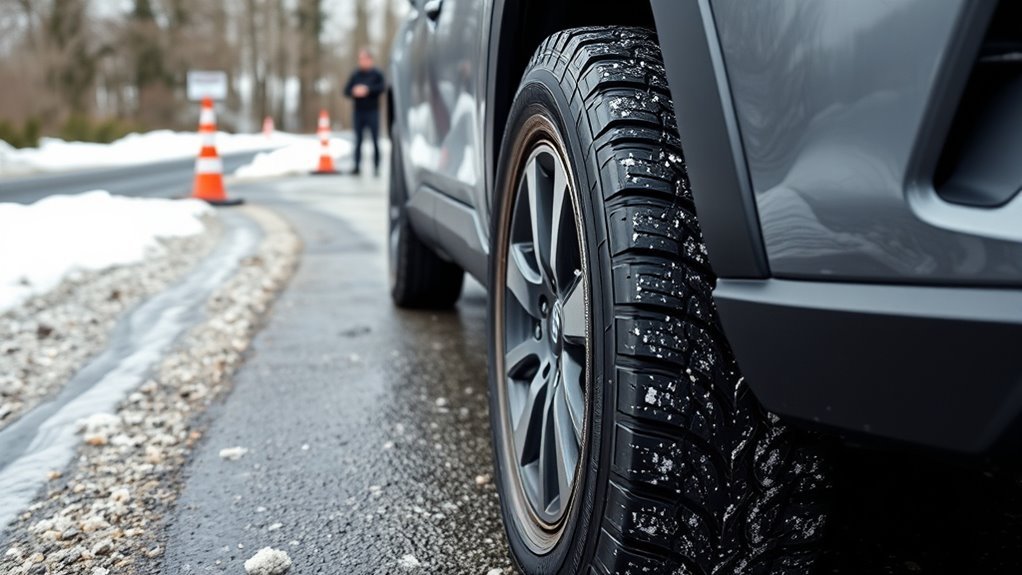
Before fitting studded or studdable tires on your RAV4, check local laws for permitted dates and any outright bans, since many jurisdictions set strict installation and removal windows to limit road damage. Review your vehicle and tire warranties carefully—using studs outside recommended seasons or leaving winter tires on year-round can void coverage or accelerate wear. Also confirm seasonal road restrictions and manufacturer guidance so you’re not exposed to fines, denied claims, or compromised traction when conditions change.
Local Studded Tire Laws
When you consider studded tires for your RAV4, check local statutes and manufacturer guidance first, since many jurisdictions limit their use by season or ban them outright to prevent pavement damage. You’ll want to follow studded tire regulations and regional guidelines closely to avoid fines, denied claims, or unnecessary wear. Act with clarity and autonomy: know your legal window, whether permits are required, and where studs are prohibited.
- Quebec: winter tires (including studs) mandatory Dec 1–Mar 15; violations carry fines.
- California and some states: studded tires prohibited to prevent road damage.
- Many regions: seasonal limits or permit systems; noncompliance risks legal penalties and liability.
Check both local laws and your vehicle manufacturer before installing studs.
Warranty And Tire Coverage
If you install studded or studdable winter tires on your RAV4, check regional laws and the tire-maker’s warranty terms immediately so you don’t invalidate coverage or face legal exposure. You’ll need to know warranty limitations and coverage specifics: manufacturers set seasonal-use rules, tread-life limits, and defect remedies. Using studs outside allowed months or running winter tires year-round speeds wear, can void warranties, and may jeopardize insurance claims after an incident.
| Risk factor | Impact |
|---|---|
| Regional restrictions | Legal fines, banned use |
| Seasonal misuse | Voided warranty |
| Accelerated wear | Reduced tread-life coverage |
| Insurance denial | Claim refusal |
| Manufacturer terms | Coverage specifics vary |
Read terms, log usage, and choose liberation through informed compliance.
Seasonal Road Restrictions
Because regional rules and manufacturer policies directly affect legal exposure and warranty status, you should verify local statutes and your tire warranty before fitting studded or studdable winter tires. Regional differences matter: some jurisdictions require winter tires only during set months (often October–April), while others ban studs outright or limit them by season to prevent road damage. You’ll face fines or liability if you ignore seasonal impacts like temperature thresholds (commonly around 7°C/45°F) that make studs illegal or unsafe.
- Check local laws for mandated months and stud restrictions to avoid fines and preserve public roads.
- Review your tire warranty: year-round winter use or studs can void coverage due to premature wear.
- Monitor temperatures and swap tires timely to reduce risk and retain your freedom to drive safely.
When It’s OK to Keep Winter Tires Longer (Thresholds)
Although winter tires excel below about 7°C (45°F), you can occasionally keep them into milder periods only if you monitor conditions and tire condition closely. Respect clear temperature thresholds: once daily highs consistently exceed about 7°C, the softer compound speeds tread wear and shortens tire lifespan. You’re choosing freedom from rushed swaps, but it’s conditional.
Inspect tread depth frequently—stop using winter tires for performance driving once depth falls below about 4 mm, since traction and emergency braking degrade sharply. Watch pavement temperature as well as air temperature; hot roads raise wear and rolling resistance, harming fuel economy and handling. If you face unexpected cold snaps, confirm remaining tread and adjust driving behavior: allow longer braking distances and lower speeds. If you don’t commit to vigilant checks and conservative driving, swap to all-season or summer tires. Keeping winter tires longer is a calculated liberty, valid only when you accept measurable risks and manage them with disciplined inspection and temperature-aware judgment.
Best Seasonal Changeover Practices for RAV4 Owners
Having accepted the limits of keeping winter tires past their ideal range, you should plan seasonal changeovers around clear, measurable practices to protect performance and safety. Schedule the swap when temperatures consistently fall below 7°C (45°F) in autumn and reverse it once sustained warmth returns—this reduces risk and preserves tread life. Store off-season tires in a climate-controlled space to avoid rubber degradation and keep them ready.
Plan seasonal tire changes around consistent 7°C (45°F) thresholds and store off‑season tires in climate‑controlled conditions.
- Schedule swaps at temperature thresholds and use professional installation for correct wheel balancing and torque to minimize vibration and safety hazards.
- Rotate winter tires every 10,000–12,000 km on AWD RAV4s; track kilometers and inspect tread depth—replace at 4 mm to retain snow-clearing traction.
- Follow maintenance tips: monitor tire pressure monthly, record inspections, and keep storage and mounting receipts to prove care and support resale value.
These practices free you from guesswork, reduce legal and physical risk, and guarantee your RAV4 performs reliably across seasons.
Alternatives: All‑Season, All‑Weather, and Wheel Packages

When you’re weighing alternatives to dedicated winter tires, consider all-season, all-weather, and winter wheel packages through the lens of real-world risk and cost: All-season tires offer a compromise—acceptable tire performance across varied conditions but reduced capability on severe snow and ice, raising your exposure in harsh winters. All-weather tires bridge that gap; they give improved cold-weather traction while remaining usable year-round, lowering the safety trade-off if you want freedom from seasonal swaps. A winter wheel package (steel or alloy wheels with narrower winter tires) reduces installation friction and lets you optimize tread width for snow, cutting risk during winter months. Remember performance trade-offs: winter-compound tires used year-round wear faster and handle worse on warm pavement, increasing replacement costs and momentary handling risk. Choose based on where you drive, how often roads freeze, and whether you prioritize liberation from seasonal maintenance or maximum winter safety—balance seasonal strategies against quantified risks and long-term expense.
Quick Checklist: What to Do This Season and Next
Because winter tires work best below about 7°C (45°F), start by matching tire use to local temperatures and driving conditions: you’ll reduce risk and preserve resources. Check regulations and costs before deciding to run winters year-round. Monitor tread depth monthly and note accelerated wear when temperatures rise.
- Inspect tread depth and condition: measure regularly; replace if below safe limits or showing uneven wear from warm-weather use.
- Time swaps with seasonal changes: switch to winter tires as temps consistently drop toward 7°C (45°F) and return to all-season or all-weather tires when nights stay warmer to avoid excess wear and fuel penalties.
- Assess legal and cost risks: confirm local rules, factor in higher rolling resistance, fuel use, and replacement frequency, and opt for a wheel package to simplify swaps and protect rims.
Follow this checklist to keep control, cut avoidable costs, and reclaim mobility without compromising safety or legal standing.
Frequently Asked Questions
What Happens if You Use Winter Tires All Year Round?
You’ll accelerate tire wear, face safety concerns like reduced dry traction and longer stopping distances, incur higher fuel costs, risk legal issues, and sacrifice handling; accept these trade-offs only if you prioritize freedom over optimized performance.
Can You Put Snow Tires on a RAV4?
Can you put snow tires on a RAV4? Yes—you can fit snow tires, gaining winter tire benefits like superior cold traction, but they’ll wear faster and handle poorly in warmth; consider all season alternatives if you want year‑round freedom.
Can I Drive Blizzaks in the Summer?
You shouldn’t drive Blizzaks in summer; tire performance and seasonal safety drop as rubber softens, braking worsens, wear accelerates, fuel costs rise, and legal or insurance risks increase—choose seasonal tires to preserve freedom and reduce hazards.
Conclusion
You can, but it’s a compromise: winter tires on your RAV4 year‑round wear faster and grip less on hot pavement, raising costs and risk like a slowly leaking lifeline. Their soft rubber and deep siping excel in cold, but in warmth they deform, worsen fuel economy slightly, and increase braking distances on dry and wet roads. Swap them when temps stay above ~45°F, or use all‑season/all‑weather tires to balance safety, mileage, and expense.

Related Articles

Upsizing Wheels on a Toyota RAV4: Pros, Cons, and Considerations
Boost your Toyota RAV4's performance with larger wheels, but discover the hidden trade-offs that could impact your ride before you decide.
Read More
Can I Change Tire Size on My Toyota RAV4? Rules and Recommendations
Are you considering changing the tire size on your Toyota RAV4? Discover the essential rules and recommendations before making a decision.
Read More
What to Do If the TPMS Light Comes On in Your RAV4
Understand the steps to take when the TPMS light illuminates in your RAV4, as overlooking it could lead to serious tire problems.
Read More