Bicycle Wheel Size Guide: Correct Size for Every Bike Type
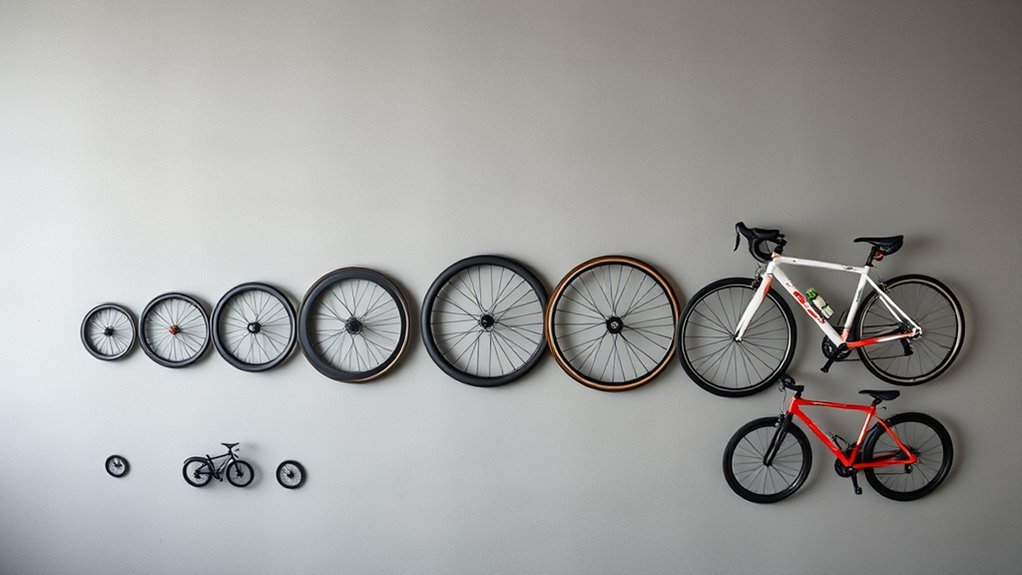
Pick wheel size by matching rim ISO/ETRTO diameter, tire width, and frame clearance to your bike type and goals: use 700c (622 mm) for road speed and low rolling resistance; 29″ (622 mm) or 27.5″ (584 mm) for mountain rollover and traction; 650B for gravel comfort with 30–47 mm tires; and kids’ sizes by height (12–24″). Check ETRTO codes, allow ~6 mm clearance, and test-fit wheels to confirm handling—keep going to see measurement tips and fitting checks.
Choose the Right Wheel Size for Your Riding Style
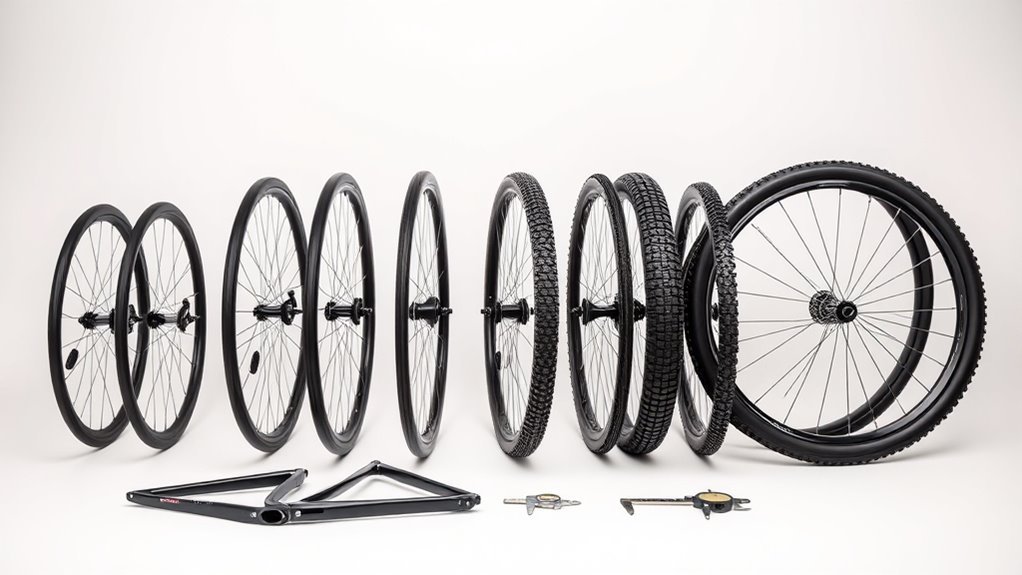
Pick the wheel size that matches where and how you ride: road bikes use 700c (often labeled 28″) for low rolling resistance and high-speed efficiency on pavement, mountain bikes favor 29″ or 27.5″ for improved rollover and stability on rough trails, and gravel/touring setups commonly run 650B (or the less common 750D) with 30–47 mm tire widths to balance comfort and traction across mixed surfaces. You’ll choose 700c when you prioritize aerodynamics and cadence-driven power on smooth roads. Opt for 29″ or 27.5″ when trail conditions demand rollover capability and predictable stability; select diameter based on maneuverability versus momentum needs within specific bike geometry. For mixed-surface freedom, 650B with wider tires trades top speed for compliance and puncture resistance. If you’re sizing a kid’s bike, match wheel diameter (12″, 16″, 20″, 24″) to height and confidence rather than age. Use wider tires to increase grip and shock absorption when terrain or liberation require it.
How Wheel Diameter (700c, 29″, 27.5″) Affects Speed and Handling
When you compare 700c, 29″, and 27.5″ wheels, larger diameters sustain higher rolling momentum and typically yield faster cruising speeds on flats. Smaller wheels accelerate more quickly and give you sharper handling in tight turns, aiding responsiveness in technical maneuvers. Balance your priority—top-end speed versus nimble acceleration—because wheel diameter proportionally trades off momentum for agility.
Larger Wheels: Roll Faster
Larger-diameter wheels—700c on road bikes and 29″ on mountain bikes—roll over obstacles more efficiently, lowering rolling resistance and letting you sustain higher speeds with less power input. You’ll notice improved wheel efficiency and clearer speed dynamics: aerodynamic 700c rims accelerate better on pavement, while 29″ wheels maintain momentum on technical trails. The trade-offs are measurable—higher center of gravity affects stability and requires minor technique adjustments—yet liberation comes from sustained pace and control.
- 700c: superior aerodynamics, lower rolling resistance on smooth surfaces
- 29″: increased traction and momentum over rough terrain
- 27.5″: compromise between agility and sustained speed
- Higher diameter: raises center of gravity, alters handling at speed
- Choose based on terrain, cadence, and desired speed dynamics
Smaller Wheels: Quicker Handling
You’ve seen how bigger wheels smooth rough ground and lock in momentum; smaller diameters push the opposite advantage by lowering rotational inertia and sharpening responsiveness. You’ll notice 700c and similar smaller wheels deliver faster rotational acceleration and more immediate steering input, making quick turns and urban agility tangible benefits for commuters and racers. Data show reduced moment of inertia improves lateral responsiveness, so you change direction with less energy and delay. The 27.5″ wheel offers a calculated compromise: more rollover than compact 700c but nearer the nimbleness you rely on in technical sections. Conversely, 29″ wheels trade some cornering quickness for superior obstacle clearance and stability. Choose smaller diameters when liberation means instant reactions and tighter line control.
Wheel Diameter Versus Acceleration
Because wheel diameter changes rotational inertia and contact patch dynamics, it directly alters how quickly you get up to speed and how the bike reacts to inputs. 700c road wheels, with their lower rolling resistance and narrower tires, let riders accelerate rapidly on smooth pavement, while 29″ mountain wheels carry more angular momentum—helping maintain speed over obstacles but demanding more torque to accelerate from a stop. 27.5″ wheels sit between those extremes, trading some rollover and high-speed stability for quicker spin-up and sharper direction changes.
- Expect higher wheel speed and greater momentum impact with larger diameters.
- Note increased acceleration effort due to inertia effects on 29″ setups.
- Wider tires improve tire grip but reduce top-end speed.
- 27.5″ boosts terrain adaptability and agile handling.
- Choose for rider efficiency and bike stability relative to your goals.
Match Wheel Size to Rider Height and Bike Type
When you match wheel size to rider height and bike type, you get better handling, comfort, and efficiency; use wheel compatibility and sizing charts to make objective choices. For road bikes, 700c (28″) wheels suit riders roughly 5’4″–6’2″, optimizing rolling resistance and aerodynamics for sustained speed. Mountain bikes split: 27.5″ fits about 5’2″–6’0″ for nimble acceleration and maneuverability, while 29″ supports 5’8″–6’4″ for rollover ability and traction on technical terrain. Gravel bikes typically use 700c with tire widths from 30–47mm, matching riders ~5’6″–6’2″ to balance comfort and mixed-surface control. Selecting wheel size by these ranges reduces setup guesswork and improves performance metrics—cornering stability, contact patch, and cadence efficiency. Apply sizing charts alongside frame fit and intended use; prioritize liberated choice by testing setups when possible. Your best wheel is the one that aligns rider ergonomics, terrain demands, and proven compatibility data.
Kids’ Wheel Sizes: 12″, 16″, 20″, 24″, 26″ – Size by Height & Confidence
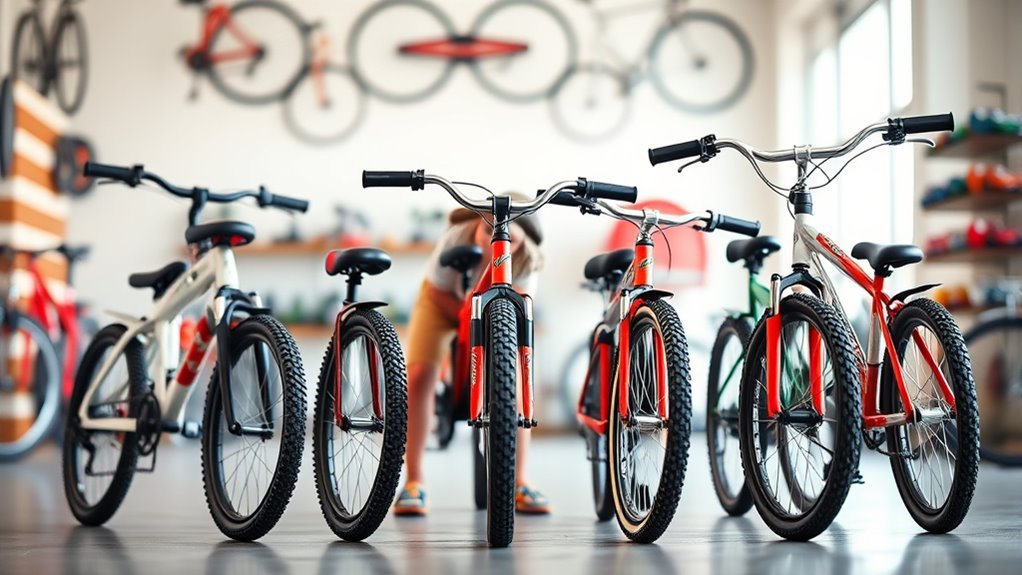
Start with the wheel: children’s bikes are sized by wheel diameter rather than frame measurements, and choosing 12″, 16″, 20″, 24″, or 26″ wheels should be driven by the child’s height, inseam, and confidence level rather than age alone. Use these measured ranges to match capability to equipment: 12″ suits 86–102 cm (ages 2–4), 16″ fits 99–117 cm (4–6), 20″ covers 114–132 cm (6–8), 24″ fits 130–150 cm (8–12), and 26″ works for 146–160 cm (12+). Prioritize inseam clearance and the rider’s comfort with balance techniques over nominal age bands. A confident child ready to pedal without training wheels can move up sooner; a cautious rider benefits from a lower standover for control. Always assess bike safety: proper reach, saddle height, and helmet fit. Choose size to expand mobility and freedom while keeping measurable safety margins.
- Measure height and inseam before shopping
- Match wheel to measured range
- Evaluate confidence, not just age
- Confirm standover and reach
- Check helmet and component fit
Tire Width & Profile: How Width Changes Comfort, Traction, and Clearance
Now that you’ve matched wheel diameter to height and confidence, the next sizing decision is tire width and profile, because they directly shape comfort, traction and whether the tire will even fit your frame. Choose width with intent: wider tires (2.2″–3″ on mountain bikes) increase contact patch and improve shock absorption, raising comfort levels on rough terrain and altering traction dynamics in corners and loose surfaces. Wider profiles also lower rolling resistance at moderate tire pressure compared with very narrow tires, so you won’t sacrifice speed for suppleness. However, verify frame and fork clearance—aim for at least 6 mm between tire and structure to prevent rubbing. On road bikes, 23–32 mm ranges are common; moving toward 25–28 mm often boosts comfort without meaningful speed loss on smooth roads. Match width to your terrain, desired handling characteristics, and the tire pressure you plan to run so your bike liberates you to ride faster, safer, and with more confidence.
Read Tire Sizes: ISO/ETRTO Made Simple
The ISO/ETRTO code tells you exactly what size tire will fit your rim: it’s two numbers—tire width (mm) and bead seat diameter (mm)—so you can match replacements without guesswork. Read the printed code (example: 58-622) to confirm tire compatibility with your rim’s bead seat diameter. ETRTO standards unify measurements across brands, so you won’t be misled by inch or nominal labels. Use ISO sizing to assert control over maintenance choices and avoid unsafe mismatches.
The ISO/ETRTO code (e.g., 58-622) specifies tire width and bead seat diameter for exact rim compatibility.
- 58-622 means 58 mm width on a 622 mm bead seat diameter rim (common for 29”).
- 700C road wheels use ISO 622; choose widths per clearance and comfort.
- 27.5” mountain bikes commonly use ISO 584; check before swapping sizes.
- ETRTO standards list both numbers; prioritize the bead diameter for compatibility.
- When replacing tires, match the second ISO number first, then select desired width for performance and clearance.
Frame & Fork Clearance: Will Bigger Wheels or Tires Fit?
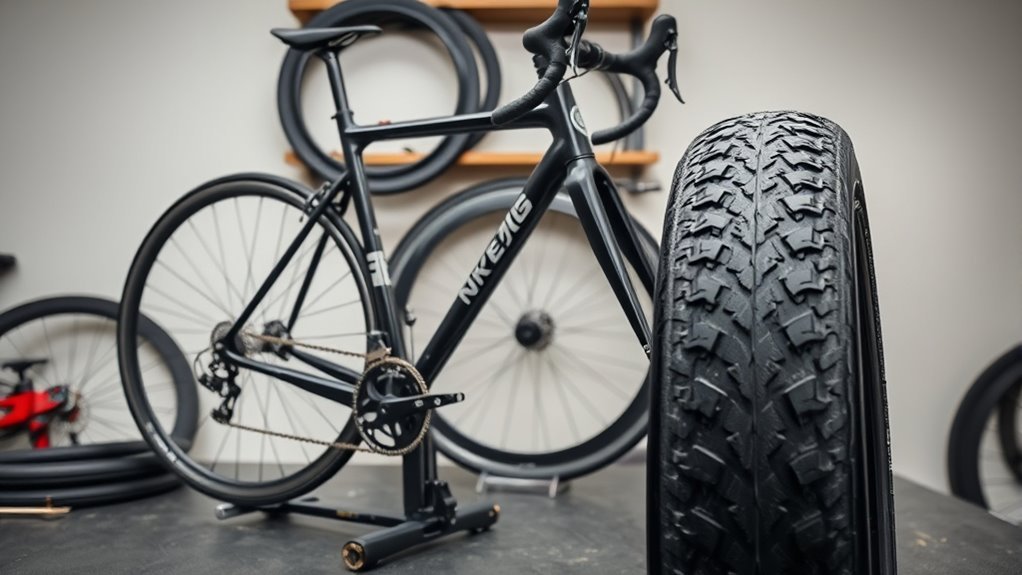
To verify whether larger wheels or tires will fit, measure clearance by spinning the wheel and recording the minimum gap between the tire shoulder and frame/fork at several points—aim for at least 6 mm of consistent clearance. Check your frame and fork specs (manufacturer maximum tire width/diameter and brake/fender limits) and compare those numbers to the ISO/ETRTO dimensions of the candidate tire. Remember that exceeding the listed limits can change geometry and handling, so validate fit with a test install before regular use.
Clearance Measurement Methods
If you want to fit larger wheels or tires, measure frame and fork clearance precisely and aim for at least 6 mm of space between the tire and any nearby frame or fork surface to prevent rubbing under load. Use proven clearance techniques and measurement tools: with the wheel centered, measure from the tire centerline to the closest frame or fork point using calipers or a ruler. Record outer diameter changes and verify brake and rotor clearance. Cross-check manufacturer maximum tire size specs. Assess standover impact before committing.
- Measure centerline-to-frame/fork distance with calipers for repeatable accuracy.
- Compare current and proposed tire outer diameters numerically.
- Inspect brake caliper and rotor proximity after measurement.
- Note manufacturer max tire size limits.
- Re-measure after installing mock-up tire.
Frame And Fork Limits
When you evaluate frame and fork limits, measure real clearances and compare them to the proposed tire outer diameter plus a 6 mm safety margin to guarantee no rubbing under load. You’ll verify frame compatibility by checking manufacturer maximum tire width/diameter and measuring actual gap at the chainstays, seatstays, and crown. Consider fork geometry changes when upgrading wheel size: larger diameter or wider tires can increase trail and alter handling, so quantify head angle and axle-to-crown shifts. Inspect brake type and mount—disc brake setups often provide greater clearance than rim brakes. Always test-fit the exact tire and wheel assembly before purchase to confirm safe operation. Use measured data to choose upgrades that expand your riding freedom without compromising control.
Buying Checklist & Troubleshooting: Test Rides, Rentals, and When to See a Shop
Anyone shopping for a new wheelset should never skip a test ride: you’ll confirm fit, handling, and comfort in real conditions rather than relying on specs alone. Use a controlled Test Ride to evaluate standover height (≥1″ clearance), reach, and handling across accelerations and cornering. If you can’t access multiple models, try Rental Options to compare wheel sizes, tire widths, and geometry on real roads.
- Verify at least 1″ standover clearance and neutral saddle-to-bar reach.
- Time a short loop to assess handling, braking, and comfort under load.
- Swap stem/spacers or saddle fore/aft to test simple fit adjustments.
- Rent a model with the wheel size you’re considering to compare rolling resistance and stability.
- Visit a local shop for a professional fitting when persistent discomfort or unclear measurements remain.
These steps let you choose wheels and setup that free you to ride efficiently, confidently, and without compromise.
Frequently Asked Questions
What Bicycle Wheel Size for My Height?
You’ll choose wheel size based on height: shorter riders take 12–16″, growing kids 20–24″, teens/adults 26″+. This height correlation guarantees bike fit, riding comfort, performance impact, terrain suitability, age considerations, and style preferences.
Conclusion
You’ll pick the right wheel like a data-driven mechanic: 700c for speed, 29″ for rollover, 27.5″ for nimble trails — and kids’ 12–26″ sized to height charts and confidence. Tire width trades grams for grip; ISO numbers tell you exact fit; frame clearance is non-negotiable. Don’t gamble—measure, test-ride, or consult a shop. Picture a ruler, calipers, and a stopwatch pointing at your bike; choose the numbers that make sense.
Related Articles
Valve Stem Length Guide for Deep Section Rim Wheels
I need to explain how to choose and extend valve stems for deep-section rims—discover which lengths, types, and tricks prevent leaks and broken cores.
Read More
How to Measure Wheel Rim Diameter Accurately at Home
Simple steps to measure wheel rim diameter accurately at home—learn the essential setup, measuring technique, and common pitfalls to avoid.
Read More
How to Measure Tire Width: Tools & Correct Method
Carefully measure tire width with the correct tools and setup, learn the step‑by‑step method and pitfalls to get accurate results—read on to avoid costly mistakes.
Read More