
How to Check and Test the TPMS Sensor on a Honda Accord
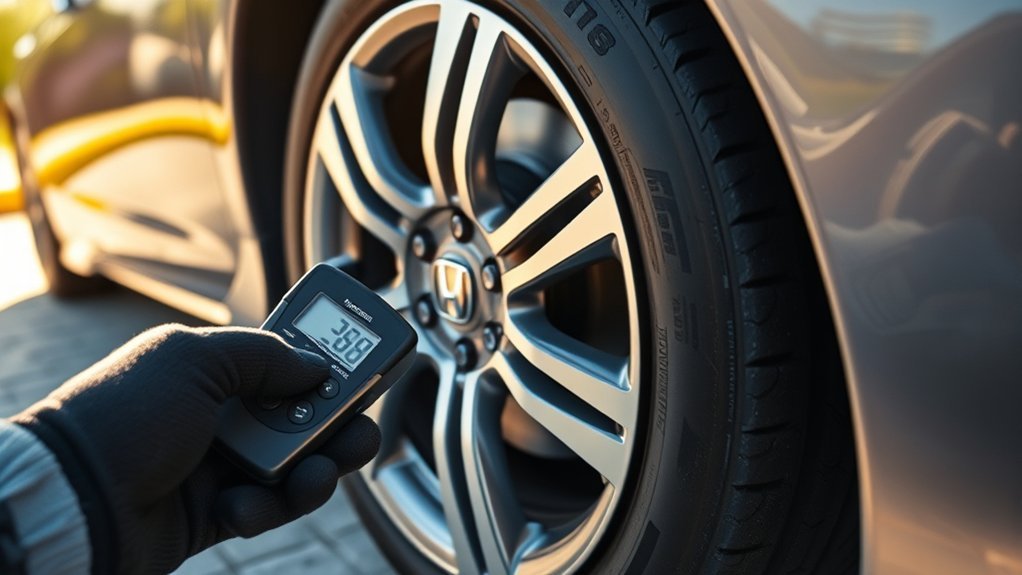
If your Honda Accord TPMS light is on, the right fix depends on the model year. Some older Accord models use tire-mounted pressure sensors, while many newer U.S. Accord models use an indirect TPMS that compares wheel rotation instead of measuring tire pressure inside each tire. Start with a cold tire-pressure check, then calibrate or diagnose the system based on which TPMS type your Accord has.
Quick Answer
To check a Honda Accord TPMS issue, measure all four regular tires with a reliable gauge when the tires are cold, inflate them to the driver-door placard pressure, then start TPMS calibration if your Accord uses indirect TPMS. For 2008–2012 direct-sensor models, a persistent TPMS malfunction usually needs a TPMS scan tool or professional diagnosis.
Key Takeaways
- Check tire pressure manually first. TPMS is a warning system, not a replacement for a tire gauge.
- Many 2013 and newer U.S. Honda Accord models use indirect TPMS, so there may be no tire-mounted TPMS sensor to test.
- A solid low tire pressure/TPMS light usually means low pressure or an incomplete calibration. A light that flashes first and then stays on points to a system malfunction.
- Start calibration only after all four regular tires are inflated to the recommended cold pressure.
- If the warning returns after correct pressure and calibration, inspect for leaks, mismatched tires, wheel-speed issues, or failed direct TPMS sensors on older models.
At a Glance
| Time Required | 5–10 minutes to check pressure; about 30 minutes of cumulative driving for indirect TPMS calibration |
| Difficulty | Easy for pressure checks and calibration; moderate if scan-tool diagnosis is needed |
| Tools Needed | Accurate tire pressure gauge, air compressor, owner’s manual, and TPMS scan tool only for direct-sensor diagnosis |
| Cost | Usually free if tires only need air; service cost varies if a tire leak, wheel-speed fault, or direct TPMS sensor failure is found |
Understanding Honda Accord TPMS: Direct vs. Indirect Systems

The first step is knowing which type of TPMS your Accord uses. Older U.S. Honda Accord models, such as the 2010 Accord, used a direct TPMS with a sensor at each tire valve stem. Honda’s 2010 Accord TPMS guide states that each tire valve stem contains a TPMS sensor.
Many newer U.S. Accord models use indirect TPMS. Honda’s current Accord owner information explains that the system does not directly measure pressure in each tire. Instead, it compares the rolling radius and rotational behavior of each wheel and tire while you drive. Honda also explains that indirect TPMS uses ABS wheel-speed sensors to detect a tire that has become significantly underinflated.
Note: If your Accord has indirect TPMS, there is usually no individual tire-mounted TPMS pressure sensor to test. You test the tires, confirm calibration, and diagnose the related vehicle systems if the warning remains.
TPMS is mainly designed to warn you about significant underinflation. It should not be used as a high-pressure warning system. Honda’s current Accord manual notes that the low tire pressure/TPMS indicator will not come on because of overinflation.
[Products Worth Considering]

EVOULTES heavy duty tire inflator with an integrated gauge delivers accurate pressure readings from 10–120 PSI, helping you inflate, deflate, and check tires in one tool. The 16.5-inch extended dual-head air chuck with swivel base reaches hard-to-access dual wheel valves on trucks and RVs. A brass trigger core and side-mounted air release valve make operation smooth, with standard 1/4" NPT threading and quick-connect compatibility for easy setup.

The AstroAI 2 pack air chucks provide a heavy-duty, closed-flow locking design that helps keep air flowing during inflation while securely attaching to the valve stem. Built with 250 PSI rated brass components and compatible with Schrader valves, they feature 1/4" female NPT threads for a wide fit with common inflators. The straight tip and locking clip make filling tires and monitoring pressure more convenient.

The JACO FlowPro Tire Inflator measures, inflates, and airs down tires up to 100 PSI with battery-free operation and ±2% accuracy after calibration. It features a glowing pressure dial for night visibility, a heavy-duty steel build with a hybrid hose, and a precision push-to-inflate thumb trigger. The patented Lightning Air Chuck locks on for a secure seal, and the kit includes quick-connect hardware for easy inline use with your air compressor.
Step 1: Check Cold Tire Pressure First
Before resetting, calibrating, or replacing anything, check the tire pressure manually. Use a quality tire pressure gauge on each valve stem and compare the reading with the recommended cold tire pressure on the driver-side door jamb placard. You can also confirm the specification in your owner’s manual.
- Park the Accord on level ground.
- Let the tires cool before checking pressure. A cold tire is one that has not been driven for several hours or has only been driven a short distance at low speed.
- Remove the valve cap and press the gauge firmly onto the valve stem.
- Inflate or release air until each regular tire matches the door-jamb placard pressure.
- Reinstall each valve cap and inspect the tire for nails, cuts, bulges, or uneven wear.
Check the spare tire manually if your Accord has one, but do not treat the spare as part of TPMS calibration. Honda notes that spare tires do not have TPMS.
Pro Tip: Use the pressure on the driver-door placard, not the maximum PSI printed on the tire sidewall. The sidewall number is not the normal recommended pressure for your Accord.
Step 2: Know What the TPMS Light Means
The warning pattern tells you where to start. A solid low tire pressure/TPMS indicator usually means one or more tires are significantly underinflated, the tire pressure changed with temperature, or an indirect TPMS calibration has not finished.
A TPMS indicator that flashes for about one minute and then stays on points to a TPMS malfunction. On older direct-sensor Accords, that can mean a failed sensor, weak sensor battery, damaged valve-stem sensor, or a registration/relearn issue. On newer indirect TPMS models, it may point to a calibration problem, mismatched tires, ABS/wheel-speed sensor issue, or another system fault.
Warning: Do not simply reset or calibrate the TPMS to turn the light off. Always correct tire pressure first and inspect for damage. Driving on an underinflated tire can cause overheating, poor handling, increased tire wear, and tire failure.
Step 3: Start TPMS Calibration on Indirect TPMS Accord Models
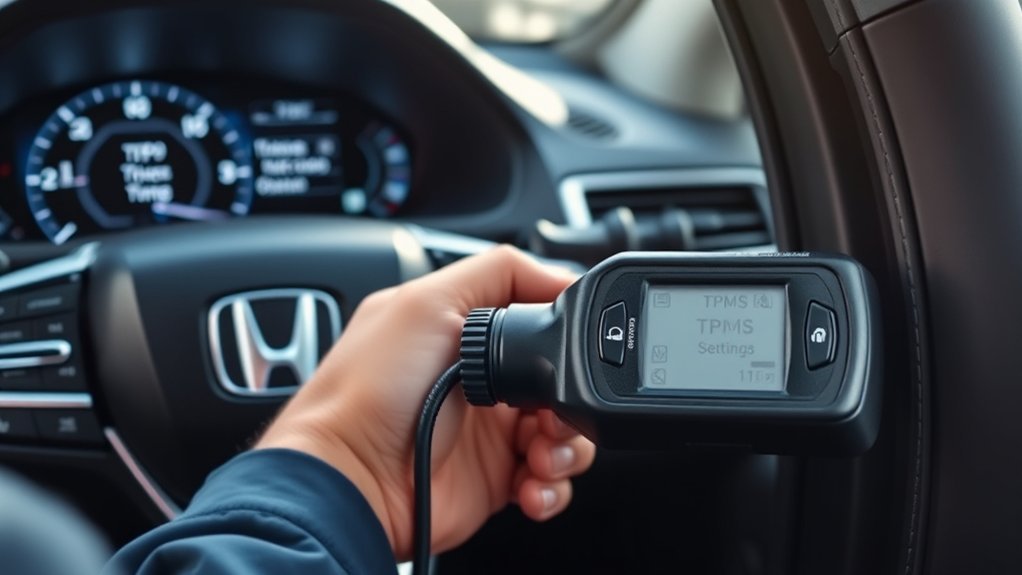
On many 2013 and newer U.S. Accord models with indirect TPMS, calibration is required after you adjust tire pressure, rotate tires, replace tires, or install wheels. Always set the cold tire pressure in all four regular tires before starting calibration.
Depending on your Accord’s year and display, the menu path may vary. Common Honda Accord calibration paths include:
- Touchscreen models: Select Settings, then Vehicle, then TPMS Calibration, then Calibrate.
- Driver Information Interface models: Use the steering-wheel selector to open Vehicle Settings, choose TPMS Calibration, then select Calibrate.
- Color audio display models: Use the menu/settings controls to find Vehicle and TPMS Calibration.
For calibration to start correctly, the vehicle should be stopped, the transmission should be in Park, and the power mode should be ON. If “Calibration Failed To Start” appears, confirm those conditions and select Calibrate again.
Step 4: Drive So Calibration Can Finish
After calibration starts, the process finishes automatically while you drive. Honda’s current Accord guidance calls for about 30 minutes of cumulative driving at 30–60 mph (48–97 km/h). It does not have to be one uninterrupted 30-minute trip, but the vehicle needs enough steady driving time to learn the tire characteristics.
During calibration, avoid conditions that can confuse the system, such as slippery roads, heavy uneven loads, tire chains, or a compact spare tire. Honda also notes that TPMS cannot be calibrated if a compact spare tire is installed.
How to Test Direct TPMS Sensors on 2008–2012 Accord Models
If your Accord is a 2008–2012 U.S. model with direct TPMS, each tire valve stem contains a sensor. You can still start with the same manual pressure check, but testing the actual sensor usually requires a TPMS scan tool.
- Check all tire pressures cold and adjust them to the door-jamb placard.
- Inspect each valve stem for cracks, corrosion, damage, missing caps, or signs of air leakage.
- Use a TPMS scan tool to trigger each wheel sensor and read the sensor ID, pressure, temperature, and battery/status data if supported.
- If a sensor does not respond, reads incorrectly, or shows a low battery/fault, the sensor may need replacement.
- After replacing a direct TPMS sensor, the new sensor ID may need to be registered or relearned with the vehicle using the correct service procedure.
If you do not have a TPMS scan tool, a tire shop or Honda service center can test each direct sensor without guessing which one failed.
[Products Worth Considering]

The Fanttik X10 Pro is a cordless portable tire inflator that reaches up to 150 PSI and can inflate an R15 tire in about 35 seconds for quick roadside or home top-ups. With AccuInFlate auto-stop and smart start/stop controls, it helps maintain accurate pressure and frees your hands once the target is reached. A high-visibility digital display and preset modes make it easy to set and monitor inflation for cars, motorcycles, bikes, and balls.
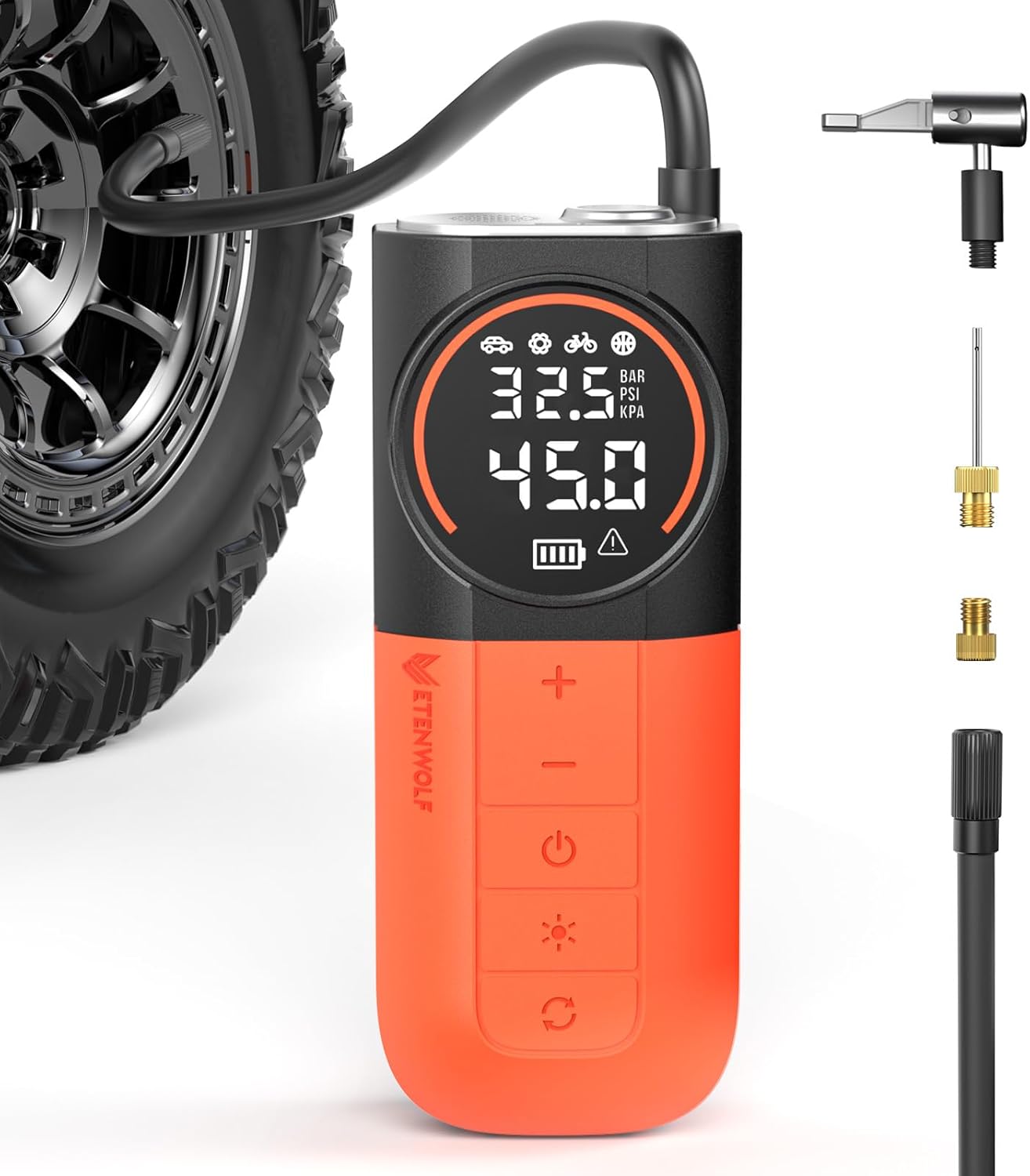
The ETENWOLF S1 cordless tire inflator delivers ultra-fast inflation with up to 160 PSI and a 20 L/min airflow for quicker tire top-offs. Its 5200mAh battery and cooling system support inflating many tires and sports balls on a single charge, while the digital pressure gauge and multi-unit display help you reach the right pressure accurately. With preset modes, pressure memory, an auto-stop feature, and an LED flashlight, it’s built for easy roadside and everyday use.
Troubleshooting a Honda Accord TPMS Light That Stays On
If the TPMS light comes back after you set the correct pressure, use the symptom to narrow the cause.
| Symptom | Likely Cause | What to Do |
|---|---|---|
| Solid TPMS/low tire light | Low tire pressure, temperature drop, slow leak, or calibration not completed | Check all tires cold, repair leaks, then calibrate if your Accord uses indirect TPMS. |
| Light flashes first, then stays on | TPMS malfunction | Scan the system. Older direct systems may have a failed sensor; indirect systems may have calibration, tire-size, ABS, or wheel-speed issues. |
| Light returns after tire rotation | Calibration was not started or did not finish | Set all four regular tires to cold placard pressure, start calibration, and drive long enough for learning to finish. |
| Light stays on with correct pressure | Mixed tire size/type, compact spare, tire chains, uneven load, direct sensor fault, or system fault | Remove temporary equipment, confirm matching tires, recalibrate if applicable, then have the vehicle checked if the light remains. |
| Tire looks low but no warning light appears | TPMS warning threshold has not been reached, pressure loss was rapid, or system cannot detect the condition yet | Trust the gauge and visual inspection. Inflate or repair the tire before driving. |
When to Consult a Professional for TPMS Troubleshooting

See a professional if the TPMS light stays on after you confirm correct cold tire pressure and complete calibration, or if the light flashes before staying on. A tire shop or Honda service center can check for leaks, damaged valve stems, mismatched tires, failed direct TPMS sensors, ABS/wheel-speed sensor problems, or stored diagnostic trouble codes.
Professional diagnosis is especially useful after tire replacement, wheel replacement, sensor replacement, collision damage, or repeated false warnings. Replacing parts without confirming whether your Accord has direct or indirect TPMS can waste money and leave the warning light unresolved.
Frequently Asked Questions
What are common TPMS problems on Honda Accords?
Common Honda Accord TPMS problems include low tire pressure, slow leaks, temperature-related pressure drops, incomplete calibration, mixed tire sizes, compact spare use, tire chains, and system malfunctions. On 2008–2012 direct TPMS models, a failed valve-stem sensor or weak sensor battery can also trigger a TPMS malfunction.
How long do Honda Accord TPMS sensors last?
It depends on the system. Older direct TPMS sensors are sealed electronic parts and are usually replaced when their battery or transmitter fails. Many newer Accord models use indirect TPMS, so there are no tire-mounted TPMS pressure sensor batteries to replace. Always confirm your model year and system type before buying sensors.
Can I test a Honda Accord TPMS sensor without a scan tool?
You can test the basics without a scan tool by checking cold tire pressure, inspecting valve stems, looking for leaks, and completing calibration on indirect TPMS models. To test an actual direct TPMS wheel sensor, you normally need a TPMS scan tool that can trigger and read sensor data.
Does a Honda Accord TPMS show exact tire pressure?
Many Accord models with indirect TPMS do not show exact PSI for each tire because the system is not directly measuring pressure inside each tire. Use a tire pressure gauge for exact readings and follow the recommended cold pressure on the driver-door placard.
Why did the TPMS light come on after rotating tires?
On indirect TPMS models, tire rotation changes the wheel and tire characteristics the system has learned. Set all four regular tires to the correct cold pressure, start TPMS calibration, and drive at normal speeds long enough for calibration to finish.
Conclusion
Testing the TPMS on a Honda Accord starts with a simple tire-pressure gauge, not a reset button. Set all four regular tires to the correct cold pressure, identify whether your Accord uses direct or indirect TPMS, and follow the correct calibration or diagnostic path for that system. If the light flashes, returns repeatedly, or stays on after proper pressure and calibration, have the vehicle checked before assuming a sensor replacement will solve it.
Sources
- Honda 2025 Accord Owner’s Manual: Tire Pressure Monitoring System — backs indirect TPMS operation, calibration requirements, and 30–60 mph calibration driving.
- Honda 2022 Accord Tire Pressure Monitoring System PDF — backs cold-pressure setup, calibration timing, and federal TPMS malfunction wording.
- Honda 2010 Accord TPMS Guide — backs direct TPMS valve-stem sensor information for older Accord models.
- Honda Information Center: Indirect Tire Pressure Monitoring System — backs ABS wheel-speed sensor operation and spare-tire TPMS note.
- NHTSA TireWise: Tire Safety — backs cold tire-pressure checking and use of the vehicle placard pressure.
- 49 CFR §571.138: Tire Pressure Monitoring Systems — backs federal TPMS purpose, underinflation warning requirements, and malfunction-telltale requirements.

Related Articles
How Tall Is a 305 70 R17 Tire? Exact Height, Width & Dimensions
Curious how tall a 305 70 R17 tire really is—and whether it fits your truck?
Read More
Can-Am Defender Tire Size Guide: Stock Specs & Upgrade Options
Just how big can you go on a Can-Am Defender before mods become necessary?
Read More
How Tall Is a 275 65 20 Tire? Exact Height, Width & Dimensions
Check the exact height, width, and hidden fitment effects of a 275/65R20 tire before you buy or upgrade.
Read More