
What Happens if You Dont Regear a Toyota Tacoma With Bigger Tires
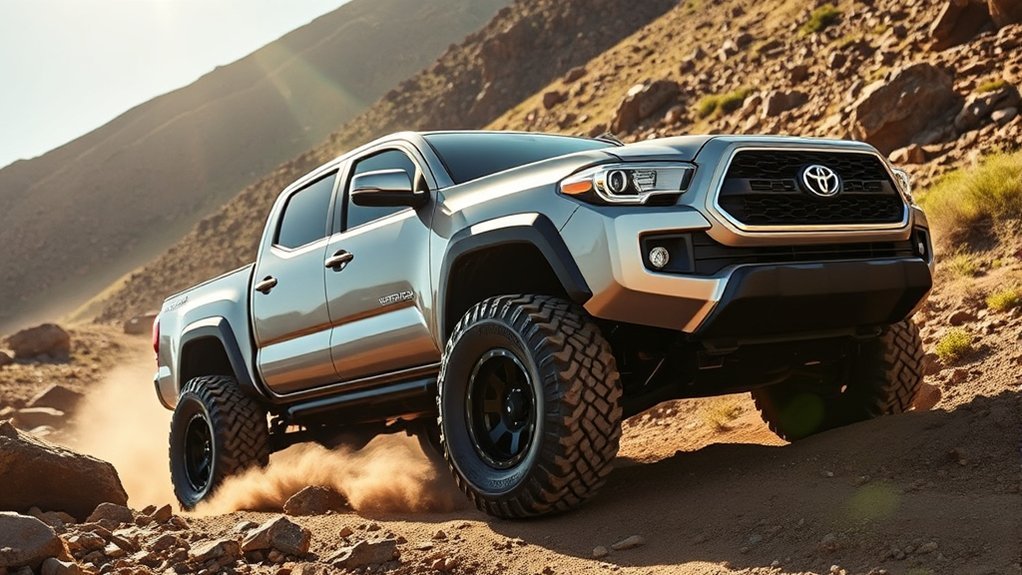
Installing larger tires changes more than your Toyota Tacoma’s appearance and ground clearance. The added diameter changes the truck’s effective gearing, while extra tire and wheel weight can affect acceleration, shifting, braking, and fuel use. Whether you need to regear depends on your exact Tacoma, tire change, driving conditions, and performance goals.
Quick Answer
You can drive some Tacomas with larger tires without regearing, especially when the diameter increase is modest and the truck still shifts and accelerates normally. Regearing becomes more useful when you experience gear hunting, weak hill performance, poor towing response, difficult low-speed control, or a major increase in tire diameter and weight.
Key Takeaways
- Larger tires lower the effective numerical gear ratio, reducing mechanical leverage at the wheels.
- Regearing is not automatically required for every Tacoma or every tire-size increase.
- Your engine, transmission, factory axle ratio, tire weight, terrain, towing use, and added vehicle weight all affect the decision.
- Regearing can improve acceleration, shifting, towing response, and low-speed control, but it cannot remove tire weight or rolling resistance.
- Four-wheel-drive Tacomas must use matching front and rear differential ratios.
What Larger Tires Do to Your Tacoma’s Gearing
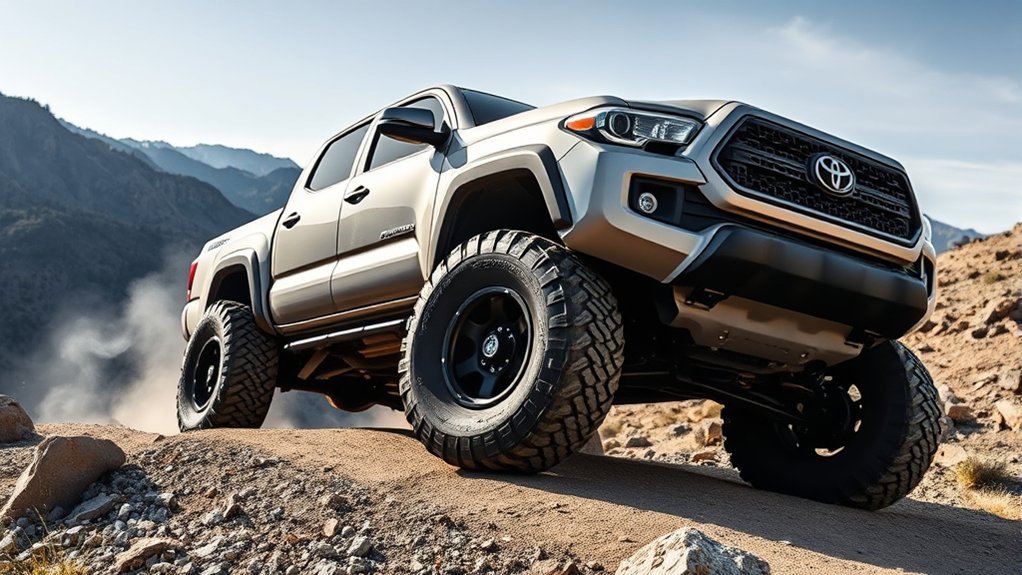
A larger tire travels farther with each revolution. That effectively makes the axle gearing taller, even though the ring-and-pinion gears have not changed. The engine turns fewer revolutions for a given road speed, but it also has less mechanical leverage to accelerate the truck.
You can estimate the change with this formula:
Effective ratio = current axle ratio × original tire diameter ÷ new tire diameter
For example, suppose a Tacoma had a 3.91 axle ratio and moved from a 32-inch tire to a 35-inch tire. Its new effective ratio would be approximately:
3.91 × 32 ÷ 35 = 3.57
The truck would respond as though it had roughly a 3.57 ratio with its original tires. This is only a mathematical example. It does not mean every Tacoma has a 3.91 ratio or that every truck using 35-inch tires needs the same replacement gears.
Tire diameter changes the effective gearing, while tire and wheel weight create an additional performance penalty that a ratio calculation alone cannot measure.
[Products Worth Considering]

Upgrade your Toyota tire setup with these corrosion-resistant, leak-proof valve stem caps designed to help protect the valve core from water, snow, and road grime. The caps feature a snug rubber seal and durable copper alloy construction to resist rust and oxidation while maintaining stable tire pressure. Ideal for replacing worn original caps and keeping your wheels looking clean and stylish.

Universal magnetic jack pad with aluminum grooved design to protect vehicle pinch welds during lifting. Durable nylon pad inserts are upgraded and secured with screws to resist damage and keep in place. Designed to fit most single vehicle pinpoint welds for safer, stable jacking when changing tires, repairs, or performing oil changes.

Camco Trailer Aid Plus tandem tire ramp lifts your trailer for quick, safe tire changes with ample clearance from its 5 1/2-inch lift. It helps you change a flat tire without unloading cargo, making roadside and routine maintenance more efficient. The heavy-duty, waterproof and rustproof polymer design supports up to 15,000 lb and is built for easy portability and storage.
Do You Actually Need to Regear Your Tacoma?
You do not automatically need to regear because your tires are larger than stock. A Tacoma with a small diameter increase, light tires, moderate terrain, and acceptable shifting may remain perfectly usable with its factory gears.
The case for regearing becomes stronger when several of the following conditions apply:
- You made a large jump in overall tire diameter.
- The replacement tires and wheels are substantially heavier.
- You regularly tow, haul, or carry camping equipment, armor, bumpers, and other accessories.
- You drive in mountains, at higher elevations, or on steep highways.
- You need controlled low-speed power for rocks, sand, mud, or technical trails.
- Your automatic transmission frequently changes gears to hold speed.
- Your manual-transmission Tacoma needs noticeably more clutch work to start moving.
- The truck struggles to merge, pass, or maintain speed under conditions it previously handled well.
Tacoma generations and configurations use different engines, transmissions, tire sizes, and driveline systems. The redesigned fourth-generation Tacoma, for example, introduced turbocharged and hybrid powertrains as well as an eight-speed automatic. You should therefore base the decision on your exact model rather than a universal tire-size rule.
Note: Verify your existing axle ratio, original tire size, replacement tire diameter, transmission, drivetrain, and intended use before choosing gears. A ratio that works well for a trail-focused truck may feel unnecessarily aggressive on a lightly modified highway commuter.
Signs Your Tacoma May Benefit From Regearing
Performance changes after a tire upgrade can help you decide whether the factory gearing is still suitable. Compare the truck’s behavior before and after the modification instead of judging it by tire size alone.
| Possible Sign | What It May Indicate | What Else to Check |
|---|---|---|
| Slower acceleration | Reduced mechanical leverage and greater rotating mass | Tire weight, pressure, alignment, brake drag, engine condition |
| Frequent gear hunting | The transmission cannot hold the desired road speed efficiently | Transmission condition, fluid temperature, terrain, headwind, vehicle load |
| Weak hill or towing performance | The effective ratio may be too tall for the load | Payload, trailer weight, tire pressure, cooling system, towing limits |
| More clutch work when starting | A manual-transmission truck has less leverage at low speed | Clutch wear, driving technique, added weight, steep grades |
| Poor low-speed trail control | The truck needs more throttle to move over obstacles | Transfer-case range, tire pressure, traction, suspension setup |
| Higher fuel use | Added rolling resistance, weight, aerodynamic drag, or inefficient shifting | Driving speed, tread design, pressure, roof accessories, alignment |
None of these symptoms proves that gears are the only problem. Low tire pressure, aggressive tread, heavy wheels, poor alignment, worn drivetrain components, extra cargo, and mechanical faults can produce similar results.
How Larger Tires Affect Your Driving Experience
Acceleration and Passing
Taller effective gearing reduces torque multiplication at the wheels. You may need more throttle to leave a stop, enter traffic, or pass at highway speed. Heavy tires can make the change feel greater because the engine must accelerate more rotating mass.
Automatic-Transmission Shifting
An automatic transmission may downshift more often on hills, into headwinds, or while towing. Occasional downshifting is normal. Repeated hunting between gears under conditions the truck previously handled comfortably suggests that the overall setup may be too demanding for the factory ratio.
Manual-Transmission Clutch Use
A manual Tacoma may require more throttle and clutch slip to start on an incline or move a heavy load. Regearing can restore low-speed leverage, but it will not repair an already worn or slipping clutch.
Towing and Hill Performance
Larger tires do not increase Toyota’s published payload, axle, or towing limits. They can make it harder to hold speed because the engine operates with less mechanical advantage. Regearing may improve response, but you must still follow the limits for your exact truck.
Off-Road Control
Lower overall gearing helps the truck move slowly with less throttle. That can improve control on rocks, steep climbs, sand, and other technical terrain. Tire pressure, traction, suspension travel, and transfer-case gearing remain equally important.
Fuel Economy
Fuel economy does not drop to one predictable number. Larger tires may increase rolling resistance, rotating mass, frontal area, and aerodynamic drag. Taller gearing can also lower cruising RPM, so the final result depends on tire design, speed, terrain, transmission behavior, load, and driving style.
The U.S. Environmental Protection Agency notes that tire construction and rolling resistance influence how much energy a vehicle uses. Regearing may recover some drivability, but it cannot eliminate the tire’s weight, tread losses, or aerodynamic effects.
Speedometer, Odometer, and TPMS Considerations
A taller tire travels farther per revolution. Unless the vehicle is recalibrated, the displayed speed and recorded distance may differ from the truck’s actual speed and travel. The amount of error generally follows the percentage change in tire diameter.
For example, moving from a true 32-inch tire to a true 35-inch tire increases diameter by about 9.4 percent. At an indicated 60 mph, the actual speed could be approximately 65.6 mph if no system compensates for the change.
Toyota also identifies tire-size changes as a condition that can require tire-pressure warning system initialization on applicable 2024 Tacoma models. Follow the owner’s manual for your exact model year, and confirm whether additional calibration is supported or required.
Warning: Do not rely on an unverified speedometer after a major tire-size change. Confirm the error with suitable diagnostic or GPS-based equipment and have supported vehicle settings corrected by a qualified technician.
What It Can Cost If You Do Not Regear
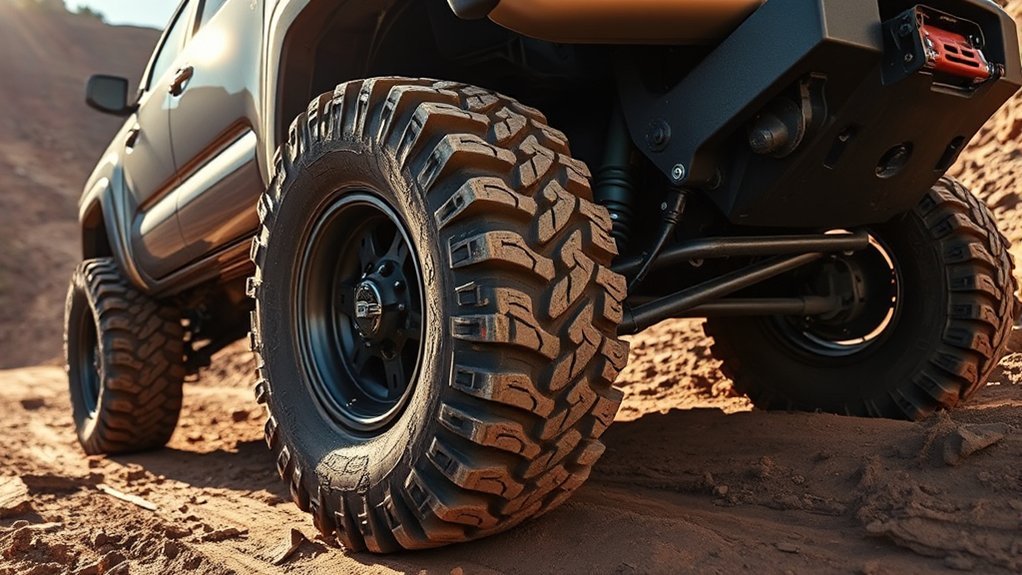
Not regearing does not guarantee a mechanical failure. However, an unsuitable effective ratio can make the engine and transmission work harder during acceleration, towing, hill climbing, and repeated speed changes.
Possible long-term costs include:
- Higher fuel use caused by frequent downshifting or heavier throttle input
- Extra automatic-transmission heat during demanding operation
- More clutch use on manual-transmission models
- Faster wear when the truck is routinely overloaded or operated at high temperatures
- Diagnostic costs when drivability problems are mistaken for engine or transmission faults
- The eventual cost of regearing after first paying for other modifications that did not solve the problem
Larger tires can also increase stress on brakes, wheel bearings, steering components, and suspension parts because of their size, leverage, and weight. Regearing does not remove those loads, so it should not be treated as a complete solution to every effect of oversized tires.
How to Calculate a Starting Gear Ratio
You can estimate the ratio that restores approximately the original engine speed with this formula:
Estimated replacement ratio = current axle ratio × new tire diameter ÷ original tire diameter
Using the earlier example:
3.91 × 35 ÷ 32 = 4.28
A nearby commercially available ratio might restore engine speed close to the original setup. However, the mathematically closest ratio is not automatically the best choice. A heavy trail truck, towing setup, or mountain-driven Tacoma may benefit from a numerically higher ratio, while a lightly loaded highway truck may not.
Pro Tip: Use the tire manufacturer’s measured diameter or revolutions-per-mile specification when available. A tire labeled 35 inches may not measure exactly 35 inches when mounted, loaded, and inflated.
[Products Worth Considering]

Secure your trailer or RV tires with a scissor-style wheel chock stabilizer that applies opposing force to help prevent wheel shift. It fits tight wheel gaps from 3.5 inches up to 12 inches and works for travel trailers, campers, fifth wheels, toy haulers, and heavy-duty trucks. The surface uses new electrophoretic technology to help prevent rust for reliable travel use.

Camco’s RV wheel chocks with an attached rope help keep your travel trailer securely in place for safer unhitching or parking. This 2-pack is compatible with wheels up to 26-inch diameter and features durable UV-resistant construction for reliable outdoor performance. The rope enables quick, safe removal so you can prepare for your next trip with less hassle.
Choosing the Correct Ratio for Your Tacoma
A drivetrain specialist should consider the complete vehicle rather than selecting gears from tire diameter alone. Useful information includes:
- Model year, engine, transmission, trim, and drivetrain
- Verified front and rear axle type
- Current axle ratio
- Original and replacement tire diameter
- Actual tire and wheel weight
- Normal cruising speed and desired engine RPM
- Towing and payload requirements
- Terrain, elevation, and off-road use
- Added bumpers, sliders, armor, camper equipment, or recovery gear
The technical guidance from Yukon Gear & Axle likewise identifies tire size, transmission ratio, cruising RPM, stock ratio, and intended use as core ratio-selection variables.
Special Requirement for Four-Wheel Drive
A four-wheel-drive Tacoma must have matching front and rear differential ratios. Regearing only one axle can cause driveline binding and serious damage when four-wheel drive is engaged.
Ring-and-pinion work also requires precise backlash, bearing preload, pinion depth, fastener torque, and tooth-contact pattern. Incorrect setup can cause noise, overheating, rapid wear, or gear failure.
Warning: Differential regearing is not a basic bolt-on modification. Use a technician experienced with your Tacoma’s specific axles, lockers, sensors, and four-wheel-drive system. Follow the gear manufacturer’s break-in, fluid, and inspection instructions.
What Regearing Will Not Fix
Regearing can restore mechanical leverage, but it cannot correct every problem created or exposed by a tire upgrade. It will not fix:
- Tire rubbing against the body, frame, suspension, or brake lines
- Incorrect wheel offset or insufficient suspension clearance
- Weak braking caused by added tire and wheel mass
- Poor alignment, vibration, or unbalanced tires
- Excessive tread noise or rolling resistance
- Incorrect tire pressure or inadequate load capacity
- Speedometer error unless calibration is performed separately
- A worn engine, transmission, clutch, driveshaft, bearing, or differential
Diagnose these concerns separately. Otherwise, you may spend money on gears and still have the same vibration, rubbing, braking, or fuel-economy problem.
How Not Regearing May Affect Your Tacoma’s Longevity
A Tacoma that drives normally with a modest tire-size increase may not suffer meaningful damage simply because it retains its factory gears. The risk becomes more significant when the truck regularly struggles, hunts between gears, runs unusually hot, tows heavily, or requires excessive clutch work.
Continued high-load operation can contribute to additional heat and wear, especially when combined with poor maintenance, excessive payload, steep terrain, or existing mechanical problems. Watch for warning lights, abnormal temperatures, fluid odors, slipping, vibration, or new drivetrain noises.
Do not assume an overheating engine or transmission is a normal result of larger tires. Stop demanding operation and diagnose the cooling, lubrication, transmission, or drivetrain system if temperatures become abnormal.
Frequently Asked Questions
Do I need to regear for bigger tires?
Not always. A modest increase may work acceptably with factory gears. Regearing becomes more useful when larger or heavier tires cause weak acceleration, frequent downshifting, poor towing response, or difficult low-speed control.
Do I need to regear my Tacoma?
Base the decision on your model year, engine, transmission, factory ratio, tire diameter, tire weight, added vehicle weight, terrain, and use. If the truck still performs well and stays within normal temperatures, regearing may remain optional.
Can I run 33-inch tires on a Tacoma without regearing?
Many setups can, but the 33-inch label alone does not answer the question. Compare the tire’s actual diameter and weight with the original tire, then evaluate shifting, acceleration, towing, terrain, and any added vehicle weight.
What gear ratio do I need for 35-inch tires?
No single ratio fits every Tacoma. Calculate a starting point by multiplying the current axle ratio by the new tire diameter and dividing by the original tire diameter. Then adjust for the transmission, vehicle weight, cruising RPM, towing, terrain, and off-road goals.
Will regearing improve my Tacoma’s fuel economy?
It may reduce gear hunting and heavy throttle use, but an MPG improvement is not guaranteed. Tire weight, tread, rolling resistance, aerodynamics, speed, terrain, and driving style continue to affect fuel consumption after regearing.
Do both differentials need to be regeared on a 4WD Tacoma?
Yes. The front and rear axle ratios must match on a four-wheel-drive Tacoma. Regearing only one axle can create incompatible wheel speeds and damage the driveline when four-wheel drive is used.
Conclusion
Not regearing your Tacoma after installing larger tires does not automatically cause drivetrain failure. You may, however, experience weaker acceleration, more frequent shifting, reduced towing response, and poorer low-speed control if the new effective ratio no longer suits the truck.
Start with your actual factory ratio and measured tire diameters. Then consider tire weight, transmission, vehicle load, terrain, and driving goals. If the truck regularly struggles under conditions it previously handled well, a properly selected and professionally installed gear ratio can restore much of its lost mechanical leverage.
Sources
- Toyota 2024 Tacoma Owner’s Manual: Maintenance Data — factory tire sizes, pressures, wheel specifications, and differential-fluid information.
- Toyota 2024 Tacoma Owner’s Manual: Items to Initialize — TPMS initialization after changes involving tire size or inflation settings.
- Toyota USA Newsroom: 2024 Tacoma Powertrains and Drivetrains — fourth-generation engine, transmission, hybrid, and 4WD configuration differences.
- Yukon Gear & Axle Technical FAQs — gear-ratio selection variables and the effects of larger tires on effective gearing.
- Yukon Gear & Axle: Selecting the Right Gear Ratio — intended use, tire size, load, transmission, and performance considerations.
- U.S. Environmental Protection Agency: Vehicle Efficiency — tire rolling resistance and its effect on energy use and fuel economy.

Related Articles
How Tire Weight Affects Toyota Tacoma Performance
How does tire weight influence your Toyota Tacoma's performance and efficiency? Discover the surprising effects that could change your driving experience.
Read More
Tire Noise Levels by Tire Type on a Toyota Tacoma
A comprehensive look at how tire types affect noise levels in your Toyota Tacoma reveals surprising insights that could enhance your driving experience.
Read More
How To Choose Tires for a Dual Use Toyota Tacoma
Unlock the secrets to selecting the perfect tires for your dual-use Toyota Tacoma, ensuring optimal performance and comfort on every adventure. Discover more inside!
Read More