
Pros and Cons of Running 33s on a Toyota Tacoma
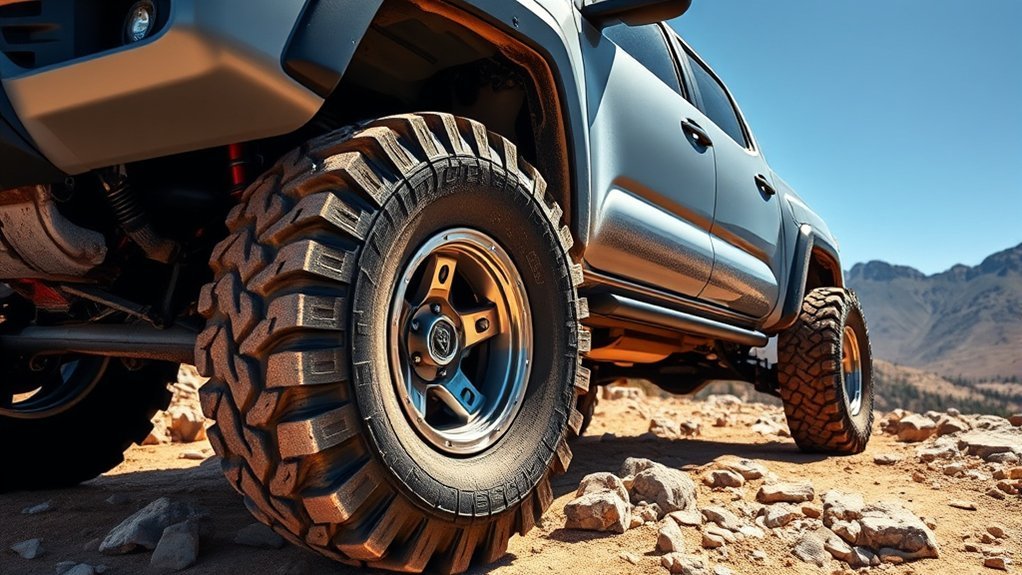
Running 33-inch tires on a Toyota Tacoma can improve trail clearance and give the truck a wider, more aggressive stance. However, “33-inch” does not describe one universal fitment. Your Tacoma’s model year, trim, wheel specifications, exact tire dimensions, suspension, and intended use determine whether the tires fit safely or rub during steering and suspension movement.
Quick Answer
Most Toyota Tacomas can run a tire close to 33 inches, but fitment is not universal. Your model year, trim, wheel width, offset, tire construction, and suspension determine whether it rubs. A lift may create space, yet it does not guarantee clearance at full steering lock or suspension compression.
Key Takeaways
- A 33-inch label is approximate. Actual inflated diameter and width vary by tire model, load range, and measuring rim.
- The 2024-and-newer Tacoma TRD Pro and Trailhunter use factory 33-inch tires with supporting suspension, wheel, and clearance changes.
- Other Tacoma trims may need changes to wheel offset, caster, liners, mud flaps, suspension, or body clearance.
- A lift does not automatically prevent rubbing when the wheels are turned or the suspension is compressed.
- Check load capacity, approved rim width, tire pressure, alignment, TPMS operation, speedometer accuracy, and spare-tire fitment.
- Fuel economy, acceleration, braking feel, and transmission behavior can change, but the amount depends on the complete setup.
At a Glance
| Time Required | Allow one to two hours for research, measurements, and a professional fitment inspection. Installation takes longer when suspension or clearance work is required. |
| Difficulty | Intermediate to advanced. Professional mounting, balancing, alignment, and clearance testing are recommended. |
| Tools Needed | Tape measure, tire specifications, wheel specifications, torque wrench, suitable lifting equipment, alignment equipment, and a safe method for checking suspension compression. |
| Cost | Varies widely. Tires, wheels, suspension components, alignment, trimming, calibration, and labor are separate costs. |
Note: Use the tire and loading label on the driver-side door area and the owner’s manual as your starting point. A tire shop should confirm that the replacement tire’s load capacity, speed rating, approved rim-width range, and cold inflation pressure are suitable for your exact truck.
What Counts as a 33-Inch Tire?
A tire described as a “33” may use either a flotation size, such as 33×12.50R17, or a metric size whose calculated diameter is close to 33 inches. The number is not always the tire’s exact mounted diameter. Tread design, load range, inflation pressure, wheel width, and manufacturer specifications can change the final measurement.
For metric tires, you can estimate diameter with this formula:
Estimated diameter in inches = wheel diameter + 2 × sidewall height in inches
The sidewall height is the tire width multiplied by the aspect ratio. Because published dimensions are measured under controlled conditions, check the tire manufacturer’s specification sheet before purchasing.
| Common Size | Approximate Calculated Diameter | Important Fitment Consideration |
|---|---|---|
| 285/75R16 | About 32.8 inches | Wide section width may contact liners, mud flaps, suspension parts, or the cab mount. |
| 285/70R17 | About 32.7 inches | A common near-33-inch option, but actual diameter, weight, and width vary by tire. |
| 275/70R18 | About 33.2 inches | Narrower than a 285 in nominal width, but wheel offset and tire shape still affect clearance. |
| 255/85R16 | About 33.1 inches | The narrower profile may help in some clearance areas, but suitable products and load ratings are limited. |
| 33×12.50R17 | Manufacturer-specific | The 12.5-inch nominal width often creates more clearance challenges than a narrower metric tire. |
These sizes are examples, not universal fitment recommendations. Verify the exact tire’s inflated diameter, width, approved rim range, load index, and weight before deciding.

Upgrade your 2024-2026 Tesla Model 3 Highland with REEVAA all-weather mud flaps designed for seamless fit along the original body lines. The set of four delivers strong splash protection against mud, gravel, and road debris while using OEM-grade durable materials. Installation is non-destructive with original hole positions and snap-in clips, and the aerodynamic design helps minimize impact on efficiency.

Universal magnetic jack pad with aluminum grooved design to protect vehicle pinch welds during lifting. Durable nylon pad inserts are upgraded and secured with screws to resist damage and keep in place. Designed to fit most single vehicle pinpoint welds for safer, stable jacking when changing tires, repairs, or performing oil changes.

Adam’s Pro Tire Hex Grip applicators are molded foam sponges designed for precise, even tire dressing application. The ergonomic grip helps you spread product without overapplying, reducing sling that can splash onto paint and helping keep your hands clean during wheel and trim detailing. They’re durable, washable, and reusable for repeated detailing sessions.
Will 33-Inch Tires Fit a Toyota Tacoma?
Some Tacomas can use 33-inch tires with minimal changes, while others need wheels, suspension work, liner adjustments, or more extensive clearance modifications. The answer depends on the truck rather than the diameter alone.
Factory 33-Inch Tacoma Models
Toyota equips the fourth-generation Tacoma TRD Pro and Trailhunter with factory 33-inch Goodyear Territory R/T tires. These trucks also receive model-specific suspension, control arms, track width, wheel specifications, and body clearance. A lower trim does not automatically gain the same fitment simply by installing the same advertised tire size.
You can review Toyota’s factory configuration in the 2024 Tacoma technical overview.
Second- and Third-Generation Tacoma Fitment
On 2005–2023 Tacomas, a near-33-inch tire may contact the front fender liner, mud flap, body or cab mount, upper control arm, sway bar, or bumper area. The result changes with tire width, wheel offset, backspacing, alignment settings, ride height, and how far the suspension compresses.
A truck that clears during normal street driving can still rub while reversing at full steering lock, crossing a driveway at an angle, or compressing a wheel on a trail. Test the complete range of movement before considering the setup finished.
Fourth-Generation Non-Factory Fitment
For 2024-and-newer models that did not come with factory 33s, confirm compatibility with the exact suspension type, wheel package, trim, and driver-assistance equipment. The fourth-generation Tacoma uses different suspension and chassis configurations across its grades, so third-generation fitment advice should not be reused without verification.
Warning: Do not rely on lift height or online photos alone. Check clearance at full left and right steering lock and through controlled suspension compression. Structural cutting, body-mount changes, steering interference, or tire contact with brake and suspension parts should be evaluated by a qualified shop.
Benefits and Drawbacks of Installing 33-Inch Tires
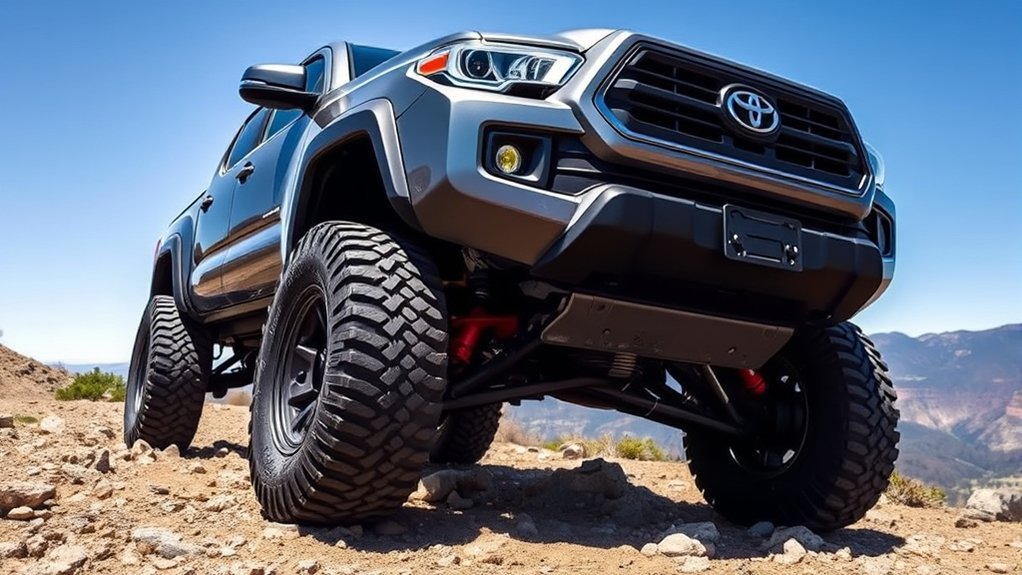
Potential Benefits
- More differential clearance: Increasing tire diameter raises the axle centerline. The clearance increase is approximately half the difference between the old and new tire diameters.
- Improved obstacle rollover: A larger radius can help the tire roll over rocks, ledges, ruts, and trail edges.
- More sidewall options: Pairing a larger tire with a suitable wheel can provide useful sidewall height for airing down off-road.
- Improved flotation: A wider tire at an appropriate pressure may spread the truck’s weight across a larger area on sand or other soft surfaces.
- More aggressive appearance: The larger tire can fill the wheel opening and create a more trail-focused stance.
Potential Drawbacks
- Rubbing: The tire may contact liners, mud flaps, body mounts, suspension components, or the bumper.
- Slower acceleration: A larger effective tire radius reduces torque multiplication at the road surface.
- Different transmission behavior: Automatic transmissions may hold gears differently or downshift more often on grades.
- Higher rotating mass: Heavier tires and wheels require more energy to accelerate and control.
- Reduced fuel economy: Wider tread, aggressive patterns, increased weight, aerodynamics, and rolling resistance may increase fuel use.
- Longer or less consistent braking feel: Added rotating mass and leverage can change how the truck responds under braking.
- Speedometer and odometer error: A larger circumference travels farther per wheel revolution unless the vehicle is recalibrated.
- More steering and suspension wear: Very heavy or aggressively offset combinations can increase loads on bearings, steering parts, bushings, and ball joints.
- Spare-tire problems: The larger spare may not fit the original storage location, and using a much smaller spare can create drivetrain concerns.
Regular balancing, alignment checks, inspections, and tire rotations help control irregular wear. Use the rotation pattern and interval specified for your Tacoma and tire configuration.
A larger tire only adds half of its diameter increase as axle clearance. Replacing a 31.6-inch tire with a 32.7-inch tire raises the axle by roughly 0.55 inch, not a full 1.1 inches.
How to Plan a Safe 33-Inch Tire Setup
- Identify the exact truck configuration. Record the model year, trim, engine, drivetrain, cab, bed length, current suspension, and factory tire size.
- Read the tire and loading label. Note the original size, load requirements, and recommended cold inflation pressure.
- Select an exact tire model. Do not shop by “33-inch” diameter alone. Check the manufacturer’s actual diameter, width, weight, load index, speed rating, approved rim-width range, and construction.
- Confirm wheel compatibility. Match wheel diameter and width to the tire’s approved range. Verify offset, backspacing, brake clearance, hub fit, lug-seat style, and wheel load rating.
- Compare complete assembly weight. Weigh or research the original and replacement wheel-and-tire assemblies. The added weight is the difference between them, not the total weight of the new setup.
- Test static steering clearance. Turn the steering fully left and right while checking the liner, mud flap, frame, sway bar, upper control arm, brake hose, and bumper areas.
- Test suspension compression safely. A qualified shop should check clearance while each front wheel moves through compression and steering travel.
- Choose only the modifications that are necessary. Options may include alignment changes, liner reshaping, mud-flap adjustment, compatible wheels, upper control arms, or a properly engineered suspension system.
- Mount and balance all tires. New tires should be professionally balanced, and the wheels should use the correct hardware and torque procedure.
- Perform an alignment. Set caster, camber, and toe within appropriate specifications while preserving tire and body clearance.
- Set pressure for the actual load and tire. Do not automatically inflate an LT tire to the maximum pressure printed on its sidewall. Have a tire professional determine an appropriate cold pressure based on load capacity and vehicle requirements.
- Initialize or register TPMS components. Confirm that all sensors display correctly and that the warning system functions after the wheel or tire change.
- Check the speedometer. Compare indicated speed with a calibrated diagnostic tool or reliable GPS reading and recalibrate where supported.
- Inspect after driving. Look for polished contact marks, damaged liners, loose hardware, vibration, steering pull, or unusual tire wear.
Pro Tip: Ask the shop to record the final tire model, measured diameter, wheel width, offset, alignment numbers, cold pressure, and complete assembly weight. These details make future rotations, replacements, and troubleshooting much easier.
Impact on Performance, Fuel Economy, and Speedometer Accuracy
Installing 33-inch tires can change several performance characteristics, but the tire diameter is only one factor. A lightweight all-terrain tire on a suitable wheel may behave differently from a heavy LT mud-terrain tire on a wide aftermarket wheel.
| Performance Area | Possible Change | Main Variables |
|---|---|---|
| Acceleration | May feel slower from a stop or on grades | Diameter, assembly weight, axle ratio, engine, transmission, and elevation |
| Fuel economy | May decrease | Tread pattern, pressure, width, weight, rolling resistance, lift height, speed, and driving style |
| Braking | Pedal response and stopping behavior may change | Rotating mass, tire grip, brake condition, load, and road surface |
| Steering | May feel heavier or follow road grooves more | Tire width, pressure, offset, caster, tread, and sidewall construction |
| Ride and noise | Can become firmer or louder | Load range, tread void, pressure, wheel weight, and suspension tuning |
| Towing | More downshifting or reduced response may occur | Trailer weight, axle ratio, transmission temperatures, terrain, and tire capacity |
Continental’s tire-size guidance explains that tire dimensions can affect rolling resistance, fuel use, steering response, road noise, and speedometer readings. Your actual result should be measured rather than assumed.
Speedometer Error Example
If the replacement tire has a larger rolling circumference, the truck travels farther than the computer expects during each revolution. Unless corrected, the speedometer normally reads lower than the actual road speed.
Actual speed = indicated speed × new tire diameter ÷ original tire diameter
For example, changing from an approximately 31.6-inch 265/70R17 tire to an approximately 32.7-inch 285/70R17 tire increases theoretical diameter by about 3.5%. When the speedometer shows 60 mph, the truck may be traveling close to 62 mph. Manufacturer-listed diameters should be used for a more accurate calculation.
Tire Weight and Load Range
A near-33-inch tire does not have one standard weight. Manufacturer specifications show that a 285/70R17 tire can range from the mid-40-pound range to more than 60 pounds depending on construction and load range. The wheel adds more weight.
A heavier E-load tire is not automatically the best choice for every Tacoma. It may provide additional capacity or durability, but it can also add weight and create a firmer ride. Select a tire with sufficient capacity for your truck and use rather than buying the highest load range by default.
Maintaining proper tire pressure helps control heat, wear, handling, and rolling resistance. Pressure should be established for the actual tire and vehicle load, not copied from another owner’s setup.
Choosing a Lift Kit for 33-Inch Tacoma Tires
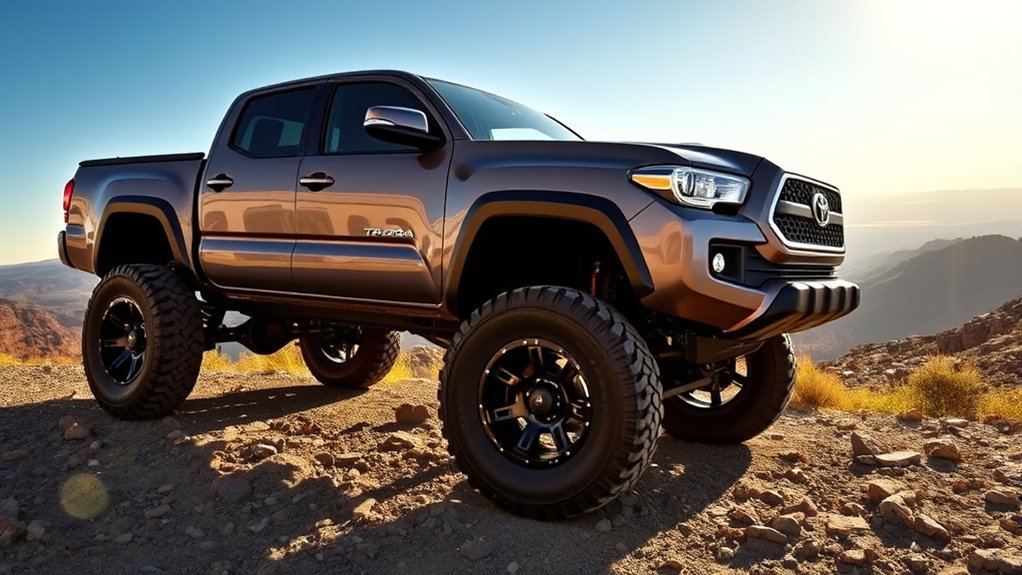
The best lift kit is the one engineered for your exact Tacoma configuration, vehicle weight, ride goals, and safety systems. A product name or advertised lift height does not confirm tire clearance.
Verified Third-Generation Toyota Option
Toyota introduced a dealer-installed TRD suspension lift for many V6 4×4 Tacoma configurations. The original version provided approximately two inches of front lift and one inch of rear lift and included TRD-tuned Bilstein shocks plus components intended to retain Toyota Safety Sense compatibility.
However, Toyota listed several exclusions, including certain drivetrains, engines, cab and bed combinations, and TRD Pro models. Review the official Toyota TRD lift announcement and confirm current part-number compatibility by VIN.
Fourth-Generation Lift Options
For 2024-and-newer Tacomas, use a suspension system specifically designed for the fourth-generation chassis and the truck’s front and rear accessory load. Current systems may offer different spring and shock configurations for stock-weight trucks, bumpers, winches, racks, campers, and other equipment.
Do not install a third-generation kit on a fourth-generation Tacoma. Verify whether the system supports your suspension type, electronic features, stabilizer-disconnect equipment, hybrid or non-hybrid powertrain, and intended payload.
What a Lift Can and Cannot Do
A suspension lift can increase static body and frame clearance and may improve approach, breakover, and departure angles. It can also create more space around parts of the wheel opening at normal ride height.
However, the tire still moves upward as the suspension compresses. A lift does not automatically change every body, frame, mount, liner, or control-arm interference point. Final clearance still depends on the exact tire and wheel package.
Wheel Offset and Upper Control Arms
Moving the wheel outward may increase space near an upper control arm, but it can create more contact at the fender liner, body mount, and outer fender. It also changes the leverage placed on wheel bearings and steering components.
Aftermarket upper control arms may help restore alignment range on some lifted setups, but they should be selected for the suspension design, lift amount, wheel clearance, and intended travel. They do not guarantee that a wide 33-inch tire will clear the body.
The same basic principle discussed in this guide about how to match a tire to the vehicle and wheel size applies here, but Tacoma load capacity, off-road use, and suspension travel require truck-specific verification.
Do You Need to Regear for 33-Inch Tires?
Re-gearing is not mandatory for every Tacoma running 33s. Whether it is worthwhile depends on the original axle ratio, engine, transmission, tire diameter, wheel-and-tire weight, elevation, towing load, and driving conditions.
You may consider re-gearing when the truck frequently hunts between gears, feels weak on grades, struggles while towing, or no longer provides acceptable low-speed trail control. Before changing axle gears, confirm that tire pressure, alignment, engine condition, transmission operation, and tire weight are not causing or worsening the problem.
Four-wheel-drive trucks require compatible front and rear axle ratios. Gear installation also requires specialized setup tools and experience, so it should be completed by a qualified differential shop.

This roadside assistance kit helps drivers and passengers in urgent situations after an accident or breakdown, providing practical support while waiting for help. It includes a lightweight, compact tire inflator for fast inflation of standard vehicle tires, plus reinforced jumper cable protection for safer handling. Ideal for winter weather, road trips, camping, and travel, with everything stowed neatly in a trunk bag.
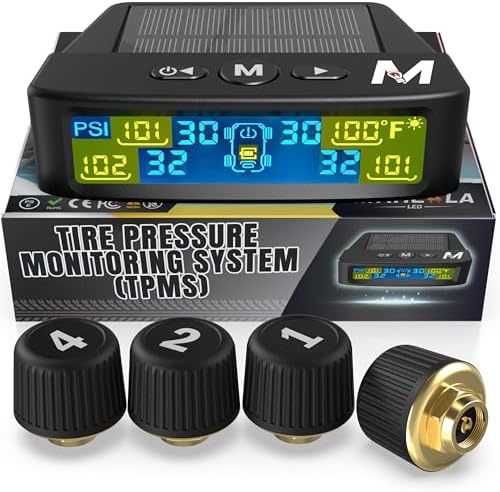
Marcala’s TPMS set of four sensors helps you monitor tire pressure and temperature in real time while driving, with updates every second. The bright color LCD uses auto-dimming for easy viewing, powered by dual solar and USB charging, and offers six alarm modes. Built for trailers, RVs, campers, trucks, and towing setups, the sensors support monitoring 1-4 wheels up to 98 PSI with IP67 waterproof protection.
Comparing All-Terrain and Mud-Terrain Tires
Your tread choice can affect daily comfort and fuel use as much as the tire diameter. Choose the least aggressive tread that reliably covers the terrain you drive.
Assess your normal driving patterns, annual mileage, climate, trail conditions, and tolerance for road noise before selecting a tire category.
| Feature | All-Terrain | Rugged-Terrain or Hybrid | Mud-Terrain |
|---|---|---|---|
| Best use | Daily driving with moderate trails | Mixed road use with more demanding trails | Mud, rocks, and severe off-road use |
| Road noise | Usually lowest | Moderate | Usually highest |
| Wet-road behavior | Often the most road-focused | Varies by model | May be less predictable, especially as tread wears |
| Off-road void space | Moderate | Moderate to high | High |
| Weight | Often lighter, depending on load range | Moderate to heavy | Often heaviest |
| Tread life | Often longest on pavement | Varies | Often shorter with extensive road use |
For a Tacoma that spends most of its time commuting, towing, or traveling on pavement, an all-terrain tire is usually the more balanced option. A rugged-terrain or mud-terrain tire makes more sense when its stronger off-road features are needed often enough to justify the added noise, weight, and possible fuel penalty.
Post-Installation Checklist
- Confirm that every tire has adequate load capacity and fits the wheel’s approved width range.
- Verify the correct lug hardware and wheel-centering method.
- Torque the wheel fasteners to the specification for your exact model year and wheel type.
- Balance all assemblies and investigate any vibration immediately.
- Complete a four-wheel alignment and retain the before-and-after measurements.
- Check full steering lock in forward and reverse.
- Check suspension-compression clearance under controlled conditions.
- Inspect brake hoses, sensor wiring, upper control arms, sway bars, liners, and body mounts.
- Set an appropriate cold tire pressure for the tire and vehicle load.
- Register or initialize TPMS sensors and confirm that no warning remains.
- Compare speedometer readings with a reliable reference.
- Confirm that the spare tire fits its storage position and can be safely used with the installed tires.
- Reinspect clearance and hardware after the first drives and after off-road use.
- Watch for rubbing marks, steering pull, vibration, reduced braking response, or unusual tread wear.
Warranty Note: Installing an aftermarket part does not automatically cancel the entire vehicle warranty. However, coverage may be denied for damage caused by an unsuitable part or improper installation. Keep product specifications, alignment reports, receipts, and installation records.
Frequently Asked Questions
Will 33-inch tires rub on a Toyota Tacoma?
They can. Rubbing depends on the Tacoma’s generation, trim, tire width, actual tire dimensions, wheel width, offset, caster, ride height, liners, mud flaps, body mounts, and suspension travel. Check clearance at full steering lock and through suspension compression rather than testing only on level ground.
Can you fit 33-inch tires on a Tacoma without a lift?
Some factory configurations already use 33-inch tires, while other Tacomas may require clearance work even with a lift. A narrower near-33-inch tire may fit differently from a wide 33×12.50 tire. Your exact truck, wheel specifications, tire model, alignment, and intended suspension travel determine the answer.
Will 33-inch tires reduce Tacoma gas mileage?
Fuel economy may decrease, but there is no universal loss. Tire weight, tread, width, pressure, wheel weight, lift height, driving speed, terrain, axle ratio, and driving style all affect the result. Compare hand-calculated fuel use over several tanks before and after the change.
How far will the speedometer be off with 33-inch tires?
The error depends on the original and replacement tire diameters. Divide the new diameter by the old diameter and multiply that ratio by the indicated speed. A change from about 31.6 inches to 32.7 inches is roughly 3.5%, so an indicated 60 mph may be close to 62 mph.
Do you need to regear a Tacoma for 33-inch tires?
Not always. Many drivers use 33s without changing axle gears. Re-gearing may become worthwhile when the truck feels weak, hunts between gears, tows frequently, operates at elevation, or uses a particularly heavy tire and wheel package. Evaluate the complete setup before changing gears.
Can you use stock Tacoma wheels with 33-inch tires?
Possibly, but the tire must list the stock wheel width within its approved rim-width range. Stock offset may help in some body-clearance areas while reducing clearance near an upper control arm. Confirm the exact tire specifications and test the mounted assembly.
Do 33-inch tires affect Tacoma towing or payload?
They do not increase the truck’s factory payload, axle, or towing ratings. A heavier wheel-and-tire package uses part of the vehicle’s available carrying capacity and may change acceleration, braking, and transmission behavior while towing. Keep every tire and wheel within its rated capacity.
Conclusion
Running 33-inch tires on a Toyota Tacoma can be a useful upgrade when you need additional trail clearance, stronger off-road tire options, or a more aggressive stance. The trade-offs may include rubbing, extra rotating weight, reduced acceleration, altered braking feel, speedometer error, higher fuel use, and additional maintenance.
Start with your exact Tacoma configuration and the manufacturer specifications for the tire and wheel. Test steering and suspension clearance, maintain adequate load capacity, complete an alignment, verify TPMS and speedometer operation, and inspect the truck after installation. A carefully matched setup is more important than choosing a tire based only on its advertised diameter.
Sources
- Toyota USA Newsroom: 2024 Toyota Tacoma — factory 33-inch tire, suspension, control-arm, and grade information.
- Toyota 2024 Tacoma Owner’s Manual: Maintenance Data — factory tire sizes, wheel sizes, inflation pressures, and wheel-fastener information.
- Toyota 2024 Tacoma Owner’s Manual: Items to Initialize — TPMS procedures after tire-size and wheel changes.
- NHTSA TireWise — replacement tire size, load, pressure, balancing, alignment, rotation, and tire-safety guidance.
- Nitto Ridge Grappler Specifications — examples of actual diameter, approved rim width, load capacity, pressure, and tire weight by size and construction.
- Federal Trade Commission: Auto Warranties — aftermarket parts, installation-related damage, and warranty coverage guidance.

Related Articles
How Tire Weight Affects Toyota Tacoma Performance
How does tire weight influence your Toyota Tacoma's performance and efficiency? Discover the surprising effects that could change your driving experience.
Read More
Tire Noise Levels by Tire Type on a Toyota Tacoma
A comprehensive look at how tire types affect noise levels in your Toyota Tacoma reveals surprising insights that could enhance your driving experience.
Read More
How To Choose Tires for a Dual Use Toyota Tacoma
Unlock the secrets to selecting the perfect tires for your dual-use Toyota Tacoma, ensuring optimal performance and comfort on every adventure. Discover more inside!
Read More