
Pros and Cons of Bigger Tires on a Toyota Tacoma
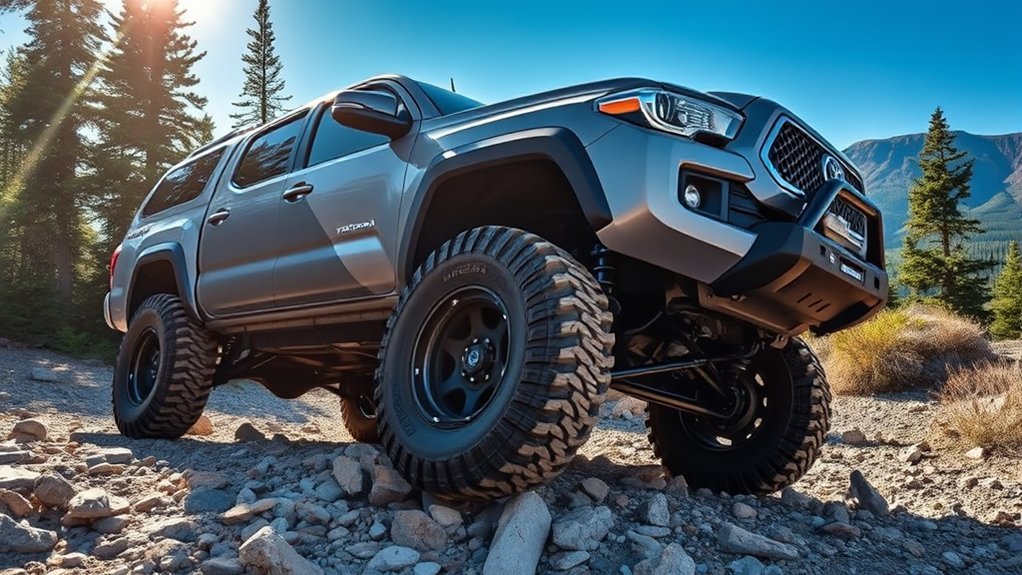
Upgrading to bigger tires can give your Toyota Tacoma more ground clearance, stronger off-road traction, and a tougher stance. The trade-offs can include slower acceleration, less accurate speedometer readings, extra drivetrain load, rubbing, and higher ownership costs. The result depends on your Tacoma’s model year, trim, wheel width and offset, suspension, alignment, tire construction, and actual measured diameter.
Last updated: July 17, 2026. Fitment guidance applies generally to U.S.-market Tacomas. Always confirm your exact year, trim, axle ratings, wheel specifications, and tire placard before ordering parts.
Quick Answer
Bigger tires can improve a Tacoma’s ground clearance, loose-surface traction, and appearance, but they may also reduce acceleration and fuel economy, alter braking feel, cause rubbing, and make the speedometer read low. Choose by model year and trim, keep adequate load capacity, and test full steering and suspension travel before regular driving.
Key Takeaways
- A tire’s diameter alone does not determine fit. Wheel offset, tire width, tread shape, alignment, and suspension travel also matter.
- A lift creates vertical clearance, but it does not automatically solve rubbing at the cab mount, body mount, fender liner, bumper, or upper control arm.
- Bigger tires do not automatically increase payload or towing ratings. The truck’s door label, axle ratings, and manufacturer limits still control.
- Match or exceed the required load capacity and use the cold inflation pressure specified for the approved setup, not the maximum pressure molded on the sidewall.
- Plan for calibration, alignment, a matching spare, TPMS compatibility, and a post-installation clearance inspection.
Warning: An oversized tire that contacts suspension, steering, brake, or body components can be damaged without obvious warning. Do not assume a setup is safe because it clears while parked. Check clearance at full steering lock and through suspension compression on both sides.
Why Consider Bigger Tires for Your Tacoma?
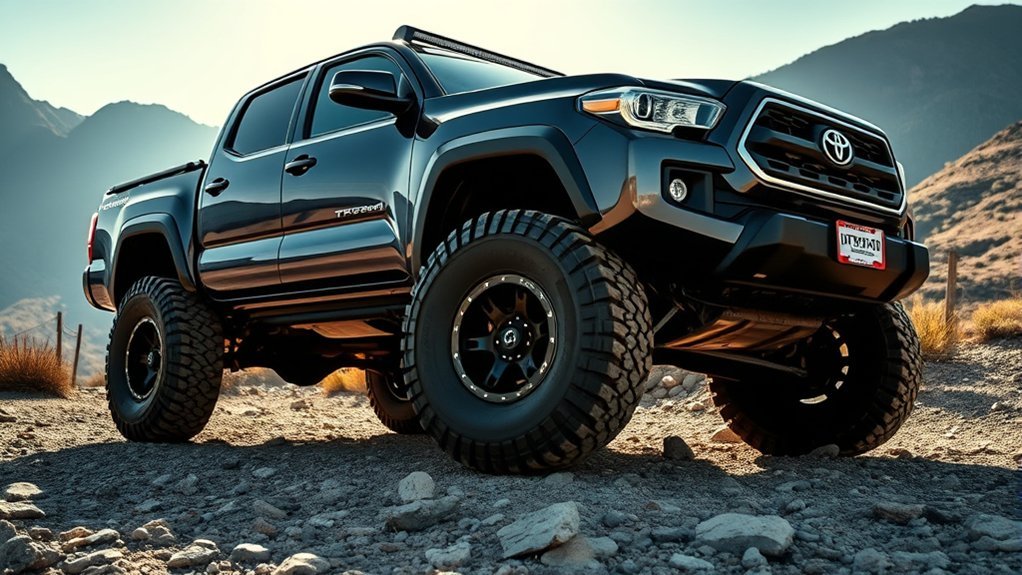
Larger tires are most useful when they solve a specific need. A modest increase in overall diameter can raise the differential and axle housings farther from the ground. A more aggressive all-terrain or mud-terrain tread may also improve traction in loose dirt, mud, sand, or snow, depending on the tire and conditions.
The visual change is another reason owners upgrade. A wider or taller tire can fill the wheel wells and give the Tacoma a more planted stance. However, appearance should come after fit, load capacity, braking, and steering clearance.
Factory equipment shows why year and trim matter. Toyota lists 32-inch tires on a 2026 TRD Off-Road package and 33-inch tires on 2026 TRD Pro, Trailhunter, and certain i-FORCE MAX configurations. Those trucks use factory-engineered wheels, suspension, body clearance, calibration, and electronic settings. A 33-inch tire on an older Tacoma or a different trim is not automatically equivalent. See Toyota’s 2026 Tacoma specifications and equipment overview for current factory examples.

This 4-in-1 tire valve core removal tool helps you deflate, unblock, and remove or install valve cores quickly for easier tire repair. The multifunction design also supports re-taping damaged threads and reaming inside the valve stem for smoother service. Included as a 2-pack, it’s compact for convenient carry and works for cars, bicycles, and motorcycles.

The JACO FlowPro Tire Inflator measures, inflates, and airs down tires up to 100 PSI with battery-free operation and ±2% accuracy after calibration. It features a glowing pressure dial for night visibility, a heavy-duty steel build with a hybrid hose, and a precision push-to-inflate thumb trigger. The patented Lightning Air Chuck locks on for a secure seal, and the kit includes quick-connect hardware for easy inline use with your air compressor.

EVOULTES heavy duty tire inflator with an integrated gauge delivers accurate pressure readings from 10–120 PSI, helping you inflate, deflate, and check tires in one tool. The 16.5-inch extended dual-head air chuck with swivel base reaches hard-to-access dual wheel valves on trucks and RVs. A brass trigger core and side-mounted air release valve make operation smooth, with standard 1/4" NPT threading and quick-connect compatibility for easy setup.
Benefits of Enhanced Traction and Stability
Bigger tires can help off-road, but the improvement comes from the complete tire design, not size alone. Tread compound, tread depth, void ratio, sidewall construction, inflation pressure, and the surface under the tire all affect grip.
- More ground clearance: Increasing overall tire diameter by 2 inches raises axle clearance by about 1 inch, assuming the tire measures as labeled and does not compress differently under load.
- Larger obstacle approach: A taller tire can roll over small ledges, ruts, and rocks more easily.
- More flotation: A wider footprint at an appropriate pressure can help on sand or soft terrain, but pressure must remain within safe limits for the tire, wheel, load, and speed.
- Stronger off-road construction: Many larger all-terrain and light-truck tires offer reinforced sidewalls or tougher casings, though they may also weigh more and ride more firmly.
On pavement, wider or more aggressive tires do not guarantee better braking or wet grip. A quality tire in the correct size can outperform a larger tire with a less suitable compound or tread pattern. Use the tire’s load index, speed rating, manufacturer data, and independent performance testing rather than judging by size or appearance.
The safest upgrade is not the biggest tire that can be forced into the wheel well. It is the largest complete setup that maintains load capacity, steering clearance, suspension travel, braking performance, and predictable handling.
Aesthetic Benefits of Bigger Tires on Tacoma
Bigger tires can make a Tacoma look more capable and better proportioned, especially when the wheel size, sidewall height, and suspension stance work together. The goal should be a balanced setup rather than a tire that looks oversized for the wheel well.
Enhanced Aggressive Stance
A taller sidewall and fuller wheel well can create a rugged profile without relying on oversized wheels. The visual result varies by Tacoma generation, ride height, wheel offset, and tire width.
| Approximate Tire Class | Typical Visual Effect | Fitment Reality |
|---|---|---|
| 31 to 32 inches | Subtle to moderately rugged | Often closest to factory proportions, but trim-specific checks still apply |
| About 33 inches | Bold, off-road-focused stance | Factory on some fourth-generation trims; older or lower trims may need clearance work |
| About 35 inches | Dominant and highly modified | Usually requires a coordinated build, not tires alone |
| 37 inches and larger | Extreme trail or show-truck appearance | Major steering, suspension, body, gearing, axle, and brake considerations |
Improved Off-Road Presence
A larger all-terrain tire can visually match bumpers, sliders, skid plates, and a mild lift. Keep the tire inside a practical track width and verify that it does not extend beyond local legal limits or throw debris onto other road users.
Customization and Personal Style
Tire size is only one part of the look. Sidewall lettering, tread pattern, wheel diameter, wheel offset, and sidewall height can change the Tacoma’s character. Avoid choosing an aggressive tread solely for appearance if most driving is on pavement. Heavier mud-terrain tires can add noise, vibration, and rolling resistance without providing a daily-driving benefit.
Start With Your Tacoma’s Year, Trim, and Door Placard
Tacoma fitment changes across generations and trims. Before comparing “31s,” “33s,” or “35s,” record the original tire size, wheel size, recommended cold pressure, gross axle weight ratings, and payload information from the driver-door labels. NHTSA advises owners to use the owner’s manual or the Tire and Loading Information label when selecting replacement tire sizes. Review the agency’s TireWise guidance before changing size or load capacity.
Also record whether your truck has factory or aftermarket suspension, wheel spacers, aftermarket control arms, a body lift, steel bumpers, a winch, or added cargo. These changes affect available clearance and axle load.
Pro Tip: Compare the tire manufacturer’s published measured diameter and section width on your exact wheel width. The size printed on the sidewall is nominal, and two tires with the same labeled size can measure differently.
What to Expect for Fuel Efficiency With Bigger Tires?
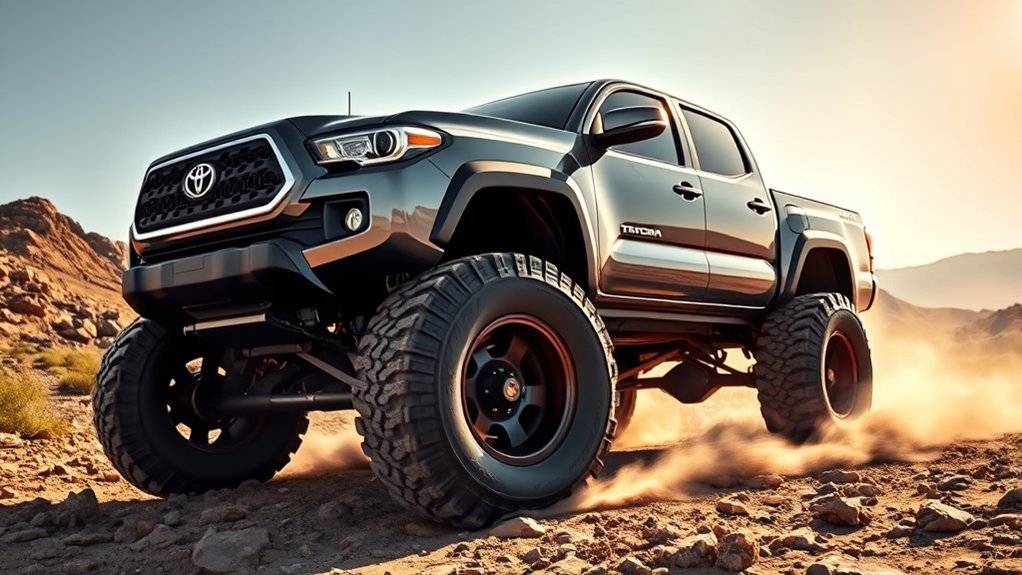
Fuel-economy changes cannot be predicted accurately from diameter alone. Tire mass, rolling resistance, tread compound, inflation pressure, wheel weight, aerodynamics, driving speed, gearing, and traffic all matter. A heavier all-terrain setup usually takes more energy to accelerate, while a high-rolling-resistance tread can increase the energy needed to maintain speed.
The U.S. Department of Energy notes that proper inflation and lower rolling resistance support better fuel economy. Its fleet guidance also explains that replacement-tire efficiency varies significantly. See the DOE’s fleet fuel-efficiency guidance.
Do not rely on a universal “1 to 3 MPG” promise or penalty. Measure your own result over several full tanks on similar routes. Correct the odometer for the new tire diameter before comparing miles per gallon, because a larger tire may make the odometer undercount distance.
Handling Changes: How Size Matters?
A larger and heavier tire can change steering effort, acceleration, brake feel, and how quickly the suspension controls wheel movement. A wider tire may also follow road grooves more strongly. The result depends on the tire’s construction and the wheel’s offset, not just the diameter.
- Steering response: More rotating mass and a larger scrub radius can make turn-in feel slower or heavier.
- Ride quality: A taller sidewall may absorb sharp impacts, but a heavy light-truck casing or excessive pressure can make the ride harsher.
- Braking: Added rotating mass and leverage can change stopping feel. Tire compound and wet traction remain critical.
- Electronic systems: A meaningful diameter change can affect speed-based calculations used by the transmission, cruise control, driver-assistance features, and stability systems.
- Alignment: Caster, camber, and toe affect clearance and tire wear. A lift or control-arm change should be followed by a professional alignment.
After installation, test the truck at low speed in a safe area before highway use. Listen for contact, check steering self-centering, and confirm that no warning lights appear.
Modifications Needed for Bigger Tires
Some Tacomas can use a modestly larger tire without major work. Others rub with the same labeled size because of wheel offset, tread width, alignment, or aftermarket parts. Treat every fitment as a system.
Suspension Adjustments Required
A lift can create vertical room above the tire, but it may not increase clearance where the tire swings rearward toward the cab mount or inward toward the upper control arm. Depending on the truck and target size, a complete setup may include:
- A properly engineered suspension lift or leveling system
- Upper control arms that allow safe alignment and adequate joint travel
- Correct-length shocks, bump-stop tuning, and brake-line checks
- An alignment that balances caster, tire clearance, and stable road manners
- Re-torquing suspension and wheel hardware after the initial break-in period
A fixed “minimum 2-inch lift” rule is not reliable. Some fourth-generation Tacomas use factory 33-inch tires, while many older Tacomas need trimming or mount clearance even with a lift.
Body Modifications Needed
Depending on size and offset, clearance work may involve the front fender liner, mud flap, bumper edge, pinch seam, cab mount, or body mount. A cab-mount or body-mount chop is permanent structural work and should be performed by a qualified fabricator who understands corrosion protection, welding safety, and local inspection rules.
Do not trim until the wheel alignment and final ride height are set. A different caster setting can move the tire within the wheel opening and change the point of contact.
Wheel Width, Offset, and Spacers
Wheel offset controls where the tire sits relative to the upper control arm and outer body. Moving the wheel outward may solve inner clearance but create more rubbing at the fender or cab mount. It can also increase leverage on wheel bearings and alter steering feel.
Use only wheels approved for the tire’s width and load. If spacers are used, they must be hub-centric where required, properly rated, installed on clean mating surfaces, and torqued according to the manufacturer’s instructions. Check local laws and inspect fasteners regularly.
Cost Considerations: Tires, Lift Kits, and More
The tires are only the first line in the budget. A complete upgrade may require wheels, a matching spare, mounting and balancing, TPMS service, alignment, suspension parts, body clearance work, calibration, and possibly gearing changes. A basic size increase may remain relatively simple, while a 35-inch or larger build can become a multi-thousand-dollar project.
| Cost Area | Why It May Be Needed |
|---|---|
| Four tires plus matching spare | A smaller spare can create drivetrain problems on some four-wheel-drive systems and may not provide safe clearance |
| Wheels, mounting, balancing, and TPMS | Required when the original wheel width, diameter, load rating, or offset is unsuitable |
| Lift, control arms, shocks, or bump stops | May be needed for travel, alignment, and clearance |
| Trimming or fabrication | May be needed when the tire contacts body or mount areas |
| Calibration and gearing | May restore accurate speed data and improve drivability with a large diameter increase |
| Ongoing operating cost | Heavier tires may increase fuel use, brake wear, steering wear, and replacement cost |
Get an itemized quote for the complete setup instead of comparing tire prices alone. Include the cost of correcting problems if the first wheel offset or tire model does not clear.
Common Drawbacks of Bigger Tires: Rubbing and Speedometer Calibration Issues
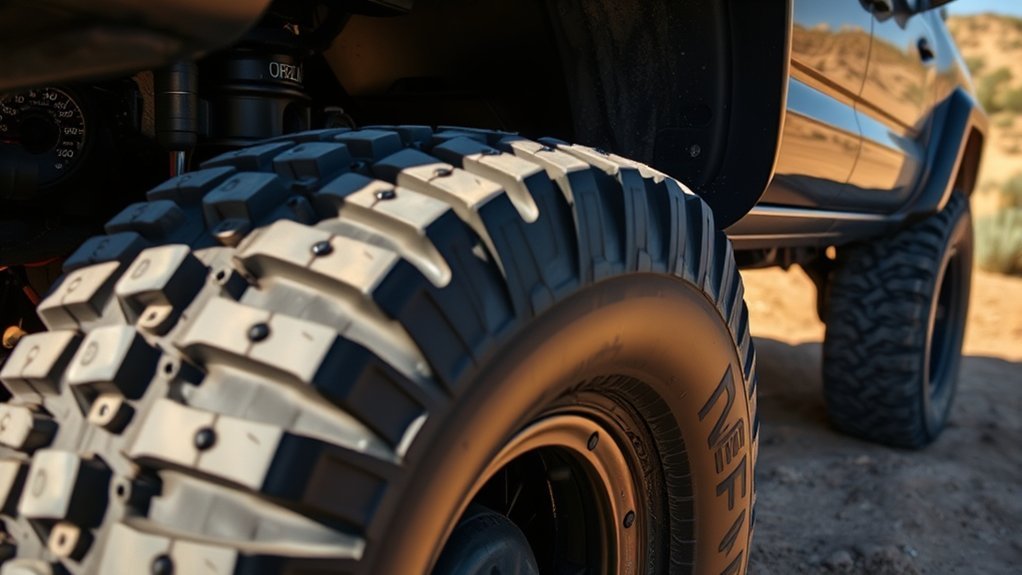
Rubbing may occur only while reversing, turning at full lock, braking into a driveway, or compressing one front corner off-road. Inspect the tire sidewall and tread for polished areas, cuts, or missing rubber after the first drives.
A larger rolling diameter usually makes the speedometer and odometer read lower than the truck’s actual speed and distance. Use this estimate:
Actual speed ≈ indicated speed × new measured diameter ÷ original measured diameter.
For example, if the new measured diameter is 3% larger, an indicated 60 mph is approximately 61.8 mph. Real-world results can vary with tire growth, load, pressure, and factory calibration. Use a suitable scan tool, calibration device, or qualified shop where supported, then verify the reading with a reliable GPS speed reference.
Note: The popular “stay within 3% of stock” rule is a comparison shortcut, not a universal Toyota approval. Any change still requires clearance, load, wheel, pressure, and calibration checks.

Protect your Tesla during lifting with durable rubber jack pads designed to cushion pressure and help safeguard the battery and chassis. The non-slip, plug-and-play puck set fits Tesla Model 3/Y/X/S for safe, secure jacking. Each pack includes a portable storage case for cleaner trunk organization.

Universal magnetic jack pad with aluminum grooved design to protect vehicle pinch welds during lifting. Durable nylon pad inserts are upgraded and secured with screws to resist damage and keep in place. Designed to fit most single vehicle pinpoint welds for safer, stable jacking when changing tires, repairs, or performing oil changes.
Towing, Payload, and Gearing With Bigger Tires
Bigger tires do not raise the Tacoma’s official tow rating, payload rating, gross vehicle weight rating, or axle ratings. Those limits remain tied to the vehicle’s certification and equipment. Added wheel, tire, suspension, bumper, and recovery-gear weight also uses part of the available payload.
A taller tire effectively makes the final drive ratio taller. The engine may operate at lower rpm at a given road speed, but it also has less mechanical advantage during acceleration, hill climbing, and towing. The transmission may downshift more often, and low-speed control may feel weaker.
Re-gearing can restore some mechanical advantage on heavily modified trucks, but it is not automatically required for every size increase. Engine, transmission, axle ratio, tire weight, terrain, towing load, and driver expectations all matter. Confirm axle compatibility and calibration requirements before changing gear ratios.
Brakes, TPMS, and Driver-Assistance Systems
Maintain enough wheel clearance for the brake calipers and verify that the wheel’s load rating meets the truck’s needs. After changing tire diameter or wheel offset, make sure brake hoses, ABS wiring, and TPMS components remain protected through full steering and suspension movement.
TPMS reports pressure, not whether the new tire has the correct load capacity or whether the pressure is appropriate for the new setup. Work with the tire manufacturer or a qualified tire professional to establish a safe cold pressure based on axle loads, tire load tables, and wheel limits. Never use the sidewall maximum as an automatic daily target.
Modern Tacomas use speed and wheel information for multiple systems. Large changes may affect cruise control, transmission behavior, stability control, collision-avoidance functions, and other driver-assistance features. Confirm calibration support for your model year before buying parts.
Off-Road Performance With Bigger Tires: Are They Worth It?
Bigger tires can be worth it when you regularly encounter terrain that needs more clearance or a tougher tire construction. The best size is the smallest one that reliably clears your intended obstacles and supports your load.
- Choose a modest increase for daily driving, mild trails, lower cost, and easier fitment.
- Choose about 33 inches when the truck’s generation, trim, wheel, and suspension can support it without unsafe contact.
- Choose 35 inches or larger only as part of a coordinated build that addresses steering, brakes, gearing, body clearance, spare-tire storage, and axle loads.
For many owners, a high-quality all-terrain tire near the factory diameter produces a better daily balance than a much larger and heavier mud-terrain tire.
Pros and Cons of Upgrading Your Tacoma Tires
Enhanced Off-Road Capability
The main benefits are increased axle clearance, improved ability to roll over obstacles, and access to more aggressive off-road tire designs. These benefits are most noticeable on rocks, ruts, mud, sand, and uneven trails.
Aesthetic Appearance Improvement
A larger tire can give the Tacoma a stronger stance and fill the wheel opening. Matching sidewall height and wheel size usually looks more balanced than choosing a very large wheel with a short sidewall for off-road use.
Impact on Fuel Economy
Heavier construction and higher rolling resistance can reduce efficiency, especially in stop-and-go driving. The exact change varies too much for a universal MPG figure. Track corrected distance and fuel use before and after the upgrade to measure your truck’s result.
| Potential Advantages | Potential Disadvantages |
|---|---|
| More axle and differential clearance | Rubbing during steering or suspension travel |
| Better obstacle rollover | Slower acceleration and more frequent downshifts |
| Access to durable off-road tire designs | Higher tire, wheel, fuel, and modification costs |
| More aggressive appearance | Speedometer, odometer, and system-calibration changes |
| Possible flotation benefit on soft terrain | Added rotating and unsprung mass |
Installation and Post-Installation Checklist
- Confirm the original tire, wheel, pressure, payload, and axle-rating information.
- Check the new tire’s measured diameter, section width, load capacity, speed rating, approved wheel-width range, and weight.
- Verify wheel diameter, width, offset, center bore, bolt pattern, seat type, and load rating.
- Test inner and outer clearance before finalizing the setup.
- Install compatible TPMS hardware and balance every wheel and tire.
- Set alignment after suspension work and after final ride height settles.
- Check full-lock steering in both directions, including reverse.
- Compress the suspension safely or have a qualified shop inspect travel clearance.
- Verify speedometer accuracy and supported electronic calibration.
- Re-torque wheel and suspension hardware according to the component manufacturer’s instructions.
- Inspect for rubbing, loosened hardware, abnormal heat, and uneven wear after the first drives.
- Keep a matching, usable spare and confirm that it fits the storage location and brake package.
Frequently Asked Questions
How do bigger tires affect towing capacity on my Tacoma?
They do not increase the official tow rating. Taller and heavier tires can reduce effective gearing, acceleration, and hill-climbing response. Added tire, wheel, suspension, and accessory weight also consumes payload. Stay within the truck’s published tow, payload, gross vehicle, and axle limits.
Will larger tires void my Tacoma’s warranty?
Aftermarket tires do not automatically cancel the entire warranty. However, coverage may be denied for damage caused by an unsuitable part or incorrect installation. Keep receipts, alignment records, specifications, and maintenance records. The FTC explains that a manufacturer generally must connect the aftermarket part or installation to the claimed damage before denying coverage for that damage. Review the FTC’s auto-warranty guidance.
Can I switch back to smaller tires easily?
Usually, yes, if the original-size wheels and tires still clear the brakes and remain compatible with the truck. Recalibrate the speedometer if it was changed, restore the correct pressure settings, and confirm alignment and TPMS operation.
What is the recommended tire size for my Tacoma model?
Use the Tire and Loading Information label on the driver-side door area and the owner’s manual for your exact model year and trim. Tacoma sizes vary widely, so a single range cannot safely cover every generation and configuration. Toyota provides model-specific manuals through its Tacoma owner resources.
How often should I rotate bigger tires?
Follow the maintenance schedule for your model year and the tire manufacturer’s instructions. Inspect aggressive or heavy tires more often for cupping, heel-and-toe wear, and pressure loss. Include the spare in the rotation only when its size, construction, wear level, and rotation pattern make it compatible.
Will 33-inch tires fit a Tacoma without a lift?
Sometimes, but not as a universal rule. Some fourth-generation trims use factory 33-inch tires. Other trims and older generations may rub because of wheel offset, tire width, tread shape, alignment, cab-mount clearance, or suspension travel. Confirm fit using the exact tire and wheel combination.
Do I need to re-gear after installing bigger tires?
Not for every upgrade. Re-gearing becomes more relevant as diameter and weight increase, especially with frequent towing, steep terrain, or poor low-speed response. Compare the truck’s engine, transmission, axle ratio, target tire size, and use before deciding.
Conclusion
Bigger tires can improve a Tacoma’s clearance, off-road ability, and appearance, but the upgrade works only when the complete setup is compatible. Start with your exact year, trim, door placard, and owner’s manual. Then verify measured tire dimensions, wheel specifications, load capacity, suspension travel, steering clearance, calibration, and spare-tire compatibility.
For a daily-driven Tacoma, a modest increase with a quality tire often provides the best balance. Larger builds can work well, but they should be planned as a system that includes brakes, gearing, alignment, electronics, body clearance, and long-term operating costs.
Sources
- Toyota USA Newsroom: 2026 Toyota Tacoma — factory 32-inch and 33-inch tire examples, trim equipment, towing, and payload context.
- Toyota Tacoma Owner Resources — model-specific owner’s manuals, warranty guides, and maintenance information.
- NHTSA TireWise — tire-size, placard, load, pressure, and tire-safety guidance.
- U.S. Department of Energy Fleet Management Guidance — tire inflation, rolling resistance, and fuel-efficiency context.
- Federal Trade Commission Auto Warranty Guidance — aftermarket parts and warranty-coverage principles.

Related Articles
How Tire Weight Affects Toyota Tacoma Performance
How does tire weight influence your Toyota Tacoma's performance and efficiency? Discover the surprising effects that could change your driving experience.
Read More
Tire Noise Levels by Tire Type on a Toyota Tacoma
A comprehensive look at how tire types affect noise levels in your Toyota Tacoma reveals surprising insights that could enhance your driving experience.
Read More
How To Choose Tires for a Dual Use Toyota Tacoma
Unlock the secrets to selecting the perfect tires for your dual-use Toyota Tacoma, ensuring optimal performance and comfort on every adventure. Discover more inside!
Read More