
Directional vs Non Directional Tires for a Toyota Tacoma
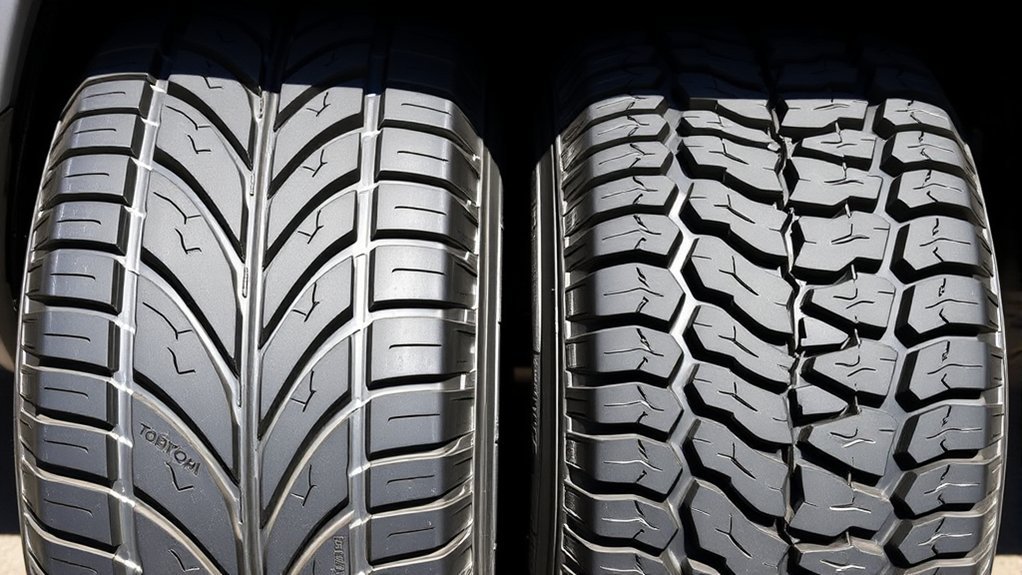
Choosing between directional and non-directional tires for your Toyota Tacoma is not simply a matter of wet grip versus easy maintenance. You also need to consider whether a non-directional tire is symmetric or asymmetric, how the tire must be mounted, which rotation patterns are allowed, and whether its size and load capacity match your truck.
Last updated: July 17, 2026 · Reviewed against current Toyota, NHTSA, USTMA, Continental, Michelin, and EPA guidance.
Quick Answer
Directional tires can improve water evacuation and snow or mud traction, but they have stricter mounting and rotation requirements. Symmetric non-directional tires provide the most rotation flexibility. Asymmetric non-directional tires balance different inner and outer tread functions but must be mounted with the marked outside sidewall facing outward.
Key Takeaways
- Directional tires have a rotation arrow and must roll in the direction shown on the sidewall.
- A symmetric non-directional tire usually offers the easiest mounting and rotation options.
- An asymmetric tire may be non-directional, but its “OUTSIDE” sidewall must remain facing outward.
- Tread direction does not replace proper Tacoma fitment, load capacity, inflation, or seasonal suitability.
- For a 4WD Tacoma, keep tire size, construction, model, circumference, and tread depth closely matched.
What You Need to Know About Directional Tires for Your Tacoma
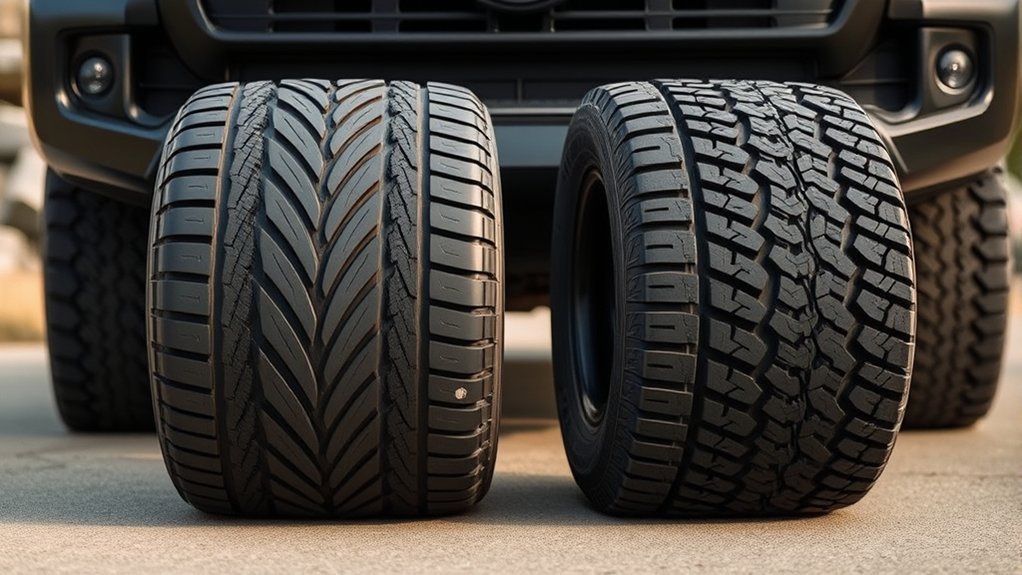
A directional tire is designed to rotate forward in one specified direction. It often has V-shaped, arrow-shaped, or sweeping tread grooves that move water, slush, or loose material away from the center of the contact area.
Look for an arrow and wording such as ROTATION on the sidewall. When the tire is at the top of the wheel, the arrow should point toward the front of the truck. Michelin states that directional tires must be mounted so their forward rotation matches the sidewall arrow. Michelin’s tire guidance also confirms that equal-size directional tires normally rotate from front to rear on the same side.
Directional tread can be useful in heavy rain, snow, slush, or mud because its groove arrangement may evacuate water and loose material efficiently. Continental identifies hydroplaning resistance and snow or mud handling as common benefits of this tread pattern. However, those benefits do not mean every directional tire will outperform every asymmetric or symmetric tire.
The rubber compound, tire category, tread depth, siping, temperature rating, load, inflation, and actual test results still matter. A premium asymmetric rain tire may provide better wet braking than a lower-performing directional tire, even though the asymmetric tire has no rotation arrow.
Warning: Do not knowingly operate a directional tire backward. Incorrect orientation can reduce the water-evacuation and traction characteristics the tread was designed to provide. Have the tire professionally remounted before normal road use.
[Products Worth Considering]

This portable cordless tire inflator delivers up to 160 PSI with fast 17 L/min airflow to help you quickly top up tires and get back on the road. It features dual power mode, running on a 21V rechargeable battery or a 12V DC adapter for convenient roadside use. An automatic shut-off with digital pressure gauge helps prevent overinflation, and a built-in LED light improves visibility in low-light conditions.

The JACO FlowPro Tire Inflator measures, inflates, and airs down tires up to 100 PSI with battery-free operation and ±2% accuracy after calibration. It features a glowing pressure dial for night visibility, a heavy-duty steel build with a hybrid hose, and a precision push-to-inflate thumb trigger. The patented Lightning Air Chuck locks on for a secure seal, and the kit includes quick-connect hardware for easy inline use with your air compressor.
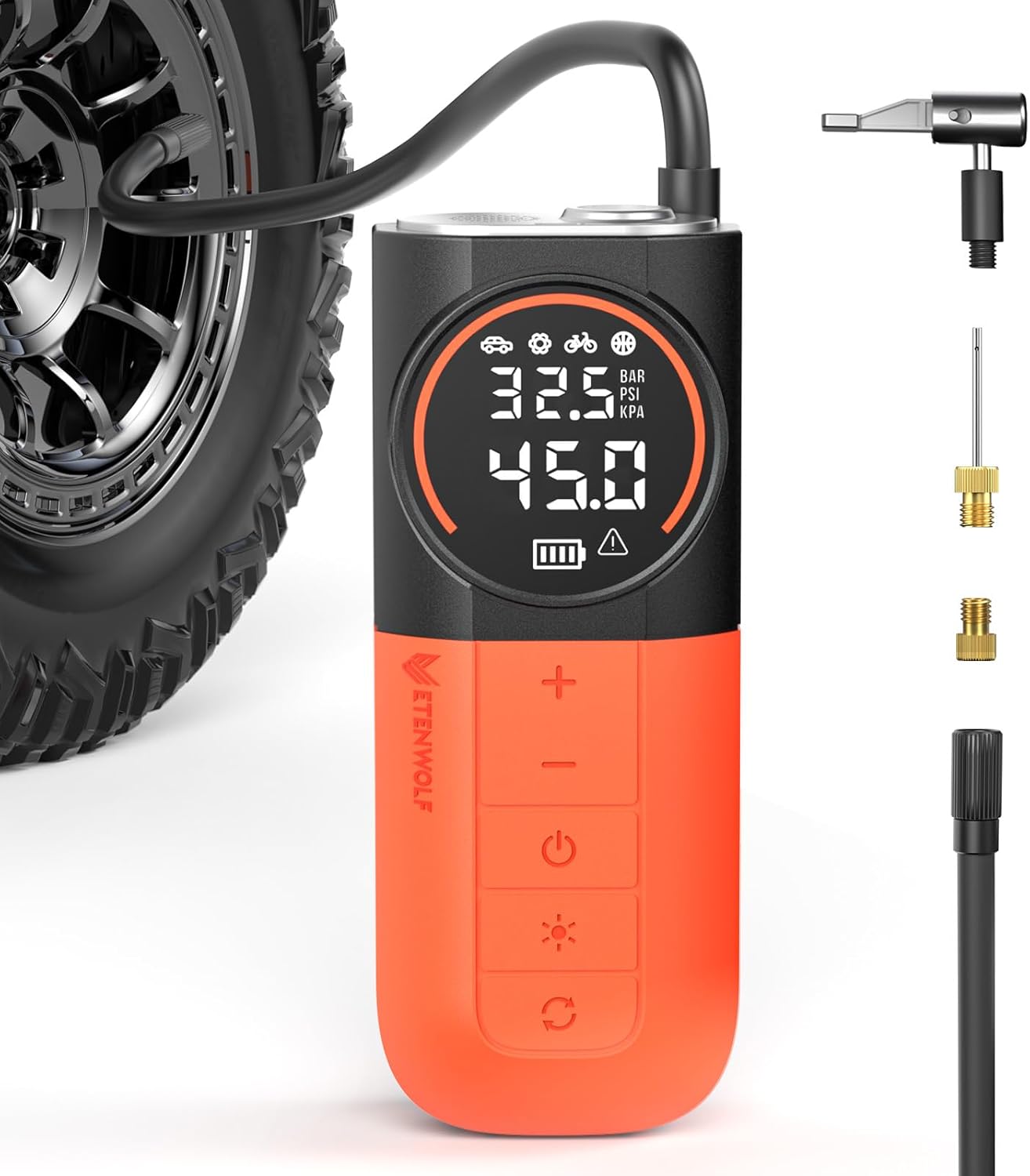
The ETENWOLF S1 cordless tire inflator delivers ultra-fast inflation with up to 160 PSI and a 20 L/min airflow for quicker tire top-offs. Its 5200mAh battery and cooling system support inflating many tires and sports balls on a single charge, while the digital pressure gauge and multi-unit display help you reach the right pressure accurately. With preset modes, pressure memory, an auto-stop feature, and an LED flashlight, it’s built for easy roadside and everyday use.
Directional Tire Rotation Limitations
When all four tires and wheels are the same size, a mounted directional tire usually moves only between the front and rear positions on the same side. Crossing it to the other side would reverse its direction of travel.
A tire shop can move a directional tire to the opposite side by removing it from the wheel, remounting it in the correct orientation, balancing the assembly, and reinstalling it. That process costs more than a standard wheel-position rotation and may not be worthwhile during every service.
If a tire is both asymmetric and directional, it may have an “OUTSIDE” marking plus a rotation arrow. Both instructions must be satisfied. Some highly specialized tires may also be left- or right-side specific.
Benefits and Limits of Non-Directional Tires for Your Tacoma
“Non-directional” means the tire does not have to roll in one assigned direction. However, this category includes two different designs: symmetric and asymmetric. They do not have identical mounting rules.
Symmetric Non-Directional Tires
A symmetric tire has the same basic tread pattern across both sides of its tread face. It normally offers the greatest rotation flexibility because it has no required forward direction and no dedicated inner or outer side.
Depending on the vehicle, wheel sizes, and tire manufacturer’s instructions, symmetric tires may support front-to-rear or cross-rotation patterns. This flexibility can make it easier to manage developing wear across the four positions.
Possible advantages include:
- Flexible rotation: More rotation patterns may be available than with a directional tire.
- Simple mounting: The tire normally has no rotation arrow or “OUTSIDE” requirement.
- Practical daily use: Many highway and touring tires use symmetric designs.
- Potentially low noise: Some symmetric patterns are designed for a smooth, quiet ride, although this varies by tire model.
- Wear management: More rotation options may help distribute wear when the truck and tires permit those patterns.
Asymmetric Non-Directional Tires
An asymmetric tire uses different tread features on its inner and outer portions. The inner area may emphasize water evacuation, while the outer shoulder may use larger or stiffer blocks for dry cornering and stability.
Most asymmetric tires carry OUTSIDE and INSIDE sidewall markings. The “OUTSIDE” side must face away from the truck. Once the tire is mounted correctly on its wheel, it can often roll in either direction because it has no rotation arrow.
This means an asymmetric tire may still support cross-rotation, provided the vehicle, tire manufacturer, wheel sizes, and wear condition allow it. The “OUTSIDE” side remains outward because the entire wheel-and-tire assembly moves to the new position.
Note: “Non-directional” does not automatically mean “mount either side outward.” Check every sidewall for an arrow, “ROTATION,” “OUTSIDE,” “INSIDE,” or left/right markings before installation.
Directional vs. Symmetric vs. Asymmetric Tires: Key Differences
| Feature | Directional | Symmetric Non-Directional | Asymmetric Non-Directional |
|---|---|---|---|
| Sidewall marking | Rotation arrow or “ROTATION” | Usually no direction or inside/outside marking | “OUTSIDE” and “INSIDE” |
| Mounting rule | Arrow must point forward when the truck moves | Normally mountable in either direction | Outside marking must face away from the truck |
| Typical rotation flexibility | Front to rear on the same side | Usually the most flexible | Often supports cross-rotation if other fitment rules permit |
| Common design goal | Water, slush, snow, or mud evacuation | Balanced daily use, wear, noise, and efficiency | Combined wet evacuation, cornering, and dry stability |
| Main limitation | Restricted rotation and mounting direction | Pattern alone does not guarantee severe-weather performance | Inside/outside mounting rule must be followed |
| Best choice for a Tacoma? | Useful when a specific tested tire suits wet, winter, or loose-surface needs | Practical for many daily-driving and highway applications | Useful when balanced wet and dry handling is a priority |
For a Tacoma, correct size, load capacity, inflation, seasonal category, and matching circumference matter more than the direction of the tread alone.
Choosing the Right Tire for Your Tacoma
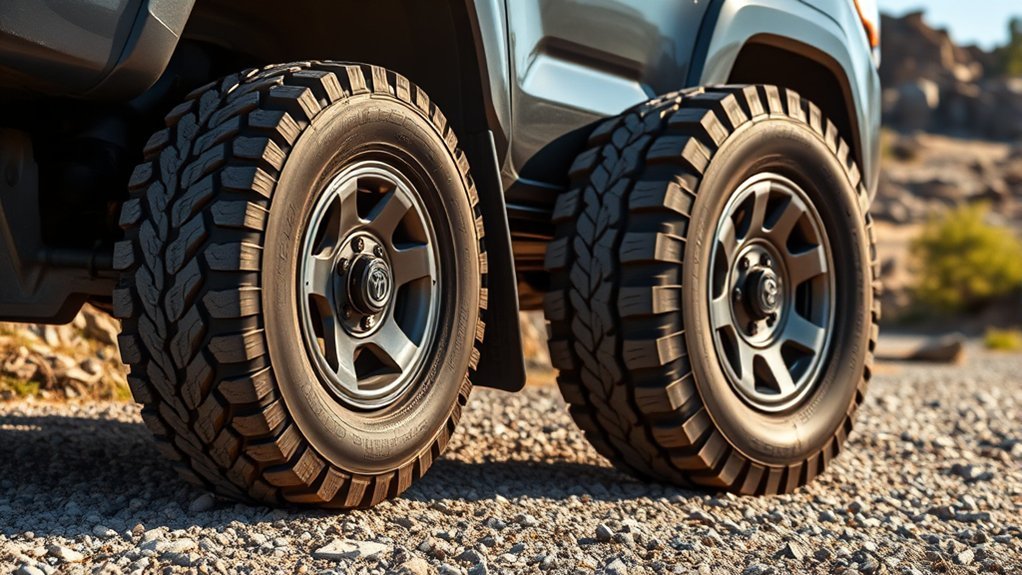
Selecting a tire for your Tacoma starts with vehicle compatibility. Tread direction should be considered only after you confirm the tire’s basic fitment and load requirements.
[Products Worth Considering]

Powools cordless tire inflator delivers up to 150 PSI for fast, reliable inflation in a compact, travel-ready design. The LED digital display shows real-time and preset...
1. Check the Door Placard and Owner’s Manual
Use the Tire and Loading Information label on the driver-side door opening to confirm the original tire size and recommended cold inflation pressure. You can also use the correct model-year documentation in the Toyota owner’s manual and warranty library.
NHTSA advises using the pressure specified by the vehicle manufacturer, not the maximum pressure molded into the tire sidewall. The sidewall number is a tire limit associated with its rated load, not your Tacoma’s normal cold-pressure target.
2. Match Size, Load, and Speed Requirements
Confirm all of the following before buying:
- Tire size: Match an approved size for your model year, trim, wheel, and suspension setup.
- Wheel diameter: A tire for a 16-inch wheel cannot be mounted on a 17- or 18-inch wheel.
- Load index and load range: The tire must safely support the truck, passengers, cargo, accessories, and tongue weight.
- Speed rating: Use the rating recommended by Toyota or an approved equal or higher rating, unless specific winter-tire guidance applies.
- Construction: Avoid mixing incompatible radial, bias, P-metric, and LT applications.
- Clearance: Oversized tires can contact suspension, steering, fender, brake, or body components.
The U.S. Tire Manufacturers Association advises choosing replacement tires with the size, load index, and speed-rating designation recommended by the vehicle or tire manufacturer. A replacement should not have less load-carrying capacity than the original specification.
Warning: Do not select a Tacoma tire solely because it fits the wheel. A tire with inadequate load capacity, unsuitable construction, incorrect pressure requirements, or poor clearance can create a serious safety risk.
3. Consider P-Metric Versus LT Tires
Some Tacoma configurations use passenger-type or P-metric tires, while owners who tow, haul, or drive on rough surfaces may consider LT tires. An LT tire can offer stronger construction or a higher load range, but it may also be heavier, firmer-riding, noisier, and less fuel-efficient.
Do not assume an LT tire should use the pressure printed for the original P-metric tire. Load capacity depends on the tire’s construction, size, and inflation table. Have a qualified tire professional confirm the correct replacement and operating pressure.
4. Protect a Four-Wheel-Drive System
On a 4WD Tacoma, large differences in tire circumference can cause the tires to rotate at different rates. That can affect handling and place unnecessary stress on drivetrain components.
For the most consistent result, use four matching tires with the same size, brand, model, construction, and similar tread depth. Michelin’s 4WD guidance also advises matching rolling radius and avoiding a mixture of tire categories such as all-terrain and all-season tires.
If one tire is damaged, consult your Toyota manual and tire professional before replacing only that tire. Depending on the remaining tread depth and Toyota’s limits, you may need a matching shaved tire, a pair, or a complete set.
5. Choose by How You Use Your Tacoma
- Mostly highway and city driving: A symmetric or asymmetric highway-terrain or all-season tire may offer the best balance of comfort, noise, wear, and road handling.
- Frequent heavy rain: Compare tested wet braking and hydroplaning performance. A directional design may help, but it is not the only effective option.
- Snow and freezing conditions: Choose a tire with the appropriate winter certification and compound. Tread direction alone does not make a tire a true winter tire. See this explanation of winter and snow tire terminology.
- Dirt, gravel, and moderate trails: Tread durability, stone ejection, sidewall protection, and all-terrain construction may matter more than directionality.
- Deep mud or aggressive off-road use: Large voids, self-cleaning ability, sidewall strength, and appropriate pressure management become major factors.
- Towing and hauling: Load capacity, heat control, correct inflation, and stable construction should take priority over tread appearance.
Seasonal classification is separate from tread direction. An all-season, all-weather, winter, all-terrain, or mud-terrain tire may use a directional, symmetric, or asymmetric pattern. This guide to all-season and all-weather tires explains why the seasonal category also matters.
Pro Tip: Compare complete tire specifications and independent wet, dry, snow, noise, and wear results. Do not choose a tire from the tread shape alone.
Maintaining Tire Performance and Longevity for Your Tacoma
Directional and non-directional tires need the same basic care. Correct pressure, regular inspections, suitable rotation, balanced wheels, and proper alignment have more influence on tire life than the tread category by itself.
Check Cold Tire Pressure Monthly
Check all road tires and the spare at least once a month and before a long trip. Measure pressure when the tires are cold, normally before driving or after the vehicle has been parked for at least three hours.
Inflate to the value on the Tacoma’s door placard or in the correct owner’s manual. Do not reduce pressure for normal road use simply because a lower pressure feels softer, and do not inflate to the sidewall maximum unless a qualified load-and-inflation calculation specifically calls for it.
Underinflation increases tire flex, heat generation, and rolling resistance. Correct inflation supports safety, tire life, and fuel economy, but it does not guarantee a fixed percentage improvement. Learn more about heat buildup caused by tire pressure and loading.
Inspect Tread and Sidewalls
Check tread depth and visible condition monthly. Look for:
- Uneven shoulder or center wear
- Cuts, cracks, exposed cords, or missing tread
- Bulges or bubbles in the sidewall
- Nails, screws, stones, or other embedded objects
- Repeated pressure loss
- Vibration, thumping, or a sudden increase in road noise
NHTSA states that tires should be replaced when the tread reaches 2/32 inch in the United States. A tire may require earlier replacement because of damage, irregular wear, age, reduced wet performance, or the tire manufacturer’s instructions.
Use the Correct Rotation Pattern
Follow the rotation interval in your Tacoma’s model-year maintenance guide and the tire warranty. NHTSA has used 5,000 to 8,000 miles as a general range when the manufacturer recommends rotation, but the vehicle and tire instructions take priority.
| Maintenance Task | Recommended Timing | Important Detail |
|---|---|---|
| Cold pressure check | At least monthly and before long trips | Use the door-placard pressure, including any different front and rear values. |
| Tread and damage inspection | Monthly and after hard off-road use | Check the full tread width and both sidewalls where visible. |
| Tire rotation | Follow the Toyota maintenance guide and tire warranty | Directional tires normally move front to rear on the same side. |
| Balance inspection | When vibration appears or a tire is mounted | Persistent vibration may also indicate damage or suspension issues. |
| Alignment inspection | When symptoms appear or after a major impact | Check after uneven wear, pulling, an off-center steering wheel, or suspension work. |
| Spare-tire check | Monthly or with regular tire service | Confirm pressure, age, condition, size, and whether it is approved for rotation. |
A symmetric non-directional set usually permits the widest range of rotation patterns. An asymmetric non-directional set may often be crossed because the “OUTSIDE” face remains outward with the wheel assembly. A directional set normally stays on the same side unless a professional dismounts and remounts the tire.
Do not include a compact temporary spare in a normal rotation. A full-size spare should be included only when its size, wheel, construction, tread pattern, direction, wear, and Toyota’s instructions make it compatible. For more rotation background, see this guide to rotation intervals and uneven tire wear.
Frequently Asked Questions
What kind of tires come on a Toyota Tacoma?
Original Tacoma tires vary by model year, trim, package, wheel size, drivetrain, and market. Some trims use highway-oriented or all-season tires, while off-road packages may use all-terrain tires. Check the driver-side placard, current sidewall, build specification, and model-year Toyota manual before ordering replacements.
Are directional tires better than non-directional tires?
Not automatically. Directional patterns can provide effective water, slush, snow, or mud evacuation, but non-directional symmetric and asymmetric tires can also deliver excellent wet grip, braking, comfort, and tread life. Compare the complete tire design and verified performance for your driving conditions.
Can a directional Tacoma tire be rotated from side to side?
Not as a complete mounted wheel in a typical equal-size setup, because crossing it would reverse the required rotation direction. A tire professional can move it to the opposite side by dismounting, remounting, and balancing it while preserving the sidewall arrow’s forward direction.
Are asymmetric tires considered non-directional?
Many asymmetric tires are non-directional. They can roll in either direction but must be mounted with the “OUTSIDE” sidewall facing outward. Some specialized tires are both asymmetric and directional, in which case you must follow both the inside/outside markings and the rotation arrow.
What happens if a directional tire is installed backward?
The tire may not evacuate water, slush, or loose material as intended, reducing the performance benefit of its directional tread. Have the orientation corrected promptly by a qualified tire shop rather than treating backward installation as an acceptable permanent setup.
Do I need to replace all four tires on a 4WD Tacoma?
Replacing four matching tires is usually the most consistent option. If only one or two need replacement, check Toyota’s model-specific guidance and have the remaining tread depth and circumference measured. Large differences can affect handling and place stress on a four-wheel-drive system.
Conclusion
A directional tire may be a strong choice for your Tacoma when its tested wet-, snow-, or loose-surface performance matches your needs. A symmetric non-directional tire may be more convenient for daily driving and rotation, while an asymmetric tire can combine different wet- and dry-handling features across its tread.
Do not make the decision from tread direction alone. Start with the correct Toyota-approved size, wheel diameter, load capacity, construction, speed rating, and cold pressure. Then compare the tire’s seasonal category, road-test performance, off-road durability, noise, wear warranty, and rotation requirements. The best tire is the one that fits your Tacoma correctly and performs safely in the conditions you actually drive.
Sources
- Toyota Manuals and Warranties — model-year owner’s manuals, maintenance guides, and vehicle documentation.
- NHTSA TireWise — tire pressure, tread depth, damage inspection, replacement, and safety guidance.
- U.S. Tire Manufacturers Association: Replacing Tires — replacement size, load index, speed rating, and axle-placement guidance.
- Continental: Tire Tread Patterns — directional, symmetric, and asymmetric tread characteristics.
- Michelin Tire FAQs — directional mounting, 4WD matching, load capacity, pressure, and replacement guidance.
- U.S. EPA Fuel-Saving Tips — the relationship between underinflation, tire wear, rolling resistance, and fuel economy.

Related Articles
How Tire Weight Affects Toyota Tacoma Performance
How does tire weight influence your Toyota Tacoma's performance and efficiency? Discover the surprising effects that could change your driving experience.
Read More
Tire Noise Levels by Tire Type on a Toyota Tacoma
A comprehensive look at how tire types affect noise levels in your Toyota Tacoma reveals surprising insights that could enhance your driving experience.
Read More
How To Choose Tires for a Dual Use Toyota Tacoma
Unlock the secrets to selecting the perfect tires for your dual-use Toyota Tacoma, ensuring optimal performance and comfort on every adventure. Discover more inside!
Read More