
Pizza Cutter Tires vs Wide Tires for Toyota Tacoma Overlanding
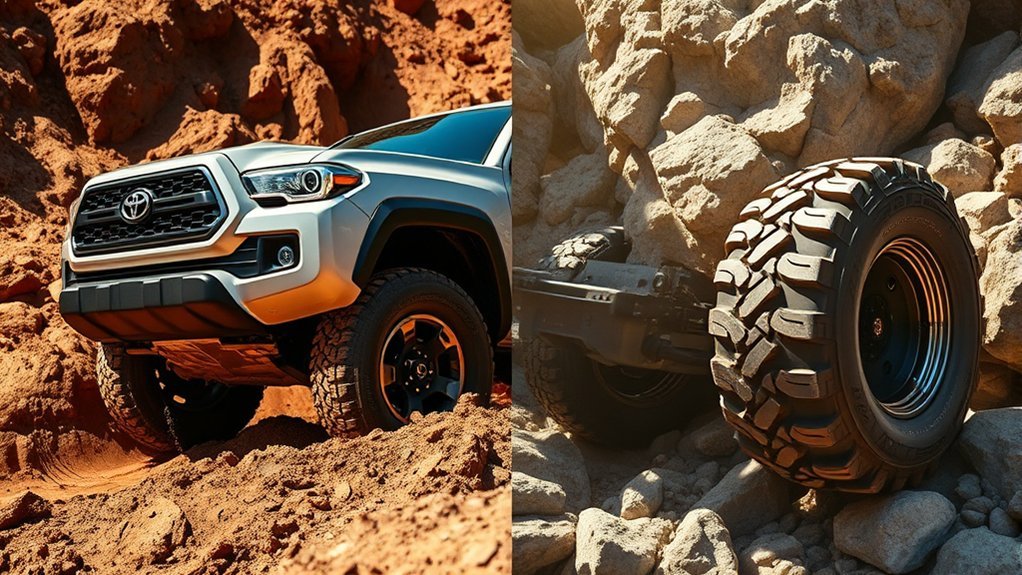
Choosing between pizza cutter tires and wide tires for a Toyota Tacoma is not as simple as matching one width to one type of terrain. Tire diameter, tread design, construction, load rating, wheel width and offset, inflation pressure, vehicle weight, and driver technique all affect the result. The best choice is the tire that fits your exact Tacoma, carries its load safely, and matches where you drive most often.
Quick Answer
Pizza cutter tires are usually easier to fit and may work well when you want a tall tire with less width. Wide tires can provide more flotation when aired down and a broader feel on rocks. Neither is always better: verify load capacity, clearance, wheel compatibility, pressure, and terrain before choosing.
Key Takeaways
- A pizza cutter is a tall, relatively narrow tire; it is not a single size or tread type.
- Narrow tires are often easier to package, but a tall 33-inch tire can still rub on a stock Tacoma.
- Wide tires can improve flotation in deep sand, snow, or soft mud when properly aired down, but they usually create more fitment challenges.
- Wet grip depends more on tread design, compound, tread depth, pressure, speed, and water depth than on width alone.
- Use the driver-door placard, owner’s manual, tire load data, and a full-clearance check before buying a non-stock size.
Key Differences Between Pizza Cutter Tires and Wide Tires
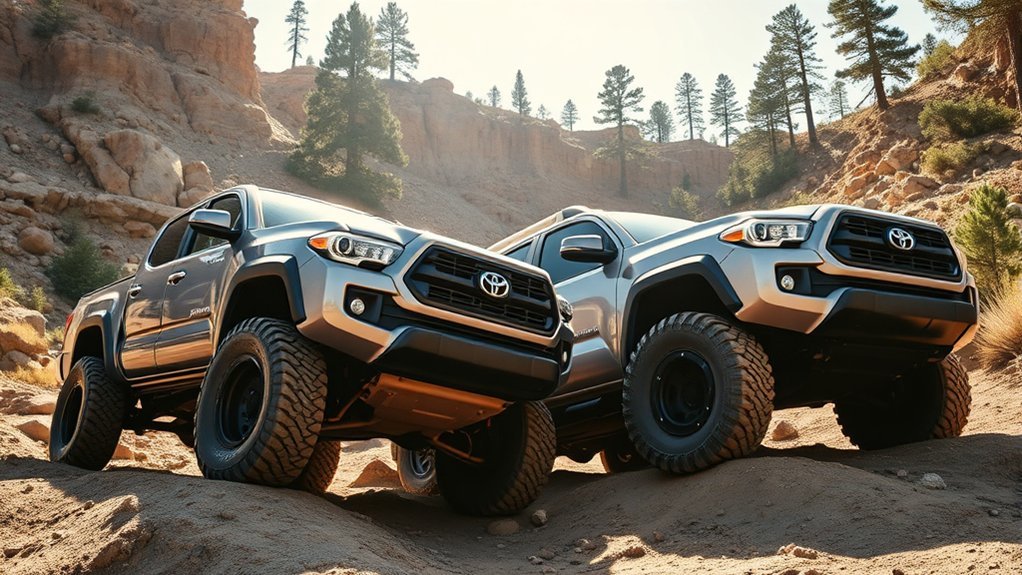
“Pizza cutter” is an informal term for a tire that is narrow compared with its overall diameter. A 255/85R16 is a common example: its calculated diameter is about 33.1 inches, while its nominal section width is 255 millimeters. A 285/75R16 is also close to 33 inches tall, but it is 30 millimeters wider. Actual mounted dimensions vary by tire model and approved rim width.
Width changes the shape of the tire’s contact patch, but it does not work alone. Vehicle load and inflation pressure strongly affect how much rubber touches the ground. Tread design, casing stiffness, compound, wheel width, and terrain can matter as much as the number printed on the sidewall.
| Factor | Pizza Cutter Tire | Wide Tire |
| Fitment | Usually creates less sidewall and suspension interference at the same diameter, but height can still cause rubbing. | More likely to contact the upper control arm, cab mount, liner, or body at full steering lock and suspension compression. |
| Soft terrain | Can cut through shallow mud or snow to a firmer layer; may sink more in deep sand or bottomless material. | Can provide more flotation when pressure is safely reduced; may push more material when a firm base is below the surface. |
| Rocks | Can place more concentrated pressure on small contact areas and may steer more precisely through tight spaces. | Can spread across irregular surfaces when aired down and may feel more planted laterally. |
| Road manners | May feel lighter and track less in road grooves if the tire itself is lighter and properly matched to the wheel. | May add steering effort, tramlining, noise, and rolling resistance, depending on tread and construction. |
| Appearance | Tall, purposeful profile with less sidewall bulge. | Broader stance and more aggressive visual presence. |
Note: A wider tire does not lower your Tacoma’s center of gravity. A larger overall diameter can raise the axle and chassis slightly, while wheel offset may widen the track. Those are separate changes with different handling effects.
[Products Worth Considering]

Vigorder rubber cement glue delivers superior adhesion and cures quickly within about 30 seconds for seamless rubber bonding. Once cured, it helps provide a strong, durable, waterproof seal that holds up to vehicle weight, pressure, and heat. Suitable for cars, motorcycles, trucks, bicycles, and off-road tires, it’s designed for emergency patch and maintenance repairs.

These aluminum alloy tire valve stem caps with an O-ring seal help protect valve stems from corrosion while adding a clean, stylish look to your vehicle. The universal fit works across cars, trucks, motorcycles, bicycles, and more, making them an easy upgrade for everyday driving and off-road use. Installation is quick, and the included four-pack keeps all your tires dressed and protected.

These universal tire valve stem caps help protect valve cores from dust, debris, and moisture while helping maintain stable tire pressure. The corrosion-resistant metal construction and sealed design provide reliable protection in road grime, mud, and winter conditions. Twist-on installation makes them quick to fit on cars, SUVs, trucks, and motorcycles.
Benefits of Pizza Cutter Tires for Overlanding
Pizza cutter tires can be a practical choice when you want more ground clearance from tire diameter without adding as much width. Their narrower section can reduce interference near suspension parts and the body compared with a wider tire of similar height. That does not guarantee a rub-free fit, especially with a roughly 33-inch size such as 255/85R16.
A narrow tire can also be lighter than a wide tire, but compare actual published tire weights rather than assuming. Casing type, load range, tread depth, and construction can make one narrow LT tire heavier than a wider P-metric or flotation tire. Lower rotating mass can help steering response, braking feel, and fuel use, but the final change depends on the complete wheel-and-tire package.
On loose surfaces with a firm base below, a narrow tread may dig through the top layer and reach material with more grip. This can help in shallow mud or some snow conditions. In deep sand, powder snow, or bottomless mud, however, digging may be the opposite of what you want; flotation and careful pressure reduction can become more useful.
Pro Tip: Compare the exact specifications for each candidate tire: measured diameter, section width, tread width, weight, approved rim range, load index, and revolutions per mile. Two tires with the same labeled size can fit and drive differently.
Top Advantages of Wide Tires for Off-Roading
Wide tires can work well for drivers who spend more time in deep, soft terrain or want a broad, planted feel on uneven trails. Their main advantage appears when the tire, wheel, pressure, and vehicle weight work together—not simply because the sidewall number is larger.
Enhanced Stability on Uneven Terrain
A wider tread can place rubber across more of an irregular rock surface and may feel more stable during slow off-camber travel. When pressure is reduced for trail use, the tread and sidewall can conform to rocks and enlarge the footprint. BFGoodrich notes that airing down can improve traction and ride quality on soft or uneven terrain, but it also warns that there is no universal pressure and that going too low can unseat a tire from the wheel.
Width alone does not guarantee more total contact area at the same load and pressure. It mainly changes the contact patch’s shape. Tread compound, siping, carcass flexibility, wheel width, and the obstacle itself determine whether that shape creates a useful advantage.
Improved Traction in Mud
Wide tires may help in deep mud when the goal is to stay closer to the surface instead of cutting down. A wide tread can also provide more biting edges across the path, but open voids and self-cleaning tread design are crucial. A clogged wide tire can lose traction quickly, while a narrower mud-terrain tire may keep digging until it reaches a firmer base.
For that reason, “wide for mud” is not a complete rule. Bottom depth, mud type, vehicle weight, tread pattern, throttle control, and inflation pressure all affect the outcome. Deep, bottomless mud tends to reward flotation; shallow mud over rock or hardpack may reward a tire that cuts through.
Where Wide Tires Can Create Trade-Offs
Wider tires are more likely to rub at full lock or full compression. They may require a different wheel offset, careful alignment, liner work, or body clearance changes. A suspension lift by itself does not guarantee clearance because steering sweep and suspension travel still move the tire through the wheel opening.
They can also increase steering effort and expose wheel bearings, steering parts, and bodywork to different leverage when paired with aggressive wheel offset. Larger and heavier tires may reduce acceleration, lengthen braking response, change effective gearing, and alter speedometer accuracy. Evaluate the full package rather than width alone.
How to Choose the Right Tire for Your Needs
Start with your exact model year, trim, drivetrain, factory wheel, payload, and normal terrain. Toyota Tacoma specifications are not universal. For example, Toyota lists several original tire sizes and cold pressures for the 2024 Tacoma, including 245/70R17, 265/70R17, and 265/65R18 configurations. Your driver-door Tire and Loading Information label and owner’s manual are the correct starting points for your truck.
1. Verify the Original Specification
Record the original tire size, load index, speed rating, cold pressure, wheel size, and axle weight information. NHTSA advises using the owner’s manual or driver-door tire label for the correct size and pressure. Do not use the maximum pressure molded on the tire sidewall as the normal road setting.
2. Decide Which Dimension You Actually Want to Change
Separate diameter from width. More diameter can increase ground clearance under the differentials, but it can also affect rubbing, gearing, braking, and speedometer readings. More width changes side clearance and steering sweep. A pizza cutter lets you add diameter with less width, but its height still has to fit through the full range of motion.
3. Match Load Capacity and Wheel Compatibility
Use a tire with an appropriate load index and an approved rim-width range. Michelin advises that replacement tires should have an equivalent or higher load capacity and that optional sizing must account for load rating, dimensions, wheel-well clearance, and rim size. A higher load range is not automatically better; a heavy, stiff casing may ride more firmly and add rotating mass.
4. Check Clearance at Full Lock and Full Compression
A proper fitment check includes both steering directions, forward and reverse movement, and suspension compression. Inspect clearance near the upper control arm, sway bar, frame, cab mount, fender liner, mud flap, pinch seam, and bumper area. Wheel offset and alignment settings can move the tire toward one problem while creating another.
5. Match the Tire to Your Most Common Terrain
- Daily driving and mixed trails: Prioritize wet braking, noise, weight, tread life, and dependable fitment before choosing an aggressive look.
- Rocky trails: Favor durable sidewalls, suitable tread compound, controllable deformation when aired down, and enough clearance for articulation.
- Deep sand or powder snow: Flotation, vehicle weight, pressure management, and smooth driving matter more than a simple narrow-versus-wide rule.
- Shallow mud or snow over a firm base: A narrower tire may cut through the loose layer, while an open tread pattern helps clear material.
- Heavy rain: Prioritize tread depth, water channels, compound, correct pressure, and lower speed. Width alone cannot predict wet safety.
6. Plan for the Spare, TPMS, and Calibration
Confirm that a matching spare fits its storage location and that all four driven tires have compatible size, construction, and tread. Tire-size changes may require TPMS registration or pressure-setting procedures, and a meaningful diameter change may require speedometer or vehicle-system calibration. Toyota’s manual notes that the tire-pressure warning system may need initialization when tire size or inflation settings change.
Warning: Do not choose road pressure by copying another Tacoma’s trail setup. An incorrect pressure can reduce load capacity, overheat the tire, damage the wheel, impair handling, or cause the bead to unseat. Use the placard for original-size road tires and obtain a load-based recommendation from the tire manufacturer or a qualified installer for non-stock sizes.
The safest tire is not the narrowest or widest option. It is the properly fitted tire that carries the Tacoma’s load, clears through its full range of motion, and is inflated for the job.
User Experiences With Tire Performance
Owner reports can help identify fitment problems, noise, wear, and trail behavior, but they are not controlled tests. A report from a third-generation Tacoma on a 17-by-8.5-inch wheel with zero offset may not apply to a stock fourth-generation truck. Compare model year, trim, wheel width, offset, suspension, alignment, tire model, load range, pressure, payload, and terrain before treating another driver’s result as evidence.
[Products Worth Considering]

Upgrade your Toyota’s wheels with durable aluminum alloy valve stem caps that help protect valve cores from corrosion and direct exposure to road grime, clay, water, and snow. Rubber rings improve sealing to help prevent air leakage and maintain stable tire pressure for safer driving. These caps are easy to install or remove without tools and add a unique, stylish look to your car.

Monitor tire tread wear with a smart, color-coded depth gauge that shows clear condition ranges at a glance. The bar is range marked for fast, easy readings, helping you maintain safer traction and performance. Each gauge is portable with a pocket clip, and the set includes 20 units for daily use and sharing.

Measure tyre tread depth precisely with a digital gauge that reads in both MM and inches, helping you monitor safe driving conditions. The large LCD screen is easy to operate, and the compact tool fits for cars, trucks, and motorcycles. It provides high accuracy with a 0-25.4mm range and includes a 1-year warranty for added peace of mind.
Performance in Various Terrains
Drivers often describe pizza cutters as easier to place on tight trails and less likely to rub than wide tires of the same diameter. Others prefer wide tires because they feel more planted when aired down on rocks or soft ground. Both experiences can be valid because the tire model, pressure, wheel, and vehicle setup change the result.
Use owner feedback to create a test list, not a final answer. Look for repeated reports about the exact tire and wheel combination you are considering, then confirm those reports with measured specifications and a professional clearance check.
Traction in Wet Conditions
Neither width wins every wet-road test. A wider tire may be more prone to riding on standing water when other factors are equal, but real tires rarely hold every other factor equal. Tread channels, compound, tread depth, pressure, speed, water depth, and road texture all influence hydroplaning and braking.
Continental explains that water displacement falls as tread wears and that hydroplaning risk rises sharply at low tread depth. NHTSA also treats wet traction as a tire-specific performance characteristic. For road safety, compare the actual tire model and maintain adequate tread instead of assuming that 255 millimeters or 285 millimeters guarantees better rain performance.
Aesthetics and Visual Appeal
Wide tires give a Tacoma a broader, more aggressive stance, while pizza cutters create a tall and purposeful profile with less sidewall bulge. Appearance is a valid preference, but it should come after load capacity, road safety, wheel compatibility, clearance, and spare-tire planning.
A wheel pushed outward for visual stance can alter scrub radius, increase spray beyond the body, and create new rubbing points. Make wheel offset part of the tire decision rather than treating it as a separate cosmetic choice.
How to Maintain Your Tires for Optimal Performance
- Check cold pressure regularly: Check all tires, including the spare, at least monthly and before a loaded trip. For original-size tires, use the cold pressure on the driver-door label. Recheck after major temperature changes.
- Reinflate before pavement driving: Airing down is a trail technique. Carry an accurate gauge and a compressor, and restore the correct road pressure before sustained speed. Do not drive fast on deliberately reduced pressure.
- Rotate on the correct schedule: Follow the maintenance guide for your Tacoma and the tire manufacturer’s instructions. Toyota’s general guidance places many rotations in the 5,000-to-8,000-mile range, but use the interval and pattern specified for your vehicle and tire setup.
- Inspect tread and damage: Look for cuts, bulges, exposed cords, punctures, chunking, uneven wear, and debris between tread blocks. NHTSA says tires are unsafe at 2/32 inch of tread; off-road or wet-road performance may become unacceptable before that legal minimum.
- Check alignment and balance: Feathering, cupping, vibration, pulling, or a crooked steering wheel can signal a problem. Larger tires often make small alignment or balance issues more noticeable.
- Use the correct wheel torque: Wheel-nut torque can vary by model and wheel type. Use the value in the Tacoma owner’s manual or service information, and have installation checked by a qualified technician.
- Inspect after off-roading: Remove packed mud and stones, check both sidewalls, inspect valve stems, and look for fresh rubbing marks inside the wheel wells.
Frequently Asked Questions
Can I use pizza cutter tires for daily driving?
Yes. A properly rated and fitted pizza cutter can work well for daily driving. Compare wet braking, noise, ride quality, weight, tread life, and cold-weather performance for the exact tire model. Do not assume that every narrow LT tire will ride softly or save fuel.
What tire size is best for my Tacoma model?
There is no universal 265-to-285 answer. Start with the size and load information on your driver-door label and in the manual for your exact model year and trim. Any alternative size must match the wheel, carry the required load, clear at full lock and compression, and remain compatible with the spare and vehicle systems.
How do tire pressures differ for pizza cutter and wide tires?
Pressure is based on load, tire construction, size, and use—not a rule that narrow tires run lower and wide tires run higher. Use the placard pressure for original-size road tires. For a non-stock size, use manufacturer load-inflation data and qualified guidance. Trail pressure must be restored before highway driving.
Are there specific brands recommended for overlanding tires?
Established brands such as BFGoodrich, Falken, Goodyear, Toyo, Cooper, and General offer suitable all-terrain or mud-terrain models, but the model matters more than the logo. Compare load rating, casing, tread pattern, wet performance, weight, warranty, availability, and whether a matching spare is easy to obtain.
How do weather conditions affect tire performance choices?
Rain favors good water evacuation, adequate tread depth, correct pressure, and reduced speed. Packed snow and ice depend heavily on compound and winter design. Deep snow may reward flotation, while shallow snow over a firm surface may favor a narrower tread. Choose the tire category for the climate, not width alone.
Will 255/85R16 tires fit a stock Tacoma?
Do not assume they will. A 255/85R16 is roughly 33 inches tall, so it may rub even though it is narrow. Fit depends on Tacoma generation, trim, wheel width and offset, alignment, suspension condition, body clearances, and the tire’s actual measured dimensions.
Do wide tires always reduce fuel economy?
Not always, but a wider setup is often heavier and may have more rolling and aerodynamic resistance. Tread design, compound, pressure, load range, wheel weight, and overall diameter also matter. Compare the actual tire weights and expect larger diameter to change effective gearing even when width stays modest.
Do I need an alignment after installing larger tires?
An alignment check is wise after changing tire size, wheel offset, or suspension height. The installer should also inspect clearance through the steering and suspension range. Alignment may reduce some rubbing, but it cannot make an incompatible tire-and-wheel package safe.
Conclusion
Pizza cutter tires are often the sensible choice when you want a tall tire, less width, lighter steering, and fewer fitment conflicts. Wide tires can be the better tool when deep soft terrain, aired-down flotation, or a broad stance matters most. The terrain labels are tendencies, not guarantees.
Before buying, verify the exact Tacoma specification, compare real tire measurements and weight, protect the required load capacity, check wheel compatibility, cycle the steering and suspension, plan for the spare, and set pressure correctly. That process will do more for safety and trail performance than choosing width by appearance or forum consensus alone.
Sources
- NHTSA TireWise — tire size, placard pressure, tread depth, damage inspection, and wet-traction guidance.
- Toyota 2026 Tacoma Manuals and Warranties — current owner-manual and maintenance-guide access.
- Toyota 2024 Tacoma Maintenance Data — original tire sizes, wheel sizes, and cold inflation pressures by configuration.
- BFGoodrich Off-Road Tire Selection Guide — airing-down benefits, variables, and bead-unseating risk.
- Michelin Changing Tire Sizes Guide — load capacity, wheel clearance, and rim-compatibility considerations.
- Continental Aquaplaning Guide — tread depth, water displacement, and hydroplaning risk.
[Products Worth Considering]

The Continental Grand Prix 5000 is an allround road bike tire engineered for faster rolling, improved ride comfort, and enhanced puncture protection. It features a Vectran Breaker cut-protection layer, Lazer Grip micro-profile tread for confident cornering control, and Active Comfort Technology to damp vibration for smoother rides. BlackChili compound optimizes grip and speed for everyday performance and long-lasting confidence.
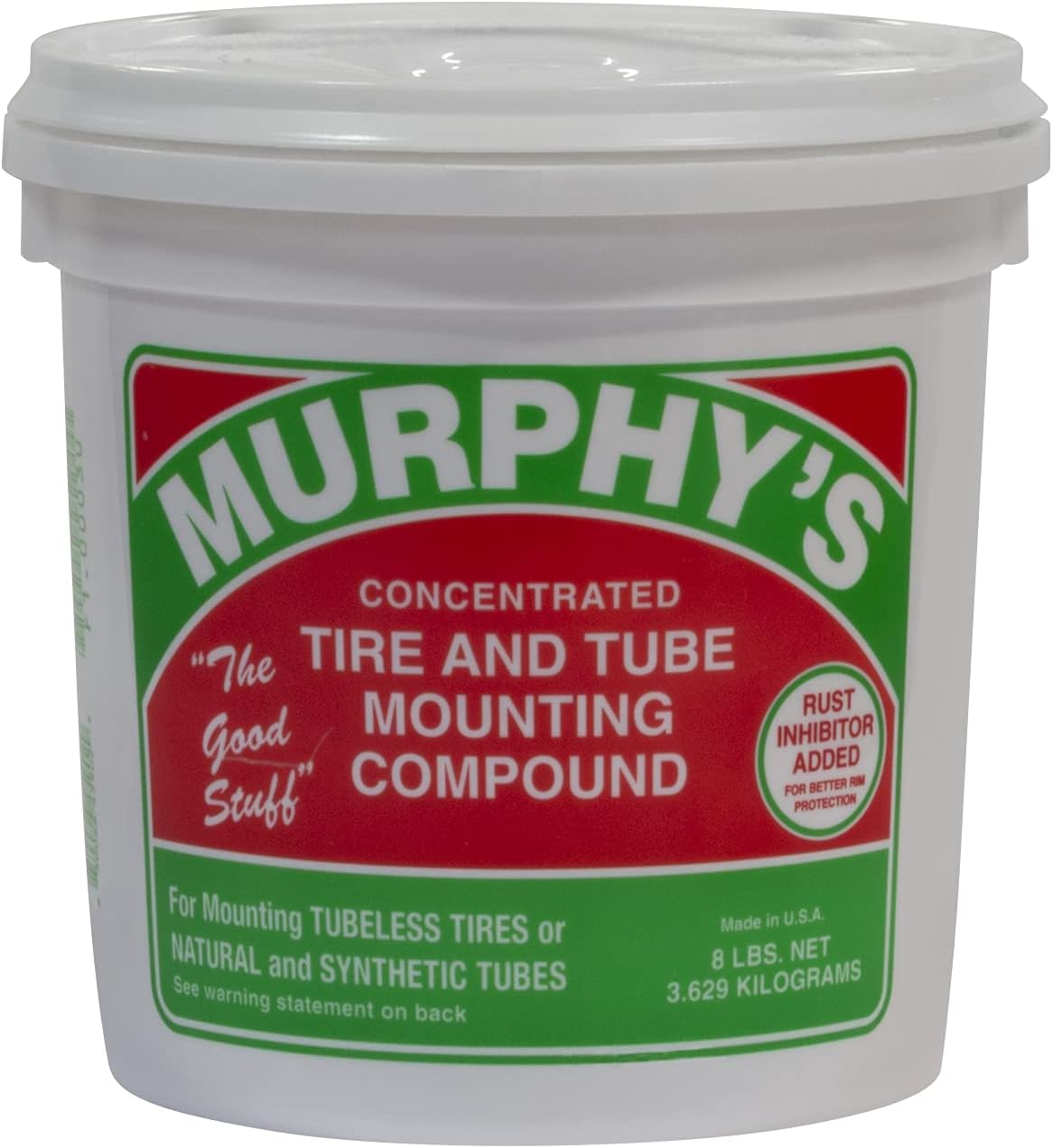
A concentrated tire and tube mounting compound designed to help simplify mounting rubber tires and tubes on passenger, semi truck, construction, and OTR applications. Its ultra-thick formula packs beads effectively and includes rust inhibitors to help protect against corrosion during use.

This manual duck head tire changer kit makes tire installation and removal simpler by letting you embed the duck head into the tire with applied pressure. The integrated design and durable steel construction help reduce friction and improve efficiency and safety during use. Suitable for 16–21 inch wheels, it’s convenient for cars, trucks, SUVs, and ATV tires, with 24-hour after-sales support.

Related Articles
How Tire Weight Affects Toyota Tacoma Performance
How does tire weight influence your Toyota Tacoma's performance and efficiency? Discover the surprising effects that could change your driving experience.
Read More
Tire Noise Levels by Tire Type on a Toyota Tacoma
A comprehensive look at how tire types affect noise levels in your Toyota Tacoma reveals surprising insights that could enhance your driving experience.
Read More
How To Choose Tires for a Dual Use Toyota Tacoma
Unlock the secrets to selecting the perfect tires for your dual-use Toyota Tacoma, ensuring optimal performance and comfort on every adventure. Discover more inside!
Read More