
16 Inch Vs 17 Inch Wheels for Toyota Tacoma off Road
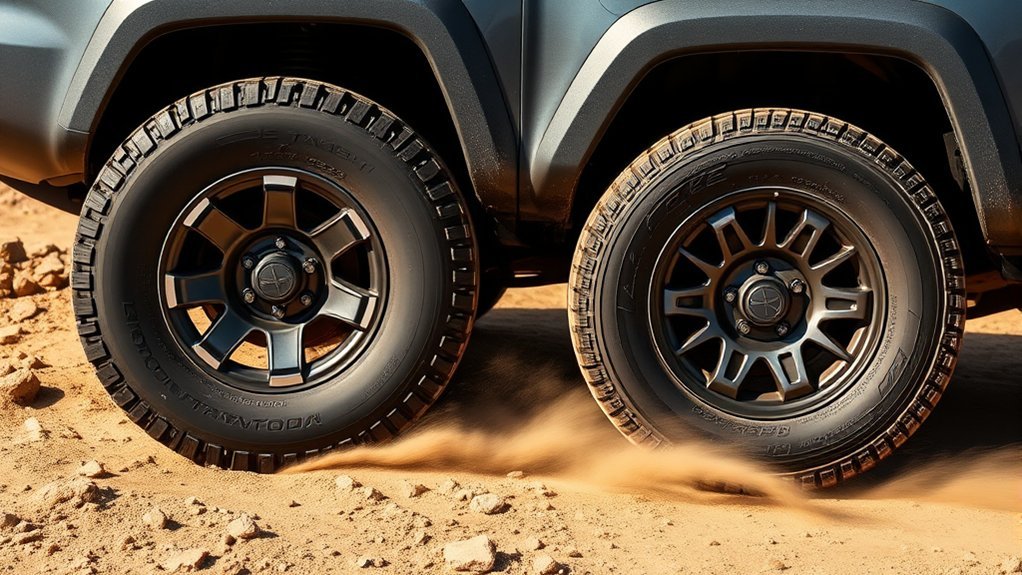
Choosing between 16-inch and 17-inch wheels for your Toyota Tacoma off-road is not just a style decision. Wheel diameter changes sidewall height, tire availability, brake clearance, ride feel, and fitment. Both sizes can work well, but the better choice depends on your Tacoma generation, brake package, tire size, wheel offset, suspension setup, and how often you drive on pavement.
Quick Answer
Choose 16-inch wheels if you want more sidewall, better rim protection, and a softer feel on rough trails. Choose 17-inch wheels if you want easier tire shopping in many modern sizes, better brake clearance, and a balanced setup for daily driving, overlanding, and newer Tacoma builds.
Key Takeaways
- 16-inch wheels usually give you more tire sidewall at the same overall tire diameter, which helps comfort and rim protection off road.
- 17-inch wheels often make tire shopping easier in current all-terrain and mud-terrain sizes, but you still need to verify the exact tire model and load rating.
- Wheel diameter alone does not decide fitment. Tire diameter, section width, offset, backspacing, wheel width, alignment, and suspension travel matter more.
- Older Tacoma builds may suit 16-inch wheels well, while many newer builds need extra brake-clearance checks before downsizing.
- Always match tire size, load rating, inflation pressure, and wheel specs to your Tacoma’s door placard, owner’s manual, and real loaded weight.
How Wheel Size Affects Off-Road Performance
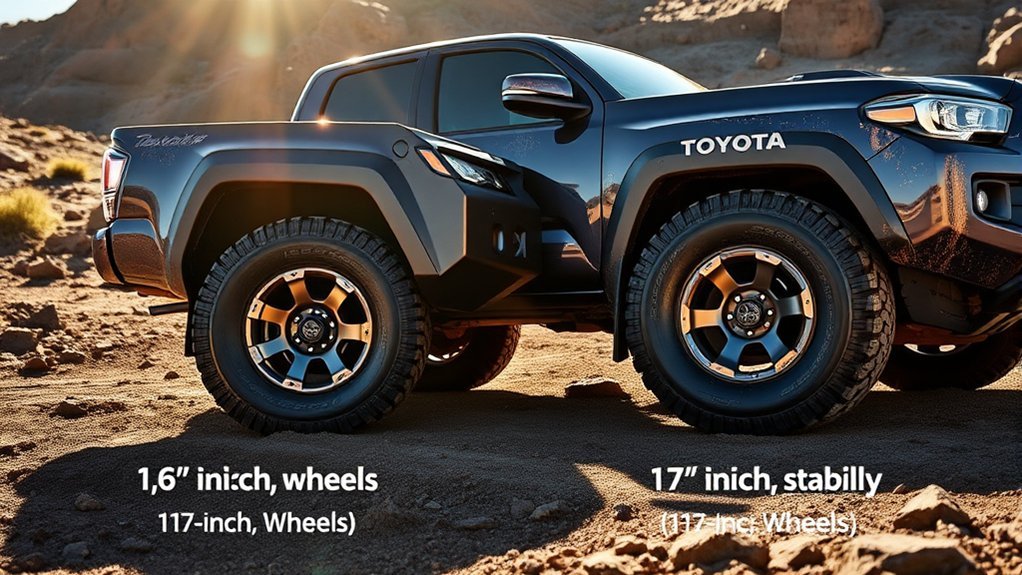
Wheel size affects how much tire sidewall you can run for a given overall tire diameter. A 16-inch wheel leaves more room for sidewall than a 17-inch wheel when the outside tire diameter stays similar. That extra sidewall can flex more over rocks, roots, ruts, and washboard surfaces.
This is why many trail-focused Tacoma owners still like 16-inch wheels. The taller sidewall can improve ride comfort, help the tire conform to uneven terrain when aired down, and reduce the chance of bending or scraping the wheel lip.
17-inch wheels can still perform very well off road. They often make sense for mixed-use Tacomas because tire choices are strong in many current sizes, steering can feel more precise, and the larger barrel may provide better clearance for some brake packages. Your final result depends on the tire, pressure, suspension, and wheel offset more than the number on the wheel alone.
Sidewall height comes from tire size, not wheel size by itself. For example, a 265/75R16 tire has about 7.8 inches of sidewall, while a 265/70R17 has about 7.3 inches of sidewall. Both are close in total diameter, but the 16-inch setup gives the tire more rubber between the rim and the trail.
A one-inch wheel change does not automatically add ground clearance. Overall tire diameter, tire pressure, and suspension setup decide how the truck actually feels and clears obstacles.
[Products Worth Considering]
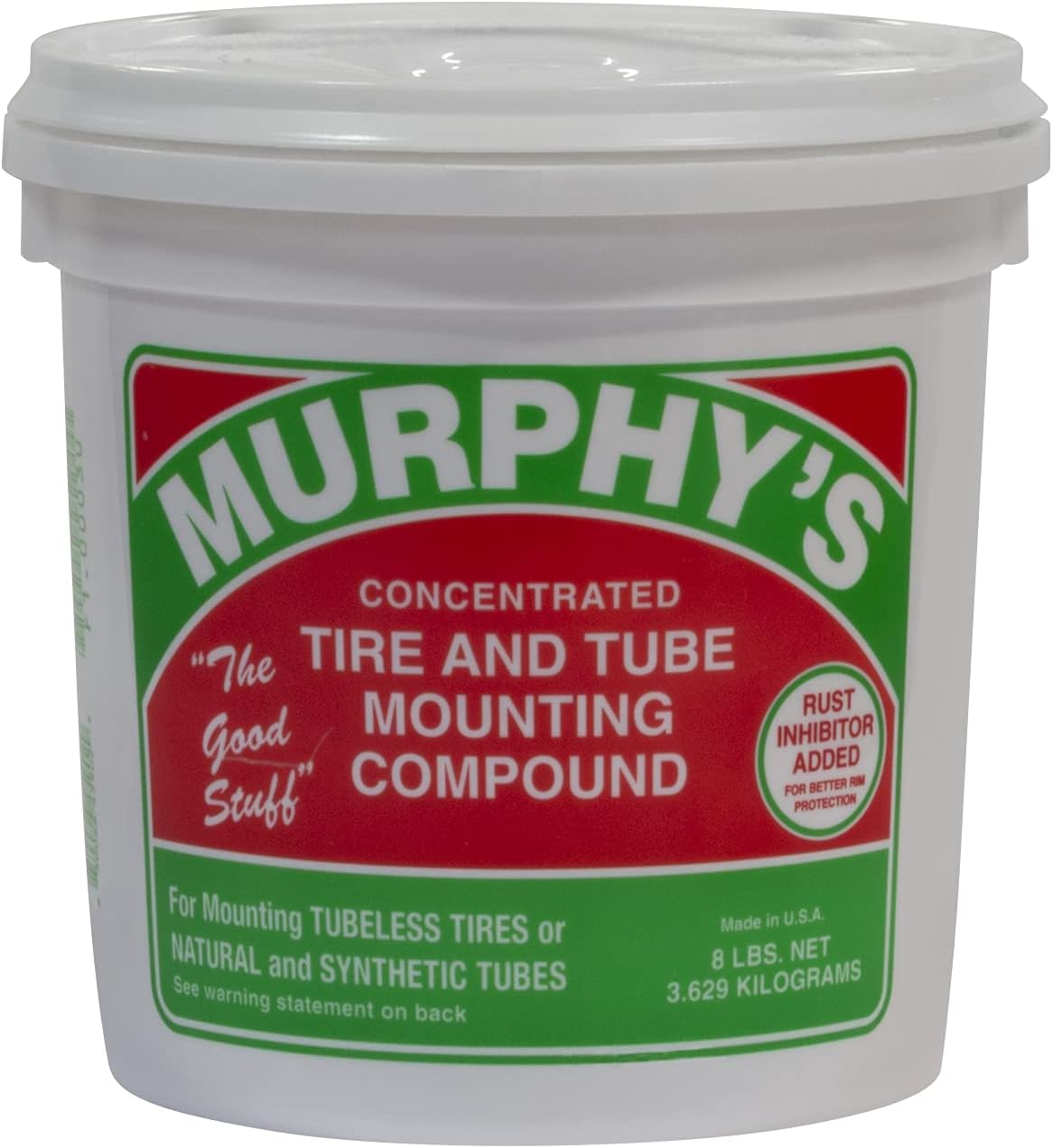
A concentrated tire and tube mounting compound designed to help simplify mounting rubber tires and tubes on passenger, semi truck, construction, and OTR applications. Its ultra-thick formula packs beads effectively and includes rust inhibitors to help protect against corrosion during use.

These aluminum alloy tire valve stem caps with an O-ring seal help protect valve stems from corrosion while adding a clean, stylish look to your vehicle. The universal fit works across cars, trucks, motorcycles, bicycles, and more, making them an easy upgrade for everyday driving and off-road use. Installation is quick, and the included four-pack keeps all your tires dressed and protected.

These M14x1.5 closed-end chrome lug nuts are a one-piece replacement designed for secure fitment on compatible GM, Ford, and select Chrysler/Dodge models. Featuring a 60-degree conical seat and anti-rust chrome plating, they help resist corrosion and maintain a bright look for everyday driving. Built for long-term durability, they include OEM-style part references and are backed by 12 months of support.
16 vs 17-Inch Tacoma Wheels at a Glance
| Category | 16-Inch Wheels | 17-Inch Wheels |
| Best For | Trail comfort, airing down, rock crawling, and rim protection | Daily driving, overlanding, tire availability, and brake clearance |
| Ride Feel | Softer and more forgiving with the right tire pressure and load rating | Tighter steering feel with slightly less sidewall flex |
| Tire Choice | Good in classic Tacoma sizes, but some newer tire choices may be narrower | Often broader for popular modern all-terrain and mud-terrain sizes |
| Brake Clearance | Can be tight on some newer trims or brake upgrades | Usually easier for newer factory brakes and some aftermarket brake kits |
| Main Trade-Off | May limit newer tire options and some brake upgrades | Less sidewall at the same tire diameter than a 16-inch wheel |
Pros and Cons of 16-Inch TRD Wheels for Off-Roading
16-inch TRD wheels make the most sense when trail comfort and sidewall protection matter more than appearance or brake clearance. They are especially appealing on older Tacoma builds that came with 16-inch factory wheel and tire packages.
Increased Sidewall Flexibility
The biggest advantage of a 16-inch wheel is the extra sidewall you can keep when the total tire diameter stays the same. More sidewall gives the tire more room to flex over rough terrain. That can help traction when you air down for slow trail driving, because the tire can conform to rocks and uneven surfaces instead of bouncing across them.
The taller sidewall also gives the wheel more protection. On rocky trails, the rubber sidewall can take some of the hit before the wheel lip does. This is helpful if your Tacoma sees ledges, loose rock, roots, or washed-out forest roads.
Warning: Airing down is for low-speed off-road use only. Reinflate before highway driving, and use the vehicle tire placard or owner’s manual for normal road pressure. Running too little pressure on pavement can overheat and damage a tire.
Limited Tire Options
The downside is tire choice. Many popular all-terrain and mud-terrain tires are still available for 16-inch wheels, but some newer sizes and load ranges are easier to find in 17-inch fitments. This matters if you want a very specific tire model, a lighter C-load tire, or a size that shops keep in stock.
Brake clearance can also become a limit. Some Tacoma brake upgrades and some newer factory brake packages may need more wheel-barrel clearance than a 16-inch wheel provides. Before buying, confirm the wheel clears your calipers, suspension, balancing weights, and stick-on wheel weights.
Advantages of 17-Inch Wheels: Versatility and Performance
17-inch wheels are the more versatile choice for many Tacoma owners. They suit daily driving, overlanding, towing light gear, and weekend trail use. They also match the direction of many newer truck tire sizes, which can make replacement tires easier to find while traveling.
A 17-inch wheel can also feel sharper on pavement because the tire has slightly less sidewall at the same overall diameter. That can reduce squirm during lane changes, highway driving, and cornering. You may notice a more planted steering feel compared with a taller-sidewall 16-inch setup.
The trade-off is comfort and wheel protection. A 17-inch setup can still ride well, but the tire sidewall has less room to absorb hard impacts if you keep the same overall tire diameter. For rocky trails, that makes tire pressure, sidewall strength, and wheel choice more important.
Do not assume a 17-inch wheel is automatically stronger or better. A light-duty 17-inch wheel with the wrong offset can cause more problems than a properly rated 16-inch wheel. Focus on the complete wheel-and-tire package, not the diameter alone.
Generation and Trim Context Matters
Do not choose wheel size without checking your Tacoma’s generation and trim. Older Tacoma TRD Off-Road setups often make 16-inch wheels feel natural, while many newer Tacoma builds and aftermarket tire packages lean toward 17-inch wheels.
The fourth-generation Tacoma changed the conversation because Toyota updated the frame, suspension, brakes, and off-road trim hardware. Toyota notes that TRD Off-Road models use Bilstein remote-reservoir shocks, and current off-road trims may also offer systems such as a front stabilizer bar disconnect and Multi-Terrain Monitor on equipped models. You can read Toyota’s current-generation overview in the Toyota USA Newsroom.
That does not mean every newer Tacoma needs 17-inch wheels. It means you should verify clearance before buying, especially if you are downsizing wheels, changing offset, adding a lift, or buying aftermarket wheels with a different barrel shape.
The safest approach is simple: start with your model year, factory tire placard, brake package, suspension height, wheel specs, and the Toyota owner’s manual. Then choose the tire size and wheel diameter that fit your actual truck, not just a forum photo or social media build.
Wheel Specs to Check Before You Buy
A wheel can be the right diameter and still be wrong for your Tacoma. Before ordering, confirm the full wheel spec sheet and compare it with your truck, not just the product title.
- Bolt pattern: Confirm the pattern for your exact year, trim, and drivetrain. Do not assume every Tacoma uses the same pattern across every generation and configuration.
- Wheel width: Match the wheel width to the tire manufacturer’s approved rim-width range.
- Offset: Lower offset pushes the tire outward. That can help upper-control-arm clearance but can increase fender, mud-flap, and bumper rubbing.
- Backspacing: Too much backspacing can place the tire too close to suspension parts.
- Center bore and hub fit: Confirm whether the wheel is hub-centric or needs proper hub-centric rings.
- Wheel load rating: Make sure the wheel is rated for your Tacoma’s real loaded use, especially with armor, racks, tools, camping gear, or towing tongue weight.
- Lug nut seat: Use the correct lug nut style for the wheel. The wrong seat type can prevent proper clamping.
- TPMS compatibility: Confirm sensor fitment and programming needs before mounting tires.
- Brake clearance: Test fit the wheel before mounting tires if your truck has larger brakes or aftermarket calipers.
Note: A wheel’s spoke shape and inner barrel can affect brake clearance even when the diameter, width, and offset look correct on paper.
Tire Options: What’s Available and Why It Matters
Tire availability should be one of your first checks. A wheel size only works if the tire you want is available in the right diameter, width, load rating, speed rating, and tread type. This is where tire selection becomes more important than wheel size alone.
Tire Size Availability
- 16-inch wheels can work well with classic Tacoma tire sizes and taller sidewalls.
- 17-inch wheels often have broader choices in modern all-terrain, rugged-terrain, and mud-terrain models.
- Common Tacoma upgrade sizes can vary by generation, lift height, wheel offset, tire brand, and actual tread width.
- Load index and load range must match your truck’s real use, especially if you carry armor, racks, tools, camping gear, or towing weight.
- Spare tire planning matters because a larger tire may not fit the factory spare location without changes.
Use the Tire and Loading Information Label and owner’s manual as your baseline. NHTSA recommends replacing tires with the original size or another size recommended by the vehicle manufacturer. If you move away from factory size, confirm the change with a qualified tire shop.
Off-Road Performance Options
The best off-road tire is not always the biggest tire. A lighter all-terrain tire may ride better, stop better, and stress the suspension less than a heavy mud-terrain tire. A more aggressive tire may help in mud or loose terrain, but it can add noise, weight, and rolling resistance on the highway.
When comparing 16-inch and 17-inch options, look at the complete tire spec. Check overall diameter, section width, tread depth, load index, load range, approved rim width, weight, and sidewall construction. A tire with the same size printed on the sidewall can still measure differently from one brand to another.
Pro Tip: Before ordering wheels, choose your tire first. The tire’s real measured width, approved rim range, and load rating will tell you which wheel width and offset make sense.
Cost Considerations and Trends
Cost depends on more than the wheel diameter. A 16-inch tire may be cheaper in one size, while a 17-inch tire may be easier to find in another. Heavy-duty LT tires can also cost more, weigh more, and ride firmer than standard-load or C-load options.
- Check local availability: A common tire size is easier to replace during a trip.
- Compare tire weight: Heavier tires can reduce acceleration, braking feel, and fuel economy.
- Match the load rating: Do not buy more tire than your truck needs if comfort and weight matter.
- Budget for fitment: Larger tires may need alignment work, trimming, mud-flap changes, or suspension adjustments.
- Think long term: The best wheel size is one that gives you tire options now and later.
Ride Quality: 16-Inch vs. 17-Inch Wheels
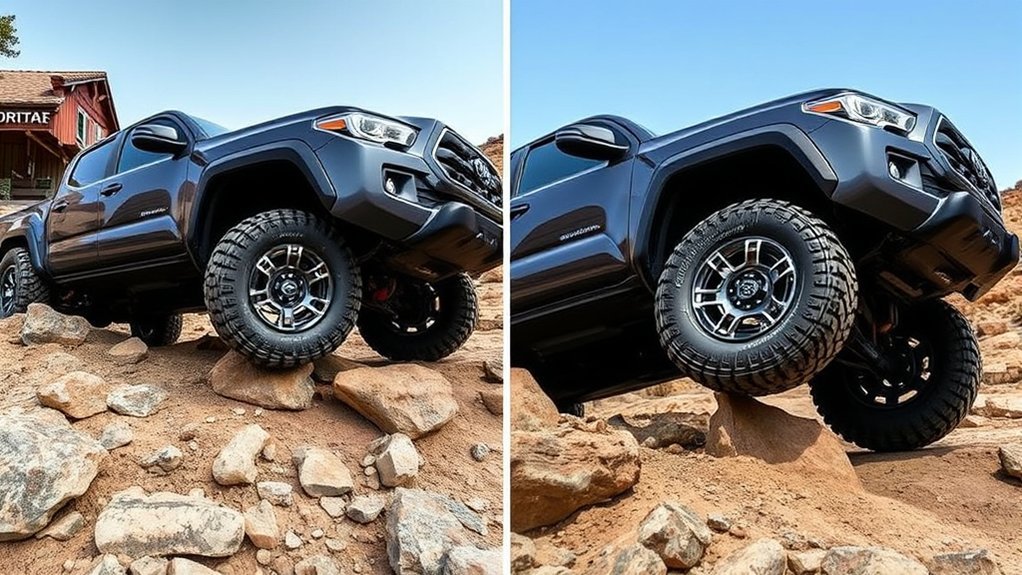
Ride quality is one of the strongest reasons to consider 16-inch wheels. More sidewall can soften sharp impacts and reduce harshness over rocks, potholes, washboard roads, and trail chatter. If your Tacoma spends a lot of time on rough backroads, that softer feel can make a real difference.
17-inch wheels can still ride comfortably with the right tire. A 17-inch wheel paired with a taller tire, proper load rating, and correct pressure can work well for daily use and long-distance overlanding. It may also feel more stable on pavement because the sidewall moves less during steering inputs.
The key is not wheel diameter alone. Tire construction, pressure, suspension tuning, added vehicle weight, and tread type all affect comfort. A stiff E-load mud tire on a 16-inch wheel may ride harsher than a lighter all-terrain tire on a 17-inch wheel.
If comfort matters, avoid buying the heaviest tire just because it looks tougher. A tire with the right load rating for your actual use can feel better, stop better, and reduce stress on steering and suspension parts.
[Products Worth Considering]

This ALL-TOP auto-stop tire deflator valve kit lets you air down off-road tires quickly without watching pressure, automatically stopping when your preset PSI is reached. Each valve is individually calibrated for reliable performance with an acceptable +/- 2 PSI tolerance. The adjustable deflator range covers 10 to 30 PSI and includes four valves plus valve caps and a zipper pouch for easy setup on trucks, SUVs, RVs, UTVs, and powersports.

This 1/2-inch drive breaker bar delivers powerful leverage for loosening and tightening stubborn lug nuts and automotive fasteners. The 180-degree flex head helps you reach tight spaces at the angle you need, making tire and brake jobs easier. A spring-loaded ball detent design holds 1/2-inch sockets securely while the chrome-moly head provides durable strength for everyday use.

These universal tire valve stem caps help protect valve cores from dust, debris, and moisture while helping maintain stable tire pressure. The corrosion-resistant metal construction and sealed design provide reliable protection in road grime, mud, and winter conditions. Twist-on installation makes them quick to fit on cars, SUVs, trucks, and motorcycles.
Fitment Issues: Avoiding Rubbing With the Right Wheel Size
Fitment problems usually come from the full wheel-and-tire package, not just the wheel diameter. A wider tire, lower offset, taller diameter, or changed alignment can move the tire into the upper control arm, cab mount, fender liner, mud flap, or bumper edge.
- Tire diameter: Taller tires improve clearance under the axle but increase rubbing risk at the body.
- Section width: Wider tires can rub suspension parts or fender liners, especially with aggressive tread shoulders.
- Wheel offset: Lower offset pushes the tire outward, which can help upper-control-arm clearance but increase fender and mud-flap rubbing.
- Backspacing: Too much backspacing can place the tire too close to suspension components.
- Suspension height: A lift helps vertical clearance, but it does not automatically fix rubbing during steering and compression.
- Alignment: Caster settings can move the tire forward or backward in the wheel well.
- Tire type: Aggressive tread blocks can measure wider than the size suggests, so check real specs for tire section width.
A body mount chop, cab mount relocation, fender-liner adjustment, or trimming may be needed on some larger setups. That depends on the tire size, wheel offset, Tacoma generation, and suspension geometry. Do not assume a tire clears just because another Tacoma runs the same printed size.
Note: Test fit at full steering lock and through suspension compression. A tire that clears in the driveway can still rub hard on a trail when the suspension is loaded.
Which Size Fits Your Driving Style?
Your best wheel size depends on how you actually use your Tacoma. A trail truck, a commuter, and an overland build all place different demands on tires and wheels.
- Choose 16-inch wheels for a trail-first Tacoma: Pick this route if you spend more time on rocky trails, forest roads, and slow technical sections than on highways.
- Choose 17-inch wheels for a daily-driven Tacoma: Pick this route if you want a balanced ride, modern tire availability, and easier brake clearance.
- Choose 17-inch wheels for overlanding in many cases: Replacement tire availability matters on long trips, especially if you travel far from your usual tire shop.
- Consider 16-inch wheels for comfort-focused travel: If your truck is light and your route is rough, the taller sidewall can reduce harshness.
- Do not oversize just for looks: A tire that rubs, weighs too much, or exceeds your real load needs can make the truck worse to drive.
User Experiences: Real-World Insights From Tacoma Owners
Real-world Tacoma owner feedback usually follows a pattern. Drivers who spend more time on rocky trails, slow technical sections, and rough forest roads often prefer 16-inch wheels for the softer sidewall and added rim protection. They like being able to air down and let the tire work.
Owners who drive long highway miles, carry overlanding gear, or want easier tire shopping often lean toward 17-inch wheels. They like the balance between off-road ability and daily comfort. Many also prefer the stance and brake clearance that come with a 17-inch setup.
Neither group is wrong. A weekend rock-crawling Tacoma has different needs than a daily driven truck with camping gear, snow trips, and occasional trail runs. The better choice is the one that matches your actual driving, not the most popular setup online.
Choosing the Best Wheels for Your Off-Road Adventures
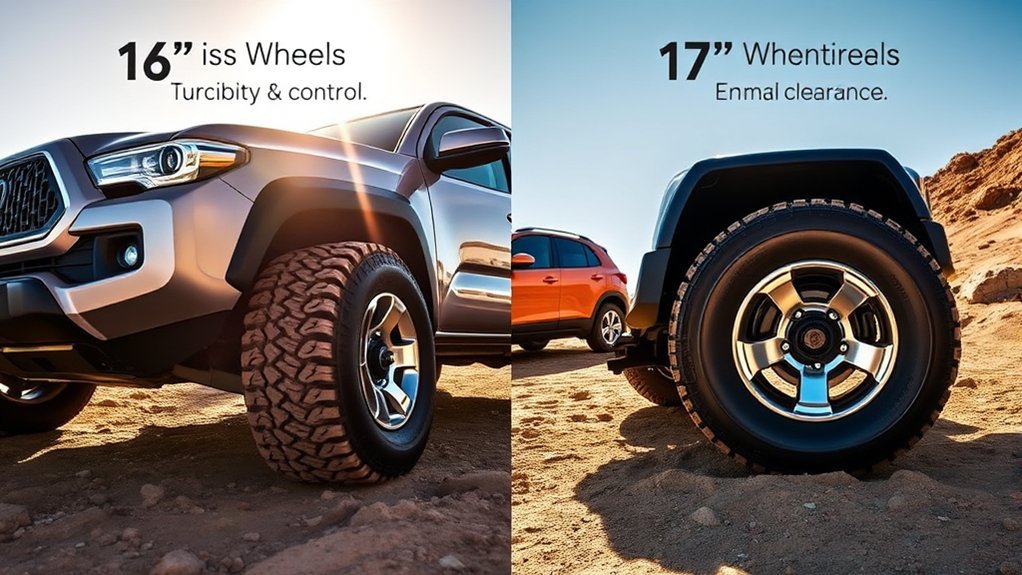
Choose 16-inch wheels if you care most about sidewall, slow-speed trail comfort, rock protection, and a classic Tacoma off-road setup. This is a strong choice for trail-focused trucks, especially if your preferred tire is available in the right size and load rating.
Choose 17-inch wheels if you want a more flexible setup for daily driving, road trips, overlanding, and current tire availability. This is often the easier choice if you want popular all-terrain sizes, better brake clearance, and a modern Tacoma stance.
Before you buy, make a short checklist: your Tacoma year, trim, brake package, suspension height, wheel width, offset, tire diameter, tire width, load rating, TPMS plan, lug nut style, and spare tire plan. That checklist will prevent more problems than choosing a wheel diameter by itself.
Frequently Asked Questions
Are 17-inch wheels good for off-roading?
Yes, 17-inch wheels can be very good for off-roading when paired with the right tire. They offer strong tire availability, good brake clearance, and a balanced feel for mixed driving. For technical rock crawling, a 16-inch wheel may still feel more forgiving because it leaves more sidewall at the same tire diameter.
What is the biggest tire size for a Tacoma TRD Off-Road?
Many Tacoma owners target tires around 32 to 33 inches, but the biggest safe size depends on Tacoma generation, wheel offset, suspension height, alignment, brake package, and tire model. Some larger setups need trimming, cab mount work, or other fitment changes. Always test clearance before driving off road.
What are the disadvantages of 17-inch wheels?
The main disadvantage is reduced sidewall compared with a 16-inch wheel at the same overall tire diameter. That can mean less cushion on rocks and less rim protection. Some 17-inch tire-and-wheel packages can also weigh more, depending on tire construction and wheel design.
Are bigger wheels better for off-road driving?
Bigger wheels are not automatically better off road. Smaller wheels with taller sidewalls can improve comfort and rim protection. Larger wheels can improve brake clearance and tire availability. The best setup balances wheel diameter, tire diameter, tire width, pressure, load rating, and terrain.
Do 16-inch wheels clear Tacoma brakes?
Many factory-style 16-inch wheels clear brakes on older Tacoma setups, but clearance is not guaranteed for every year, trim, aftermarket wheel, or brake upgrade. Check the wheel manufacturer’s fitment notes and test fit before mounting tires, especially on newer Tacoma trims.
Should I choose 16-inch or 17-inch wheels for overlanding?
For overlanding, 17-inch wheels are often the easier choice because popular all-terrain tire options are widely available. Choose 16-inch wheels if your route includes more rough, slow trails and you want extra sidewall comfort. In either case, choose a tire with enough load rating for your added gear.
Can you put 16-inch wheels on a 2024 or newer Tacoma?
You may be able to on some setups, but you should not assume they fit. Newer Tacoma trims can have different brake and suspension packaging than older trucks. Check the wheel manufacturer’s confirmed fitment list, verify brake clearance, and test fit before mounting tires.
Do 17-inch wheels ride rougher than 16-inch wheels?
They can ride firmer if the total tire diameter stays the same because the tire has less sidewall. But tire load range, pressure, tread design, and suspension tuning can matter even more. A properly chosen 17-inch all-terrain can ride better than a heavy, stiff 16-inch mud-terrain.
Conclusion
The best Toyota Tacoma off-road wheel size depends on how you use the truck. 16-inch wheels are better if you want maximum sidewall, a softer trail ride, and more protection against rocks. 17-inch wheels are better if you want modern tire availability, better brake clearance, sharper road manners, and an easier overlanding setup.
For most mixed-use Tacoma owners, 17-inch wheels are the practical all-around choice. For trail-first drivers who value sidewall and ride comfort over tire-market convenience, 16-inch wheels still make a strong case. Check tire specs, wheel offset, load rating, brake clearance, and real fitment before you buy, and your Tacoma will be much easier to live with on and off the trail.
Sources
- Toyota USA Newsroom: 2024 Toyota Tacoma is the Ultimate Adventure Machine — current Tacoma off-road trim, suspension, brake, camera, and capability context.
- Toyota Owner Manuals and Warranty Resources — vehicle-specific tire placard, wheel, tire, and pressure guidance.
- NHTSA TireWise — tire pressure, tire labels, tread, sidewall, replacement size, TPMS, and tire maintenance guidance.
- 49 CFR § 575.104: Uniform Tire Quality Grading Standards — federal tire grading and labeling context.
[Products Worth Considering]

This manual duck head tire changer kit makes tire installation and removal simpler by letting you embed the duck head into the tire with applied pressure. The integrated design and durable steel construction help reduce friction and improve efficiency and safety during use. Suitable for 16–21 inch wheels, it’s convenient for cars, trucks, SUVs, and ATV tires, with 24-hour after-sales support.

Upgrade your Toyota’s wheels with durable aluminum alloy valve stem caps that help protect valve cores from corrosion and direct exposure to road grime, clay, water, and snow. Rubber rings improve sealing to help prevent air leakage and maintain stable tire pressure for safer driving. These caps are easy to install or remove without tools and add a unique, stylish look to your car.

Vigorder rubber cement glue delivers superior adhesion and cures quickly within about 30 seconds for seamless rubber bonding. Once cured, it helps provide a strong, durable, waterproof seal that holds up to vehicle weight, pressure, and heat. Suitable for cars, motorcycles, trucks, bicycles, and off-road tires, it’s designed for emergency patch and maintenance repairs.

Related Articles
How Tire Weight Affects Toyota Tacoma Performance
How does tire weight influence your Toyota Tacoma's performance and efficiency? Discover the surprising effects that could change your driving experience.
Read More
Tire Noise Levels by Tire Type on a Toyota Tacoma
A comprehensive look at how tire types affect noise levels in your Toyota Tacoma reveals surprising insights that could enhance your driving experience.
Read More
How To Choose Tires for a Dual Use Toyota Tacoma
Unlock the secrets to selecting the perfect tires for your dual-use Toyota Tacoma, ensuring optimal performance and comfort on every adventure. Discover more inside!
Read More