
Toyota Tacoma Tire Losing Air Overnight Causes
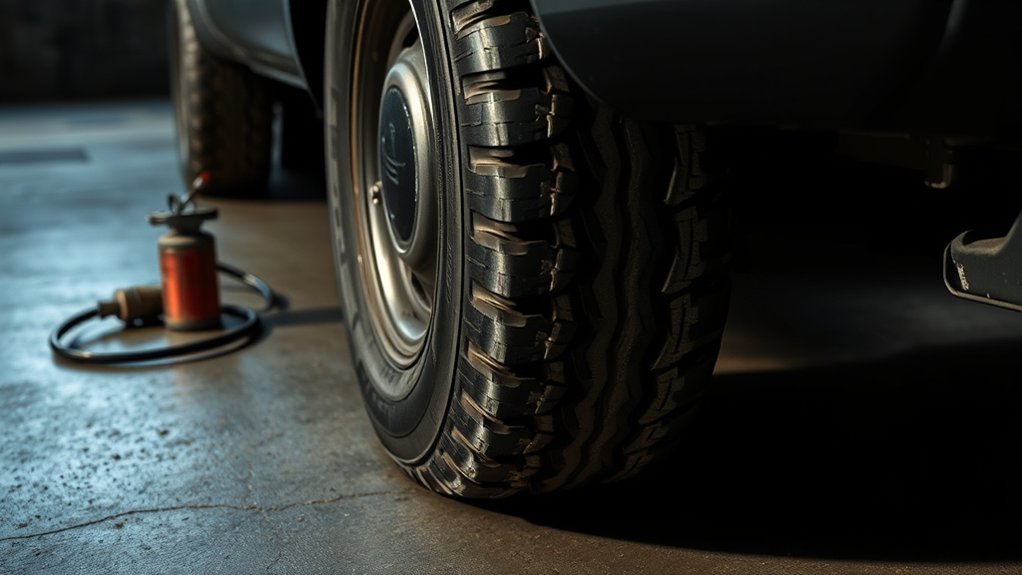
If your Toyota Tacoma tire is losing air overnight, start with simple checks before you assume the tire is ruined. Cold weather, a small tread puncture, a leaking valve stem, bead corrosion, rim damage, sidewall damage, or a TPMS issue can all point to low pressure. The safe fix depends on where the air is escaping and whether the tire is still repairable.
Quick Answer
A Toyota Tacoma tire usually loses air overnight because cold air lowers pressure, a nail or screw is leaking through the tread, the valve stem is cracked, or the bead is not sealing against the wheel. Check pressure cold, use soapy water to find bubbles, and replace the tire if the sidewall is damaged.
Key Takeaways
- A cold night can lower tire pressure, but one tire dropping much faster than the others usually points to a leak.
- Use the tire pressure listed on your Tacoma’s driver-door placard or owner’s manual, not the maximum pressure on the tire sidewall.
- Valve stems, tread punctures, bead leaks, TPMS valve seals, and bent rims are common slow-leak sources.
- A repairable puncture must be in the tread area; sidewall, shoulder, bulge, and exposed-cord damage usually means replacement.
- Your TPMS light helps, but it does not replace a monthly cold-pressure check with an accurate gauge.
At a Glance
| Time Required | 10 to 30 minutes for a basic leak check; longer if a shop removes the tire from the wheel |
| Difficulty | Easy for pressure and bubble checks; professional service for bead, rim, TPMS, sidewall, or internal tire damage |
| Tools Needed | Accurate tire-pressure gauge, air compressor, spray bottle, water, dish soap, flashlight, chalk or marker, and a tread-depth gauge |
| Cost | Often low for valve service or a repairable tread puncture; higher if the tire, TPMS sensor, or wheel needs replacement |
Why Is Your Toyota Tacoma Losing Air?
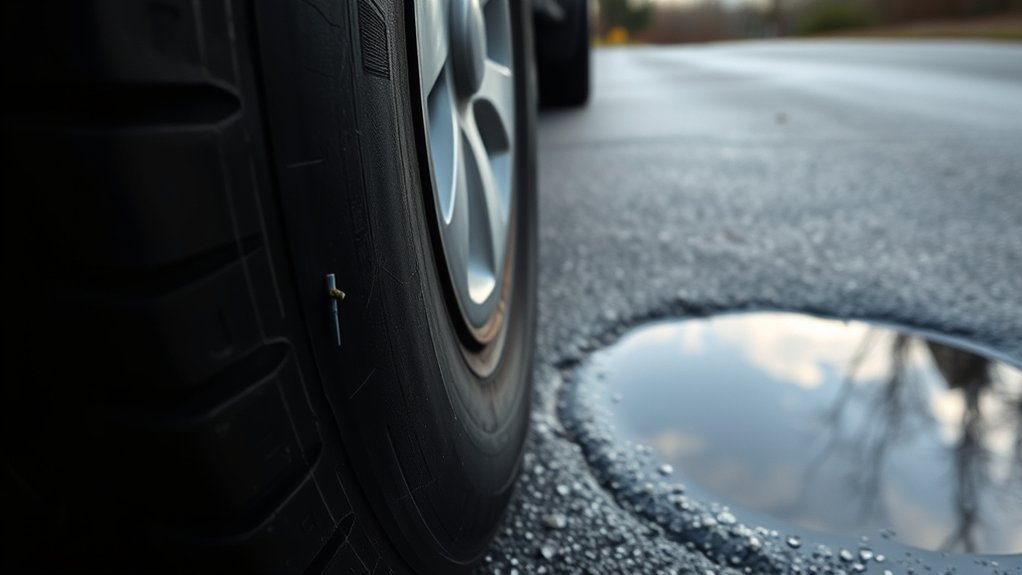
Your Tacoma tire can lose pressure for two different reasons: normal pressure change or an actual leak. A normal drop often happens after a cold night because air contracts as temperature falls. A true leak keeps losing pressure even after you refill the tire to the correct cold PSI.
The most common leak points are the tread, valve stem, valve core, TPMS valve seal, bead seat, wheel rim, and sidewall. A nail in the tread may leak slowly for days. A cracked rubber valve stem may leak only when you move it. A corroded bead area can leak around the rim even when the tread looks perfect.
| Likely Cause | What You May Notice | Best Next Step |
|---|---|---|
| Cold temperature drop | All tires read slightly lower in the morning | Set pressure cold to the driver-door placard PSI |
| Small tread puncture | One tire keeps dropping after refill | Inspect tread and use soapy water to find bubbles |
| Valve stem, valve core, or TPMS valve leak | Bubbles appear at the valve area | Replace the valve core, stem, seal, or TPMS hardware as needed |
| Bead or rim leak | Bubbles form where the tire meets the wheel | Have a tire shop clean, reseal, or inspect the rim |
| Sidewall or shoulder damage | Cuts, cracks, bulges, exposed cord, or air from the sidewall | Stop driving and replace the tire if unsafe |
Warning: Do not keep driving on a tire that is visibly flat, has a sidewall bulge, leaks air rapidly, or cannot hold pressure after inflation. Poor tire maintenance can lead to a flat, blowout, or tread separation, according to NHTSA TireWise.
[Products Worth Considering]
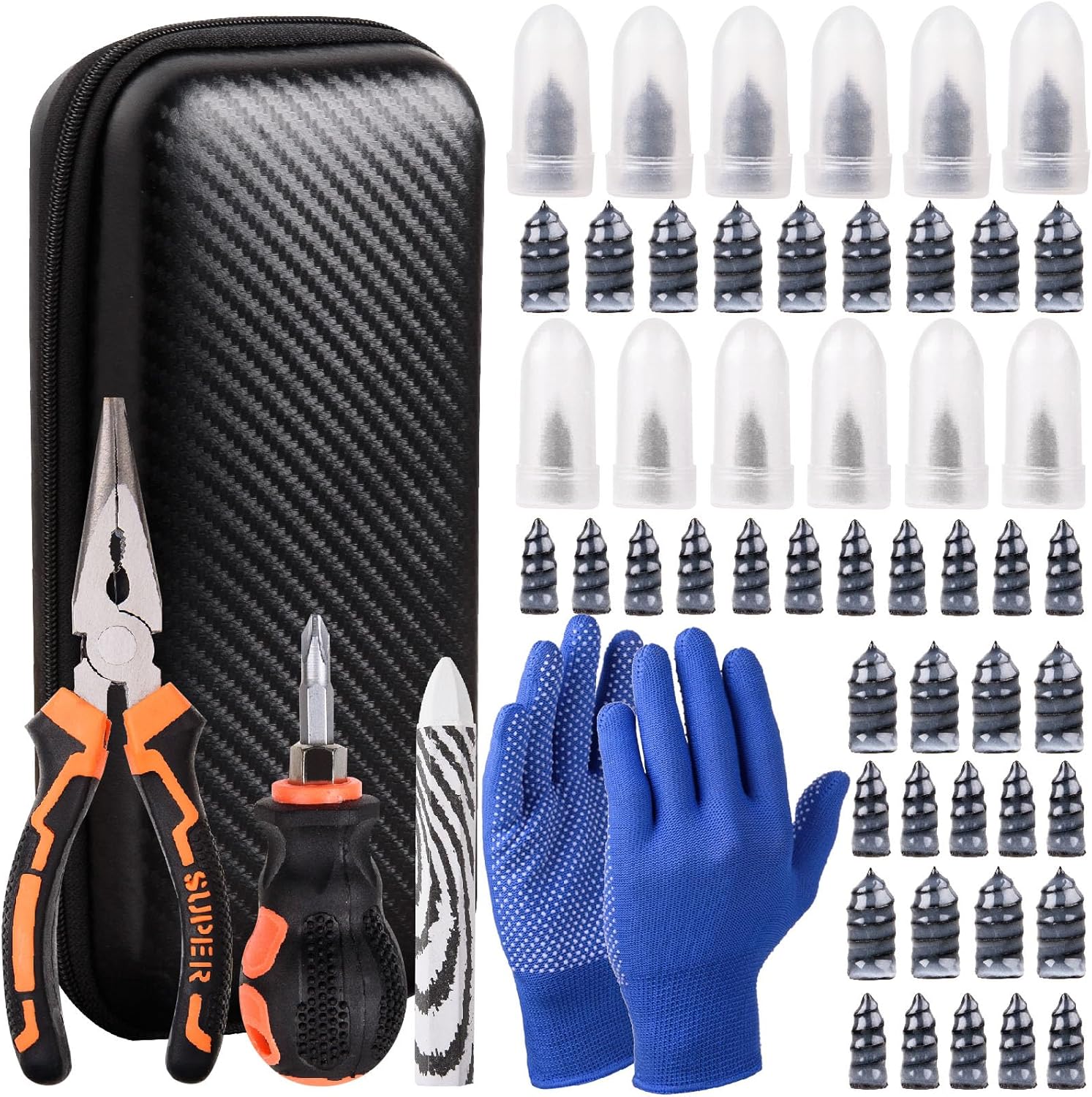
This tire sidewall puncture repair kit fixes flats fast without removing the tire, helping you get back on the road in minutes. It includes self-tapping repair nails, essential tools, gloves, and a portable storage bag for convenient roadside use. Designed for tubeless tires, it helps create a tight, leak-resistant seal for cars, motorcycles, trucks, SUVs, and ATVs.
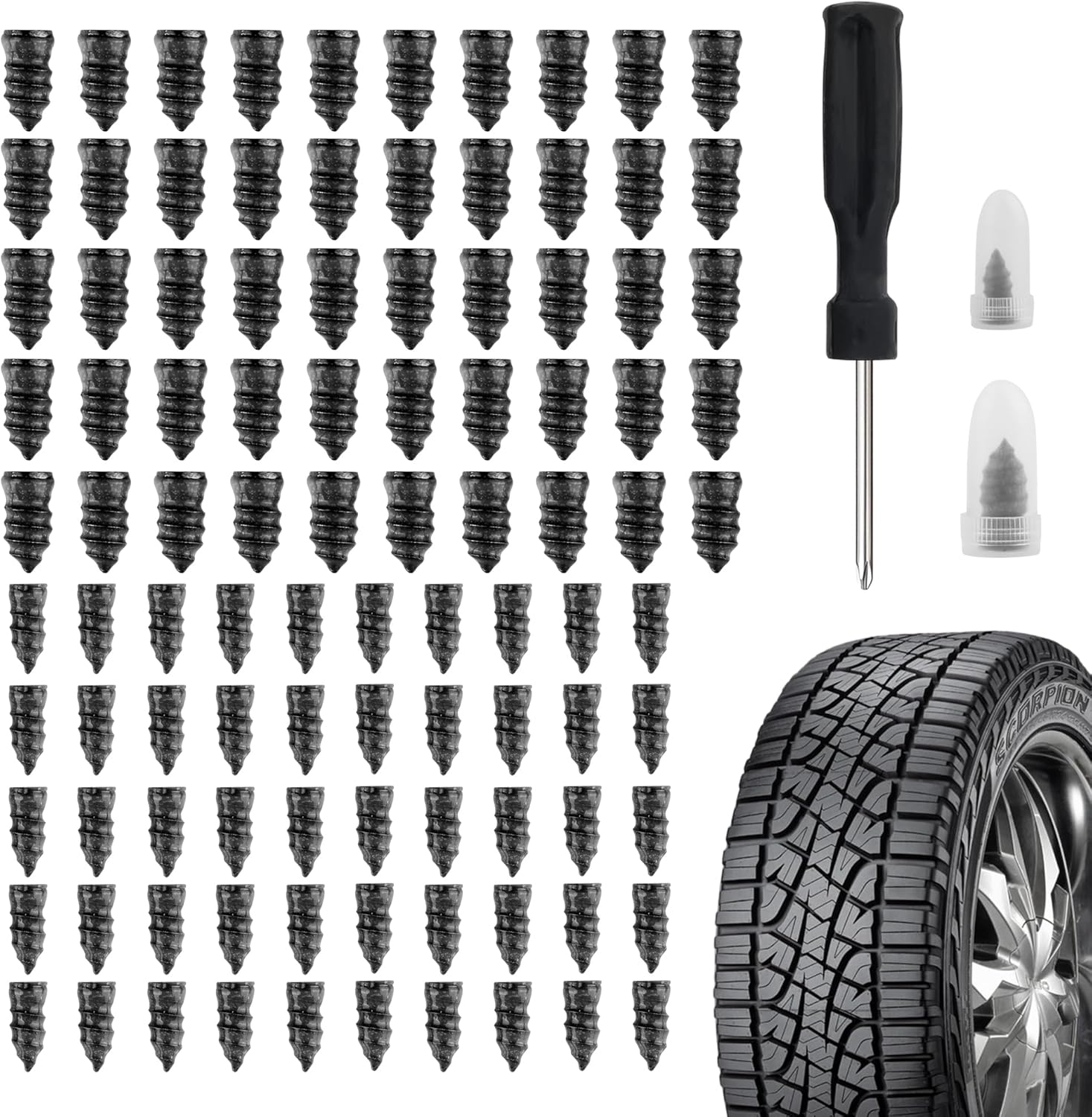
Salior’s tire plug kit provides a fast, reliable self-service fix for punctured or leaking tires without the need for flaring tools. Choose the correct plug size, then screw the nail into the puncture using the included screwdriver for an enhanced seal. The set is durable and convenient for on-the-go maintenance across multiple vehicle types.

Wykodra tire plugs provide quick vulcanizing repairs for tubeless tires, helping you seal punctures and get back on the road. The industrial-strength rubber creates a long-lasting, leak-resistant bond and is designed for emergency fixes without removing the tire. Choose between two standard plug sizes with color-matched options for small to larger damage across many vehicles and off-road uses.
How Temperature Changes Affect Tire Pressure
Temperature can make your Tacoma’s tire pressure look worse overnight. Air expands when it warms and contracts when it cools. Tire Rack explains that a common rule of thumb is about a 2% pressure change for every 10°F change in air temperature, which is roughly 1 psi on many light-duty tires inflated in the 30 to 50 psi range. Tire Rack’s temperature-pressure guide gives the full explanation.
That means a cold morning can trigger a low reading even if the tire has no puncture. Still, temperature should affect all four tires in a similar way. If one tire loses much more pressure than the others, treat it as a possible leak.
Normal Pressure Drop vs. a Real Leak
| Situation | Likely Meaning | What to Do |
|---|---|---|
| All four tires drop slightly after a cold night | Normal temperature-related pressure change | Adjust cold pressure to the placard PSI |
| One tire drops several PSI overnight | Likely slow leak | Check valve, tread, bead, sidewall, and rim |
| TPMS light appears on cold mornings and disappears after driving | Pressure may be close to the warning threshold | Check pressure cold with a gauge |
| Tire loses pressure again after being refilled | Leak or wheel-seal problem | Do a bubble test or visit a tire shop |
Check the Correct Tacoma Tire Pressure First
Before you hunt for a leak, confirm the tire is inflated to the correct cold pressure. The right PSI for your Toyota Tacoma is on the Tire and Loading Information Label on the driver’s door edge or doorjamb, or in the owner’s manual. NHTSA’s TireWise tire-pressure guidance reminds drivers to use the vehicle manufacturer’s recommended cold pressure, not the maximum PSI printed on the tire sidewall.
For the most accurate reading, check tire pressure before you drive or after the truck has been parked for at least three hours. Check all four tires and the spare. If one tire reads much lower than the others, mark that tire and inspect it closely.
Pro Tip: Write down each tire’s cold PSI in the morning, refill to the placard pressure, then check again the next morning. A repeat drop in the same tire usually confirms a leak.
What the TPMS Light Can and Cannot Tell You
Your Tacoma’s tire pressure monitoring system can warn you when a tire becomes significantly underinflated, but it does not replace a gauge. NHTSA says newer vehicles have TPMS warnings, yet drivers should still check tire pressure monthly because TPMS warnings activate only after pressure drops enough to trigger the system. NHTSA also notes that cold mornings can make a marginally low tire trigger the light temporarily.
If the TPMS light comes on, check all tires cold as soon as possible. If the light flashes for 60 to 90 seconds and then stays on, NHTSA says that pattern can indicate a TPMS system malfunction. In that case, have a qualified shop inspect the sensors, valve hardware, and system.
How to Identify Valve Stem Damage and Its Consequences
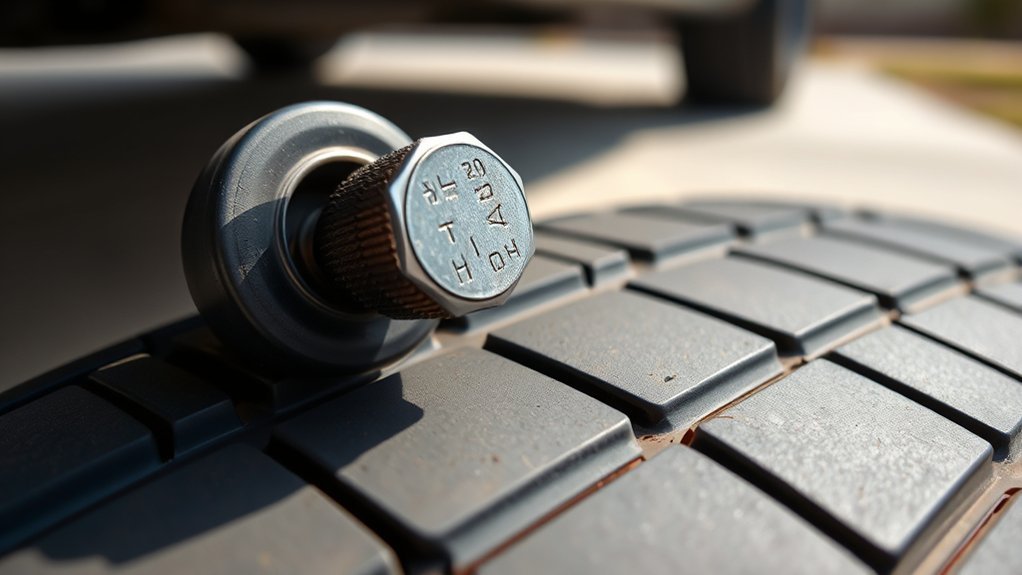
A damaged valve stem can cause a slow leak even when the tire tread looks clean. Rubber valve stems age, dry out, crack, and sometimes leak around the base. Valve cores can also loosen or fail, which lets air escape through the center of the stem.
Use soapy water around the valve cap area, the valve core, and the stem base. If bubbles grow, the valve is leaking. Gently move the valve stem from side to side while watching for bubbles. A leak that appears only when the stem moves still needs repair.
- Replace a cracked, dry, split, or loose valve stem.
- Tighten or replace a leaking valve core with the correct valve-core tool.
- Do not overtighten metal or decorative caps because they can seize or damage the stem.
- Ask the shop to inspect the TPMS sensor if your Tacoma uses valve-mounted sensors.
- Replace corroded TPMS nuts, seals, or grommets when a shop services the sensor.
Check for Tread Punctures and Sidewall Damage
Small nails, screws, staples, and metal shards can hide between tread blocks. A puncture may leak slowly enough that your tire looks fine during the day but loses pressure overnight. Roll the truck forward a few feet if you cannot inspect the full tread surface from one position.
Do not pull out a nail or screw while the tire is still on the truck unless you are ready to install the spare or have the tire repaired immediately. Removing the object can turn a slow leak into a fast leak. Instead, mark the spot with chalk or a marker and let the tire shop inspect it.
A tread puncture may be repairable only after the tire is removed and inspected from the inside. Cooper Tire says a proper tire repair should include both a plug and a patch, should not be performed on the wheel, and should not be used for sidewall or shoulder punctures. Cooper Tire’s repair guidance also says punctures larger than 1/4 inch or 6 mm should not be repaired.
A sidewall cut, shoulder puncture, bulge, exposed cord, impact bubble, or crack is different. Those signs can point to structural damage, and the safer fix is usually tire replacement.
NHTSA reported 511 deaths in tire-related crashes in 2024, so repeated air loss deserves a real inspection, not daily top-offs.
Check Tread Depth and Tire Condition
A slow leak is not the only safety issue to check. Inspect tread depth, uneven wear, dry cracking, exposed cord, and impact damage while you are already looking for the leak. NHTSA says tires are not safe and should be replaced when tread wears down to 2/32 of an inch.
If the leaking tire is old, badly worn, cracked, or unevenly worn, a shop may recommend replacement even if the leak itself looks small. A tire that ran underinflated for a long time can also have hidden internal damage, especially after highway driving, towing, hauling, or trail use.
Spotting Bead and Rim Issues
The bead is the edge of the tire that seals against the wheel. Dirt, old sealant, corrosion, impact damage, or a bent rim can break that seal. This type of leak often shows bubbles along the outer edge of the wheel instead of the tread.
[Products Worth Considering]

This spare tire tool kit is designed for the 2004 to 2018 Ford F-150 to help you loosen and tighten wheel lug nuts and manage the spare tire and provided jack functions from underneath the vehicle. It includes the lug nut wrench and extension pieces plus a convenient storage carrying case for organized transport. The jack itself is not included.

EVOULTES heavy duty tire inflator with an integrated gauge delivers accurate pressure readings from 10–120 PSI, helping you inflate, deflate, and check tires in one tool. The 16.5-inch extended dual-head air chuck with swivel base reaches hard-to-access dual wheel valves on trucks and RVs. A brass trigger core and side-mounted air release valve make operation smooth, with standard 1/4" NPT threading and quick-connect compatibility for easy setup.
Common Bead Problems
- Dirt, sand, or dried tire lubricant between the tire bead and wheel.
- Corrosion on alloy or steel wheels, especially in areas with road salt.
- Improper bead seating after tire installation or repair.
- Low-pressure off-road driving that lets the bead shift or leak.
- Small wheel bends caused by potholes, curbs, rocks, or trail impacts.
Rim Corrosion Effects
Rim corrosion can create tiny channels where air escapes. You may not see the leak until you spray the bead area with soapy water. If bubbles form around the rim, a tire shop may need to break the tire down, clean the bead seat, inspect the wheel, and reseal or replace parts as needed.
Tire Mounting Issues
If the air loss started right after a tire installation, rotation, puncture repair, or off-road trip, suspect the bead area. A tire that is not seated evenly can leak slowly. Do not keep adding air every day without inspection because the leak can get worse under load or highway heat.
Effective Methods for Locating Tire Leaks
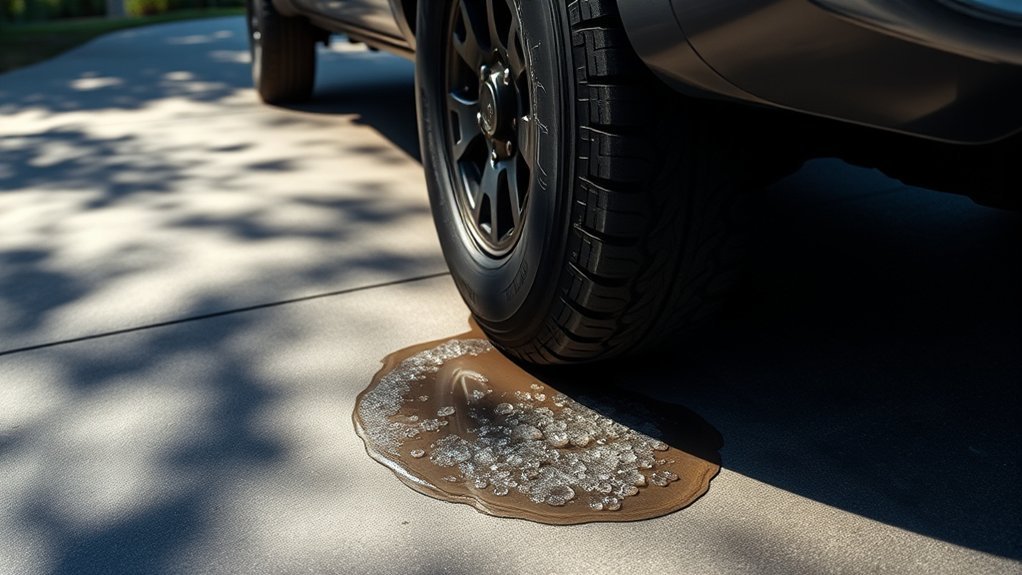
The easiest home leak test uses water and dish soap. Inflate the tire to the correct cold pressure, mix soap and water in a spray bottle, and spray one area at a time. Growing bubbles show where air is escaping.
- Start at the valve: Spray the valve cap area, valve core, stem base, and TPMS valve hardware.
- Check the tread: Spray the full tread surface and look for bubbles around nails, screws, or small cuts.
- Check the bead: Spray where the tire meets the wheel on both sides if you can safely access them.
- Inspect the sidewall: Look for cuts, cracks, bulges, abrasions, bubbling, or exposed cord.
- Repeat after moving the truck: Roll forward slightly so you can inspect the tread area that was touching the ground.
- Record the result: Write down the starting PSI, refill PSI, leak location, and next-morning PSI.
Note: If you cannot find bubbles but the tire keeps losing pressure, the leak may be on the inner bead, inside the tread, around the TPMS sensor, or under the mounted tire. A tire shop can submerge the tire or inspect it off the wheel.
How to Fix Tire Air Loss Issues
The right fix depends on the leak location. Some issues are simple. Others need professional tire service because the tire must come off the rim for a safe inspection.
| Leak Source | Possible Fix | DIY or Shop? |
|---|---|---|
| Low pressure from cold weather | Adjust cold pressure to the door placard PSI | DIY |
| Loose valve core | Tighten or replace the valve core | DIY if you have the right tool |
| Cracked valve stem or TPMS valve seal | Replace valve stem, seal, grommet, or TPMS hardware as needed | Shop |
| Repairable tread puncture | Internal patch-plug repair after tire removal and inspection | Shop |
| Puncture in sidewall, shoulder, or outer tread area | Replace the tire | Shop |
| Bead leak | Clean bead seat, reseat tire, replace valve hardware if needed | Shop |
| Bent or corroded rim | Repair or replace wheel after inspection | Shop |
| Sidewall cut, bulge, crack, or exposed cord | Replace the tire | Shop |
After any repair, recheck the tire cold the next morning. If it still loses air, do not assume the first repair failed. Some tires have more than one leak point, such as a nail in the tread plus a weak valve stem.
What Not to Do With a Slow-Leaking Tacoma Tire
- Do not keep topping off the same tire every day without finding the leak. The tire can fail when load, heat, or speed increases.
- Do not use a plug-only repair as a permanent fix for a road tire. A qualified shop should remove the tire and inspect the inside.
- Do not pull out a nail or screw before you are ready for immediate repair, spare-tire use, or roadside help.
- Do not tow, haul, or drive off-road on a tire that keeps losing air overnight.
- Do not ignore a flashing TPMS light after you confirm all tire pressures are correct. That pattern can point to a system fault.
When to Stop Driving and Use the Spare
Stop driving and use the spare, roadside assistance, or a tow if the tire is visibly flat, the sidewall is damaged, the tire has a bulge, the truck pulls hard, or the tire loses pressure quickly after inflation. If your Tacoma uses a temporary spare, follow the speed, distance, and load limits in your owner’s manual. You can find model-specific guidance through Toyota Owners Manuals and Warranties.
If the tire is only slightly low, has no visible damage, and holds air long enough, inflate it to the correct cold pressure and drive carefully to a tire shop. Avoid highway speeds, towing, heavy payloads, and off-road driving until the tire is inspected.
Frequently Asked Questions
Is 35 psi too high for a Toyota Tacoma?
Not automatically, but you should not use 35 psi as a universal answer. Check the Tire and Loading Information Label on your Tacoma’s driver-door area or the owner’s manual for your exact model year, tire size, and load setup. Check pressure when the tires are cold.
Is it okay to drive on a tire with a slow leak?
It is not a good long-term idea. If the tire is only slightly low, has no visible damage, and holds air, inflate it to the correct pressure and drive carefully to a tire shop. Do not keep driving on a tire that is visibly flat, rapidly leaking, bulging, or damaged on the sidewall.
Why does my Tacoma TPMS light come on only in the morning?
Cold air can lower tire pressure enough to trigger the TPMS warning, then the light may turn off as the tire warms during driving. Still, you should check all tires cold with a gauge because one tire may be close to the warning threshold or have a slow leak.
Can a valve stem make a tire lose air overnight?
Yes. A cracked valve stem, loose valve core, damaged cap area, leaking TPMS seal, or corroded valve hardware can lose air slowly. Spray soapy water around the valve and watch for bubbles. If bubbles appear, repair the valve before checking for other leaks.
Can I plug a Tacoma tire myself?
A roadside plug may help in an emergency, but it should not be treated as a final road repair. A proper repair requires the tire to come off the wheel so a trained tire technician can inspect the inside and use an approved patch-plug repair when the puncture is in a repairable tread area.
Should I remove the nail or screw before driving to a tire shop?
Usually, no. Removing the object can make the tire lose air much faster. Mark the spot, inflate the tire if it is safe to do so, and drive carefully to a nearby shop only if the tire holds pressure and has no sidewall damage. Use the spare or roadside help if pressure drops quickly.
What if I cannot find a leak with soapy water?
The leak may be on the inner bead, inside a tread channel, around the TPMS sensor, or visible only when the tire is under load. Recheck the tire cold the next morning. If it keeps dropping, have a tire shop remove and inspect the tire.
Conclusion
A Toyota Tacoma tire that loses air overnight usually has a simple cause, but you should treat it as a safety issue until you find the source. Start with a cold-pressure check, compare all four tires, then test the valve stem, tread, bead, rim, TPMS valve hardware, and sidewall with soapy water.
If the problem is temperature-related, adjusting to the door-placard PSI may solve it. If one tire keeps dropping, get it inspected before you tow, haul, drive at highway speed, or head off-road. A slow leak is easier and cheaper to fix before it turns into a flat tire or blowout risk.
Sources
- NHTSA TireWise — cold-pressure checks, driver-door placard PSI, TPMS guidance, tread safety, and tire maintenance safety.
- Tire Rack: How Temperature Change Affects Tire Air Pressure — pressure changes from air temperature shifts.
- Cooper Tire: Proper Tire Puncture Repair — patch-plug repair, tire removal, sidewall limits, and 1/4-inch puncture guidance.
- Toyota Owners Manuals and Warranties — model-specific Tacoma tire-pressure, spare-tire, and TPMS instructions.

Related Articles

How Tire Weight Affects Toyota Tacoma Performance
How does tire weight influence your Toyota Tacoma's performance and efficiency? Discover the surprising effects that could change your driving experience.
Read More
Tire Noise Levels by Tire Type on a Toyota Tacoma
A comprehensive look at how tire types affect noise levels in your Toyota Tacoma reveals surprising insights that could enhance your driving experience.
Read More
How To Choose Tires for a Dual Use Toyota Tacoma
Unlock the secrets to selecting the perfect tires for your dual-use Toyota Tacoma, ensuring optimal performance and comfort on every adventure. Discover more inside!
Read More