
Toyota Tacoma TPMS Light Blinking What It Means
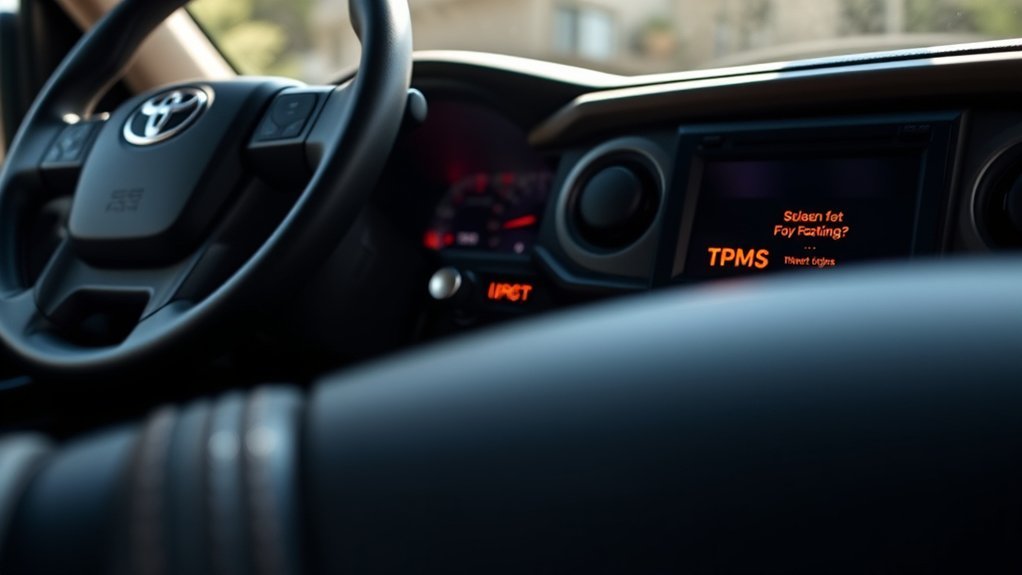
If your Toyota Tacoma’s TPMS light is blinking, treat it as a system warning, not just a routine low-pressure alert. A solid tire pressure light usually means one or more tires are low. A blinking light, especially one that flashes for about 60 to 90 seconds and then stays on, often points to a TPMS malfunction, such as a failed sensor, sensor relearn issue, or communication fault.
Quick Answer
A blinking Toyota Tacoma TPMS light usually means the tire pressure monitoring system has a malfunction. First, safely check all tire pressures against the doorjamb placard. If pressure is correct and the light still blinks, the Tacoma may need a TPMS reset, sensor relearn, or professional diagnosis.
Key Takeaways
- A blinking TPMS light usually signals a system fault, while a solid light usually points to low tire pressure.
- Check tire pressure when the tires are cold and use the PSI listed on your Tacoma’s driver-side doorjamb placard.
- After tire rotation, new tires, or sensor replacement, your Tacoma may need TPMS initialization or sensor relearning.
- Do not reset the TPMS until you correct tire pressure and inspect for leaks, punctures, or visible damage.
- If the light keeps blinking after pressure correction, use a TPMS scan tool or visit a tire shop or Toyota service center.
At a Glance
| Time Required | 10 to 30 minutes for pressure checks and reset attempts; longer if a sensor relearn or repair is needed. |
| Difficulty | Easy for pressure checks; moderate if you need a TPMS scan tool or sensor relearn. |
| Tools Needed | Accurate tire pressure gauge, air compressor, valve cap tool if needed, and a TPMS scan tool for sensor diagnosis. |
| Cost | Usually free for a pressure check; sensor diagnosis or replacement varies by shop, sensor type, and model year. |
Warning: If a tire looks flat, damaged, or is losing air quickly, do not keep driving. Pull over safely, use the spare or roadside help, and avoid highway speeds until the tire is inspected.
What a Blinking TPMS Light Means on a Toyota Tacoma

A blinking TPMS light on your Toyota Tacoma usually means the system itself has a fault. According to NHTSA tire safety guidance, a TPMS malfunction may show as a warning lamp that flashes for 60 to 90 seconds and then stays illuminated. That pattern can repeat each time you start the truck until the problem is repaired.
A solid TPMS light is different. It usually means at least one tire is significantly underinflated. You should still check the pressure right away, because underinflated tires can affect handling, tire life, and fuel use.
If your Tacoma light blinks only on cold mornings and later turns off, tire pressure may be close to the warning threshold. Cold air can lower tire pressure enough to trigger the light, then the light may go away as the tires warm during driving.
A blinking TPMS light is usually a diagnostic clue. Check tire pressure first, but do not assume a reset will fix a failed sensor or relearn problem.
[Products Worth Considering]

EVOULTES heavy duty tire inflator with an integrated gauge delivers accurate pressure readings from 10–120 PSI, helping you inflate, deflate, and check tires in one tool. The 16.5-inch extended dual-head air chuck with swivel base reaches hard-to-access dual wheel valves on trucks and RVs. A brass trigger core and side-mounted air release valve make operation smooth, with standard 1/4" NPT threading and quick-connect compatibility for easy setup.

This spare tire tool kit is designed for the 2004 to 2018 Ford F-150 to help you loosen and tighten wheel lug nuts and manage the spare tire and provided jack functions from underneath the vehicle. It includes the lug nut wrench and extension pieces plus a convenient storage carrying case for organized transport. The jack itself is not included.

This multi-function tire valve stem removal tool set makes it fast to remove, install, bleed, and clean valve cores for easier tire maintenance. It includes valve core removers, a 4-way spool tool, replacement valve caps, and spare cores to handle replacements and repairs with confidence. Universal compatibility suits cars, trucks, motorcycles, bicycles, and more for roadside convenience.
Identify Common Causes for a Blinking TPMS Light
If your Toyota Tacoma’s TPMS light is blinking, start with the simplest causes before assuming the system needs major repair. Low tire pressure can still be part of the problem, but a persistent blinking pattern often points to a sensor, registration, or communication issue.
Low or Uneven Tire Pressure
Check all four tires with a reliable gauge. Use the recommended cold PSI on the driver-side doorjamb tire placard, not the maximum PSI printed on the tire sidewall. The sidewall number is the tire’s maximum rating, not your Tacoma’s recommended inflation pressure.
- One tire may be underinflated from a slow leak.
- Several tires may be low after a sharp temperature drop.
- A tire may be overinflated after service or seasonal adjustment.
- A damaged valve stem can leak slowly.
- A puncture can cause pressure loss even if the tire does not look flat.
Common Sensor Malfunction
A blinking TPMS light can happen when one or more wheel sensors stop communicating with the truck. Common causes include a failed sensor, a sealed sensor battery that has reached the end of its life, physical damage during tire service, or interference between the sensor and receiver.
Many direct TPMS sensors use sealed batteries. When the battery fails, a shop usually replaces the sensor assembly rather than replacing only the battery. This is why a blinking TPMS light may need a tire shop or Toyota technician even when all tires are properly inflated.
System Calibration Issues
System calibration problems often appear after tire rotation, wheel replacement, tire replacement, or TPMS sensor replacement. If the Tacoma does not know which sensor is installed at each wheel, or if a new sensor ID was not registered, the warning light can blink even when pressure is correct.
Some Tacoma model years use a physical TPMS SET button. Others may use a menu-based initialization process or require a TPMS scan tool. Always match the reset procedure to your Tacoma’s model year and equipment.
Spare Tire or Aftermarket Wheel Issues
Some vehicles monitor a full-size spare, while others do not. If your Tacoma has a full-size spare with a TPMS sensor, a low spare or failed spare sensor may trigger a warning. Aftermarket wheels can also cause problems if they use incompatible sensors or if the sensor IDs were not programmed correctly.
Note: TPMS helps warn you about pressure problems, but it does not replace monthly tire pressure checks with a gauge.
Steps to Troubleshoot Your TPMS Light Issue
Use this sequence before you reset anything. Resetting the light before fixing the cause can hide the real issue and make diagnosis harder.
Step 1: Check Tires for Visible Damage
Park on a safe, level surface and inspect each tire. Look for nails, cuts, sidewall bulges, cracked rubber, leaking valve stems, or a tire that sits lower than the others. If you see obvious damage, do not rely on the TPMS reset button. Have the tire repaired or replaced first.
Step 2: Check Cold Tire Pressure
Check pressure when the tires are cold, meaning the Tacoma has been parked for at least three hours or driven only a short distance at low speed. Measure all four tires and, if applicable, the full-size spare.
Add or release air until each tire matches the recommended cold PSI on the doorjamb placard. Reinstall the valve caps after checking pressure because missing caps allow dirt and moisture into the valve stem.
Step 3: Drive and Watch the Light Pattern
After correcting pressure, drive normally for several minutes if the tires are safe and no damage is visible. A low-pressure warning may turn off after the system receives updated readings. If the light blinks again at startup and then stays on, the problem is more likely a TPMS fault than simple low pressure.
Step 4: Reset or Initialize the TPMS If Equipped
Some Toyota Tacoma models have a TPMS reset or initialization button. Others may use dashboard settings or require a scan tool. If your Tacoma has a SET button, the basic process usually starts with properly inflated cold tires, ignition in the ON position, and the reset button held until the light confirms initialization. Check your exact model-year manual through Toyota’s owner manual lookup before using a reset procedure.
Do not use the reset process to “turn off” a warning while a tire is still low. The system should be initialized only after the tires are set to the correct cold PSI.
Step 5: Use a TPMS Scan Tool
A basic OBD-II code reader may not read every TPMS fault. A dedicated TPMS scan tool can check sensor IDs, pressure readings, battery status where supported, and sensor communication. It can also help confirm whether a sensor relearn or registration is needed.
If a sensor has failed, the repair usually involves replacing the sensor, registering the new sensor ID, setting tire pressure correctly, and confirming the light stays off after a drive cycle.
Pro Tip: Write down the cold PSI reading for each tire before adding air. If one tire is much lower than the others, you may have a leak instead of a simple seasonal pressure change.
When to Get Professional TPMS Repair
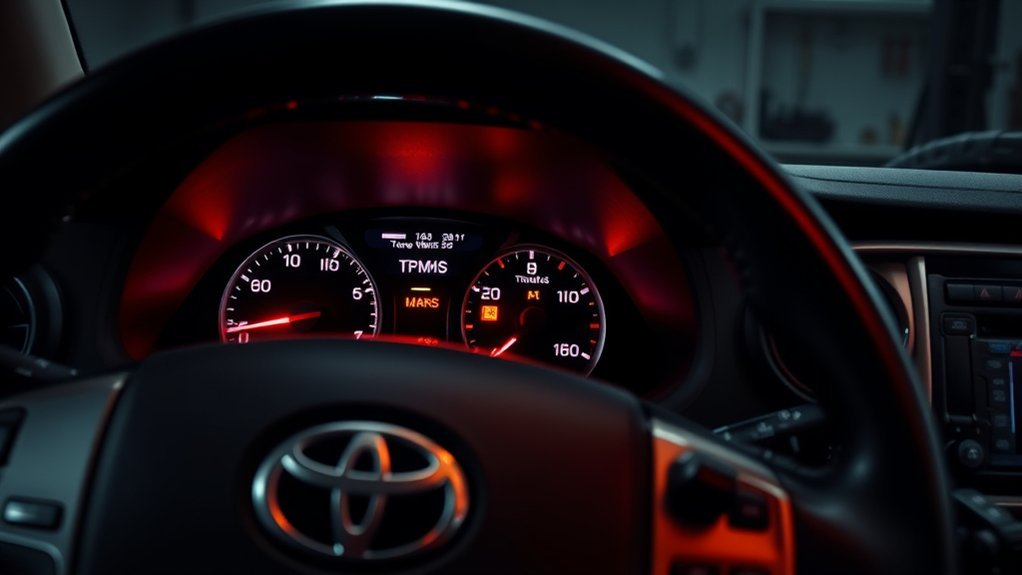
You can handle basic pressure checks at home, but some TPMS problems need professional tools. Visit a tire shop or Toyota service center if the blinking light keeps returning after the tires are inflated correctly.
- The light flashes for 60 to 90 seconds at each startup and then stays on.
- The light keeps blinking after you set all tires to the correct cold PSI.
- You recently replaced tires, wheels, or sensors.
- You rotated tires and the system no longer reads correctly.
- A TPMS scan tool shows a dead sensor, missing sensor ID, or communication fault.
- You suspect wiring, receiver, or control-module trouble.
A technician can scan each sensor, confirm the sensor IDs, test the receiver, perform a relearn, and replace failed sensors if needed. You can also check NHTSA recalls by VIN if you suspect an unresolved safety-related issue.
Resetting Your TPMS System
Resetting your TPMS system can help after you correct tire pressure, rotate tires, or install new tires. The key is to reset only after the tires are already set to the recommended cold PSI.
For Tacoma models with a TPMS reset button, the general process may include turning the ignition to ON without starting the engine, holding the reset button until the tire pressure light blinks, and then driving so the system can confirm readings. For models without a button, use the vehicle settings menu or a TPMS scan tool if your manual calls for it.
If the TPMS light continues blinking after multiple reset attempts, stop repeating the reset. The system likely has a fault that needs diagnosis. Repeated resets will not fix a dead sensor battery, incompatible aftermarket sensor, damaged sensor, or missing sensor registration.
[Products Worth Considering]

The JACO FlowPro Tire Inflator measures, inflates, and airs down tires up to 100 PSI with battery-free operation and ±2% accuracy after calibration. It features a glowing...
Simple Tips for Keeping Your Tires and TPMS Happy

Keeping your tires and TPMS in good shape starts with simple maintenance. NHTSA recommends checking tire pressure at least once a month when tires are cold. You should also check before long trips, heavy loads, towing, or big temperature changes.
- Use the PSI on your Tacoma’s driver-side doorjamb placard.
- Keep a quality tire pressure gauge in the truck.
- Check tire tread and visible damage when you check pressure.
- Replace missing valve caps to keep dirt out of valve stems.
- Follow your owner’s manual for tire rotation intervals; many vehicles use a 5,000 to 8,000 mile range when rotation is recommended.
- Ask the tire shop to confirm TPMS relearn after sensor replacement or wheel changes.
- Do not ignore a warning light that returns every time you start the truck.
Frequently Asked Questions
Can I drive with a blinking tire pressure light on a Toyota Tacoma?
You should not ignore it. First, pull over when safe and check for a visibly low or damaged tire. If all tires are properly inflated and look safe, you may be able to drive carefully to a tire shop or Toyota service center. Avoid long highway trips until the TPMS fault is diagnosed.
Can I fix a TPMS error myself?
You can fix simple causes yourself by setting all tires to the correct cold PSI and using the proper reset process for your model year. If the light still blinks, you likely need a TPMS scan tool or professional sensor diagnosis.
Why does my Tacoma TPMS light blink and then stay on?
That pattern usually means the TPMS has detected a malfunction. Common causes include a failed wheel sensor, dead sealed sensor battery, missing sensor registration, damaged sensor, or communication problem between the sensor and the truck.
Will low tire pressure make the TPMS light blink?
Low tire pressure usually makes the TPMS light stay solid. A blinking light is more often a malfunction warning. Still, you should always check tire pressure first because a low tire and a sensor fault can happen at the same time.
Do I need a special tool to reset a Tacoma TPMS light?
Sometimes. Basic pressure corrections may not need a tool, and some Tacomas have a reset or initialization button. Sensor replacement, sensor ID registration, or persistent blinking usually requires a TPMS scan tool or service equipment.
Should I check tire pressure hot or cold?
Check tire pressure cold whenever possible. A cold tire reading means the truck has been parked for at least three hours. Use the recommended PSI on the doorjamb placard, then recheck later if you had to add air while the tires were warm.
Conclusion
A blinking TPMS light on your Toyota Tacoma deserves quick attention because it often points to a monitoring-system fault, not just low tire pressure. Start with the basics: inspect the tires, check cold pressure with a gauge, and set each tire to the doorjamb PSI. If the light keeps blinking after that, use the correct Tacoma reset process or have the system scanned.
Do not rely on the reset button as a shortcut. A failed sensor, damaged valve stem, missing relearn, or sensor communication problem needs proper diagnosis. Handle the issue early, and your Tacoma’s TPMS can keep doing its job: warning you before tire pressure becomes a bigger safety problem.
Sources
- NHTSA TireWise — TPMS warning behavior, cold tire pressure checks, tire maintenance, and tire safety guidance.
- Toyota Owner Manuals — model-year-specific Tacoma owner manual lookup for TPMS reset and initialization steps.
- NHTSA Recalls — VIN-based recall lookup for unresolved vehicle safety issues.

Related Articles

How Tire Weight Affects Toyota Tacoma Performance
How does tire weight influence your Toyota Tacoma's performance and efficiency? Discover the surprising effects that could change your driving experience.
Read More
Tire Noise Levels by Tire Type on a Toyota Tacoma
A comprehensive look at how tire types affect noise levels in your Toyota Tacoma reveals surprising insights that could enhance your driving experience.
Read More
How To Choose Tires for a Dual Use Toyota Tacoma
Unlock the secrets to selecting the perfect tires for your dual-use Toyota Tacoma, ensuring optimal performance and comfort on every adventure. Discover more inside!
Read More