
How Long Do Stock Toyota Tacoma Tires Last
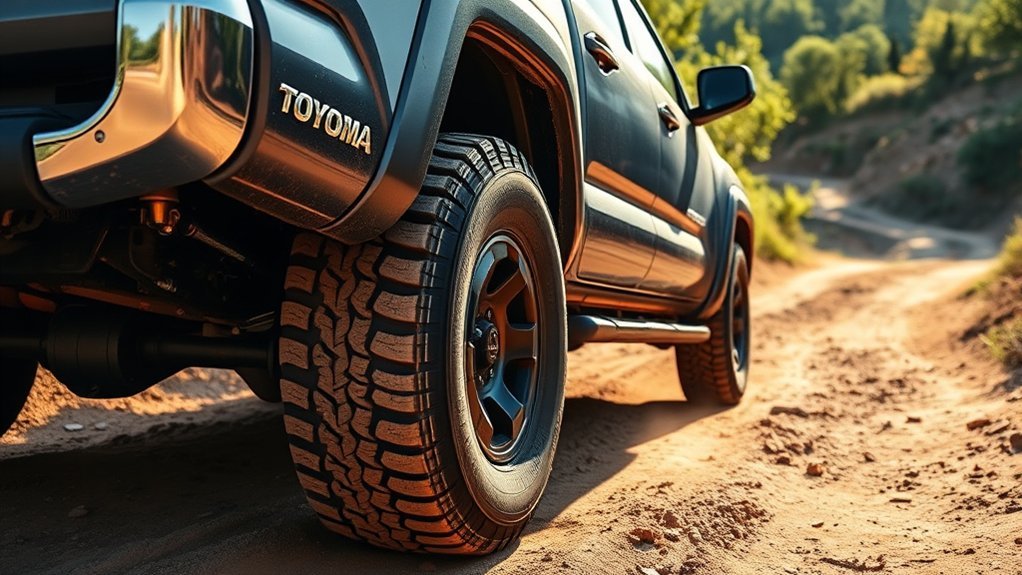
Stock Toyota Tacoma tires can last a long time, but there is no single mileage number that fits every truck. Tire life depends on the original tire model, road surface, load, towing, off-road use, alignment, tire pressure, and how hard the truck is driven. Use mileage as a guide, but use tread depth, visible damage, tire age, and ride feel to decide when replacement is actually due.
Quick Answer
Stock Toyota Tacoma tires commonly last about 30,000 to 50,000 miles for everyday driving. Some wear out closer to 20,000 miles with frequent off-road use, towing, poor alignment, or aggressive driving, while gentle highway use and good maintenance can push certain tires beyond 60,000 miles.
Key Takeaways
- Replace Tacoma tires when tread reaches 2/32 inch, or sooner if you see cracks, bulges, exposed cords, repeated air loss, or uneven wear.
- Toyota Tacoma maintenance is commonly scheduled every 5,000 miles or six months; tire rotation should follow the maintenance guide and owner’s manual.
- Check tire pressure cold, using the driver-door tire placard rather than the maximum pressure molded on the tire sidewall.
- Original-equipment tires are usually chosen for a balance of comfort, fuel economy, noise, price, and capability; aftermarket tires can be better when matched to your exact driving needs.
At a Glance
| Time Required | 5 minutes for tread and pressure checks; 30–60 minutes for a shop rotation or alignment inspection. |
| Difficulty | Easy for inspection; professional service recommended for rotation, balancing, alignment, and tire replacement. |
| Tools Needed | Tread-depth gauge or penny, accurate tire-pressure gauge, flashlight, and your Tacoma’s driver-door tire placard or owner’s manual. |
| Cost | Basic checks cost $0–$15 if you buy a gauge. Rotation, alignment, and replacement tire costs vary by shop, tire size, and tire type. |
How Long Do Stock Toyota Tacoma Tires Usually Last?
For most Tacoma owners, a realistic stock tire lifespan is about 30,000 to 50,000 miles. That range can drop if the truck spends a lot of time on gravel, rock, job sites, sand, mud, or rough city roads. It can also climb with mostly highway driving, correct pressure, regular rotations, good alignment, and moderate loads.
The wider possible range is roughly 20,000 to 70,000 miles. A Tacoma used for towing, overlanding, trail driving, or carrying heavy tools may wear tires much sooner than a lightly loaded commuter truck. Tire model matters too: an all-terrain tire, highway all-season tire, winter tire, and mud-terrain tire are built for different tradeoffs.
Note: Toyota states in its Tacoma warranty and maintenance guide that original-equipment tires are warranted by the individual tire manufacturer, not Toyota, and tire-maker coverage can vary. Check the brand and model printed on your tire sidewall before assuming a mileage warranty applies.
Tire safety is not just about saving money. NHTSA reports that 511 people died in tire-related crashes in 2024.
[Products Worth Considering]

EVOULTES heavy duty tire inflator with an integrated gauge delivers accurate pressure readings from 10–120 PSI, helping you inflate, deflate, and check tires in one tool. The 16.5-inch extended dual-head air chuck with swivel base reaches hard-to-access dual wheel valves on trucks and RVs. A brass trigger core and side-mounted air release valve make operation smooth, with standard 1/4" NPT threading and quick-connect compatibility for easy setup.

This portable cordless tire inflator delivers up to 160 PSI with fast 17 L/min airflow to help you quickly top up tires and get back on the road. It features dual power mode, running on a 21V rechargeable battery or a 12V DC adapter for convenient roadside use. An automatic shut-off with digital pressure gauge helps prevent overinflation, and a built-in LED light improves visibility in low-light conditions.

The JACO FlowPro Tire Inflator measures, inflates, and airs down tires up to 100 PSI with battery-free operation and ±2% accuracy after calibration. It features a glowing pressure dial for night visibility, a heavy-duty steel build with a hybrid hose, and a precision push-to-inflate thumb trigger. The patented Lightning Air Chuck locks on for a secure seal, and the kit includes quick-connect hardware for easy inline use with your air compressor.
Signs That Indicate Tire Replacement Is Necessary
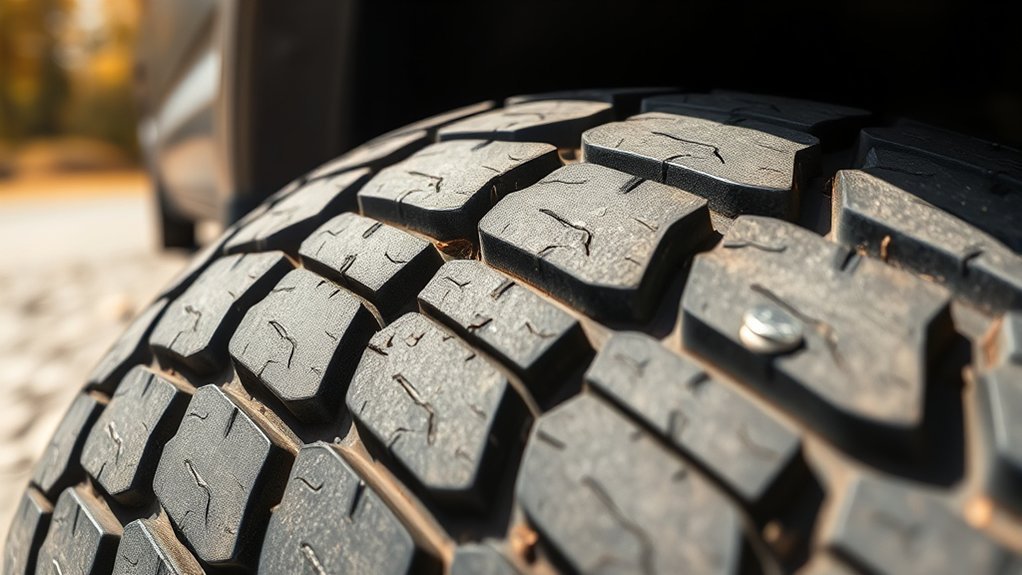
Replace your Tacoma tires when safety signs appear, even if the odometer mileage seems low. Mileage estimates are helpful, but tread depth and condition matter more.
- Tread is at 2/32 inch: NHTSA says tires should be replaced when tread is worn down to 2/32 inch.
- Wear bars are flush with the tread: Built-in treadwear indicators show when the tire has reached the replacement point.
- Cracks, cuts, or dry rot appear: Sidewall cracking can signal aging or damage.
- Bulges or bubbles show on the sidewall: This can mean internal tire damage and a higher blowout risk.
- The tire keeps losing air: Repeated pressure loss can point to a puncture, bead leak, valve-stem issue, or structural damage.
- Vibration, pulling, or cupping develops: These can indicate tire damage, imbalance, suspension wear, or alignment problems.
Warning: Do not keep driving on a tire with a sidewall bulge, exposed cords, deep cuts, or sudden pressure loss. Install the spare if it is safe to do so and have the tire inspected by a qualified technician.
Understanding Stock Tire Lifespan for Toyota Tacoma
Stock Tacoma tire life is shaped by four big factors: the tire itself, how the truck is used, how it is maintained, and where it is driven. Two identical Tacomas can get very different tire mileage if one is a highway commuter and the other regularly carries tools, trailers, or camping gear on rough roads.
Common Tire Lifespan Factors
- Tire pressure: Underinflation can cause shoulder wear, heat buildup, lower fuel economy, and reduced tire life.
- Alignment: A misaligned Tacoma can wear one edge of the tire quickly.
- Rotation: Regular rotation helps even out front-to-rear wear.
- Road surface: Gravel, potholes, washboard roads, and rocky trails can chip tread and damage sidewalls.
- Load and towing: Extra weight creates more heat and stress, especially at highway speeds.
- Tire type: Highway tires, all-terrain tires, mud-terrain tires, and winter tires wear differently.
Driving Conditions Impact
Off-road driving is one of the biggest reasons Tacoma tires wear early. Rocks can slice lugs, gravel can chip tread blocks, and aired-down trail driving can flex sidewalls more than normal road driving. That does not mean off-road use is bad; it simply means you should inspect the tires more often.
Weather also matters. Heat can accelerate aging and pressure changes, while winter conditions may require a tire compound that stays flexible in cold temperatures. If you use winter tires, swap them off when the weather warms up because soft winter compounds can wear quickly in heat.
Tire Quality Variations
Not every Tacoma leaves the factory with the same tire. Year, trim, package, wheel size, and market can change the original tire brand and model. Some stock tires are tuned for quiet ride and fuel economy, while others lean toward all-terrain capability.
When comparing replacement tires, look at the Uniform Tire Quality Grading information where available. Treadwear grades are a relative comparison, not a guaranteed mileage promise, but they help you compare tire lines alongside traction, temperature grade, reviews, and real-world use.
What Affects How Long Your Tires Last?
Your Tacoma’s tires wear based on repeated small habits. Hard launches, late braking, sharp turns, and high-speed cornering can scrub away tread. Underinflation, overinflation, and poor alignment can wear tires unevenly even when the truck is driven gently.
| Wear Pattern | Likely Cause | What to Do |
|---|---|---|
| Both shoulders worn | Underinflation or heavy cornering | Check cold pressure and inspect for leaks. |
| Center tread worn | Overinflation or incorrect load setup | Set pressure to the door placard when tires are cold. |
| One edge worn | Alignment issue or worn suspension part | Schedule alignment and suspension inspection. |
| Cupping or scalloping | Imbalance, worn shocks, or suspension wear | Have the tires balanced and suspension checked. |
How to Check Your Tire Tread Depth
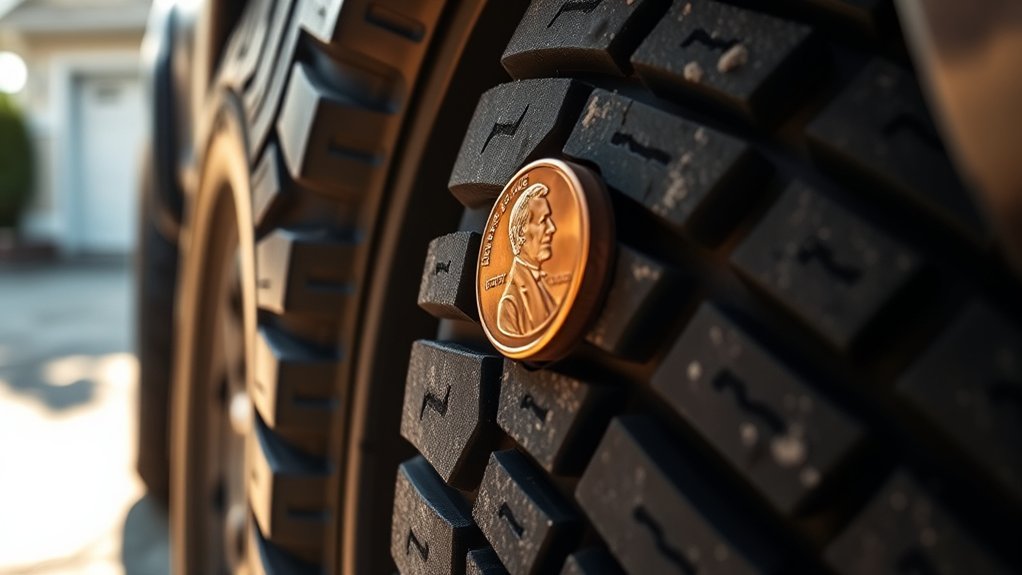
Check tread depth at least monthly and before long trips, especially if your Tacoma tows, carries heavy loads, or sees dirt roads. Measure more than one groove on each tire because uneven wear can hide on the inner shoulder.
Tread Depth Measurement Methods
- Tread-depth gauge: This is the most accurate quick method. Measure in several grooves across the tire.
- Penny test: Place a penny into the tread with Lincoln’s head upside down and facing you. If the top of Lincoln’s head is visible, the tire is at or near replacement depth.
- Wear bars: Look for raised bars running across the tread grooves. If the surrounding tread is level with the bars, replace the tire.
2. Penny Test Technique
The penny test is fast and useful when you do not have a gauge. It is not as precise as a tread-depth gauge, but it can quickly tell you when a tire is too worn to keep using safely.
| Tread Depth | What It Means |
|---|---|
| Above 4/32 inch | Generally usable if the tire has no damage or uneven wear. |
| Around 4/32 inch | Start planning replacement, especially before rainy, snowy, or off-road driving. |
| 2/32 inch | Replace now. This is the minimum tread depth NHTSA uses for replacement guidance. |
| Below 2/32 inch | Unsafe for normal road use. Replace immediately. |
3. Wear Indicator Bars
Wear indicator bars are molded into tire grooves. When tread wears down level with those bars, the tire has reached its replacement point. Check all four tires because one tire can wear faster than the others if alignment, rotation, pressure, or suspension is off.
The Impact of Driving Habits on Tire Wear
Your driving style can shorten or extend tire life. Smooth acceleration, gentle braking, steady highway speeds, and wider turns reduce tread scrub. Quick starts, hard stops, aggressive cornering, and repeated high-speed driving create more heat and friction.
For Tacoma owners, the load in the bed matters too. A truck that regularly carries tools, camping gear, building materials, or a trailer will work its tires harder. Check the Tire and Loading Information Label on the driver-side door area so you know the correct tire size, load rating, and cold inflation pressure for your specific truck.
Pro Tip: Check tire pressure before the first drive of the day or after the truck has been parked for at least three hours. Warm tires read higher and can lead you to underinflate them later.
Why Choose Aftermarket Tires Over OEM?
Aftermarket tires are not automatically better than OEM tires, but they can be better for your use case. Original-equipment tires are usually selected to balance ride comfort, noise, fuel economy, handling, cost, and general capability. That balance may not match how you use your Tacoma.
Consider aftermarket tires if you want one of these upgrades:
- More off-road durability: Look for stronger sidewalls, deeper tread blocks, and all-terrain or mud-terrain designs.
- Better winter grip: A dedicated winter tire can outperform an all-season tire in snow and ice.
- Longer treadwear: Some highway and touring tires are designed for higher mileage and quieter road manners.
- Improved towing stability: A properly rated tire can handle heat and load better when matched to your Tacoma’s requirements.
Stay with OEM-style tires if you like the factory ride, do mostly pavement driving, and want predictable fuel economy and road noise. Upgrade only after checking the correct size, load index, speed rating, and fitment for your specific year and trim.
[Products Worth Considering]

This roadside assistance kit helps drivers and passengers in urgent situations after an accident or breakdown, providing practical support while waiting for help. It includes a lightweight, compact tire inflator for fast inflation of standard vehicle tires, plus reinforced jumper cable protection for safer handling. Ideal for winter weather, road trips, camping, and travel, with everything stowed neatly in a trunk bag.

This spare tire tool kit is designed for the 2004 to 2018 Ford F-150 to help you loosen and tighten wheel lug nuts and manage the spare tire and provided jack functions from underneath the vehicle. It includes the lug nut wrench and extension pieces plus a convenient storage carrying case for organized transport. The jack itself is not included.
Key Benefits of Regular Tire Maintenance for Tacoma Owners
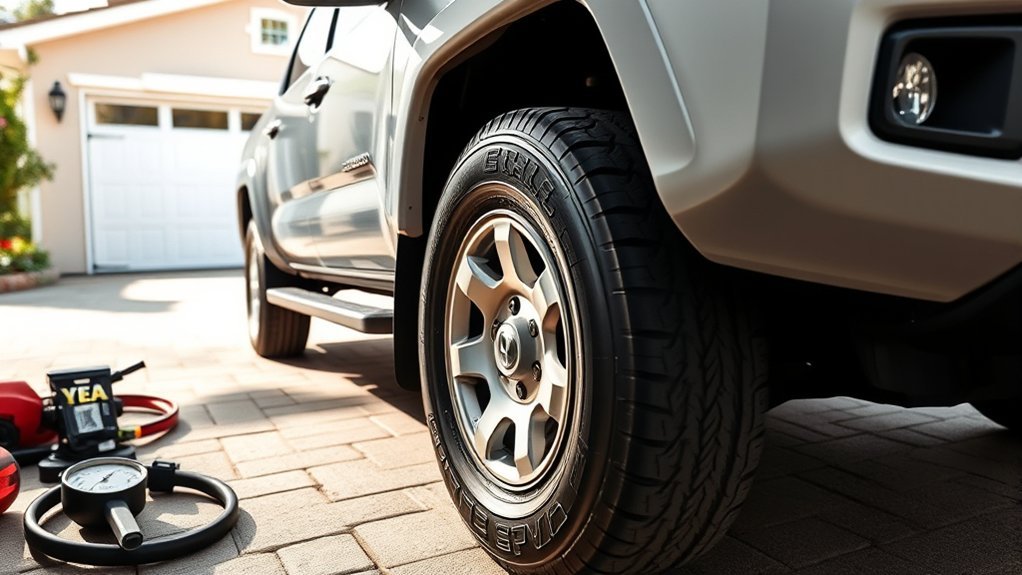
Regular tire maintenance helps your Tacoma stop, steer, ride, and tow more safely. It also helps prevent early replacement caused by uneven wear. According to NHTSA TireWise, poor tire maintenance, including low air pressure and missed rotations, can lead to flats, blowouts, or tread separation.
- Pressure checks: Check all tires, including the spare, at least monthly when cold.
- Rotations: Rotate tires according to Toyota’s maintenance guide and owner’s manual.
- Balance: Balance tires when new tires are installed or if vibration appears.
- Alignment: Have alignment checked if the truck pulls, the steering wheel is off-center, or tire edges wear unevenly.
- Visual inspections: Look for nails, cuts, bulges, cracking, uneven wear, and missing tread chunks.
When to Rotate and Align Your Tires
Toyota’s 2025 Tacoma Warranty & Maintenance Guide recommends scheduled maintenance every 5,000 miles or six months, whichever comes first, and its maintenance chart repeatedly lists tire rotation. NHTSA also advises following the owner’s manual and, when recommended by the vehicle manufacturer, rotating tires every 5,000 to 8,000 miles or sooner if uneven wear appears.
Get an alignment check at least once a year, after a hard pothole or curb hit, after suspension work, or whenever you notice:
- the Tacoma pulls left or right,
- the steering wheel is off-center,
- one tire edge wears faster than the rest,
- the truck wanders on a straight road,
- new tires begin wearing unevenly soon after installation.
Note: Rotation patterns can vary by drivetrain, tire type, directional tread, staggered sizing, and spare-tire setup. Use the pattern in your Tacoma owner’s manual or ask a qualified technician.
Choosing the Best Tires for Your Toyota Tacoma
The best tire for your Tacoma depends on how you actually drive. Before shopping, check the tire size and pressure listed on the driver-door Tire and Loading Information Label and confirm the details in the owner’s manual. Do not choose a replacement tire only by wheel diameter; load index, speed rating, overall diameter, and clearance also matter.
| Driving Need | Best Tire Direction | Tradeoff |
|---|---|---|
| Daily commuting and highway driving | Highway all-season or touring tire | Less aggressive off-road traction. |
| Mixed pavement and dirt roads | All-terrain tire | More road noise and possible fuel-economy drop. |
| Frequent rocks, mud, and trails | Heavy-duty all-terrain or mud-terrain tire | Faster wear, more noise, and rougher ride on pavement. |
| Snow and ice | Dedicated winter tire | Should be removed when temperatures warm up. |
| Towing or frequent heavy loads | Properly load-rated tire that matches the placard/manual | May ride firmer when the truck is empty. |
For current Tacoma research, Toyota’s Tacoma pressroom shows that wheel and tire packages can vary by trim and option package, including TRD and all-terrain tire setups. That is why the door placard and owner’s manual should be your final fitment authority.
Frequently Asked Questions
How often should I replace the tires on my Toyota Tacoma?
Replace them when tread reaches 2/32 inch, when damage appears, when they repeatedly lose air, or when age and condition make them unsafe. Many Tacoma owners replace stock tires around 30,000 to 50,000 miles, but your actual timing depends on the tire model and how the truck is used.
How long do factory tires last on a Toyota Tacoma?
Factory Tacoma tires often last about 30,000 to 50,000 miles in normal use. Off-road driving, towing, heavy payloads, poor pressure, and misalignment can shorten that. Gentle highway driving and regular maintenance can extend life.
Should I replace Tacoma tires after six years?
Not automatically in every case, but you should take tire age seriously. NHTSA notes that some vehicle and tire manufacturers recommend replacing tires at six to 10 years regardless of treadwear. Check the DOT date code, inspect for cracking or performance changes, and follow the tire maker’s guidance.
Are original Tacoma tires covered by Toyota’s warranty?
Toyota’s Tacoma warranty guide says original-equipment tires are warranted by the individual tire manufacturer, not Toyota, and coverage varies by tire maker. Check the tire brand on your sidewall and review that manufacturer’s warranty terms.
Should I replace all four Tacoma tires at once?
Replacing all four is usually best when the tires are worn evenly or when switching tire type. If replacing only one or two, match size, load rating, tread type, and similar tread depth as closely as possible. For 4WD trucks, ask a qualified tire professional because mismatched tread depth can affect driveline behavior.
Conclusion
Stock Toyota Tacoma tires usually last around 30,000 to 50,000 miles, but mileage is only part of the story. Replace tires based on tread depth, visible damage, air-loss problems, uneven wear, and age. Check pressure monthly, rotate according to Toyota’s maintenance schedule, watch for alignment symptoms, and choose replacement tires that match how you use your Tacoma. Good tire care keeps the truck safer, smoother, and ready for the next road or trail.
Sources
- NHTSA TireWise — tire tread depth, penny test, tire pressure, tire aging, rotation guidance, and tire safety data.
- 2025 Toyota Tacoma Warranty & Maintenance Guide — Tacoma maintenance intervals, tire rotation schedule, and original-equipment tire warranty details.
- Toyota USA Newsroom: 2026 Toyota Tacoma — current Tacoma trim and package context for wheel and tire variations.

Related Articles
How Tire Weight Affects Toyota Tacoma Performance
How does tire weight influence your Toyota Tacoma's performance and efficiency? Discover the surprising effects that could change your driving experience.
Read More
Tire Noise Levels by Tire Type on a Toyota Tacoma
A comprehensive look at how tire types affect noise levels in your Toyota Tacoma reveals surprising insights that could enhance your driving experience.
Read More
How To Choose Tires for a Dual Use Toyota Tacoma
Unlock the secrets to selecting the perfect tires for your dual-use Toyota Tacoma, ensuring optimal performance and comfort on every adventure. Discover more inside!
Read More