
Solid vs. Pneumatic Skid Steer Tires: Which Is Right for Your Job?
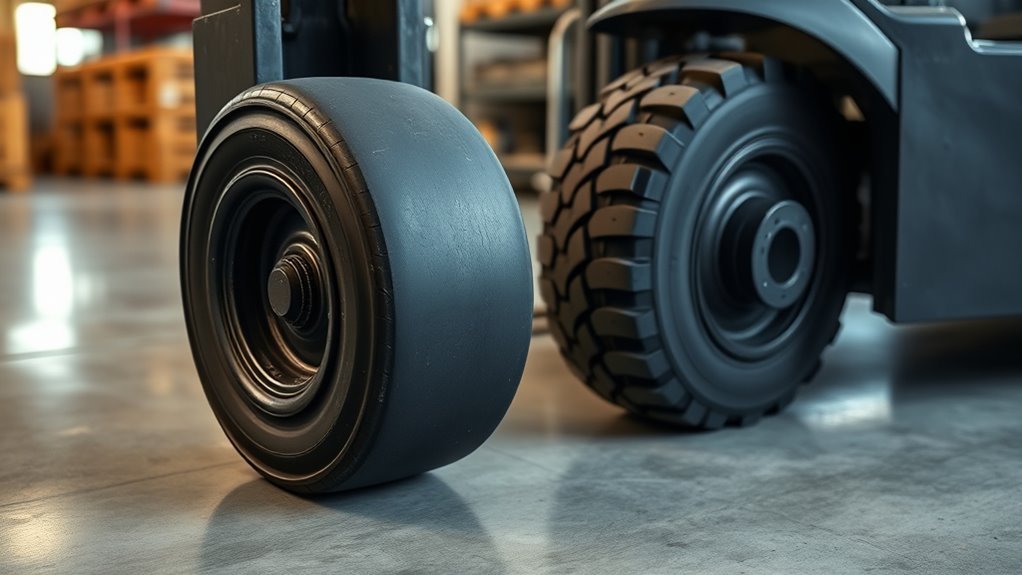
The wrong tire on a skid steer doesn’t just wear out faster; it costs you hours, money, and crew energy. Solid rubber tires eliminate flats on brutal job sites, while pneumatic tires cushion operators and grip soft ground. This guide breaks down every key difference so you can match the right tire to your work.
What’s in This Article
- Quick Decision Framework
- How Solid Tires Are Made
- How Pneumatic Tires Work
- Durability and Puncture Risk
- Ride Comfort vs. Productivity
- Upfront Cost vs. Total Cost of Ownership
- Terrain and Industry Use Cases
- Weight, Load Ratings, and Sizing
- Maintenance Checklist and Troubleshooting
- Airless Hybrids and Semi-Pneumatic Options
- Frequently Asked Questions
Quick Answer
Choose solid rubber tires for debris-heavy or rugged sites where flat prevention and long service life (3,000–4,000 hours) matter most. Choose pneumatic tires for softer terrain, snow, or precision work where cushioning and traction count more than puncture risk. Semi-pneumatic and airless hybrids balance both demands.
Key Takeaways
- Solid rubber tires cost more upfront ($600–$1,500+) but last three to four times longer than pneumatics, reducing total ownership cost on harsh sites.
- Pneumatic tires ($150–$600) deliver better comfort, grip, and traction on soft ground, but need regular pressure checks and are prone to flats.
- Solid tires transfer more vibration to the operator, which can increase fatigue on long shifts requiring steady, precise control.
- Match your tire to your terrain: solids for construction debris, pneumatics for landscaping and snow, semi-pneumatics for mixed or agricultural use.
- Always confirm load ratings and sizing compatibility before swapping tire types, since solid tires are heavier and can affect a machine’s center of gravity.
Quick Decision Framework: Choose the Right Skid Steer Tire
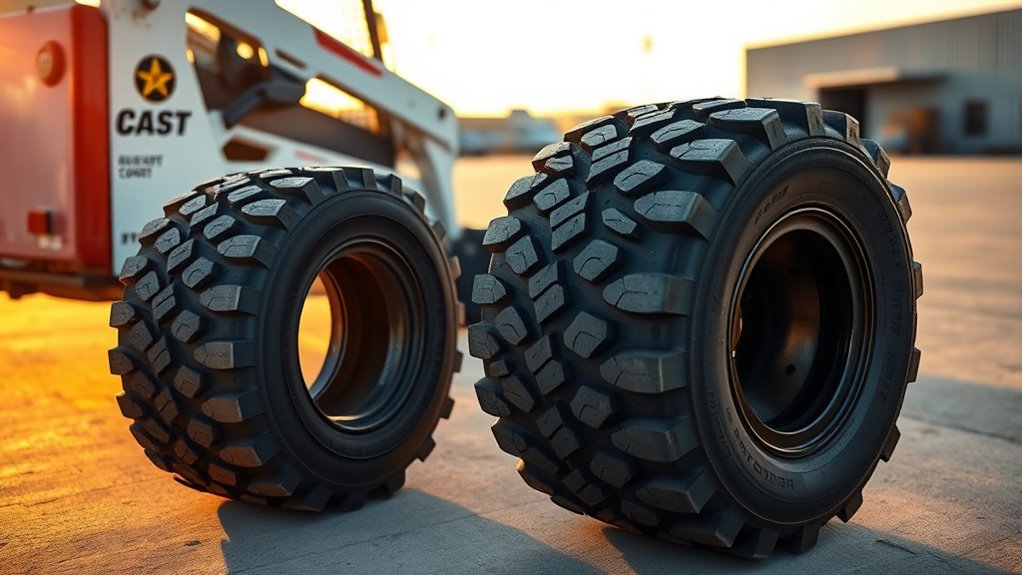
Start by matching tire type to terrain. Pick solid tires for debris-strewn, rugged sites where punctures halt progress. Choose pneumatic tires for turf, snow, and soft ground where traction and cushioning matter most.
Next, weigh upfront cost against runtime. Solids cost $600–$1,500+ but last about 3,000–4,000 hours, while pneumatics run $150–$600 and typically endure 500–1,000 hours. Maintenance also plays a role: solids need fewer interventions and eliminate flats, while pneumatics demand pressure checks and repairs that cut into uptime.
Use the table below to compare all three tire types at a glance, then calculate total cost of ownership for your specific conditions.
| Feature | Solid Rubber | Pneumatic | Semi-Pneumatic |
|---|---|---|---|
| Upfront Cost | $600–$1,500+ | $150–$600 | $400–$1,000 |
| Service Life | 3,000–4,000 hrs | 500–1,000 hrs | 1,500–2,500 hrs* |
| Flat Risk | None | High | Low |
| Operator Comfort | Low | High | Medium |
| Maintenance Need | Low | High | Medium |
| Best For | Construction, demolition | Landscaping, snow, turf | Agriculture, mixed terrain |
*Semi-pneumatic service life is an industry estimate; verify with your manufacturer.
Choose solid tires if: you work on construction or demolition sites with nails, debris, or sharp material; downtime from flats costs more than the higher purchase price; or you run multiple shifts and need predictable availability.
Choose pneumatic tires if: you work on turf, snow, or soft ground; operator comfort directly affects work quality; or your budget requires lower upfront spend with planned replacements.
[Products Worth Considering]
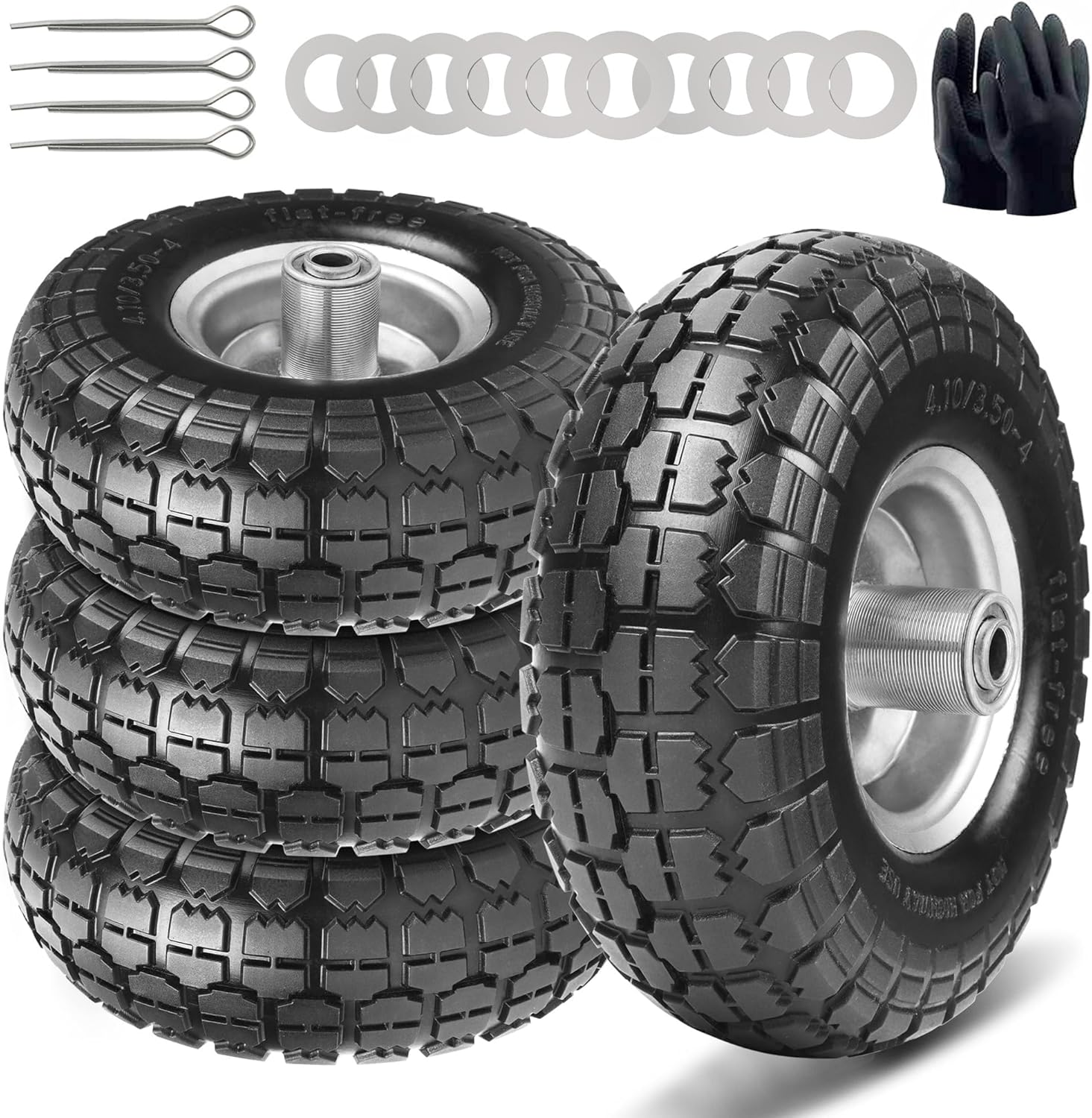
Upgrade your hand truck, garden cart, or yard wagon with flat-free solid rubber tires that eliminate blowouts and maintenance. The serrated tread delivers excellent traction and stable rolling, while double sealed bearings help keep movement smooth on many terrains. Heavy-duty steel rims and 200kg max load support durable performance for demanding outdoor use.

LiQuiTube Premium Heavy Duty Tire Sealant provides permanent flat tire protection to help maintain proper air pressure while sealing punctures and leaks. It seals bead, rim, and porosity weathering leaks and helps prevent flats in heavy ply industrial tires. Designed for versatile use on trailers and off-road equipment, it can be installed in tubeless tires and also inside tubes.

Upgrade your garden cart, wagon, trolley, or hand truck with solid puncture-guarded tires that help prevent flats for worry-free pushing. Textured tread improves stability, grip, and shock absorption for smoother, safer travel over outdoor surfaces. Built with strong polyurethane and durable bearing components for long-lasting performance and confident handling.
How Solid Tires Are Made for Skid Steers: Why It Matters
Solid skid steer tires start with a dense, puncture-resistant rubber compound that manufacturers mold and vulcanize under pressure. This process creates a uniform, load-bearing mass with no air cavity to puncture or lose pressure. Controlled vulcanization locks in density and bond integrity throughout the tire.
Manufacturers then add specialized tread patterns to optimize traction without reducing heat dissipation or load capacity. Each tire goes through rigorous testing for wear resistance, thermal behavior, and static load performance before release. You get a predictable service life — typically three to four times that of pneumatic options — along with lower long-term costs. Repeatable manufacturing processes and measurable testing standards mean fewer service interruptions over the tire’s life.
How Pneumatic Tires Work: Benefits and Limits for Skid Steers
When you use pneumatic tires, the air-filled cavity cushions impacts by compressing and rebounding, which smooths rides and cuts operator fatigue on rough ground. You need to monitor air pressure regularly, because under- or over-inflation degrades cushioning, traction, and puncture resistance. Balance the immediate comfort and superior traction against pressure-sensitive limits and shorter service life when choosing pneumatics for a skid steer.
How Pneumatics Cushion
Pneumatic tires cushion impacts by using compressed air as a flexible spring. The air compresses over bumps and rebounds, spreading shock loads across the tire’s structure instead of transmitting them directly to the machine and operator. Tire flexibility lets the rubber conform to uneven ground, improving traction and reducing fatigue on long shifts.
That shock absorption also preserves machine components and keeps controls steadier. You’ll need to monitor inflation and fix punctures, since performance and lifespan depend on correct PSI. Expect a shorter service life than solids, but better control and ride quality on rough terrain.
Air Pressure Limits for Pneumatic Tires
Treat air pressure as a strict operating parameter, not a loose guideline. Set PSI to manufacturer specs and check inflation regularly to keep tires in their performance window. Temperature-driven pressure changes mean checks aren’t optional — they’re routine steps that prevent under-inflation, which reduces traction and accelerates wear.
Proper inflation preserves the tire’s shock-absorbing advantage on rough ground. Lapses invite punctures, flats, and downtime. Measure cold pressure, adjust before heavy shifts, and log readings to protect safety and extend tire life.
Durability and Puncture Risk: Real-World Lifespan Comparison
Solid rubber tires are built without air, giving you a much longer service life and zero puncture-related downtime. Expect roughly 3,000–4,000 hours versus 500–1,000 hours for pneumatics, which can go flat from debris. You prioritize tire longevity and puncture prevention when uptime matters more than ride comfort. Fewer repairs simplify logistics and free resources for other work.
Solid rubber tires eliminate flats and extend service life: 3,000–4,000 hours of predictable uptime at the expense of ride comfort.
- Cost analysis: higher upfront ($800–$1,200) but lower total cost per hour when you count downtime.
- Puncture prevention: solid construction removes flat risk in debris-prone settings, boosting operational resilience.
- Vibration transmission: expect increased vibration; plan shift adjustments or machine suspension upgrades accordingly.
- Comfort trade-offs: you accept a harsher ride to gain predictable uptime and simpler maintenance schedules.
Ride Comfort vs. Productivity: Operator Fatigue and Performance
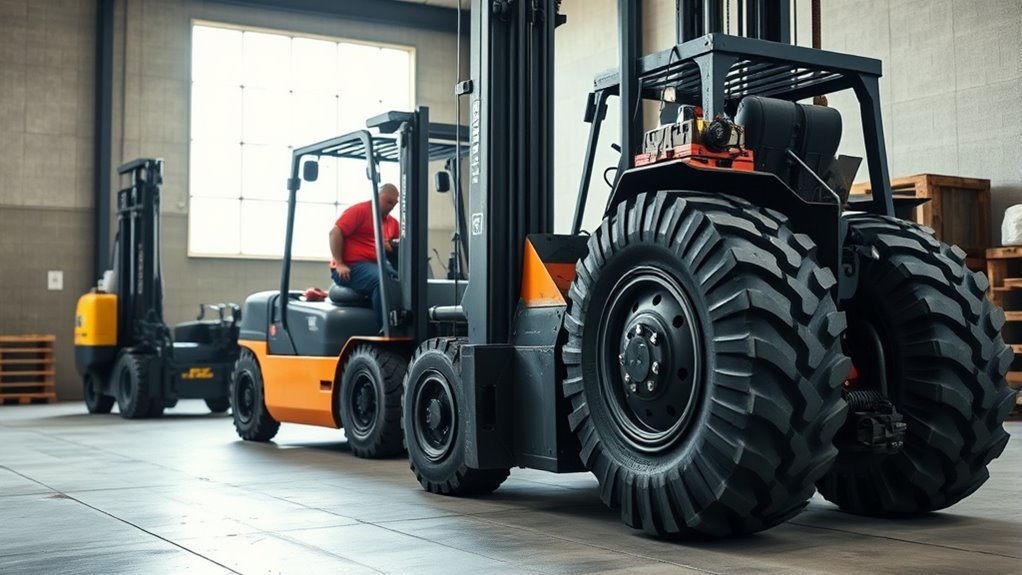
When your crew spends long shifts on uneven ground, pneumatic tires noticeably reduce shock and whole-body vibration, letting operators stay focused and productive longer. Solid tires transfer more vibration to the cab, which can accelerate fatigue on tasks that demand steadiness or prolonged attention.
| Tire Type | Operator Comfort | Productivity Impact |
|---|---|---|
| Pneumatic | High: superior vibration reduction | Higher: sustained focus |
| Solid | Moderate: harsher ride | Variable: durability trade-off |
| Hybrid/foam-filled | Balanced | Situational |
Choose pneumatic when operator comfort directly affects output quality, such as precision landscaping or urban work where fatigue undermines safety and control. Solid tires suit relentless, puncture-prone sites where you prioritize uptime and accept some loss in fine-motor performance. Quantify how sensitive your tasks are to vibration, then schedule shifts to keep crews productive without sacrificing the durability you need.
Upfront Cost vs. Total Cost of Ownership for Fleets
Solid tires demand a higher upfront purchase price, often $600 to $1,500+ versus $150–$600 for pneumatics. But when you factor in lifetime maintenance expenses like replacements, flats, and labor, solids can cost less over 3,000–4,000 service hours compared with pneumatics at 500–1,000 hours. Evaluate both figures against your operating environment to find which option minimizes total ownership cost for your fleet.
[Products Worth Considering]

The SAFELIFE dial tire tread depth gauge measures tread depth in 1/32 inch increments with clear, easy-to-read 2-inch dial face. Color zones using a traffic light system help you quickly judge whether tread is low, marginal, or ample for safer driving. Built with a durable zinc cast body and a metal detect probe for precise, comfortable use across cars, motorcycles, trucks, and buses.

Monitor tire tread wear with a smart, color-coded depth gauge that shows clear condition ranges at a glance. The bar is range marked for fast, easy readings, helping you maintain safer traction and performance. Each gauge is portable with a pocket clip, and the set includes 20 units for daily use and sharing.

Accurately measure tire tread depth with a calibrated gauge marked from 0 to 1 inch in 1/32 inch increments. The color-coded bar helps you quickly identify tread condition ranges, supporting safe driving for trucks, motorcycles, automobiles, and passenger vehicles.
Upfront Purchase Costs
Upfront tire prices don’t tell the whole story. Solid rubber skid steer tires typically cost $600–$1,500+ each, pneumatic tires run $150–$600, and semi-pneumatics sit in the $400–$1,000 range. Higher initial spend can still deliver lower overall cost when you account for relative lifespans and replacement frequency.
- Solid: high upfront, 3,000–4,000 hours — buy once, reduce interruptions.
- Pneumatic: low upfront, frequent swaps every 500–1,000 hours — cheaper now, costlier over time.
- Semi-pneumatic: midrange balance of price and durability.
- Environment: harsh conditions favor solids for total value.
Lifetime Maintenance Expenses
Shift focus from sticker price to lifetime maintenance expenses to see how purchase decisions play out over service hours. Solid tires demand a higher initial outlay ($600 to $1,500+), but their 3,000–4,000 hour life reduces replacement frequency versus pneumatic tires at $150–$600 and 500–1,000 hour lifespans. For fleet operators, that translates to lower labor and repair line items: solids eliminate puncture-related downtime, cutting repair costs and simplifying maintenance budgeting.
In harsh environments, the total cost of ownership often favors solid rubber, delivering measurable long-term savings despite the higher purchase price. If your sites generate regular puncture risk, investing in solids can turn a large upfront cost into controlled lifecycle economy.
Terrain and Industry Use Cases: Construction, Landscaping, Agriculture, Snow
Terrain and industry demands drive tire choice. Match tire type to the job by weighing terrain suitability, tire longevity, performance, cost, operator comfort, maintenance requirements, and safety.
- Construction: Use solid tires for debris-laden sites where puncture resistance and tire longevity minimize downtime. Industry operators favor durability and low maintenance to protect productivity.
- Landscaping: Choose pneumatic tires for softer ground. Better operator comfort and reduced soil compaction improve site health over time. Cost-effectiveness comes from fewer replacements on gentler terrain.
- Agriculture: Semi-pneumatic tires balance traction and cushioning for varied fields while limiting compaction. They offer a practical compromise between longevity and comfort.
- Snow and Mixed Use: Pneumatic tires deliver superior grip in snow. For mixed-terrain jobs, semi-pneumatic versatility preserves safety and efficiency across surface types.
Weight, Load Ratings, Sizing, and Machine Compatibility
Tire choice directly changes a machine’s weight distribution and rated capacity. Check specifications before swapping tires. Solid tires are heavier and can exceed 5,000 lb load ratings, while pneumatic tires weigh less and typically rate around 4,700 lb. Match tire size to rim and axle specs to preserve balance.
Warning: Improper sizing creates uneven wear, reduces performance, and can shift a machine’s center of gravity in ways that affect lifting safety.
Use manufacturer load charts to confirm machine compatibility before purchasing. Select the configuration that matches your load requirements: solids for sustained heavy loads, pneumatics where reduced unsprung weight and shock absorption matter. Document chosen sizes and ratings in your equipment records so future swaps respect original design parameters and maintain safe, reliable operation.
Maintenance Checklist, Inspections, and Troubleshooting
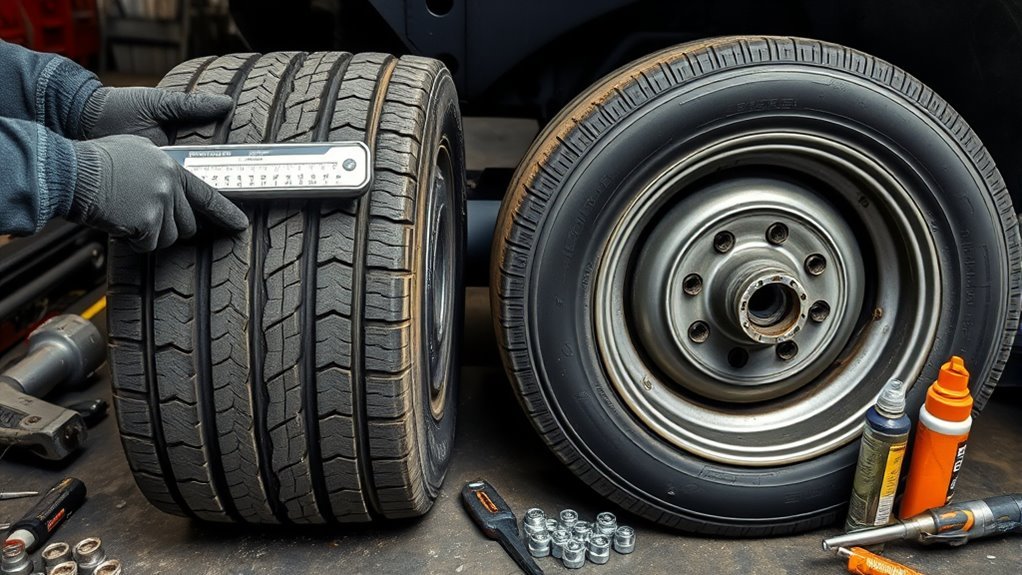
Start each maintenance session with a systematic visual inspection to spot cuts, embedded debris, surface cracks, and abnormal wear patterns on both solid and pneumatic tires. Check pneumatic air pressure against the machine’s specifications and document deviations, since under- or over-inflation directly affects performance and failure risk. When you find damage or uneven wear, trace it to its root cause (load, alignment, or terrain), then decide on repair, rotation, or replacement.
Regular Visual Inspections
One simple visual check each day catches small problems before they become safety hazards. Examine tires for cuts, cracks, and unusual wear patterns, and run a gloved hand over the tread to feel for embedded debris or soft spots.
- Record damage indicators: note cuts, sidewall cracks, and abnormal tread loss for maintenance tracking and performance assessment.
- Assess wear patterns: evaluate uneven wear that signals misalignment, and schedule alignment checks when needed.
- Compare solid vs. pneumatic: solids resist punctures but still show impact damage; pneumatics need closer monitoring of air pressure.
- Log findings weekly to extend tire longevity and keep safety inspections consistent.
Pro tip: Keep a simple paper or digital log near the machine so operators can record inspection results at the end of each shift without extra steps.
Air Pressure Checks for Pneumatic Tires
After checking for cuts and uneven wear, make routine air pressure checks a regular part of your maintenance workflow. Verify manufacturer PSI, use a digital pressure gauge for accurate readings, and record results in a maintenance log. Inspect at least once a week or before each use; increase check frequency in extreme temperatures that alter pressure.
Correct under-inflation right away to prevent reduced traction, accelerated wear, and overheating. Avoid over-inflation to maintain ride comfort and cut blowout risk. When readings deviate from spec despite adjustments, note patterns in the log and follow your damage diagnosis procedure.
Damage Diagnosis Procedures
Early detection limits downtime and repair costs. Your damage diagnosis procedures should combine a standardized inspection checklist with clear troubleshooting steps for both solid and pneumatic tires. Follow maintenance frequency guidelines tied to usage hours and record tire performance data to predict replacements before failures happen.
- Visual inspection: check cuts, abrasions, cracks, and abnormal wear patterns; note location and severity.
- Pressure and tread: for pneumatic tires, verify inflation per specs; assess tread depth and uneven wear.
- Troubleshooting signs: rapid deflation or air loss for pneumatics; surface cracks or chunking for solids.
- Documentation loop: log findings, corrective actions, and interval adjustments to refine maintenance frequency and reduce downtime.
Airless Hybrids, Semi-Pneumatic Options, and Sustainability
Airless hybrids and semi-pneumatic options bridge the gap between solid and pneumatic tires by combining puncture resistance with measurable cushioning. Airless hybrids like the Michelin X® TWEEL™ deliver predictable ride quality without flats, while semi-pneumatic options use internal voids to absorb shocks with less maintenance than standard pneumatics. Both types suit mixed-use or rugged conditions where neither full solid nor full pneumatic performance fits perfectly.
Sustainability benefits are real and growing. Bio-based rubbers and circular recycling programs lower lifecycle emissions and cut dependence on petroleum. Smart-tire technology gives you real-time wear and temperature data, improving performance management and enabling targeted replacements. Choose based on terrain, maintenance tolerance, and end-of-life plans.
| Feature | Benefit |
|---|---|
| Airless hybrids | No flats, steady cushioning |
| Semi-pneumatic options | Balanced shock absorption |
| Bio-based materials | Lower carbon footprint |
| Smart monitoring | Enhanced performance management |
| Recycling initiatives | Reduced waste, circular value |
Frequently Asked Questions
Are Solid Rubber Tires Better Than Pneumatic Tires?
It depends on your job site. Solid rubber excels when you need flat immunity, lower lifecycle costs, and maximum durability on rugged terrain. Pneumatic tires win when cushioning, lighter weight, traction, and smoother ride are the priority. Match the tire to the environment rather than treating one type as universally better.
What Are the Disadvantages of Pneumatic Tires?
Pneumatic tires carry several real drawbacks: puncture risk from sharp debris, frequent maintenance needs, shorter lifespan (500–1,000 hours), and variable load capacity tied to inflation levels. Vibration on rough ground can accelerate operator fatigue, and any flat means downtime for repair. Plan for these limitations when budgeting time and maintenance resources.
How Long Do Solid Skid Steer Tires Last?
Solid skid steer tires typically last 3,000–4,000 operating hours under normal conditions. Actual lifespan depends on the job site’s abrasiveness, load weights, and how well you match tire compound to surface type. Regular visual inspections help you catch wear patterns early and get the most from each set.
Can You Switch From Pneumatic to Solid Tires on a Skid Steer?
Yes, but confirm compatibility first. Solid tires are heavier than pneumatics, which can affect the machine’s rated lift capacity and center of gravity. Check your skid steer’s load chart and consult the manufacturer before swapping, then update your equipment records to reflect the new tire specs.
Choose the Tire That Fits Your Work
Pick the tire that keeps your project running: solid rubber for sites where flats cost more than the higher purchase price, pneumatic for terrain where cushioning and grip drive output. Think of them like a hammer and a chisel: each precise, each suited to a different job. Match terrain, load, and downtime tolerance, inspect consistently, and factor lifecycle cost over sticker price. Your best choice is the one that keeps the machine moving and your schedule intact.
[Products Worth Considering]

ETENWOLF’s calibrated tire pressure gauge delivers accurate readings for cars, trucks, motorcycles, bikes, SUVs, RVs, and ATVs across a 0–75 PSI range. The large glow dial improves visibility in low light, while the 360° swivel chuck makes it easy to check valve pressure from any angle. It’s designed to stay accurate even in extreme hot or cold weather.

The Topeak SmartGauge D2 delivers precise digital tire pressure readings for bikes, motorcycles, and sports equipment up to 250 psi (17 bar). Its rotating SmartHead works with both Presta and Schrader valves, so you can check pressure quickly without adapters. The LCD display makes it easy to read results in psi, bar, or kg/cm² with an included CR2032 battery for immediate use.

Measure tire tread depth quickly and accurately with this LUMITECO dial gauge that reads in 1/32" increments up to 14/32". The color-coded green/yellow/red zones make it easy to judge tire wear and know when replacement is needed. A rugged, compact design with a protective pouch helps keep the gauge ready for use on cars, trucks, motorcycles, and more.

Related Articles

Are Expensive Tires Worth It? Cost vs Performance
More than just price, expensive tires can change safety, grip, and long-term value in surprising ways.
Read More
Why Do EV Tires Wear Out Faster?
I reveal why EV tires wear out faster, from instant torque to extra weight, and show what’s secretly chewing through your tread.
Read More
What Are Run-Flat Tires and How Do They Work?
Need a tire that keeps you moving after a puncture? Discover how run-flat tires work and why their hidden limits matter.
Read More