
Street vs Off-Road Tires: Which Does Your Hilux Need
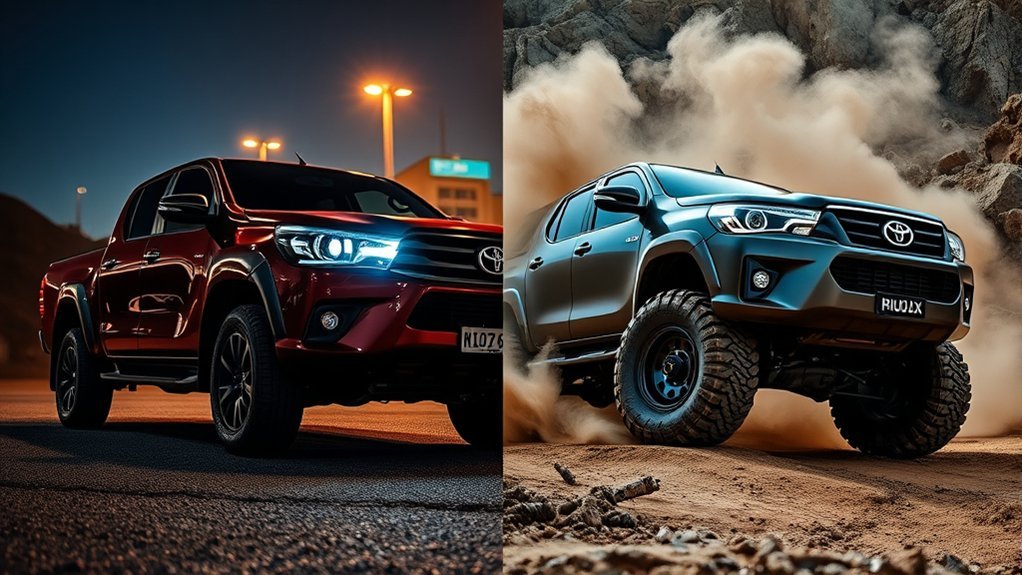
Choosing tires for your Hilux comes down to where you drive most, how much load you carry, and how much comfort you want on paved roads. Street-focused tires suit daily commuting and highway use. All-terrain tires are the best middle ground for many Hilux owners. Mud-terrain or off-road tires make sense when loose dirt, rocks, ruts, mud, or sand are a regular part of your driving.
Quick Answer
Choose street tires if your Hilux spends most of its time on sealed roads. Choose all-terrain tires if you split time between highway driving, worksites, gravel, and light trails. Choose mud-terrain or more aggressive off-road tires only if off-road traction matters more than quietness, fuel economy, and paved-road comfort.
Key Takeaways
- Street tires are best for highway comfort, wet-road control, low road noise, and fuel economy.
- All-terrain tires are usually the smartest Hilux choice if you drive both sealed roads and unsealed tracks.
- Mud-terrain tires give stronger grip in mud, ruts, sand, and rocks, but they are usually louder, heavier, and less efficient on highways.
- Always check the correct tire size, load rating, speed rating, and cold pressure on your Hilux tire placard or owner’s manual before buying.
Street vs Off-Road Tires: Key Differences and Which to Choose
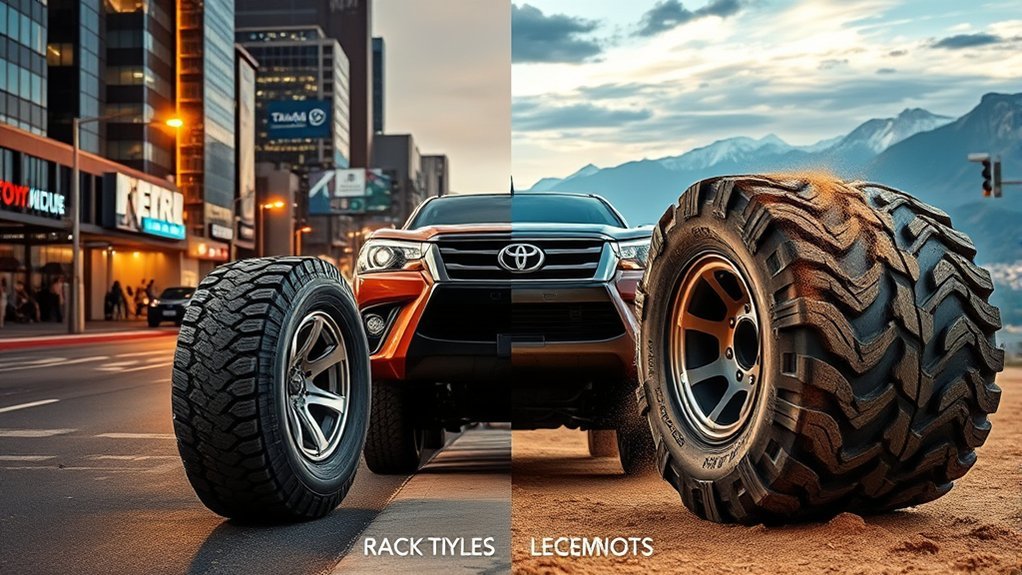
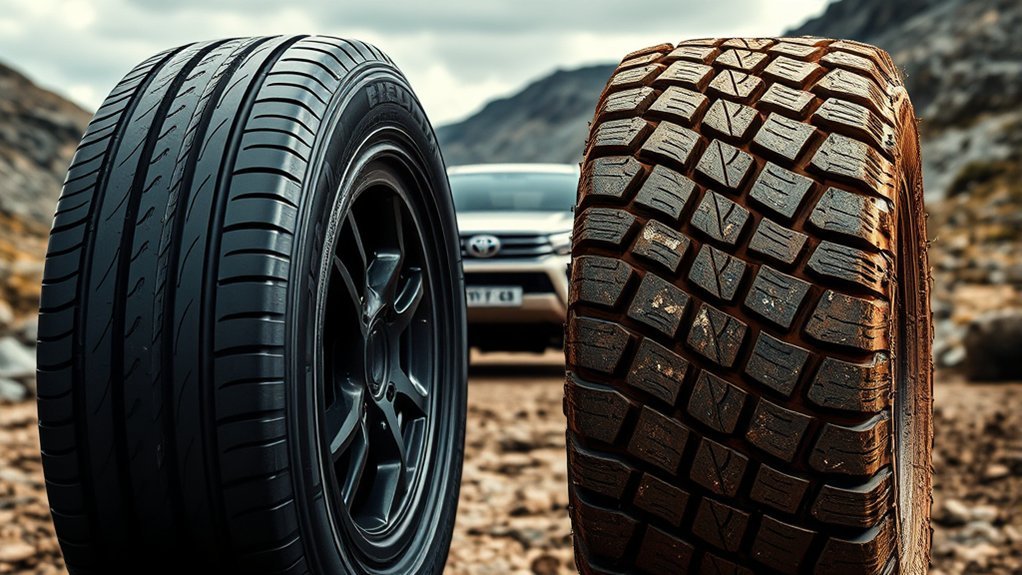
Street and off-road tires are built around different priorities. A street-focused tire usually has a smoother tread pattern, more continuous rubber on the road, and a casing designed for stable, quiet, comfortable driving on sealed surfaces. That makes it a strong choice for commuting, school runs, highway travel, and wet paved roads.
Off-road tires put more emphasis on grip and durability away from pavement. They often use larger tread blocks, wider voids, stronger shoulder areas, and tougher construction. This helps in mud, loose gravel, sand, rocky tracks, and uneven worksites, but the trade-off is usually more road noise, more weight, firmer ride quality, and higher fuel use.
For many Hilux drivers, the best answer is not a pure street tire or a full mud-terrain tire. It is an all-terrain tire. All-terrain tires are designed to balance daily road use with moderate off-road grip, making them a practical choice for utes that tow, carry tools, visit job sites, and still do regular highway kilometres.
Warning: Never choose a tire only because it looks tougher. The size, load index, speed rating, rim compatibility, and cold inflation pressure must suit your Hilux. A tire with the wrong rating can affect braking, handling, towing safety, and insurance compliance.
[Products Worth Considering]
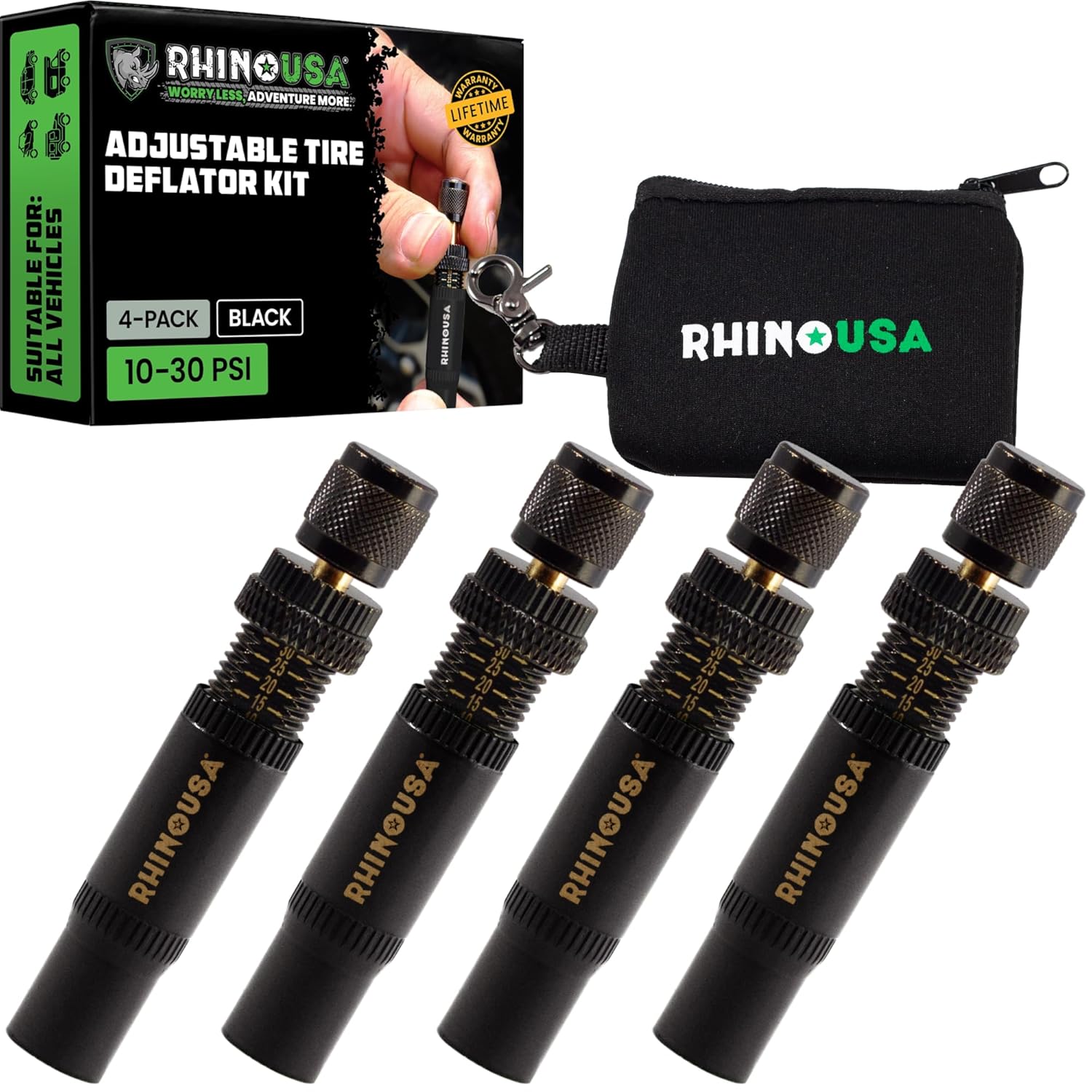
Use the Rhino USA adjustable tire deflators to air down all four tires at once by screwing one deflator onto each valve stem, letting you step away while the tires reach your preset pressure. Each deflator independently adjusts across a 10–30 PSI range with laser-etched indicators for quick setup and verification, making it ideal for beach, sand, and rocky off-road trails.

Keep your tires properly inflated with this analog VONDIOR tire pressure gauge, designed for fast, easy readings without batteries. The swiveling, two-axis hose and large glow dial help you measure at any tire angle with instant visibility. Built with a protective rubber shield, it supports durable, low-maintenance use for cars and trucks.

Measure tire tread depth quickly and accurately with this LUMITECO dial gauge that reads in 1/32" increments up to 14/32". The color-coded green/yellow/red zones make it easy to judge tire wear and know when replacement is needed. A rugged, compact design with a protective pouch helps keep the gauge ready for use on cars, trucks, motorcycles, and more.
What Makes Street Tires Great for City Driving?
Street tires are best when your Hilux spends most of its life on sealed roads. Their tread patterns are usually designed to put more rubber in contact with the road, which helps steering response, braking feel, and ride comfort on pavement.
They also tend to be quieter than aggressive off-road tires. On a long highway drive, that matters. Less tread slap and less pattern noise can make the cabin more relaxed, especially if you use your Hilux as a daily driver or family vehicle.
In wet weather, street and highway-terrain tires can also perform very well when they have enough tread depth and are properly inflated. Their grooves help move water away from the contact patch, which can reduce hydroplaning risk. No tire can prevent hydroplaning in every situation, though. Speed, standing water, tread depth, and pressure all matter.
How Off-Road Tires Excel in Rugged Conditions
Off-road tires are built for surfaces where a normal highway tire can lose traction quickly. In mud, sand, gravel, ruts, and loose rock, larger tread blocks and wider gaps help the tire bite, clear debris, and keep moving.
Mud-terrain tires take that idea further. They use more open tread voids and aggressive shoulders to dig into soft terrain and eject mud or sand. That is useful if your Hilux spends a lot of time on farms, trails, construction tracks, or remote access roads.
The downside is that aggressive off-road tires are rarely as refined on pavement. Expect more hum at highway speeds, a firmer ride, longer warm-up feel in cold weather, and sometimes heavier steering. Braking and wet-road grip also vary heavily by tire model, so compare independent test data and tire labels rather than assuming a rugged tire is automatically safer everywhere.
Street vs All-Terrain vs Mud-Terrain Tires: Quick Comparison
| Tire Type | Best For | Main Trade-Off |
| Street / Highway-Terrain | Commuting, highway trips, towing on sealed roads, wet paved roads, low noise | Limited grip and sidewall protection on mud, rocks, deep sand, and rutted tracks |
| All-Terrain | Mixed road use, gravel, light trails, worksites, touring, moderate off-road trips | Not as quiet as highway tires and not as aggressive as mud-terrain tires |
| Mud-Terrain / Off-Road | Mud, ruts, rocks, loose soil, sand, steep off-road climbs, slow technical driving | More road noise, more weight, reduced comfort, and often higher fuel use on highways |
Tread Patterns: Balancing Traction and Noise Levels
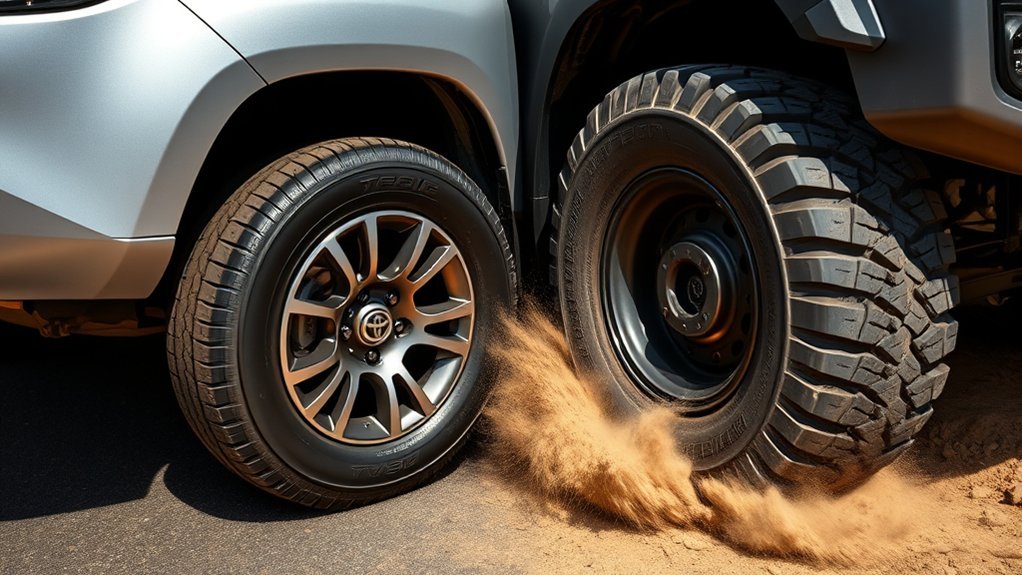
Tread pattern is one of the biggest differences between street and off-road tires. Street tires use closer tread blocks and smoother ribs to improve road feel, reduce noise, and help water evacuation on sealed roads. Off-road tires use chunkier blocks and larger voids to find grip in loose terrain.
Traction in Off-Road Conditions
Off-road traction depends on more than tread depth. The tire also needs the right compound, casing strength, shoulder design, and pressure for the terrain. Mud needs open voids that can clear debris. Rock needs a strong carcass and sidewall protection. Sand needs flotation so the tire stays on top instead of digging down.
That is why a tire that feels excellent on a rocky trail may feel noisy or vague on the highway. Tire design always involves compromise. The goal is to choose the compromise that fits your real driving, not the most aggressive tread you can find.
Noise Levels on Highways
Road noise matters if you drive long distances. The bigger and more open the tread blocks are, the more likely you are to hear humming, droning, or tread slap at speed. All-terrain tires reduce that problem compared with mud-terrain tires, but highway-terrain tires are still usually the quietest choice.
If your Hilux is a daily driver, think carefully before fitting mud-terrain tires just for looks. The extra noise may seem minor on a short test drive, but it can become tiring on long trips.
Sidewall Design: Comfort vs. Durability in Tires
Sidewall design affects comfort, steering, towing stability, and puncture resistance. A highway tire usually focuses on ride quality and predictable handling on sealed roads. A tougher all-terrain or LT-rated tire may feel firmer, but it can better handle load, gravel, and off-road impacts when properly matched to the vehicle.
If your Hilux carries tools, tows, or regularly drives on rough tracks, pay close attention to load rating and construction. Never replace an original LT-rated tire with a weaker passenger tire unless a qualified tire professional confirms that the replacement still meets the vehicle’s load and use requirements.
Start With Size, Load Rating, and Pressure
Before comparing tread patterns, confirm the basics. Check the tire placard on your Hilux, the owner’s manual, or a trusted tire fitment guide for the correct size, load index, speed rating, and cold inflation pressure. These numbers matter more than the tread pattern.
- Size: Larger tires can improve clearance, but they may rub guards, affect speedometer accuracy, change gearing feel, and require suspension or brake-line changes.
- Load rating: A Hilux used for work, towing, or touring needs tires that can safely carry the load.
- Speed rating: The tire must suit legal road use and the vehicle’s requirements.
- Pressure: Road pressure should follow the vehicle placard or the tire professional’s guidance for your load. Off-road pressure is different and should be adjusted carefully.
The tire that looks toughest is not always the safest choice. Correct fitment, pressure, tread depth, and load rating are what keep your Hilux predictable on the road.
[Products Worth Considering]

Milton S-921 pencil tire pressure gauge helps you maintain optimal tire pressure for passenger cars with accurate readings in PSI and kPa. It features a built-in deflator valve for convenient pressure adjustments, plus a single chuck head and nylon indicator bar for easy use on the go. Built from durable plated brass and designed for reliable performance, it’s a practical road trip and cold-weather maintenance tool.

This tire inflator with pressure gauge delivers long-lasting performance with a durable rubber-protected gauge and sturdy build. The longer hose and 360 swivel air chuck help you seal the valve securely and keep your hands free while measuring, inflating, or deflating. It’s battery-free for reliable use and provides ±2 PSI accuracy in the mid-range for most typical tires, with universal compatibility for 1/4 NPT compressor outputs.

This ALL-TOP auto-stop tire deflator valve kit lets you air down off-road tires quickly without watching pressure, automatically stopping when your preset PSI is reached. Each valve is individually calibrated for reliable performance with an acceptable +/- 2 PSI tolerance. The adjustable deflator range covers 10 to 30 PSI and includes four valves plus valve caps and a zipper pouch for easy setup on trucks, SUVs, RVs, UTVs, and powersports.
How Tire Weight Impacts Fuel Efficiency
Heavier off-road tires can affect fuel use because they add rotating mass and often have more aggressive tread. They can also make the Hilux feel slower to accelerate and heavier to steer, especially if you move to a larger size.
However, fuel economy is not controlled by weight alone. Tread compound, rolling resistance, tire pressure, wheel alignment, load, driving speed, roof racks, and terrain all matter. Instead of relying on a fixed percentage claim, compare real tire specifications, keep pressures correct, and avoid fitting more tire than you actually need.
Pro Tip: If you air down for sand, rocks, or corrugations, carry a quality pressure gauge and portable compressor. Reinflating before highway driving protects handling, heat control, and tire life.
How Weather Affects Tire Performance Throughout the Seasons
Weather changes the tire decision. A highway-terrain tire may be excellent in rain on sealed roads, while an aggressive mud-terrain tire may clear mud well but feel less secure on cold, wet pavement. If you drive in snow or icy conditions, do not rely on the tread looking aggressive.
The M+S mark is a broad mud-and-snow marking. It does not automatically mean the tire performs like a dedicated winter tire. If snow and ice are common where you drive, look for a tire with the Three-Peak Mountain Snowflake (3PMSF) symbol or use dedicated winter tires where appropriate.
Note: All-terrain tires can be useful in mild snow or mixed winter conditions when properly rated, but deep snow, ice, and mountain driving often need winter-specific tires or chains where local rules require them.
Making the Right Tire Choice for Your Hilux’s Needs
Use your real driving habits as the guide. If 90% of your driving is highway and city use, a highway-terrain or street-focused tire is usually the sensible choice. It will be quieter, more comfortable, and more efficient than a heavy off-road tire.
If your Hilux splits its time between weekday commuting and weekend gravel tracks, an all-terrain tire is usually the best balance. It gives you more shoulder protection and loose-surface grip than a highway tire while staying more comfortable than a mud-terrain tire.
If you often drive through deep mud, ruts, rocky tracks, soft sand, or remote trails, a mud-terrain or more aggressive off-road tire may be worth the trade-offs. Just be honest about the cost: more noise, possible fuel penalty, heavier steering, and faster wear if most of your driving is on sealed roads.
Choosing the Best Tires Based on Your Driving Habits?
Here is a simple way to decide:
- Mostly city and highway: Choose highway-terrain or street-focused tires for comfort, wet-road control, and low road noise.
- Mixed road and gravel: Choose all-terrain tires with a sensible tread pattern and the correct load rating.
- Worksites and towing: Prioritize load rating, puncture resistance, heat control, and pressure management over aggressive looks.
- Regular mud, rock, or sand: Consider mud-terrain or rugged-terrain tires, plus recovery gear, a full-size spare, and an air compressor.
- Snow and ice: Look for 3PMSF-rated tires or dedicated winter tires rather than relying only on M+S markings.
The best tire for a Hilux is the one that matches your terrain, load, and road use without creating unnecessary compromises.
Frequently Asked Questions
What tyres should I put on my Hilux?
For mostly paved roads, choose highway-terrain or street-focused tyres. For mixed road, gravel, and light trail use, choose all-terrain tyres. For regular mud, rock, sand, and rutted tracks, choose mud-terrain or off-road tyres. In every case, match the tyre size, load rating, speed rating, and pressure requirements for your Hilux.
Are all-terrain tyres a good choice for a Hilux?
Yes, all-terrain tyres are often the best choice for a Hilux that does both road driving and occasional off-road work. They offer more loose-surface grip and toughness than highway tyres while staying quieter and more comfortable than mud-terrain tyres.
What is the weakness of the Toyota Hilux when choosing tyres?
The Hilux is tough, but fitting overly heavy or oversized tyres can make any ute feel less responsive. Bigger aggressive tyres may affect acceleration, braking feel, steering weight, fuel use, speedometer accuracy, and suspension clearance. Choose a tyre that suits the vehicle’s load rating and your real driving conditions.
Do off-road tyres use more fuel?
They can. Aggressive off-road tyres are often heavier and have higher rolling resistance than highway tyres. Fuel use also depends on tyre pressure, wheel alignment, tread design, load, speed, and driving style, so avoid fitting a more aggressive tyre than you need.
Should I air down my Hilux tyres off-road?
Airing down can improve comfort and traction on sand, rocks, and corrugations by increasing the tyre footprint. Do it carefully, avoid sharp steering at very low pressures, and reinflate before returning to highway speeds. Carry a pressure gauge and compressor if you drive off-road often.
Conclusion
Choosing between street, all-terrain, and off-road tires for your Hilux is really about matching the tire to the job. Street tires are best for comfort, wet paved roads, and efficiency. All-terrain tires are the best fit for many Hilux owners because they balance daily driving with gravel, worksites, and weekend trails. Mud-terrain tires are for drivers who genuinely need extra off-road bite and can accept more noise, weight, and fuel use.
Before you buy, check the tire placard, owner’s manual, load rating, speed rating, and pressure requirements. The right tire will make your Hilux safer, more capable, and more enjoyable wherever you drive.
Sources
- NHTSA TireWise — tire safety, tire types, tread, pressure, tire size, and maintenance guidance.
- BFGoodrich Off-Road Tire Selection Guide — all-terrain vs mud-terrain use cases, sizing, LT tires, and tire pressure guidance.
- BFGoodrich Tackling Tough Terrain Guide — sand, rocks, trail planning, airing down, and off-road driving considerations.
- Tire Rack Tire Test Results — tire-design trade-offs involving comfort, handling, noise, traction, and efficiency.
[Products Worth Considering]

Orange Seal regular formula tubeless sealant quickly seals punctures and forms a durable bond inside your tire to help reduce flats. Made with natural latex, it adheres effectively to rubber and seals from the inside out, including the critical bead-to-rim interface for a reliable ride. It seals punctures up to 1/4 inch, slices up to 3/4 inch, and performs in temperatures as low as 11°F across MTB, road, cyclocross, gravel, and e-bike applications.

Vigorder rubber cement glue delivers superior adhesion and cures quickly within about 30 seconds for seamless rubber bonding. Once cured, it helps provide a strong, durable, waterproof seal that holds up to vehicle weight, pressure, and heat. Suitable for cars, motorcycles, trucks, bicycles, and off-road tires, it’s designed for emergency patch and maintenance repairs.

The SAFELIFE dial tire tread depth gauge measures tread depth in 1/32 inch increments with clear, easy-to-read 2-inch dial face. Color zones using a traffic light system help you quickly judge whether tread is low, marginal, or ample for safer driving. Built with a durable zinc cast body and a metal detect probe for precise, comfortable use across cars, motorcycles, trucks, and buses.

Related Articles
Toyota Hilux Run-Flat Tires: What You Need to Know
Take control of your safety with Toyota Hilux run-flat tires; discover their benefits and hidden costs that could change your driving experience forever.
Read More
Effects of Underinflated Tires on the Toyota Hilux
Inadequate tire pressure in your Toyota Hilux can lead to serious safety issues and costly repairs; discover how to avoid these pitfalls.
Read More
The Risks of Overinflating Toyota Hilux Tires
Overinflating your Toyota Hilux tires can lead to dangerous blowouts and uneven wear, but understanding the risks is crucial for your safety.
Read More