
What Is a Radial Tire and Why the Hilux Uses One
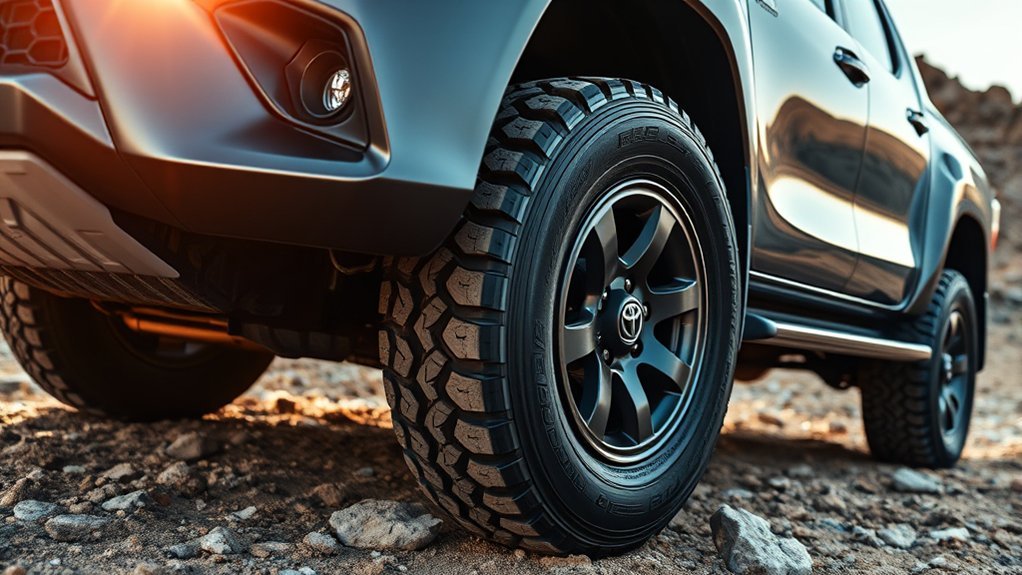
A radial tire is usually the best everyday tire construction for a Toyota Hilux because it gives the tread a stable footprint while letting the sidewall flex. That combination helps with ride comfort, heat control, steering response, tread wear, and fuel efficiency when the tire is correctly sized, loaded, and inflated.
Quick Answer
Radial tires suit most Hilux drivers because their cords run across the tire at about 90 degrees, while stabilizing belts support the tread. This design usually gives better road contact, cooler running, longer wear, and more predictable handling than bias-ply construction.
Key Takeaways
- Radial tires are identified by the “R” in sizes such as 265/65R17.
- For a Hilux, always match the tire placard or owner’s manual for size, load index, speed rating, and cold tire pressure.
- All-terrain radial tires are a strong choice for mixed highway, gravel, towing, and light off-road use.
- Radials are not damage-proof; sidewall cuts, shoulder punctures, and improper repairs can make a tire unsafe.
What Are Radial Tires and How Do They Work?
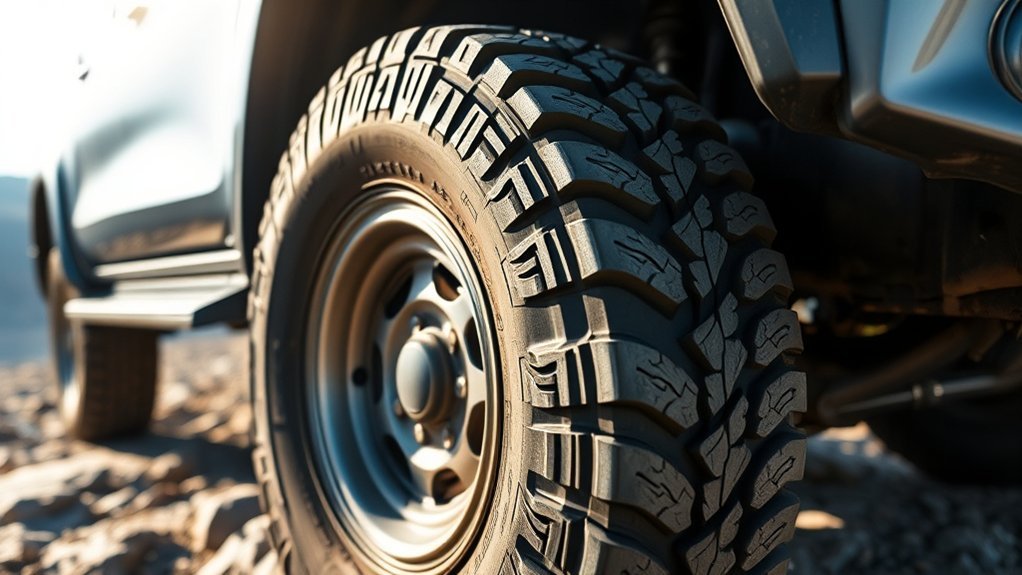
In a radial tire, the body cords run from bead to bead across the tire, roughly at a right angle to the direction of travel. On the sidewall, this construction is shown by the letter R in the tire size. For example, in 265/65R17, the “R” means radial construction.
This structure separates two jobs. The sidewall can flex to absorb bumps, while the tread area stays more stable on the road. Michelin explains that radial construction uses cables that radiate around the tire, with additional belt layers around the crown of the tire to support the tread. Michelin’s radial tire guide also notes common benefits such as grip, ride comfort, heat resistance, and wear resistance.
For a Hilux, that matters because the vehicle often does more than one job. It may carry tools during the week, tow on weekends, drive on highways, and then handle dirt roads, gravel, sand, or job-site tracks. A properly chosen radial tire gives the Hilux a better balance of comfort, stability, durability, and efficiency than old-style bias-ply construction for most normal driving.
Note: “Radial” describes the internal construction, not the tread pattern. A highway tire, all-terrain tire, and mud-terrain tire can all be radial tires.
Key Advantages of Radial Tires for the Hilux
When you use the correct radial tires on your Hilux, the main advantages are comfort, control, heat management, and long-term value. These benefits are strongest when the tire also matches your driving style, load needs, and terrain.
| Benefit | What It Means for a Hilux |
|---|---|
| Better ride comfort | Flexible sidewalls help absorb small impacts from broken pavement, corrugations, and gravel roads. |
| Improved tread stability | The tread stays flatter on the road, which helps steering response and braking consistency. |
| Cooler running | Radial construction usually creates less heat than bias-ply construction at highway speeds. |
| Fuel-efficiency potential | Lower rolling resistance can help efficiency, especially when tires are properly inflated. |
| Longer usable wear | Even tread contact can support longer tread life, but mileage still depends on tire model, load, pressure, alignment, rotation, and road surface. |
Fuel efficiency should be described carefully. Radial construction can reduce rolling resistance compared with bias-ply construction, but there is no single fuel-saving number that applies to every Hilux. Tire pressure also matters. FuelEconomy.gov notes that keeping tires inflated to the proper pressure can improve gas mileage and that under-inflated tires reduce fuel economy.
[Products Worth Considering]

EVOULTES heavy duty tire inflator with an integrated gauge delivers accurate pressure readings from 10–120 PSI, helping you inflate, deflate, and check tires in one tool. The 16.5-inch extended dual-head air chuck with swivel base reaches hard-to-access dual wheel valves on trucks and RVs. A brass trigger core and side-mounted air release valve make operation smooth, with standard 1/4" NPT threading and quick-connect compatibility for easy setup.

This portable cordless tire inflator delivers up to 160 PSI with fast 17 L/min airflow to help you quickly top up tires and get back on the road. It features dual power mode, running on a 21V rechargeable battery or a 12V DC adapter for convenient roadside use. An automatic shut-off with digital pressure gauge helps prevent overinflation, and a built-in LED light improves visibility in low-light conditions.

The JACO FlowPro Tire Inflator measures, inflates, and airs down tires up to 100 PSI with battery-free operation and ±2% accuracy after calibration. It features a glowing pressure dial for night visibility, a heavy-duty steel build with a hybrid hose, and a precision push-to-inflate thumb trigger. The patented Lightning Air Chuck locks on for a secure seal, and the kit includes quick-connect hardware for easy inline use with your air compressor.
Enhancing Handling and Performance With Radial Tires
A Hilux feels more secure when the tread stays planted and the sidewall flexes in a controlled way. That is where radial tires usually perform well.
[Products Worth Considering]

The Fanttik X10 Pro is a cordless portable tire inflator that reaches up to 150 PSI and can inflate an R15 tire in about 35 seconds for quick roadside or home top-ups. With AccuInFlate auto-stop and smart start/stop controls, it helps maintain accurate pressure and frees your hands once the target is reached. A high-visibility digital display and preset modes make it easy to set and monitor inflation for cars, motorcycles, bikes, and balls.
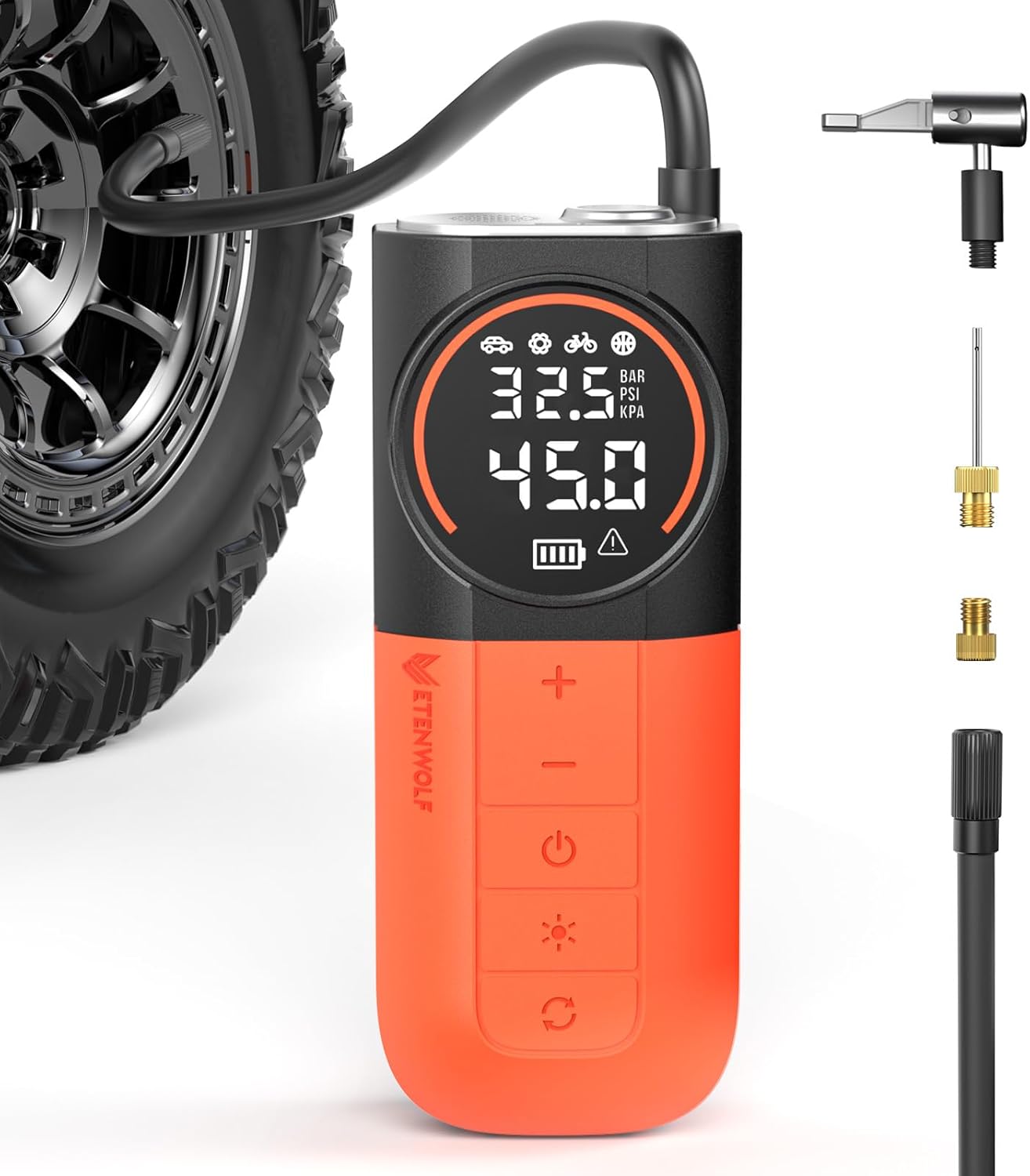
The ETENWOLF S1 cordless tire inflator delivers ultra-fast inflation with up to 160 PSI and a 20 L/min airflow for quicker tire top-offs. Its 5200mAh battery and cooling system support inflating many tires and sports balls on a single charge, while the digital pressure gauge and multi-unit display help you reach the right pressure accurately. With preset modes, pressure memory, an auto-stop feature, and an LED flashlight, it’s built for easy roadside and everyday use.

Improved Road Contact
The stable tread area of a radial tire helps keep more usable rubber in contact with the road. This can improve grip during braking, cornering, and lane changes. On rough surfaces, the sidewall flex also helps the tire follow small bumps instead of skipping over them.
For daily driving, this means a smoother and more predictable Hilux. For gravel or dirt-road driving, it means better contact and less harshness than a stiff bias-ply tire would usually provide at the same speed.
Enhanced Stability at Speed
Radial tires are especially helpful at sustained highway speeds because they typically run cooler and keep the tread more stable. That matters for a Hilux carrying passengers, tools, camping gear, or towing weight. Heat is one of the main enemies of tire life, so the correct tire pressure and load rating are just as important as the radial construction itself.
Pro Tip: Check Hilux tire pressure when the tires are cold, before a long highway trip, towing, or driving off-road. Do not use the maximum pressure printed on the tire sidewall as your normal operating pressure; use the vehicle placard or owner’s manual.
Better Efficiency Through Lower Rolling Resistance
Rolling resistance is the energy a tire uses as it flexes and rolls. A well-designed radial tire can reduce wasted energy compared with older construction types. The gain is not automatic, though. A heavy mud-terrain tire, aggressive tread blocks, low pressure, poor alignment, or an overloaded tray can all reduce efficiency.
If fuel economy is a priority, choose a road-focused or all-terrain radial tire with an efficiency rating where available, keep pressure correct, rotate on schedule, and avoid carrying unnecessary weight.
Why Durability Is Key for Radial Tires in Tough Conditions
A Hilux often works in conditions that expose tires to heat, rocks, curbs, potholes, gravel, and heavy loads. Radial tires can handle this well, but the exact tire type matters. A passenger-style highway radial is not the same as a reinforced light-truck all-terrain radial.
Key Features of Durability
Look for these durability features when choosing radial tires for a Hilux:
- Correct load index: The tire must meet or exceed the vehicle manufacturer’s requirement.
- LT or C-type construction where required: These tires may be better suited for heavy loads, towing, or work use, depending on your Hilux specification.
- Strong sidewall design: Useful for gravel, job sites, and light off-road driving.
- Appropriate tread depth and pattern: More open patterns help on dirt and mud, while highway patterns are quieter and more efficient.
- Heat resistance: Important for long trips, heavy loads, and high ambient temperatures.
Performance in Rough Terrain
For rough roads and mixed terrain, an all-terrain radial tire is often the best balance. It usually gives stronger tread blocks and better gravel traction than a highway-terrain tire, without the noise, weight, and fuel-economy penalty of a full mud-terrain tire.
For deep mud, sharp rocks, and frequent low-pressure off-road driving, choose a radial tire built specifically for that use. Some extreme off-road drivers still prefer bias-ply tires in special cases, but for most Hilux owners who drive both road and trail, a quality radial all-terrain or mud-terrain tire is the more practical choice.
Long Lifespan Benefits
Radial tires can last a long time, but there is no universal mileage promise. A Hilux tire’s lifespan depends on tread compound, tire category, rotation schedule, wheel alignment, pressure, payload, towing, road surface, and driving style.
To get more life from your tires:
- Rotate tires at the interval recommended by the tire maker or vehicle manual.
- Keep the Hilux aligned, especially after hard off-road impacts.
- Check pressure before towing, hauling, or highway travel.
- Inspect sidewalls and tread after gravel or rocky driving.
- Replace tires that show deep cuts, bulges, exposed cords, or unsafe tread depth.
The best radial tire for a Hilux is not simply the toughest-looking one. It is the tire that matches the vehicle placard, load, speed, terrain, and real driving conditions.
What Are the Limitations of Radial Tires?
Radial tires are the standard choice for most modern pickups, but they still have limits. Understanding these limits helps you avoid unsafe tire choices and expensive replacements.
| Limitation | What It Means |
|---|---|
| Sidewall damage | Cuts, bulges, or punctures in the sidewall or shoulder area are usually not safe to repair. |
| Repair limits | Tire repairs are generally limited to the tread area and small punctures. A trained technician should inspect the inside of the tire. |
| Extreme off-road use | Some radial sidewalls can be more vulnerable when aired down hard on sharp rocks unless the tire is built for that use. |
| Wrong tread choice | A highway radial will not perform like a mud-terrain radial in deep mud, and a mud-terrain radial may be noisy and less efficient on pavement. |
| Winter grip | Cold-weather grip depends on compound and tread design. In real winter conditions, look for the Three-Peak Mountain Snowflake symbol. |
Warning: Do not rely on plug-only repairs or repair sidewall damage. The U.S. Tire Manufacturers Association says repairs should be considered only when damage is limited to the tread area and the puncture is no larger than 1/4 inch or 6 mm. Have the tire removed from the wheel and inspected by a trained tire technician.
Selecting Radial Tires for Your Hilux
The safest starting point is always the tire placard on your Hilux, your owner’s manual, or your Toyota dealer. Toyota Australia’s current HiLux specification sheet lists sizes such as 265/65R17 and 265/60R18 on different grades, but the correct tire depends on year, market, trim, body style, drivetrain, wheel package, and load requirement. You can confirm current grade data in the Toyota Australia HiLux specification sheet.
[Products Worth Considering]


TWO PACK OF TIRES: 4.10/3.50-4" (10.2" diameter) with a 2.25" offset hub and 5/8" ball bearings; sold as a 2-pack
Read the Sidewall Before You Buy
A tire size such as 265/65R17 112T contains more information than just width and wheel size:
- 265 = tire section width in millimeters.
- 65 = sidewall height as a percentage of width.
- R = radial construction.
- 17 = wheel diameter in inches.
- 112 = load index, or how much weight the tire can carry when properly inflated.
- T = speed rating under specified conditions.
The Tire Industry Association explains that the service description after the tire size indicates load index and speed symbol. Those ratings must be suitable for the Hilux, especially if you tow, carry tools, add a canopy, fit accessories, or drive on rough roads.
Warning: Do not mix radial and non-radial tires, mismatched sizes, or lower load-rated tires on a Hilux unless Toyota specifically approves it. For 4WD models, even small outside-diameter differences can affect driveline behavior.
Choose the Right Radial Tread Type
Pick the tread pattern based on where your Hilux spends most of its time:
- Highway-terrain radial: Best for sealed roads, commuting, low noise, and fuel efficiency.
- All-terrain radial: Best all-round option for mixed highway, gravel, farm tracks, light mud, and touring.
- Mud-terrain radial: Best for frequent mud, ruts, and tougher trails, but usually noisier and heavier on pavement.
- LT or reinforced radial: Useful when the Hilux regularly carries heavy loads or tows, provided the size and rating match the placard or approved specification.
Check Pressure, Load, and Maintenance
The USTMA Tire Care and Safety Guide recommends using the vehicle tire placard and owner’s manual for replacement size and cold inflation pressure. It also recommends matching tire size, load index, speed rating, and construction unless the manufacturer specifies otherwise.
The National Highway Traffic Safety Administration also provides tire safety information on choosing and caring for tires, tire labeling, aging, maintenance, and fuel efficiency.
Before buying radial tires for a Hilux, confirm:
- The tire size matches the placard, manual, or approved alternative.
- The load index meets or exceeds the original requirement.
- The speed rating is suitable for the vehicle and legal road use.
- The tire type matches your use: highway, all-terrain, mud-terrain, LT, or winter.
- The spare tire is compatible and safe to use.
- The tire is not old stock with an unsuitable date code.
Frequently Asked Questions
What is better for a Hilux: cross-ply or radial tires?
For most Hilux owners, radial tires are better because they usually provide smoother ride comfort, lower heat buildup, better highway stability, and more even wear. Cross-ply or bias-ply tires can still have niche uses in slow-speed industrial, agricultural, or extreme off-road work, but they are not the best everyday choice for normal Hilux driving.
What is special about radial tires?
Radial tires separate sidewall flex from tread stability. The sidewall can absorb bumps while the tread stays flatter on the road. That design helps comfort, handling, heat control, and tread wear when the tire is correctly selected and maintained.
How do I know if my Hilux tire is radial?
Look at the tire size on the sidewall. If the size contains the letter “R,” such as 265/65R17, it is a radial tire. The “R” appears before the wheel diameter.
Are radial tires good for off-road Hilux driving?
Yes, if you choose the right tread and construction. An all-terrain radial is usually best for mixed road and trail use. A mud-terrain radial is better for frequent mud and rough tracks. For sharp rocks or heavy loads, consider a reinforced light-truck tire with the correct load rating.
Can I replace one Hilux radial tire at a time?
It is usually better to replace tires in matching pairs or full sets, especially on 4WD models. If only one tire must be replaced, match the same size, construction, load index, speed rating, and tread type, and ask a tire professional to check tread-depth difference and driveline compatibility.
Conclusion
Radial tires are a strong choice for a Hilux because they balance comfort, stability, heat control, fuel-efficiency potential, and tread life. The real key is choosing the right radial tire, not just any radial tire. Match the placard or owner’s manual, confirm the load index and speed rating, choose a tread pattern for your terrain, and keep pressure and alignment in check. Do that, and your Hilux will be better prepared for daily driving, towing, gravel roads, and weekend adventure.
Sources
- Michelin — Radial tyres — radial construction, grip, comfort, heat resistance, and wear benefits.
- NHTSA TireWise — tire selection, maintenance, safety ratings, aging, and fuel-efficiency guidance.
- FuelEconomy.gov — Keeping Your Vehicle in Shape — proper inflation and fuel-economy impact.
- USTMA Tire Care and Safety Guide — replacement tire size, load index, speed rating, construction, and pressure guidance.
- USTMA Tire Repair Basics — tread-area repair limits and proper puncture repair procedures.
- Toyota Australia HiLux Specification Sheet — current HiLux wheel and tire size examples by grade.

Related Articles
Toyota Hilux Run-Flat Tires: What You Need to Know
Take control of your safety with Toyota Hilux run-flat tires; discover their benefits and hidden costs that could change your driving experience forever.
Read More
Effects of Underinflated Tires on the Toyota Hilux
Inadequate tire pressure in your Toyota Hilux can lead to serious safety issues and costly repairs; discover how to avoid these pitfalls.
Read More
The Risks of Overinflating Toyota Hilux Tires
Overinflating your Toyota Hilux tires can lead to dangerous blowouts and uneven wear, but understanding the risks is crucial for your safety.
Read More