
When to Use 4WD With Snow Tires on a Tundra: Situations That Call for It
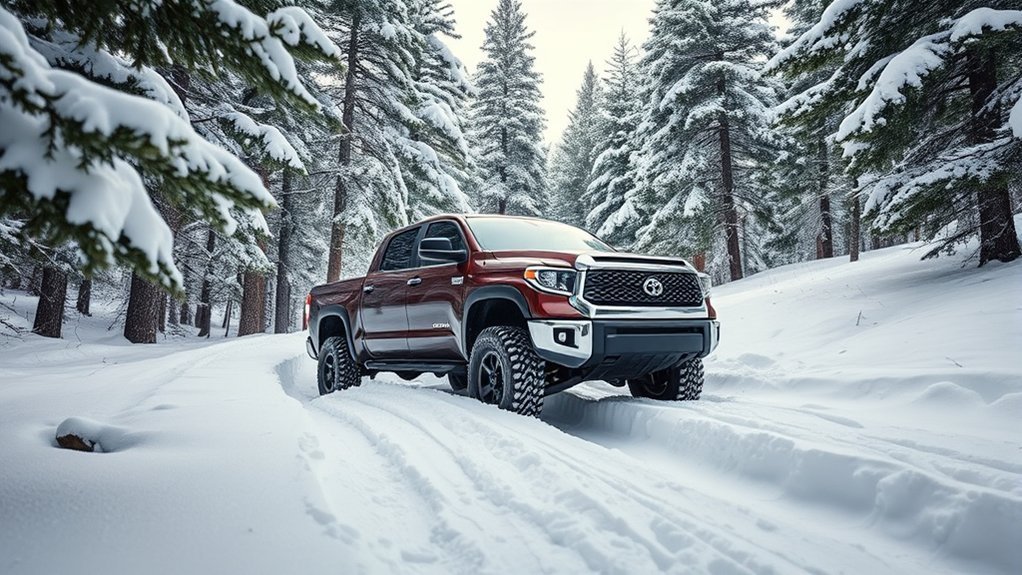
Using 4WD with snow tires on your Tundra is essential for maneuvering through snowy and icy conditions. Engage 4WD when snow depth exceeds several inches or on packed snow and ice for better traction and stability. It’s also important during emergencies in deep, untouched snow. However, remember to switch it off on dry pavement to avoid drivetrain damage. Proper tire selection and maintenance are equally important for peak performance. There are many more tips to enhance your winter driving experience.
Understanding the Benefits of 4WD for Your Tundra
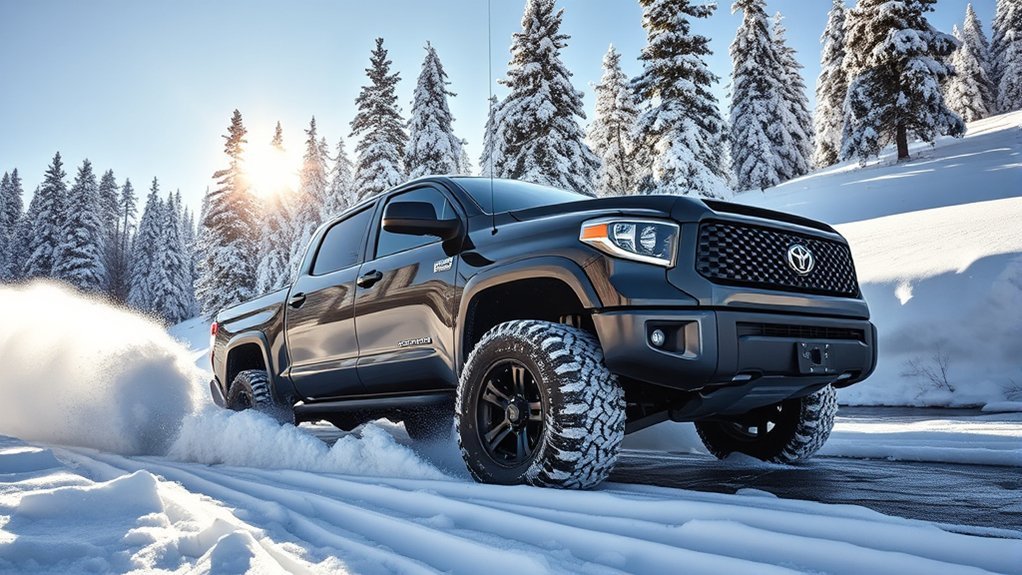
When you’re driving a Tundra in challenging conditions, understanding the benefits of 4WD can make all the difference. Many people fall for 4WD myths, thinking it’s a cure-all for winter driving. However, it’s vital to pair 4WD with the right tires. Dedicated winter tires like the Nokian Hakkapeliitta enhance traction and control, especially during heavy snow accumulation. Engaging 4WD improves your vehicle’s stability on slick roads, making it essential for maneuvering icy surfaces or whiteout conditions. You’ll find that it can greatly boost your safety in emergencies, reducing the risk of getting stuck. But remember, all-terrain or M/T tires may not deliver the necessary grip in these scenarios. So, to maximize your Tundra’s performance, verify your tire compatibility matches the conditions and rely on 4WD when the weather turns harsh. Embrace the freedom that comes with confident driving!
When to Use 4WD in Snowy Conditions?
When you’re maneuvering through snowy conditions, engaging 4WD is essential for maintaining traction and control, especially on packed snow or ice. You should switch to 4WD when the snow depth increases or during emergencies in deep, untouched snow to keep moving. However, remember that 4WD isn’t a substitute for quality winter tires, so make sure you’re properly equipped for the best performance.
Situations Requiring 4WD
Driving in snowy conditions can challenge even the most skilled drivers, so engaging 4WD is essential for enhancing traction and maintaining control. Activate 4WD when tackling packed snow or ice, especially when visibility drops in heavy snow or whiteout conditions. This driving technique boosts vehicle stability and aids in traction management, helping you navigate safely. If snow accumulates beyond several inches, 4WD becomes vital to avoid losing grip. Remember, 4WD myths suggest it’s a catch-all solution, but it won’t shorten your stopping distances. Always switch it off on dry pavement to prevent damage. Embrace winter preparedness by knowing when to use 4WD, ensuring you’re ready for whatever snowy challenges come your way.
Benefits of Engaging 4WD
Engaging 4WD greatly enhances your Tundra’s performance in snowy conditions, providing essential benefits that boost safety and control. Here are some key 4WD advantages to take into account:
- Improved Traction: 4WD distributes power to all wheels, enhancing grip on packed snow and ice.
- Increased Stability: It helps maintain control during deep snow, reducing the risk of losing traction.
- Better Handling: Engaging 4WD at higher speeds improves handling, minimizing skidding or spinning out.
- Enhanced Maneuverability: Regularly using 4WD on steep inclines or during heavy snowfall prevents getting stuck.
These seasonal factors make 4WD an important tool for traversing winter’s challenges, ensuring a safer journey in your Tundra.
Why Snow Tires Are Essential for Winter Driving
Snow tires are vital for winter driving because they provide enhanced traction in snow, which keeps you safe on slippery roads. Their specialized design improves stopping distance and handling on ice, giving you the confidence to navigate challenging conditions. If you want to maintain control and minimize the risk of accidents this winter, investing in dedicated snow tires is essential.
Enhanced Traction in Snow
How can you guarantee your Tundra handles winter’s worst? The answer lies in using snow tires designed for enhanced traction. Here’s why they’re essential:
- Superior Tire Performance: Snow tires, especially with the 3PMSF rating, outperform all-season tires by providing better grip on icy surfaces.
- Optimal 4WD Engagement: With snow tires, your 4WD system can operate more effectively, maximizing traction control in slick conditions.
- Specialized Compounds: Tires like the Bridgestone Blizzak utilize unique materials that maintain flexibility in cold temperatures for improved performance.
- Enhanced Handling: Properly fitted snow tires improve weight distribution, giving you better control during sudden maneuvers or in deep snow.
Embrace winter freedom with the right tools for the job!
Improved Stopping Distance
When winter weather strikes, knowing that your Tundra can stop effectively is essential for your safety. Snow tires, especially those with the 3PMSF rating, dramatically improve stopping distance on icy roads—by up to 30% compared to all-season tires. This reduction is significant when you need to maintain control in slippery conditions. Utilizing the specialized tread patterns of winter tires, like Blizzak and Nokian Hakkapeliitta, enhances grip and helps you stop more efficiently. Remember, proper tire maintenance, including correct inflation, is critical; under-inflated tires can lengthen stopping distances. Engaging 4WD with snow tires can boost stability during braking, but it won’t directly improve stopping power. Mastering these stopping techniques keeps you safe on winter roads.
Better Handling on Ice
While driving on icy roads, having the right tires can make all the difference in your Tundra’s handling. Snow tires, especially those with a 3PMSF rating, are engineered for ideal ice traction and tire performance. Here’s why they’re essential for winter driving:
- Enhanced Grip: Specialized tread patterns improve traction on slippery surfaces.
- Shorter Stopping Distances: Better tire performance means you can stop quicker on ice.
- Improved Cornering Stability: Snow tires help maintain control during turns.
- Reduced Slipping Risk: Properly maintained tires lower the chances of losing control.
When paired with 4WD, these tires maximize your Tundra’s stability and safety, empowering you to navigate winter conditions with confidence.
Strategies for Using 4WD in Deep Snow vs. Icy Conditions
Understanding the nuances between driving in deep snow and icy conditions is essential for effectively using 4WD in a Tundra. Engage 4WD when you’re in deep snow, especially when it exceeds your vehicle’s clearance. This enhances traction and prevents you from getting stuck. In contrast, on icy roads, use 4WD judiciously. While it improves traction, remember that it won’t help with braking, so manage your speed carefully.
When you encounter packed snow or ice, switching to 4WD can maintain control, particularly on inclines and slippery turns. However, avoid using 4WD on dry pavement, as it’ll wear down your drivetrain and affect handling. Always assess road conditions before engaging 4WD; it’s most beneficial during severe weather, like heavy snowfall or ice, when traction loss is likely. By understanding these strategies, you’ll navigate challenging winter conditions with confidence.
How to Maintain Control With 4WD on Slippery Roads
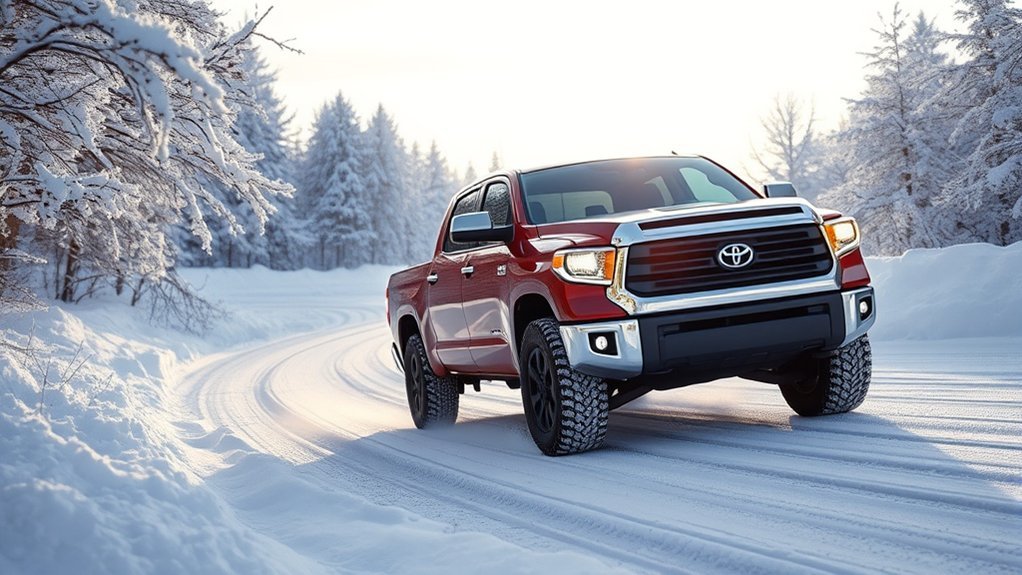
To maintain control with 4WD on slippery roads, it’s essential to engage your vehicle’s capability effectively. Here are some key strategies to keep in mind:
- Engage 4H: Activate 4WD to enhance traction on packed snow or ice, but remember that stopping distances may increase.
- Smooth Steering: Anticipate turns and stops well in advance, using gentle steering inputs to maintain stability and control.
- Brake Gently: Slow down and brake softly to avoid losing grip on slippery surfaces; sudden braking can lead to skidding.
- Tire Maintenance: Regularly check your snow tires for proper inflation and tread depth, as this greatly affects your control in 4WD.
Common Missteps: Misusing 4WD and Their Consequences
Maintaining control on slippery roads often involves effectively using your 4WD system, but misusing it can lead to serious consequences. Many drivers fall prey to 4WD misconceptions, mistakenly engaging it on dry pavements, which can cause unnecessary wear and potential drivetrain damage. Overconfidence risks arise when you overestimate your 4WD’s capabilities in snow, ignoring the importance of proper tire selection and driving techniques.
Relying solely on 4WD, especially without winter tires, can result in poor traction, increased stopping distances, and heightened danger on icy surfaces. Additionally, using 4WD for parking can create steering difficulties and raise the risk of vehicle damage. Engaging 4WD in light snow can lead to false confidence, encouraging you to drive faster, compromising your safety on slick roads. By understanding these common missteps, you can navigate winter conditions more effectively and safely.
The Impact of Weight on Traction and Stability
Adding a few hundred pounds of weight in the bed of your Tundra can considerably boost traction and stability, especially in challenging snowy conditions. Proper weight distribution is key to enhancing your driving experience. Here are a few benefits of strategic weight use:
- Improved Tire Contact: Extra weight guarantees better grip on slippery roads, reducing your chances of slipping.
- Enhanced Control: A well-balanced load helps prevent fishtailing, allowing for smoother navigation through snow.
- Momentum Maintenance: In deep snow, added weight aids in maintaining momentum, helping you avoid getting stuck.
- Optimal Traction Without Overloading: Finding the right balance is vital; too much weight can negatively impact handling.
Choosing the Right Tires for Optimal 4WD Performance
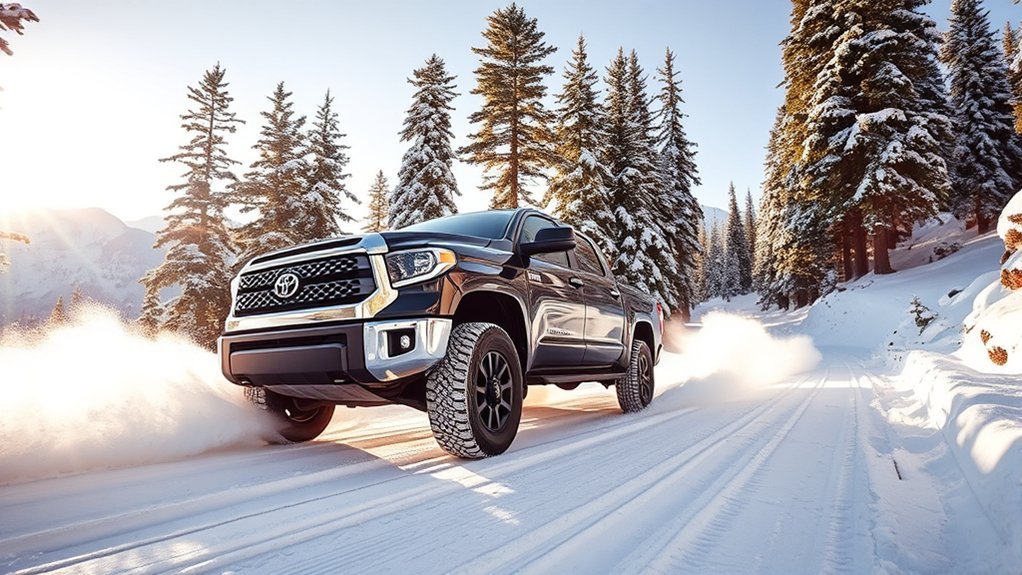
When steering through winter’s icy grip, selecting the right tires is essential for maximizing your Tundra’s 4WD performance. Dedicated winter tires, like Nokian Hakkapeliitta or Bridgestone Blizzak, offer superior traction and control on snow and ice. Look for tires with a 3PMSF (Three-Peak Mountain Snowflake) rating; these are engineered specifically for severe winter conditions, ensuring ideal grip when your 4WD is engaged.
While all-terrain tires can handle deep snow, they often lack the same ice traction as dedicated winter options. Prioritize tire selection based on your winter driving needs. Maintain proper tire pressure to prevent traction issues, and regularly inspect your tires for adequate tread depth—at least 5/32 inches is vital. Worn tires can drastically compromise safety and performance, so keep them in top shape to fully leverage your Tundra’s 4WD capabilities in snowy conditions.
4WD Tips for Safe Driving in Heavy Snow
When you’re driving in heavy snow, mastering key techniques is essential for safety. Engaging 4WD can greatly enhance your grip, but don’t forget that the quality of your tires plays an important role in performance. With the right approach and maintenance, you can navigate winter conditions with confidence.
Key Driving Techniques
Maneuvering heavy snow with your Tundra requires specific driving techniques to guarantee safety and control. Here are some essential tips:
- Engage 4WD in heavy snow or icy conditions to enhance stability.
- Maintain a slow and steady pace; sudden acceleration or braking can lead to losing traction.
- Adjust your driving posture; keep your body relaxed but alert, allowing for smooth steering movements.
- Anticipate road conditions and practice gentle braking and smooth steering techniques for better control.
Tire Performance Importance
Tire performance plays a critical role in your Tundra’s ability to navigate heavy snow safely. The right tire composition and tread patterns are key; dedicated winter tires like Nokian Hakkapeliitta or Blizzak offer superior grip compared to all-season options. When snow depth exceeds a few inches, engaging 4WD enhances traction, helping you maintain control on slick surfaces. However, remember that while 4WD improves grip, it doesn’t shorten stopping distances. Always maintain a safe following distance and regularly assess road conditions. Using 4WD judiciously not only maximizes your vehicle’s performance but also guarantees your safety when tackling challenging winter roads. Prioritize tire quality, and your Tundra will thank you with confidence and stability in heavy snow.
Preparing Your Tundra for Winter: Must-Do Checks and Modifications
As winter approaches, making certain your Tundra is ready for icy roads and snow-covered landscapes is vital for both safety and performance. Here are some must-do checks and modifications:
- Tire Maintenance: Equip your Tundra with 3PMSF-rated winter tires, like Nokian Hakkapeliitta or Toyo GSI 6, for enhanced traction.
- Tire Pressure: Regularly check and maintain proper tire pressure; it’s essential for optimal performance in winter conditions.
- Battery Inspection: Cold weather can impact battery life. Inspect your battery and consider a winter-rated option if needed.
- Fluid Checks: Verify all fluids, including antifreeze and windshield washer fluid, are winter-grade to prevent freezing and maintain visibility.
These steps will enhance your Tundra’s capability on slippery surfaces, keeping you safe and confident throughout the winter months.
Frequently Asked Questions
Should I Turn My 4wd on When Driving on Snow?
Yes, you should turn your 4WD on when driving on snow. It enhances traction and stability, allowing you to navigate slick conditions more safely. Embrace the 4WD benefits for a smoother snow driving experience.
Is October Too Early for Winter Tires?
It’s not too early for winter tires in October. Embracing winter tire benefits enhances your traction and safety. Consider seasonal tire factors, and you’ll glide through the chilly months with confidence and peace of mind.
Can I Drive My Tundra in 4H in the Snow?
Yes, you can drive your Tundra in 4H in the snow. This enhances tire performance and traction on slippery surfaces, ensuring better control and stability. Just remember to switch back to 2WD on dry roads.
Conclusion
In the dance of winter driving, knowing when to engage 4WD with snow tires on your Tundra is essential. Like a well-timed waltz, it enhances your grip on slippery roads and deep snow. Embrace the power of your truck and remember that preparation is key—check your tires, maintain control, and adjust to the conditions. With the right approach, you’ll glide through winter’s challenges, transforming icy obstacles into mere stepping stones on your journey. Stay safe out there!

Related Articles

When to Replace All-Terrain Tires on a Tundra: Tread Depth and Age Limits
Get essential tips on when to replace all-terrain tires on your Tundra—discover the critical signs of wear and age that could impact your safety.
Read More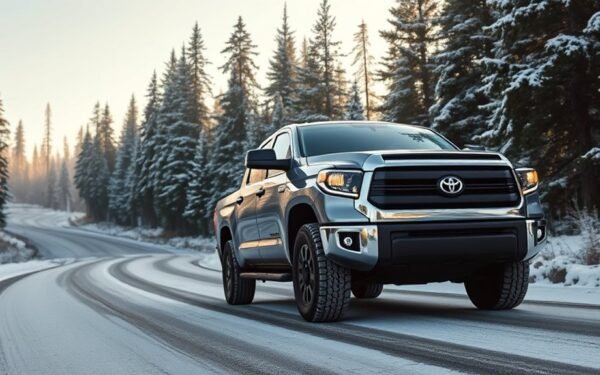
When to Switch to Winter Tires on a Toyota Tundra: Temperature Rule
Make the switch to winter tires for your Toyota Tundra when temps drop below 45°F—discover how this simple change can enhance your safety.
Read More
How Tire Age Affects Safety: When Old Tires Become Dangerous
How tire age impacts your safety may surprise you; learn why ignoring old tires could lead to dangerous situations on the road.
Read More