
How to Use a Portable Tire Inflator for Truck Tires: PSI Tips and Tricks
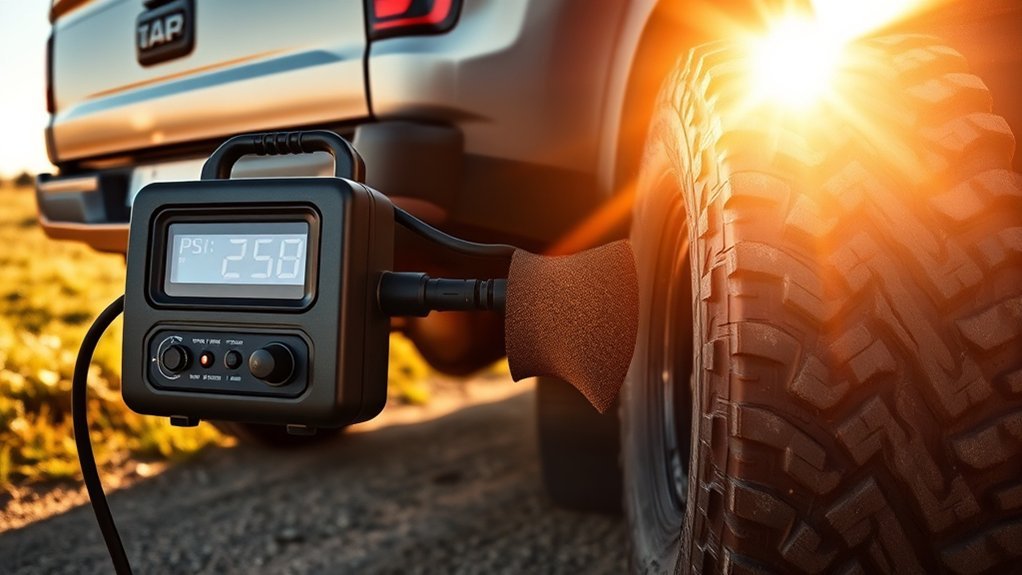
A portable tire inflator is one of the easiest tools to keep in your truck, especially before towing, hauling, or taking a long drive. The key is to use the correct cold tire pressure from your truck’s tire placard or owner’s manual, not a guessed PSI range and not the maximum number printed on the tire sidewall.
Quick Answer
To use a portable tire inflator for truck tires, park safely, check the tire placard for the recommended cold PSI, connect the hose securely to the valve stem, set or monitor the target pressure, inflate in short intervals, verify with a separate gauge, then replace the valve cap and inspect the tire.
Key Takeaways
- Use the truck’s tire placard or owner’s manual for the correct cold PSI; the tire sidewall shows a maximum rating, not your everyday target.
- Check pressure when tires are cold, ideally after the truck has been parked for at least three hours.
- Make sure your portable inflator can handle your truck tire’s PSI, tire size, power draw, and duty cycle before you start.
- Stop if the tire has sidewall damage, exposed cords, a damaged valve stem, bead damage, or has been driven while flat.
- Recheck pressure monthly, before long trips, and before towing or carrying heavy loads.
At a Glance
| Time Required | 5–15 minutes for topping off most pickup or light-truck tires; longer for large tires or a very low tire. |
| Difficulty | Easy, as long as the tire is not damaged and the inflator is rated for the job. |
| Tools Needed | Portable tire inflator, accurate tire pressure gauge, valve caps, flashlight if needed, and the truck’s tire placard or owner’s manual. |
| Cost | Usually $0 if you already own the inflator; a separate tire gauge is typically inexpensive and worth keeping in the truck. |
How to Use a Portable Tire Inflator for Truck Tires
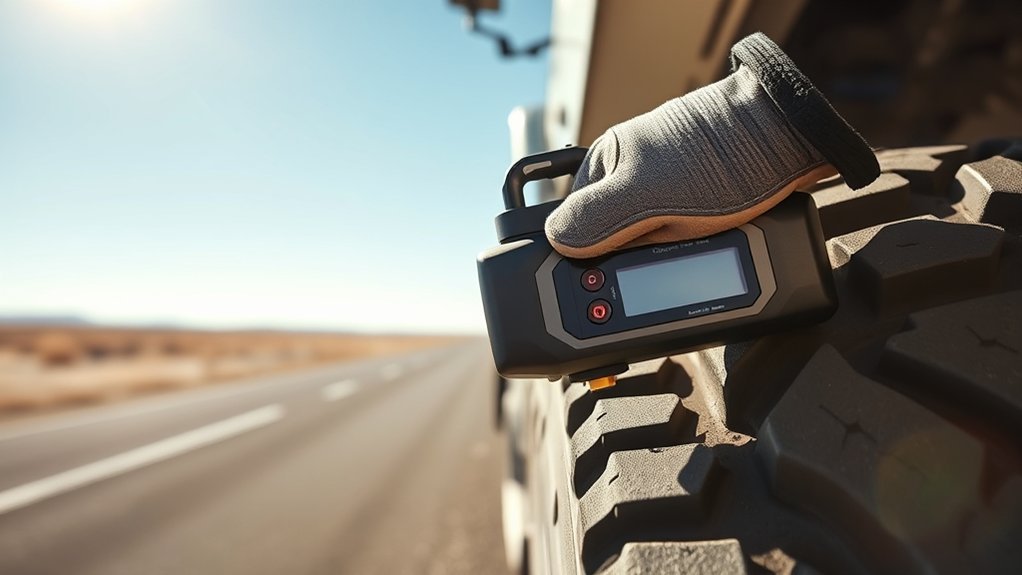
Before inflating, confirm that this is a normal pickup or light-truck tire top-off. If the tire is badly underinflated, has sidewall bulges, exposed cords, a cut, a bent rim, a broken valve stem, or was driven while flat, do not try to “save it” with a portable inflator. Install the spare or call roadside assistance.
Warning: This guide is for topping off pickup and light-truck tires. Large commercial truck tires, multi-piece rim wheels, split rims, and damaged tire-and-wheel assemblies require trained service procedures and proper safety equipment. Do not inflate a damaged or questionable tire at the roadside.
[Products Worth Considering]

EVOULTES heavy duty tire inflator with an integrated gauge delivers accurate pressure readings from 10–120 PSI, helping you inflate, deflate, and check tires in one tool. The 16.5-inch extended dual-head air chuck with swivel base reaches hard-to-access dual wheel valves on trucks and RVs. A brass trigger core and side-mounted air release valve make operation smooth, with standard 1/4" NPT threading and quick-connect compatibility for easy setup.

This portable cordless tire inflator delivers up to 160 PSI with fast 17 L/min airflow to help you quickly top up tires and get back on the road. It features dual power mode, running on a 21V rechargeable battery or a 12V DC adapter for convenient roadside use. An automatic shut-off with digital pressure gauge helps prevent overinflation, and a built-in LED light improves visibility in low-light conditions.

The JACO FlowPro Tire Inflator measures, inflates, and airs down tires up to 100 PSI with battery-free operation and ±2% accuracy after calibration. It features a glowing pressure dial for night visibility, a heavy-duty steel build with a hybrid hose, and a precision push-to-inflate thumb trigger. The patented Lightning Air Chuck locks on for a secure seal, and the kit includes quick-connect hardware for easy inline use with your air compressor.
1. Find the Correct PSI First
Look for the recommended cold tire pressure on the Tire and Loading Information Label, usually on the driver’s door edge or door jamb, or in the owner’s manual. The front and rear tires may have different pressures, especially on trucks designed for towing or hauling.
Do not use the maximum PSI molded into the tire sidewall as your target. That number is the tire’s maximum inflation limit under specific load conditions, not the vehicle manufacturer’s normal recommended pressure.
2. Check Pressure When the Tires Are Cold
For the most accurate reading, check truck tire pressure before driving or after the truck has been parked for at least three hours. If you must add air after driving, inflate to the placard pressure as a temporary roadside fix, then recheck and adjust once the tires are cold.
Note: Tire pressure changes with temperature. The U.S. Tire Manufacturers Association notes that inflation pressure can rise or fall by about 1–2 PSI for every 10°F temperature change, so seasonal checks matter.
3. Make Sure the Inflator Can Handle Truck Tires
Check your inflator’s manual or label for maximum PSI, recommended tire size, power source, amperage draw, and duty cycle. A small 12V inflator may be fine for topping off a few PSI, but it may overheat if you try to fill a large truck tire from very low pressure.
- Maximum PSI: The inflator should be rated above your truck’s required tire pressure.
- Duty cycle: Some inflators must rest after several minutes of continuous use.
- Power source: Some plug into a 12V outlet, while heavier-duty models connect directly to the battery.
- Hose and chuck: The hose must reach the valve stem and seal without leaking.
- Gauge accuracy: Use a separate tire gauge to confirm the final pressure.
4. Park Safely and Prepare the Tire
Park on level ground away from traffic, set the parking brake, and turn on hazard lights if you are roadside. Remove the valve cap and put it somewhere safe. Check that the valve stem is clean, straight, and not cracked.
5. Connect the Hose Securely
Attach the inflator’s hose or chuck firmly to the valve stem. If you hear air leaking, stop and reseat the connection. A poor hose connection can make the inflator run longer, heat up faster, and give you a false pressure reading.
6. Set the Target PSI or Watch the Gauge
If your inflator has an auto shut-off feature, set it to the placard PSI for that tire position. If it does not, turn the inflator on and monitor the gauge closely. Inflate in short intervals, especially when you are close to the target pressure.
Pro Tip: If you need to add a lot of air, pause every few minutes to let the inflator cool according to the manufacturer’s duty cycle. Many portable inflators get hot at the hose fitting and compressor head.
7. Stop, Recheck, and Adjust
Once the inflator reaches the target, turn it off and disconnect the hose quickly to avoid losing extra air. Check the pressure again with a separate tire gauge. If the tire is slightly low, add small bursts of air. If it is too high, press the valve core briefly with the gauge tip or a valve tool, then recheck.
8. Replace the Valve Cap and Inspect the Tire
Replace the valve cap snugly. The cap helps keep dirt and moisture away from the valve core. Before driving, inspect the tire tread and sidewall for cuts, nails, bulges, uneven wear, or anything that looks unsafe.
Common Mistakes When Inflating Truck Tires
Maintaining the right tire pressure is essential for safety, fuel economy, tire life, and handling. Avoid these common mistakes when using a portable tire inflator on truck tires:
| Mistake | Why It Matters | Better Move |
|---|---|---|
| Guessing the PSI | Truck PSI varies by vehicle, axle, tire size, and load. | Use the door-jamb placard or owner’s manual. |
| Using the sidewall max as the target | The sidewall number is not the normal driving recommendation. | Inflate to the vehicle manufacturer’s cold PSI. |
| Checking hot tires | Driving warms the tire and can raise the reading. | Check cold or recheck later when cold. |
| Ignoring the inflator duty cycle | Portable inflators can overheat during long fills. | Pause and cool the unit as the manual directs. |
| Trusting only the built-in gauge | Built-in gauges can be off, especially on budget inflators. | Verify with a separate tire pressure gauge. |
| Leaving the valve cap off | Dirt and moisture can reach the valve core. | Replace the cap after every pressure check. |
Key Maintenance Tips for Your Tire Inflator
A well-maintained tire inflator is more reliable when you actually need it. After each use, let the unit cool, wipe dirt from the housing and hose, and store it in a clean, dry place. Moisture, grit, heat, and damaged cords are the main enemies of portable inflators.
- Inspect the hose and chuck: Look for cracks, stiff rubber, loose fittings, or damaged threads.
- Check the power cord: Replace or repair the unit if the cord, plug, clamp, or 12V connector is damaged.
- Know the fuse rating: Some 12V inflators can blow a vehicle outlet fuse if the outlet is not rated for the draw.
- Recharge battery models: Keep cordless inflators charged before long trips.
- Test it periodically: Run a short pressure check at home so you are not learning the controls on the roadside.
- Keep accessories together: Store adapters, spare valve caps, and a separate gauge in the same bag.
Note: Avoid using electric inflators in rain, standing water, or wet conditions unless your specific model is rated for that use. Water entering an inflator can increase the risk of electric shock.
[Products Worth Considering]

This portable cordless tire inflator delivers fast, efficient inflation for cars, motorcycles, bikes, and sports balls with a digital pressure gauge. Use the one-click PSI preset with auto shut-off for accurate, hands-free topping to your target pressure up to 150 PSI. It’s compact and rechargeable with a built-in emergency LED light plus valve adapters and accessories for quick, ready-to-go use.

The Fanttik X10 Pro is a cordless portable tire inflator that reaches up to 150 PSI and can inflate an R15 tire in about 35 seconds for quick roadside or home top-ups. With AccuInFlate auto-stop and smart start/stop controls, it helps maintain accurate pressure and frees your hands once the target is reached. A high-visibility digital display and preset modes make it easy to set and monitor inflation for cars, motorcycles, bikes, and balls.
Understanding Tire Pressure: Why It Matters for Trucks
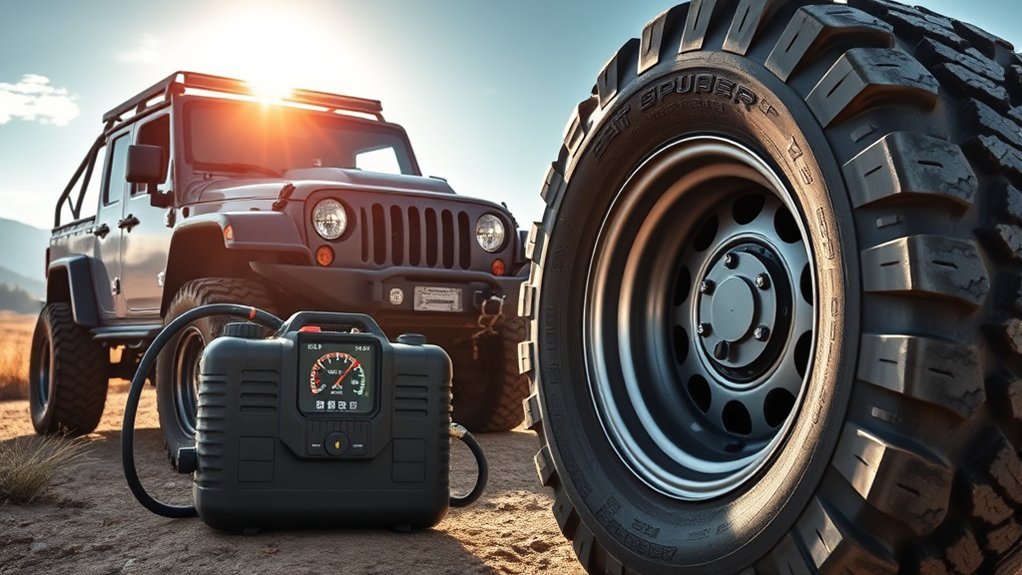
Truck tire pressure matters because trucks often carry changing loads. A pickup used for commuting, hauling tools, towing a trailer, or carrying a camper may have different pressure requirements depending on the manufacturer’s load guidance. Always follow the placard and owner’s manual for your exact truck and tire size.
| Pressure Condition | What Can Happen | What to Do |
|---|---|---|
| Below placard PSI | More heat buildup, uneven wear, reduced fuel economy, and poorer handling. | Inflate to the recommended cold PSI and inspect for leaks. |
| At placard PSI | Best balance of load support, handling, braking, tire life, and comfort for normal use. | Recheck monthly and before long trips, towing, or heavy loads. |
| Above placard PSI | Harsher ride, uneven center wear, and greater risk of impact damage from potholes or debris. | Bleed air slowly until the tire matches the recommended cold PSI. |
FuelEconomy.gov says underinflated tires can lower gas mileage by about 0.2% for every 1 PSI drop in the average pressure of all tires.
Correct pressure also helps your tires last longer. According to USTMA tire care guidance, underinflated tires can build excessive heat and stress, while overinflated tires are more likely to be damaged by potholes or road impacts.
What to Do After Inflating Your Truck Tires?
Once your truck tires reach the recommended cold PSI, take a minute to finish the job properly. First, confirm the pressure with a separate tire gauge. Then replace the valve cap, check the sidewall and tread, and look for anything that suggests the tire is losing air.
- Listen for leaks: A faint hiss near the valve stem means the hose may not have seated well, the valve core may be loose, or the stem may be damaged.
- Check tread depth: The penny test is a quick check, but replace tires at 2/32 inch tread depth or sooner if wear is uneven or traction is poor.
- Check the spare: Spare tires often lose pressure slowly because they are ignored for months.
- Watch the TPMS light: If your light stays on after inflation, recheck all tires, including the spare if your system monitors it. Some systems need a short drive or reset procedure.
- Recheck before towing: Heavy loads and trailers make correct tire pressure even more important.
Troubleshooting: What If the Inflator Will Not Reach the Desired PSI?
If your portable inflator runs but the tire will not reach the target PSI, stop and work through the problem instead of letting the unit run until it overheats.
| Problem | Likely Cause | Fix |
|---|---|---|
| Pressure rises very slowly | Small inflator, large tire, low battery, or weak 12V socket. | Let the unit cool, use the correct power source, or switch to a higher-capacity compressor. |
| Pressure will not hold | Puncture, valve leak, bead leak, or damaged rim. | Stop driving on it, install the spare, or have the tire inspected. |
| Inflator shuts off | Auto shut-off reached, overheated motor, blown fuse, or low voltage. | Check the set PSI, let it cool, inspect the fuse, and verify the power source. |
| Gauge reading jumps around | Loose chuck, air leak, or inaccurate built-in gauge. | Reconnect the hose and verify pressure with a separate gauge. |
Frequently Asked Questions
How often should I check my truck tire pressure?
Check your truck tire pressure at least once a month, before long trips, before towing, and before carrying heavy loads. Check when tires are cold for the most accurate reading.
Can I use a portable inflator for other vehicles?
Yes, if the inflator is compatible with the vehicle’s tire pressure, valve type, tire size, and power source. Many portable inflators work for cars, SUVs, motorcycles, bicycles, and sports equipment, but always follow the inflator manual and the tire or item’s pressure rating.
What if my inflator does not reach the desired PSI?
Stop and check for a loose hose connection, weak power source, overheated inflator, blown fuse, leaking valve stem, puncture, or an inflator that is too small for the tire. Do not keep running the unit past its duty cycle.
Are there different PSI requirements for front and rear truck tires?
Sometimes. Some trucks list different front and rear pressures, especially for load-carrying or towing setups. Use the pressure shown on the tire placard or in the owner’s manual for each axle and tire size.
Is it safe to inflate tires in wet conditions?
Avoid using an electric tire inflator in rain, standing water, or when the cord, plug, or inflator is wet unless your model is specifically rated for those conditions. If you must add air during bad weather, move to a covered, dry, well-ventilated area first.
Can I rely on TPMS instead of checking with a gauge?
No. TPMS is a warning system, not a replacement for routine pressure checks. A tire can be low before the warning light comes on, so use a tire gauge monthly and before trips.
Should my truck be running while I use a 12V tire inflator?
Follow your inflator manual. Some 12V inflators recommend running the engine to maintain voltage, while others give different instructions. Always use the correct outlet or battery connection and keep the area well ventilated if the engine is running.
Conclusion
Using a portable tire inflator for truck tires is simple, but accuracy matters. Start with the recommended cold PSI from your truck’s placard or owner’s manual, use an inflator that is rated for your tire size and pressure, and verify the final reading with a separate gauge. Regular pressure checks help improve safety, tire life, handling, and fuel economy, and they can prevent a small leak from becoming a roadside problem.
Sources
- NHTSA TireWise: Tire Safety Ratings and Awareness — backs cold tire pressure, tire placard guidance, and tire pressure checking steps.
- U.S. Tire Manufacturers Association: Tire Care Essentials — backs monthly checks, temperature-pressure changes, TPMS limitations, tread depth, and inflation risks.
- FuelEconomy.gov: Gas Mileage Tips — backs the fuel economy impact of underinflated tires.
- OSHA 1910.177: Servicing Multi-Piece and Single-Piece Rim Wheels — backs the commercial truck/rim-wheel safety caution.
- Harbor Freight Dual Power Tire Inflator Manual — backs general inflator safety, wet-condition cautions, duty-cycle awareness, hot parts, and pressure verification.

Related Articles
Toyota Tundra Tire and Wheel Package: What to Consider Before Buying
Unlock the secrets to choosing the perfect tire and wheel package for your Toyota Tundra—essential tips await to enhance your ride.
Read More
Do Bigger Tires Void a Toyota Tundra Warranty? Magnuson-Moss Act Explained
Bigger tires might not void your Toyota Tundra warranty, but understanding the Magnuson-Moss Act is crucial—discover how to protect your investment effectively.
Read More
Toyota Tundra Tire Rack Setup: Garage Storage Ideas for Seasonal Sets
Better tire storage for your Toyota Tundra awaits—discover essential tips to maximize space and protect your seasonal sets in the garage!
Read More