
How to Read a Wheel Alignment Report: What the Numbers Mean for Your Tundra

Reading a Toyota Tundra wheel alignment report is mostly about comparing the before and after readings for toe, camber, caster, and thrust angle against the specification range shown for your exact truck. The report does not just tell you whether the wheels are “straight.” It shows whether the tires are pointed, tilted, and balanced correctly enough to help the truck track straight and wear tires evenly.
Quick Answer
To read a Tundra wheel alignment report, compare the “before” and “after” toe, camber, caster, and thrust angle readings with the spec range for your exact model. Green usually means in spec; red means out of range. Focus on final toe first, then side-to-side balance and thrust angle.
Key Takeaways
- Use the spec range on your report, not a random number online. Tundra specs vary by year, trim, tire size, suspension, and ride height.
- Toe is usually the tire-wear priority. A small toe error can scrub the tread quickly even when the truck feels normal.
- Camber and caster should be compared side to side. A value can be technically “green” but still cause a pull if the left and right sides are far apart.
- Thrust angle shows whether the truck tracks straight. A bad thrust angle can make the steering wheel sit off-center or make the truck dog-track.
- Red after-alignment numbers need an explanation. Ask whether a worn part, bent part, lift kit, seized adjuster, or incorrect spec selection is the reason.
At a Glance
| Time Required | 5–10 minutes to read the printout; longer if you need to inspect tire wear or call the shop for clarification. |
| Difficulty | Easy to read; professional equipment is required to measure or adjust alignment accurately. |
| Tools Needed | Alignment printout, tire pressure gauge, tread-depth gauge if available, and the correct Toyota or alignment-machine specifications for your exact Tundra. |
| Cost | Reading the report costs nothing. Alignment service pricing varies by shop, region, truck condition, and whether repairs are needed. |
What Is a Tundra Wheel Alignment Report?

A wheel alignment report is the printout from the alignment machine. It lists the wheel-angle measurements before adjustment, the target specification range, and the final readings after the technician makes corrections. On a Tundra, the most useful numbers are usually toe, camber, caster, and thrust angle.
The important point is that the report should match the truck being measured. Toyota alignment and repair information is vehicle-specific, so the most reliable source is the current Toyota service information for your model year or the shop’s updated alignment database. Toyota’s Technical Information System is the official repair-information source for Toyota vehicles in North America.
Warning: This guide explains how to read the report, not how to perform the alignment. Adjusting tie rods, cam bolts, caster/camber settings, or steering components requires the right equipment, torque procedures, and technician experience.
Essential Wheel Alignment Angles: Toe, Camber, Caster, and Thrust
Most Tundra alignment reports show several measurements, but four of them tell most of the story. Read them together instead of focusing on one number by itself.
| Angle | What It Means | Why It Matters |
|---|---|---|
| Toe | Whether the front of the tires point slightly inward or outward when viewed from above. | Affects straight-line tracking and tire scrub. Bad toe can wear tires quickly. |
| Camber | The inward or outward tilt of the tire when viewed from the front of the truck. | Too much positive or negative camber can contribute to shoulder wear and pulling. |
| Caster | The forward or rearward angle of the steering axis. | Affects steering return, stability, and whether the truck tends to pull left or right. |
| Thrust angle | The direction the rear axle points compared with the vehicle centerline. | Affects tracking, steering-wheel centering, and whether the truck feels like it is driving slightly sideways. |
Some reports also show SAI, included angle, setback, or toe-out on turns. These are useful diagnostic values, especially after collision damage or suspension repair, but toe, camber, caster, and thrust angle are usually the first numbers an owner should understand.
How to Read Before and After Measurements on Your Alignment Report

Your report normally has columns for before, specified range, and after. The before column shows where the truck started. The after column shows what the technician achieved. The spec range shows the minimum and maximum values allowed for that exact vehicle setup.
- Confirm the vehicle information first. Check year, model, cab, drivetrain, tire size, trim, and any lift or leveling kit notes. A wrong vehicle profile can make the colors and specs meaningless.
- Look at the final toe readings. Toe is one of the biggest tire-wear angles. Both individual toe and total toe should be within the printed range.
- Compare camber left to right. A slightly different number may be normal, but a big side-to-side split can point to worn parts, bent parts, ride-height issues, or a truck that may pull.
- Compare caster left to right. Caster often affects straight-line stability and steering return. Do not use a universal caster number; use the spec range printed for your Tundra.
- Check thrust angle. A thrust angle close to zero is usually the goal, but your report’s spec range is the deciding reference.
- Read any technician notes. If a final reading is still red, the note should explain why: seized adjusters, worn bushings, bent components, oversized tires, lift-kit limitations, or another mechanical issue.
Pro Tip: Keep the alignment report with your tire paperwork. If the tires wear unevenly later, the printout gives you a starting point for a warranty discussion or a follow-up inspection.
Understanding Alignment Specifications for Your Tundra
The biggest mistake is treating one online alignment number as correct for every Tundra. Alignment specifications can change by model year, cab configuration, tire size, drivetrain, package, ride height, and whether the truck is stock, leveled, lifted, or carrying extra weight.
Use the specification range on your printout, the shop’s current alignment database, or Toyota repair information from Toyota Customer Support and Toyota TIS. Do not copy a toe, camber, or caster number from a forum post unless it matches your exact model and setup.
Note: Inside wheel angle is not the same thing as camber. If you see a very large number around 40 degrees, that is likely a steering-angle or turn-angle value, not the normal camber reading.
Understanding Color Indicators in Your Alignment Report
Many alignment machines use colors to make the report easy to scan. The exact colors can vary by machine and shop software, so use the legend on your printout if one is provided.
| Common Color | Typical Meaning | What You Should Do |
|---|---|---|
| Green | Within the selected specification range. | Good sign, but still compare side-to-side balance and tire wear. |
| Red | Outside the selected specification range. | Ask whether it was corrected. If it stayed red, ask why. |
| Yellow | Near the edge of the range or flagged for attention. | Ask whether the truck is likely to pull or wear tires unevenly. |
| White, gray, or black | Often used for neutral labels, before readings, or values not color-flagged. | Read the column heading before assuming what the color means. |
A report with all-green final readings is usually a good result. However, green does not always mean perfect. A truck can still have a steering pull if tire pressure, tire conicity, road crown, brake drag, worn suspension parts, or side-to-side caster/camber split is involved.
How Thrust Angle Affects Vehicle Tracking and Handling
Thrust angle compares the direction of the rear axle with the centerline of the truck. If it is off, the rear wheels may push the vehicle slightly left or right while the front wheels try to compensate. This can leave the steering wheel off-center even after the front toe is adjusted.
A thrust angle near zero is usually preferred, but the report’s spec range is the number to use. If the Tundra has a solid rear axle and the thrust angle is out of spec, the shop may need to inspect axle position, leaf-spring hardware, bushings, collision damage, or frame/suspension issues rather than simply adjusting front toe.
Tire maintenance is a safety issue, not just a tire-life issue. NHTSA reported 511 tire-related crash deaths in 2024 and recommends routine tire pressure and condition checks through its TireWise guidance.
How to Identify and Resolve Signs of Misalignment
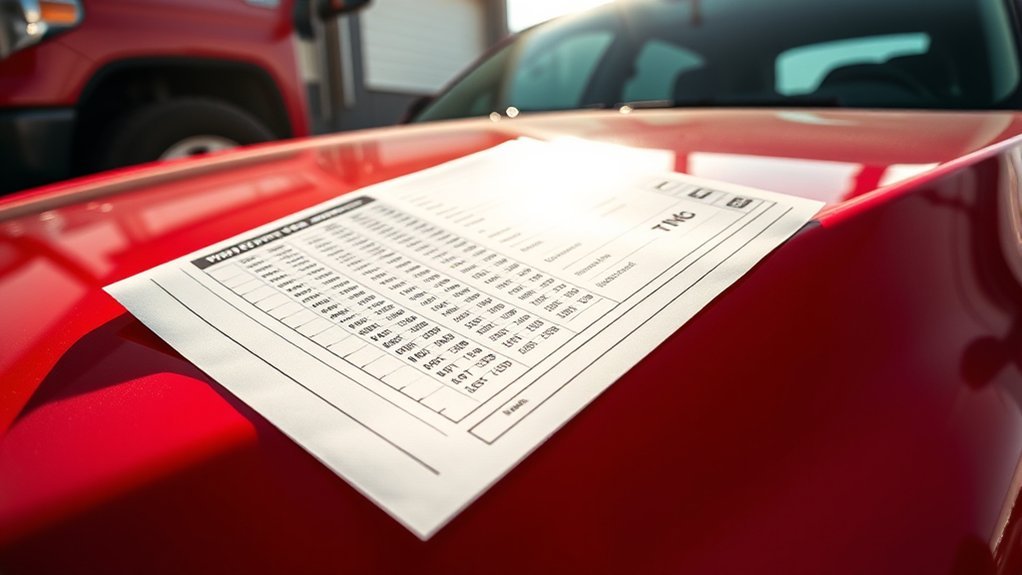
Misalignment symptoms are easiest to understand when you connect them to the numbers on the report. Use this table as a starting point, then let a qualified shop inspect the truck before replacing parts.
| Symptom | Possible Alignment Clue | Also Check |
|---|---|---|
| Truck pulls left or right | Caster/camber side-to-side split or thrust angle issue. | Tire pressure, tire conicity, brake drag, road crown. |
| Steering wheel off-center | Front toe not centered or thrust angle not addressed. | Steering components, previous collision repair, tire rotation history. |
| Feathered tread edges | Toe is often the first number to inspect. | Rotation interval, tire pressure, worn tie rods. |
| Inner or outer shoulder wear | Camber and toe should both be reviewed. | Ball joints, control-arm bushings, ride height, tire inflation. |
| Vibration at speed | Alignment may contribute, but it is not the usual first suspect. | Wheel balance, tire damage, bent wheel, driveline issue. |
[Products Worth Considering]

EVOULTES heavy duty tire inflator with an integrated gauge delivers accurate pressure readings from 10–120 PSI, helping you inflate, deflate, and check tires in one tool. The 16.5-inch extended dual-head air chuck with swivel base reaches hard-to-access dual wheel valves on trucks and RVs. A brass trigger core and side-mounted air release valve make operation smooth, with standard 1/4" NPT threading and quick-connect compatibility for easy setup.

This AUTOWN flat tire repair kit is designed for quick, reliable puncture repairs using a plug kit and spiral probe tool to simplify installation. Built for durability and safe handling, it offers strong adhesion and flexibility to help maintain tire air tightness. With a portable storage case and a multi-vehicle approach, it’s suitable for cars, motorcycles, ATVs, tractors, lawn mowers, RVs, jeeps, and trucks.

The JACO FlowPro Tire Inflator measures, inflates, and airs down tires up to 100 PSI with battery-free operation and ±2% accuracy after calibration. It features a glowing pressure dial for night visibility, a heavy-duty steel build with a hybrid hose, and a precision push-to-inflate thumb trigger. The patented Lightning Air Chuck locks on for a secure seal, and the kit includes quick-connect hardware for easy inline use with your air compressor.
Common Misalignment Symptoms
Common signs include uneven tire wear, a truck that drifts or pulls, a steering wheel that sits off-center, or handling that feels vague after hitting a pothole or curb. If the symptoms appeared right after new tires, suspension work, a lift/leveling kit, or an impact, the alignment report is especially important.
What to Ask the Shop If the Report Still Shows Red
- Was the correct Tundra year, trim, tire size, and suspension package selected?
- Were tire pressures checked cold before the alignment?
- Are any adjusters seized or at the end of their range?
- Is a worn ball joint, tie rod, control-arm bushing, wheel bearing, or bent component preventing adjustment?
- If the truck is lifted or leveled, does it need aftermarket adjustment parts or different setup targets?
- Was the steering wheel centered and road-tested after adjustment?
When to Schedule Your Next Wheel Alignment
Schedule an alignment check when the truck pulls, the steering wheel is off-center, the tires show uneven wear, or the Tundra has hit a curb, pothole, or road debris hard enough to change the way it drives. You should also check alignment after suspension repairs, steering repairs, new tires, a lift kit, a leveling kit, or any ride-height change.
Some owners ask for an alignment check during tire rotations. That can be useful, but there is no single mileage interval that fits every truck and driving style. A Tundra used for towing, job sites, rough roads, or off-road trails may need checks more often than one used mostly on smooth highways.
Signs of Misalignment
| Sign | Best Next Step |
|---|---|
| Uneven or feathered tire wear | Check tire pressure and schedule alignment inspection. |
| Vehicle pulls to one side | Inspect tires, brakes, suspension, and alignment. |
| Off-center steering wheel | Ask for toe and thrust-angle verification. |
| Recent suspension, steering, or tire work | Request a printout after the alignment is completed. |
Tire Wear Patterns
Tire wear can point you toward the alignment angle that deserves attention, but it does not prove the cause by itself. Check pressure first. NHTSA recommends checking all tires, including the spare, at least once a month when they are cold, and using the pressure listed on the vehicle placard or owner’s manual rather than the maximum pressure molded into the tire sidewall.
- Feathering: often points toward toe problems.
- One shoulder worn more than the other: can involve camber, toe, worn parts, or underinflation/overinflation patterns.
- Cupping or scalloping: often needs a suspension, balance, or shock/strut inspection in addition to alignment.
- Center wear: commonly points toward overinflation or tire/load mismatch rather than alignment alone.
Alignment vs. Balancing vs. Rotation
These services are related, but they are not the same.
- Alignment adjusts wheel angles such as toe, camber, caster, and thrust angle.
- Balancing corrects heavy spots in the wheel-and-tire assembly to reduce vibration.
- Rotation moves tires to different positions to help wear them more evenly.
- Tire pressure supports load, steering, braking, and tire life; it should be checked separately from alignment.
[Products Worth Considering]

This portable cordless tire inflator delivers fast, efficient inflation for cars, motorcycles, bikes, and sports balls with a digital pressure gauge. Use the one-click PSI preset with auto shut-off for accurate, hands-free topping to your target pressure up to 150 PSI. It’s compact and rechargeable with a built-in emergency LED light plus valve adapters and accessories for quick, ready-to-go use.

This roadside assistance kit helps drivers and passengers in urgent situations after an accident or breakdown, providing practical support while waiting for help. It includes a lightweight, compact tire inflator for fast inflation of standard vehicle tires, plus reinforced jumper cable protection for safer handling. Ideal for winter weather, road trips, camping, and travel, with everything stowed neatly in a trunk bag.
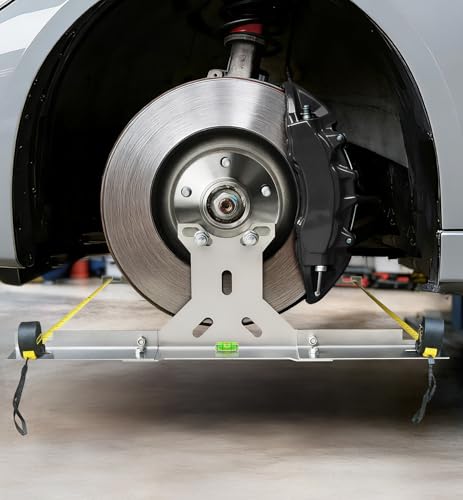
DIY front‑end toe adjustment for home garages - Designed for car owners and home garages who want tocheck front-end toe and assist with basic adjustments between professional visits. Use after minor suspension, steering, or tire work to verify toe settings and keep steering stable without a costly shop trip.
Tips for Maintaining Proper Alignment and Tire Health
Maintain your Tundra’s alignment by keeping tire pressure correct, rotating tires on schedule, inspecting tread wear, and fixing loose or worn steering/suspension parts before expecting a perfect alignment. A shop cannot accurately align a truck with worn ball joints, loose tie rods, damaged bushings, or bent parts.
If your Tundra is lifted or leveled, ask the shop whether the factory adjustment range is still enough. Some modified trucks need aftermarket upper control arms, camber/caster hardware, or a specialist alignment shop to get a stable result. Also ask for a before-and-after printout every time so you can see exactly what changed.
[Products Worth Considering]

Accurate Front Wheel Alignment: Front alignment camber toe adjustment bolts are specially designed for car front wheel alignment, ensuring you can achieve accurate alignment adjustments. Whether you want to fix steering instability or reduce tire wear, we can help you achieve precise front wheel alignment to keep your vehicle in top condition

Front wheel alignment kit includes 2 washer bolts (different length), 2 cam plate nuts and 2 cam adjustors. This is 1 set for one side ONLY. You will need two kits to do both driver and passenger sides of your vehicle.

【HIGH PERFORMANCE】One of, if not the weakest point on the Tundra, Sequoia and Land Cruiser's front suspension is the Cam Tabs.MEMOEO cam bolt kits are designed to assist with camber and toe-related issues, returning the vertical angles to OE specifications or allowing you to make adjustments for precise handling that provided by the factory settings.
Frequently Asked Questions
What are the main numbers on a Tundra alignment report?
The main numbers are toe, camber, caster, and thrust angle. Toe tells whether the tires point inward or outward. Camber shows tire tilt. Caster shows steering-axis angle. Thrust angle shows whether the rear axle tracks with the vehicle centerline.
What numbers are good for a tire alignment paper?
Good numbers are the final “after” readings that fall within the min/max specification range for your exact Tundra. Avoid using one generic toe, camber, or caster target for every truck because Toyota specs vary by model year, configuration, tire size, package, and suspension setup.
Is $150 for an alignment good?
It can be reasonable, but price alone does not prove value. A good alignment should include the correct vehicle specs, a before-and-after printout, steering wheel centering, and an explanation of any reading that could not be brought into spec. Trucks with lifts, seized adjusters, or worn parts may cost more.
What does an alignment score mean?
An alignment score is usually a shop or machine summary of how many readings are within range. It is useful for a quick overview, but the actual toe, camber, caster, and thrust-angle readings matter more than a single score.
Can a Tundra still pull if the final alignment report is green?
Yes. Tire pressure, tire construction pull, brake drag, road crown, worn suspension parts, or side-to-side caster/camber differences can cause a pull even when the final readings are technically within range.
Do lifted or leveled Tundras need a different alignment approach?
Often, yes. Changing ride height can change caster, camber, and toe range. A leveled or lifted Tundra may need different adjustment parts or a shop familiar with modified trucks to get stable handling and even tire wear.
Conclusion
A Tundra wheel alignment report is useful once you know what to look for. Start with the vehicle profile and spec range, then check the final toe, camber, caster, and thrust-angle readings. Green final numbers are a good sign, but the best report is one that also matches your symptoms: straight steering wheel, stable tracking, and even tire wear. If any value remains red, ask the shop why before assuming the alignment is complete.
Sources
- Toyota Technical Information System — official Toyota repair and service-information access for model-specific alignment procedures and specifications.
- Toyota Customer Support: repair information online — explains public access to Toyota service publications through TIS.
- NHTSA TireWise — tire safety, tire pressure, maintenance, and tire-rating guidance.
- NHTSA Tire Safety brochure — cold tire pressure, load limits, road hazard, and inspection guidance.
- Hunter Engineering alignment equipment reference — examples of alignment-machine measurement capabilities including camber, caster, toe, and thrust angle.

Related Articles
Toyota Tundra Tire and Wheel Package: What to Consider Before Buying
Unlock the secrets to choosing the perfect tire and wheel package for your Toyota Tundra—essential tips await to enhance your ride.
Read More
Do Bigger Tires Void a Toyota Tundra Warranty? Magnuson-Moss Act Explained
Bigger tires might not void your Toyota Tundra warranty, but understanding the Magnuson-Moss Act is crucial—discover how to protect your investment effectively.
Read More
Toyota Tundra Tire Rack Setup: Garage Storage Ideas for Seasonal Sets
Better tire storage for your Toyota Tundra awaits—discover essential tips to maximize space and protect your seasonal sets in the garage!
Read More