
How to Find the Correct Tire Pressure When Towing With a Tundra
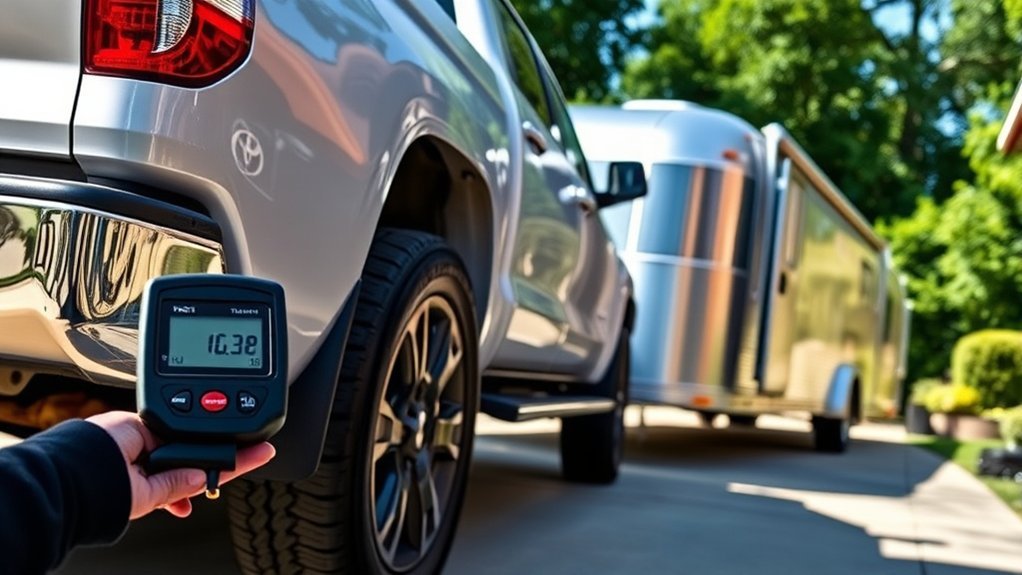
Setting tire pressure for towing with a Toyota Tundra is not about copying one PSI number from another truck. The safe starting point is the Tire and Loading Information label on your driver-side door jamb. From there, adjust only when your loaded truck, tire type, axle weights, and tire manufacturer’s load table support the change.
Quick Answer
For most Toyota Tundra towing setups, use the cold PSI listed on the driver-side door placard for the truck’s original tire size. If you upgraded to LT tires or changed tire size, weigh the loaded truck and use the tire maker’s load/inflation table. Never use sidewall max PSI as the automatic towing pressure.
Key Takeaways
- The correct Tundra tire pressure for towing starts with the door-jamb placard, not the tire sidewall.
- Check pressure cold, before driving or after the truck has been parked for at least three hours.
- If you run LT replacement tires, set PSI from loaded axle weight and the tire manufacturer’s load/inflation table.
- Do not exceed the tire sidewall max PSI, wheel max pressure, GVWR, GAWR, payload rating, or trailer rating.
- Trailer tires have their own PSI requirements; do not set trailer tires based on the Tundra’s tire pressure.
At a Glance
| Time Required | 5 minutes for a cold PSI check; 15–30 minutes if you also weigh the loaded truck at a scale |
| Difficulty | Easy for stock tires; moderate for LT tire load-table setup |
| Tools Needed | Accurate tire pressure gauge, air compressor, door-jamb placard, tire load table, and scale ticket if towing heavy |
| Cost | Usually free to low cost; public truck scales often charge a small fee |
Essential Tire Pressure Guidelines for Towing
The safest towing tire-pressure rule is simple: start with the truck manufacturer’s recommended cold PSI. On a Toyota Tundra, that information is on the Tire and Loading Information label on the driver-side door jamb and in the owner’s manual. The National Highway Traffic Safety Administration explains that the correct tire pressure is the vehicle manufacturer’s listed cold PSI, not the number molded into the tire sidewall.
The number on the tire sidewall is the tire’s maximum cold inflation pressure for its maximum rated load. It is not a universal towing recommendation. Running too little air can build heat and damage a tire, but running too much air can reduce the tire’s contact patch, affect ride and braking, and cause uneven wear.
Warning: Never exceed the lowest limit in the system: the tire’s max PSI, the wheel’s max pressure, the truck’s GAWR, the truck’s GVWR, the payload rating, the hitch rating, or the trailer’s rating.
Recommended Tire Pressures for LT Tires
If your Tundra still has the original tire size and type, the door placard is the correct starting point. If you installed LT tires, changed tire size, or moved to a higher load range, the correct PSI may change. In that case, use the tire manufacturer’s load/inflation table, not a forum number.
Toyo Tires states that original-equipment tire pressure should come from the vehicle placard or owner’s manual, while load/inflation tables help when replacement or optional tire sizes are used. That is the right approach for a Tundra running LT tires for towing.
Understanding LT Tire Ratings
LT stands for Light Truck. LT tires are built differently than many passenger tires and are often available in higher load ranges, such as C, D, or E. A higher load range does not automatically mean you should inflate to the maximum pressure every time. It means the tire can carry a certain load at certain pressures when used within its ratings.
For example, many Load Range E LT tires show a maximum cold pressure of 80 PSI on the sidewall, but that does not mean your Tundra needs 80 PSI when towing. The needed PSI depends on the actual loaded axle weight, tire size, single-tire load rating, wheel rating, and tire maker’s chart.
Factors Influencing Tire Pressure
These factors affect the correct towing PSI:
- Tire size and load range
- Original-equipment tire vs. replacement LT tire
- Front and rear loaded axle weight
- Trailer tongue weight added to the truck
- Truck payload, passengers, cargo, bed load, and accessories
- Wheel pressure rating
- Ambient temperature and whether the tire is cold or hot
Adjusting Pressure for Towing
Use this workflow instead of guessing:
- Load the Tundra exactly as you tow it, including passengers, cargo, hitch, and trailer tongue weight.
- Check the door-jamb placard for the recommended cold PSI and the truck’s payload information.
- Weigh the loaded truck’s front and rear axles at a public scale.
- Confirm the axle weights do not exceed the truck’s GAWR and the full truck does not exceed GVWR.
- If you have OE-size tires, use the placard pressure unless Toyota or the tire manufacturer gives specific alternate guidance for your setup.
- If you have LT replacement tires or a different size, use the tire maker’s load/inflation table for the loaded axle weight.
- Run the same PSI on both tires across the same axle unless the tire manufacturer gives a specific reason not to.
- Recheck all pressures cold before the trip home.
| Tire Setup | Best Starting Point | Towing Adjustment Method |
|---|---|---|
| Original tire size and type | Driver-side door placard cold PSI | Stay within payload, GAWR, GVWR, and tire ratings |
| LT replacement tire, same size | Tire maker’s load/inflation table | Use loaded axle weight and do not exceed wheel or tire limits |
| Different tire size | Tire maker, installer, or load/inflation table | Confirm load capacity equals or exceeds the OE requirement |
How Load Affects Tire Pressure When Towing
Towing adds load to the truck, especially through tongue weight. A travel trailer with 700 pounds of tongue weight adds that weight to the Tundra’s payload. Passengers, cargo, bed covers, tools, coolers, and hitch hardware also count against payload.
Load Distribution Importance
Good load distribution helps steering, braking, tire wear, and trailer stability. If too much weight sits behind the rear axle or the trailer is nose-heavy, the rear tires may carry more load than expected while the front axle may become too light. That can make steering feel vague and increase sway risk.
A weight-distribution hitch can help some travel-trailer setups, but it does not increase the truck’s payload, GAWR, GVWR, tire rating, or wheel rating. It only helps distribute load when properly sized and adjusted.
Pressure Adjustments For Weight
For stock tires, do not assume more PSI is always better. First confirm that the loaded truck stays within all ratings. If the truck is overloaded, adding air does not make it safe. If you are within ratings but running replacement LT tires, use the load table to match pressure to the load carried by each tire.
Note: If you only have axle weights, divide the axle weight by two for a rough per-tire load on that axle. If one side is heavier, use the heavier side when possible. Keep both tires on the same axle at the same cold PSI.
Importance of Cold PSI Measurements
Tire pressure should be checked cold. In practical terms, that means before driving or after the truck has been parked for at least three hours. Michelin recommends checking tires cold and comparing the reading to the vehicle’s door sticker or owner’s manual, not the tire sidewall.
Warm tires can read several PSI higher after highway driving, especially when towing. Do not bleed air from a hot tire just because the gauge reads higher than the cold placard pressure. Let the tires cool, then adjust to the correct cold setting.
Pro Tip: Check tire pressure early in the morning before sun heats one side of the truck. Sunlight on one side can make left/right readings look different even when the tires were set evenly.
Adjusting Tire Pressure for Different Temperatures
Temperature affects tire pressure, but that does not mean you should use a fixed seasonal towing chart. Bridgestone notes that tire pressure changes by about 1 PSI for every 10°F change in ambient temperature. A pressure that was correct in the afternoon may be low the next cold morning.
| Situation | What To Do |
|---|---|
| Cold morning before towing | Set tires to the correct cold PSI before leaving. |
| Tires are hot after highway towing | Do not bleed air down to the cold number. Recheck when cold. |
| Large weather swing | Recheck cold pressure after the temperature changes by about 10°F or more. |
| Long towing trip | Check cold PSI before departure and inspect tires at every fuel stop. |
Picking the Best Tires for Towing
The best tire for towing with a Tundra is one that matches the truck’s load requirements, driving conditions, and wheel rating. Many owners choose LT tires for heavier towing because they can offer stronger construction and higher load capacity, but LT tires are not automatically better for every driver. They can ride firmer, weigh more, and require careful pressure setup.
Before changing tires, confirm these details:
- The replacement tire size is approved for your wheel size.
- The load index or load range meets or exceeds the original tire’s load requirement.
- The tire’s maximum pressure does not exceed the wheel’s pressure rating.
- The tire’s speed rating fits your towing use.
- The tire type matches your driving: highway, all-terrain, winter, or mixed use.
When in doubt, ask the tire manufacturer or a qualified tire shop to confirm the correct replacement pressure based on the loaded axle weight and tire size.
Tools for Monitoring Tire Pressure
You do not need a complicated setup, but you do need accurate tools. Keep these in the truck before towing:
- Quality tire pressure gauge: A digital or dial gauge is easier to read than guessing from a gas-station inflator.
- Portable air compressor: Useful when the rear tires need adjustment before a towing trip.
- Valve-stem caps and spare cores: Small leaks can start at the valve stem.
- Tread-depth gauge: Pressure is only one part of tire safety; worn tread also reduces grip.
- Scale ticket: Keep your loaded axle weights so you can reference them when using load tables.
The Tundra’s TPMS is helpful, but it is not a replacement for a gauge. TPMS warnings usually appear after pressure is already significantly low, so check pressure manually before towing.
Tire Pressure Tips From Tundra Owners
Owner experience can be useful, but it should never override your truck’s placard, tire ratings, or scale weights. A pressure that works for one Tundra may be wrong for another because cab style, bed length, trim, tire size, trailer tongue weight, cargo, and passengers all change the load.
Useful owner-tested habits include:
- Check cold PSI before every towing day.
- Inspect the inside and outside shoulders of each tire for unusual wear.
- Recheck lug nuts, tire condition, and valve stems before long trips.
- Weigh the truck and trailer at least once in a fully loaded camping or work setup.
- Keep a written note of the PSI that matches your load-table calculation.
The right towing PSI is the pressure that supports your actual loaded axle weight while staying within the truck, tire, wheel, and trailer ratings.
Safety Tips for Proper Tire Inflation While Towing
Proper tire inflation is one part of a safe towing setup. Use this checklist before you hit the road:
- Check all four Tundra tires cold.
- Check the spare tire, especially before a long trip.
- Check trailer tire pressure from the trailer placard or trailer tire sidewall guidance.
- Confirm the loaded trailer tongue weight does not exceed the truck’s payload or hitch rating.
- Look for cracks, bulges, nails, uneven wear, and aged trailer tires.
- Do not tow on tires that are overloaded, underinflated, visibly damaged, or past their safe service life.
Warning: Adding air cannot fix an overloaded truck or trailer. If your loaded axle weight, payload, or trailer weight is over the rating, reduce weight or change the setup before towing.
Frequently Asked Questions
Should I run 50–60 PSI in my Tundra tires when towing?
Not automatically. Some LT tire setups may need pressures in that range, but stock Tundra tires should start with the cold PSI listed on the driver-side door placard. If you upgraded to LT tires, use loaded axle weight and the tire maker’s load/inflation table.
Is 40 PSI too high for 4WD?
It depends on your exact Tundra, tire size, load, and placard pressure. Forty PSI may be too high for one setup and too low for another. Check the door-jamb placard first, then verify any towing adjustment against tire load data.
What is the correct tire pressure for a Toyota Tundra?
The correct cold tire pressure is printed on the Tire and Loading Information label on the driver-side door jamb and listed in the owner’s manual. It varies by model year, tire size, and configuration, so do not rely on a universal Tundra PSI number.
Should I use the PSI printed on the tire sidewall?
Use the sidewall PSI as a maximum limit, not as the recommended pressure. The recommended operating pressure comes from the truck’s placard for OE tires or from a load/inflation table for replacement LT tires.
How do I know how much PSI to put in trailer tires?
Check the trailer’s tire placard, owner’s manual, and the tire sidewall. Trailer tires often use different pressures than the tow vehicle. Never set trailer tire pressure based on the Tundra’s door placard.
Do LT tires always need more pressure than passenger tires?
Not always. LT tires often require different pressure to carry the same load, but the correct number depends on tire size, load range, and axle weight. Use the tire manufacturer’s load/inflation table instead of guessing.
Conclusion
The correct Toyota Tundra tire pressure for towing is vehicle-specific. Start with the cold PSI on the driver-side door placard, then use axle weights and tire load tables if you run LT replacement tires or changed sizes. Avoid universal PSI advice, never treat sidewall max pressure as the automatic towing setting, and always stay within the tire, wheel, truck, hitch, and trailer ratings. A five-minute cold PSI check before towing can prevent heat buildup, uneven wear, poor handling, and roadside tire trouble.
Sources
- NHTSA TireWise — vehicle placard guidance, cold PSI, tire safety, and TPMS basics
- Toyota Owner Manuals and Warranties — official owner’s manual lookup for model-specific Tundra tire information
- Toyo Tires Load & Inflation Tables — replacement tire and optional tire-size inflation guidance
- Michelin Tire Pressure Guide — cold-pressure checking and door-sticker guidance
- Bridgestone Tire Inflation Guidance — temperature effects and cold tire pressure checking

Related Articles
Toyota Tundra Tire and Wheel Package: What to Consider Before Buying
Unlock the secrets to choosing the perfect tire and wheel package for your Toyota Tundra—essential tips await to enhance your ride.
Read More
Do Bigger Tires Void a Toyota Tundra Warranty? Magnuson-Moss Act Explained
Bigger tires might not void your Toyota Tundra warranty, but understanding the Magnuson-Moss Act is crucial—discover how to protect your investment effectively.
Read More
Toyota Tundra Tire Rack Setup: Garage Storage Ideas for Seasonal Sets
Better tire storage for your Toyota Tundra awaits—discover essential tips to maximize space and protect your seasonal sets in the garage!
Read More