
How to Break In New Tires on a Toyota Tundra: The First 500 Miles
New tires on a Toyota Tundra can feel slightly different for the first few drives because the tread surface, mounting materials, and full-depth tread blocks need time to settle. For the safest break-in, drive gently, check cold tire pressure, avoid aggressive towing or off-road use at first, and follow your installer’s lug nut retorque instructions.
Quick Answer
To break in new tires on a Toyota Tundra, drive smoothly for the first 500 miles. Avoid hard acceleration, panic braking, sharp cornering, heavy towing, and aggressive off-road driving. Check cold tire pressure using the driver-side door placard, and have the lug nuts retorqued according to your installer’s or Toyota’s specifications.
Key Takeaways
- Use gentle acceleration, braking, and cornering for the first 500 miles.
- Give yourself extra following distance because new tires may not deliver full traction immediately.
- Check tire pressure when the tires are cold, and use the Toyota door placard or owner’s manual—not the number molded on the tire sidewall.
- Retorque lug nuts only to the correct specification with a torque wrench, or return to the tire shop for the recommended retorque check.
- Delay heavy towing, hauling, hard off-road use, and aggressive wet-road driving until the tires feel stable and predictable.
At a Glance
| Time Required | About 500 miles of normal, gentle driving |
| Difficulty | Easy |
| Tools Needed | Accurate tire pressure gauge; torque wrench if you retorque wheels yourself |
| Cost | Usually free if you already own a pressure gauge or return to the installer for a retorque check |
Why Proper Tire Break-In Matters for Your Toyota Tundra
When new tires are installed, the tread is at full depth and may feel less responsive than the worn tires you replaced. Tire manufacturers and tire retailers also note that release lubricants and other substances used during manufacturing can remain on the tire surface until they wear away during normal driving. That is why easy acceleration, smooth braking, and moderate cornering matter during the first several hundred miles.
For a Toyota Tundra, break-in is especially important because the truck may be used for towing, hauling, trail driving, or larger all-terrain tires. Those loads ask more from the tire than normal commuting. Giving the tires a gentle first 500 miles helps the tread surface scuff in, gives you time to learn the new tire’s feel, and reduces the chance of surprises during braking or cornering.
The first 500 miles are not about babying the truck forever. They are about letting the tire surface, tread blocks, and driver all adjust before asking for full performance.
Steps to Break in New Tires
Use this simple timeline after installing new tires on your Toyota Tundra.
First 100 Miles: Be Extra Smooth
The first 100 miles are when new tires may feel the most slippery, squirmy, or different from the tires you removed. Drive like traction is limited until the tires start to feel consistent.
- Accelerate gradually from stops.
- Brake earlier than usual and avoid panic stops when possible.
- Take curves, highway ramps, and turns at moderate speeds.
- Leave extra space between your Tundra and the vehicle ahead.
- Avoid testing the tires in rain, mud, gravel, or snow.
Warning: Do not use the first few drives to test grip, launch hard, tow at maximum weight, or take fast corners. New tires can need more stopping distance until the surface is fully scuffed in.
Miles 100 to 500: Drive Normally, But Not Aggressively
After the first 100 miles, the tires should begin to feel more predictable. Keep driving normally, but avoid aggressive inputs until you pass roughly 500 miles.
- Keep highway speeds reasonable and avoid sudden lane changes.
- Use steady braking instead of late, hard stops.
- Avoid hard cornering on freeway ramps.
- Do not overload the truck or tow heavy trailers unless necessary.
- Listen for vibration, thumping, rubbing, or unusual road noise.
Highway driving is fine during break-in. The key is to avoid abrupt acceleration, heavy braking, and sharp steering inputs. If you must take a long trip immediately after installation, check pressure before leaving, keep extra following distance, and stop if the truck develops vibration or pulling.
After 500 Miles: Resume Normal Use
Once you have driven about 500 miles, the tires should feel more settled. You can return to normal driving habits as long as the truck tracks straight, the tires hold pressure, and there are no vibration, rubbing, or TPMS warnings.
If your Tundra still feels unstable after 500 miles, the issue may not be tire break-in. Have the tires inspected for balance, alignment, wheel fitment, tire pressure, or installation problems.
Recommended Driving Techniques
The goal is to avoid sudden forces while the tires are new. A Tundra is heavy, powerful, and often fitted with truck or all-terrain tires, so smooth inputs matter.
- Accelerate gently: Roll into the throttle instead of jumping on it, especially with the i-FORCE MAX hybrid powertrain or any tire with an aggressive tread pattern.
- Brake early: Start slowing down sooner than usual, especially in traffic or rain.
- Corner gradually: Take turns and ramps at a moderate pace until the tires feel planted.
- Avoid abrupt steering: Sudden lane changes can make new full-depth tread blocks feel flexible.
- Skip traction testing: Do not test launch grip, braking limits, or off-road traction during the break-in period.
Pro Tip: If your new tires are all-terrain, mud-terrain, winter, or oversized tires, expect more tread squirm and road feel during the first few hundred miles than you would with a highway tire.
[Products Worth Considering]

EVOULTES heavy duty tire inflator with an integrated gauge delivers accurate pressure readings from 10–120 PSI, helping you inflate, deflate, and check tires in one tool. The 16.5-inch extended dual-head air chuck with swivel base reaches hard-to-access dual wheel valves on trucks and RVs. A brass trigger core and side-mounted air release valve make operation smooth, with standard 1/4" NPT threading and quick-connect compatibility for easy setup.

This 4-in-1 tire valve core removal tool helps you deflate, unblock, and remove or install valve cores quickly for easier tire repair. The multifunction design also supports re-taping damaged threads and reaming inside the valve stem for smoother service. Included as a 2-pack, it’s compact for convenient carry and works for cars, bicycles, and motorcycles.

These universal tire valve stem caps help protect your valve core from dust, debris, moisture, and corrosion, supporting more stable tire pressure. The aluminum alloy design resists long-term wear, while the sealing construction helps help prevent air leakage. They twist on easily for quick installation and help safeguard driving safety across cars, SUVs, trucks, and motorcycles.
Tire Pressure Management
Correct tire pressure is one of the most important parts of a safe break-in. Use the pressure listed on your Toyota Tundra’s Tire and Loading Information Label on the driver-side door edge or doorjamb, or use the pressure specified in the owner’s manual. Do not use the maximum PSI molded on the tire sidewall as your normal inflation target.
Check pressure when the tires are cold, meaning the truck has been parked for at least three hours or driven only a short distance at low speed. New tires can lose or gain pressure as they seat, as outside temperature changes, or after the first few heat cycles.
- Check all four tires after installation.
- Check the spare if your Tundra carries one.
- Recheck pressure after the first week.
- Recheck before long highway trips, towing, or hauling.
- Investigate any tire that loses pressure repeatedly.
Note: If the TPMS light turns on after new tires are installed, check pressure first. If pressure is correct, the TPMS sensors may need inspection, reset, or relearn by the installer.
[Products Worth Considering]

These universal aluminum tire valve stem caps help protect valve cores from corrosion caused by dirt, water, and snow while helping prevent air leaks to maintain steady tire pressure. They’re easy to install with a simple screw-on fit and are suitable for cars, SUVs, trucks, bicycles, motorcycles, and other vehicles. The stylish black caps add a clean, standout look to your wheels while supporting reliable long-term performance.
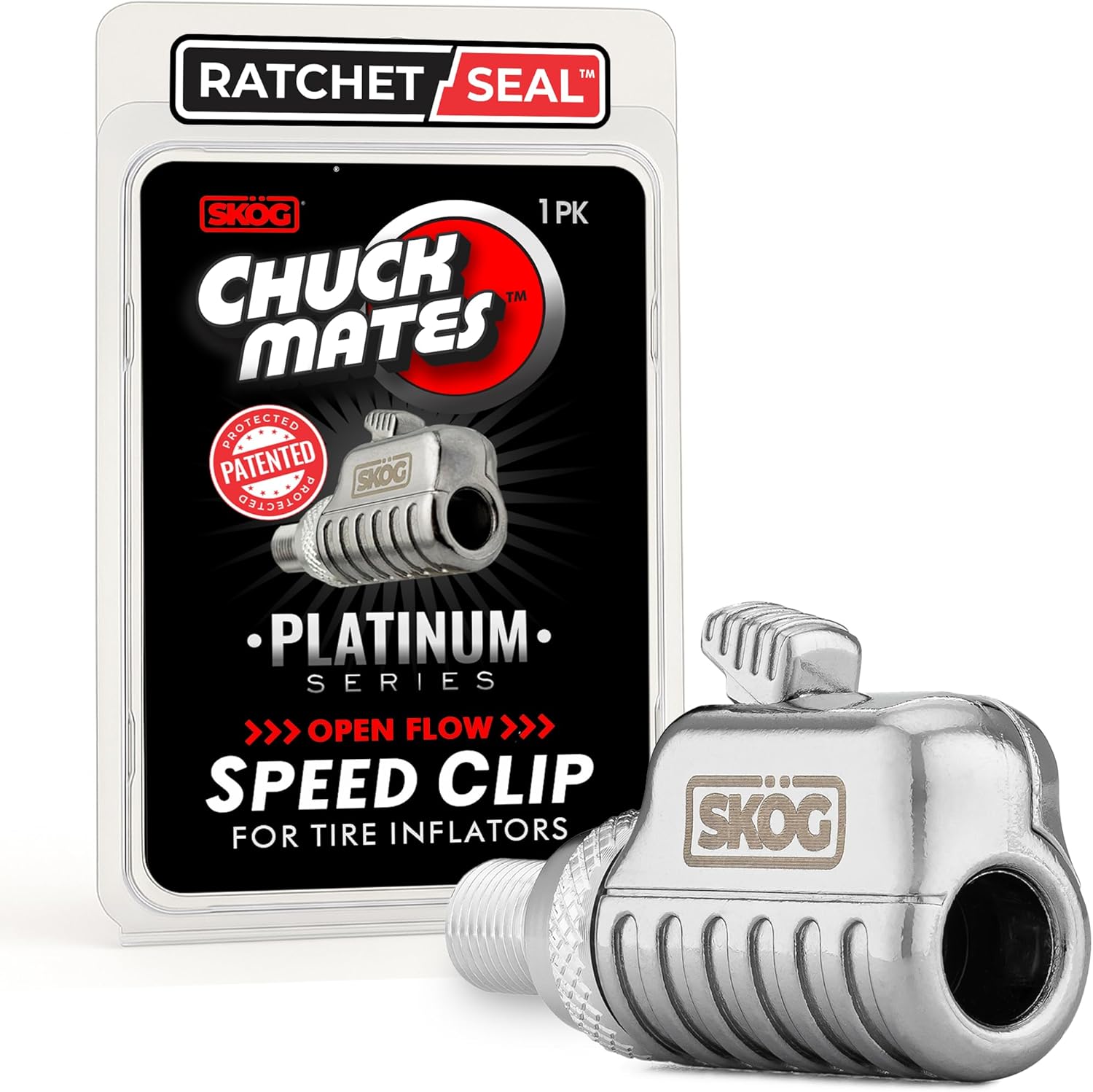
The SKÖG Chuck Mates Platinum uses a patented RatchetSeal push-to-connect system for instant, secure, air-tight attachment to standard tire valve stems. It features an easy push-button release for quick disconnects, plus 360° swivel open-flow airflow to keep operation smooth and kink-free. Universal Schrader compatibility makes it ideal for cars, bikes, motorcycles, RVs, trucks, and more.
Lug Nut Retorque After New Tires
After any wheel removal, the lug nuts should be tightened to the correct specification with a torque wrench. The correct torque can vary by model year, wheel type, lug nut style, and aftermarket wheel setup, so do not guess by feel and do not rely on an impact wrench for the final torque.
Many tire shops ask drivers to return for a retorque check shortly after installation. Follow your installer’s instructions, and confirm the correct specification in your Toyota owner’s manual or with the wheel manufacturer if you use aftermarket wheels.
- Use a calibrated torque wrench if checking the lug nuts yourself.
- Tighten in the correct star or crisscross pattern for the wheel.
- Never lubricate lug studs unless the vehicle or wheel manufacturer specifically says to do so.
- Stop driving and inspect immediately if you feel wheel vibration, hear clunking, or notice a loose lug nut.
Common Mistakes to Avoid During Tire Break-In
Avoid these mistakes during the first 500 miles:
- Driving aggressively right away: Hard launches, sharp turns, and late braking can reduce control before the tire surface is ready.
- Ignoring tire pressure: Underinflation can increase heat and wear; overinflation can reduce ride comfort and contact patch performance.
- Assuming the TPMS is enough: TPMS warns only when pressure is significantly low. Use a gauge for routine checks.
- Skipping the retorque check: Lug nuts should be verified after wheel installation according to the installer’s guidance.
- Towing or hauling at the limit immediately: Give the tires a normal break-in before asking them to handle maximum load.
- Blaming break-in for every problem: Pulling, vibration, rubbing, or rapid air loss needs inspection, not more break-in miles.
Impact of Driving Conditions on Tire Break-In

Driving conditions affect how new tires feel during break-in. Dry pavement is best because it gives the tread a predictable surface. Wet, icy, muddy, or gravel roads reduce available traction and can make new tires feel less stable.
Wet, Cold, or Slippery Roads
If you must drive in rain or cold weather during the break-in period, slow down and increase your following distance. Avoid sudden braking and sharp steering. New tires can already feel different, and slick roads leave less margin for error.
Rough Roads and Gravel
Rough pavement can help scuff the tread surface, but gravel and loose dirt reduce traction. Keep speeds moderate and avoid hard cornering. If your Tundra has new all-terrain or mud-terrain tires, expect more stone pickup, road noise, and tread movement at first.
Towing, Hauling, and Off-Road Use
Delay heavy towing, maximum payload runs, and difficult off-road trails until the tires have a few hundred miles on them. If towing or hauling cannot wait, check cold pressure before the trip, keep speeds conservative, brake earlier, and avoid sudden steering inputs.
Warning: Never exceed the load rating of your tires, wheels, or Toyota Tundra. Replacement tires must match the correct size, load index, and speed rating recommended for your truck or approved by a qualified tire professional.
How to Tell When Your Tires Are Ready for Normal Use
Your tires are usually ready for normal driving after about 500 miles if the truck feels stable and predictable. Look for these signs:
- The steering feels consistent instead of squirmy.
- The truck tracks straight on a flat road.
- Braking feels predictable.
- There is no vibration at highway speed.
- The tires hold the correct cold pressure.
- There are no TPMS warnings.
- The tread shows no unusual wear, bulges, cuts, or rubbing.
If the tires still feel wrong after the break-in period, schedule an inspection. Common causes include incorrect pressure, poor balance, alignment issues, damaged wheels, mismatched tire sizes, or aftermarket wheel fitment problems.
When Should You Think About Replacing Your Tires?
Break-in applies to new tires, but ongoing tire care determines how long they stay safe. Check tread depth, pressure, age, and visible condition regularly.
- Tread depth: Replace tires when tread reaches 2/32 inch. For wet or winter driving, consider replacing earlier if performance drops.
- Uneven wear: Feathering, cupping, or one-sided wear can point to alignment, balance, suspension, or pressure problems.
- Visible damage: Bulges, deep cuts, exposed cords, sidewall cracks, or repeated air loss need professional inspection.
- Age: Check the DOT date code. Some vehicle and tire manufacturers recommend replacement after six to 10 years, even if tread remains.
- Performance changes: Vibration, pulling, noise, or poor wet traction can signal a tire or wheel problem.
Frequently Asked Questions
Can I drive on the highway during the break-in period?
Yes. Highway driving is fine if you drive smoothly. Keep speeds reasonable, leave extra following distance, avoid sudden lane changes, and do not test braking or cornering grip during the first 500 miles.
How do temperature changes affect tire break-in?
Temperature changes affect tire pressure and grip. Cold weather can lower pressure and reduce available traction, while hot weather can raise pressure after driving. Check pressure when the tires are cold and adjust to the Toyota placard specification.
Should I check tire pressure during break-in?
Yes. Check tire pressure after installation, again after the first week, and before long trips, towing, or hauling. Use a reliable gauge and check the tires when cold for the most accurate reading.
Can I use tire shine products after installation?
You can use tire shine on the sidewalls, but keep it off the tread surface, brake parts, and wheel mounting surfaces. Any slick product on the tread can reduce traction, especially while the tires are new.
What should I do if I hear unusual noises?
Stop and inspect the tires if you hear thumping, scraping, clunking, or rubbing. Check for visible damage, low pressure, loose lug nuts, stones in the tread, or tire contact with the fender liner. If the noise continues, have the truck inspected before normal driving.
Can I tow with brand-new tires on my Toyota Tundra?
Light towing may be unavoidable, but avoid towing near the truck’s limit during the first few hundred miles. If you must tow, verify cold pressure, confirm the tires have the correct load rating, drive slower than usual, and brake earlier.
Do all-terrain tires need a different break-in?
The basic process is the same, but all-terrain and mud-terrain tires can feel more flexible or noisy at first because of deeper tread blocks. Drive gently for the first 500 miles and pay close attention to pressure, vibration, and rubbing.
Conclusion
Breaking in new tires on your Toyota Tundra is simple: drive gently for about 500 miles, check cold tire pressure, avoid hard braking and sharp cornering, and follow the correct lug nut retorque guidance after installation. Once the tires feel stable, hold pressure, and show no vibration or unusual wear, you can return to normal driving. A careful break-in helps your Tundra feel more predictable and gives you a chance to catch installation issues before they become safety problems.
Sources
- Tire Rack — How Do I Break In Tires? — supports the 500-mile easy driving recommendation and explains mold release lubricant and tread squirm.
- Continental Tires — Braking with New Tires — supports gentle acceleration, braking, cornering, dry-road preference, and extra following distance during break-in.
- Continental Tires — Retorquing Wheels — supports retorquing wheels after a tire change.
- NHTSA TireWise — supports cold tire pressure checks, tire placard guidance, tread depth replacement, tire aging, alignment, balancing, and rotation guidance.
- Toyota Owners — 2025 Tundra Owner’s Manual — supports checking the Toyota owner’s manual for model-specific guidance.

Related Articles
Toyota Tundra Tire and Wheel Package: What to Consider Before Buying
Unlock the secrets to choosing the perfect tire and wheel package for your Toyota Tundra—essential tips await to enhance your ride.
Read More
Do Bigger Tires Void a Toyota Tundra Warranty? Magnuson-Moss Act Explained
Bigger tires might not void your Toyota Tundra warranty, but understanding the Magnuson-Moss Act is crucial—discover how to protect your investment effectively.
Read More
Toyota Tundra Tire Rack Setup: Garage Storage Ideas for Seasonal Sets
Better tire storage for your Toyota Tundra awaits—discover essential tips to maximize space and protect your seasonal sets in the garage!
Read More