
How to Balance Tires on a Truck: Why It Matters and What to Expect
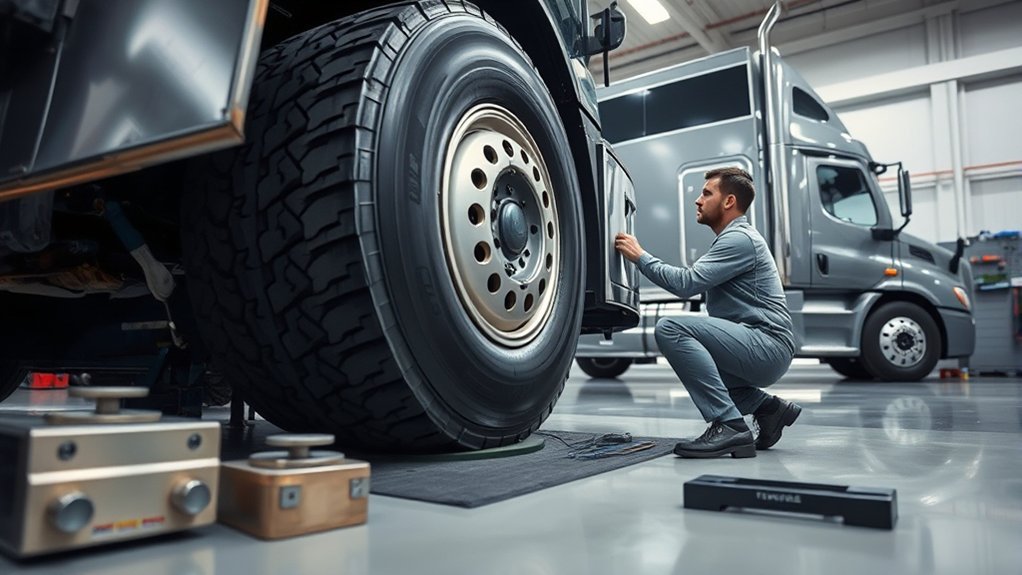
Truck tire balancing keeps the tire and wheel assembly spinning evenly, which helps reduce highway-speed vibration, uneven tread wear, driver fatigue, and extra stress on steering and suspension parts. It is a routine service, but it matters even more on trucks because heavier loads, larger tires, towing, potholes, and job-site driving can make small imbalances feel much worse.
Quick Answer
Balance truck tires when you install new tires, rotate tires, repair a tire, hit a pothole or curb, or feel vibration at highway speeds. A technician uses a spin or road-force balancer to find heavy spots, then adds wheel weights so the tire and wheel rotate smoothly.
Key Takeaways
- Common signs of unbalanced truck tires include steering wheel vibration, seat or floorboard vibration, uneven tread wear, and vibration that gets worse as speed increases.
- Most light trucks should have tire balance checked around normal tire-rotation intervals, after tire repairs, and any time vibration appears.
- Dynamic balancing is the standard choice for most modern truck tires; road-force balancing is useful when a normal balance does not fix vibration.
- Balancing is not the same as wheel alignment. Balance fixes weight distribution; alignment fixes wheel angle and tracking.
- Do not ignore vibration, bulges, bumps, or irregular wear. Have the tire and wheel inspected by a qualified tire professional.
At a Glance
| Time Required | Usually 30–60 minutes for a set, depending on tire size, wheel condition, shop workload, and whether road-force testing is needed. |
| Difficulty | Professional service recommended. Mounting and balancing truck tires requires proper equipment and training. |
| Tools Needed | Computerized wheel balancer, wheel weights, tire changer if the tire is being mounted, valve tools, torque wrench, and inspection equipment. |
| Cost | Varies by shop, tire size, wheel type, and whether balancing is bundled with tire installation, rotation, or a service package. |
What Is Tire Balancing and Why Does It Matter?
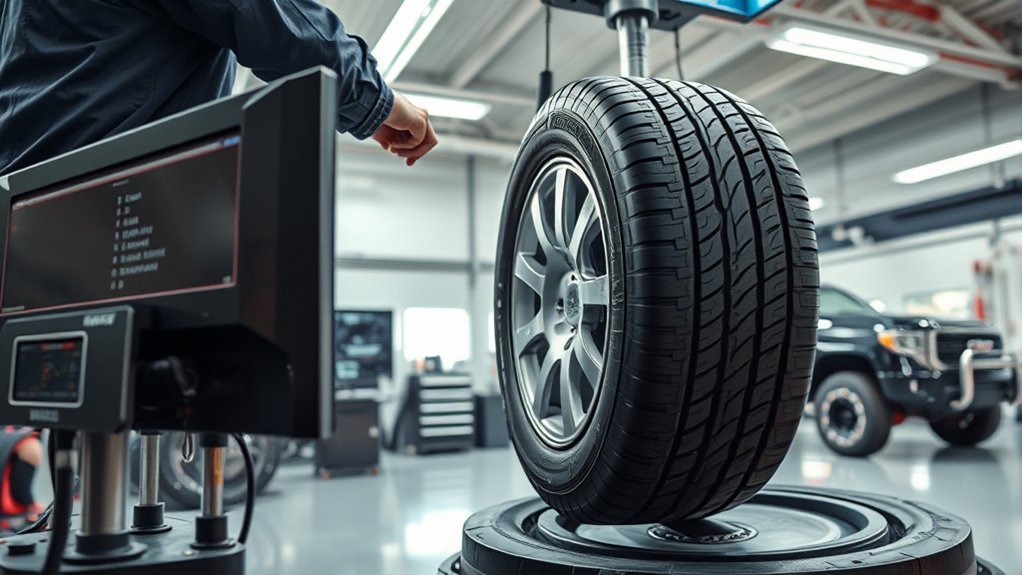
Tire balancing is the process of correcting uneven weight in the tire and wheel assembly. Even a small heavy spot can make the assembly hop, shake, or wobble as it spins. A technician mounts the assembly on a balancer, spins it, identifies the heavy or light areas, and applies small weights to the wheel so the assembly rotates more evenly.
For trucks, proper balance is important because larger tires and heavier wheel assemblies can magnify vibration. A slight imbalance that feels minor on a small passenger car can feel stronger through a truck’s steering wheel, seat, or floorboard, especially while towing, hauling, or driving at highway speed.
According to Discount Tire, tire balancing helps the tire and wheel work together for a smooth ride, while Goodyear notes that balancing helps prevent uneven tire wear and wheel vibration.
Note: Tire balancing is not the same as wheel alignment. Balancing corrects uneven weight in the tire and wheel assembly. Alignment corrects the angles of the wheels so the truck tracks straight and the tires meet the road correctly.
[Products Worth Considering]

This VEVOR tire bead breaker uses a slide-hammer impact and wedge tip to separate tire beads from rims quickly and efficiently without damaging hub surfaces. The long handle and sturdy steel construction help reduce user strain while providing reliable, portable tire changing for cars, trucks, and more. Ideal for home mechanics and repair shops handling multiple vehicle tire sizes.

Upgrade your air tools with this 18-piece air compressor accessory kit featuring a 25ft recoil poly hose, 1/4" NPT quick connect fittings, and a 100 PSI tire inflator gauge. The set also includes a heavy-duty blow gun with safety and tapered nozzles, plus couplers, inflation needles, plugs, and other essentials for everyday mechanic and workshop tasks. Corrosion-resistant steel and brass components help keep connections reliable for inflating, blowing out, and general pneumatic use.

The AstroAI 2 pack air chucks provide a heavy-duty, closed-flow locking design that helps keep air flowing during inflation while securely attaching to the valve stem. Built with 250 PSI rated brass components and compatible with Schrader valves, they feature 1/4" female NPT threads for a wide fit with common inflators. The straight tip and locking clip make filling tires and monitoring pressure more convenient.
How Tire Imbalance Affects Truck Performance and Safety
When a truck tire is out of balance, the wheel assembly does not rotate as smoothly as it should. That can cause vibration, uneven tread contact, more driver fatigue, and extra stress on related parts. The effect is often most noticeable at highway speeds because the tire is spinning faster.
| Effect | What You May Notice | Why It Matters |
|---|---|---|
| Vibration | Shaking through the steering wheel, seat, or floorboard | Can reduce comfort, control, and confidence at speed |
| Uneven tread wear | Cupping, scalloping, patchy wear, or faster wear on one tire | Can shorten tire life and reduce traction |
| Suspension stress | More shock, strut, bearing, or steering wear over time | May lead to more repairs if ignored |
| Efficiency loss | Slightly poorer fuel economy, especially with other tire issues | Poor balance, alignment, tire pressure, and tread wear can all increase operating costs |
Fuel economy should be discussed carefully. Tire imbalance alone does not guarantee a specific mileage loss, but poor tire maintenance can reduce efficiency. Continental notes that proper alignment and tire balance together may add up to 2.2% in savings, while correct tire pressure can also improve efficiency.
Tire balancing is a small service, but the symptoms it prevents—vibration, irregular wear, and added stress on parts—can affect comfort, safety, and long-term ownership costs.
Signs Your Truck Tires Need Balancing
The most common sign of tire imbalance is vibration that appears or gets stronger at highway speed. You may feel it through the steering wheel, seat, floorboard, or the whole cab.
- Steering wheel vibration: Often points toward an issue with a front tire or wheel assembly.
- Seat or floorboard vibration: Often points toward a rear tire or wheel assembly.
- Vibration that increases with speed: Tire balance is more likely when the shake changes with vehicle speed.
- Uneven or patchy tread wear: Cupping, scalloping, or flat spots can appear when a tire is bouncing instead of rolling smoothly.
- New vibration after tire service: If shaking starts after new tires, rotation, repair, or wheel installation, the tire and wheel assembly should be checked.
- Lost wheel weights: A missing clip-on or adhesive weight can throw off balance.
Warning: Do not treat every vibration as a simple balance problem. If you see a bulge, bump, exposed cord, sidewall damage, severe uneven wear, or a sudden change in handling, stop driving as soon as it is safe and have the tire inspected by a qualified professional.
Why Truck Tires Go Out of Balance
Tires can lose balance even if they were balanced correctly when installed. Common causes include normal tread wear, uneven wear, lost wheel weights, a tire repair, mud packed inside the wheel, curb impact, pothole damage, bent wheels, tire runout, or a tire that was not seated evenly on the wheel.
Truck use can make these problems more likely. Towing, hauling, gravel roads, off-road driving, construction sites, and heavy curb contact all add stress to the tire and wheel assembly. Large all-terrain and mud-terrain tires can also be more sensitive to imbalance because they are heavier and have more aggressive tread blocks.
Tire Balancing vs. Rotation vs. Alignment
These services are often done together, but they solve different problems:
| Service | What It Fixes | When You Need It |
|---|---|---|
| Tire balancing | Uneven weight in the tire and wheel assembly | Highway-speed vibration, new tires, rotation, repair, or lost wheel weight |
| Tire rotation | Uneven wear caused by tire position | At regular maintenance intervals or as recommended by the vehicle/tire maker |
| Wheel alignment | Incorrect wheel angles | Truck pulls, steering wheel is off-center, edge wear, or after suspension work |
If your truck vibrates and pulls to one side, you may need more than balancing. A tire shop can balance the tires, but alignment, suspension, brake, or wheel-bearing problems may require a repair shop.
What to Expect During Tire Balancing
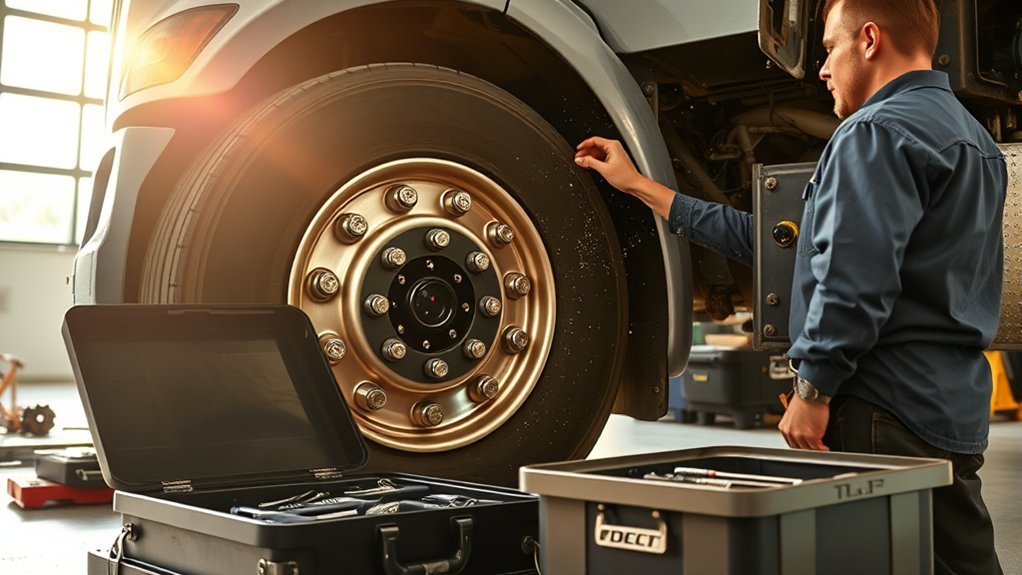
During a professional balancing service, the technician should inspect the tire and wheel before adding weights. A good shop does more than spin the tire and send you out the door.
- Inspect the tire and wheel: The technician checks for uneven wear, damage, bulges, bent wheels, old weights, and debris.
- Mount the assembly on the balancer: The wheel must be centered correctly on the machine to avoid a false reading.
- Spin the assembly: A computerized balancer measures where weight correction is needed.
- Add wheel weights: Clip-on or adhesive weights are placed at the correct points on the wheel.
- Recheck the balance: The technician spins the assembly again to confirm the correction.
- Reinstall and torque the wheel: Lug nuts or bolts should be tightened in the proper pattern and to the correct specification.
- Road test if needed: If the original complaint was vibration, a road test can confirm whether the issue is fixed.
A standard balance often takes about 30 to 60 minutes for a set of truck tires, depending on tire size, wheel condition, technician workflow, and whether extra diagnosis is needed.
Pro Tip: Ask the shop to remove old wheel weights before balancing and to check the tire and wheel for runout if vibration has been difficult to solve.
Static vs. Dynamic vs. Road-Force Balancing
Not all balancing methods are the same. The best option depends on the tire, wheel, truck use, and the vibration complaint.
| Method | How It Works | Best For |
|---|---|---|
| Static balancing | Corrects up-and-down imbalance on a single plane. | Simple assemblies, minor imbalance, or specialty cases. |
| Dynamic balancing | Corrects imbalance across two planes, including side-to-side wobble. | Most modern light trucks, SUVs, and highway-driven pickups. |
| Road-force balancing | Applies a load roller to measure how the tire and wheel behave under simulated road force. | Persistent vibration, suspected runout, stiff tire spots, or difficult tire/wheel match problems. |
For most pickup trucks, dynamic balancing is the normal choice. Road-force balancing is worth asking about when the tires have been balanced but the truck still shakes. Tire Rack explains that when rebalancing does not cure vibration, the technician should also check runout and may need to rotate the tire on the wheel to reduce the problem.
When Should You Balance Truck Tires?
Balance truck tires at the times when imbalance is most likely to appear or when the tire and wheel assembly has been disturbed.
- When installing new tires: New tires should be balanced after mounting.
- During tire rotations: Many shops recommend balancing around normal rotation intervals, often about every 5,000 to 6,000 miles or as your vehicle/tire maker recommends.
- After a flat repair: A patch, plug-patch, dismount, or remount can change the assembly’s balance.
- After hitting a pothole or curb: Impact can bend a wheel, shift weights, damage a tire, or create runout.
- Before a long trip or towing: If you already feel vibration, fix it before adding highway miles, cargo, or trailer weight.
- Any time vibration appears: Do not wait for the tread to wear unevenly.
For heavy-duty commercial trucks, dual-rear-wheel trucks, and fleet vehicles, follow the tire maker, wheel maker, vehicle maker, and fleet maintenance procedures. Commercial truck tire service may require different equipment and safety practices than light-truck service.
[Products Worth Considering]
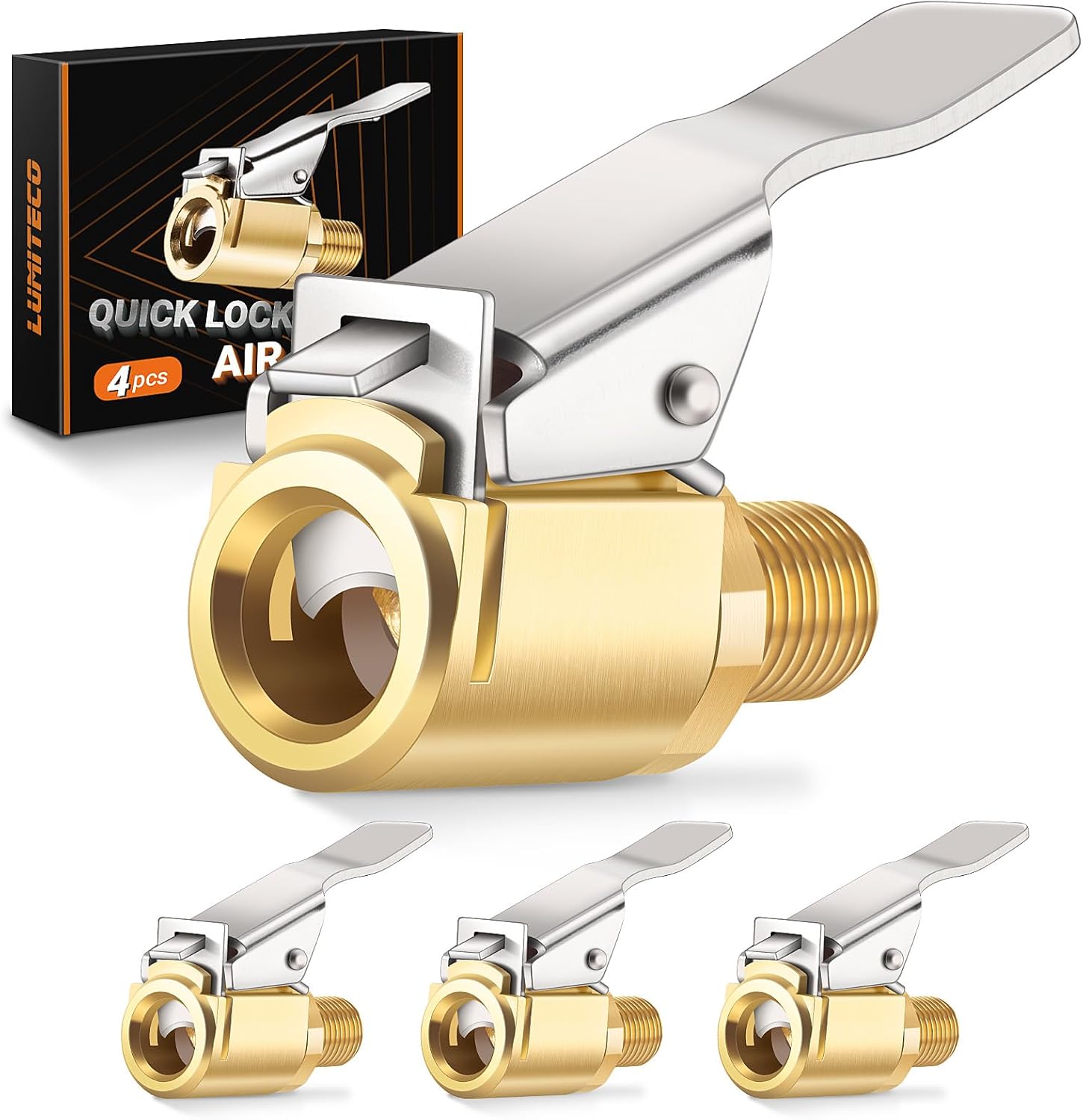
This brass air chuck adapter converts a screw-on inflator connection into a lock-on quick connect for hands-free, no-leak tire inflation. Clip the chuck onto Schrader valve stems and lock it in place to simplify inflating car, bike, and motorcycle tires. Built for durability with a corrosion-resistant brass body and strong quick operation.

This wheel brush kit delivers pro-level cleaning at home, lifting dirt, grime, and brake dust to help restore wheel appearance. It includes multiple brush styles and applicator pads for tackling different wheel surfaces, with gentle, metal-free bristles designed to reduce scratching risk. The flat and double-ended brushes are built for comfort and reach, making wheel care easier for cars, trucks, and RVs.
Risks of Ignoring Tire Balancing
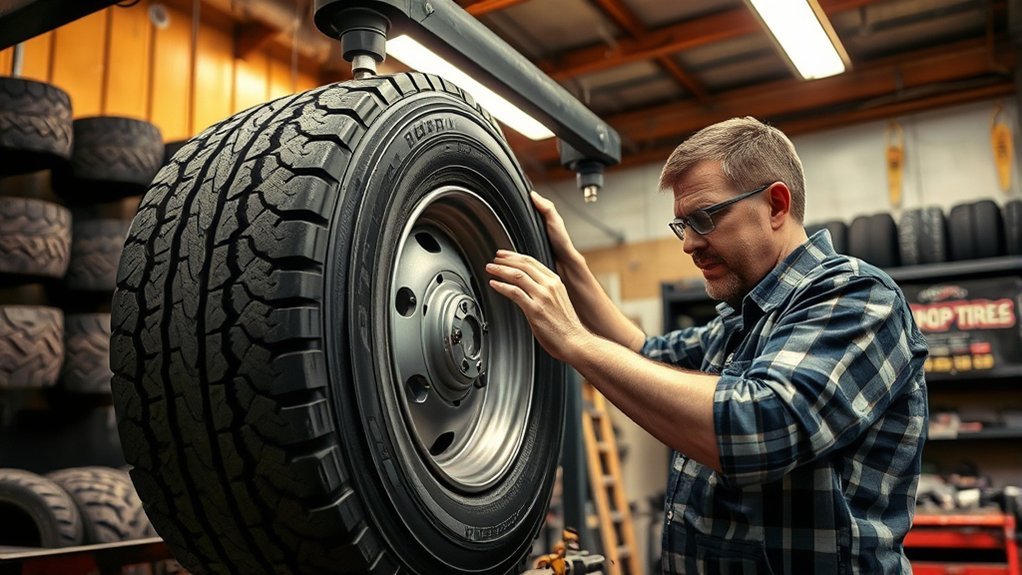
Ignoring tire imbalance can turn a small vibration into a bigger maintenance problem. The exact cost and tire-life impact depend on the truck, tire type, load, road conditions, and how long the issue is ignored, so avoid relying on fixed percentages. The risk is still real: imbalance can contribute to uneven tread wear, ride discomfort, and extra stress on related parts.
Increased Tire Wear
Unbalanced tires can bounce instead of rolling smoothly. That bouncing can create cupping, scalloping, or patchy wear. Once a tread pattern is worn unevenly, balancing may reduce the vibration, but it may not fully restore a smooth ride because the tread itself has already changed shape.
Safety Hazards
Vibration can make a truck feel less stable, especially at highway speeds, while towing, or when carrying a load. It can also hide other problems, such as a bent wheel, damaged tire, loose suspension component, brake issue, or wheel-bearing problem. Bridgestone’s tire safety manual warns that vibration, bumps, bulges, or irregular wear should be evaluated by a qualified tire service professional.
Higher Operating Costs
Poor balance can add vibration and wear, while poor alignment, low tire pressure, overloading, and worn suspension can make the problem worse. Together, these issues can reduce tire life, lower comfort, and increase the chance of additional repairs. Regular inspection helps catch the cause before it spreads to other parts.
Benefits of Regular Tire Balancing for Trucks
Regular tire balancing is a simple way to protect a truck that works hard. It helps the tires roll more smoothly and can reduce the vibration that wears on the driver, the vehicle, and the tires.
Longer Tire Life
Balanced tires are less likely to develop vibration-related uneven wear. That does not mean every tire will last a set number of miles, but it does give the tread a better chance to wear evenly when tire pressure, alignment, rotation, loading, and suspension condition are also correct.
Better Ride Comfort
A balanced tire and wheel assembly reduces shaking through the cab. This matters on long highway drives, work routes, towing trips, and daily commutes. Less vibration also makes it easier to notice new noises or handling changes.
Improved Vehicle Safety
Truck tire maintenance is a safety issue, not just a comfort issue. The National Highway Traffic Safety Administration provides TireWise resources to help drivers choose and maintain tires safely. Balancing is one part of that larger maintenance picture, along with inflation pressure, tread depth, load rating, tire age, and regular inspections.
How to Choose a Professional for Tire Balancing
Choose a tire professional who has the right equipment for your truck’s tire size, wheel type, and use case. Light trucks with larger all-terrain tires, aftermarket wheels, or towing setups may need more careful balancing than a basic passenger-car setup.
- Ask what balancing equipment they use: A modern dynamic balancer is standard; road-force balancing is helpful for stubborn vibration.
- Ask whether they inspect runout: Runout can cause vibration even when the wheel technically balances.
- Confirm they torque wheels properly: Lug nuts or bolts should be tightened with a torque wrench to the correct specification.
- Tell them when the vibration happens: Note the speed, whether it is in the steering wheel or seat, and whether it started after tire service or an impact.
- Use a shop familiar with truck tires: Heavy tires, dually setups, off-road tires, and fleet vehicles may need specialized handling.
What If Tire Balancing Does Not Fix the Vibration?
If the truck still vibrates after balancing, the tire balance may not be the only problem. Do not keep adding weights without diagnosing the cause.
- Check tire and wheel runout: An out-of-round tire or bent wheel can shake even when balanced.
- Inspect wheel fitment: Incorrect hub centering, spacers, clips, or hardware can cause vibration.
- Look at tread wear: Cupped or chopped tread may keep making noise and vibration.
- Inspect suspension and steering: Worn bushings, shocks, struts, ball joints, tie rods, and bearings can mimic tire imbalance.
- Check brakes: Vibration during braking may point to brake components rather than tire balance.
- Consider alignment: Pulling, off-center steering, and edge wear often point toward alignment or suspension geometry.
If the vibration changes location after rotating tires front to rear, the issue likely follows a tire or wheel. If the vibration stays in the same area, the problem may be in the vehicle rather than the tire assembly.
Practical Tips for Maintaining Tire Balance
Good tire balance works best when the rest of the tire maintenance routine is also strong.
| Tip | Why It Helps |
|---|---|
| Check balance around rotation intervals | Helps catch imbalance before it creates uneven wear. |
| Keep tire pressure correct | Incorrect pressure can cause wear patterns that feel like balance problems. |
| Clean mud and debris from wheels | Packed mud can temporarily throw off balance. |
| Inspect after impacts | Potholes, curbs, and job-site hits can damage tires, wheels, or weights. |
| Do not ignore vibration | Early diagnosis can prevent uneven wear and unnecessary parts replacement. |
Frequently Asked Questions
What is the best way to balance truck tires?
For most light trucks, dynamic balancing on a computerized balancer is the best standard method because it corrects both up-and-down and side-to-side imbalance. If vibration remains after a normal balance, ask about road-force balancing and a runout inspection.
Can unbalanced tires damage your truck?
Yes. Unbalanced tires can contribute to uneven tread wear, vibration, ride discomfort, and extra stress on shocks, struts, bearings, steering parts, and suspension components. The faster you fix the vibration, the less time those parts spend under added stress.
How often should truck tires be balanced?
A practical schedule is to check balance around regular tire-rotation intervals, often about every 5,000 to 6,000 miles or as recommended by your vehicle or tire maker. Balance sooner if you install new tires, repair a tire, hit a pothole, lose a wheel weight, or feel vibration.
Is tire balancing the same as wheel alignment?
No. Tire balancing corrects weight distribution in the tire and wheel assembly. Wheel alignment corrects the angles of the wheels and suspension. If your truck shakes at speed, start with balance. If it pulls, has an off-center steering wheel, or wears one tire edge, check alignment too.
Why does my truck still vibrate after balancing?
Persistent vibration can come from tire or wheel runout, a bent wheel, damaged tire, uneven tread wear, incorrect wheel fitment, brake problems, worn suspension parts, bad wheel bearings, or alignment issues. Ask the shop to inspect the tire and wheel assembly rather than simply adding more weight.
Conclusion
Truck tire balancing is one of the simplest ways to reduce vibration, protect tire wear, and keep your truck more comfortable at highway speed. Balance the tires when they are installed, rotated, repaired, or after any hard impact, and treat new vibration as a warning sign. If balancing does not solve the problem, keep diagnosing until the tire, wheel, suspension, brake, or alignment issue is found.
Sources
- Discount Tire — Tire Balancing — definition, symptoms, static/dynamic imbalance, and balancing process.
- Goodyear — Tire Maintenance Services — wheel balance, vibration, uneven wear, and service interval guidance.
- Bridgestone — Tire Maintenance and Safety Manual — tire safety warnings for vibration, bumps, bulges, irregular wear, and impact damage.
- Tire Rack — Mounting and Balancing Procedure — runout, persistent vibration, and professional mounting safety.
- NHTSA TireWise — tire safety and tire-maintenance awareness.
- Continental Tires — Tire Maintenance and Fuel Efficiency — tire maintenance, alignment, balance, pressure, and fuel-efficiency context.

Related Articles
Toyota Tundra Tire and Wheel Package: What to Consider Before Buying
Unlock the secrets to choosing the perfect tire and wheel package for your Toyota Tundra—essential tips await to enhance your ride.
Read More
Do Bigger Tires Void a Toyota Tundra Warranty? Magnuson-Moss Act Explained
Bigger tires might not void your Toyota Tundra warranty, but understanding the Magnuson-Moss Act is crucial—discover how to protect your investment effectively.
Read More
Toyota Tundra Tire Rack Setup: Garage Storage Ideas for Seasonal Sets
Better tire storage for your Toyota Tundra awaits—discover essential tips to maximize space and protect your seasonal sets in the garage!
Read More