
What Does the 3PMSF Symbol Mean on Tires? Winter Rating Explained
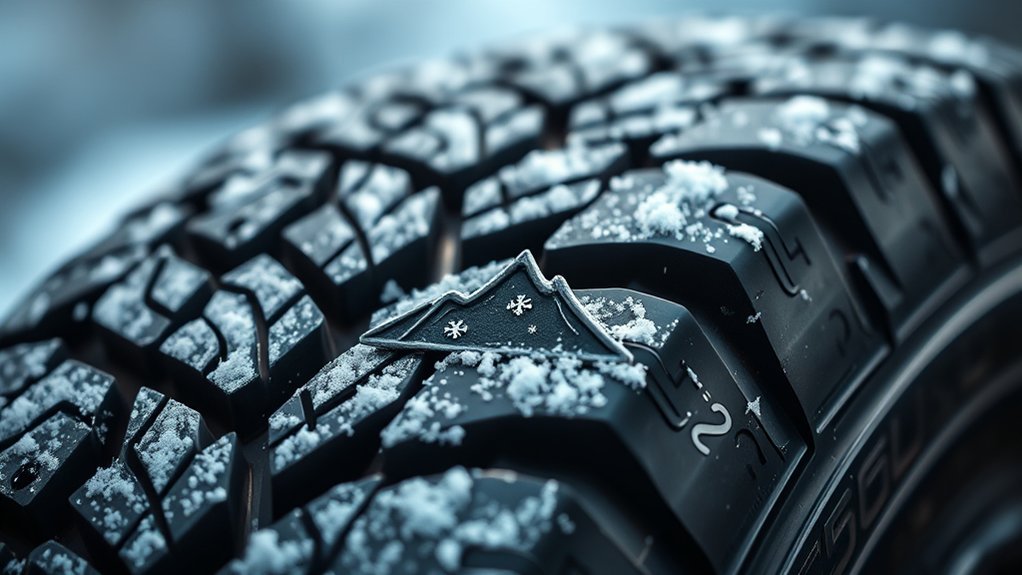
The 3PMSF symbol is the three-peak mountain snowflake mark you see on tires built for severe snow service. It matters because it tells you the tire has met a defined snow-traction test, not just a basic tread-design label. This guide explains what the symbol means, how it compares with M+S, when to use these tires, and what winter-tire laws may require.
Quick Answer
The 3PMSF symbol means a tire qualifies for severe snow service after meeting a recognized snow-traction test. It is stronger evidence of winter performance than M+S alone, but it is not a guarantee of ice braking, year-round durability, or legal compliance in every location.
Key Takeaways
- 3PMSF stands for Three-Peak Mountain Snowflake and identifies tires designed for severe snow conditions.
- M+S is mainly a tread-design marking; 3PMSF is tied to a snow-traction performance test.
- Quebec requires approved winter tires from December 1 to March 15, while British Columbia accepts M+S or 3PMSF on signed routes but recommends 3PMSF for cold-weather driving.
- Install four matching winter or all-weather tires, check pressure often, and avoid using worn winter tires in severe conditions.
- 3PMSF helps in snow, slush, and cold weather, but it does not make a tire an all-purpose ice tire.
At a Glance
| Time Required | 5–10 minutes to inspect your tire sidewalls and tread; longer if you are scheduling a seasonal tire change. |
| Difficulty | Easy for identification and maintenance checks; professional help is recommended for mounting, balancing, or tire replacement. |
| Tools Needed | Flashlight, tire-pressure gauge, tread-depth gauge or ruler, and your vehicle owner’s manual for the correct tire size, load rating, and pressure. |
| Cost | Free to inspect; tire changeover and replacement costs vary by vehicle, tire size, and whether you use a dedicated winter wheel set. |
What Is the 3PMSF Symbol and Why Is It Important?
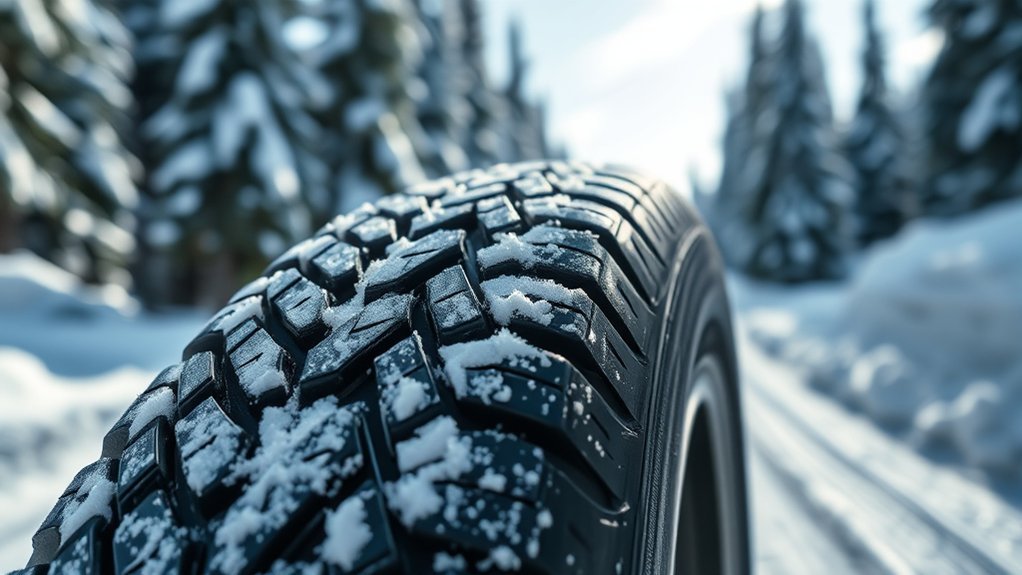
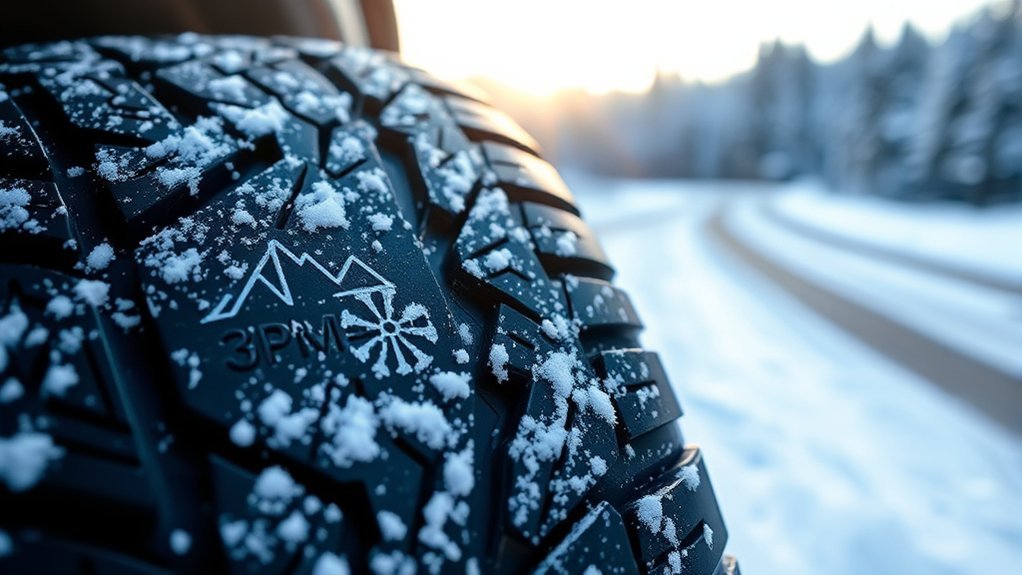
The 3PMSF symbol, also called the Alpine symbol, shows a mountain with three peaks and a snowflake inside it. It appears on a tire sidewall when the tire is designed for severe snow conditions and meets a recognized snow-traction performance requirement.
Transport Canada advises shoppers to look for the peaked mountain with snowflake symbol because tires marked with it meet specific snow-traction performance requirements and are designed for severe snow conditions. In the United States, the current FMVSS 139 definition describes a snow tire as one that reaches a traction index of 112 or greater compared with the ASTM F2493 reference tire using the ASTM F1805-20 medium-packed-snow test.
That technical language matters because it separates a performance-tested snow tire from a tire that only looks winter-ready. A 3PMSF tire can help with acceleration and control on packed snow, but safe winter driving still depends on tread depth, temperature, tire pressure, vehicle condition, road speed, and driver judgment.
[Products Worth Considering]
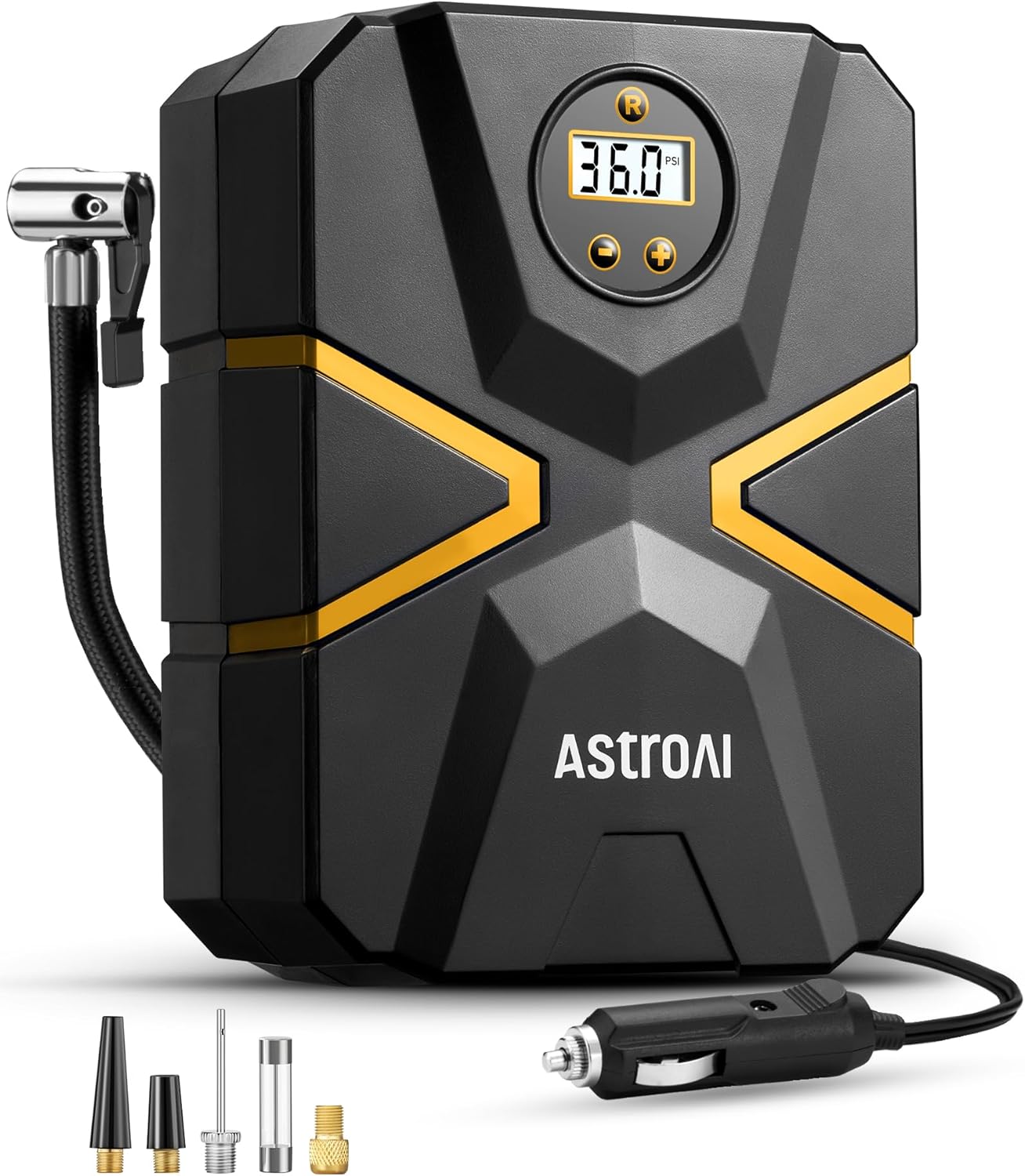
AstroAI S1 is a compact 12V DC tire inflator with a digital screen that shows real-time pressure for accurate inflation. Set your target pressure and the compressor automatically shuts off to help prevent overinflation. It supports fast inflation for car, motorcycle, bicycle, and sports balls, with an accessory kit and LED light for convenient use in emergencies.

This heavy-duty tire pressure gauge combines measurement, inflation, and deflation in one compact tool for quick roadside and garage use. Its dual-head chuck helps reach inner and outer dual-wheel positions, while the clear indicator bar makes readings easy to see. Built for durability, it supports a wide pressure range and works across cars, trucks, RVs, SUVs, and motorcycles.

The AstroAI portable tire inflator delivers fast, accurate inflation with a TrueGauge digital display that reads pressure extremely frequently for safer driving. It inflates common car tires quickly, includes auto shut-off, and features a premium metal build with an ergonomic handle and anti-slip base. A built-in ultra-bright 12 LED emergency light and multi-adapter compatibility make it convenient for cars, motorcycles, bikes, and inflatables (not for truck tires).
How Does the 3PMSF Symbol Differ From M+S Ratings?
The main difference is that 3PMSF is tied to a snow-traction performance test, while M+S mainly indicates a mud-and-snow tread design. M+S tires may be legal in some places, but the marking does not prove the same severe-snow traction performance as the 3PMSF symbol.
| Feature | 3PMSF | M+S |
|---|---|---|
| Meaning | Three-Peak Mountain Snowflake; severe snow service mark | Mud and Snow tread-design marking |
| Performance basis | Based on a snow-traction test | Generally based on tread features, not the same severe-snow test |
| Best use | Winter, all-weather, and some all-terrain tires built for severe snow | Mild winter, mud, light snow, and legal minimum use in some regions |
| Legal status | Required or recognized in some winter-tire laws | Accepted in some regions, including B.C. signed routes when tread-depth rules are met |
Note: A tire can show both M+S and 3PMSF. When both are present, the 3PMSF mark is the stronger winter-performance signal.
What Are the Performance Standards for 3PMSF Tires?
To qualify for the 3PMSF/Alpine symbol, a tire must meet a defined snow-traction requirement. The exact wording depends on the regulation or market:
- United States: Current FMVSS 139 language defines a snow tire as reaching a traction index of 112 or greater compared with the ASTM F2493 standard reference tire on medium-packed snow using ASTM F1805-20.
- Canada: Transport Canada’s public winter-tire briefing describes the North American winter-tire standard as a traction index equal to or greater than 110 compared with a reference test tire, with manufacturers responsible for certifying that their tires meet the performance test.
- UNECE markets: The United Nations Economic Commission for Europe describes advanced winter tires for severe snow conditions as tires marked with the Alpine/3PMSF symbol after passing a snow-grip test and being type approved under UN Regulation No. 117.
The safe takeaway is simple: 3PMSF is a performance-tested severe-snow mark. It is not just a decorative symbol, and it is not the same as M+S.
3PMSF confirms a tire has met a snow-traction threshold. It does not mean every 3PMSF tire performs equally, and it does not replace careful driving on ice.
What 3PMSF Does Not Guarantee
The 3PMSF symbol is valuable, but it has limits. It does not guarantee:
- Equal ice performance: A 3PMSF tire may be better in winter than a typical all-season tire, but the symbol itself is not an ice-braking certification.
- Safe performance when worn: A winter tire with low tread depth can lose much of its snow and slush performance.
- Year-round durability: Dedicated winter tires usually wear faster in warm weather because their rubber compounds are designed for cold conditions.
- Legal compliance everywhere: Laws vary by province, state, road sign, vehicle class, and date range.
Warning: Do not assume 3PMSF tires make icy roads safe at normal speeds. Slow down, leave extra stopping distance, and check whether your tires are winter tires, all-weather tires, or another 3PMSF-rated category.
Why Choose 3PMSF Tires for Winter Driving Conditions?
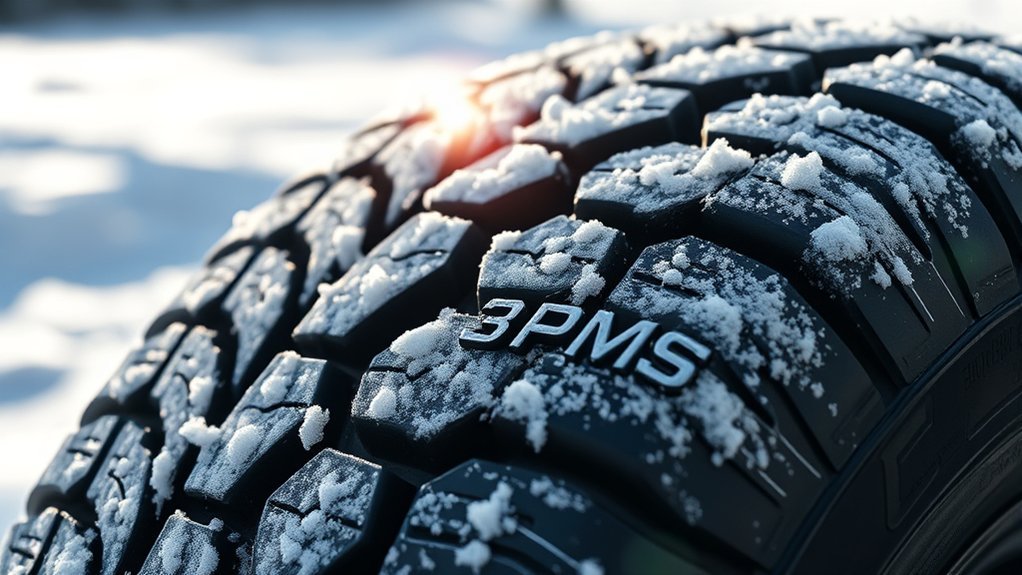
Choose 3PMSF tires when you regularly drive in snow, slush, freezing temperatures, mountain passes, rural winter roads, or regions with winter-tire laws. Compared with M+S-only tires, 3PMSF tires give you stronger evidence that the tire has been tested for severe snow service.
Winter tires also use rubber compounds that remain more flexible in the cold. Transport Canada notes that below 7°C, all-season and summer tires begin to lose elasticity, while winter tires keep their elasticity and grip at much lower temperatures.
That makes 3PMSF tires especially helpful for:
- snow-covered city streets after storms;
- rural roads where plowing may be delayed;
- mountain highways with chain or winter-tire signs;
- drivers who commute early in the morning before temperatures rise;
- fleet, delivery, and service vehicles that must keep moving in winter weather.
How to Identify 3PMSF Tires on Your Vehicle
You can identify 3PMSF tires by checking the tire sidewall. Look for a small mountain outline with three peaks and a snowflake inside. It is usually printed near the tire size, load index, speed rating, M+S marking, or brand information.
- Park safely and turn the wheels if needed: This gives you a better view of the sidewall.
- Use a flashlight: Tire markings can be shallow or dirty, especially after winter driving.
- Find the mountain snowflake: Do not confuse it with M+S, “all-season,” or marketing words like “snow” unless the actual symbol is present.
- Check all four tires: All four tires should match in type, size, load rating, speed rating, and similar tread depth.
- Inspect tread depth and damage: A 3PMSF symbol is not enough if the tire is worn, cracked, bulged, or unevenly damaged.
Warning: Avoid mixing 3PMSF tires with non-3PMSF tires, different tread patterns, different sizes, or very different tread depths. Mismatched tires can reduce stability, braking control, and predictable handling.
How to Determine the Right Time for Switching to 3PMSF Tires?
A practical rule is to switch when daytime temperatures are consistently near or below 7°C / 45°F, or before regular snow and ice appear in your forecast. Waiting until the first major storm can leave you driving on tires that have already lost cold-weather grip.
If your area has a legal deadline, switch before that date. For example, Quebec’s winter-tire period begins December 1. In mountain or rural regions, it may be smarter to install winter tires earlier because snow can arrive well before calendar winter.
Pro Tip: Book your seasonal tire change before the first forecasted snow week. Tire shops fill quickly once temperatures drop, and early installation is usually safer than waiting for the first storm.
Do You Need 3PMSF Tires by Law Where You Live?
Winter-tire laws are local. Some places require approved winter tires during specific dates. Others require winter tires or chains only on signed routes. Always check your local transportation authority before winter travel.
| Region | Current rule to know | What it means for 3PMSF |
|---|---|---|
| Quebec | Vehicles registered in Quebec must be winter-ready from December 1 to March 15, with listed exceptions and fines for non-compliance. | Approved winter tires generally need the 3PMSF/Alpine pictogram or another legally accepted winter-tire option such as permitted studded tires. |
| British Columbia | Winter tires or chains are required on many signed routes from October 1 to March 31 or April 30, depending on the route. | B.C. accepts M+S or 3PMSF tires with at least 3.5 mm tread depth, but the province recommends 3PMSF for cold-weather driving. |
| Other provinces, states, and mountain routes | Rules may depend on posted signs, chain-control alerts, vehicle weight, and road conditions. | 3PMSF is often the safest choice for severe winter travel, but local rules still control what is legally required. |
Note: A tire that is legal may not be ideal. For example, B.C. accepts M+S as a minimum on signed highways, but recommends 3PMSF tires for cold-weather driving because they offer better snow and ice traction.
[Products Worth Considering]

The AstroAI tire inflator delivers dual power for 12V DC car use and 120V AC home use, making it convenient for travel and everyday inflations. Choose high-pressure mode for car, bike, and motorcycle tires up to 150 PSI, or use large-volume mode for low-pressure inflatables like air mattresses. An LED light, digital pressure display, preset shutoff, and memory for your last setting simplify each session. Dual metal motors, OmniVent heat dissipation, and a 15-minute continuous work limit help it run reliably between cool-downs.

AstroAI’s tire pressure gauge with inflator helps you check and adjust car tire pressure accurately for safer, smoother driving. It offers 3-in-1 operation to inflate, deflate, or measure pressure, with an easy-to-read 2.5-inch glow dial and a heavy-duty air chuck for convenient use. Universal compatibility supports Schrader-valve tires and quick-connect 1/4" NPT air compressors for quick maintenance.

Replace worn pool cleaner tires with this all-purpose C10 tire set made to fit compatible Polaris automatic pool cleaners. The tires are designed for maximum traction while helping protect your pool finish, and they match Polaris OEM size and material. Each pack includes three new tires in sealed bags.
Legal Requirements Overview
Legal winter-tire rules usually focus on three things: tire marking, tread depth, and the dates or road signs that activate the rule. Some laws apply province-wide. Others apply only on marked highways or during chain-control conditions.
In Quebec, the official requirement applies from December 1 to March 15 for most motor vehicles registered in the province, including rental vehicles, with exceptions for certain vehicle types and temporary situations. In B.C., signed winter routes require winter tires or chains, and legal winter tires must meet the province’s marking and tread-depth rules.
Regional Variations Explained
Regional variation is the reason you should not rely on one blanket answer. Quebec has a province-wide winter-tire period. B.C. uses signed routes and accepts both M+S and 3PMSF markings when tread-depth requirements are met. U.S. mountain states may use traction laws, chain laws, or temporary storm restrictions.
If you travel across regions, choose the more conservative setup: four matching 3PMSF tires in good condition, plus chains or approved traction devices when your route requires them.
Which Vehicles Benefit From 3PMSF Tires?
Any vehicle that faces real winter conditions can benefit from 3PMSF tires. That includes passenger cars, SUVs, crossovers, pickups, commercial vans, fleet vehicles, and some all-terrain-equipped trucks.
- Passenger cars: Better cold-weather grip helps with daily commuting in snow and slush.
- SUVs and crossovers: All-wheel drive can help you start moving, but tires help you stop and turn.
- Pickup trucks and work vans: 3PMSF tires can improve control when carrying tools, cargo, or uneven loads in winter.
- Fleet vehicles: Matching 3PMSF tires can reduce risk for drivers who cannot simply stay home during storms.
- Mountain-route travelers: 3PMSF tires are a smart choice where steep grades, packed snow, and sudden weather changes are common.
Can You Use 3PMSF Winter Tires Year-Round?
You can physically drive on many 3PMSF tires year-round, but it may not be the best choice. The right answer depends on whether the tire is a dedicated winter tire or an all-weather tire.
- Dedicated winter tires: Best for cold temperatures, snow, and ice. They usually wear faster in warm weather and may feel softer on hot dry pavement.
- All-weather tires with 3PMSF: Designed for year-round use and severe-snow eligibility, but they may not match dedicated winter tires in harsh winter conditions or dedicated summer tires in hot performance driving.
- All-season tires without 3PMSF: Often acceptable for mild climates, but they are not the same as severe-snow-rated tires.
If your winters are harsh, dedicated winter tires plus a separate warm-season set usually provide the best performance. If your climate is moderate and storage is limited, a quality 3PMSF all-weather tire may be a practical compromise.
Essential Maintenance Tips for 3PMSF Tires
3PMSF tires only perform well when they are properly maintained. Use this checklist before and during winter:
- Check tire pressure cold: Tire pressure drops as temperatures fall. Check pressure at least monthly and before highway trips.
- Measure tread depth: Transport Canada advises against using tires with less than 4 mm / 5/32 inch tread depth in severe winter conditions. B.C. requires at least 3.5 mm tread depth for legal winter tires on signed routes.
- Rotate on schedule: Follow your owner’s manual or tire maker’s interval, commonly around 5,000 to 7,500 miles for many vehicles.
- Inspect for damage: Look for cracks, bulges, punctures, uneven wear, exposed cords, and vibration after impacts.
- Use four matching tires: For best control, install the same tire type, size, load index, speed rating, and similar tread depth on all four wheels.
- Store off-season tires correctly: Keep them clean, dry, cool, and away from direct sunlight, ozone sources, oil, and solvents.
How to Choose the Right 3PMSF Tires
Not every 3PMSF tire is the same. Before buying, check these points:
- Correct size: Match your vehicle’s tire placard or owner’s manual.
- Load index and speed rating: Do not choose a tire below your vehicle’s required ratings unless the vehicle maker allows it.
- Winter type: Choose dedicated winter tires for harsh cold, snow, and ice; choose all-weather 3PMSF tires for milder climates and year-round convenience.
- Driving pattern: City commuters, mountain drivers, long-distance highway users, and work vehicles may need different tread designs.
- Road noise and comfort: Aggressive winter tread can be noisier, so compare comfort and noise ratings if you drive mostly cleared roads.
- Studded vs. non-studded: Studded tires may help on ice where legal, but they can be restricted by date, road, or region.
Common Misconceptions About 3PMSF Tires
Misconception 1: “3PMSF means the tire is only for winter.” Not always. Some all-weather tires carry the 3PMSF symbol and are designed for year-round use.
Misconception 2: “M+S and 3PMSF mean the same thing.” They do not. M+S is a basic mud-and-snow tread marking, while 3PMSF is tied to a severe-snow performance requirement.
Misconception 3: “All-wheel drive means I do not need winter tires.” All-wheel drive can help with acceleration, but it does not replace winter tire grip for braking and cornering.
Misconception 4: “A worn 3PMSF tire is still winter-ready.” The symbol does not overcome low tread depth, age cracking, poor inflation, or uneven wear.
Frequently Asked Questions
Is 3PMSF mandatory in winter?
It depends on where you drive. Quebec requires approved winter tires from December 1 to March 15 for most registered vehicles. British Columbia requires winter tires or chains on many signed routes, but accepts M+S or 3PMSF tires when tread-depth requirements are met. Always check your local law and posted road signs.
What is the difference between 3PMSF and Mud and Snow?
3PMSF is a severe-snow service symbol tied to snow-traction testing. M+S stands for Mud and Snow and is mainly a tread-design marking. M+S may be legal in some regions, but it does not show the same severe-snow performance testing as 3PMSF.
What does 3PMSF certified mean?
It means the tire has been manufacturer-certified or type-approved, depending on the market, to meet a recognized severe-snow traction requirement. In North America, the test is based on traction on medium-packed snow. Regulators set and enforce standards, while manufacturers are responsible for certifying compliance.
What is the snowflake symbol 3PMSF?
The snowflake symbol is a mountain outline with three peaks and a snowflake inside. It appears on the tire sidewall and identifies a tire designed for severe snow conditions.
Does 3PMSF mean a tire is good on ice?
Not automatically. 3PMSF is primarily a severe-snow traction mark. Some 3PMSF tires perform well on ice, especially dedicated winter tires, but the symbol itself is not a separate ice-braking certification.
When should I install 3PMSF winter tires?
Install them when temperatures are consistently near or below 7°C / 45°F, before the first major snowfall, or before your local legal deadline. Early installation is usually safer than waiting until roads are already icy.
Conclusion
The 3PMSF symbol is one of the most useful markings to look for when choosing tires for winter driving. It tells you the tire has met a severe-snow traction requirement, making it a stronger winter-performance signal than M+S alone. Still, the symbol is only one part of winter safety. Use four matching tires, keep them properly inflated, monitor tread depth, understand local laws, and remember that ice, speed, and worn tires can still overwhelm even a good winter setup.
Sources
- eCFR — 49 CFR § 571.139, FMVSS 139 — current U.S. snow tire definition and traction-index requirement.
- Transport Canada — Using winter tires — severe snow symbol guidance, cold-temperature performance, installation, pressure, and tread-depth advice.
- Transport Canada — Winter Tires briefing — Canadian winter tire standards, manufacturer certification, compliance testing, and ice-performance limitations.
- UNECE — Snow performance and 3PMSF identification — UN Regulation No. 117 context for Alpine/3PMSF snow-grip marking.
- Gouvernement du Québec — Requirements for winter tires — Quebec winter-tire dates, coverage, exceptions, and penalties.
- Province of British Columbia — Passenger vehicle tire and chain requirements — B.C. legal winter-tire markings, tread depth, and 3PMSF recommendation.
[Products Worth Considering]

Autel MX TPMS sensors combine 315MHz and 433MHz in a single easy-to-install press-in design for faster tire service. They support wireless programming with strong signal performance, and the sensors are clone-able for streamlined replacement. Built for reliability and tested to SAE standards, each sensor includes a series number for quality control.

This 22-piece car wash and detailing kit includes a collapsible 20L bucket, lint-free wash mitt, microfiber sponge, super-absorbent drying towels, and specialized tools for wheels, tires, and windows. Soft, scratch-free accessories help protect paint and glass while tackling grime both inside and out. It’s a complete interior and exterior care set for cars, motorcycles, RVs, and home cleaning tasks like windows and mirrors.

The AUTOWN tire repair kit is designed to quickly fix punctures and plug flats with professional-quality steel components. It includes a T-handle and spiral probe tool for easy tire access, plus a compact storage case for convenient carry. Suitable for many vehicles including cars, motorcycles, ATVs, RVs, trailers, and trucks, it helps restore airtight performance for reliable roadside repairs.

Related Articles
Toyota Tundra Tire and Wheel Package: What to Consider Before Buying
Unlock the secrets to choosing the perfect tire and wheel package for your Toyota Tundra—essential tips await to enhance your ride.
Read More
Do Bigger Tires Void a Toyota Tundra Warranty? Magnuson-Moss Act Explained
Bigger tires might not void your Toyota Tundra warranty, but understanding the Magnuson-Moss Act is crucial—discover how to protect your investment effectively.
Read More
Toyota Tundra Tire Rack Setup: Garage Storage Ideas for Seasonal Sets
Better tire storage for your Toyota Tundra awaits—discover essential tips to maximize space and protect your seasonal sets in the garage!
Read More