What Causes Tire Blowouts on a 4Runner and How to Prevent Them

Tire blowouts on your 4Runner can happen due to factors like underinflation, overloading, and road hazards. When tires are underinflated, heat builds up, increasing the risk of failure. Overloading stresses the tires, causing overheating, while potholes and sharp objects can puncture them. Extreme temperatures also impact tire integrity. Regular maintenance, like checking pressure and tread depth, can help prevent these issues. Want to know more about keeping your tires safe? There’s plenty more to explore!
Understanding Tire Blowouts: Risks and Prevention
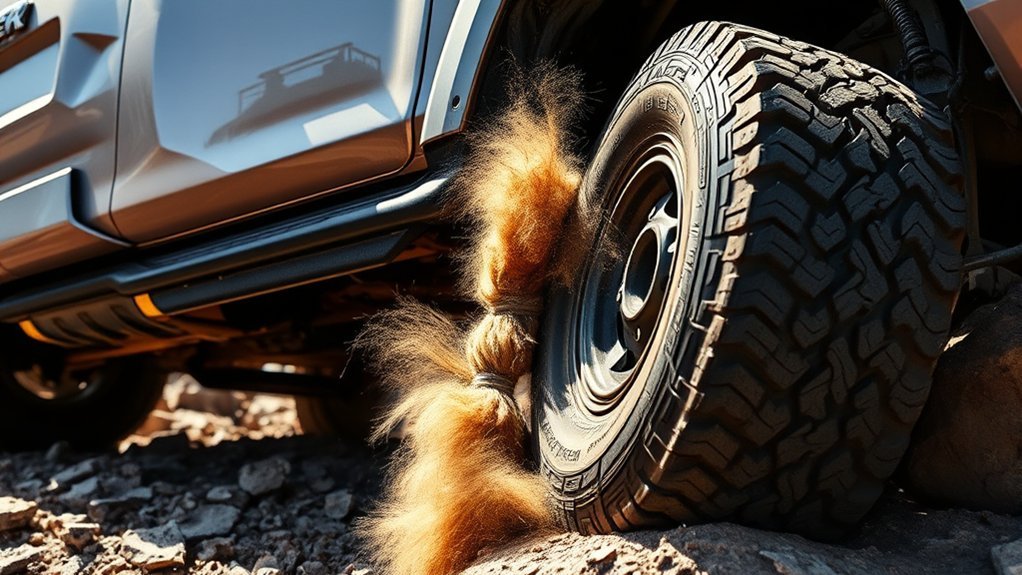
Understanding tire blowouts is essential for every 4Runner owner, especially since these incidents can lead to serious accidents. To guarantee tire safety, you must adopt effective maintenance practices. Regularly check your tire pressure; underinflation can increase heat buildup, weakening the tire structure over time. Be mindful of your vehicle’s load capacity—overloading stresses tires and heightens blowout risks.
Conduct routine inspections for wear signs like cracks or bulges, as these vulnerabilities can compromise your tires. Aim to replace them every five years or 50,000 miles. Additionally, driving at safe speeds can help mitigate excessive heat and friction, reducing blowout chances. Stay alert for road hazards such as potholes and debris; reducing speed in poor conditions can prevent tire damage. By prioritizing these preventive measures, you can enhance your driving experience and guarantee your safety on the road.
Common Causes of Tire Blowouts
Tire blowouts can stem from several common causes that every 4Runner owner should be aware of. Underinflation is a major culprit, leading to excessive sidewall flexing and heat buildup, which weakens your tire’s structure over time. Overloading your vehicle beyond its specified capacity puts additional stress on the tires, increasing the failure risk during long trips or while towing. Road hazards like potholes and sharp objects can cause immediate tire damage, often unnoticed until a blowout occurs. Worn-out tires, especially those with low tread depth, lack grip and stability, making them more susceptible to failure. Environmental factors also play a role; extreme heat can raise tire pressure, while cold conditions may crack the rubber. By understanding these issues and leveraging advancements in tire technology, you can greatly enhance your vehicle safety and enjoy a smoother, worry-free ride.
How Tire Underinflation Leads to Blowouts
When your tires aren’t properly inflated, you’re setting the stage for potential blowouts. Underinflation leads to excessive sidewall flexing, generating heat that weakens the tire structure over time. You might not realize that a tire loses about 1 PSI for every 10°F drop in temperature, making regular pressure monitoring essential, especially in fluctuating weather.
Proper tire inflation is crucial; underinflation can cause blowouts and reduce tire life due to excessive heat and flexing.
To help you maintain ideal tire health, consider these tips:
- Check tire pressure at least once a month.
- Refer to the recommended PSI on your 4Runner’s driver’s side door jamb.
- Remember that underinflated tires can reduce fuel efficiency by up to 3% for every PSI drop.
What Are the Risks of Overloading Your 4Runner’s Tires?
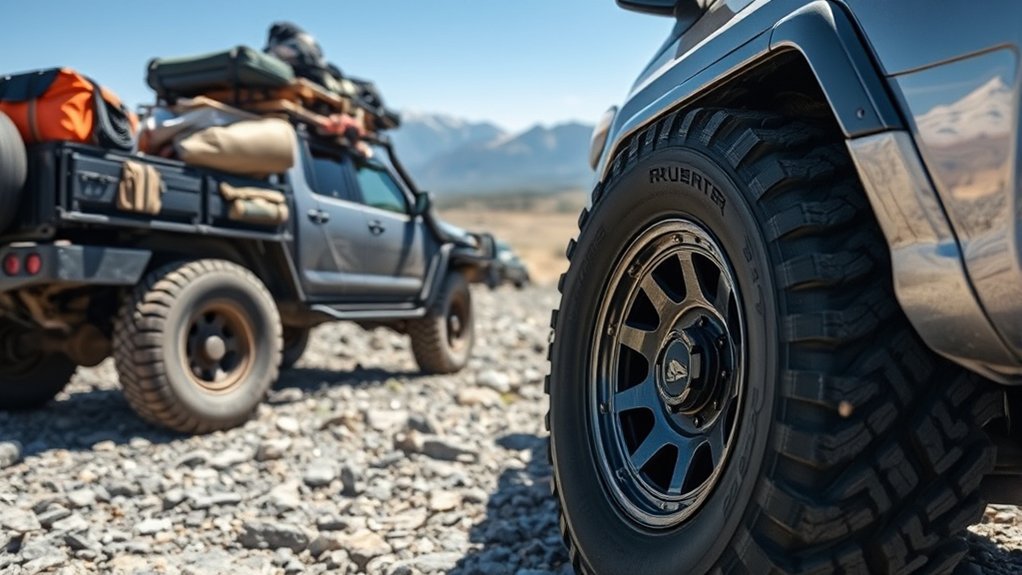
Overloading your 4Runner’s tires can lead to serious risks, including increased tire pressure and heat buildup that heighten the chance of blowouts. When you exceed the load limit, you also compromise handling stability, making it tougher to control your vehicle in emergencies. Staying within the manufacturer’s recommended load capacity is essential for maintaining safety and performance on the road.
Tire Pressure Increase
Exceeding your 4Runner’s load capacity can lead to significant risks, particularly concerning tire pressure. When you overload your vehicle, the tire pressure can rise dangerously, increasing the likelihood of blowouts. Here are some points to take into account:
- Overheating tires due to excessive weight can cause sudden failure.
- Increased sidewall flexing weakens tire structure, heightening blowout risk.
- Regularly checking load limits helps maintain peak tire pressure and longevity.
Make it a habit to use a reliable gauge for monitoring tire pressure, especially when loaded. Staying within your 4Runner’s load capacity not only enhances safety but also guarantees a smoother, more liberated driving experience. Prioritize maintaining proper tire pressure for both performance and peace of mind.
Reduced Handling Stability
Maintaining tire pressure is essential for your 4Runner’s performance, but handling stability takes on a whole new level of significance when you load your vehicle beyond its recommended limits. Overloading can compromise your tires’ integrity, leading to reduced traction and stability, especially during sharp turns or sudden maneuvers. This not only heightens the risk of losing control but also accelerates tire wear, resulting in uneven tread and increased blowout potential. Effective cargo management and proper load distribution are vital in maintaining ideal handling. Always check the load limit marked on your tire’s sidewall, and adhere to the manufacturer’s recommendations. By doing so, you’ll enhance your driving experience and safeguard against tire-related incidents.
Increased Heat Buildup
Heat buildup is a hidden adversary when it comes to your 4Runner’s tires. Overloading your vehicle can lead to excessive friction, raising tire temperatures and increasing the risk of blowouts. Regular tire temperature monitoring is essential to guarantee your tires remain within safe limits.
Consider these heat dissipation strategies:
- Check your tire pressure regularly to avoid underinflation.
- Adhere to the maximum load limits indicated on the tire sidewall.
- Distribute weight evenly to minimize excessive flexing.
How Road Hazards Cause Tire Blowouts
When you’re maneuvering the roads, it’s essential to be aware of how road hazards can lead to tire blowouts. Potholes, sharp objects, and road debris can puncture or weaken your tires, making you vulnerable. A sudden impact with a sharp item at high speed can cause immediate structural failure, resulting in a blowout. Uneven surfaces can also contribute to excessive tire flexing and heat build-up, further increasing the risk.
Here’s a quick look at common road hazards:
| Hazard Type | Impact on Tires |
|---|---|
| Potholes | Causes punctures and weakens tire structure |
| Sharp Objects | Immediate puncture risk |
| Road Debris | Can create vulnerabilities |
Regular tire inspections are vital. They help you identify wear and damage early, allowing you to address vulnerabilities before road hazards exploit them. Stay proactive to keep your 4Runner safe!
How Worn Tires Increase Blowout Risk
Worn tires pose a serious blowout risk due to reduced tread depth and aging rubber. If you notice uneven wear or visible damage, it’s essential to act quickly, as these signs indicate that your tires may be nearing the end of their lifespan. Regular inspections and simple tests, like the penny test, can help you catch issues early and keep you safe on the road.
Tread Depth Importance
Tread depth plays a critical role in your vehicle’s safety, especially when driving a 4Runner. Worn tires, with a tread depth below 2/32 of an inch, greatly increase the risk of blowouts. Reduced tread wear means less surface area for grip, impacting your vehicle’s performance, particularly in wet or slippery conditions.
To keep your 4Runner safe, remember to:
- Regularly check your tread depth using the penny test.
- Replace tires every five years or sooner if tread depth is insufficient.
- Inspect for uneven wear patterns that might indicate alignment issues.
Signs of Tire Aging
As tires age, their performance and safety can diminish considerably, making it essential for you to recognize the signs before a blowout occurs. Tire degradation often shows through visual aging indicators like cracks or bulges on the sidewalls, which signal structural weakness. Additionally, regularly checking tread depth is vital; tires with less than 2/32 inches of tread face a higher blowout risk due to poor grip. Extreme temperatures can also accelerate aging, rendering rubber brittle.
| Aging Indicator | Description | Action Needed |
|---|---|---|
| Cracks/Bulges | Structural weaknesses | Replace tires ASAP |
| Low Tread Depth | Less than 2/32 inches | Replace tires ASAP |
| Brittle Rubber | Caused by heat exposure | Inspect regularly |
Stay vigilant to maintain safety on the road.
Regular Inspection Necessity
While regular inspections of your tires might seem tedious, they’re vital for preventing blowouts on your 4Runner. Worn tires can compromise grip and stability, making you more susceptible to dangerous blowouts, especially under stress or harsh conditions. Catching issues early is important; that’s where tire inspection benefits come in.
- Identify signs of wear like cracks and bulges
- Use the penny test to check tread depth
- Conduct weekly checks to guarantee safety
Why Speed Matters: The Blowout Connection
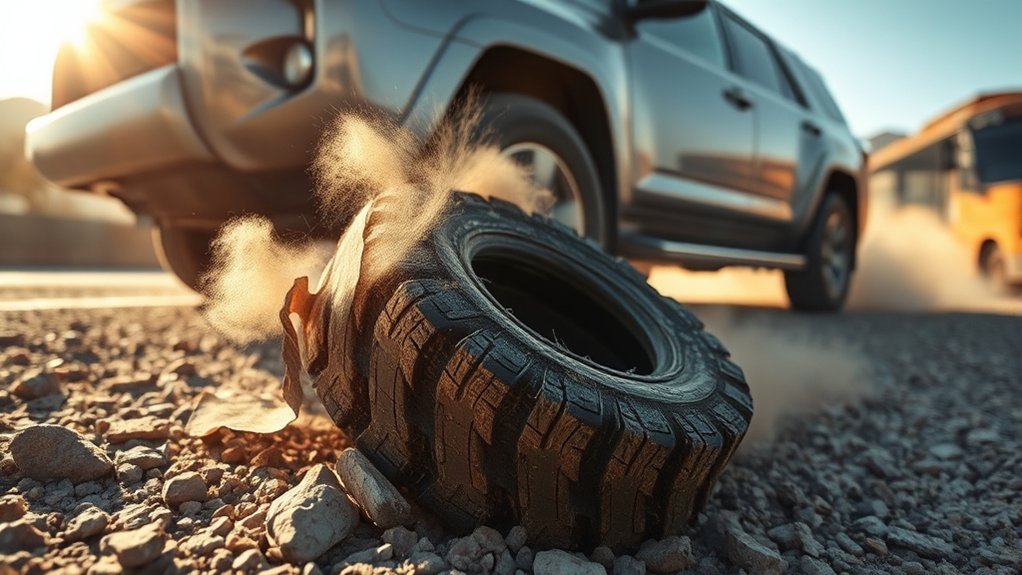
Speed plays an essential role in the likelihood of tire blowouts, especially when you’re driving a 4Runner. When you exceed speed limits, tire heat builds up rapidly, compromising their structural integrity. A study shows that blowouts are 27% more likely at speeds over 70 mph due to increased friction and heat. This risk escalates if your tires are underinflated or worn, making tire maintenance vital.
The National Highway Traffic Safety Administration highlights that tires can lose 1 PSI of pressure for every 10-degree drop in temperature, further complicating matters when you’re driving fast. Regularly checking your tire pressure and inspecting for wear can greatly reduce your chances of a blowout. Remember, high speeds amplify the consequences of even minor tire issues. So, keep your speed in check and prioritize tire maintenance to safeguard your journey.
How Seasonal Temperature Changes Affect Tire Blowouts
When temperatures fluctuate dramatically between seasons, your 4Runner’s tires face unique challenges that can increase the risk of blowouts. Seasonal effects like cold snaps and heat waves can drastically alter tire pressure and rubber durability, making monitoring vital.
- Cold temperatures decrease tire flexibility, leading to cracks.
- Hot weather can cause overinflation, raising blowout risks.
- Extreme temperature fluctuations worsen existing wear, especially on older tires.
To keep your tires safe, remember that tire pressure typically drops by 1 PSI for every 10°F decrease. Regular pressure adjustments are important to maintain the manufacturer’s recommended PSI. Failing to monitor these changes can leave you vulnerable to underinflation or overinflation, both of which can lead to blowouts. By understanding how seasonal temperature changes affect your tires, you can take proactive steps to guarantee your 4Runner remains roadworthy and reliable.
Tire Maintenance Tips to Prevent Blowouts
To keep your 4Runner’s tires in top shape and prevent blowouts, regular maintenance is essential. Start by checking tire pressure monthly with a reliable gauge, confirming it meets the manufacturer’s recommended PSI. Underinflation can lead to excessive heat and blowouts. Inspect your tires weekly for visible wear, using the penny test to check tread depth for grip and stability.
Here’s a quick reference table for tire maintenance:
| Maintenance Task | Frequency |
|---|---|
| Tire Pressure Check | Monthly |
| Tire Inspection | Weekly |
| Tire Rotation | Every 5,000 – 7,000 mi |
| Load Capacity Check | Before long trips |
Rotating your tires every 5,000 to 7,000 miles promotes even tread wear, reducing the likelihood of blowouts. Finally, avoid overloading and stay alert for road hazards. Your diligence can confirm safer journeys.
What to Do If You Experience a Tire Blowout While Driving?
Even with proper tire maintenance, blowouts can still happen unexpectedly. When this occurs, your emergency response is essential for maintaining driving safety. Here’s what to do:
Even with regular tire care, blowouts can occur. Your emergency response is crucial for safe driving in these situations.
- Keep a firm grip on the steering wheel to stabilize your vehicle.
- Gradually ease off the accelerator instead of slamming the brakes, which can lead to loss of control.
- Signal and pull over safely to the side of the road, using your hazard lights to warn other drivers.
Once you’ve stopped, take a moment to inspect the tires for any visible damage like tears or bulges. This will help you assess the situation before attempting to change the tire. If you can’t manage the tire change yourself, don’t hesitate to call for roadside assistance. Prioritizing your safety guarantees you can handle the unexpected with confidence.
Frequently Asked Questions
Will Insurance Cover Damage From a Tire Blowout?
Yes, insurance can cover damage from a tire blowout, especially if it leads to an accident. To support your insurance claims, document the incident thoroughly, including photos and witness statements for smooth processing.
Conclusion
As you cruise down the highway, the last thing you want is the heart-stopping moment of a tire blowout. By understanding the common causes—like underinflation, overloading, and road hazards—you can take proactive steps to keep your 4Runner safe. Regular maintenance and mindful driving can make all the difference. So, before you hit the road, take a moment to check your tires; a few simple actions can prevent a dangerous situation from unfolding before your eyes.

Related Articles

When to Switch From All-Season to Winter Tires on a 4Runner
Ineffective all-season tires in cold weather can jeopardize your safety—discover when to make the crucial switch for better traction and handling.
Read More
4Runner Tire Mileage: How Many Miles Should They Last
Curious about how long your 4Runner tires should last? Discover essential tips and factors that influence tire longevity.
Read More
How Long Do Toyota 4Runner Tires Typically Last
How long do Toyota 4Runner tires typically last? Discover the factors that influence tire longevity and essential tips for maintenance.
Read More