
All-Terrain vs Mud-Terrain Tires: Which Suits Your Driving
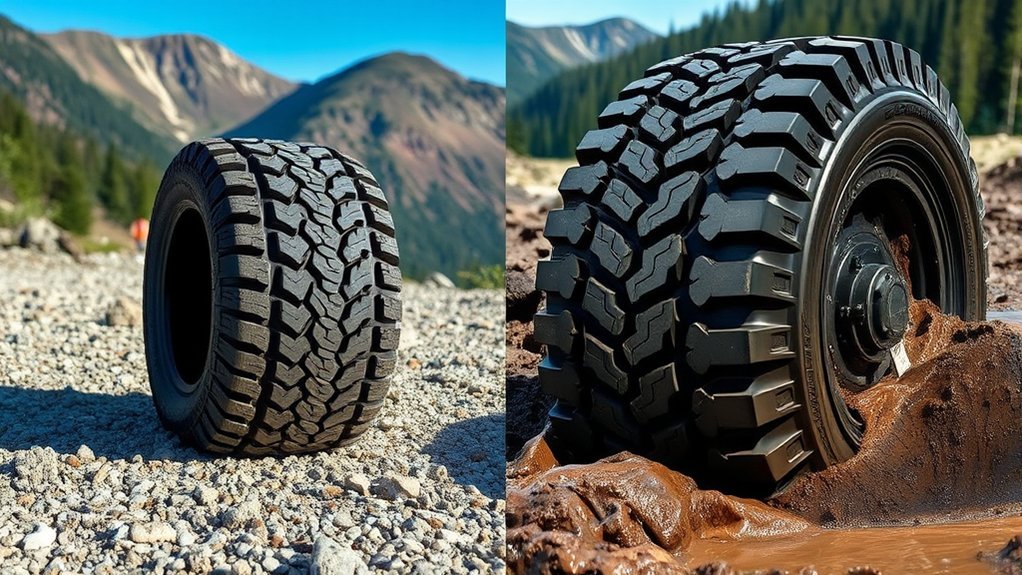
When deciding between all-terrain and mud-terrain tires, think about your driving habits. If you need a tire for mixed conditions and everyday driving, all-terrain tires offer a balanced performance, better fuel efficiency, and a quieter ride. However, if you’re tackling extreme off-road environments, mud-terrain tires excel with aggressive tread patterns. Consider factors like cost, longevity, and specific terrain needs to make the best choice. Stick around to discover more about how each option fits your lifestyle.
All-Terrain vs. Mud-Terrain Tires: Key Features and Benefits
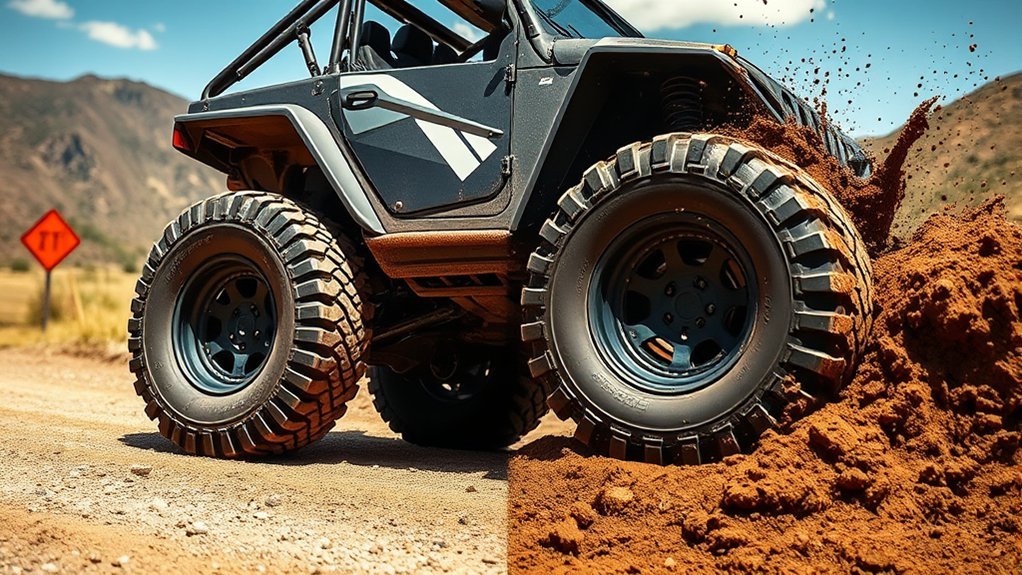
When you’re deciding between all-terrain and mud-terrain tires, it’s essential to understand their key features and benefits. All-terrain tires offer a balanced design, featuring versatile tread patterns that excel in both street and moderate off-road conditions. With a performance lifespan of 45,000 to 65,000 miles, they provide better fuel efficiency, averaging an extra MPG compared to mud-terrain options. You’ll enjoy quieter operation on highways, enhancing your driving comfort.
On the other hand, mud-terrain tires boast aggressive tread patterns that shine in deep mud and rocky terrains, but they come with a shorter lifespan of 35,000 to 45,000 miles. They tend to produce more road noise and can impact fuel efficiency negatively. When considering price points, all-terrain tires typically range from $200 to $400, making them a more budget-friendly choice. Ultimately, your selection should reflect your driving style and off-road capabilities.
Discovering the Benefits of Mud-Terrain Tires
All-terrain tires have their advantages, but if you’re an off-road enthusiast who frequently tackles rugged landscapes, mud-terrain tires are designed just for you. These tires feature larger tread lugs and wider voids, enhancing mud performance and ensuring maximum traction techniques in the toughest conditions. Their aggressive tread design, equipped with kick-out bars, helps expel mud trapped between tread blocks, delivering superior grip when you need it most.
While they excel in off-road scenarios, keep in mind that mud-terrain tires generally have a shorter lifespan of 35,000-45,000 miles and can produce higher road noise, making them less ideal for daily driving. Additionally, you might notice a slight dip in fuel efficiency—around -1 MPG—due to increased rolling resistance. However, if your heart beats for adventure and exploration, the benefits of mud-terrain tires far outweigh the drawbacks, empowering you to conquer any terrain with confidence.
Performance Comparison: All-Terrain vs. Mud-Terrain on Different Terrains
How do all-terrain and mud-terrain tires stack up against each other on various surfaces? The performance of these tires varies considerably based on terrain type, impacting your driving experience.
- Sand Performance: All-terrain tires shine here, offering grip and flotation, especially with lowered air pressure. Mud-terrain tires can get bogged down.
- Snow Handling: All-terrain tires feature compact tread designs that resist snow packing, making them more effective in snowy conditions compared to mud-terrain tires.
- Off-Road Terrain: For deep mud and rocky landscapes, mud-terrain tires excel due to their aggressive tread design and self-cleaning features, outperforming all-terrain options.
In terms of tire longevity, all-terrain tires generally provide better wear across various surfaces. If versatility and balanced performance are your priorities, all-terrain tires are your best bet, while mud-terrain tires are your go-to for extreme off-road challenges.
Noise Levels and Comfort: Which Tire Is Quieter?
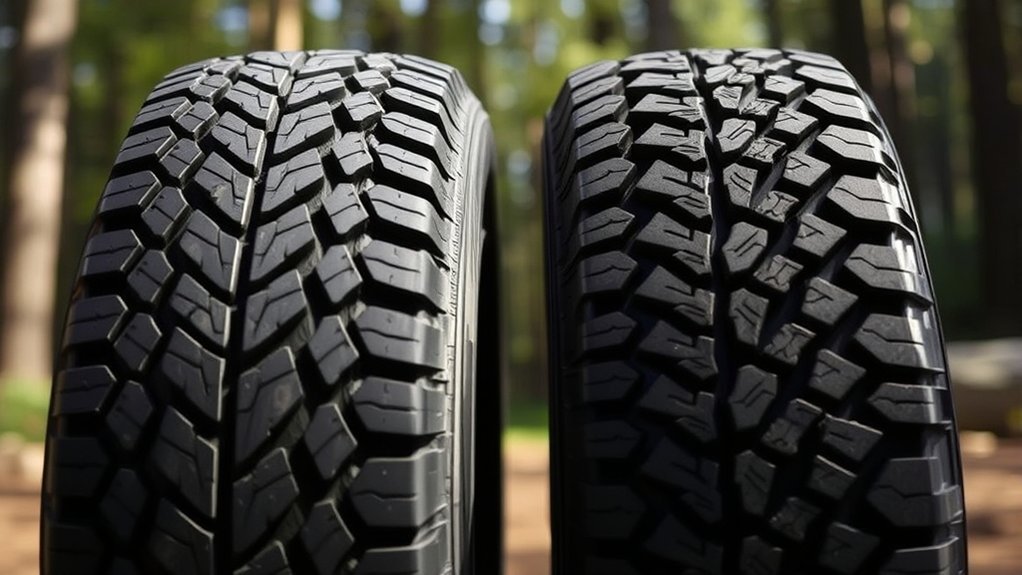
While you navigate the choices between all-terrain and mud-terrain tires, noise levels and comfort are essential factors to evaluate. All-terrain tires are designed for quieter operation, making them ideal for daily driving. Their tread patterns feature smaller lugs and tighter spacing, resulting in less vibration and reduced road noise. This design enhances your overall driving experience, especially on paved surfaces.
On the other hand, mud-terrain tires, with their aggressive tread patterns, tend to produce more road noise, which can become noticeable at highway speeds. Although modern mud-terrain radials have made strides in minimizing noise, they still lag behind all-terrain options regarding comfort and silence. If tire longevity and a smooth ride matter to you, all-terrain tires are likely the better choice. In the quest for liberation on the road, prioritizing comfort and noise levels can greatly elevate your driving experience.
Cost Comparison: All-Terrain vs. Mud-Terrain Tires
When considering your tire options, understanding the cost implications between all-terrain and mud-terrain tires is essential. While mud-terrain tires may seem appealing, they come at a higher price. Here’s a breakdown:
- Initial Costs: All-terrain tires range from $200 to $400, while mud-terrain tires typically cost between $300 and $500.
- Tire Longevity: All-terrain tires offer a treadwear warranty of 50,000 to 65,000 miles, compared to mud-terrain’s 35,000 to 45,000 miles.
- Total Ownership Costs: Due to their longer lifespan, all-terrain tires generally incur lower ownership costs over time, making them a smarter investment for daily driving.
Ultimately, while the initial purchase might be higher for all-terrain tires, their durability and efficiency can lead to significant savings in the long run. Choose wisely to guarantee your driving experience remains liberating and cost-effective!
How Kansas City Weather Impacts Your Tire Decision
Kansas City’s weather swings dramatically, pushing you to reflect on how seasonal variations affect your tire choice. With scorching summers and frigid winters, all-terrain tires provide the durability and grip you need for both hot pavement and icy roads. Plus, with around 40 inches of annual rainfall, reliable traction becomes essential, making all-terrain tires the smarter option for year-round performance.
Seasonal Weather Variations
As the seasons shift in Kansas City, the varying weather conditions greatly influence your tire choice. You face distinct seasonal challenges that can impact your driving habits. Here are three key points to keep in mind:
- Hot Summers: With temperatures soaring past 100°F, all-terrain tires resist accelerated wear, ensuring durability.
- Cold Winters: In frigid conditions, these tires provide better traction, as their rubber compounds remain flexible compared to mud-terrain options.
- Heavy Rain: Kansas City’s average annual rainfall of about 40 inches makes reliable wet traction essential; all-terrain tires excel here with their siped tread design.
Understanding these factors will help you make an informed decision, ensuring safety and performance throughout the year.
Rain and Snow Conditions
Weather conditions in Kansas City can shift rapidly, creating challenges that directly affect your tire performance. With an average annual rainfall of around 40 inches, reliable wet traction is essential during heavy rainstorms. All-terrain tires shine here, featuring siped tread blocks that enhance grip on slippery roads, unlike mud-terrain tires which may struggle and even hydroplane at higher speeds. In winter, temperatures plummet, causing tire rubber to stiffen and reducing grip. All-terrain tires often outperform mud-terrain options in these frigid conditions, particularly those with 3PMSF certification, ensuring safer winter performance on snow and ice. Choosing the right tire can elevate your driving experience, granting you confidence in Kansas City’s unpredictable weather.
The Hybrid Tire Option: A Balanced Choice
If you’re looking for a tire that excels in both on-road comfort and off-road capability, hybrid tires might be the perfect fit for you. Options like the Nitto Ridge Grappler and General Grabber ATX offer impressive versatility across various terrains while minimizing road noise. These tires strike a balance between performance and practicality, making them a smart choice for drivers who regularly switch between different driving environments.
Versatility Across Terrains
While many drivers face the challenge of choosing between all-terrain and mud-terrain tires, hybrid options like the Nitto Ridge Grappler offer a compelling solution. These tires excel in terrain adaptability, making them ideal for diverse driving habits. Here’s why you might consider them:
- Balanced Performance: They combine aggressive off-road capability with on-road comfort, allowing you to switch seamlessly between terrains.
- Enhanced Traction: The variable pitch tread design provides excellent grip in various conditions, ensuring safety and control.
- Efficiency: Hybrid tires often extend tread life and improve fuel efficiency compared to traditional mud-terrain options, making them a smart choice for daily drivers.
With hybrid tires, you can enjoy the freedom of exploration without sacrificing comfort or performance.
Noise Reduction Benefits
Hybrid tires like the Nitto Ridge Grappler not only excel in versatility but also shine when it comes to noise reduction, making them an attractive choice for daily drivers. These tires feature variable pitch tread patterns that effectively minimize road noise while still providing excellent traction on diverse road conditions. Compared to traditional mud-terrain tires, hybrids offer a quieter ride, allowing you to enjoy your time behind the wheel without the constant drone of loud tires. Their reinforced sidewalls enhance durability and contribute to a smoother driving experience on paved surfaces. By balancing aggressive tread designs with noise reduction technologies, hybrid tires truly deliver a versatile solution for those seeking performance both on and off the beaten path.
Choosing Between All-Terrain and Mud-Terrain Tires?
How do you decide between all-terrain and mud-terrain tires when both have distinct advantages? Your choice hinges on your driving preferences and how you plan to use your vehicle. Consider these factors:
- Tire Longevity: All-terrain tires typically last 45,000-65,000 miles, while mud-terrain tires only reach 35,000-45,000 miles due to softer compounds.
- Fuel Efficiency: All-terrain tires deliver better fuel economy, averaging +1 MPG. Mud-terrain tires, on the other hand, may lower your fuel efficiency by -1 MPG.
- Cost: All-terrain options range from $200 to $400, while mud-terrain tires usually cost $300 to $500, making the latter pricier by about $50.
If you’re traversing mixed terrains, all-terrain tires provide versatility; however, if you’re tackling deep mud, mud-terrain tires are your best bet. Choose wisely to match your driving needs.
Frequently Asked Questions
How Do Tire Sizes Affect Performance Between A/T and M/T Tires?
Tire sizes directly impact performance; larger tires with aggressive tread patterns enhance off-road capabilities but can increase road noise and reduce fuel efficiency. Smaller tires often offer better handling on pavement, balancing performance across terrains.
Can I Use M/T Tires for Daily Commuting?
Yes, you can use M/T tires for daily commuting, but expect increased road noise and lower fuel efficiency. Their aggressive tread patterns may compromise comfort level, impacting your ride during those everyday drives. Choose wisely!
What Is the Lifespan Difference Between A/T and M/T Tires?
All-terrain tires generally last longer than mud-terrain tires due to their better tread wear and durability comparison. If you prioritize longevity and versatility, all-terrain might be your best fit for everyday driving needs.
Do A/T or M/T Tires Provide Better Traction on Snow?
A/T tires generally offer better traction on snow conditions due to their versatile tread patterns, while M/T tires, designed for extreme off-road, may struggle. For your needs, consider this tire comparison carefully before deciding.
How Does Tire Pressure Impact Performance for A/T and M/T Tires?
Ever wondered how tire inflation affects your grip? Proper pressure boosts performance metrics, ensuring ideal traction and handling. Too low or high, and you risk losing control, especially in challenging conditions. Keep those tires balanced for adventure!
Conclusion
In the epic showdown between all-terrain and mud-terrain tires, your choice can feel like picking a superhero for your adventures! If you crave versatility, all-terrain tires might just be your trusty sidekick. But if conquering the mud is your ultimate quest, mud-terrain tires are the unstoppable force. Whichever you choose, gear up for a thrilling ride that’ll turn heads and tackle any terrain Mother Nature throws your way! So, what’s it gonna be?

Related Articles

Load Range C vs E for a 4Runner: Does Weight Matter
Heavier Load E tires add 32 pounds of unsprung mass—but is that trade-off worth it for your 4Runner?
Read More
Do 5th Gen 4Runner Wheels Fit the 6th Gen
Not all 5th Gen 4Runner wheels fit the 6th Gen, but the reasons behind this may surprise you. Discover the crucial details inside.
Read More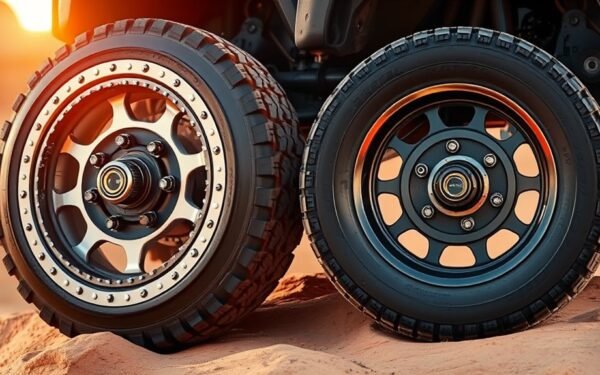
Beadlock vs Non-Beadlock Wheels: Do You Really Need Them
Just how low do you air down before risking a tire disaster on the trail?
Read More