
How to Store Seasonal Tires for Your Toyota 4Runner
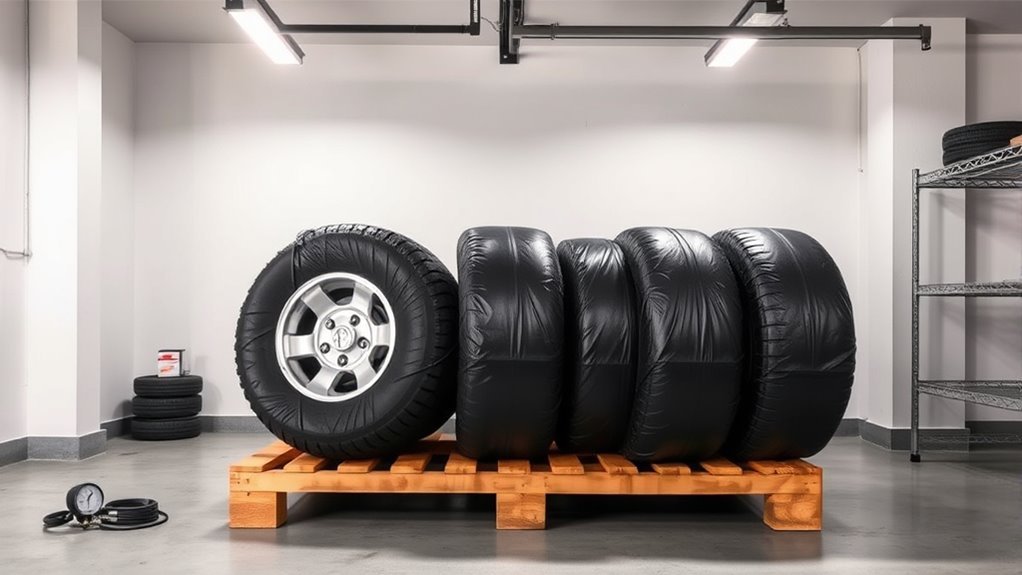
Storing your Toyota 4Runner’s seasonal tires correctly is mostly about controlling four things: sunlight, moisture, heat, and tire shape. The best method depends on whether the tires are mounted on wheels, unmounted, or still supporting the vehicle. Clean and dry them first, store them indoors whenever possible, keep them away from chemicals and ozone sources, and inspect them before they go back on the road.
Quick Answer
Store 4Runner seasonal tires in a clean, dry, cool indoor space away from sunlight, heat, chemicals, and ozone sources. Clean and dry each tire, bag it only after moisture is gone, and store mounted tires stacked or hung. Store unmounted tires upright or on a proper rack, then inspect and set pressure before reinstalling.
Key Takeaways
- Indoor storage is best: choose a clean, dry, cool, dark, well-ventilated spot.
- Clean tires with mild soap and water, remove stones from tread grooves, dry completely, and skip tire dressing before storage.
- Mounted tire-and-wheel assemblies are usually best stacked or hung; unmounted tires are usually best stored upright or on a proper rack.
- Do not store tires directly on bare concrete, asphalt, oily floors, or near furnaces, generators, electric motors, welders, or battery chargers.
- Before reinstalling, check tread, sidewalls, DOT/TIN age, bead area, valve stems, wheel condition, and pressure.
At a Glance
| Time Required | 30–60 minutes for cleaning, drying, labeling, bagging, and storing a set of four tires |
| Difficulty | Easy, as long as the tires are lifted safely and stored securely |
| Tools Needed | Mild soap, water, tire brush, microfiber towels, tire pressure gauge, labels or chalk, opaque bags, tape, pallet/rack/clean wood barrier |
| Cost | Low for home storage; higher if you use a dealer or tire shop storage program |
Choose Where to Store Your 4Runner Tires: Garage, Basement, or Dealer
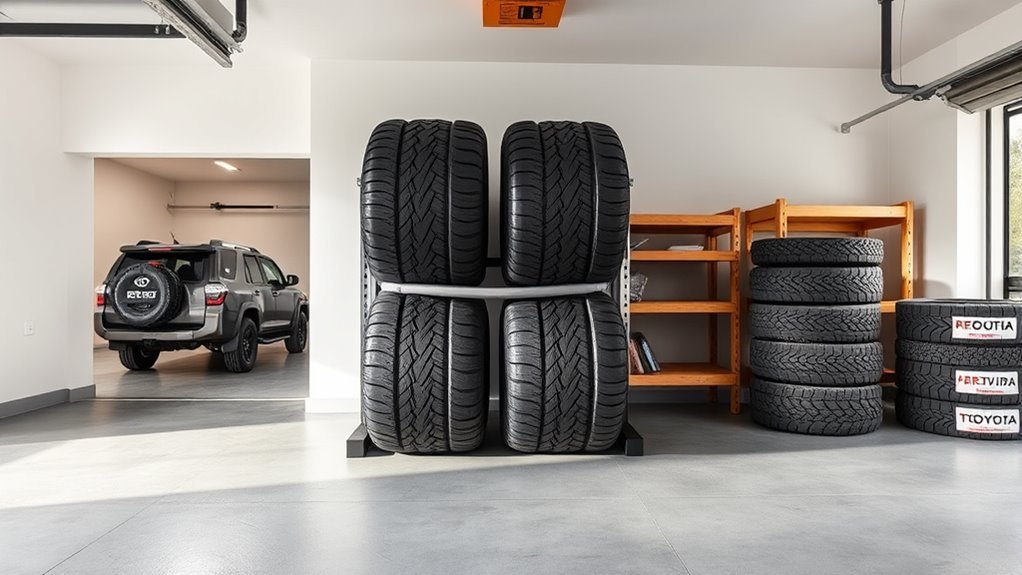
The best storage spot is indoors: a garage, basement, utility room, or professional tire-storage facility. The goal is a clean, dry, cool, dark space with mild ventilation and no chemical exposure. The U.S. Tire Manufacturers Association recommends keeping tires away from heat, sunlight, chemicals, petroleum-based products, and ozone-generating equipment.
A garage can work well if it stays dry and the tires are raised off the floor. A basement is often better because temperatures are more stable, but only if it is dry and away from furnaces, sump pumps, electric motors, or stored fuel. Dealer or tire-shop storage is worth considering if you lack clean indoor space or do not want to transport heavy 4Runner tires yourself.
Note: Before paying for dealer storage, ask where the tires are kept, whether the area is indoors, whether tires are protected from sunlight and moisture, and whether the shop inspects them before reinstalling.
Outdoor storage should be a last resort. If you must store tires outside for a short time, raise them off the ground and use an opaque waterproof cover with vent openings so moisture does not build up underneath.
[Products Worth Considering]

The Kurgo Seasonal Tire Tote helps protect your car interior, clothes, and garage from tire grime, brake dust, and residue during seasonal tire changes. Its universal design fits most passenger tires between 22" and 31" in diameter, making storage and transport simpler with less mess. Built for rugged, repeated use, it’s machine washable for easy care and comes with a lifetime warranty.

Keep RV, trailer, or truck dual-axle tires protected with waterproof, UV-resistant covers that help guard against sunlight, snow, rust, and dirt. The dual tire covers are easy to install with a rope/bungee fastener for a stable fit that won’t easily slip. Designed for 27–30 inch diameter wheels, they help maintain tire condition through harsh weather.

Mount your spare tire off the floor and onto your wall using an e-track spare tire carrier that helps you stay organized in trailers, garages, and warehouses. The upgraded double-fittings design improves stability versus single-fittings and supports greater load bearing. Install by snapping into e-track anchor points and securing the tire with a lug-nut style bolt setup for quick, secure storage.
Clean Your 4Runner Tires and Wheels Before Bagging
Before cleaning, mark each tire’s position: LF for left front, RF for right front, LR for left rear, and RR for right rear. That makes it easier to rotate the tires properly when you reinstall them. Then inspect each tire for cuts, bulges, uneven wear, nails, stones, or sidewall cracking.
Remove All Debris
Scrub each tire with mild soap, water, and a tire brush. Work the brush into the tread grooves to remove stones, road salt, mud, and brake dust. If the tires are mounted on wheels, clean the wheels too, especially around the bead area and valve stem.
- Brush the tread grooves: remove trapped stones, dirt, and road debris.
- Rinse thoroughly: leftover soap, salt, or chemicals can sit against the rubber or wheel finish during storage.
- Inspect while cleaning: look for punctures, cuts, exposed cords, bulges, and uneven wear.
Dry Thoroughly First
Do not bag wet tires. Moisture trapped in a sealed bag can encourage corrosion on wheels and can create a damp storage environment. Dry the tread, sidewalls, bead area, wheel face, and valve stem with a clean towel, then let the tires air-dry fully before bagging.
Warning: Do not apply tire shine or dressing before storage. Clean rubber is better for storage because oily dressings can trap grime or interact with the tire surface over time.
Bag Your Tires to Block Moisture, UV, and Garage Debris
Once the tires are completely dry, place each tire in its own large opaque plastic bag. Lawn-and-leaf bags work if they are thick enough and large enough. Push out excess air, close the bag tightly with tape, and keep the bag away from sharp edges.
Individual bags help reduce exposure to dust, moisture, UV light, and airborne contaminants. They are especially useful in garages where tires might otherwise sit near cleaners, fuel, oil, or seasonal clutter.
- Use one bag per tire: individual storage limits transfer of grime and moisture.
- Keep bags opaque: blocking light helps reduce UV exposure.
- Inspect bags monthly: replace torn bags and dry any tire that shows signs of moisture inside the bag.
Pro Tip: Add a simple label to each bag with tire position, storage date, tire size, and current tread depth. You will know exactly where each tire belongs when seasonal changeover time returns.
Set Tire Pressure Correctly Before and After Storage
Pressure advice depends on the storage situation. A loose tire without a wheel does not hold air. A tire mounted on a wheel but stored off the vehicle may not need full road-use pressure during storage. A tire still supporting the 4Runner needs a different approach because it carries vehicle weight.
Tires Mounted on Wheels but Stored Off the Vehicle
If your seasonal tires are mounted on rims, follow the tire manufacturer’s or storage shop’s pressure recommendation for off-vehicle storage. Industry guidance is not identical across sources: some tire-industry material recommends partial inflation for mounted stored tires, while some tire makers recommend a specific low pressure for loose mounted assemblies. Before the tires go back on the 4Runner, always adjust them to the pressure shown on the driver-door tire placard or in your Toyota owner information.
Tires Still on the Vehicle During Long-Term Storage
If the tires remain on the 4Runner during storage, the best protection is to remove the vehicle’s weight from the tires with proper stands or blocks. If that is not practical, unload the vehicle as much as possible, park on a clean, level, well-drained surface, keep the tires properly inflated, and move the vehicle periodically to reduce flat-spotting.
TPMS Considerations
Your 4Runner’s tire pressure monitoring system helps warn you about underinflation, but it does not replace a pressure gauge. NHTSA TireWise notes that TPMS is not a substitute for regular tire maintenance. Check pressure with an accurate gauge before driving on the stored set, and expect cold weather to lower pressure readings.
Flat Spot Prevention
Flat spots happen when one part of a tire supports weight for too long. They are more likely when tires are underinflated, left on a parked vehicle, or stored in the wrong position. Mild temporary flat spots may smooth out after driving, but persistent vibration, visible distortion, sidewall cracks, or bulges should be checked by a tire professional before the tire is used.
Store Tires by Type: Mounted vs. Unmounted
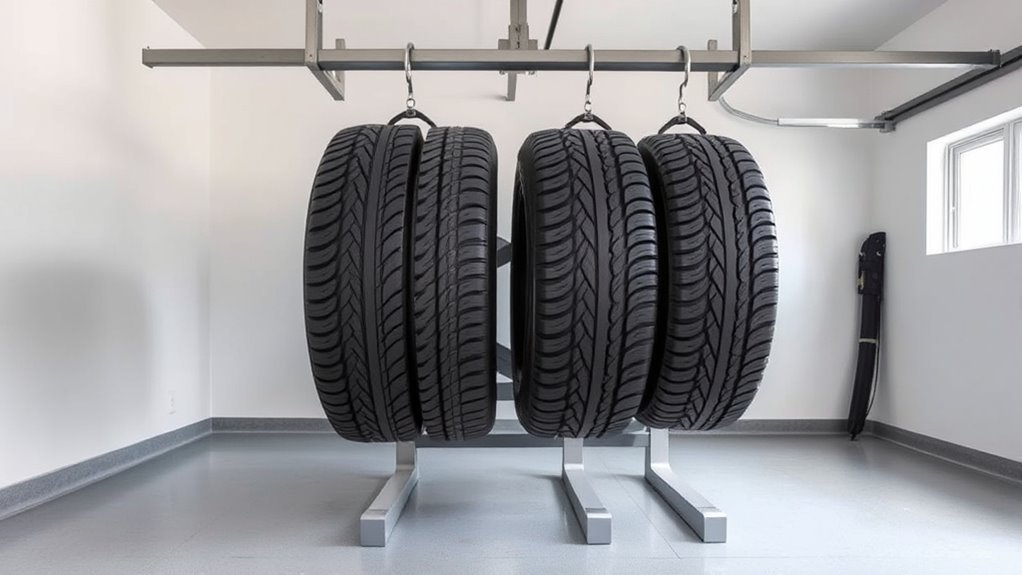
The safest home-storage method depends on whether the tire is mounted on a wheel. Do not treat every tire the same.
| Tire Setup | Best Storage Position | Key Precaution |
|---|---|---|
| Mounted on wheels | Stack flat on the sidewall or hang securely by the wheel | Do not let the tire’s tread carry the wheel’s weight upright for long periods |
| Unmounted tire only | Store upright on tread or on a proper tire rack | Rotate or reposition occasionally so one contact patch is not stressed all season |
| Limited floor storage | Use a clean pallet, rack, plywood, or carpet barrier | Never store directly on bare concrete, oily floors, black asphalt, or wet surfaces |
For a 4Runner’s larger tire sizes, stability matters. If you stack mounted wheel-and-tire assemblies, keep the stack low and stable. If you hang mounted tires, use a strong wall rack or hooks rated for the load and anchored into studs or a solid structure. Do not hang unmounted tires from hooks because the bead area can distort.
Avoid Chemicals, Furnaces, and Heat Sources That Degrade Rubber
Good positioning will not help if the storage area attacks the rubber. Tires should be kept away from sunlight, high heat, freezing extremes, petroleum products, solvents, and ozone sources.
- Keep chemicals away: gasoline, oil, brake fluid, cleaners, solvents, grease, and corrosive products can damage rubber or wheels.
- Avoid heat and sunlight: do not store tires beside furnaces, hot pipes, radiators, south-facing windows, or direct sun.
- Watch for ozone sources: keep tires away from electric motors, battery chargers, generators, welders, sump pumps, and similar equipment.
Choose a storage surface that is clean, smooth, dry, and raised. A pallet, rack, or sheet of clean plywood is better than bare concrete because it helps reduce moisture exposure and keeps the tires away from floor contaminants.
Monthly 4Runner Tire Checks: Pressure, Cracks, and Shape
Do a quick monthly check while the tires are stored. It only takes a few minutes and can prevent surprises when the season changes.
| Check | Frequency | Action Required |
|---|---|---|
| Moisture in bags | Monthly | Open the bag, dry the tire fully, and replace the bag if needed |
| Cracks, bulges, cuts, or weather checking | Monthly | Have a tire professional inspect questionable damage before reinstalling |
| Shape and contact point | Monthly | Rotate upright unmounted tires or restack mounted tires so pressure is not always on the same spot |
| Pressure on mounted assemblies | Before reinstalling | Set to the Toyota placard pressure before driving |
Also check the DOT/TIN date code on the tire sidewall. The last four digits show the week and year the tire was made. For example, “2521” means the tire was made in the 25th week of 2021. Age alone is not the only factor, but older tires deserve closer inspection even if the tread looks deep.
[Products Worth Considering]

Upgrade your tires with authentic 40mm caliber bullet-shaped stem caps designed to help keep inflation consistent and secure. The patented insert helps protect TPMS and the lacquer coating resists tarnishing for a stylish look. Easy to install on standard Schrader valve stems, these caps fit cars, trucks, SUVs, motorcycles, BMX and bicycles.

Blackline Blackout is a water-based trim and tire dressing that restores rubber, vinyl, and plastic with a rich satin, blackout look. Its no-sling formula dries quickly and helps prevent messy transfer onto paint. The coating repels water and offers UV protection to help prevent fading, cracking, and discoloration for a clean, long-lasting finish.
When Dealer Storage Is Worth the Cost for Your 4Runner
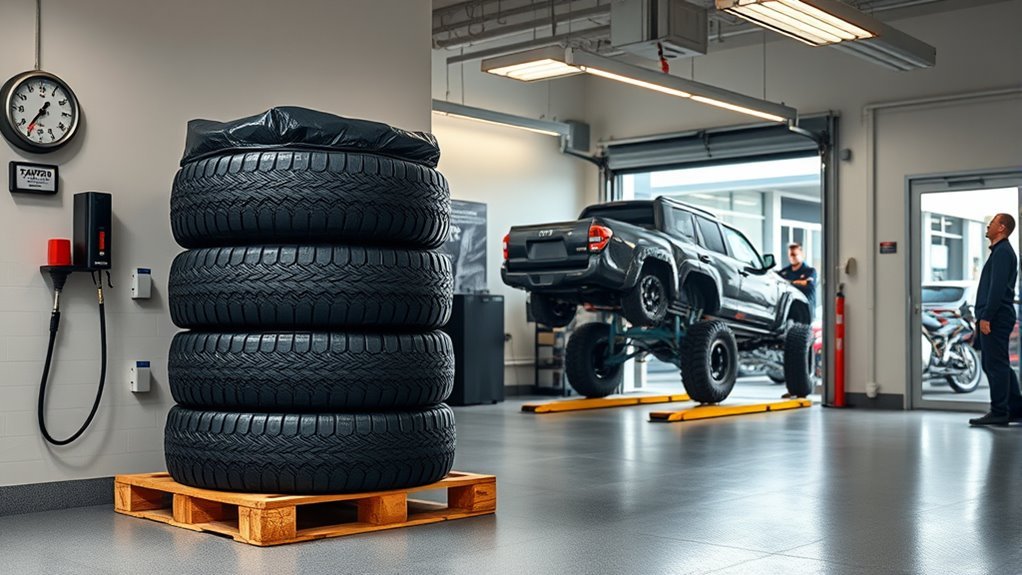
Dealer or tire-shop storage can make sense if you do not have a clean indoor space, if the tires are difficult to lift safely, or if you want the same shop to inspect and swap them each season. A full 4Runner tire-and-wheel set is bulky, and professional storage can free up garage space while reducing the risk of poor home-storage conditions.
Space Savings Benefit
A seasonal set of 4Runner tires can take up a noticeable corner of a garage, especially if the tires are mounted on wheels. Professional storage removes that clutter and keeps the tires out of walkways, tool areas, and parking space.
Climate Protection Value
Good professional storage should reduce exposure to UV light, moisture, heat swings, and chemical contamination. That matters because tire materials age from service, storage, and environmental conditions. Ask the facility whether tires are stored indoors, raised off the floor, protected from sunlight, and kept away from ozone-generating equipment.
Convenience Factor Analysis
The biggest advantage is simplicity. You avoid loading heavy tires into the 4Runner, carrying them through the garage, and finding a safe place to stack them. A shop can also check tread depth, sidewall condition, pressure, wheel corrosion, and valve stems during the seasonal swap.
Inspect Stored Tires Before Reinstalling on Your 4Runner
Before reinstalling stored tires, give each one a full inspection. If you are not comfortable judging tire damage, have a tire professional inspect the set before it goes back on the vehicle.
- Check tread depth: replace tires that are worn to the legal limit or that no longer suit the season you are driving in.
- Look at the sidewalls: cracks, cuts, bulges, exposed cords, or severe weather checking are warning signs.
- Inspect the bead area: dirt, rust, or corrosion can prevent a proper seal.
- Check the wheels: look for bends, corrosion, damaged lug seats, or cracked finishes.
- Check valve stems and caps: replace damaged stems and use caps to keep dirt out.
- Set pressure before driving: inflate to the Toyota tire placard pressure when the tires are cold.
- Watch TPMS after installation: if the warning light stays on after proper inflation, follow your owner’s manual or ask a tire shop to check the system.
Troubleshooting: Flat Spots, Cracking, and When to Replace
Even properly stored tires can develop problems, especially if they are older or were stored in heat, sun, moisture, or chemical exposure before you got them.
- Flat spots: light temporary flat spots may smooth out after a short drive, but vibration that does not go away needs professional inspection.
- Cracking: replace or professionally inspect tires with deep sidewall cracks, tread cracks, or weather checking that looks severe.
- Bulges: do not drive on a tire with a sidewall bulge. It can indicate internal damage.
- Persistent air loss: check the tire, wheel, bead area, and valve stem for leaks before using the tire.
- Age concerns: many tire and vehicle manufacturers recommend replacing tires somewhere between six and 10 years old regardless of tread. Check the DOT/TIN date and follow the tire maker’s guidance.
If a stored tire has cracks, bulges, vibration, repeated pressure loss, or unknown age, treat it as a safety issue—not a storage inconvenience.
Frequently Asked Questions
How do you properly store seasonal tires?
Clean and dry the tires, remove stones and debris, mark their original positions, bag each dry tire, and store the set in a clean, cool, dry indoor space away from sunlight, heat, chemicals, and ozone sources. Keep tires raised off bare concrete and inspect them before reinstalling.
Is it better to store winter tires upright or flat?
It depends on whether the tires are mounted. Winter tires mounted on wheels are usually best stacked or hung. Unmounted winter tires are usually best stored upright on tread or on a proper rack, with occasional rotation to avoid stressing one contact patch all season.
Can I store my winter tires in my shed?
A shed is acceptable only if it stays dry, dark, clean, and reasonably temperature-stable. Raise the tires off the floor, keep them away from fuel, oil, lawn chemicals, electric motors, and direct sunlight, and use opaque bags or covers after the tires are fully dry.
Should I inflate 4Runner tires before storing them?
For tires still on the vehicle, keep them at the recommended cold pressure and move or unload the vehicle during long storage. For off-vehicle mounted tires, follow the tire manufacturer or storage shop’s recommendation. Before driving, always set pressure to the Toyota placard value.
How long can seasonal tires be stored?
Properly stored tires can sit through an off-season without issue, but all tires age over time. Check the DOT/TIN date code, inspect for cracks and pressure loss, and follow the tire manufacturer’s age guidance. Many tire and vehicle makers recommend replacement between six and 10 years regardless of tread.
Do I need professional tire storage?
You do not need it if you have a clean, dry, indoor space and can store the tires correctly. Professional storage is worth considering if your garage is damp, hot, crowded, or exposed to chemicals, or if you want the shop to inspect and swap the tires each season.
Conclusion
Store your 4Runner’s seasonal tires like safety equipment, not garage clutter. Clean and dry them, bag them only when moisture is gone, choose the right position for mounted or unmounted tires, keep them raised off bare floors, and protect them from sunlight, heat, chemicals, and ozone. A few careful storage habits will help the tires stay safer, cleaner, and ready for the next seasonal swap.
Sources
- U.S. Tire Manufacturers Association — Tire Care & Safety — backs up clean, dry, cool storage and avoidance of heat, sunlight, chemicals, and ozone sources.
- USTMA Tire Storage Recommendations PDF — supports indoor storage, raised surfaces, vented outdoor covers, and long-term vehicle-storage precautions.
- NHTSA TireWise — supports TPMS, tire maintenance, tire aging, DOT/TIN date-code checks, and replacement considerations.
- Toyota 4Runner Owner Information — Tire Inflation Pressure — supports using Toyota owner guidance and the placard pressure before driving.
- Michelin — Storing My Tires — supports cleaning, drying, marking tire position, indoor storage, and mounted vs. unmounted positioning.
- Continental Tire — Seven Tips for Storing Tires — supports bagging dry tires, avoiding tire dressing, and keeping tires away from UV, heat, and ozone sources.

Related Articles

When to Switch From All-Season to Winter Tires on a 4Runner
Ineffective all-season tires in cold weather can jeopardize your safety—discover when to make the crucial switch for better traction and handling.
Read More
4Runner Tire Mileage: How Many Miles Should They Last
Curious about how long your 4Runner tires should last? Discover essential tips and factors that influence tire longevity.
Read More
How Long Do Toyota 4Runner Tires Typically Last
How long do Toyota 4Runner tires typically last? Discover the factors that influence tire longevity and essential tips for maintenance.
Read More