
Choosing 4Runner Tires for Overlanding Adventures
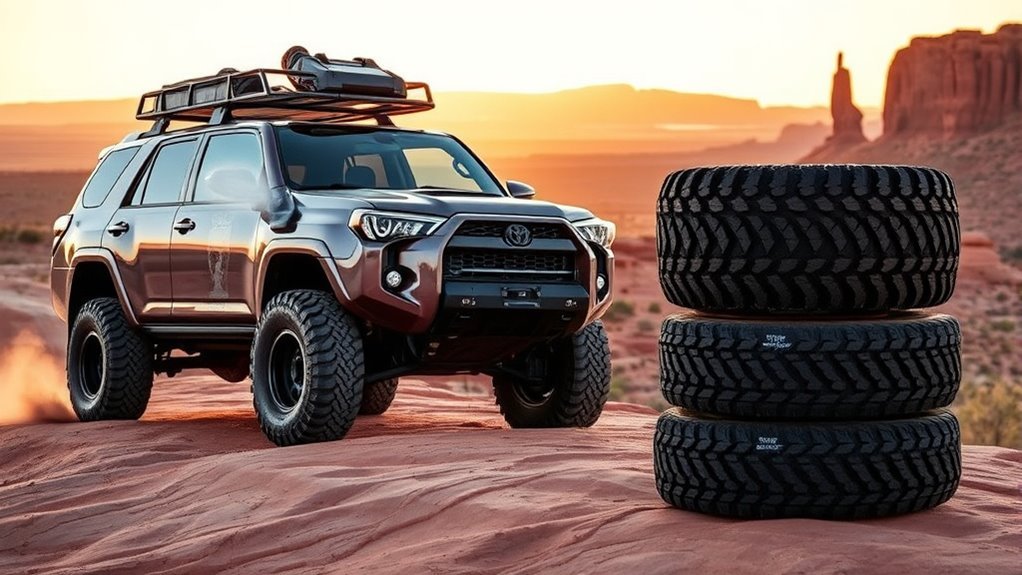
Choosing the best overlanding tires for a Toyota 4Runner starts with one honest question: how much tire do you actually need? For most fifth-generation 4Runners from 2010–2024, a 275/70R17 or 285/70R17 all-terrain is the sweet spot for extra clearance, trail grip, and daily drivability. Bigger tires can work, but they bring rubbing, weight, MPG loss, spare-fitment problems, and speedometer error if you do not plan the setup carefully.
Quick Answer
For most fifth-gen 4Runner overlanding builds, 285/70R17 all-terrain tires are the best balance of clearance and capability, but stock rigs may need minor trimming. Lighter daily-driven builds usually ride better on C-load or SL/XL tires, while heavily loaded rigs may justify E-load LT tires.
Key Takeaways
- 265/70R17 is the safe stock-size baseline for many fifth-gen 4Runners with 17-inch wheels; 275/70R17 is the low-drama upgrade.
- 285/70R17 is the popular “33-inch” size, but it is really about 32.7 inches tall and may rub depending on wheel offset, alignment, tire model, and suspension sag.
- Do not choose E-load tires just because they sound tougher. Match the tire’s load index, load range, and inflation needs to your actual payload.
- All-terrain tires are the best match for most overlanding. Mud-terrains are better for deep mud and aggressive rock work, but they usually cost more in noise, weight, wet-road grip, and fuel economy.
- Your spare must match your running tires closely enough to avoid 4WD driveline stress, and it must physically fit in your spare location.
At a Glance
| Time Required | 30–60 minutes to compare sizes and inspect clearance; 2–4 hours for installation, alignment, and test-fit checks. |
| Difficulty | Moderate. Tire choice is simple; fitment, load rating, alignment, and spare compatibility need careful checking. |
| Tools Needed | Tire-size calculator, flashlight, tire-pressure gauge, torque wrench, jack/stands if checking clearance, and a professional alignment after installation. |
| Cost | Usually $900–$1,800+ for five quality all-terrain tires, plus mounting, balancing, alignment, TPMS service, and any trimming or lift work. |
Note: This guide focuses on fifth-generation Toyota 4Runners from 2010–2024. The 2025+ sixth-generation 4Runner uses different factory wheel and tire combinations, and Toyota offers some trims with factory 33-inch tires on 18-inch wheels. Do not copy fifth-gen fitment advice onto a sixth-gen truck without checking that platform specifically.
What Tire Size Actually Fits Your 4Runner
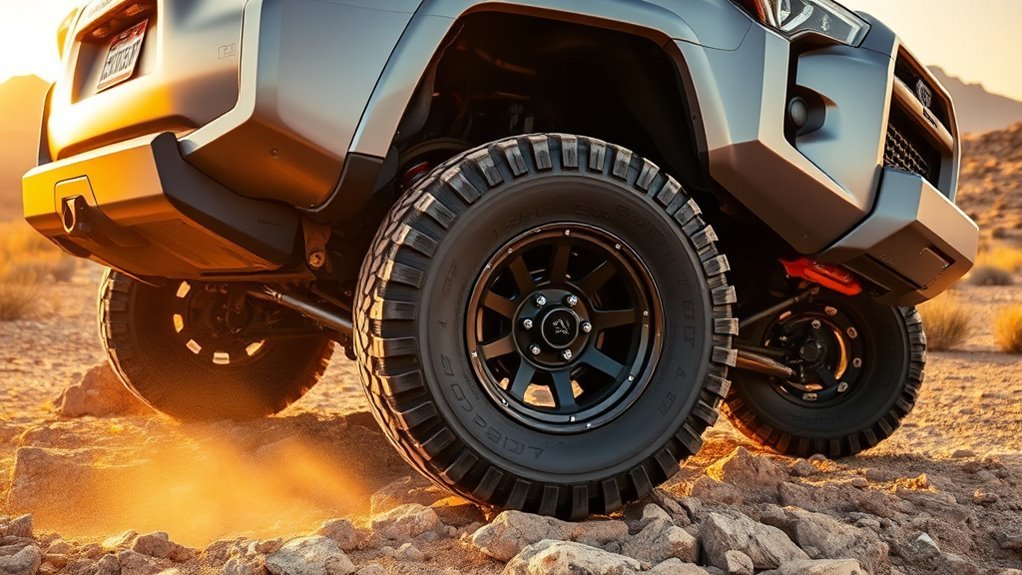
Tire size sets the whole build. It changes ground clearance, gearing feel, braking distance, wheel-well clearance, spare fitment, and speedometer accuracy. The common stock size for many fifth-gen 4Runners with 17-inch wheels is 265/70R17, while some 20-inch trims use 245/60R20. Before ordering anything, check the tire placard on your driver-side door jamb and confirm your wheel diameter.
| Tire Size | Approx. Diameter | Best For | Fitment Notes |
|---|---|---|---|
| 265/70R17 | 31.6 in. | Stock replacement, daily driving, light trails | Usually no trimming on factory 17-inch setups. |
| 275/70R17 | 32.2 in. | Mild overlanding, better stance, low-drama upgrade | Often fits with minimal issues, but check mud flaps and liner clearance. |
| 285/70R17 | 32.7 in. | Most popular “33-inch” overlanding setup | May need trimming, caster adjustment, mud-flap removal, or lift depending on tire and wheel offset. |
| 295/70R17 | 33.3 in. | More aggressive trail builds | More likely to need lift, body-mount clearance work, and careful wheel selection. |
| 285/75R17 | 33.8 in. | Tall, narrow-ish trail builds | Usually not a simple stock-suspension fit. Expect trimming and more careful setup. |
For most overlanding scenarios, 285/70R17 is the practical ceiling before fitment work becomes part of the plan. It adds clearance and a larger footprint without jumping into the weight and clearance problems of larger 34-inch-class setups. If you drive long highway miles, tow lightly, or keep the truck close to stock weight, a 275/70R17 may be the smarter choice.
Pro Tip: Two tires with the same printed size can measure differently once mounted. Aggressive shoulder lugs, tread depth, and sidewall shape can create rubbing even when the size looks safe on paper.
[Products Worth Considering]

EVOULTES heavy duty tire inflator with an integrated gauge delivers accurate pressure readings from 10–120 PSI, helping you inflate, deflate, and check tires in one tool. The 16.5-inch extended dual-head air chuck with swivel base reaches hard-to-access dual wheel valves on trucks and RVs. A brass trigger core and side-mounted air release valve make operation smooth, with standard 1/4" NPT threading and quick-connect compatibility for easy setup.
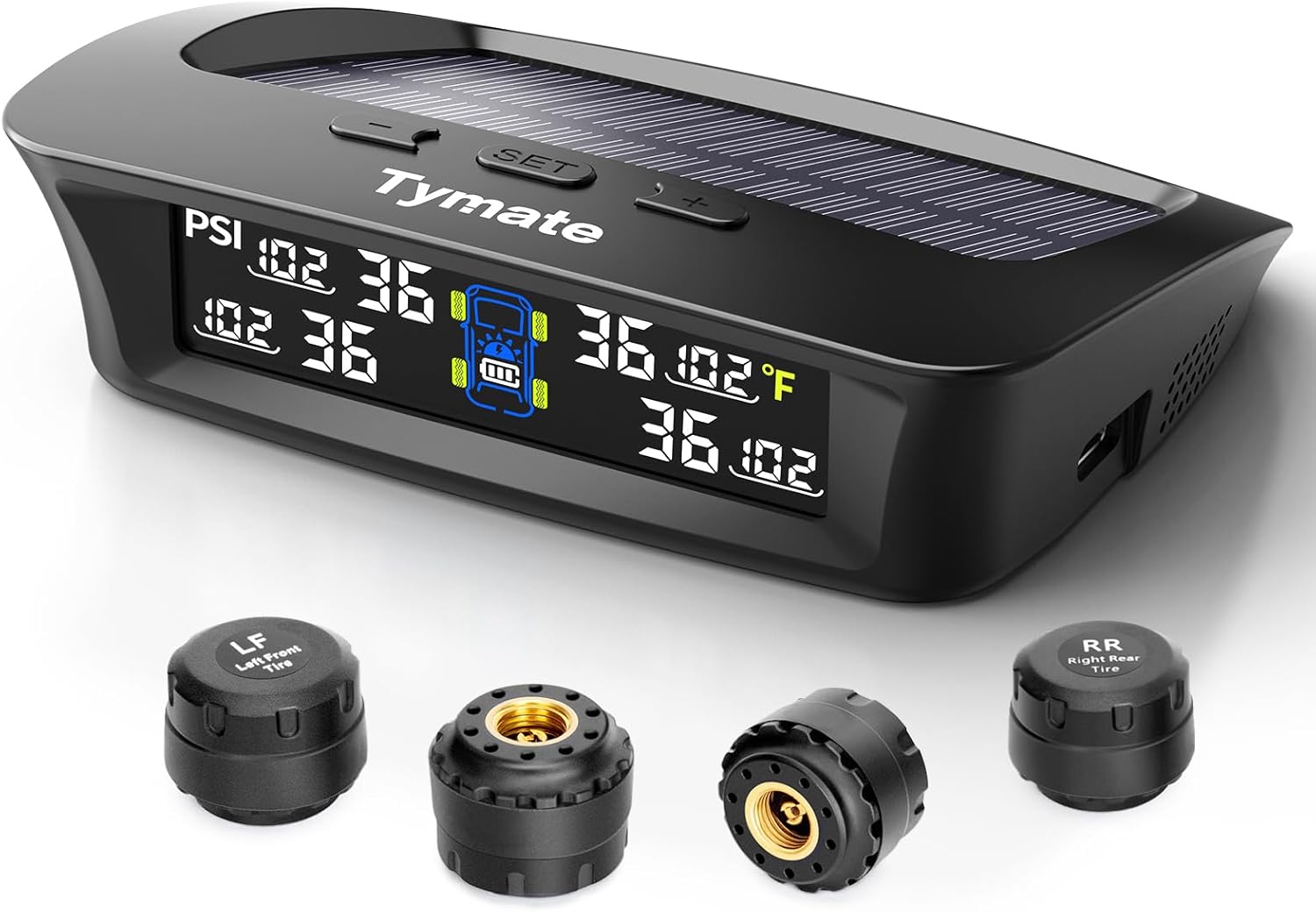
The Tymate TM3 RV TPMS delivers real-time tire pressure monitoring from 0 to 144 PSI with accurate readings and dependable wireless communication. It includes four external sensors with pre-pairing, six alarm modes for rapid leak, pressure extremes, temperature, and signal loss, plus an easy-reference setup for alert thresholds. Solar and USB-C charging help keep the display powered, while the color LCD and adaptive backlight improve visibility for safer driving and towing.

This portable cordless tire inflator delivers up to 160 PSI with fast 17 L/min airflow to help you quickly top up tires and get back on the road. It features dual power mode, running on a 21V rechargeable battery or a 12V DC adapter for convenient roadside use. An automatic shut-off with digital pressure gauge helps prevent overinflation, and a built-in LED light improves visibility in low-light conditions.
C-Rated or E-Rated? Pick Tires Strong Enough for Your Load
Load rating is where many 4Runner builds go wrong. A heavier tire is not automatically a better tire. You need enough load capacity for your actual truck weight, passengers, camping gear, water, armor, recovery gear, drawer system, fridge, rooftop tent, and tongue weight if you tow.
There are two related numbers to understand:
- Load index: the tire’s actual weight-carrying capacity at its rated pressure.
- Load range: the tire’s strength category, such as C, D, or E on many LT tires. C is often described as a 6-ply equivalent, while E is often described as a 10-ply equivalent, but modern tires do not necessarily have that many physical plies.
C-load LT tires can make sense for lighter overlanding rigs because they usually ride better and weigh less than E-load versions. E-load tires make more sense when the truck is consistently heavy, sees sharp-rock terrain, carries armor and roof weight, or tows. The tradeoff is simple: E-load tires usually bring tougher construction, but also more unsprung weight, firmer ride quality, slower acceleration feel, and more rolling resistance.
Warning: Do not inflate E-load tires to the maximum sidewall pressure for normal driving unless the tire maker’s load-inflation data and your vehicle load require it. For pavement, start with the vehicle placard’s cold pressure guidance and work with a tire professional if you changed tire type or load range.
All-Terrain vs. Mud-Terrain: Match the Tread to Your Trails
Most 4Runner overlanders are happiest on all-terrain tires. A good all-terrain gives you useful grip on gravel, dirt, sand, snow, wet pavement, and rocky two-tracks while staying livable on the highway. That matters when the trail is three hours away and the truck still has to commute on Monday.
Mud-terrain tires are more specialized. Their big voids and aggressive lugs clear mud better and can grip well on rocks, but they usually add noise, weight, vibration, wet-road compromise, and faster wear. If you spend more time on forest roads, desert tracks, snow-packed routes, and mixed highway miles than in deep mud, choose an all-terrain.
The best overlanding tire is not the biggest tire you can force under the fender. It is the tire that matches your payload, terrain, highway miles, spare location, and recovery plan.
- Choose all-terrain tires for mixed trails, highway comfort, wet-road confidence, and longer trips.
- Choose rugged-terrain tires if you want a more aggressive shoulder and stronger trail bias without going full mud-terrain.
- Choose mud-terrain tires for deep mud, aggressive rock crawling, and trail-first rigs where noise and wear are secondary.
- Look for 3PMSF if you regularly drive in winter conditions. It does not turn an all-terrain into a dedicated winter tire, but it is a useful severe-snow traction rating.
Best All-Terrain Tires for 4Runners: 7 Current Picks Compared
The right model depends on how you use the truck. A daily-driven 4Runner on fire roads needs a different tire than a fully armored rig crawling sharp ledges with a rooftop tent and recovery gear. Here are current all-terrain and rugged all-terrain options worth comparing.
| Tire | Best Use | Why It Fits a 4Runner Build |
|---|---|---|
| BFGoodrich All-Terrain T/A KO3 | Balanced trail and highway use | Current KO-series all-terrain with 3PMSF, strong sidewall reputation, and broad SUV/truck fitments. |
| Falken Wildpeak A/T4W | Value, snow, and mixed terrain | A strong successor to the A/T3W with severe-snow rating and good warranty coverage. |
| Toyo Open Country A/T III | Quiet all-terrain touring with trail ability | Good option for drivers who want wet-road manners, stability, and all-terrain bite without going too aggressive. |
| Nitto Terra Grappler G3 | Daily driving plus light-to-moderate overlanding | All-terrain tire with 3PMSF snow traction and long treadwear warranty options. |
| Goodyear Wrangler DuraTrac RT | Rugged all-terrain and winter-biased use | More aggressive than many highway-friendly all-terrains, with a rugged tread character for dirt, gravel, and work-truck duty. |
| General Grabber APT | Comfortable daily use with mild trail coverage | A quieter, less aggressive choice for owners who value road manners and snow rating over maximum mud performance. |
| Cooper Discoverer Road+Trail AT | Daily driver with weekend trail use | A road-friendly all-terrain option for owners who want durability and traction without a loud, heavy mud-terrain feel. |
Load Rating Selection
Start with your real build weight, not your wish-list build. A stock or lightly loaded 4Runner with camping bins and recovery boards may not need E-load tires. A 4Runner with steel bumpers, skids, winch, sliders, drawer system, water storage, fridge, rooftop tent, and passengers may need the higher load capacity and sidewall strength of LT tires.
Before buying, check:
- Door-jamb tire and loading placard
- GVWR and GAWR on the certification label
- Tire load index and load range
- Actual loaded axle weights if your build is heavy
- Recommended pressure for your tire type and load
Terrain Performance Comparison
Match the tread to the ground you actually drive:
- Gravel and forest roads: choose a durable all-terrain with good stone ejectors and balanced road manners.
- Snow and cold-weather travel: prioritize 3PMSF-rated all-terrains or dedicated winter tires if conditions are severe.
- Sharp rock: look for stronger sidewalls, reinforced shoulders, and a size that gives you enough sidewall height to air down carefully.
- Mud: choose a more open tread or rugged-terrain tire, but accept more noise and road compromise.
- Sand: flotation and correct pressure matter more than aggressive tread. Too much bite can dig.
Can You Run 33s on a Stock 4Runner? Fitment by Year
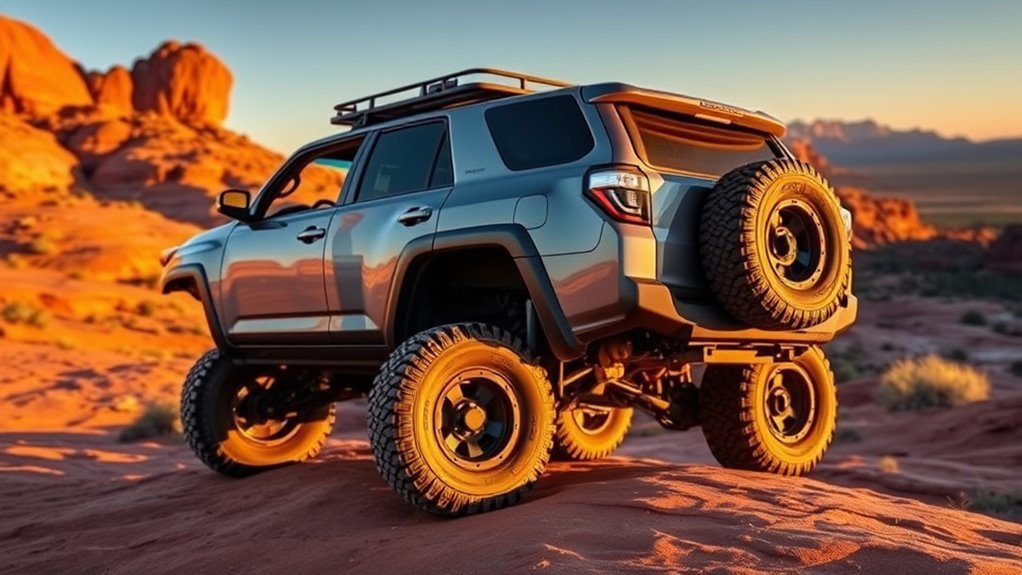
Many fifth-gen 4Runner owners run 285/70R17 tires, but “fits” does not always mean “fits perfectly.” You may clear the tire on flat pavement and still rub at full steering lock, while reversing, while stuffed into the fender off-road, or after adding camping weight that lowers the suspension.
Stock Clearance Limits
On stock suspension, the most common rub points are the front fender liner, mud flaps, lower bumper edge, body mount area, and sometimes the upper control arm depending on wheel offset and tire width. A 275/70R17 is usually easier to live with. A 285/70R17 often needs at least small adjustments.
Check clearance with the wheels turned fully left and right, then check again while reversing. If possible, cycle the suspension or test on uneven ground before assuming the setup is trail-ready.
Year-Specific Fitment
For fifth-gen 4Runners from 2010–2024, 17-inch trims are the easiest starting point because most popular overlanding sizes are available in 17-inch LT and all-terrain options. Earlier fourth-generation 4Runners from 2003–2009 have different clearance patterns and should not be treated as identical. Sixth-generation 2025+ 4Runners are a different platform and need separate fitment research.
Minor Trimming Needs
Minor trimming may include pushing the fender liner forward, trimming liner tabs, removing front mud flaps, trimming small bumper-edge areas, or adjusting caster during alignment. More aggressive setups may require body-mount clearance work or aftermarket upper control arms.
Note: Wheel offset matters as much as tire size. A lower-offset wheel can push the tire outward and create fender or bumper rub, while the wrong backspacing can create inner clearance problems.
Speedometer, Odometer, and Gearing Effects
Upsizing tires changes how far the truck travels per wheel revolution. Moving from a 265/70R17 tire at about 31.6 inches tall to a 285/70R17 at about 32.7 inches is roughly a 3.5% diameter increase. That means your speedometer and odometer may read low unless corrected.
You will also feel the larger tire in acceleration and braking. The truck may downshift more often on hills, feel heavier in stop-and-go traffic, and lose some responsiveness. These changes are normal, but they become more noticeable as tire weight and diameter increase.
[Products Worth Considering]

The JACO FlowPro Tire Inflator measures, inflates, and airs down tires up to 100 PSI with battery-free operation and ±2% accuracy after calibration. It features a glowing pressure dial for night visibility, a heavy-duty steel build with a hybrid hose, and a precision push-to-inflate thumb trigger. The patented Lightning Air Chuck locks on for a secure seal, and the kit includes quick-connect hardware for easy inline use with your air compressor.
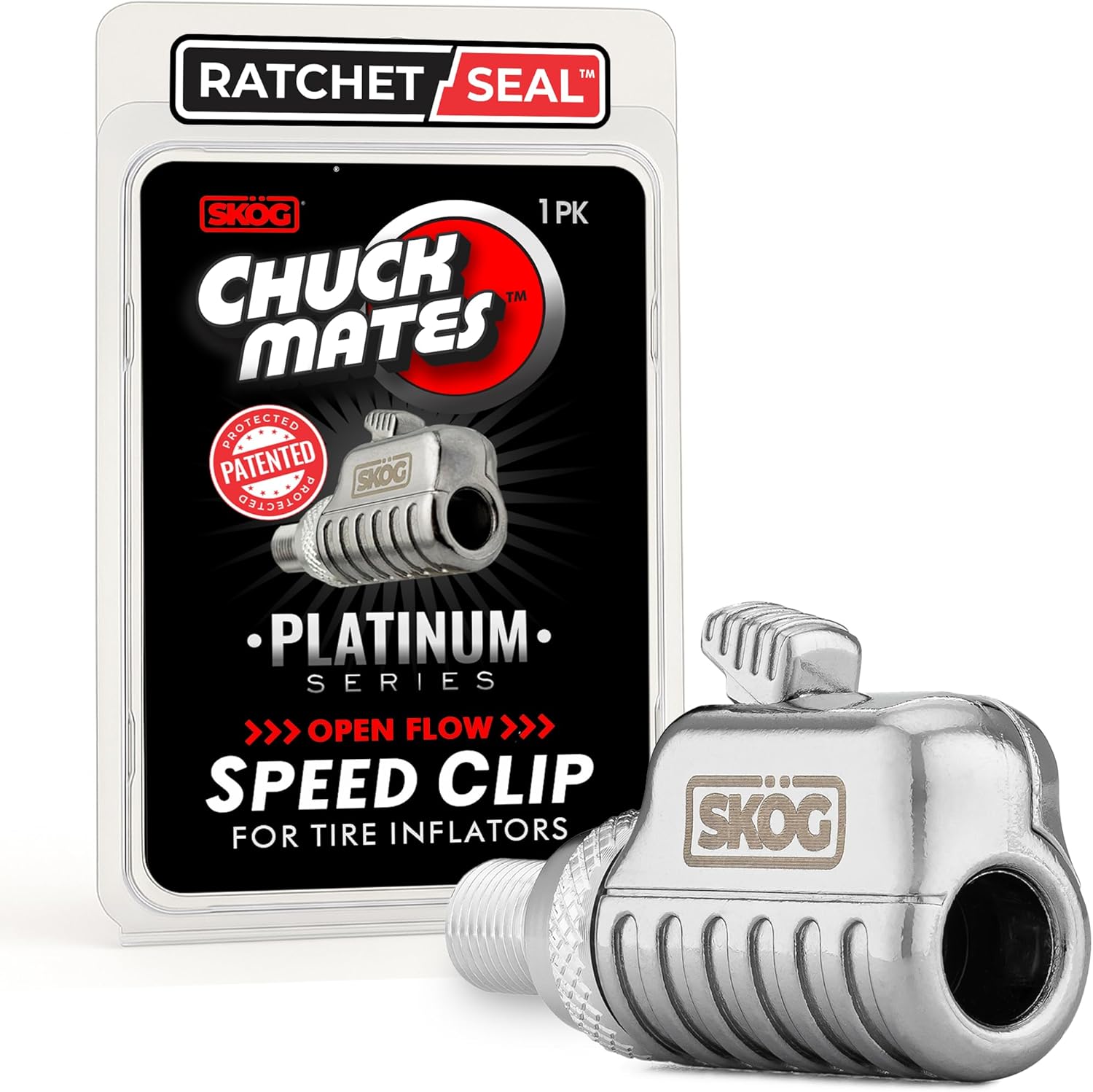
The SKÖG Chuck Mates Platinum uses a patented RatchetSeal push-to-connect system for instant, secure, air-tight attachment to standard tire valve stems. It features an easy push-button release for quick disconnects, plus 360° swivel open-flow airflow to keep operation smooth and kink-free. Universal Schrader compatibility makes it ideal for cars, bikes, motorcycles, RVs, trucks, and more.
4Runner MPG With 33s: Real Owner Reports
The EPA rating for a 2024 Toyota 4Runner 4WD is 17 MPG combined, 16 city, and 19 highway. Real-world mileage varies with roof racks, armor, driving speed, elevation, headwinds, tire weight, and tread aggressiveness. A switch to heavier 33-inch all-terrains commonly costs mileage, but the exact drop depends on the build.
| Driving Type | EPA / Stock Baseline | With 33-Inch Tires | Efficiency Tip |
|---|---|---|---|
| Highway | Up to 19 MPG on 2024 4WD EPA rating | Often 1–2+ MPG lower | Keep speeds moderate and remove unused roof gear |
| City | 16 MPG on 2024 4WD EPA rating | Usually drops more than highway MPG | Avoid heavy throttle and oversized tires if you commute daily |
| Mixed Use | 17 MPG combined on 2024 4WD EPA rating | Build weight decides the final number | Choose the lightest tire that still meets your load and terrain needs |
| Technical Off-Road | Not EPA-rated | Highly variable | Air down only for trail conditions, then reinflate before pavement |
Warning: Airing down improves ride and traction off-road, but do not drive highway speeds on trail pressure. Reinflate before returning to pavement and check pressure cold whenever possible.
Don’t Forget Your Spare: Will It Still Fit?
A full-size spare is not optional for overlanding. If you install four 285/70R17 tires and keep a smaller stock spare, you may create a mismatch that is risky for 4WD use and inconvenient far from pavement. Your spare should match your running tire diameter as closely as possible, and ideally it should be the same size, model, and wear level.
Check these before your first trip:
- Physical fit: confirm the larger spare fits in the factory spare location or your rear carrier.
- Weight: heavier LT tires can stress factory hoists and carriers.
- Diameter match: mismatched tire diameters can create driveline stress, especially in 4WD on high-traction surfaces.
- Rotation plan: a five-tire rotation keeps wear even and makes the spare more useful.
- Repair kit: carry a plug kit, compressor, pressure gauge, valve cores, and the tools needed to remove the spare.
How to Choose the Right 4Runner Overlanding Tire
Use this simple decision path before buying:
- Confirm your generation and wheel size. Fifth-gen 2010–2024 fitment advice does not automatically apply to 2025+ 4Runners.
- Pick your tire size. Choose 265/70R17 for stock reliability, 275/70R17 for a mild upgrade, or 285/70R17 for a popular 33-inch-class setup.
- Weigh your build. Heavy armor, roof tents, drawers, water, and recovery gear push you toward stronger LT tires.
- Choose load rating by need. Do not buy E-load tires for a light daily driver unless you need the added capacity and sidewall strength.
- Choose tread by terrain. All-terrain for mixed use, rugged-terrain for harder trails, mud-terrain for mud-first rigs.
- Confirm spare fitment. Buy five matching tires if the truck leaves pavement regularly.
- Install, align, and test. Balance new tires, align the truck, check full-lock clearance, and recheck after the suspension settles.
Frequently Asked Questions
Are 4Runners good for overlanding?
Yes. The 4Runner is a strong overlanding platform because it has body-on-frame construction, strong aftermarket support, good trail capability, and enough cargo room for multi-day trips. The main limits are payload, fuel economy, and interior space once you add heavy armor, drawers, water, and roof gear.
Is 265 or 275 better for a 4Runner?
Choose 265/70R17 if you want stock-size simplicity, the best chance of no rubbing, and lower weight. Choose 275/70R17 if you want a small clearance and traction upgrade without jumping into the extra fitment work that often comes with 285/70R17 tires.
Can a stock fifth-gen 4Runner run 285/70R17 tires?
Often, but not always cleanly. Many fifth-gen owners run 285/70R17 tires with minor liner trimming, mud-flap changes, caster adjustment, or a small lift. Tire brand, wheel offset, tread shoulder design, and suspension sag can decide whether the setup rubs.
Are E-load tires worth it on a 4Runner?
E-load tires are worth it for heavy builds, sharp-rock terrain, towing, or frequent remote travel where sidewall strength matters. For a lighter daily-driven 4Runner, E-load tires can feel harsh and heavy. Match the tire to actual payload and terrain, not just the toughest-looking sidewall.
Do 33-inch tires hurt 4Runner MPG?
Usually, yes. Taller and heavier tires add rolling resistance and rotational weight, and aggressive tread can increase drag and noise. The EPA rates a 2024 4Runner 4WD at 17 MPG combined, and many owners see a noticeable drop after adding heavy 33-inch all-terrains, roof gear, or armor.
Should my spare tire match my upgraded tires?
Yes, especially for overlanding. A matching full-size spare protects your 4WD system, keeps handling predictable, and lets you continue a trip instead of limping out. If you upgrade to 285/70R17 tires, plan for a matching spare and confirm it fits before leaving pavement.
Conclusion
The best 4Runner overlanding tire is the one that fits your truck, your load, and your terrain without turning every drive into a compromise. For many fifth-gen owners, 275/70R17 is the clean mild upgrade and 285/70R17 is the best 33-inch-class trail setup. Keep the load rating honest, choose an all-terrain for mixed travel, verify spare fitment, and test for rubbing before the trail does it for you.
Sources
- Toyota USA Newsroom — 4Runner fifth and sixth generation overview — confirms fifth-gen 2010–2024 and sixth-gen 2025 context.
- Toyota USA Newsroom — 2025 4Runner announcement — backs the sixth-gen warning and factory 33-inch tire context.
- NHTSA TireWise tire safety guide — supports tire pressure, tire size, tread, balance, alignment, and tire-rotation guidance.
- FuelEconomy.gov — 2024 Toyota 4Runner 4WD — provides EPA MPG baseline.
- BFGoodrich All-Terrain T/A KO3 — backs current KO3 tire features and warranty details.
- Falken Wildpeak A/T4W — backs current A/T4W tire features, 3PMSF rating, and warranty details.

Related Articles
When to Switch From All-Season to Winter Tires on a 4Runner
Ineffective all-season tires in cold weather can jeopardize your safety—discover when to make the crucial switch for better traction and handling.
Read More
4Runner Tire Mileage: How Many Miles Should They Last
Curious about how long your 4Runner tires should last? Discover essential tips and factors that influence tire longevity.
Read More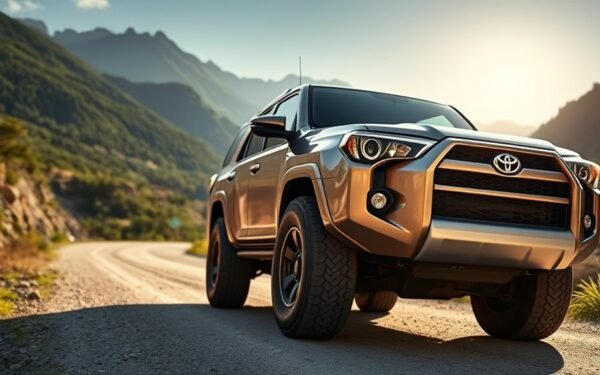
How Long Do Toyota 4Runner Tires Typically Last
How long do Toyota 4Runner tires typically last? Discover the factors that influence tire longevity and essential tips for maintenance.
Read More