
Tire Load Rating Meaning: What 4Runner Owners Should Know
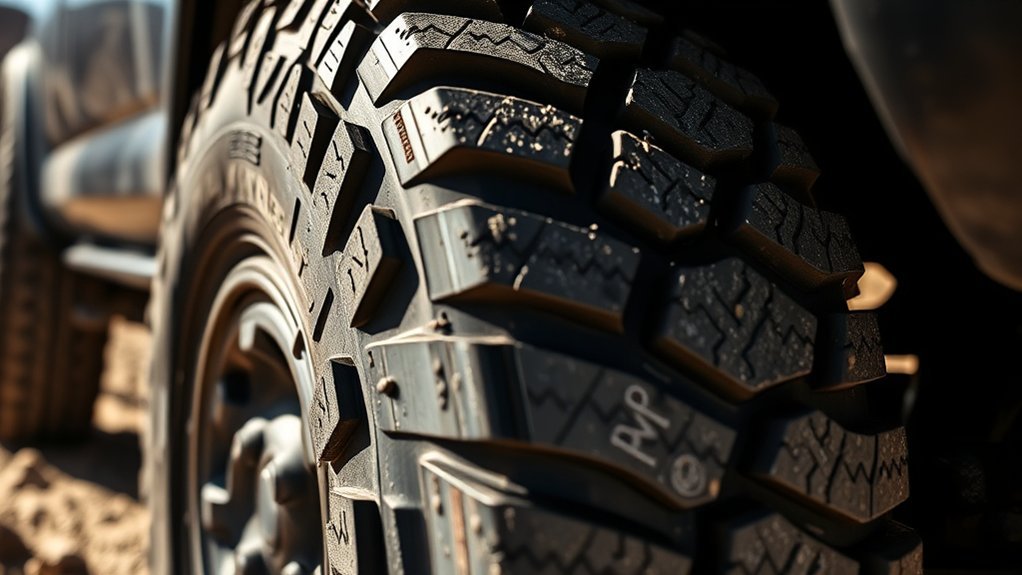
Understanding tire load ratings helps you choose safer, better-matched tires for your Toyota 4Runner. The key is not simply picking the “strongest” tire. You need a tire whose load index, load range, pressure requirements, and construction match your 4Runner’s year, trim, cargo, towing use, and terrain.
Quick Answer
For a 4Runner, choose tires with a load index that meets or exceeds the tire placard or owner’s manual. C-rated LT tires often ride smoother and weigh less, while E-rated LT tires can handle heavier loads and rougher use. Always verify the exact tire’s sidewall, load table, and cold PSI.
Key Takeaways
- A tire’s load index is the most direct number for how much weight one tire can carry when properly inflated.
- Load range, such as C or E, describes construction and pressure capability; it is not a single fixed weight rating.
- E-rated tires can be useful for towing, heavy cargo, sharp rocks, and long overland trips, but they may add weight and ride firmness.
- Higher-rated tires do not increase your 4Runner’s GVWR, GAWR, payload, or factory tow rating.
- Use the door placard, owner’s manual, tire sidewall, and tire maker’s load/inflation data before changing size or load range.
At a Glance
| Time Required | 10–20 minutes to check your placard, sidewalls, and load needs before shopping |
| Difficulty | Easy for basic replacement; moderate if changing tire size or switching from P-metric to LT tires |
| Tools Needed | Tire pressure gauge, owner’s manual, driver-door tire placard, and the tire manufacturer’s load/inflation data |
| Cost | Free to check; tire cost varies by size, load range, tread type, and brand |
Understanding Tire Load Ratings and Their Importance
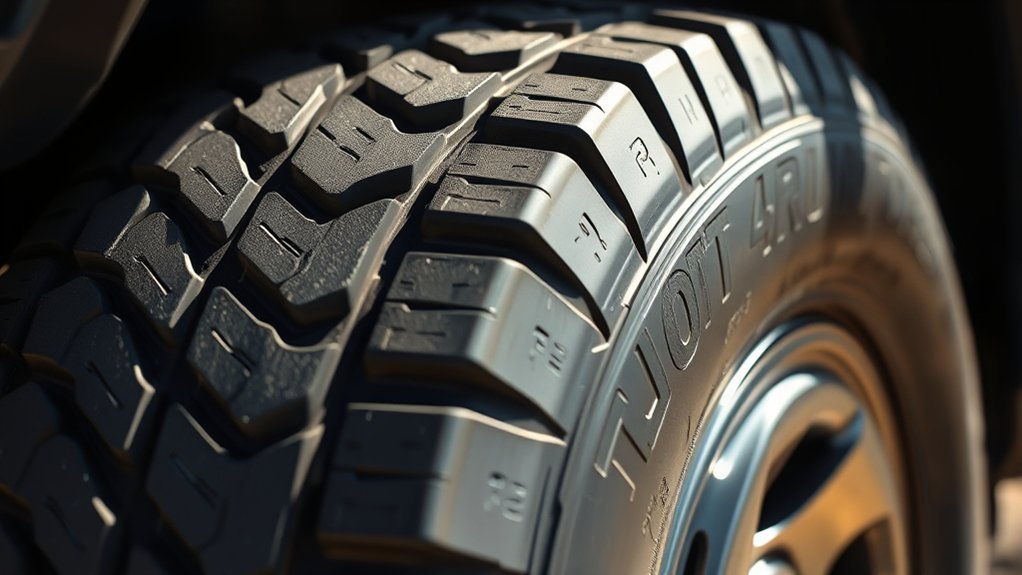
A tire load rating tells you how much weight a tire can carry when it is properly inflated and used within its design limits. For a 4Runner, this matters because the vehicle may be used for daily commuting, off-road trails, rooftop tents, camping gear, towing, recovery equipment, and heavier aftermarket accessories.
The most important number is the load index. It appears near the end of the tire size on the sidewall, often before the speed rating. For example, in a tire marked 265/70R17 113S, the load index is 113. That number corresponds to a specific maximum load per tire.
The load range, such as C or E on many LT tires, is different. It describes a tire’s construction and pressure capability compared with other tires of the same type. A higher load range usually means a stronger casing and higher pressure capability, but the actual weight capacity still depends on the tire size, load index, and inflation pressure.
Warning: A higher tire load rating does not raise your 4Runner’s payload, Gross Vehicle Weight Rating (GVWR), Gross Axle Weight Rating (GAWR), tongue-weight limit, wheel rating, or legal tow rating. The vehicle, axle, wheel, and tire limits all matter, and the lowest safe limit controls.
[Products Worth Considering]

Universal magnetic jack pad with aluminum grooved design to protect vehicle pinch welds during lifting. Durable nylon pad inserts are upgraded and secured with screws to resist damage and keep in place. Designed to fit most single vehicle pinpoint welds for safer, stable jacking when changing tires, repairs, or performing oil changes.

The JACO FlowPro Tire Inflator measures, inflates, and airs down tires up to 100 PSI with battery-free operation and ±2% accuracy after calibration. It features a glowing pressure dial for night visibility, a heavy-duty steel build with a hybrid hose, and a precision push-to-inflate thumb trigger. The patented Lightning Air Chuck locks on for a secure seal, and the kit includes quick-connect hardware for easy inline use with your air compressor.

Blackline Blackout is a water-based trim and tire dressing that restores rubber, vinyl, and plastic with a rich satin, blackout look. Its no-sling formula dries quickly and helps prevent messy transfer onto paint. The coating repels water and offers UV protection to help prevent fading, cracking, and discoloration for a clean, long-lasting finish.
Load Index vs Load Range: What 4Runner Owners Should Check First
Load index and load range are often mixed up, but they answer different questions:
| Load Index | A number that translates to the maximum weight one tire can carry at the proper pressure. |
| Load Range | A letter or category, such as C or E, that describes tire construction and pressure capability. |
| Sidewall Maximum Load | The maximum load and pressure molded into that specific tire’s sidewall. |
| Vehicle Placard | The Toyota-specified tire size, load rating, and cold inflation pressure for the original tire setup. |
When replacing tires, start with the tire placard and owner’s manual. Tire manufacturers also recommend using official load and inflation tables when changing to optional tire sizes that are not listed on the placard.
Choosing Between E-Rated and C-Rated Tires for Your Needs
Choosing between C-rated tires and E-rated tires depends on how your 4Runner is used. Neither option is automatically better for everyone.
Performance Under Load
E-rated LT tires are often the better match when your 4Runner regularly carries heavy gear, armor, drawer systems, a fridge, a rooftop tent, recovery tools, or trailer tongue weight. Their stronger construction can improve stability under load and add resistance to damage on rough surfaces.
C-rated LT tires can still be strong enough for many 4Runner owners, especially if the vehicle is lightly modified and not used for heavy towing. They often weigh less than comparable E-rated tires, which can help ride comfort and steering feel.
Off-Road Capability Comparison
For rocky trails, sharp gravel, desert roads, and remote overlanding, E-rated tires can provide a tougher casing and more puncture resistance. That can be useful when the 4Runner is loaded and driven far from repair help.
For sand, snow, forest roads, and mild trails, a lighter C-rated or properly rated all-terrain tire may ride more comfortably and conform to the terrain better when aired down appropriately. Always air down within safe limits and air back up before highway driving.
Daily Driving Comfort
Daily drivers often feel the biggest difference. E-rated tires can be heavier and firmer, which may reduce ride comfort, increase unsprung weight, and affect fuel economy. C-rated tires can provide a better balance for pavement, highway commuting, and occasional trail use.
Pro Tip: If your 4Runner is mostly stock and you rarely tow, do not buy E-rated tires “just in case” without considering weight, ride quality, and pressure requirements. If your 4Runner is heavily loaded or used on sharp trails, the extra casing strength may be worth it.
| Use Case | Better Starting Point | Why |
|---|---|---|
| Daily driving with light trail use | Properly rated P-metric, XL, or C-rated LT tire | Usually smoother, lighter, and easier to live with. |
| Moderate off-roading and camping gear | C-rated or E-rated LT tire, depending on load | Balance comfort, casing strength, and actual vehicle weight. |
| Frequent towing or heavy overland build | E-rated LT tire with suitable load index | Better support for sustained load and rough terrain. |
| Sharp rocks, remote trails, or work use | E-rated LT tire | More casing strength and damage resistance can be useful. |
How to Determine Your Towing Load Rating
To determine your tire load needs for towing, do not look at the tire alone. Look at the whole system: vehicle tow rating, tongue weight, passengers, cargo, axle ratings, tire capacity, wheel rating, and inflation pressure.
Towing Capacity Guidelines
For many fifth-generation 4Runner models, including 2024 models, Toyota lists a maximum tow rating of 5,000 pounds and a maximum tongue weight of 500 pounds. The redesigned 2025 4Runner is rated up to 6,000 pounds when properly equipped. Always verify your exact year, trim, drivetrain, hitch, and owner’s manual before towing.
Trailer tongue weight counts against the rear axle and payload. A 4,000-pound trailer can place several hundred pounds on the 4Runner before you add passengers, cargo, tools, or accessories. That extra weight changes how hard the rear tires work.
Tire Load Index Explained
The load index gives a more precise capacity than the C or E letter alone. Here are common load-index examples useful for SUV and light-truck tire shopping:
| Load Index | Max Load Per Tire | Common Relevance |
|---|---|---|
| 113 | 1,150 kg / about 2,535 lb | Common on some SUV tire sizes; check your exact placard and sidewall. |
| 116 | 1,250 kg / about 2,756 lb | A step up in load capacity for some replacement tires. |
| 121 | 1,450 kg / about 3,197 lb | Often seen on LT all-terrain tires used for heavier SUV/truck applications. |
| 124 | 1,600 kg / about 3,527 lb | Higher-capacity LT tire example; may be more tire than many daily-driven 4Runners need. |
These numbers are examples, not a shopping shortcut. Your chosen tire must match the tire size, wheel, vehicle rating, and inflation pressure requirements for your 4Runner.
Why Load Index Matters When Choosing Tires
The load index matters because it connects the tire to the actual weight it can carry. If the load index is too low, the tire may run hotter, wear faster, handle poorly, or fail under load. If the load index is higher than needed, the tire may be stronger, but it may also be heavier, firmer, and less efficient.
When replacing tires, choose a load index that meets or exceeds Toyota’s specification for your 4Runner. If you are changing tire size, switching from P-metric to LT, or towing frequently, check the tire maker’s load/inflation tables or ask a qualified tire professional to confirm the correct cold pressure.
Note: The maximum PSI molded on the tire sidewall is not the default pressure for daily driving. It is a limit for that tire. Use the 4Runner placard for OE tires and verified load/inflation data for alternate LT sizes.
Debunking Common Myths About Tire Load Ratings
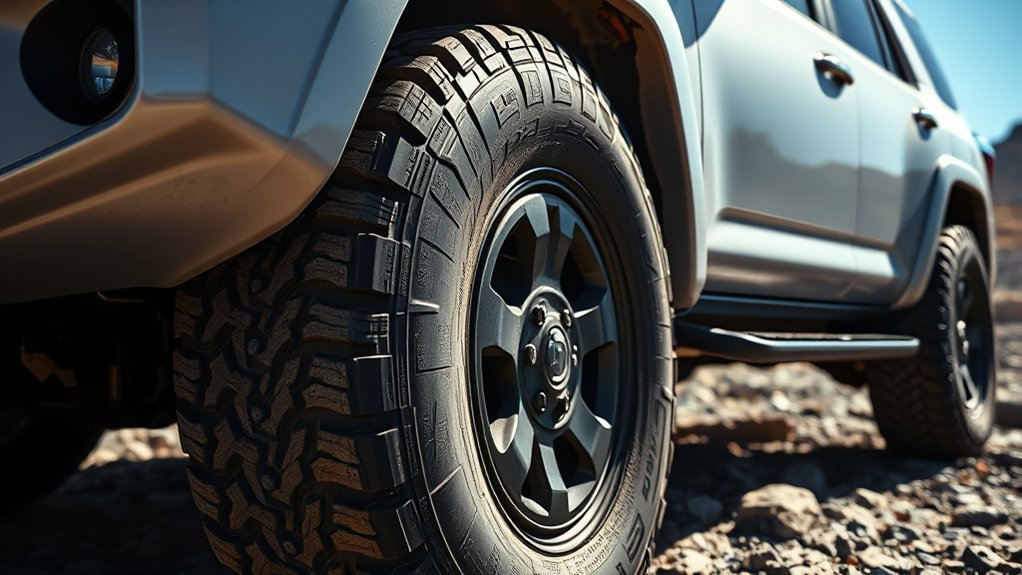
Many 4Runner owners assume a higher load rating is always better. That is not always true. A tire should match the job.
- Myth: E-rated always means safer. Reality: E-rated can be safer for heavy loads, but it may be unnecessary for a lightly loaded daily driver.
- Myth: Load Range E always carries the same weight. Reality: two E-rated tires can have different load indexes and different capacities.
- Myth: More PSI always means more performance. Reality: too much pressure can reduce ride quality, traction, and even tread contact.
- Myth: Stronger tires raise towing capacity. Reality: Toyota’s tow rating, hitch rating, axle ratings, payload, and brakes still set the vehicle limit.
- Myth: You can mix tire ratings freely. Reality: mismatched tires can hurt handling, braking, traction control, and 4WD behavior.
How Tire Weight Affects Fuel Efficiency
Tire weight affects how your 4Runner accelerates, brakes, steers, and uses fuel. Heavier LT tires can add unsprung weight at each corner. That may reduce fuel economy, make the suspension work harder, and slightly dull steering response.
This does not mean heavy tires are bad. If you drive sharp rocks, tow often, or run a loaded overland setup, the added durability can be worth the trade-off. But if most of your driving is on pavement, a lighter tire with the correct load index may make your 4Runner feel better every day.
The best 4Runner tire is not the highest-rated tire on the shelf. It is the tire that safely matches your load, terrain, pressure needs, and daily driving comfort.
Real-World Benefits of the Right Tire Load Rating
Selecting the right tire load rating can improve your 4Runner’s stability, braking feel, tire life, and trail confidence. The right choice helps the tire carry its share of the vehicle weight without excessive heat or sidewall stress.
For a loaded 4Runner, the right LT tire can feel more planted on the highway and more resistant to damage off-road. For a lightly loaded 4Runner, a properly rated but lighter tire can feel smoother, quieter, and more efficient.
The key is to calculate your real use. Add passengers, cargo, accessories, roof load, trailer tongue weight, and recovery gear. Then compare that load against the vehicle ratings, axle ratings, tire sidewall, and tire manufacturer data.
[Products Worth Considering]

Upgrade your Toyota tire setup with these corrosion-resistant, leak-proof valve stem caps designed to help protect the valve core from water, snow, and road grime. The caps feature a snug rubber seal and durable copper alloy construction to resist rust and oxidation while maintaining stable tire pressure. Ideal for replacing worn original caps and keeping your wheels looking clean and stylish.
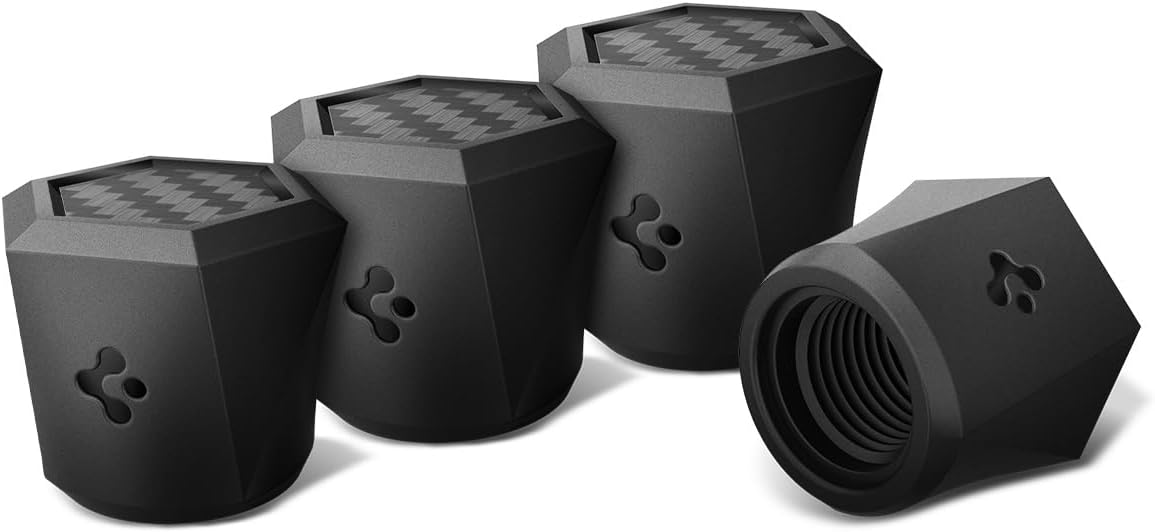
Spigen magnetic tire valve caps attach securely to metal surfaces so you never have to search for lost caps. Designed for Schrader valve stems, they install quickly, help protect against air leakage and corrosion, and feature a light magnet that won’t interfere with TPMS signals.
How to Read Tire Sidewall Markings for Load Ratings
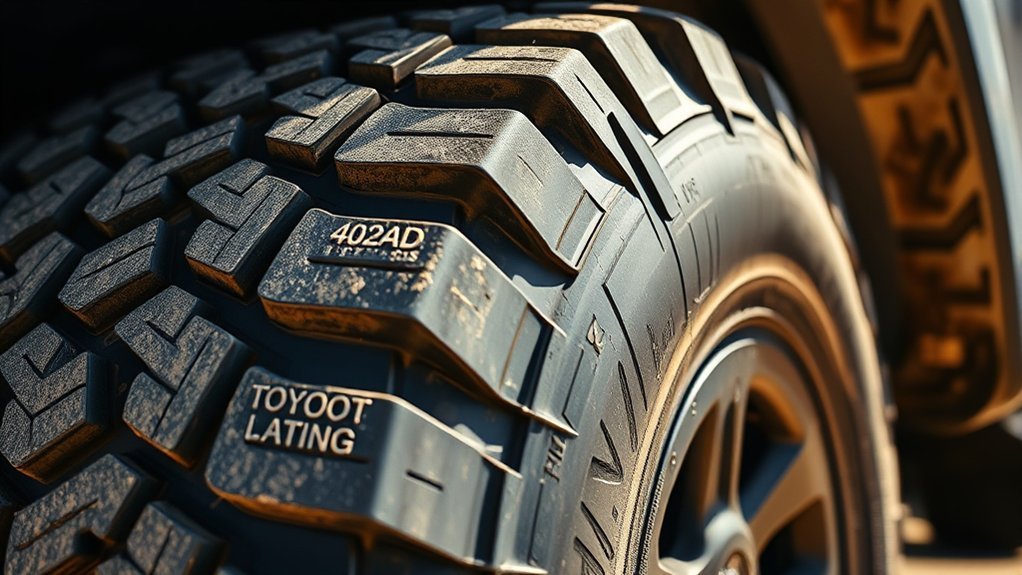
The tire sidewall tells you the tire size, construction, load index, speed rating, load range, maximum load, and maximum pressure. A common format looks like this:
LT285/70R17 121/118Q Load Range E
- LT means light truck construction.
- 285 is tire width in millimeters.
- 70 is the aspect ratio.
- R17 means radial tire for a 17-inch wheel.
- 121/118 is the load index for single/dual use. A 4Runner uses the single-tire value.
- Q is the speed rating.
- Load Range E describes the tire’s load-range category.
Also look for the small sidewall text that lists maximum load and maximum pressure. That text applies to that exact tire, not every tire in the same load range.
How to Choose the Right 4Runner Tire Load Rating
Use this process before buying tires:
- Check the driver-door tire placard. Note the original tire size, load rating, and cold PSI.
- Read your current tire sidewall. Write down the tire size, load index, speed rating, load range, maximum load, and maximum pressure.
- Check your owner’s manual. Confirm Toyota’s guidance for tire replacement, towing, loading, and inflation.
- Know your real load. Include passengers, cargo, bumpers, sliders, skid plates, roof racks, rooftop tents, drawers, water, fuel, and trailer tongue weight.
- Compare GVWR and GAWR. Make sure your setup stays within Toyota’s vehicle and axle ratings.
- Choose a tire with enough load index. Meet or exceed the factory requirement, and add margin if you tow or carry heavy gear.
- Confirm wheel compatibility. Your wheels must also be rated for the load and pressure you plan to run.
- Set pressure correctly. Use cold PSI from the placard for OE tires or tire maker load tables for alternate LT sizes.
Tips for Maintaining Tire Pressure for Optimal Load Capacity
Keeping your tire pressure in the correct range is just as important as choosing the correct load rating. A tire cannot carry its rated load safely if it is underinflated, damaged, overloaded, or run beyond its speed and pressure limits.
Regular Pressure Checks
Check tire pressure at least once a month and before long trips, towing, or heavy trail days. Measure pressure when the tires are cold, ideally before driving or after the vehicle has been parked for several hours.
Do not rely on the tire-pressure monitoring system as your only maintenance tool. TPMS is a warning system, not a replacement for a gauge and regular inspection.
Correct Inflation Guidelines
Use the pressure listed on your 4Runner’s tire placard for original-equipment tire sizes. If you switch to LT tires, a different size, or a different load range, use the tire manufacturer’s load/inflation tables or ask a tire professional to set a pressure that supports the same or greater load safely.
- Check pressure when tires are cold.
- Inspect sidewalls for cuts, bulges, cracking, or exposed cords.
- Rotate tires on schedule to reduce uneven wear.
- Recheck pressure after large temperature swings.
- Air back up before highway driving after off-road airing down.
User Experiences: Insights on Tire Ratings and Performance
Many 4Runner owners like E-rated tires because they feel tougher on rocky trails and more stable when the vehicle is loaded. Owners with bumpers, sliders, skids, winches, drawer systems, and rooftop tents often appreciate the extra casing strength.
Other owners prefer C-rated or lighter properly rated tires because they drive mostly on pavement and want better ride comfort. For commuting, road trips, and mild trails, a lighter tire can make the 4Runner feel more responsive.
Both experiences can be valid. The right answer depends on your actual load, terrain, driving speed, tire size, and pressure setup.
Frequently Asked Questions
How often should I check my 4Runner tire load ratings?
Check load ratings whenever you buy tires, change tire size, switch from P-metric to LT tires, add heavy accessories, begin towing, or change how much gear you carry. For normal maintenance, check tire pressure monthly and inspect the sidewalls regularly.
Can I mix different tire ratings on my 4Runner?
It is best to run four matching tires with the same size, construction type, load index, load range, tread pattern, and similar tread depth. Mixing ratings can affect handling, braking, traction control, ABS, and 4WD behavior.
What happens if I exceed the tire load rating?
Exceeding the tire load rating can increase heat, sidewall stress, tread wear, and the chance of tire failure. It can also reduce steering control and braking stability, especially when towing or driving at highway speed.
Are load ratings the same for all tire brands?
The load-index system is standardized, but tires of the same size may still differ in load index, load range, construction, tread design, weight, and pressure requirements. Always check the specific tire sidewall and manufacturer data.
Do tire pressure and load ratings affect tread wear?
Yes. Underinflation, overinflation, overloading, poor alignment, and mismatched tire ratings can all cause uneven wear. Correct cold pressure helps the tire carry weight evenly and maintain a better contact patch.
Do E-rated tires make my 4Runner tow more?
No. E-rated tires may help support load and resist damage, but they do not increase Toyota’s tow rating, payload, GVWR, GAWR, hitch rating, or braking capacity. They are one part of a safe towing setup, not a rating upgrade for the vehicle.
Should a daily-driven 4Runner use C-rated or E-rated tires?
A daily-driven, lightly loaded 4Runner often does well with a properly rated lighter tire, including some C-rated LT or suitable P-metric/XL options. Choose E-rated tires if you regularly tow, carry heavy gear, drive rocky terrain, or need the extra casing strength.
Conclusion
Choosing the right tire load rating for your 4Runner starts with the tire placard and owner’s manual, not with a guess. Match or exceed the required load index, understand what C and E load ranges actually mean, and set tire pressure using cold-pressure guidance from Toyota or the tire manufacturer’s load tables.
If your 4Runner is mostly a daily driver, a lighter properly rated tire may give the best balance of comfort and control. If it tows, hauls heavy gear, or spends time on rough trails, an E-rated LT tire may be worth the extra weight and firmness. The safest choice is the tire that matches your real load, terrain, wheel rating, and driving style.
Sources
- Toyota USA Newsroom: 2024 Toyota 4Runner — 2024 towing capacity and tongue-weight reference.
- Toyota USA Newsroom: 2025 Toyota 4Runner — redesigned 2025 4Runner towing-capacity update.
- NHTSA TireWise — tire safety, maintenance, tire labeling, and consumer tire guidance.
- Michelin: Tire Load Rating and Speed Rating — load rating, speed rating, sidewall markings, and replacement guidance.
- Toyo Tires: Load and Inflation Tables — using placard/manual pressure and load/inflation tables for replacement sizes.
- Bridgestone: Speed and Load Rating Charts — load-index examples and maximum load-per-tire reference.

Related Articles

When to Switch From All-Season to Winter Tires on a 4Runner
Ineffective all-season tires in cold weather can jeopardize your safety—discover when to make the crucial switch for better traction and handling.
Read More
4Runner Tire Mileage: How Many Miles Should They Last
Curious about how long your 4Runner tires should last? Discover essential tips and factors that influence tire longevity.
Read More
How Long Do Toyota 4Runner Tires Typically Last
How long do Toyota 4Runner tires typically last? Discover the factors that influence tire longevity and essential tips for maintenance.
Read More