
How Upsizing Tires Affects Gear Ratio on a 4Runner
Upsizing tires on a 2010–2024 5th Gen Toyota 4Runner changes more than ground clearance. A taller tire effectively makes your axle gearing “taller,” which can reduce throttle response, increase gear hunting, and make the truck feel heavier than it really is. Re-gearing restores mechanical leverage by changing the ring-and-pinion ratio in the differentials, but the right choice depends on tire size, vehicle weight, towing, terrain, and highway use.
Quick Answer
Most 5th Gen 4Runners do not need an immediate re-gear for mild 33-inch tires, but re-gearing becomes much more worthwhile with heavy armor, towing, mountain driving, 34s, or 35s. Choose 4.56 for a balanced daily driver on 33s–34s; choose 4.88 for heavier builds, 35s, frequent towing, or technical trails.
Key Takeaways
- The common stock 5th Gen 4Runner tire size, P265/70R17, is about 31.6 inches tall when calculated from its metric tire size.
- A factory 3.727 axle ratio behaves like about 3.57 with a true 33-inch tire, 3.47 with a 34-inch tire, and 3.37 with a 35-inch tire.
- 4.56 gears usually suit mixed daily driving and trail use with 33s–34s.
- 4.88 gears are stronger for 35s, heavy overland builds, towing, and slow technical terrain.
- A correct gear setup needs professional installation, careful break-in, and a gear oil change after the initial break-in period.
At a Glance
| Time Required | Usually 1–2 shop days for a front-and-rear re-gear, plus a 500-mile break-in period before heavy use. |
| Difficulty | Advanced. Ring-and-pinion setup requires specialty tools, pattern reading, backlash measurement, and experience. |
| Tools Needed | Professional differential tools, dial indicator, bearing tools, torque tools, gear-marking compound, and correct differential fluid. |
| Cost | Commonly about $2,400–$4,000+ installed, depending on parts, labor, lockers, bearings, seals, and whether complete third members are swapped. |
How Bigger Tires Change Your 4Runner’s Gear Ratio
When you install taller tires, each tire rotation moves the 4Runner farther down the road. That sounds efficient, but it also reduces the torque multiplication your engine feels at the ground. In practical terms, your factory axle ratio behaves like a numerically lower ratio.
Most 5th Gen 4Runners came with a 3.727 axle ratio, often rounded to 3.73. A Toyota final gear listing identifies the factory ratio as 41:11, or 3.727. Many trims also use P265/70R17 tires, which calculate to about 31.6 inches tall using standard tire-size math.
The basic effective gear ratio formula is:
Effective gear ratio = current axle ratio × original tire diameter ÷ new tire diameter.
| Setup | Approx. Effective Ratio | What It Feels Like |
| 3.727 gears with 31.6-inch stock tire | 3.73 | Factory baseline |
| 3.727 gears with true 33-inch tire | About 3.57 | Mild power loss; often livable |
| 3.727 gears with true 34-inch tire | About 3.47 | Noticeably taller; worse with weight or hills |
| 3.727 gears with true 35-inch tire | About 3.37 | Strong case for re-gearing |
This is why a 4Runner on larger tires can feel slow even though the engine has not lost horsepower. The truck has lost leverage.
[Products Worth Considering]
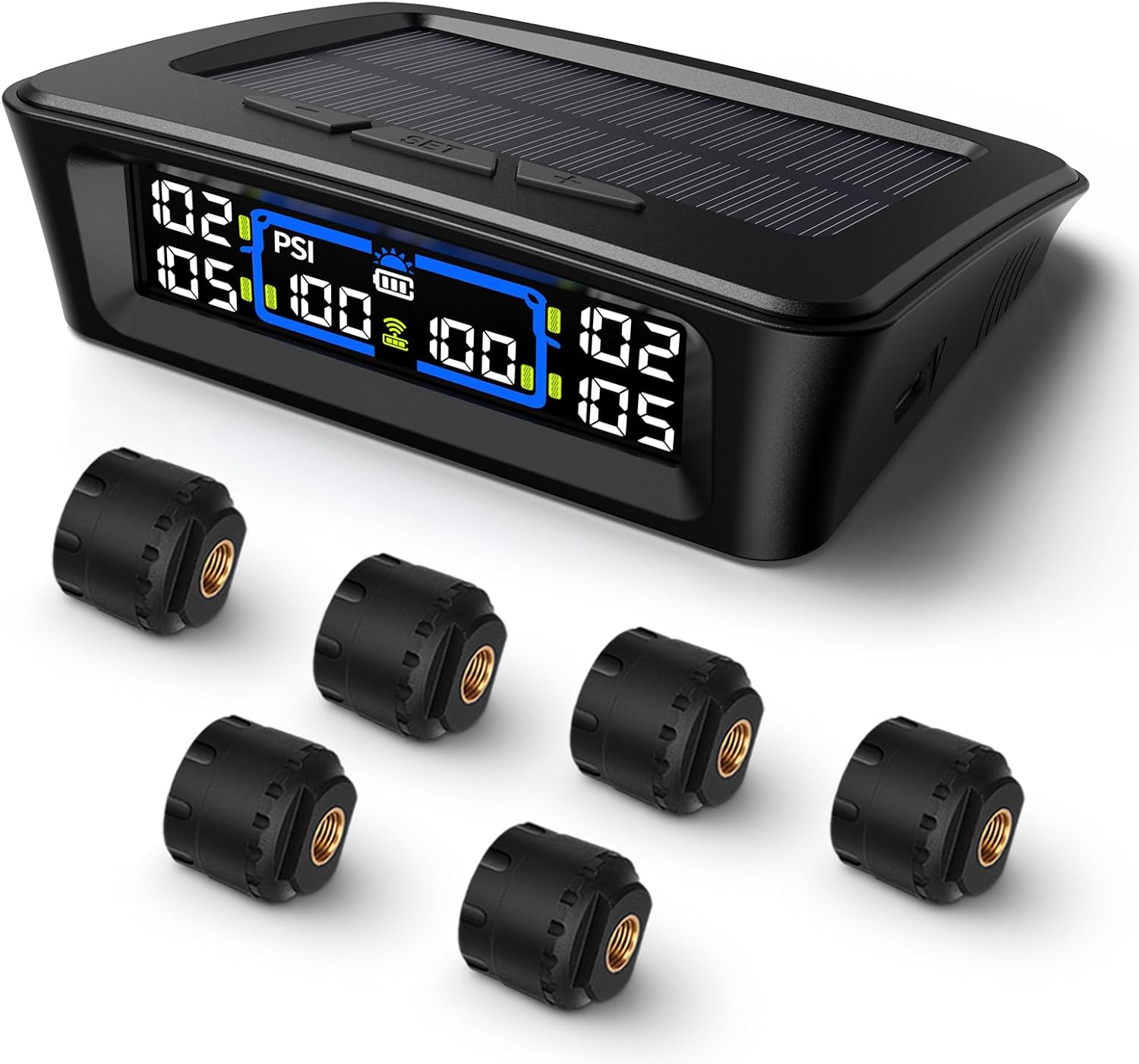
The Tymate TM12 RV TPMS delivers real-time tire pressure and temperature monitoring with a stable 433Hz display for safer long-distance driving. It supports simultaneous monitoring across vehicle and trailer zones, includes six alarm modes for pressure, temperature, leakage, battery, and signal loss, and features easy DIY installation with auto calibration. Power is supplied via USB-C charging or solar recharging, with a wide 0–144 PSI range and up to 50 ft signal coverage for RVs and towable trailers.

Keep your tires properly inflated with this analog VONDIOR tire pressure gauge, designed for fast, easy readings without batteries. The swiveling, two-axis hose and large glow dial help you measure at any tire angle with instant visibility. Built with a protective rubber shield, it supports durable, low-maintenance use for cars and trucks.

Measure tire tread depth quickly and accurately with this LUMITECO dial gauge that reads in 1/32" increments up to 14/32". The color-coded green/yellow/red zones make it easy to judge tire wear and know when replacement is needed. A rugged, compact design with a protective pouch helps keep the gauge ready for use on cars, trucks, motorcycles, and more.
The Performance Problems You’ll Notice First
The first symptom is usually a softer throttle pedal. You press down, the engine revs, and the truck does not move with the same urgency. That effect becomes stronger when the tire is not only taller but also heavier, such as an LT all-terrain or mud-terrain tire.
Sluggish Acceleration Issues
Larger tires add rotational weight and raise the effective gearing. That combination makes the 4Runner work harder to get moving. You may notice:
- slower starts from a stop;
- more throttle needed to merge or pass;
- more downshifts on grades;
- worse response when loaded with camping gear, armor, or passengers;
- a bigger performance hit when towing near the vehicle’s rated limits.
The 5th Gen 4Runner is durable, but it is not a high-horsepower platform. Toyota rated the 2024 model at 270 horsepower and 278 lb-ft of torque, with a 5-speed automatic. Taller tires ask that drivetrain to do more work with less leverage.
Transmission Strain Problems
Transmission hunting is the next common complaint. The automatic may shift between gears more often because the engine is operating farther from the speed and load range it prefers. On long climbs, in headwinds, or while towing, that extra shifting can add heat and wear.
Warning: Re-gearing is not a shortcut around payload, towing, braking, or cooling limits. Toyota lists the 2024 4Runner’s maximum towing capacity at 5,000 lb and tells owners not to exceed published towing capacities. Larger tires, added weight, and higher center of gravity still require conservative driving.
4.56 vs. 4.88: Which Gear Ratio Do You Need?
Both 4.56 and 4.88 gears are common upgrades for 5th Gen 4Runners. The right choice depends on whether you want to restore a near-factory feel or build in extra low-speed torque for a heavier tire-and-armor setup.
| Choose | Best For | Trade-Off |
| 4.56 | 33s, many 34s, daily driving, mixed highway/trail use, moderate added weight | Less crawl torque than 4.88, but calmer highway rpm |
| 4.88 | 35s, heavy bumpers/skids, roof-top tent, towing, mountain driving, technical trails | Higher highway rpm and potentially more fuel use at speed |
Daily Driving Impact
For a daily-driven 4Runner on true 33-inch tires, 4.56 is often the more balanced choice. It gives back throttle response without making the engine feel busy on the freeway. With 33s, 4.56 is roughly 1,995 rpm at 60 mph and 2,327 rpm at 70 mph in 5th gear, assuming a 0.716 overdrive ratio.
4.88 is not automatically too much for daily driving. With 33s, it is roughly 2,135 rpm at 60 mph and 2,490 rpm at 70 mph. That extra rpm can feel excellent around town and in hills, but it may not be necessary for a light build that sees mostly flat highway miles.
Off-Road Performance Gains
Off-road, the deeper 4.88 ratio has a clear advantage. It multiplies torque more than 4.56 and improves low-speed control in 4LO. Using a 3.52 first gear and 2.566 low range, the approximate crawl ratio changes like this:
- 3.727 gears: about 33.7:1
- 4.56 gears: about 41.2:1
- 4.88 gears: about 44.1:1
That difference is easy to feel when climbing ledges, easing over rocks, or controlling speed on a loose descent.
Pro Tip: Do not choose gears only by tire diameter. A 33-inch LT mud-terrain on steel wheels can feel heavier than a lighter 34-inch all-terrain on lightweight wheels. Build weight matters.
How to Calculate Your Actual Ratio After Tire Upsizing
Start with your original tire diameter, current axle ratio, and new tire diameter. If you use metric tire sizes, calculate tire diameter from the tire width, aspect ratio, and wheel diameter. Tire Rack’s tire-dimension guide explains this method in detail.
For a P265/70R17 tire:
- sidewall height = 265 mm × 0.70 = 185.5 mm;
- two sidewalls = 371 mm;
- 371 mm ÷ 25.4 = 14.6 inches;
- 14.6 + 17-inch wheel = about 31.6 inches overall diameter.
To estimate the gear ratio needed to restore factory-like leverage, reverse the formula:
Target axle ratio = factory axle ratio × new tire diameter ÷ original tire diameter.
For example, 3.727 × 35 ÷ 31.6 = about 4.13. Because common aftermarket ratios do not usually include 4.13 for this setup, the real-world choice becomes 4.56 or 4.88. If the truck is light and highway-focused, 4.56 may be enough. If it is heavy, used off-road, or running 35s, 4.88 makes more sense.
The Tire Size Threshold for Re-gearing
There is no single tire-size line where every 4Runner suddenly needs new gears. The better question is how the truck is used.
- 32-inch tires: Usually no re-gear needed.
- 33-inch tires: Often acceptable on stock gears, but re-gearing helps if the truck is heavy, tows, or lives in hills.
- 34-inch tires: Re-gearing becomes more worthwhile, especially with armor or frequent trail use.
- 35-inch tires: Re-gearing is strongly recommended for most owners who want the truck to feel responsive and controlled.
If your 4Runner feels fine on 33s and you mostly drive flat roads, you can wait. If it hunts gears, struggles on grades, or feels weak in 4LO, re-gearing is not just about speed; it is about control and drivability.
Note: Larger tires also change speedometer and odometer accuracy. A taller tire usually makes the speedometer read lower than your actual speed unless the vehicle is recalibrated or corrected with an aftermarket solution.
What Re-gearing Costs and What You Get
A complete front-and-rear re-gear is not cheap because it is precision drivetrain work. Current Toyota 4Runner front/rear gear packages from East Coast Gear Supply commonly list around the low-to-mid $1,300s to $1,400s before labor, depending on ratio and e-locker configuration. Labor, fluids, bearings, seals, shop supplies, and regional rates can push the installed total much higher.
A realistic installed range is often about $2,400–$4,000+, with the low end usually coming from efficient specialty shops and the high end coming from shops that replace more bearings/seals, add lockers, or perform extra differential work.
What you get for that money:
- restored throttle response;
- less transmission hunting;
- better low-speed control off-road;
- more confidence when loaded or towing;
- a drivetrain that feels matched to the tire size.
What you do not get is free fuel economy. Deeper gears raise engine rpm at a given speed. Around town, the truck may feel more efficient because it works less to get moving. On the highway, higher rpm can reduce fuel economy, especially with heavy tires and added aerodynamic drag.
[Products Worth Considering]

The VEHLIVE SU-50448 II TPMS relearn tool provides a fast activation reset to restore accurate tire pressure monitoring after sensor replacement or tire rotation. It supports 315 MHz and 433 MHz GM series sensors and helps clear dashboard pressure warnings. With simple two-button operation and horn-confirmed relearning order, you can reprogram sensors conveniently at home.

Malco tire mounting and demounting lubricant is a ready-to-use tire lube formulated to reduce friction during tire installation for passenger cars, light trucks, farm tires, and heavy-duty equipment. It provides rust-inhibiting protection to help reduce corrosion on rims and wheels, and helps support proper tire bead seating during inflation to reduce air leakage. The silicone-free, soap-free formula is whitewall safe to help prevent discoloration on whitewall tires and sensitive sidewall markings.

The Trivd Frol 1/2" air impact wrench delivers high performance torque up to 1500 ft-lbs with a twin hammer impact mechanism for strong, balanced blows. It features an ergonomic grip, compact lightweight design, and quick-stop control with 3 forward speeds up to 8000 RPM plus a reverse speed. Built for demanding automotive repair and tire shop work, the rear exhaust helps keep debris away from the surface.
What the Re-gearing Process Actually Involves
Re-gearing means replacing the ring-and-pinion gears in the differentials. On a 4WD 4Runner, the front and rear ratios must match. A shop may rebuild your existing differentials or install pre-built third members, depending on the axle, locker setup, and parts source.
A proper install includes:
- removing the differential assemblies or third members;
- installing new ring-and-pinion gears;
- replacing bearings, seals, shims, and crush sleeves or spacers as needed;
- setting pinion depth, preload, backlash, and contact pattern;
- filling with the correct gear oil;
- checking for noise, leaks, and proper operation.
Warning: Ring-and-pinion setup is not a beginner driveway job. Incorrect backlash, preload, or gear pattern can cause whine, overheating, chipped teeth, and early failure. Use a drivetrain shop that has Toyota differential experience.
Daily Driving After Re-gearing: What Actually Changes
The biggest change is how quickly the truck responds to throttle input. Instead of waiting for a downshift or pushing deeper into the pedal, the 4Runner feels more direct. The engine reaches its usable power sooner, and the transmission does not have to work as hard to keep the truck moving.
| Scenario | Stock 3.727 Gears on 33s | 4.56 Gears on 33s | 4.88 Gears on 33s |
| Approx. rpm at 60 mph in 5th | 1,630 | 1,995 | 2,135 |
| Approx. rpm at 70 mph in 5th | 1,902 | 2,327 | 2,490 |
| Acceleration feel | Softer, delayed | Stronger and balanced | Strongest low-end response |
| Transmission behavior | More hunting under load | More stable | Most stable in hills and trails |
These rpm numbers are estimates. Actual rpm can vary with tire’s true measured diameter, torque converter behavior, load, grade, and speedometer calibration.
Break-In, Fluid, and Warranty Considerations
New ring-and-pinion gears need break-in because the contact surfaces generate extra heat when they are new. Yukon Gear recommends short heat-cycle drives and a gear oil change after the first 500 miles. Avoid hard launches, towing, high-speed long-distance driving, and heavy off-road use during the initial break-in unless your gear manufacturer or installer gives different instructions.
Ask the shop for written break-in instructions and keep receipts for the parts, labor, and first fluid change. Toyota warranty materials also caution that warranty coverage may be denied if a failure is caused by abuse, neglect, improper maintenance, or unapproved modifications. That does not mean every modification voids your entire vehicle warranty, but it does mean documentation and proper installation matter.
Frequently Asked Questions
Can I go from a 55 to 60 aspect ratio?
Yes, if the tire fits the wheel, clears the suspension and bodywork, and has the correct load and speed rating. But a 60-series tire is taller than a 55-series tire when the width is the same, so it can change speedometer accuracy, gearing feel, and clearance. Always compare full tire diameter, not just the aspect ratio number.
Do I need to re-gear my 4Runner for 33-inch tires?
Not always. Many 5th Gen 4Runners can live on 33s with stock 3.727 gears, especially if the truck is light and mostly driven on flat roads. Re-gearing becomes more worthwhile if you add heavy armor, tow, drive in mountains, or dislike the softer throttle response.
Are 4.56 or 4.88 gears better for 35-inch tires?
For most 35-inch 5th Gen 4Runner builds, 4.88 is the stronger choice because it restores more low-speed torque and helps the transmission hold gears better. A lighter highway-focused build can use 4.56, but 4.88 usually feels better with 35s, added weight, or technical off-road use.
Will re-gearing improve fuel economy?
It can improve drivability and sometimes city mileage because the engine no longer works as hard to move oversized tires. Highway mileage may stay the same or drop because deeper gears raise cruising rpm. Tire weight, tread pattern, lift height, roof racks, and driving speed often affect mileage as much as the gear ratio.
Do I need a tune after re-gearing?
A tune is not required for the ring-and-pinion gears themselves, but some owners recalibrate tire size or use a transmission tune to improve shift behavior. Re-gearing changes mechanical ratio; calibration changes what the vehicle’s electronics think is happening.
Can I re-gear only the rear differential?
Not on a 4WD 4Runner that will use 4WD. The front and rear axle ratios must match. Running mismatched ratios in 4WD can bind the drivetrain and cause expensive damage.
Conclusion
Bigger tires make your 4Runner look better and work better off-road, but they also change the leverage your drivetrain has at the ground. The stock 3.727 gears are comfortable with factory-size tires, acceptable for many 33-inch setups, and increasingly strained as tire size, tire weight, vehicle weight, towing, and trail difficulty increase.
Choose 4.56 if you want a balanced daily driver on 33s or many 34s. Choose 4.88 if you are building around 35s, heavy gear, towing, or technical terrain. The best re-gear is not the deepest number on paper; it is the ratio that matches how your 4Runner is actually driven.
Sources
- Toyota 2024 4Runner eBrochure — factory tire sizes, engine output, towing capacity, 4WD features, and trim information.
- Genuine Toyota final gear kit listing — factory 41:11 final gear ratio, equal to 3.727.
- Tire Rack tire-dimension guide — tire diameter calculation from width, aspect ratio, and wheel size.
- East Coast Gear Supply Toyota 4Runner gear packages — current 4.56 and 4.88 front/rear gear-package availability and parts pricing.
- Yukon Gear ring-and-pinion break-in guidance — heat cycling and 500-mile gear oil change guidance.
- Toyota 2024 4Runner Warranty & Maintenance Guide — warranty and maintenance context for modifications and service documentation.
[Products Worth Considering]

Universal magnetic jack pad with aluminum grooved design to protect vehicle pinch welds during lifting. Durable nylon pad inserts are upgraded and secured with screws to resist damage and keep in place. Designed to fit most single vehicle pinpoint welds for safer, stable jacking when changing tires, repairs, or performing oil changes.

This metal-free wheel and tire cleaning brush uses dense, fluffy synthetic wool to safely clean rims, spokes, fenders, and engine areas without worrying about damaging surfaces. Its flexible, comfortable design helps you reach detailed areas while maintaining durability, and the extra absorbent fibers work well with wheel spray cleaners for faster cleanup. Reusable and washable performance helps prevent grime and build-up for cleaner vehicles and easier maintenance at home.

This 62-inch extra-long car wash brush kit makes it easy to clean hard-to-reach areas on cars, trucks, SUVs, and RV roofs with lightweight, sturdy poles. It includes soft, non-scratch microfiber and bristles with protective bumpers to help prevent scratches while cleaning effectively. A rubber squeegee helps remove water stains quickly, plus a wheel/tire brush and absorbent towels for complete exterior detailing.

Related Articles

When to Switch From All-Season to Winter Tires on a 4Runner
Ineffective all-season tires in cold weather can jeopardize your safety—discover when to make the crucial switch for better traction and handling.
Read More
4Runner Tire Mileage: How Many Miles Should They Last
Curious about how long your 4Runner tires should last? Discover essential tips and factors that influence tire longevity.
Read More
How Long Do Toyota 4Runner Tires Typically Last
How long do Toyota 4Runner tires typically last? Discover the factors that influence tire longevity and essential tips for maintenance.
Read More