
What Causes Toyota Camry Tires to Wear Out Fast? 7 Common Reasons
Last updated: June 19, 2026
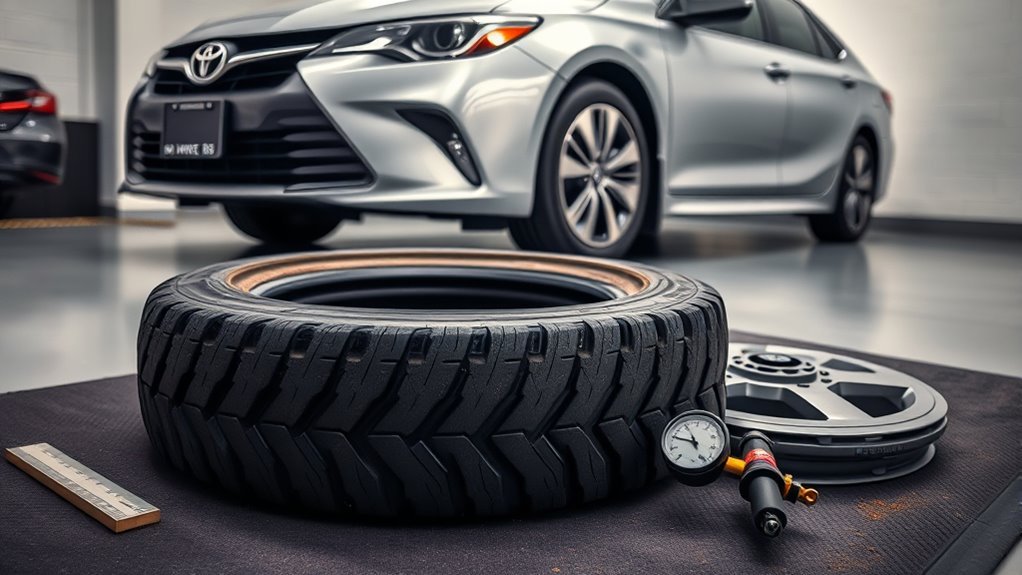
Your Toyota Camry tires usually wear out fast because the tread is being dragged, overheated, or loaded unevenly. The usual causes are bad alignment, wrong cold tire pressure, skipped rotations, worn suspension, wheel imbalance, pothole damage, aggressive driving, brake drag, or loose steering parts. Read the tread pattern first, then fix the root cause before installing another set of tires.
Quick Answer
Toyota Camry tires wear out quickly when the tread is being dragged, overheated, bounced, or loaded unevenly. The most common causes are misalignment, incorrect cold tire pressure, skipped rotations, worn struts or bushings, wheel imbalance, aggressive braking or cornering, pothole damage, brake drag, and loose steering parts.
Key Takeaways
- Check tire pressure cold and use the PSI on your Camry’s driver-door tire label or owner’s manual, not the number molded on the tire sidewall.
- Uneven shoulder, center, one-edge, feathered, or cupped wear usually points to a specific issue such as pressure, alignment, suspension, or balance.
- Toyota’s current Camry maintenance guide shows tire rotation at 5,000-mile intervals; older model years should follow the schedule in their own manual.
- Do not buy new tires until you fix pulling, vibration, pothole damage, worn struts, dragging brakes, or steering looseness.
At a Glance
| Time Required | 10–20 minutes for a basic tire inspection; 45–90 minutes for professional alignment or suspension diagnosis |
| Difficulty | Easy for pressure and tread checks; professional help recommended for alignment, brakes, steering, and suspension |
| Tools Needed | Tire pressure gauge, tread depth gauge or penny, flashlight, notebook or phone photo, and your Camry owner’s manual |
| Cost | Basic checks are free; alignment, balancing, brake repair, or suspension work varies by shop and what parts are worn |
Common Causes of Camry Tire Wear
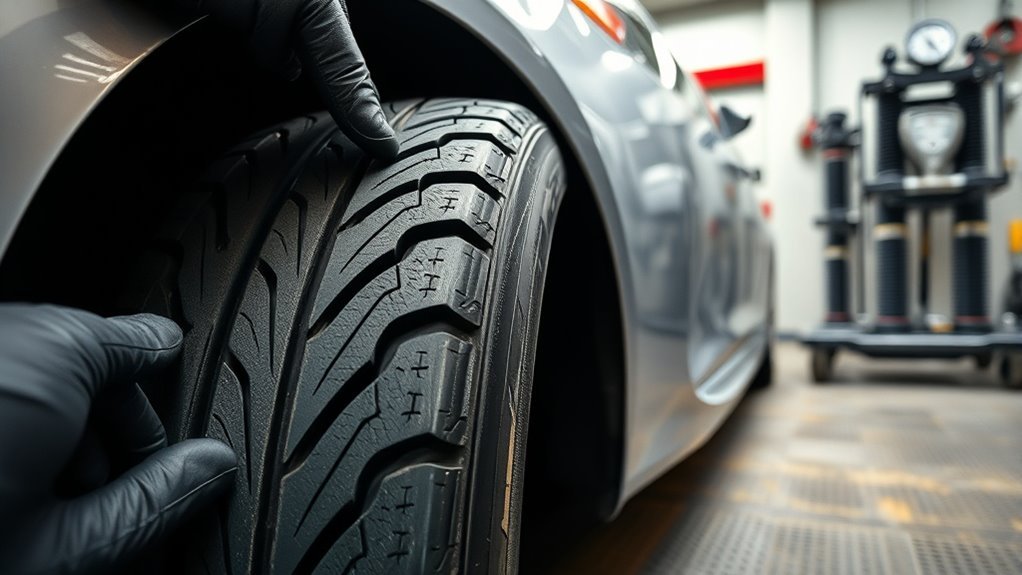
When a Toyota Camry’s tires wear too quickly, start with the basics: misalignment, wrong tire pressure, skipped rotations, worn suspension parts, wheel imbalance, rough-road impacts, aggressive driving, and brake or steering problems. The tread pattern usually tells you which one deserves attention first.
Many Camrys are front-wheel drive, so the front tires often work harder because they steer, handle much of the braking load, and may also receive drive torque. Newer Camry models may also have available all-wheel drive, but they still need regular pressure checks, tread inspections, and rotation to keep wear even.
Note: Tire wear is a symptom, not the whole diagnosis. If one tire keeps wearing faster after rotation, look for alignment, suspension, brake, or wheel damage on that corner.
Read the Tread Pattern First
The fastest way to narrow the problem is to look at where the rubber is disappearing. Use this table before guessing or buying new tires.
If the treadwear bars sit level with the tread surface, or the tire is down to 1/16 inch of tread, treat replacement as a safety issue before you troubleshoot normal wear. If the tire still has usable tread, compare the inner edge, center, outer edge, and both tires on the same axle.
| Tread wear pattern | Most likely cause | What to check next |
|---|---|---|
| Both shoulders worn | Underinflation or repeated hard cornering | Cold PSI, valve leaks, driving habits |
| Center worn faster than edges | Overinflation | Compare cold PSI with the door placard |
| One edge worn | Camber issue, bent part, worn suspension | Alignment report, ball joints, control arms, struts |
| Feathered or sawtooth tread | Toe alignment error | Toe setting, steering linkage, recent pothole hit |
| Cupped or scalloped patches | Worn shocks/struts, imbalance, loose suspension | Wheel balance, struts, shocks, bushings, bearings |
| Flat spot on one tire | Hard braking, lockup, or tire damage | Brake system, tire condition, vibration at speed |
Warning: Do not keep driving normally on a tire with exposed cords, a sidewall bulge, deep cracking, repeated air loss, severe vibration, or treadwear indicators showing. Have the tire and vehicle inspected before highway driving.
Why Are My Camry Tires Wearing on the Inside Edge?
Inside-edge wear usually points to an alignment or suspension issue, not a bad tire brand. A toe error can scrub the tread as the tire rolls. A camber problem, bent control arm, worn ball joint, weak bushing, or damaged strut can hold the tire at the wrong angle and overload the inner shoulder.
Compare the left and right tire on the same axle. If one tire shows much heavier inside wear, suspect a corner-specific problem such as pothole damage, a bent part, or brake drag. If both front tires show similar inner-edge wear, ask for a full alignment printout and a steering/suspension inspection before replacing the tires.
Can a Pothole Make Camry Tires Wear Out Fast?
A hard pothole strike can bend or shift suspension and steering parts, changing your Camry’s toe, camber, or steering center. Once the wheels are no longer aimed correctly, the tires scrub instead of rolling straight. That friction can create feathering, one-edge wear, pulling, vibration, and a steering wheel that no longer sits level.
Impact Bends Components
Even one sharp impact can damage a control arm, strut, tie rod, wheel, or bearing. You may notice the car pulling, the steering wheel sitting off-center, or one tire suddenly wearing on the inside or outside edge. If the Camry felt different immediately after a pothole, curb hit, or road-debris impact, get the suspension and alignment checked before the tread loss spreads.
Why Toe and Camber Problems Wear Tires Fast
Toe controls whether the tires point slightly inward or outward as they roll. A toe problem often causes feathered or sawtooth wear. Camber controls the inward or outward tilt of the tire. A camber problem often shows up as heavy wear on one edge of the tread.
| Symptom | Likely effect |
|---|---|
| Feathered front tread | Toe error or loose steering linkage |
| One-sided wear | Camber issue, bent part, or worn suspension |
| Vehicle drifts or pulls | Alignment loss, tire pressure mismatch, or brake drag |
Alignment Causes Rapid Wear
A proper wheel alignment positions the wheels correctly relative to the vehicle. The National Highway Traffic Safety Administration notes that alignment helps maximize tire life and prevent a vehicle from veering right or left on a straight, level road. Alignment requires special equipment, so this is not a driveway adjustment for most owners.
Pro Tip: Ask for a printed alignment report. If the before-and-after numbers show one wheel was far out of spec, keep that report with your tire records in case the same corner starts wearing again.
Can Wrong Tire Pressure Make Camry Tires Wear Out Fast?
Tire pressure affects heat, grip, ride comfort, braking, and tread shape. For a Camry, the correct number is the recommended cold tire inflation pressure listed on the tire and loading information label or in the owner’s manual. Do not use the pressure molded into the tire sidewall as your daily target; that number reflects the tire’s maximum permissible inflation pressure under normal driving conditions.
Underinflation Wear Patterns
Underinflation lets the sidewalls flex too much. That extra flex builds heat and usually wears the shoulders faster than the center. It can also make the Camry feel sluggish, reduce fuel economy, and increase the risk of tire damage. Check pressure at least monthly and before long trips, especially when seasons change or temperatures swing.
Overinflation Center Wear
Overinflation puts more load near the center of the tread. Michelin describes center tread wear as a common symptom of overinflation. If the middle grooves are shallower than the shoulders, measure the tires cold and bleed pressure down only to the Camry’s specified PSI.
- Measure pressure when the tires are cold, before driving far.
- Compare each reading with the driver-door label or owner’s manual.
- Inspect tread depth across the inner edge, center, and outer edge.
- Correct pressure before judging whether alignment or suspension is the main issue.
Can Bad Struts or Suspension Parts Cause Uneven Tire Wear?
Worn suspension parts can make a good tire wear like a bad one. Struts, shocks, control-arm bushings, ball joints, wheel bearings, and tie rods all help keep the tire planted squarely on the road. When those parts loosen or leak, the tire can bounce, tilt, or scrub.
Watch for cupping, clunking over bumps, nose-diving during braking, a floating ride, or steering that feels vague. If the tread has scalloped dips around the tire, do not assume rotation alone will fix it. Ask the shop to check wheel balance, struts, shocks, bushings, bearings, and steering linkage before the same wear returns.
[Products Worth Considering]

The JACO FlowPro Tire Inflator measures, inflates, and airs down tires up to 100 PSI with battery-free operation and ±2% accuracy after calibration. It features a glowing pressure dial for night visibility, a heavy-duty steel build with a hybrid hose, and a precision push-to-inflate thumb trigger. The patented Lightning Air Chuck locks on for a secure seal, and the kit includes quick-connect hardware for easy inline use with your air compressor.

This portable cordless tire inflator delivers up to 160 PSI with fast 17 L/min airflow to help you quickly top up tires and get back on the road. It features dual power mode, running on a 21V rechargeable battery or a 12V DC adapter for convenient roadside use. An automatic shut-off with digital pressure gauge helps prevent overinflation, and a built-in LED light improves visibility in low-light conditions.

EVOULTES heavy duty tire inflator with an integrated gauge delivers accurate pressure readings from 10–120 PSI, helping you inflate, deflate, and check tires in one tool. The 16.5-inch extended dual-head air chuck with swivel base reaches hard-to-access dual wheel valves on trucks and RVs. A brass trigger core and side-mounted air release valve make operation smooth, with standard 1/4" NPT threading and quick-connect compatibility for easy setup.
How Often Should You Rotate Toyota Camry Tires?
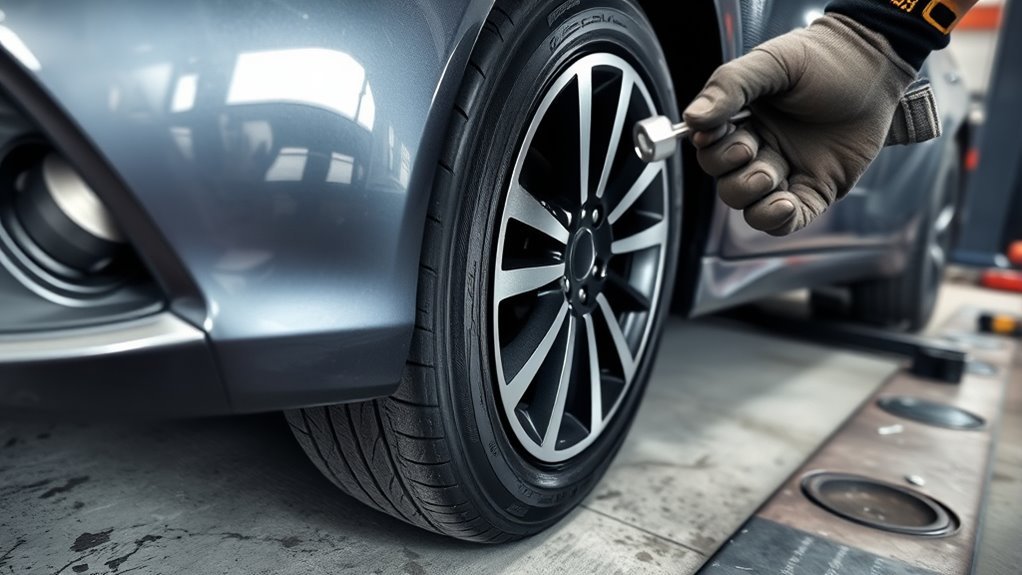
Skipping tire rotations lets one position do too much work for too long. On many Camrys, the front tires tend to wear faster because they handle steering and much of the braking. On AWD or eAWD Camrys, rotation is still important because uneven tread depth can affect traction and handling.
The 2025 Toyota Camry Warranty & Maintenance Guide lists scheduled maintenance every 5,000 miles or six months and shows tire rotation at each 5,000-mile maintenance interval. If you drive an older Camry, follow the schedule and rotation pattern in that model year’s owner’s manual, especially if your tires are directional or have different front/rear sizes.
- Rotate on schedule instead of waiting until one pair looks worn.
- Use the correct pattern for your tire type.
- Check tread depth at all four positions during each rotation.
- Investigate any tire that is more worn than the matching tire on the same axle.
Driving Habits That Wear Camry Tires Faster
Even with perfect alignment, your driving style can shorten tire life. Hard starts, sudden braking, fast corner entry, and repeated high-speed driving all create more heat and friction. Rough roads add impact damage, especially when tires are underinflated or low-profile.
| Habit | Tire effect |
|---|---|
| Hard acceleration | Faster tread loss and extra heat |
| Sharp cornering | Outer-edge wear and shoulder scrub |
| High-speed cruising | More heat buildup, especially with low pressure |
| Hitting potholes | Alignment shift, bent wheels, or internal tire damage |
Slow before turns, brake smoothly, and avoid potholes when safely possible. These habits reduce tire heat and keep the tread blocks from being dragged sideways across the pavement.
Brake, Steering, and Balance Problems That Mimic Tire Wear
Brake and steering faults can look like tire problems because they change how the tire meets the road. A sticking brake caliper can overheat one wheel and wear one tire faster. Loose tie rods or worn steering linkage can create wandering, toe change, and feathered tread. A wheel balance problem can cause vibration and contribute to cupped or choppy wear.
- After a drive, notice whether one wheel smells hot or feels much hotter than the others without touching brake parts directly.
- Listen for grinding, squealing, clunks, or humming.
- Check whether the steering wheel vibrates at highway speed.
- Have brake pads, rotors, calipers, steering linkage, and wheel balance checked if wear keeps returning.
Camry Trim, Tire Type, and Road Conditions
Not every Camry tire wears at the same rate. Tire compound, treadwear rating, wheel size, alignment specs, load, road surface, and driving style all matter. Larger wheels and shorter sidewalls can sharpen steering response, but they also make pothole impacts and pressure mistakes more noticeable. That does not mean a sportier trim is a bad choice; it means pressure, rotation, and alignment matter even more.
When shopping for replacements, compare the exact tire model, size, load rating, speed rating, warranty, and UTQG treadwear grade. The NHTSA tire safety booklet explains that UTQG can help compare tires, but it is not a guarantee of how long a tire will last. Maintenance and driving conditions still decide much of the result.
What to Check First Before Replacing Camry Tires
Use this quick checklist before spending money on another set of tires:
- Check cold PSI: Set all tires to the pressure on the driver-door label or owner’s manual.
- Measure tread depth: Check inner edge, center, and outer edge on every tire.
- Photograph the wear: Photos help a tire shop or alignment technician see the pattern before rotation changes it.
- Look for damage: Check for bulges, cuts, exposed cords, cracks, nails, or tread separation.
- Note symptoms: Pulling, vibration, noise, braking pull, and off-center steering all matter.
- Check rotation history: If you cannot remember the last rotation, schedule one and ask for tread-depth measurements.
- Inspect after potholes: A sudden new pull or vibration after impact deserves immediate inspection.
- Fix mechanical issues first: Alignment, brakes, suspension, and balance should be corrected before new tires go on.
[Products Worth Considering]

This multi-function tire valve stem removal tool set makes it fast to remove, install, bleed, and clean valve cores for easier tire maintenance. It includes valve core removers, a 4-way spool tool, replacement valve caps, and spare cores to handle replacements and repairs with confidence. Universal compatibility suits cars, trucks, motorcycles, bicycles, and more for roadside convenience.

Blackline Blackout is a water-based trim and tire dressing that restores rubber, vinyl, and plastic with a rich satin, blackout look. Its no-sling formula dries quickly and helps prevent messy transfer onto paint. The coating repels water and offers UV protection to help prevent fading, cracking, and discoloration for a clean, long-lasting finish.
What to Tell the Shop Before an Alignment or Tire Replacement
Bring clear symptoms instead of only asking for “new tires.” Tell the technician where the tread is wearing, when the problem started, whether you hit a pothole, and whether the Camry pulls, vibrates, clunks, or smells hot after driving. Those details help the shop decide whether to inspect alignment, balance, brakes, steering, or suspension first.
| Tell the shop | Why it helps |
|---|---|
| “The inner edge is wearing faster on the left front.” | Points to a specific corner for alignment, strut, control-arm, or brake checks. |
| “The steering wheel started sitting off-center after a pothole.” | Suggests impact-related toe, camber, or bent-part damage. |
| “The car shakes at highway speed.” | Raises wheel balance, bent wheel, tire damage, or suspension concerns. |
| “One wheel smells hot after normal driving.” | Helps the shop check for brake drag before it ruins another tire. |
Frequently Asked Questions
How often should Camry tires be inspected for early wear signs?
Inspect your Camry tires at least once a month and before long trips. Check cold tire pressure, tread depth, sidewalls, and uneven wear. Also inspect after a hard pothole hit, curb strike, new vibration, or sudden pulling.
Can wheel balance issues cause rapid tire wear on a Camry?
Yes. Poor wheel balance can cause vibration and contribute to cupped or choppy wear. However, balance is only one possibility. If the tire also shows one-edge wear, feathering, or pulling, check alignment and suspension parts too.
Do different Camry trim levels affect tire wear rates?
They can. Trims with larger wheels, lower-profile tires, sportier suspension tuning, or AWD/eAWD may show different wear patterns than a base model. Tire pressure, alignment, rotation, road surface, and driving style still have the biggest day-to-day effect.
What tire brands last longest on a Toyota Camry?
No single brand always lasts longest on every Camry. Compare the exact tire model, treadwear warranty, UTQG treadwear grade, size, load rating, and owner reviews for your driving conditions. Even a premium tire will wear quickly if pressure, alignment, suspension, or rotation is neglected.
Why are my Camry tires wearing on the inside edge?
Inside-edge wear usually points to toe, camber, bent suspension parts, worn bushings, bad struts, or loose steering parts. Get an alignment printout and suspension inspection before installing new tires.
Should I use the PSI on the tire sidewall or the Camry door label?
Use the cold tire pressure on the Camry’s driver-door tire label or owner’s manual. The sidewall number is the tire’s maximum permissible inflation pressure, not the vehicle’s normal target pressure.
Can seasonal temperature changes affect Camry tire wear?
Yes. Temperature changes affect tire pressure, and pressure affects tread wear. Cold weather can lower pressure, while heat and driving can raise it. Check pressure when the tires are cold and reset it to the Camry’s recommended PSI.
Why are my Camry front tires wearing faster than the rear tires?
On many Camrys, the front tires do more steering and braking work, and on front-wheel-drive models they also handle drive torque. That can make the front pair wear faster. Regular rotation helps even out that workload.
Should I get an alignment before or after new tires?
If the old tires show uneven wear, pulling, or feathering, schedule alignment and suspension inspection before or at the same time as new tire installation. New tires installed on a misaligned Camry can start wearing unevenly right away.
Conclusion
Your Toyota Camry tires wear out fast when the tread is fighting pressure errors, bad alignment, skipped rotations, worn suspension, imbalance, brake drag, steering looseness, rough roads, or aggressive driving. Start with a cold PSI check and tread-pattern inspection, then fix the mechanical cause before replacing tires. When the Camry tracks straight, rides smoothly, and wears evenly, the tires last longer and the car feels safer on every drive.
Sources
- Toyota 2025 Camry Warranty & Maintenance Guide — supports Camry maintenance interval and tire rotation guidance.
- Toyota 2025 Camry Owner’s Manual: Tires — supports tire inspection, treadwear indicator, and tire-use guidance.
- Toyota 2025 Camry Owner’s Manual: Tire Inflation Pressure — supports cold tire pressure label and pressure-check procedure.
- NHTSA Tire Safety Booklet — supports tire pressure, tread depth, rotation, balancing, alignment, UTQG, and tire safety guidance.
- Michelin: Wear in Center — supports center tread wear as an overinflation symptom.
- Michelin: Uneven Wear — supports uneven wear and pulling as alignment-related symptoms.

Related Articles

Toyota Camry All-Season Tires Explained: What They Can and Can’t Do
In exploring Toyota Camry all-season tires, discover their benefits and limitations—are they really the right choice for your driving needs?
Read More
Toyota Camry Tire Traction in Ice and Snow: A Practical Winter Driving Guide
Learn essential tips for maximizing tire traction on ice and snow in your Toyota Camry, ensuring your winter driving is safe and confident. Discover more now!
Read More
Do Toyota Camry Tires Need Snow Chains? When They Help and When They Don’t
How do snow chains enhance your Toyota Camry's winter driving safety, and when should you avoid using them? Discover the essential details inside!
Read More