
Toyota Camry Wheel Alignment: How Often It’s Needed and What It Involves
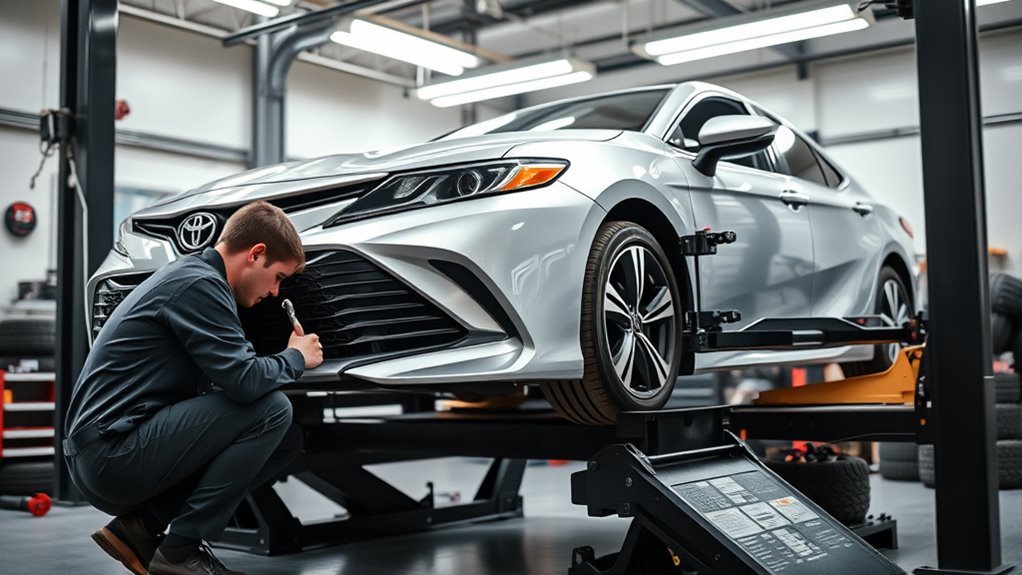
You should have your Toyota Camry’s wheel alignment checked when the car shows symptoms, after a hard pothole or curb hit, when installing new tires, or during regular tire service if your roads are rough. Alignment is not the same as tire rotation: rotation moves the tires to different positions, while alignment measures and adjusts wheel angles so the tires meet the road correctly.
Quick Answer
Have your Camry’s alignment checked if it pulls left or right, the steering wheel is off-center, tires wear unevenly, or you hit a pothole or curb. Toyota’s maintenance schedule lists regular tire rotation, while alignment is usually performed as needed after symptoms, tire wear, impact, or new tire installation.
Key Takeaways
- A Camry alignment should be checked after pulling, uneven tire wear, an off-center steering wheel, vibration, or a hard road impact.
- Toyota’s recent Camry maintenance guides schedule tire rotation at regular service intervals; alignment is a measurement and adjustment done when needed.
- Ask for a four-wheel alignment check or printout, then let the technician adjust only the angles that are out of specification and adjustable on your model.
- New tires should be installed on a car with correct alignment so the fresh tread does not start wearing unevenly.
- Toyota’s Basic Warranty may cover wheel alignment and balancing only during the limited warranty period and only when the issue qualifies under warranty terms.
At a Glance
| Time Required | About 30–90 minutes, depending on vehicle condition and alignment type |
| Difficulty | Professional service; not a driveway adjustment |
| Tools Needed | Alignment rack, wheel sensors, manufacturer specifications, and trained technician |
| Cost | Varies by shop, location, model year, and whether suspension repairs are needed; ask for a written estimate and printout |
How Often Does a Camry Need Alignment?
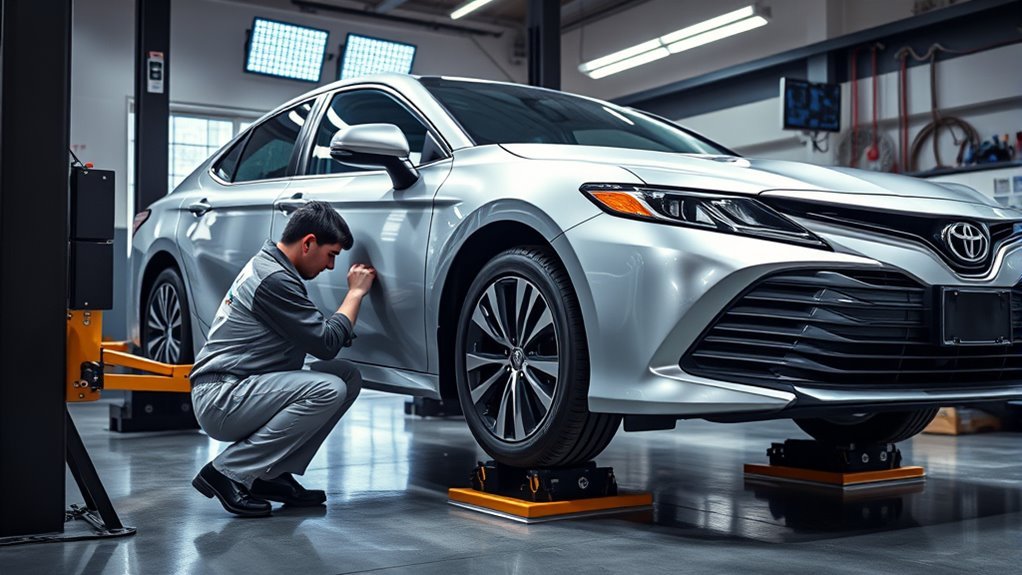
A Toyota Camry does not need a wheel alignment on a fixed mileage schedule the same way it needs scheduled maintenance. Toyota’s maintenance guides list regular items such as tire rotation, fluid checks, and inspections, while Toyota describes wheel alignment as a service that adjusts caster, camber, and toe so the vehicle tracks correctly and the tires wear evenly.
A practical rule is to check alignment whenever there is a reason to suspect a problem: after a hard pothole hit, curb impact, suspension repair, steering repair, tire replacement, or visible tire-wear change. If you drive on rough roads, an annual alignment check is also a smart preventive step, especially before buying new tires.
Note: Tire rotation and wheel alignment are different services. Toyota’s Camry maintenance log includes tire rotation at regular service intervals, but rotating tires does not correct camber, caster, or toe.
The U.S. Tire Manufacturers Association recommends rotating tires based on the vehicle owner’s manual and says that, when no period is specified, 5,000 to 8,000 miles is a common rotation interval. It also notes that striking a pothole or other road hazard can cause alignment issues and that misaligned wheels can create uneven, rapid tread wear.
Signs Your Camry Needs an Alignment
Even if your Camry was aligned recently, one hard impact or worn suspension part can change the wheel angles. Watch for these warning signs:
- Uneven tire wear: One edge wears faster than the rest, or the tread looks feathered when you run your hand across it.
- Pulling left or right: The car drifts on a flat, straight road when tire pressure is correct.
- Off-center steering wheel: The wheel sits crooked while the car is traveling straight.
- Steering vibration: A shake at highway speed may point to tire balance, tire damage, wheel damage, or alignment-related wear.
- Tire squeal or scrub: The tires make noise during normal turns because they are not rolling cleanly.
- Recent impact: You hit a pothole, curb, road debris, or a deep dip hard enough to feel it through the steering wheel.
Warning: Do not ignore a sudden pull, new vibration, or visible tire damage after a hard impact. Have the tires, wheels, steering, and suspension inspected before driving long distances.
What Causes Camry Alignment Problems?
Your Camry’s alignment changes when the suspension or steering geometry no longer holds the wheels at the correct angles. Road impacts are common, but wear, tire pressure, and previous repairs can also contribute.
Road Impacts and Potholes
Hitting a pothole, curb, raised road edge, or other hazard can jolt the suspension hard enough to shift toe, camber, or caster. After a strong impact, inspect the tire sidewalls and tread, then schedule an alignment check if the steering wheel is off-center, the car pulls, or the tires begin wearing oddly.
- A sharp hit rattles the steering wheel.
- One front tire starts to scrub along an edge.
- The Camry tracks slightly off center on a straight road.
Suspension Wear and Damage
As suspension parts wear, your Camry’s alignment can drift because worn bushings, ball joints, control arms, struts, or mounts may no longer hold the wheel in its intended position. Rust, collision damage, heavy loads, and neglected suspension repairs can make the problem worse.
A good alignment shop should inspect for loose or damaged parts before making adjustments. If a component is bent, worn, or loose, the alignment may not hold until that part is repaired.
Steering and Tire Issues
Not every steering complaint is caused by alignment. Low tire pressure, mismatched tires, tire conicity, worn steering parts, brake drag, and wheel imbalance can create similar symptoms. Start with tire pressure and visible tire condition, then move to alignment and suspension checks.
- A front tire feathering along the edge
- A steering wheel angled on a straight highway
- Vibration through your hands at 60 mph
Pro Tip: Before paying for alignment, ask the shop to confirm tire pressure, inspect for tire damage, and check for loose steering or suspension parts. Alignment cannot fix a bent wheel, separated tire, or worn ball joint.
Alignment vs. Tire Rotation vs. Balancing
These services are often mentioned together, but they solve different problems.
| Service | What It Does | When You Need It |
|---|---|---|
| Alignment | Adjusts wheel angles: camber, caster, and toe. | Pulling, off-center steering, uneven wear, impact, suspension repair, or new tires. |
| Rotation | Moves tires to different positions to even out normal wear. | At the interval in your owner’s manual or maintenance guide. |
| Balancing | Corrects weight imbalance in the tire-and-wheel assembly. | Steering wheel or seat vibration, new tires, or tire repair. |
What Happens During a Camry Wheel Alignment?

During a Camry wheel alignment, a technician places the car on an alignment rack, attaches sensors to the wheels, measures the current angles, and compares them with Toyota specifications for your model year, trim, drivetrain, and tire setup.
| Angle | Simple Meaning | Why It Matters |
|---|---|---|
| Camber | How much the tire tilts inward or outward when viewed from the front. | Affects edge wear and tire contact in turns. |
| Caster | The forward or backward tilt of the steering axis. | Affects steering stability and return-to-center feel. |
| Toe | Whether the tires point slightly inward or outward when viewed from above. | Affects straight tracking and rapid tread wear. |
Ask for the alignment printout. It should show the before and after readings and whether each angle is inside the factory range. If an angle cannot be adjusted into range, the shop should explain why before replacing parts.
Do You Need an Alignment After New Tires?
Yes, you should at least have the alignment checked when installing new tires, especially if the old tires had uneven wear. New tires are an investment, and incorrect toe or camber can start wearing the fresh tread unevenly right away.
- Fresh tread meets the pavement more evenly.
- The steering wheel tracks straight instead of fighting the lane.
- The tires roll with less scrub when the angles are correct.
You may not need an adjustment if the printout shows all angles already within specification. But skipping the check after uneven tire wear, suspension repair, or a hard impact is risky because the new tires can inherit the same wear problem.
Should You Choose 2-Wheel or 4-Wheel Alignment?
For most Camry owners, the safest request is a four-wheel alignment check. That does not mean every angle on every wheel will be adjustable. It means the technician measures all four wheels, verifies the rear thrust line, and adjusts the angles that are both out of spec and adjustable.
2-Wheel Alignment Basics
A two-wheel alignment, often called a front-end alignment, focuses on the front wheels. It may be enough when the rear wheels are fixed, undamaged, and already tracking correctly. However, it can miss rear-related problems that make the car dog-track, pull, or wear tires unevenly.
4-Wheel Alignment Benefits
A four-wheel alignment measures front and rear alignment together. This is helpful on modern vehicles because rear toe, rear camber, suspension condition, and thrust angle can influence how straight the vehicle tracks. If the rear is in spec, the shop may only adjust the front; if the rear is out of spec and adjustable, it can be corrected too.
Note: Alignment choices can vary by Camry model year, trim, drivetrain, suspension design, and shop equipment. Ask for a four-wheel measurement and a printout rather than guessing from “front-wheel drive” alone.
How Long Camry Alignments Take and Cost
A Camry alignment usually takes about 30 to 90 minutes. A simple front adjustment on a car with no damage may be faster. A four-wheel check, seized adjusters, worn parts, steering repairs, or suspension damage can take longer.
Cost varies by location, dealer or independent shop, model year, and whether extra parts or repairs are needed. Before approving work, ask for:
- A written estimate
- A before-and-after alignment printout
- Confirmation that tire pressure was checked first
- An explanation of any part that prevents the vehicle from being aligned
- Whether the shop guarantees the alignment for a set time or mileage
If you are replacing tires, ask whether the shop offers a tire-and-alignment package. Bundling the work can be convenient, but the printout still matters because it proves the tire angles were measured.
Are Camry Alignments Worth It?
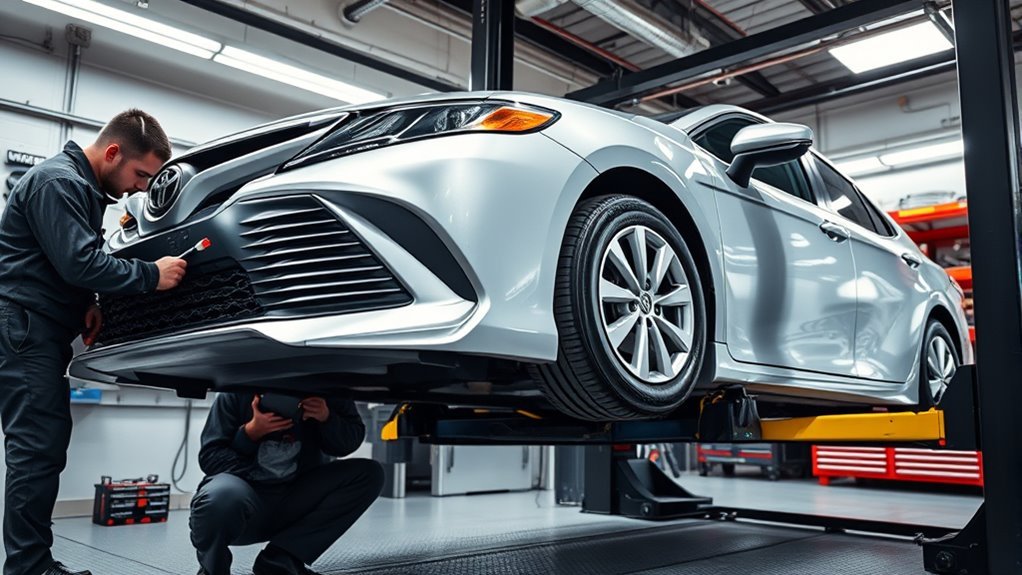
Yes—Camry wheel alignments are worth it when the car needs one. Correct alignment helps reduce uneven tire wear, supports stable steering, and keeps the car tracking as designed. It can also reduce tire scrub, which helps the tires roll more efficiently.
The best time to check alignment is before a tire problem becomes expensive: after an impact, before new tires, or as soon as the steering wheel stops sitting straight.
Alignment is not magic. It will not fix a bent wheel, bad tire, worn bearing, loose ball joint, or damaged control arm. But when the suspension is healthy and the wheel angles are off, alignment is one of the most cost-effective ways to protect your tires and improve how your Camry feels on the road.
Frequently Asked Questions
How often should you get a wheel alignment on a Toyota Camry?
Get the alignment checked when symptoms appear, after a hard pothole or curb impact, after suspension or steering work, when installing new tires, or about once a year if you drive on rough roads. Follow your Toyota maintenance guide for tire rotation, but treat alignment as an as-needed measurement and adjustment.
How much is an alignment on a Camry?
The price depends on your area, shop type, model year, drivetrain, and whether worn parts must be repaired first. Ask for a written estimate before work starts and request a before-and-after printout when the alignment is complete.
What are the signs of poor alignment?
Common signs include uneven tire wear, pulling left or right, an off-center steering wheel, tire squeal, and vibration. Check tire pressure first because underinflation, overinflation, or tire damage can mimic alignment symptoms.
Is Toyota alignment under warranty?
Toyota’s Basic Warranty may cover wheel alignment and wheel balancing for 12 months or 12,000 miles, whichever comes first, when the concern qualifies under warranty terms. Routine wear, pothole damage, curb impacts, and neglect are usually handled as maintenance or repair costs, not warranty defects.
Do I need an alignment after hitting a pothole?
You should have the tires, wheels, steering, suspension, and alignment checked if the pothole hit was hard, the car now pulls, the steering wheel is crooked, or you notice vibration or tire damage. A light bump with no symptoms may not require adjustment, but visible damage should be inspected promptly.
Can I drive with bad alignment?
You can usually drive a short distance to a repair shop, but you should not ignore bad alignment. Severe pulling, vibration, damaged tires, or rapid tread wear can reduce control and may lead to tire failure or more expensive repairs.
Conclusion
Keep your Camry tracking straight by checking alignment when the symptoms call for it: pulling, an off-center wheel, uneven tire wear, vibration, new tires, suspension work, or a hard road impact. Regular tire rotation helps manage normal wear, but only alignment corrects camber, caster, and toe. Ask for a four-wheel measurement, review the printout, and repair worn parts before expecting the alignment to hold. That approach protects your tires, handling, and repair budget.
Sources
- Toyota — Wheel Alignment & Why It Matters — explains caster, camber, toe, alignment symptoms, and why alignment matters.
- Toyota 2024 Camry Warranty & Maintenance Guide — supports scheduled tire rotation and maintenance-log context.
- Toyota 2025 Camry Warranty & Maintenance Guide — supports the 12-month/12,000-mile wheel alignment and balancing warranty limitation.
- U.S. Tire Manufacturers Association — Tire Care Essentials — supports pothole/alignment issues, tire rotation guidance, pressure checks, and uneven tread-wear warnings.
- NHTSA TireWise — supports tire safety, tread, pressure, recalls, rolling resistance, and fuel-efficiency context.
- FuelEconomy.gov — Keeping Your Vehicle in Shape — supports tire pressure, rolling resistance, and fuel-economy context.

Related Articles

Toyota Camry All-Season Tires Explained: What They Can and Can’t Do
In exploring Toyota Camry all-season tires, discover their benefits and limitations—are they really the right choice for your driving needs?
Read More
Toyota Camry Tire Traction in Ice and Snow: A Practical Winter Driving Guide
Learn essential tips for maximizing tire traction on ice and snow in your Toyota Camry, ensuring your winter driving is safe and confident. Discover more now!
Read More
Do Toyota Camry Tires Need Snow Chains? When They Help and When They Don’t
How do snow chains enhance your Toyota Camry's winter driving safety, and when should you avoid using them? Discover the essential details inside!
Read More