What Happens If You Never Rotate Tires on a Hyundai Sonata?
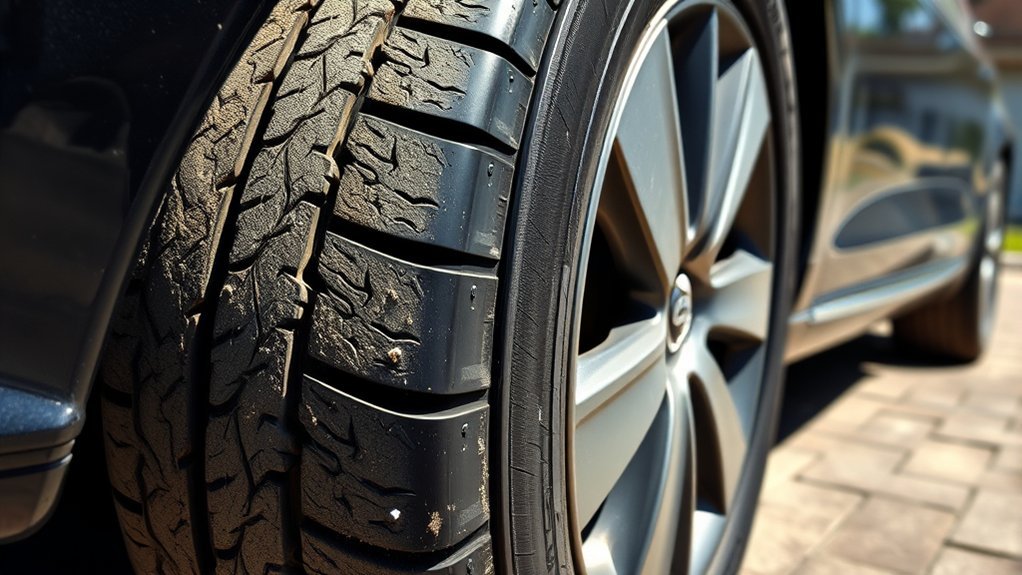
If you never rotate the tires on your Hyundai Sonata, the tires will not wear evenly. The front and rear tires carry different loads during steering, braking, cornering, and acceleration, so leaving each tire in the same position can lead to faster tread loss in certain areas, more road noise, vibration, reduced wet-road grip, and earlier tire replacement.
Quick Answer
If you never rotate your Hyundai Sonata’s tires, they can develop uneven tread wear that hurts handling, ride comfort, wet traction, and tire life. Hyundai recommends rotating tires every 8,000 miles (13,000 km), or sooner if irregular wear appears.
Key Takeaways
- Skipping tire rotation usually causes the front and rear tires to wear at different rates.
- Uneven tread can lead to vibration, road noise, pulling, weaker wet traction, and less predictable handling.
- Rotation helps even out wear, but it will not fix bad alignment, damaged tires, worn suspension parts, or tires that already need replacement.
- Check your Sonata’s exact owner’s manual and tire warranty, but Hyundai’s general guidance is every 8,000 miles or sooner if irregular wear develops.
The Importance of Regular Tire Rotation

Tire rotation means moving each tire to a different position on the vehicle so all four tires share wear more evenly. According to Hyundai’s tire rotation guidance, tires should be rotated every 8,000 miles (13,000 km), or sooner if irregular wear develops.
This matters because your Sonata’s tires do different jobs depending on where they sit. Front tires handle much of the steering and braking work, while the rear tires support stability and tracking. If the tires stay in one spot for too long, the set can lose its balanced wear pattern.
Regular rotation helps maintain more consistent tread depth, smoother ride quality, and more predictable traction. It also gives the technician a chance to inspect the tires for uneven wear, cuts, bulges, exposed cord, pressure problems, wheel balance issues, and brake-pad wear.
Note: Your exact Sonata model year, tire type, drivetrain, and tire warranty may include additional requirements. When the owner’s manual, tire sidewall instructions, and tire warranty disagree, follow the most specific instruction for your vehicle and tire set.
Consequences of Skipping Tire Rotation
Skipping tire rotation does not usually destroy a tire overnight. The problem builds gradually. At first, you may only see slightly faster wear on one axle. Over time, the difference can become large enough to affect comfort, traction, and replacement cost.
| Consequence | What You May Notice | Why It Matters |
|---|---|---|
| Uneven tread wear | One pair of tires looks more worn than the other | Traction and tire life become less consistent |
| Vibration or road noise | Buzzing, humming, shaking, or a rougher ride | May point to irregular wear, imbalance, or alignment issues |
| Reduced wet traction | Less confidence in rain, longer stops, or easier slipping | Tread depth and tire condition are critical for water evacuation |
| Earlier replacement | Two tires wear out before the full set should | You may lose usable tread life and spend more sooner |
| Warranty record problems | Mileage warranty claim may be harder to support | Some tire warranties require rotation records |
How Uneven Wear Affects Vehicle Performance
Uneven tire wear affects more than tread appearance. Tires are the only parts of your Sonata touching the road, so inconsistent tread depth can change how the car feels when it turns, brakes, accelerates, or drives through rain.
Tread Wear Patterns
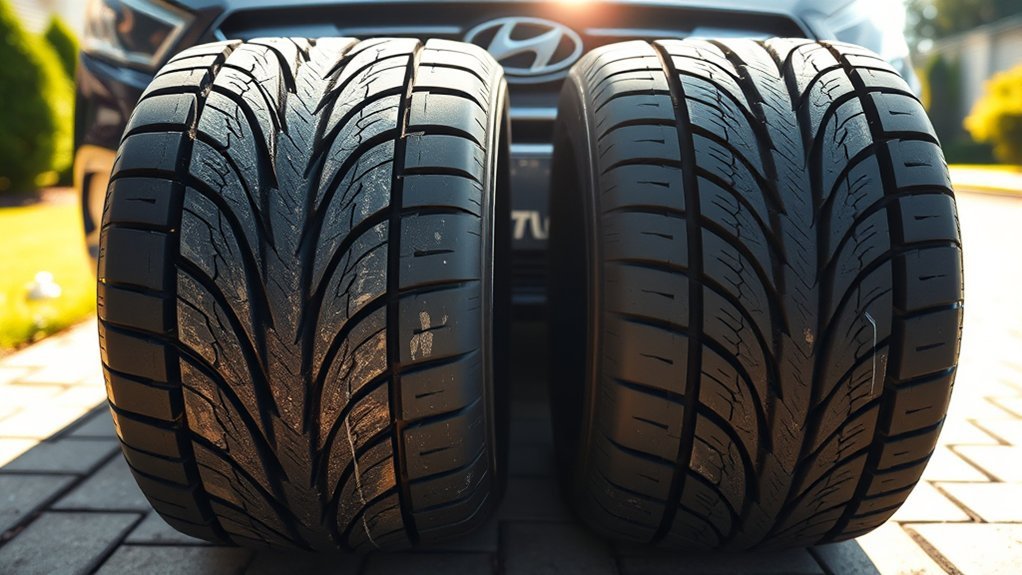
When tires are not rotated, the front tires often wear faster because they handle steering, braking, and cornering forces. Depending on tire pressure, alignment, and driving style, you may see shoulder wear, center wear, cupping, feathering, or one tire wearing faster than the others.
That wear pattern tells you something useful. Inner-edge or outer-edge wear may point to alignment problems. Center wear may suggest overinflation. Wear on both shoulders may suggest underinflation. Cupping or scalloping may point to balance or suspension issues. Rotation helps distribute normal wear, but it does not repair the cause of abnormal wear.
Handling and Stability
As tread depth becomes uneven, your Sonata may feel less stable during lane changes, sharp turns, or sudden stops. You may also notice the vehicle pulling to one side, especially on flat roads. If the pulling continues after tire pressure is corrected, have the alignment and suspension checked.
Safety Risks Involved
The main safety concern is not the missed rotation by itself. The concern is what missed rotations allow: uneven tread, low tread depth, hidden damage, poor tire pressure, and less predictable grip. The National Highway Traffic Safety Administration estimates nearly 11,000 tire-related crashes each year, and many can be prevented through proper tire maintenance, including inflation and rotation.
Warning: Do not simply rotate a tire that has a bulge, exposed cord, deep cracking, severe sidewall damage, or tread at the replacement limit. Have it inspected and replaced if needed.
Risks of Hydroplaning and Poor Traction

Hydroplaning happens when a layer of water separates the tire from the road. Tire rotation does not magically prevent hydroplaning, but it helps maintain more even tread depth across the set. That matters because tread grooves help move water away from the tire’s contact patch.
Increased Hydroplaning Risk
If one pair of tires becomes much more worn than the other, your Sonata may lose wet-road grip sooner than expected. The risk is higher when tread depth is low, tire pressure is wrong, speed is too high for the conditions, or standing water is present.
Reduced Traction Levels
Reduced traction can show up as longer stopping distances, easier wheel slip, or a less secure feeling in rain. NHTSA recommends checking tire pressure at least once a month and inspecting tires for uneven wear, cracks, foreign objects, and other signs of damage.
| Tire Condition | Wet-Road Effect |
|---|---|
| Even tread and correct pressure | Best chance of predictable grip and handling |
| Uneven tread depth | Inconsistent traction from tire to tire |
| Low tread depth | More difficulty channeling water away |
| Bulges, exposed cord, or severe cracking | Unsafe condition that needs professional inspection |
Unstable Driving Conditions
Uneven wear can make a car feel less settled in bad weather. If your Sonata shakes, wanders, pulls, or feels unstable in rain, do not wait for the next scheduled maintenance visit. Check pressure, inspect tread, and have the tires and alignment evaluated.
Key Indicators for Tire Rotation
The easiest indicator is mileage. If your Sonata is near 8,000 miles since the last tire rotation, schedule one. You should rotate sooner if you see irregular wear or if the car begins to feel different on the road.
- Vibration through the steering wheel, seat, or floor
- Humming, thumping, or louder-than-normal tire noise
- Pulling to one side after tire pressure has been corrected
- One axle wearing faster than the other
- Visible cupping, feathering, shoulder wear, or uneven tread depth
- Treadwear indicators becoming level with the tread surface
Pro Tip: Keep a tire-pressure gauge and a simple tread-depth gauge in your glove box. Check pressure when the tires are cold, and measure tread in the inner, center, and outer grooves so uneven wear is easier to spot.
What to Do If You Already Skipped Tire Rotation
If you are overdue, do not panic. Start with a tire check before assuming a basic rotation is enough.
- Check cold tire pressure. Use the pressure listed on the driver-side door placard or in the owner’s manual, not the maximum pressure printed on the tire sidewall.
- Inspect tread depth. Look at all four tires, not just the outer edge you can see quickly.
- Look for damage. Bulges, exposed cords, deep cuts, severe cracks, or embedded objects need professional attention.
- Compare tire wear. If one tire is dramatically different, ask a technician to inspect alignment, balance, and suspension before rotation.
- Rotate if the tires are safe. A shop can rotate, check balance, inspect brakes, and set the correct front/rear pressure.
- Document the service. Keep the invoice or maintenance record, especially if your tires have a mileage warranty.
[Products Worth Considering]

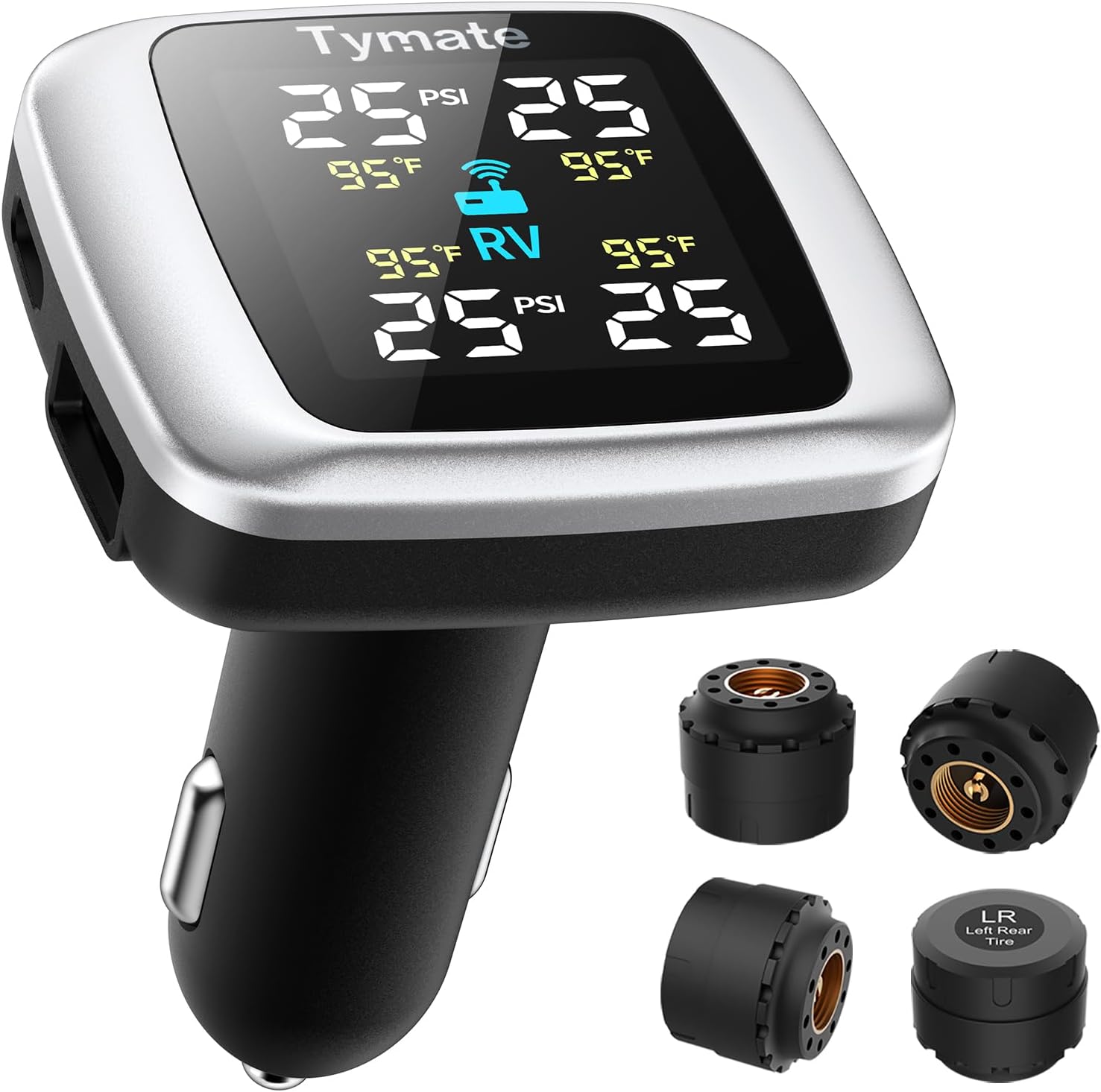
The Milton 555e digital tire inflator delivers fast, accurate pressure readings with a backlit display and multiple unit options, making tire inflation quick and easy. Its durable 20" EPDM rubber hose and grip‑head chuck provide reliable connection, while the ±1 PSI accuracy ensures precise inflation for cars, bikes, and trucks.

This digital tire pressure gauge combines a sturdy pistol grip inflator with a backlit 0.1 PSI display for quick, accurate readings in any lighting condition. Its 360° swivel gauge and 20" rubber hose make it easy to use and store, while the integrated inflate/deflate trigger and ¼" NPT air inlet provide fast, reliable tire maintenance.

The WORKPRO digital tire pressure gauge with inflator offers precise 0.1 PSI resolution and ±1% accuracy for reliable tire inflation across vehicles and inflatables. Built with heavy‑duty aluminum alloy, brass, and rubber, it resists rust and drops while delivering deflation, inflation, and pressure checking functions. The kit includes valve caps, adapters, a twist‑on chuck, screwdriver, nozzles, needle, seal tape, and a storage bag with batteries, making it a versatile, portable solution for on‑the‑go tire maintenance.
What Tire Rotation Cannot Fix
Tire rotation is preventive maintenance, not a repair for every tire problem. Rotating damaged or badly worn tires can move the symptom to another corner of the vehicle without solving the cause.
| Problem | What You Need Instead |
|---|---|
| Bad alignment | Alignment inspection and adjustment |
| Out-of-balance wheel/tire | Wheel balancing |
| Worn suspension parts | Suspension diagnosis and repair |
| Tread at replacement limit | Tire replacement |
| Bulges, exposed cord, or severe cracking | Immediate professional inspection and likely replacement |
Tire Rotation Patterns for a Hyundai Sonata
The correct rotation pattern depends on your Sonata’s drivetrain and tire design. Many Sonata models use front-wheel drive, but some model years and trims may differ. Directional, asymmetrical, staggered, or differently sized tires can also change the correct pattern.
| Setup | Common Rotation Note |
|---|---|
| Front-wheel drive with same-size, non-directional tires | Front tires usually move straight back; rear tires often cross to the front. |
| All-wheel drive with same-size, non-directional tires | A crisscross or manual-specified pattern may be used to keep tread depth balanced. |
| Directional tires | Keep each tire on the same side and rotate front to rear unless remounted. |
| Asymmetrical tires | The side marked “outside” must remain facing outward. |
| Compact spare tire | Do not include a compact spare in the tire rotation. |
Hyundai also warns not to mix bias-ply and radial-ply tires, because doing so can cause unusual handling characteristics and loss of control. After rotation, tire pressures should be set to specification and lug nut tightness should be checked to the manual’s torque specification.
[Products Worth Considering]

The Milton 507KIT delivers fast, accurate tire inflation, deflation and pressure measurement with a backlit LCD gauge and 14" rubber hose. Its 3‑in‑1 design meets ANSI/ASME standards and provides readings from 0‑250 PSI with 0.1 PSI resolution. The ergonomic pistol‑grip body and brass lock‑on chuck make one‑handed operation effortless, while the auto‑off feature conserves battery life.
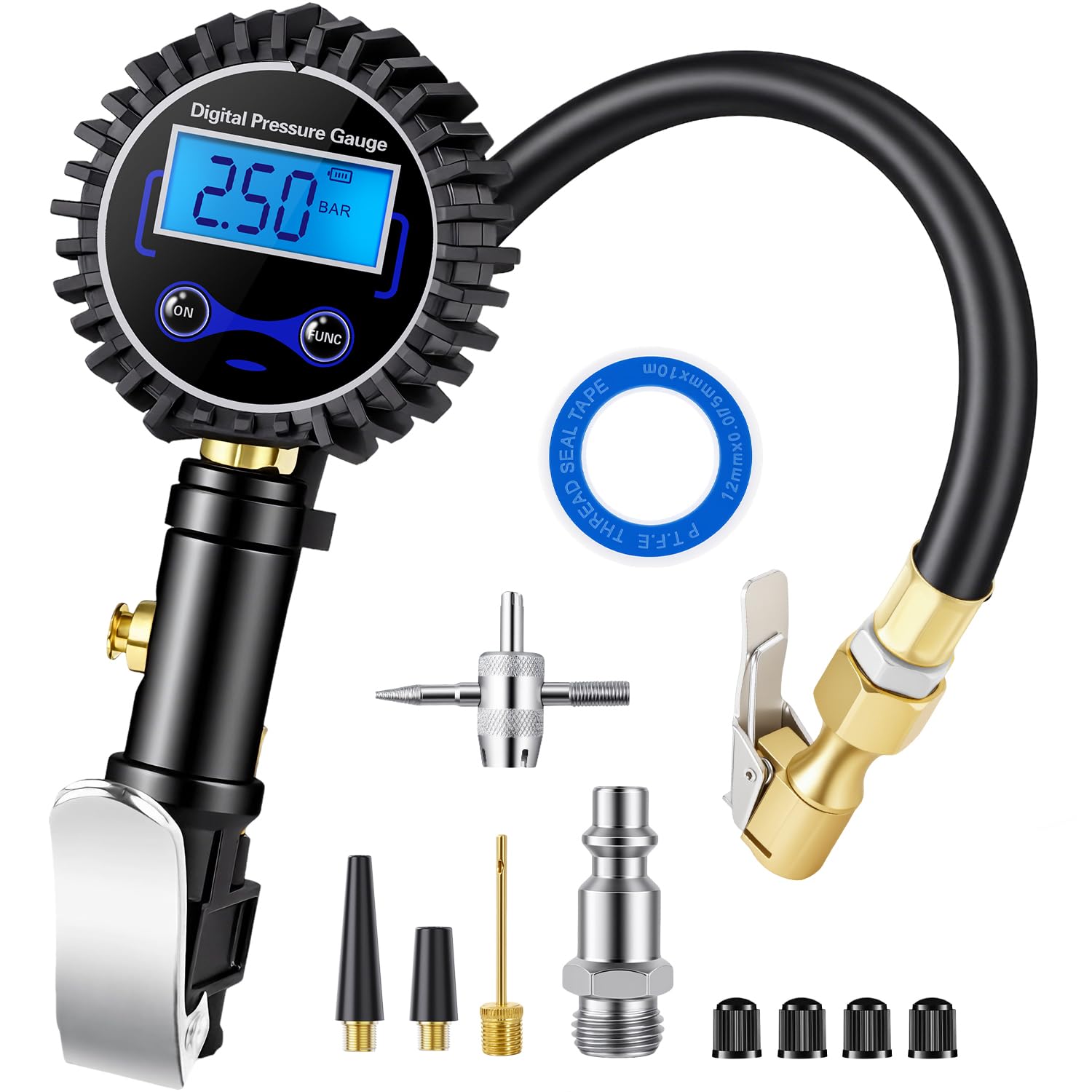
The Digital Tire Pressure Gauge with Inflator offers precise pressure readings with a high‑resolution LED display and four unit options, making tire maintenance quick and accurate. Built from stainless steel and brass, it includes a durable rubber hose, quick‑connect coupler, and a 3‑year warranty for reliable, everyday use across cars, RVs, bikes, and inflatables.

【Car Jack Capacity】Maximum lifting weight 2 Ton (4409 lbs),This Jack for Car Lifting Range from 4.33" (11cm) to 15.75"(40cm). The scissor lift jack provides a wider range to reach under low chassis sedans or elevate high-body SUVs effortlessly.
How Tire Rotation Prolongs Tire Life
Regular tire rotation helps extend tire life by distributing wear more evenly across all four tires. Without rotation, one pair of tires may reach the replacement point while the other pair still has usable tread. That can force you to replace tires sooner than expected.
Even wear also helps your Sonata ride more smoothly. When tread depth stays balanced, the tires are more likely to respond consistently during braking, cornering, and highway driving. That consistency is especially important in rain, where tire condition and tread depth affect how well water is moved away from the contact patch.
NHTSA’s tire safety guidance is simple: check tire pressure monthly, inspect tires for uneven wear and damage, and use proper maintenance to help prevent tire-related crashes.
Best Practices for Tire Maintenance
Tire rotation works best when it is part of a complete tire-care routine. For your Hyundai Sonata, follow these best practices:
- Rotate on schedule. Use Hyundai’s 8,000-mile guidance unless your specific model-year manual or tire warranty says otherwise.
- Check tire pressure monthly. Measure pressure when the tires are cold, ideally before driving or after the car has been parked for several hours.
- Use the vehicle placard. The correct pressure is on the tire information placard or in the owner’s manual.
- Inspect tread and sidewalls. Look for uneven wear, cracks, cuts, bulges, nails, glass, or exposed cord.
- Check treadwear indicators. Built-in treadwear bars show when the tire is worn to the replacement point.
- Ask for balance and alignment checks when needed. Rotation helps wear distribution, but vibration and one-sided wear often need more than rotation.
- Keep records. Save receipts and mileage notes for maintenance history and possible tire warranty claims.
[Products Worth Considering]
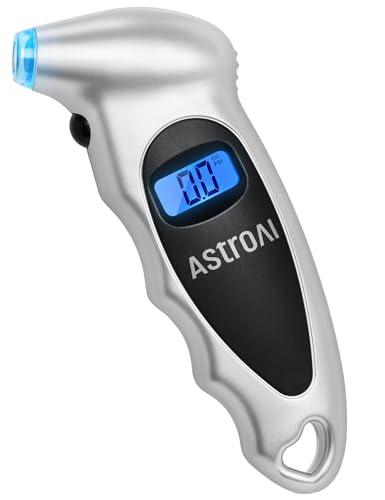
Accurate, Dependable Readings: Factory‑calibrated to ±1 PSI, so you can confidently match your vehicle’s recommended PSI (check the door jamb sticker). Ideal for monthly checks and road trips — consistent results every time, cold or warm.

PROCESS LEVEL ACCURACY: Each ETENWOLF’s digital tire pressure gauge is calibrated manually to ANSI B40.7 Grade 2A(plus-minus 1 PSI).Presta valve adapter not included, if used for bicycles, it must be purchased separately

EXPERT-GRADE CALIBRATION: Each AstroAI Tire Pressure Gauge is calibrated with professional-grade tools, ensuring quick and accurate measurement results within plus-minus 1PSI. Stay prepared for any roadside emergency and travel with peace of mind.
When Should You Schedule Your Tire Rotation?
Schedule tire rotation every 8,000 miles (13,000 km), or sooner if you see irregular wear. Many drivers pair tire rotation with oil changes or scheduled service visits so it is easier to remember.
You should also schedule an inspection before long road trips, before heavy rain seasons, or anytime the car starts vibrating, pulling, or making unusual tire noise. If your tread is already at the replacement limit, replacing the tire is safer than rotating it to a different position.
Note: If a shop rotates your tires, ask them to set the front and rear tire pressures to the correct specifications. Some vehicles use different pressures front to rear.
Frequently Asked Questions
How often does Hyundai recommend tire rotation?
Hyundai’s tire rotation guidance says to rotate tires every 8,000 miles (13,000 km), or sooner if irregular wear develops. Always check the owner’s manual for your exact Sonata model year and your tire warranty requirements.
How long can I go without getting my tires rotated?
Do not treat tire rotation as optional. If you are past the recommended interval, inspect the tires now and schedule service. A small delay may not ruin a tire, but repeated missed rotations can create uneven wear that shortens tire life and affects handling.
What happens if you wait too long to rotate your tires?
Waiting too long can cause uneven tread depth, vibration, extra road noise, reduced wet traction, and premature replacement. If the tires are already badly worn or damaged, rotation may not be enough; they may need repair, alignment work, or replacement.
Can tire rotation fix uneven tire wear?
Rotation can help prevent normal uneven wear from getting worse, but it cannot fix the root cause of abnormal wear. If you see cupping, feathering, one-sided wear, or rapid wear on one tire, have the alignment, balance, tire pressure, and suspension checked.
Does tire rotation improve fuel economy?
Rotation supports even wear, which can help tires roll and handle more consistently. However, tire pressure has the bigger direct effect on fuel economy. Check tire pressure monthly and keep it at the vehicle’s recommended cold pressure.
Should I rotate Hyundai Sonata tires myself?
You can rotate tires yourself if you have the correct jack stands, tools, torque wrench, rotation pattern, and safety knowledge. If you are unsure, use a professional shop so the tires, balance, pressure, lug torque, brakes, and wear patterns can be checked at the same time.
Should the compact spare tire be included in rotation?
No. Hyundai says not to use a compact spare tire for tire rotation. Compact spares are temporary-use tires and are not designed to be part of the regular rotation pattern.
Conclusion
Never rotating the tires on your Hyundai Sonata can quietly turn into uneven tread wear, vibration, road noise, weaker wet traction, and earlier tire replacement. The fix is simple: rotate on schedule, check pressure monthly, inspect tread often, and treat unusual wear as a sign that the tires, alignment, balance, or suspension need attention. Regular tire rotation is not just about saving money; it helps keep your Sonata predictable, comfortable, and safer on the road.
Sources
- Hyundai Owner’s Manual — Tire Rotation — Hyundai rotation interval, inspection notes, compact spare warning, asymmetrical tire note, and lug nut/tire-pressure guidance.
- NHTSA Tire Safety Brochure — monthly tire-pressure checks, tread inspection, treadwear indicators, and tire pressure placard guidance.
- NHTSA Be TireWise — tire-related crash estimate and tire maintenance safety guidance.
- NHTSA TireWise Tire Safety — tire safety ratings, maintenance, labeling, and consumer tire-safety resources.
- Michelin Tire Rotation Guide — why rotation matters, common intervals, tire-position wear differences, and rotation-pattern notes.

Related Articles

Danger of Using Summer Tires in Winter on a Hyundai Sonata
Potentially perilous, using summer tires in winter on your Hyundai Sonata can compromise safety—discover the hidden dangers that await you on icy roads.
Read More
Can You Mix Nitrogen and Air in Hyundai Sonata Tires? Answered
Discover the implications of mixing nitrogen and air in your Hyundai Sonata tires—are the benefits worth the risks? Explore the answer inside!
Read More
How to Tell If Hyundai Sonata Tires Are Too Old to Use Safely
Understand how to assess the age of your Hyundai Sonata tires and discover crucial signs of deterioration that could compromise your safety on the road.
Read More