
What Temperature to Switch to Winter Tires on Hyundai Sonata
You should switch to winter tires on your Hyundai Sonata when outdoor or road temperatures are consistently below 7°C (45°F), not only when snow is already falling. At that temperature range, all-season and summer tire rubber can become less flexible, which reduces grip in cold, wet, icy, or snowy conditions. Winter tires stay more pliable in the cold and help your Sonata brake, turn, and accelerate with better control.
Quick Answer
Switch your Hyundai Sonata to winter tires when temperatures stay below 45°F (7°C) for several days or when snow, ice, or freezing rain is forecast soon. Install a matching set of four winter tires before the first major cold snap so your Sonata has balanced traction and predictable handling.
Key Takeaways
- The best switching point is consistent temperatures below 45°F (7°C), even if snow has not arrived yet.
- Use four matching winter tires, not just two, to keep your Sonata stable while braking, turning, and accelerating.
- Check the driver-door tire placard and owner’s manual for the correct tire size, load rating, and cold tire pressure.
- If your Sonata has Snow Mode or AWD, use it only as extra help; it does not replace winter tires.
- Plan installation before the rush, especially in cold-weather areas such as the Twin Cities, where late October to early November is often a smart target.
At a Glance
| Time Required | About 30–90 minutes at a tire shop, depending on appointment volume and whether the tires are already mounted on wheels. |
| Difficulty | Easy if handled by a shop; moderate for a DIY wheel swap because proper jacking, torque, and pressure checks are required. |
| Tools Needed | Winter tires, tire pressure gauge, tread depth gauge, owner’s manual, and the driver-door tire placard. For DIY: jack, jack stands, wheel chocks, and torque wrench. |
| Cost | Varies by tire size, brand, mounting/balancing needs, and whether you buy separate winter wheels. A shop can quote the exact cost for your Sonata’s tire size. |
Why Temperature Matters for Winter Tires
Temperature matters because tire rubber changes behavior in cold weather. Transport Canada explains that all-season and summer tires begin to lose elasticity below 7°C, while winter tires are designed to keep their grip at lower temperatures. Michelin also describes dedicated winter tires as being designed for use below 7°C (45°F).
That is why the best time to install winter tires is before the first storm, not during it. If mornings and evenings are regularly below 45°F, your Hyundai Sonata is already operating in the temperature range where winter tires can help.
Note: The 45°F / 7°C rule is a timing guide, not a magic line. Road surface, rain, shade, bridges, slush, ice, and tire condition all affect real traction.
How Cold Affects Tire Performance
When temperatures drop, tires need to stay flexible enough to conform to the road. A tire that becomes stiff has a harder time gripping cold pavement, ice, or packed snow. Winter tires use cold-weather rubber compounds and tread designs that help create more biting edges in snow and slush.
Tire Rubber Flexibility
Below 45°F (7°C), many all-season and summer tires can feel harder and less responsive. On a dry road this may be subtle, but on cold rain, slush, packed snow, or ice, the loss of flexibility can make a noticeable difference in steering and stopping.
Winter tires are built to remain more pliable in those temperatures. That flexibility helps the tread maintain better contact with the road and gives your Sonata more predictable control.
Grip on Ice
Ice is where tire choice becomes especially important. Winter tires help because they combine softer cold-weather compounds, deeper grooves, and many small tread cuts called sipes. These features help the tire bite into snow and manage water film on slick surfaces.
In one Tire Rack snow-braking test from 30 mph, the car on winter tires stopped at about 59 feet, while the car on all-season tires needed about 30 more feet.
That test is only one example, and results vary by tire, vehicle, speed, surface, and temperature. Still, it shows why switching before winter weather arrives can be a real safety upgrade.
Temperature Threshold Awareness
Watch the forecast for the weekly pattern, not just one cold night. If your area is regularly seeing morning lows and daytime temperatures below 45°F, schedule the tire change. If temperatures later rise and stay above that range in spring, switch back to all-season or summer tires to avoid wearing winter tires too quickly on warm pavement.
When to Change Tires for Winter Safety?
Change to winter tires when temperatures consistently dip below 45°F (7°C), when freezing rain or snow is in the forecast, or when you regularly drive before sunrise or after dark in cold conditions. In the greater Twin Cities region, that often means planning for installation in late October or early November, but the temperature pattern matters more than the calendar.
Here is the simplest timing rule:
- Check the 7-day forecast: If most days or nights are below 45°F, schedule your tire swap.
- Book before the first storm: Tire shops fill quickly once snow appears in the forecast.
- Use winter tires on all four wheels: Hyundai guidance says snow tires should be installed on all four wheels for balanced handling.
Warning: Do not install only two winter tires on a Hyundai Sonata. Mixing winter tires with all-season or summer tires can create uneven grip, especially during braking and cornering.
Signs You Need to Switch to Winter Tires
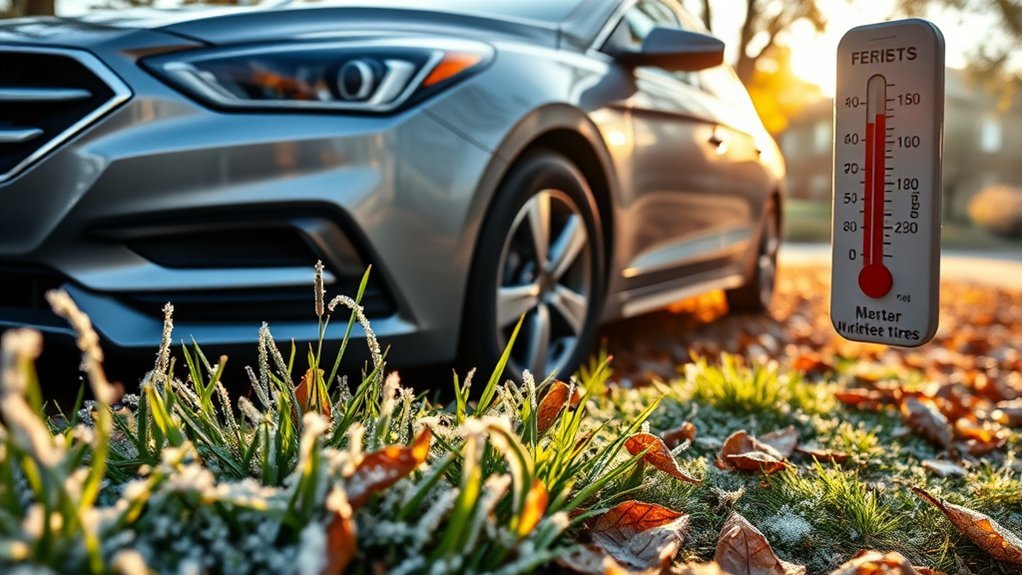
If you are unsure whether it is time, look for these practical signs. One sign may be enough if you commute daily or drive in hilly, icy, or rural areas.
Temperature Drops Below 45°F
If temperatures are staying below 45°F for several days, your Sonata is in winter-tire territory. This is especially true if roads are wet, shaded, or likely to freeze overnight.
Increased Snowfall Predictions
If snow, freezing rain, or a sharp cold front is forecast, do not wait for the first accumulation. Winter tires help most when they are already on the car before conditions turn slick.
Decreased Tire Traction
Reduced grip is another warning sign. If your Sonata spins its tires when pulling away, activates traction control often, slides during braking, or feels vague while turning on cold roads, inspect your tires and consider switching.
Low Winter Tread Depth
Tread depth matters as much as tire type. NHTSA lists 2/32 inch as a minimum tread depth for tires, but winter traction usually needs more tread than the legal minimum. Transport Canada advises not using tires worn close to 4 mm, or about 5/32 inch, on snow-covered roads.
Use a tread depth gauge instead of guessing. If your winter tires are near 5/32 inch, cracking, unevenly worn, or more than several seasons old, have them inspected before relying on them for another winter.
Benefits of Installing Winter Tires Early
Installing winter tires early gives you three advantages: safer timing, better shop availability, and less last-minute stress. You also avoid driving on cold mornings with tires that are not designed for the conditions.
Early installation helps you:
- Avoid the seasonal rush: Appointment slots disappear quickly when the first snowstorm appears in the forecast.
- Confirm fitment early: If a tire size is out of stock, you still have time to order the correct set.
- Start winter with correct pressure: Cold weather lowers tire pressure, so installation is a good time to set all four tires to the correct cold PSI.
Pro Tip: If you use separate winter wheels, label each tire position when removing them in spring. That makes rotation easier the next winter.
Key Features of Winter Tires for Your Hyundai Sonata
Choosing the right winter tires for your Hyundai Sonata is not just about buying any tire labeled “snow.” Look for tires that match your Sonata’s size and load requirements and are designed for severe winter conditions.
- Three-Peak Mountain Snowflake symbol: Transport Canada recommends looking for this symbol because it identifies tires that meet specific snow-traction performance requirements.
- Cold-weather rubber compound: Winter tires are designed to remain more flexible below 45°F (7°C).
- Deep grooves and sipes: These help move slush and water while creating biting edges for snow and ice.
- Correct tire size and rating: Check your driver-door placard and owner’s manual for the correct size, load index, speed rating, and inflation pressure.
- Four matching tires: Use the same type, size, construction, and tread design on all four wheels for balanced handling.
[Products Worth Considering]

【OE PART NUMBER】: 52933-2L500, 52933-2M000, 52933-2L700, 52933-2M550, 52933-3N000

Lateral siping on the outer blocks is designed to maximize cornering performance and control in hydroplaning situations

Anti-slip Tool: Our snow chains for car tires feature a serrated design to enhance anti-slip effect and grip, significantly improving safety and comfort while driving
All-Season vs. All-Weather vs. Winter Tires
Many drivers confuse all-season, all-weather, and winter tires. The difference matters when you are preparing a Hyundai Sonata for cold weather.
| All-season tires | Best for mild weather and light seasonal changes. They are not the strongest choice for regular snow, ice, or deep cold. |
| All-weather tires | A year-round option that may carry the Three-Peak Mountain Snowflake symbol. Useful in moderate winter climates, but still not as specialized as dedicated winter tires. |
| Winter tires | Best for areas with regular cold, snow, ice, slush, or freezing rain. They should be removed when warm weather returns. |
[Products Worth Considering]

Four straight wide circumferential grooves

Pirelli s Noise Canceling technology for comfort

Engineered with 3D interlocking sipes improve stability by increasing tread block rigidity
Importance of Seasonal Tire Changes
Seasonal tire changes protect both safety and tire life. Winter tires are helpful in cold weather, but their softer rubber can wear faster on warm, dry roads. When temperatures consistently rise above 45°F (7°C) in spring, change back to your all-season or summer tires.
This seasonal rhythm gives each tire type the conditions it was designed for: winter tires for cold weather, and regular tires for warmer months. It also helps you inspect tread depth, sidewalls, pressure, and uneven wear twice a year.
How to Prepare Your Hyundai Sonata for Winter
Winter tire installation is only one part of getting your Hyundai Sonata ready for cold weather. Before the season starts, check your tires, battery, fluids, lights, wipers, and emergency kit.
Tire Inspection Essentials
Start with the tires because they are your only contact with the road. Check:
- Tire size: Match the size shown on your Sonata’s driver-door placard or owner’s manual.
- Tread depth: Use a tread depth gauge and replace tires that are too worn for snow.
- Cold tire pressure: NHTSA advises using the vehicle manufacturer’s recommended pressure, not the maximum pressure printed on the tire sidewall.
- Damage: Look for cuts, bulges, cracks, punctures, exposed cords, or uneven wear.
- Spare tire or repair kit: Confirm it is present and usable if your Sonata is equipped with one.
Check tire pressure when the tires are cold, meaning the vehicle has been parked for at least three hours. Cold temperatures can lower inflation pressure, so a tire that looked fine in September may be underinflated in November.
Battery Performance Check
Cold weather makes batteries work harder. NHTSA notes that gasoline and diesel engines need more battery power to start in cold weather, and battery power drops as temperature falls. Have the battery and charging system tested if your Sonata cranks slowly, the battery is older, or you have had recent electrical issues.
| Action | Importance |
|---|---|
| Test battery regularly | Confirms the battery and charging system are ready for cold starts |
| Check for corrosion | Helps prevent weak connections and starting problems |
| Replace weak batteries | Reduces the chance of a no-start situation during freezing weather |
Fluid Level Maintenance
Use the fluids specified in your Hyundai owner’s manual. Do not guess or switch oil viscosity unless the manual allows it for your climate.
- Coolant: Make sure the cooling system has the correct coolant level and freeze protection.
- Windshield washer fluid: Use winter washer fluid with de-icer before freezing weather arrives.
- Engine oil: Use the Hyundai-approved viscosity for your engine and climate.
- Brake fluid and power steering fluid: Check levels if applicable and have leaks inspected.
- Wipers and defrosters: Replace worn blades and confirm the defroster clears the windshield quickly.
Does Snow Mode or AWD Change When You Need Winter Tires?
No. Snow Mode or AWD can help manage available traction, but neither creates grip where the tires do not have it. If your Hyundai Sonata has Snow Mode, use it on snow, ice, slush, or other slippery conditions. Hyundai describes Snow Mode as traction tuning that can adjust wheel-slip control, torque, and shift behavior depending on the vehicle.
However, Snow Mode does not shorten stopping distances by itself the way better tire traction can. If your Sonata does not show Snow Mode in the drive-mode menu, do not worry; the more important upgrade for winter driving is still a proper set of four winter tires.
Note: Snow Mode availability depends on model year, trim, market, and drivetrain. Check your owner’s manual or the drive-mode menu in your specific Sonata.
What About Tire Chains or Snow Socks?
For deep snow or mountain travel, some roads may require chains or approved traction devices. Before buying them for a Hyundai Sonata, check the owner’s manual and the tire size on your car. Hyundai warns that some chains can damage tires, wheels, brake lines, suspension, or bodywork if they are the wrong size or installed incorrectly.
If chains must be used, follow Hyundai and chain-manufacturer instructions. Hyundai guidance says chains should be installed on the front tires where applicable, driven slowly, tightened properly, and removed once you return to cleared roads.
Warning: Never assume a universal chain fits your Sonata. Wrong-size chains can damage the vehicle and may not be covered by the manufacturer’s warranty.
[Products Worth Considering]

Requires low operating space around drive tires

[Vehicle Fitment]: PHILTOP Engine Timing Chain Kit Compatible with Hyundai Santa Fe 2007-2009 3.3L, Santa Fe 2010-2012 3.5L, Sonata 2006-2010 3.3L, Azera 2006-2011, Genesis 2009-2012 3.8L, Veracruz 2007-2012, Entourage 2007-2008, fits for Kia Sedona 2006-2012, Sorento 2011-2013 3.5L, Sorento 2007 3.8L, Sorento 2008-2009, Borrego 2009 3.8L, Amanti 2007-2009
Requires low operating space around drive tires
Where to Get Your Winter Tires Installed in the Twin Cities
As winter approaches in the Twin Cities, schedule winter tire installation before the first major freeze or snow forecast. Good options include Hyundai service departments, dedicated tire shops, independent mechanics, and warehouse retailers that offer mounting and balancing.
Island Hyundai and Buerkle Hyundai are examples of Hyundai dealership service options in the region, while retailers such as Costco may be convenient if you buy tires through them. The best choice is the shop that can confirm the correct Sonata tire size, install all four tires, set the correct cold pressure, and handle TPMS service if needed.
Ask these questions before booking:
- Do these tires match my Sonata’s size, load index, and speed rating?
- Are mounting, balancing, valve stems, and TPMS service included?
- Can you store my off-season tires?
- Will you set pressure to the driver-door placard, not the tire sidewall maximum?
- Do you inspect tread depth, tire age, and sidewall condition?
How to Store Winter or All-Season Tires
Good storage helps tires last longer. Michelin recommends storing winter tires in a cool, dry, clean place away from sunlight and heat sources. Clean off salt and road grime first, let the tires dry, and keep them away from gasoline, solvents, and ozone sources such as electric motors.
If the tires are mounted on wheels, stack them flat or hang them. If they are unmounted, store them upright and rotate their position occasionally. Use tire bags if available, and label each tire’s previous position so you can rotate them next season.
What to Include in Your Winter Emergency Kit
Winter tires reduce risk, but they do not remove the need to prepare for delays, closures, and breakdowns. NHTSA recommends stocking your vehicle with winter-driving supplies and emergency items.
Keep these in your Sonata during winter:
- Snow shovel, broom, and ice scraper: For clearing snow and ice before driving.
- Traction material: Sand or cat litter can help if the vehicle gets stuck.
- Jumper cables or a jump starter: Cold weather can expose weak batteries.
- Flashlight and extra batteries: Useful for nighttime emergencies.
- Warning devices: Flares or reflective triangles help other drivers see you.
- First aid kit: Include any personal medications you may need.
- Blankets, gloves, and warm clothing: Important if you must wait for help.
- Phone charger, water, and non-perishable snacks: Helpful during long delays.
Also keep your fuel tank closer to full during winter travel when possible. If you are stopped or stranded, stay with the vehicle, make the car visible, and keep the exhaust pipe clear of snow before running the engine for heat.
Frequently Asked Questions
At what temperature should I start using winter tires?
Start using winter tires when temperatures consistently stay below 45°F (7°C). Do not wait for heavy snow. Cold pavement, freezing rain, and slush can all reduce traction before roads look fully wintery.
Does the Hyundai Sonata have Snow Mode?
Some Hyundai models and configurations include Snow Mode, but availability depends on model year, trim, drivetrain, and market. Check your Sonata’s drive-mode menu or owner’s manual. If your Sonata has Snow Mode, use it as extra traction help, not as a substitute for winter tires.
When should I use Hyundai Snow Mode?
Use Snow Mode, if your Sonata has it, when roads are snowy, icy, slushy, or slippery. It can help manage available traction, but you should still slow down, increase following distance, and use four proper winter tires in winter conditions.
Is mid-October too early for winter tires?
Mid-October is not too early if temperatures in your area are already staying near or below 45°F, or if you want to beat the tire-shop rush. If your area is still warm for several weeks, wait until the forecast shows a consistent cold pattern.
Should I put winter tires on all four wheels?
Yes. Install winter tires on all four wheels. Using only two can create uneven traction between the front and rear of the car, which can make braking and cornering less predictable.
When should I remove winter tires in spring?
Remove winter tires when temperatures consistently stay above 45°F (7°C) and the risk of snow or ice has mostly passed. Driving winter tires on warm pavement can wear them faster and reduce warm-weather handling.
Conclusion
For a Hyundai Sonata, the right time to switch to winter tires is when temperatures consistently fall below 45°F (7°C) or winter weather is close in the forecast. Install a matching set of four winter tires, confirm the correct size and cold tire pressure, and inspect tread depth before the season starts. Snow Mode, AWD, and traction control can help, but your tires still provide the grip that matters most. Prepare early, drive smoothly, and your Sonata will be much better ready for cold roads, snow, slush, and ice.
Sources
- Transport Canada — Using winter tires — Supports the 7°C / 45°F threshold, Three-Peak Mountain Snowflake guidance, four-tire installation, and winter tread-depth guidance.
- NHTSA — Winter Weather Driving Tips — Supports cold tire pressure checks, battery preparation, emergency kit items, and winter driving safety data.
- Hyundai Owner’s Manual — Snow or icy conditions — Supports Hyundai guidance on snow tires, four-wheel installation, tire chains, and safe chain use.
- Hyundai Owner’s Manual — Snow Mode — Supports the Snow Mode explanation and model-specific caveat.
- Michelin — X-Ice Snow tire information — Supports winter-tire temperature use and off-season storage guidance.
- Tire Rack — All-season vs. winter tire snow test — Supports the sourced braking-distance example used in the article.

Related Articles

Danger of Using Summer Tires in Winter on a Hyundai Sonata
Potentially perilous, using summer tires in winter on your Hyundai Sonata can compromise safety—discover the hidden dangers that await you on icy roads.
Read More
Can You Mix Nitrogen and Air in Hyundai Sonata Tires? Answered
Discover the implications of mixing nitrogen and air in your Hyundai Sonata tires—are the benefits worth the risks? Explore the answer inside!
Read More
How to Tell If Hyundai Sonata Tires Are Too Old to Use Safely
Understand how to assess the age of your Hyundai Sonata tires and discover crucial signs of deterioration that could compromise your safety on the road.
Read More