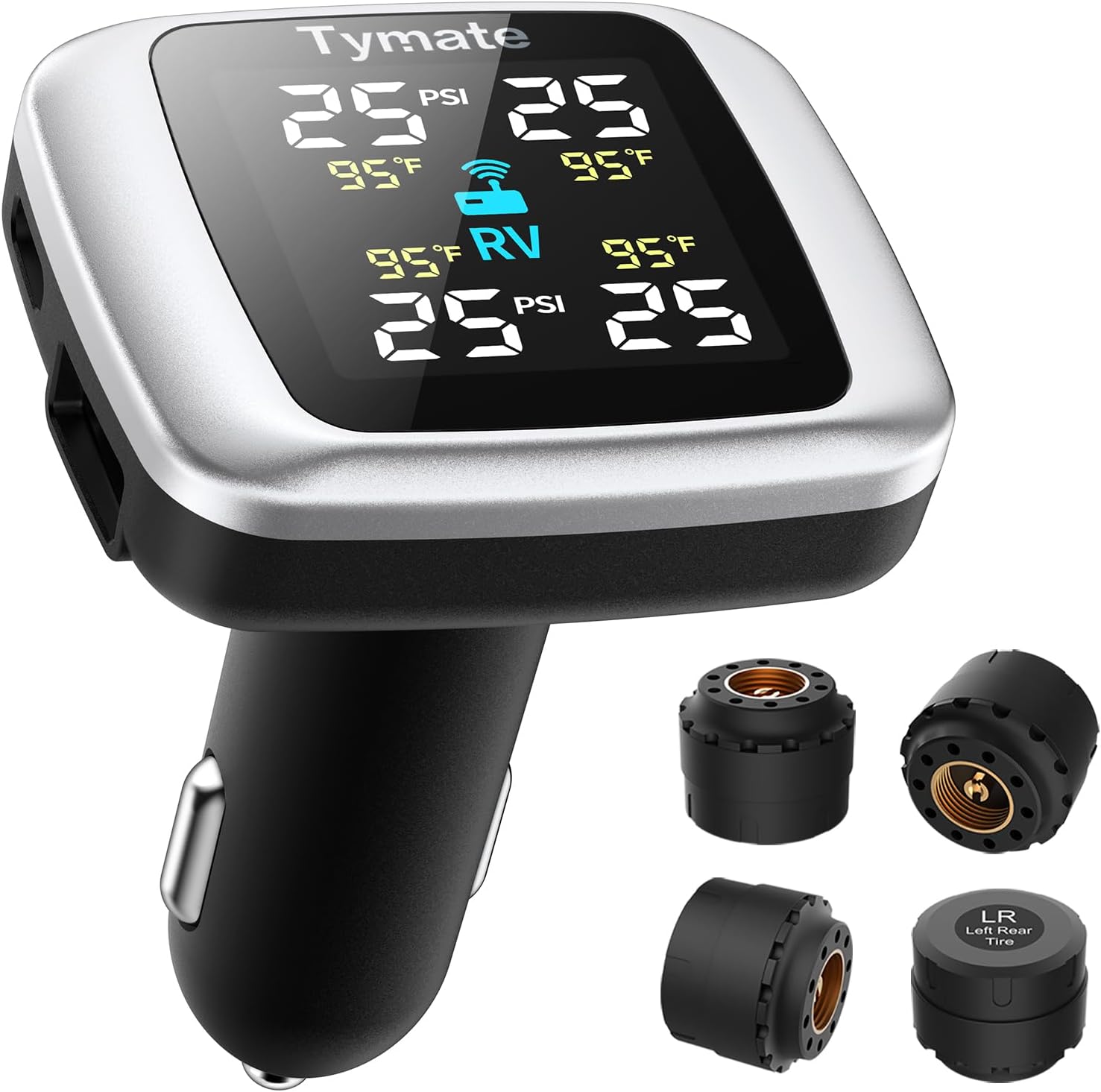
Hyundai Sonata Tire Keeps Losing Air With No Puncture: Causes
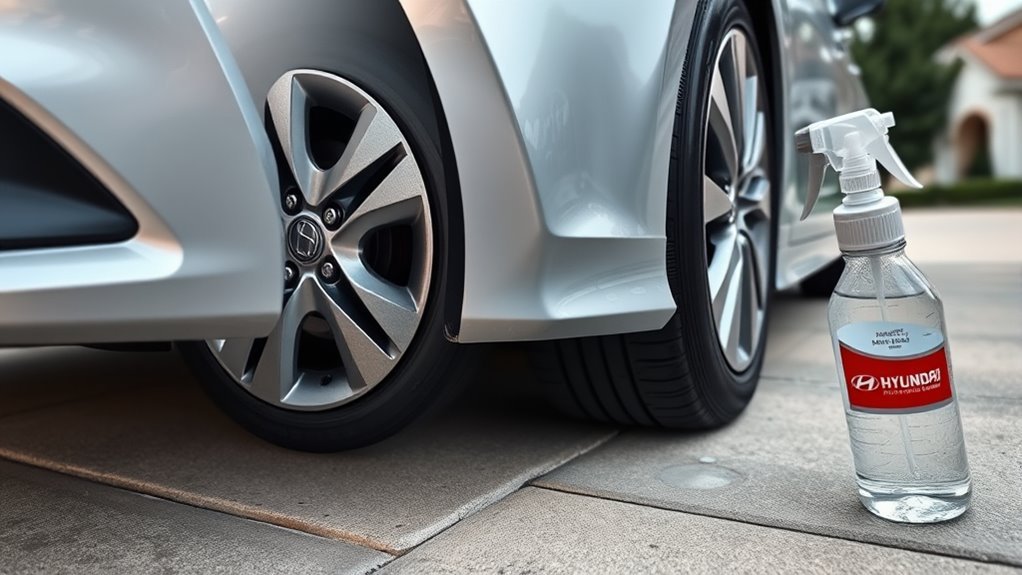
If your Hyundai Sonata tire keeps losing air but you cannot see a nail, screw, or obvious puncture, the problem is usually still findable. The most common causes are temperature-related pressure changes, a leaking valve stem or valve core, a bead leak where the tire seals to the wheel, corrosion or damage on the rim, small tread punctures, or aging tire rubber.
Quick Answer
A Hyundai Sonata tire that keeps losing air with no visible puncture is usually losing pressure through the valve stem, valve core, tire bead, corroded wheel rim, tiny tread injury, or aging sidewall cracks. If all four tires drop together after cold weather, temperature is likely. If one tire drops repeatedly, inspect it for a slow leak.
Key Takeaways
- Check tire pressure when the tires are cold and use the PSI listed on the Sonata door-jamb placard, not the maximum PSI on the tire sidewall.
- A cold snap can lower tire pressure by about 1–2 PSI for every 10°F temperature drop, but one tire dropping faster than the others usually points to a leak.
- Use soapy water on the valve stem, tread, bead, and rim edge to look for bubbles from escaping air.
- A steady TPMS warning usually means low pressure; a flashing TPMS warning that stays on can mean a system fault that needs inspection.
- Sidewall damage, bulges, exposed cords, or a tire that will not hold pressure should be handled by a tire professional before you keep driving.
At a Glance
| Time Required | 10–20 minutes for a basic pressure and soap-water check; longer if a shop removes the tire for inspection. |
| Difficulty | Easy for pressure checks and visible inspection; professional help recommended for bead leaks, rim damage, TPMS faults, and tire repairs. |
| Tools Needed | Accurate tire pressure gauge, air source, spray bottle, water, a few drops of dish soap, flashlight, and valve caps. |
| Cost | Free if you already have a gauge and air; shop inspection, valve service, bead reseal, wheel repair, or tire replacement varies by shop and tire size. |
Start With the Pattern: One Tire or All Four?
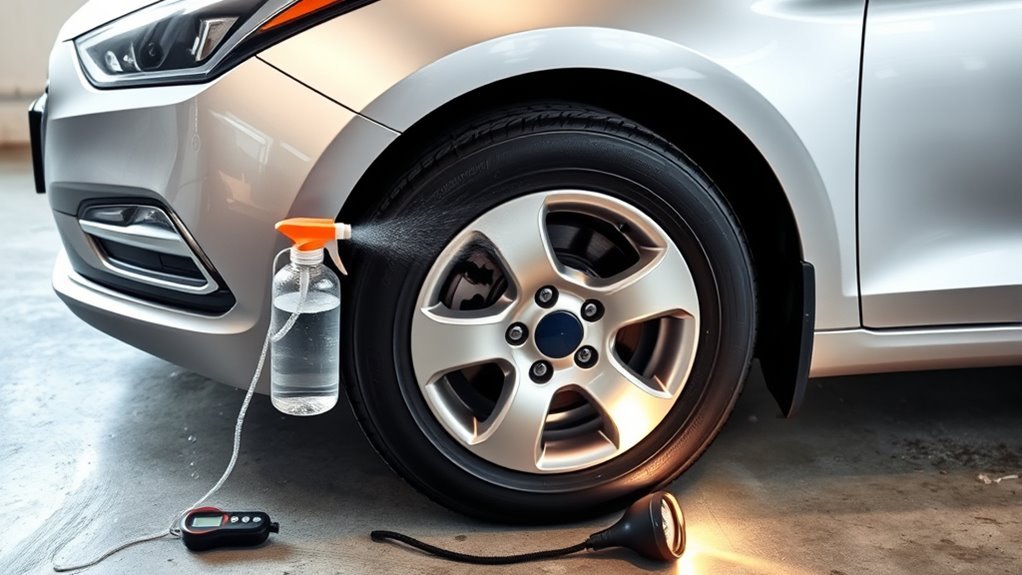
Before looking for a puncture, compare all four tire pressures when the tires are cold. A cold tire means the car has been parked for at least three hours or driven less than about 1 mile. Use the recommended cold PSI on the driver-side door-jamb tire placard or in the owner’s manual.
If all four tires are low by a similar amount after colder weather, the pressure drop may be normal temperature change. If one tire is much lower than the other three, or the same tire loses air again after you inflate it, treat it as a slow leak until proven otherwise.
The National Highway Traffic Safety Administration recommends checking tire pressure at least monthly when tires are cold and reminds drivers that the correct PSI comes from the vehicle placard or owner’s manual, not the number printed on the tire sidewall.
Note: A TPMS light is helpful, but it is not a replacement for checking with a tire gauge. TPMS often warns only after pressure is already significantly low.
How Temperature Changes Affect Tire Pressure
Temperature changes are one of the most common reasons a Sonata’s tire-pressure light appears on a cold morning. As air gets colder, it contracts and pressure drops. As air warms, it expands and pressure rises.
The U.S. Tire Manufacturers Association says tire inflation pressure can increase in warm weather or decrease in cold weather by about 1–2 pounds for every 10°F of temperature change. Michelin also describes the common estimate as about 1 PSI for every 10°F drop.
| Temperature Change | Typical Pressure Change | What It Means |
|---|---|---|
| 10°F colder | About 1–2 PSI lower | Recheck cold PSI and top up if needed |
| 20°F colder | About 2–4 PSI lower | TPMS may come on if pressure was already near the limit |
| 10°F warmer | About 1–2 PSI higher | Do not bleed air from hot tires unless pressure is clearly excessive |
| Large day-night swing | Pressure may change overnight | Compare all four tires before assuming a leak |
When Temperature Is Probably the Main Cause
Temperature is the likely cause when all four tires drop by a similar amount, the pressure drop matches a recent cold snap, and the tires hold pressure after you inflate them to the door-jamb PSI.
When Temperature Is Not Enough to Explain It
Temperature is not enough to explain the problem when one tire drops faster than the others, a tire loses several PSI repeatedly in mild weather, or bubbles appear during a soap-water leak test. In those cases, inspect the valve stem, tread, bead, rim, and sidewall.
How to Check a Hyundai Sonata Tire That Keeps Losing Air
Use this order so you do not miss the simple causes first.
- Check the cold PSI. Park for at least three hours, then measure all four tires with a reliable gauge.
- Compare the readings. If one tire is much lower, focus on that wheel assembly.
- Inflate to the placard PSI. Use the recommended pressure on the driver-side door-jamb label.
- Inspect the tread. Look for a nail, screw, staple, glass, or a small puncture hidden between tread blocks.
- Spray the valve stem and valve core. Watch for bubbles around the valve opening and the base of the stem.
- Spray the bead area. Soak the line where the tire meets the rim on both sides if accessible.
- Inspect the rim. Look for corrosion, bends, dents, cracks, or dirt at the tire-to-wheel sealing surface.
- Check the sidewall. Look for cracks, cuts, bulges, bubbles, or scuffed areas from curb contact.
- Recheck after driving. If the same tire drops again, have it removed and inspected by a tire shop.
Pro Tip: Mark the tire pressure and date in your phone. If one tire loses pressure faster than the others over the next 24–72 hours, you have better evidence for the tire shop and a faster diagnosis.
[Products Worth Considering]

The Milton 555e digital tire inflator delivers fast, accurate pressure readings with a backlit display and multiple unit options, making tire inflation quick and easy. Its durable 20" EPDM rubber hose and grip‑head chuck provide reliable connection, while the ±1 PSI accuracy ensures precise inflation for cars, bikes, and trucks.

This digital tire pressure gauge combines a sturdy pistol grip inflator with a backlit 0.1 PSI display for quick, accurate readings in any lighting condition. Its 360° swivel gauge and 20" rubber hose make it easy to use and store, while the integrated inflate/deflate trigger and ¼" NPT air inlet provide fast, reliable tire maintenance.

The Milton 507KIT delivers fast, accurate tire inflation, deflation and pressure measurement with a backlit LCD gauge and 14" rubber hose. Its 3‑in‑1 design meets ANSI/ASME standards and provides readings from 0‑250 PSI with 0.1 PSI resolution. The ergonomic pistol‑grip body and brass lock‑on chuck make one‑handed operation effortless, while the auto‑off feature conserves battery life.
Use Soapy Water to Find Slow Leaks
A slow leak may be too small to hear. A soap-water test can reveal it. Mix water with a few drops of dish soap in a spray bottle, inflate the tire to the correct cold PSI, and spray one area at a time. Escaping air creates growing bubbles.
[Products Worth Considering]

The GERCHWAY tire inflator combines a durable rubber‑protected gauge with a 360° swivel air chuck for hands‑free operation and reliable sealing on any valve. Its 100 PSI range delivers ±2 PSI accuracy, making it ideal for most passenger and light‑truck tires. The battery‑free design ensures you can measure, inflate, or deflate without worrying about power loss, while the universal ¼ NPT connection fits any standard compressor.

The GERCHWAY Digital Bike Tire Pressure Gauge offers precise ±1% accuracy across a 3–200 PSI range, fitting both Presta and Schrader valves without extra adapters. Its 16‑inch hose provides extra reach for easy inflation on bikes, motorcycles, SUVs, and cars, while the 1/4" NPT quick connector enables direct compressor attachment. Designed for quick checks, deflation, and inflation, it delivers reliable, leak‑free performance for all your tire needs.
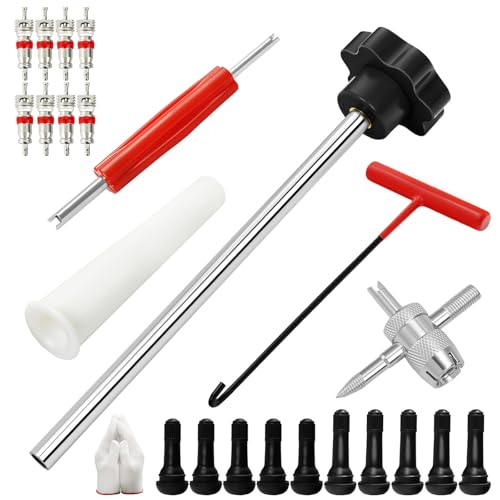
【Valve Stem & Valve Core Repair Tool Kit】:By this tool kits,easy to chaging valve stem and core,in most cases, meet the valve stem removal without tire removal,inculding 5 TR413 and 5 TR414 valve stem
Where to Spray First
- Valve core: Spray the opening after removing the cap. Bubbles at the center can mean a loose or leaking valve core.
- Valve stem base: Spray where the stem meets the wheel. Bubbles there can mean a cracked stem or poor seal.
- Tread surface: Spray around suspicious objects, tread grooves, and any shiny puncture marks.
- Bead area: Spray the rim edge where the tire seals to the wheel.
- Rim damage: Spray around dents, corrosion, or curb-damaged areas.
If bubbles appear at the tread, bead, valve stem, or wheel, do not keep simply adding air. The leak source should be repaired correctly.
What Role Do Valve Stems Play in Tire Air Loss?
The valve stem is the small part you use to inflate the tire. Inside it is a valve core that opens when you add air and closes to hold pressure. A leak can happen at the valve core, the rubber or metal stem, the seal at the wheel, or a damaged cap area that allowed dirt into the valve.
Common Valve Stem Problems
- Loose or worn valve core
- Cracked rubber stem
- Corrosion around a metal TPMS valve stem
- Dirt or moisture inside the valve
- Missing or damaged valve cap that lets debris reach the valve core
A missing cap by itself should not be the main air seal, but it protects the valve from dirt and moisture. Replace missing caps and have a leaking valve stem or TPMS valve serviced by a tire professional.
Identifying Bead Leaks and Tire Air Loss Issues
A bead leak happens where the tire bead seals against the wheel rim. This is a common reason a tire loses air even when the tread looks fine. Bead leaks can come from corrosion, dirt, old bead sealer, improper mounting, a bent rim, or impact damage from potholes and curbs.
Signs of a bead or rim leak include:
- Small bubbles along the rim edge during a soap-water test
- White corrosion or rust near the bead seat
- Pressure loss after a pothole impact
- A tire that loses air only when parked in certain positions
- No visible puncture in the tread
A bead leak usually requires the tire to be removed from the wheel. A shop can clean the bead seat, inspect the tire and rim, reseal the tire, and replace the valve stem if needed.
How Tiny Cracks and Aging Tires Contribute to Air Loss
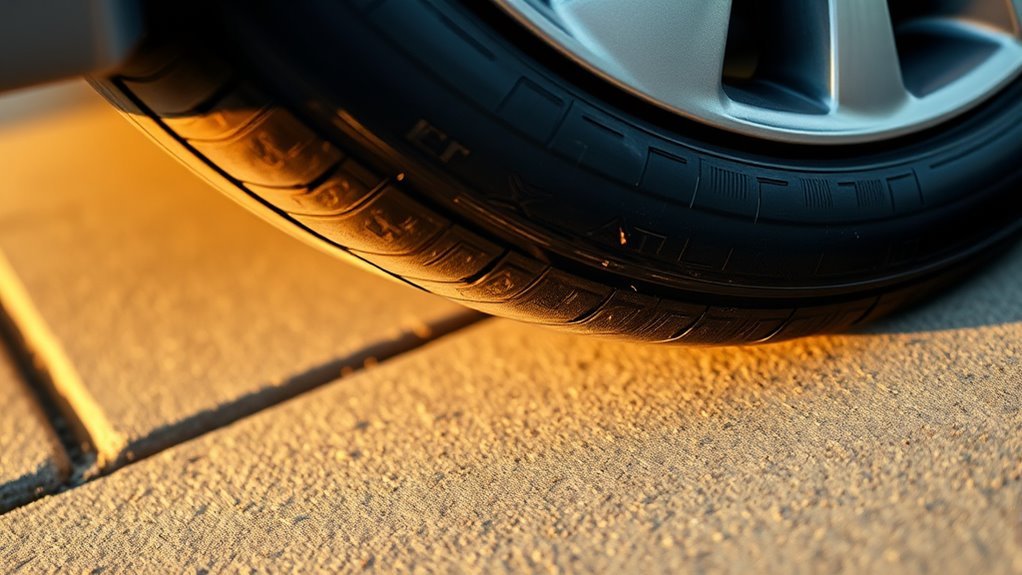
Tires age from heat, sunlight, moisture, road chemicals, use, storage conditions, and time. Aging rubber can develop cracks, cuts, bulges, and weak spots. Even if the tread depth looks acceptable, a tire that is cracked, bulging, or failing to maintain pressure needs professional inspection.
NHTSA says tires should be removed from service for several reasons, including physical damage such as cuts, cracks, and bulges, irregular wear, failing to maintain proper pressure, or manufacturer age guidance. Some vehicle and tire manufacturers recommend replacing tires that are six to 10 years old regardless of treadwear, so check the DOT date code and your tire maker’s guidance.
Warning: Do not drive normally on a tire with a bulge, exposed cords, deep sidewall cut, severe cracking, or rapid pressure loss. Install the spare if your Sonata has one and it is safe to use, or call roadside assistance.
Are Your Wheels Corroded or Damaged?
The tire is only one half of the air seal. The wheel must also be smooth, round, and clean where the tire bead sits. Corrosion or bends can let air escape even if the tire itself has no obvious hole.
Look for:
- Corrosion around the rim edge
- Bent wheel lips from potholes or curbs
- Cracks in the wheel
- Dirt, old sealer, or debris at the bead area
- Repeated air loss after tire mounting or rotation
Light corrosion can often be cleaned by a tire shop during a bead reseal. A bent, cracked, or heavily corroded wheel may need repair or replacement.
Road Hazards That Do Not Leave an Obvious Mark
A tire can lose air after a pothole, curb strike, or sharp road debris even when you cannot see a clean puncture. The impact may bend the wheel, disturb the bead seal, damage the valve stem, or create internal tire damage.
If the pressure loss started after an impact, inspect the wheel edge, sidewall, and bead area closely. Also pay attention to vibration, pulling, steering wheel shake, or uneven wear. Those symptoms can point to wheel, tire, alignment, or suspension damage.
What Your Hyundai Sonata TPMS Light Means
Your Sonata’s Tire Pressure Monitoring System helps warn you when pressure is low, but the exact reset process and display behavior can vary by model year and equipment. Always follow your owner’s manual for your specific Sonata.
For applicable Hyundai systems, Hyundai’s owner-manual instructions say to adjust all tire pressures to the recommended inflation pressure, use the steering-wheel controls to select Tire Pressure in the cluster, press and hold OK, and select Set. Hyundai also says TPMS should be reset after tire or wheel repair/replacement, tire rotation, tire pressure adjustment, and certain related service events.
Steady TPMS Warning
A steady low tire pressure warning usually means one or more tires are underinflated. Check all four tires with a gauge, inflate to the door-jamb PSI when cold, and recheck.
Flashing TPMS Warning
A TPMS warning that flashes for about a minute and then stays on can indicate a TPMS malfunction rather than ordinary low pressure. If this happens, check pressure manually and have the system inspected.
Do Not Reset TPMS to Hide a Leak
Resetting TPMS without fixing the pressure or leak can make the system less useful. Inflate the tires correctly first, repair the leak if one exists, and then reset or relearn the system only as your Sonata manual instructs.
What Can Be Repaired and What Requires Replacement?
Not every tire leak can be repaired safely. The U.S. Tire Manufacturers Association tire repair guidance says a tire must be removed from the wheel and inspected inside before proper repair. It also says puncture repairs are limited to the tread area, the injury should be no greater than 1/4 inch, and a plug alone or patch alone is not an acceptable repair.
| Problem | Likely Fix |
|---|---|
| Small puncture in the repairable tread area | Professional internal inspection and proper plug-patch repair |
| Leaking valve core or valve stem | Valve core, valve stem, or TPMS valve service |
| Bead leak from corrosion or debris | Dismount tire, clean bead seat, inspect, and reseal |
| Bent or cracked wheel | Wheel repair or replacement |
| Sidewall puncture, bulge, exposed cords, or severe cracking | Tire replacement |
| Repeated pressure loss with no visible exterior leak | Remove tire for internal inspection |
[Products Worth Considering]

[🔨PROFESSIONAL QUALITY ] - AUTOWN Tire Repair Kits are made of refined high-quality steel, AUTOWN upgraded tire patch kits comply with exacting standards of audit, can repair the toughest tires on the market.

Professional Quality: The AUTOWN tire repair kits are made of refined high-quality steel and upgraded to comply with exacting standards of audit. This ensures that the kit is of professional quality and can repair even the toughest tires on the market.
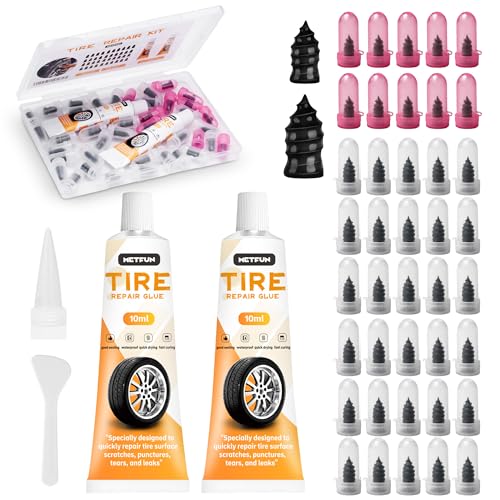
【Perfect Emergency Repair Solution】This kit includes 40 durable rubber repair screws (2 sizes for different punctures) and 2 tubes of fresh tire sealant—everything you need to fix tubeless tire punctures fast, and it’s definitely a great car tire repair kit to keep in your car for emergencies
Maintenance Tips to Prevent Air Loss
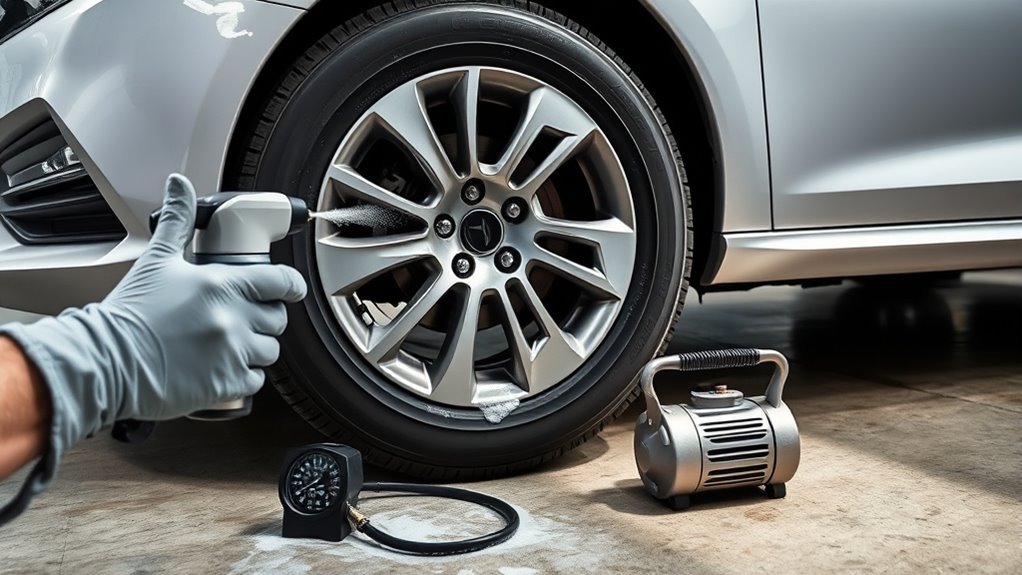
Preventing air loss is easier than chasing a slow leak after the TPMS light comes on. Add these checks to your normal maintenance routine:
- Check all tire pressures at least once a month when tires are cold.
- Check pressure before long trips, heavy loads, or major temperature swings.
- Use the Sonata door-jamb placard PSI, not the tire sidewall maximum.
- Keep valve caps installed to protect the valve core from dirt and moisture.
- Inspect tread and sidewalls for nails, cuts, cracks, bulges, and uneven wear.
- Rotate tires according to your owner’s manual; if no interval is listed, NHTSA and USTMA commonly reference roughly 5,000–8,000 miles when rotation is recommended.
- Have the wheels inspected if you hit a pothole, notice vibration, or see repeated pressure loss.
- Replace tires that are damaged, severely cracked, bulging, or too old according to manufacturer guidance.
Proper tire inflation also helps fuel economy. FuelEconomy.gov says keeping tires inflated to the proper pressure can improve gas mileage, while underinflated tires can lower fuel economy by about 0.2% for every 1 PSI drop in the average pressure of all tires.
When to Seek Professional Help for Tire Issues
Get professional tire service if the same Sonata tire keeps losing pressure after you inflate it, if the tire drops quickly, if bubbles appear during a soap-water test, or if the TPMS warning keeps returning.
You should also have the tire inspected if you see sidewall cracking, a bulge, a deep cut, exposed cords, rim damage, vibration, pulling, or pressure loss after a pothole impact. A shop can remove the tire from the wheel, inspect the inside liner, test the valve and bead, check the rim, and confirm whether the tire can be repaired safely.
Frequently Asked Questions
Why does my Hyundai Sonata tire keep losing air if there is no visible leak?
The leak may be too small to see. Common hidden causes include a loose valve core, cracked valve stem, bead leak, corroded rim, tiny tread puncture, sidewall damage, or aging tire rubber. Use a cold pressure check and soap-water test to narrow it down.
Is it normal for a Sonata tire to lose 5 PSI overnight?
A 5 PSI overnight drop is not something to ignore. A large temperature drop or checking a warm tire one day and a cold tire the next can explain some pressure change, but one tire losing 5 PSI repeatedly should be inspected for a slow leak.
How do I reset the Hyundai Sonata tire pressure sensor?
The reset process depends on your Sonata model year and TPMS system. First, inflate all tires to the recommended cold PSI. On applicable Hyundai systems, use the instrument-cluster Tire Pressure menu and steering-wheel OK/Set controls as described in the owner’s manual. Do not reset TPMS until the tire pressures are correct.
Can a bad valve stem make a tire lose air slowly?
Yes. A loose valve core, cracked rubber valve stem, corroded TPMS valve, or poor seal at the wheel can cause a slow leak. Spray soapy water on the valve opening and base. If bubbles grow, have the valve serviced.
Can I drive if my tire keeps losing air?
Only drive far enough to get air or reach safe service if the tire is just slightly low and has no visible damage. Do not continue driving on a tire that is rapidly losing pressure, visibly flat, bulging, cracked, cut in the sidewall, or repeatedly triggering the TPMS warning.
Can a tire leak be repaired if there is no nail?
Sometimes. A bead leak, valve leak, or small tread puncture may be repairable depending on the damage. Sidewall damage, bulges, severe cracking, and many internal tire injuries are not safe repairs and usually require tire replacement.
Conclusion
A Hyundai Sonata tire that keeps losing air with no visible puncture usually has a hidden but diagnosable cause. Start with a cold pressure check, compare all four tires, account for temperature changes, and then test the valve stem, tread, bead, rim, and sidewall with soapy water. If one tire keeps dropping, the TPMS light returns, or you see bubbles or damage, have the tire removed and inspected by a professional before the problem turns into a flat or blowout.
Sources
- NHTSA TireWise: Tire Safety Ratings and Awareness — cold tire pressure checks, TPMS warnings, tire aging, tire damage, and tire safety guidance.
- U.S. Tire Manufacturers Association: Tire Care Essentials — monthly pressure checks, cold-tire guidance, temperature-related pressure changes, TPMS limitations, tread depth, and rotation guidance.
- Hyundai Owner’s Manual: Tire Pressure Monitoring System — Sonata TPMS system behavior and saved-pressure operation for applicable systems.
- Hyundai Owner’s Manual: Resetting TPMS — TPMS reset steps and when to reset for applicable systems.
- FuelEconomy.gov: Keeping Your Vehicle in Shape — fuel-economy impact of proper tire inflation and underinflation.
- U.S. Tire Manufacturers Association: Tire Repair Basics — tread-only repair limits, tire removal/inspection, and plug-patch repair guidance.

Related Articles

Danger of Using Summer Tires in Winter on a Hyundai Sonata
Potentially perilous, using summer tires in winter on your Hyundai Sonata can compromise safety—discover the hidden dangers that await you on icy roads.
Read More
Can You Mix Nitrogen and Air in Hyundai Sonata Tires? Answered
Discover the implications of mixing nitrogen and air in your Hyundai Sonata tires—are the benefits worth the risks? Explore the answer inside!
Read More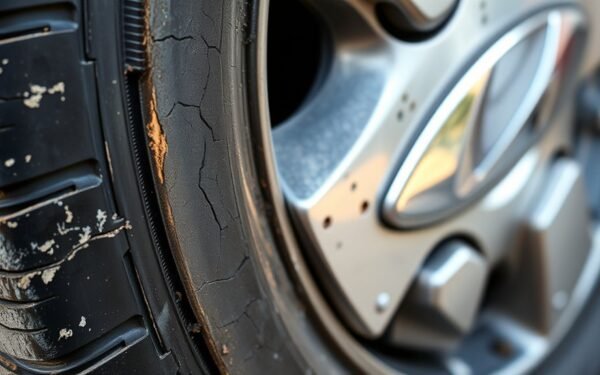
How to Tell If Hyundai Sonata Tires Are Too Old to Use Safely
Understand how to assess the age of your Hyundai Sonata tires and discover crucial signs of deterioration that could compromise your safety on the road.
Read More