
Hyundai Sonata Compact Spare vs Full Size Spare Tire Explained
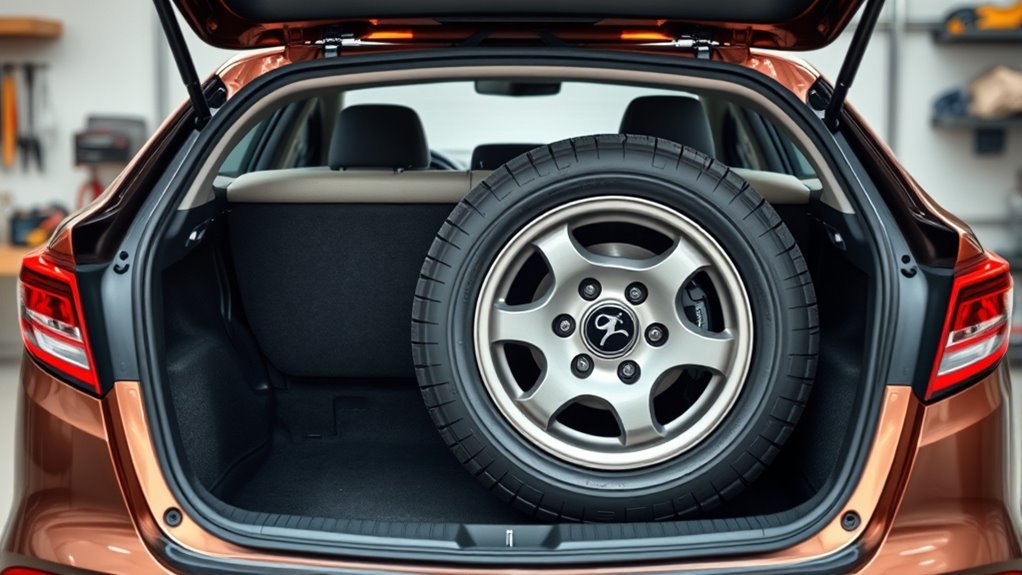
For a Hyundai Sonata, the best spare setup depends on how you drive, what your model year actually came with, and how much trunk space you are willing to trade for emergency confidence. A compact “donut” spare is best for short, low-speed emergency use. A matching full-size spare is better for longer trips and more normal handling, but only if it matches your Sonata’s required tire and wheel specifications.
Quick Answer
Choose a compact donut spare if you want a lighter, space-saving emergency tire for getting to a repair shop. Choose a matching full-size spare if you want more normal steering, braking, and stability after a flat. Always follow the tire sidewall, door placard, and Hyundai owner’s manual for your exact Sonata.
Key Takeaways
- A compact spare is temporary only. Hyundai warns not to drive over 50 mph (80 km/h) on a compact spare.
- A full-size spare is the better choice for long-distance confidence only when it matches the Sonata’s correct tire size, wheel specs, load rating, and condition.
- Some Sonata model years and trims may use a tire mobility kit instead of a physical spare, so check under the trunk floor before buying parts.
- Check spare-tire pressure monthly, inspect for cracks or dry rot, and replace old or damaged tires even if the tread looks unused.
At a Glance
| Time Required | 5–10 minutes to check what your Sonata has; longer if you are buying and test-fitting a spare kit. |
| Difficulty | Easy for inspection; moderate for verifying wheel fitment and storage hardware. |
| Tools Needed | Owner’s manual, tire pressure gauge, tire placard, and the jack/lug wrench if you have a spare. |
| Cost | $0 to inspect your current setup; often a few hundred dollars for a complete spare-tire kit if your Sonata came with only a sealant/inflator kit. |
First, Check What Your Sonata Actually Has
Before choosing between a donut and a full-size spare, lift the trunk floor and confirm your exact setup. Depending on model year, trim, market, and prior ownership, a Hyundai Sonata may have a compact spare, a tire mobility kit, or an aftermarket spare kit installed later.
Look for three things:
- A physical spare tire: Check whether it is a compact temporary spare or a full-size wheel and tire.
- A tire mobility kit: This usually includes a compressor and sealant bottle instead of a spare wheel.
- Tools and hold-down hardware: A spare is not very useful without the correct jack, lug wrench, wheel-nut key if equipped, and secure storage hardware.
Note: Do not buy a Sonata spare by appearance alone. Confirm the tire size, wheel diameter, bolt pattern, center bore, offset, load rating, and storage fit for your exact model year and trim.
[Products Worth Considering]
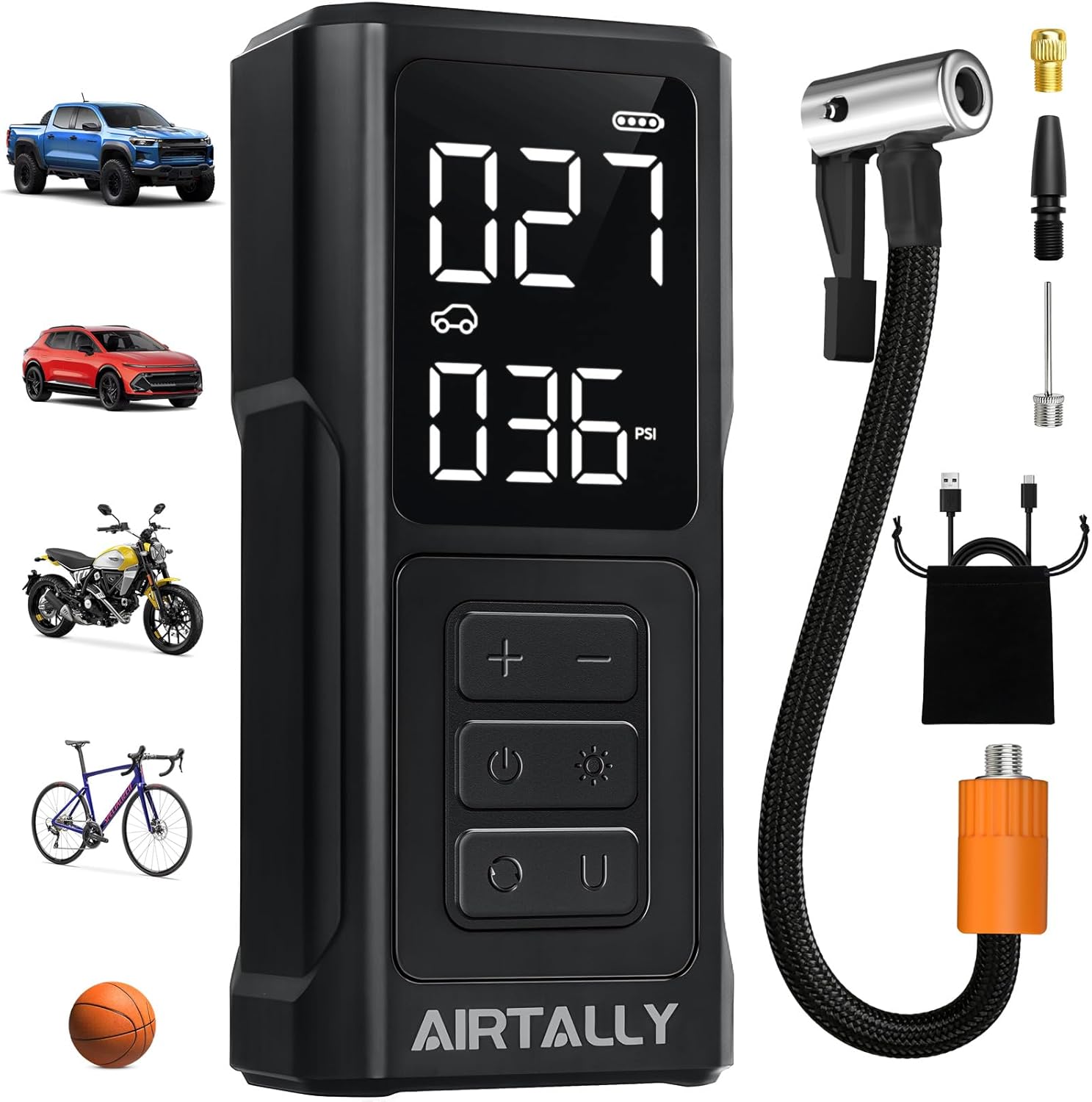
The AIRTALLY cordless tire inflator delivers fast, consistent pressure for car tires, bikes, and sports balls with a 150PSI max output. Its large dual-screen display shows...
When to Choose a Donut vs. a Full-Size Spare for Your Hyundai Sonata
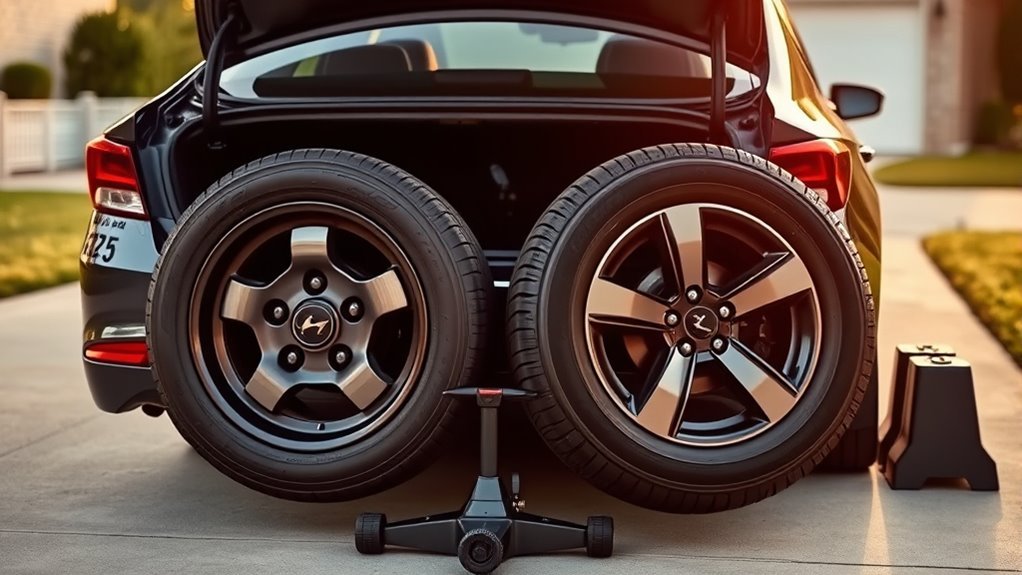
Choose a compact donut spare if your priority is saving trunk space and reducing weight. It is a short-term emergency solution that helps you leave the roadside and reach a tire shop. It is not built for normal commuting, long highway runs, hard cornering, heavy loads, or severe weather.
Choose a matching full-size spare if you want the closest thing to normal driving after a flat. A proper full-size spare can preserve more predictable steering, braking, and stability than a compact spare, especially on longer trips. The key word is matching: the tire and wheel must fit the Sonata correctly and be in safe condition.
| Best Choice | Use It When | Main Tradeoff |
|---|---|---|
| Compact donut spare | You want a lighter emergency tire for short, careful driving to service. | Lower speed, shorter use, reduced grip, and less stable handling. |
| Matching full-size spare | You drive longer distances, travel remotely, or want more normal handling after a flat. | More trunk space, weight, and cost. |
| Tire mobility kit | You have a small tread puncture and no spare tire. | May not work for sidewall damage, large punctures, blowouts, or low pressure that will not hold. |
Compact Spares: How They Work, Speed, Distance, and Handling Limits
A compact spare is smaller and narrower than a regular Sonata tire. That saves space, but it also reduces the tire’s contact patch, tread life, heat capacity, and stability. Hyundai’s owner guidance for compact spares is clear: use the compact spare only in an emergency and do not operate the vehicle over 50 mph (80 km/h). You should also repair or replace the original tire as soon as possible.
Speed and Distance Limits
Treat a donut spare as a controlled escape tool, not a normal tire. Many temporary spares are commonly associated with short-distance emergency use, often around 50 miles, but the exact limit is whatever appears on your spare tire sidewall, tire label, and owner’s manual.
Warning: Do not exceed the speed limit printed on the compact spare. Avoid aggressive steering, hard braking, heavy cargo, towing, and high-speed highway driving while the compact spare is installed.
Handling and Stability Impact
Expect the Sonata to feel different with a compact spare installed. The car may brake differently, corner less confidently, and feel less stable on wet, icy, rough, or uneven roads. Drive slower than normal, leave more following distance, and avoid sudden lane changes.
The difference is not just comfort. A smaller spare can affect traction control, ABS behavior, and drivetrain stress if the rolling diameter is not close enough to the other tires. That is why temporary spares are limited-use parts.
Proper Use and Storage
Store the compact spare in its designated trunk location, secured by the correct hold-down hardware. Check the pressure monthly with an accurate gauge. Temporary spares often require much higher pressure than regular tires, so never assume the normal tire pressure applies. Use the pressure printed on the spare, the Sonata tire placard, or the owner’s manual.
After using a compact spare, have the damaged tire repaired or replaced promptly. Also inspect the spare itself for heat damage, tread wear, cracks, bulges, cuts, or valve-stem leaks before storing it again.
Full-Size Spares: Performance, Fitment, and Long-Term Use for the Sonata
A full-size spare is the better solution when it is a true match for your Sonata. Compared with a donut spare, it can provide more normal ride quality, grip, braking, and steering response. But a random full-size wheel that “bolts on” is not automatically safe.
Performance and Handling
A matching full-size spare can remove the temporary-spare speed restriction and provide handling much closer to your regular tires. That matters if you drive long distances, travel at night, cross rural areas, or simply want fewer compromises after a flat.
| Attribute | Benefit of a Matching Full-Size Spare |
|---|---|
| Traction and stability | Closer to the regular tires when the spare has matching size, type, and condition. |
| Longer driving after a flat | No compact-spare speed limit when the tire is serviceable and correctly matched. |
| Maintenance | Can be included in rotation if it is a matching full-size spare. |
Fitment and Compatibility
Before buying a full-size spare for a Sonata, confirm all of the following:
- Tire size: Match the size listed on the tire placard or an approved size in the owner’s manual.
- Load index and speed rating: Do not use a tire with lower load-carrying capacity than required.
- Wheel diameter and width: The tire must mount correctly and clear the brakes and suspension.
- Bolt pattern, center bore, and offset: These determine whether the wheel fits safely and centers correctly.
- Rolling diameter: A large mismatch can affect ABS, traction control, and drivetrain behavior.
- Tread depth and age: A full-size spare with old rubber or uneven wear is not a true normal-driving solution.
- Storage fit: Make sure the spare, tools, and hold-down hardware fit securely under the trunk floor.
Pro Tip: Take a photo of your Sonata’s tire placard, current tire sidewall, and trunk spare-well area before shopping. Those three photos help a dealer or tire shop confirm the correct kit faster.
Long-Term Maintenance
If your Sonata has a matching full-size spare, include it in the tire rotation pattern when your vehicle and tire manufacturer allow it. Rotation helps even out tread depth and keeps the spare ready for real use. Do not rotate a temporary-use compact spare with the regular tires.
| Task | Recommended Timing |
|---|---|
| Check spare pressure | Monthly and before long trips. |
| Inspect for cracks, bulges, cuts, and corrosion | Monthly and during routine service. |
| Rotate a matching full-size spare | Follow Hyundai/tire-maker guidance; if none is specified, many tire-industry guides use about 5,000–8,000 miles. |
| Check DOT/TIN date code | At least yearly and before relying on an older spare. |
| Replace old or damaged spare | When damaged, unable to hold pressure, worn to indicators, or beyond manufacturer age guidance. |
Practical Tradeoffs: Trunk Space, Weight, Fuel Economy, and Hitch Fit
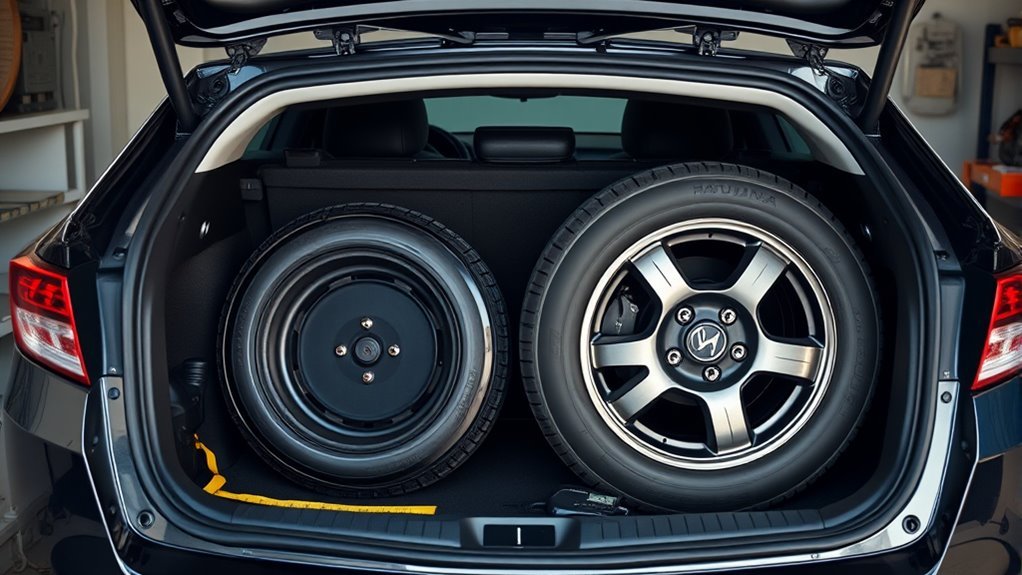
The compact spare wins on space and weight. It is easier to store, easier to lift, and less likely to take over the trunk. That is why many sedans use a compact temporary spare or skip the spare entirely in favor of a tire mobility kit.
The full-size spare wins on confidence. It gives you a more complete backup if a tire fails far from home. The tradeoff is that it weighs more, takes more cargo room, and may require different trunk foam or storage hardware.
Fuel economy is also part of the tradeoff. Removing unnecessary cargo helps efficiency, and a full-size spare adds weight. The difference may be small for one driver, but automakers care about every pound when designing new vehicles.
If your Sonata carries heavy cargo or has accessories near the rear storage area, verify clearance before installing a full-size spare or carrier. Do not assume a larger wheel will fit under the trunk floor just because the bolt pattern is correct.
Tire Mobility Kits: When Your Sonata Has No Spare
If your Sonata has a tire mobility kit instead of a spare, read the kit instructions before you need it. Hyundai’s Tire Mobility Kit is a temporary repair method, not a permanent tire repair. It is meant for certain punctures in the tread area, not severe tire damage.
A tire mobility kit may not work if:
- The cut or puncture is too large.
- The sidewall is damaged.
- The tire has separated, shredded, or blown out.
- The wheel is bent or cracked.
- The tire cannot hold the required pressure after sealant is used.
- The sealant bottle is expired, missing, frozen, or already used.
After using a sealant kit, drive carefully and follow the speed and pressure instructions exactly. Sealant is only a way to reach service; it is not a reason to keep driving on a damaged tire for days.
Warning: If the tire will not hold pressure, the damage is in the sidewall, or the car vibrates or pulls after inflation, stop driving and call roadside assistance or a tow service.
Buying and Installation Options for the Sonata: OEM Kits, Aftermarket Kits, and Run-Flats
You have three main options if you want better flat-tire preparedness: an OEM-style spare kit, an aftermarket spare kit, or run-flat tires. Each option has tradeoffs.
OEM or Dealer Spare Kit
An OEM-style kit is usually the safest route for fitment because it is designed around the vehicle’s wheel specs and storage area. A complete kit should include the spare wheel and tire, jack, lug wrench, hold-down hardware, and any foam or tray pieces needed for secure trunk storage.
Aftermarket Spare Kit
An aftermarket kit can work well, but verify the details before buying. Ask the seller to confirm fitment for your exact Sonata year, trim, brake package, and wheel size. Avoid kits that do not clearly list wheel specs, tire size, load rating, and included tools.
Run-Flat Tires
Run-flat tires can reduce the need to stop immediately after a puncture, but they are not a simple universal upgrade. They usually ride firmer, cost more, may have specific repair limits, and require a functioning Tire Pressure Monitoring System. Do not mix run-flat and conventional tires except for limited emergency use if the tire manufacturer allows it.
Maintenance and Inspection: Pressure, Aging, Rotation, and Replacement
Spare-tire maintenance is simple, but it is easy to forget because the spare spends most of its life hidden under the trunk floor. Add the spare to your monthly tire routine.
- Check pressure monthly: Use a gauge when the tire is cold. Compact temporary spares often need higher pressure than regular tires.
- Inspect the sidewall and tread: Look for cracks, cuts, bulges, flat spots, dry rot, or embedded objects.
- Check the DOT/TIN date code: The last four digits show the week and year the tire was made.
- Confirm tools are present: Make sure the jack, lug wrench, wheel lock key if equipped, and instructions are still in the car.
- Replace unsafe spares: Replace a spare that is damaged, worn, too old under manufacturer guidance, or unable to hold pressure.
Hyundai owner guidance says tires degrade over time even when unused and should be replaced after 6 years of normal service. NHTSA also notes that some vehicle and tire manufacturers recommend replacing tires that are 6–10 years old regardless of treadwear. For the safest answer, follow the most conservative guidance from your Sonata owner’s manual, tire manufacturer, and tire professional.
Frequently Asked Questions
Is it worth having a full-size spare for a Hyundai Sonata?
Yes, it can be worth it if you drive long distances, travel through rural areas, or want more normal handling after a flat. Just make sure the full-size spare truly matches your Sonata’s required tire and wheel specifications. A mismatched full-size spare can create its own safety problems.
What does compact spare tire mean?
A compact spare tire, often called a donut, is a smaller temporary spare designed to help you drive carefully to a repair facility. It saves trunk space and weight, but it has reduced traction, shorter tread life, and strict speed and use limits.
How many miles can you drive on a compact spare?
Drive only as far as needed to reach safe tire service. Many compact spares are commonly treated as short-distance emergency tires, often around 50 miles, but the exact distance depends on the spare’s sidewall label and your owner’s manual. Hyundai warns not to drive over 50 mph (80 km/h) on a compact spare.
Does it matter what size your spare tire is?
Yes. Tire size, wheel size, load rating, speed rating, offset, center bore, and rolling diameter all matter. A spare that does not match the vehicle’s requirements can affect braking, steering, ABS, traction control, and overall stability.
Can I replace my Sonata’s tire mobility kit with a spare tire?
Often, yes, but you need a complete kit that fits your exact Sonata. Confirm the wheel and tire specs, jack points, lug wrench, hold-down hardware, and trunk storage fit before buying. A dealer or qualified tire shop can help verify compatibility.
Should I rotate a full-size spare with the other tires?
If it is a matching full-size spare and your vehicle/tire manufacturer allows it, including it in rotation can help keep tread wear even. Do not rotate a compact temporary-use spare with the regular tires.
Conclusion
For most Hyundai Sonata owners, a compact donut spare is the practical space-saving choice for short emergency driving, while a matching full-size spare is the better confidence choice for longer trips and more predictable handling. The safest answer is not simply “donut” or “full-size.” It is the setup that matches your exact Sonata, is properly inflated, is not aged or damaged, and includes the tools needed to use it safely.
If your Sonata came with only a tire mobility kit, learn its limits before you need it. If you upgrade to a spare, buy a complete kit and verify fitment before trusting it on the roadside.
Sources
- Hyundai Owner’s Manual — Tire replacement — backs compact-spare emergency use, 50 mph limit, tire aging, and replacement guidance.
- Hyundai Owner’s Manual — Tire Mobility Kit use — backs sealant-kit speed, pressure, and damage-limit cautions.
- NHTSA TireWise — backs tire maintenance, pressure checks, tire aging, DOT/TIN date-code guidance, and tire safety basics.
- NHTSA Tire Safety Checklist — backs monthly tire-pressure checks including the spare.
- U.S. Tire Manufacturers Association Tire Care & Safety Guide — backs full-size spare rotation, temporary spare pressure, inspection, and storage guidance.
- AAA — Cars Without Spare Tires — backs the trend toward vehicles without spare tires and spare-kit cost context.

Related Articles

Danger of Using Summer Tires in Winter on a Hyundai Sonata
Potentially perilous, using summer tires in winter on your Hyundai Sonata can compromise safety—discover the hidden dangers that await you on icy roads.
Read More
Can You Mix Nitrogen and Air in Hyundai Sonata Tires? Answered
Discover the implications of mixing nitrogen and air in your Hyundai Sonata tires—are the benefits worth the risks? Explore the answer inside!
Read More
How to Tell If Hyundai Sonata Tires Are Too Old to Use Safely
Understand how to assess the age of your Hyundai Sonata tires and discover crucial signs of deterioration that could compromise your safety on the road.
Read More