
What Is a Run Flat Tire? How It Works & Key Limitations
A run-flat tire lets you keep driving after a puncture—generally up to about 50 miles at up to 50 mph—by using reinforced sidewalls or a support ring to carry your vehicle’s weight when pressure’s lost. They’re common on luxury and performance cars and need a working TPMS to alert you. Expect firmer ride, higher cost, and limited repair options; mixing with regular tires can harm handling. Keep going below for more on designs, limits, and decisions.
What Run-Flat Tires Are and Who Uses Them
Think of run-flat tires as a safety backup built into your wheels: they let you keep driving after a puncture for about 50 miles at up to 50 mph so you can reach a safe location or repair shop. You’ll find this tire technology mainly on luxury and high-performance cars where manufacturers prioritize safety features and trunk space by removing the spare. Run-flat designs include self-supporting tires with reinforced sidewalls and support ring systems that maintain shape when deflated. You’ll appreciate reduced weight and the convenience of avoiding roadside tire changes, especially in urban areas where stopping is risky. Remember a Tire Pressure Monitoring System (TPMS) is essential—you’ll rely on it to alert you to air loss and preserve safety and performance.
How Run-Flat Tires Keep You Moving After a Puncture
Because run-flat tires use reinforced sidewalls or an internal support ring, they’ll hold your vehicle’s weight long enough for you to drive to safety—typically about 50 miles at speeds up to 50 mph—after a puncture. You rely on built-in tire technology and safety features to avoid stopping on busy roads and to reach a repair facility.
- Reinforced structure: sidewalls resist collapse so the rim won’t contact pavement.
- TPMS alerts: monitors pressure and notifies you immediately of a loss.
- Controlled distance/speed: limits exist to prevent further damage and guarantee predictable handling.
- Post-puncture replacement: reinforced construction often prevents standard repairs, so expect full tire replacement.
These features prioritize mobility and safety while minimizing roadside exposure after a flat.
Two Designs: Self-Supporting vs. Support-Ring Explained
Now that you know how run‑flat technology keeps you moving after a puncture, it helps to understand the two main ways manufacturers achieve that resilience: self‑supporting designs and support‑ring systems. You’ll find self‑supporting tires use reinforced, stiffer sidewalls made of hard rubber so the tire holds vehicle weight and shape even when deflated; they’re the most common option and pair with TPMS to notify you of pressure loss. Alternatively, support‑ring system tires put a hardened rubber ring inside the tire carcass to carry load after air loss, offering a different structural approach. Both tire technology variants focus on safety features that maintain control and reduce blowout risk versus standard tires, helping you drive to a safe stop or service point.
Typical Limits: Speed and Distance After a Flat
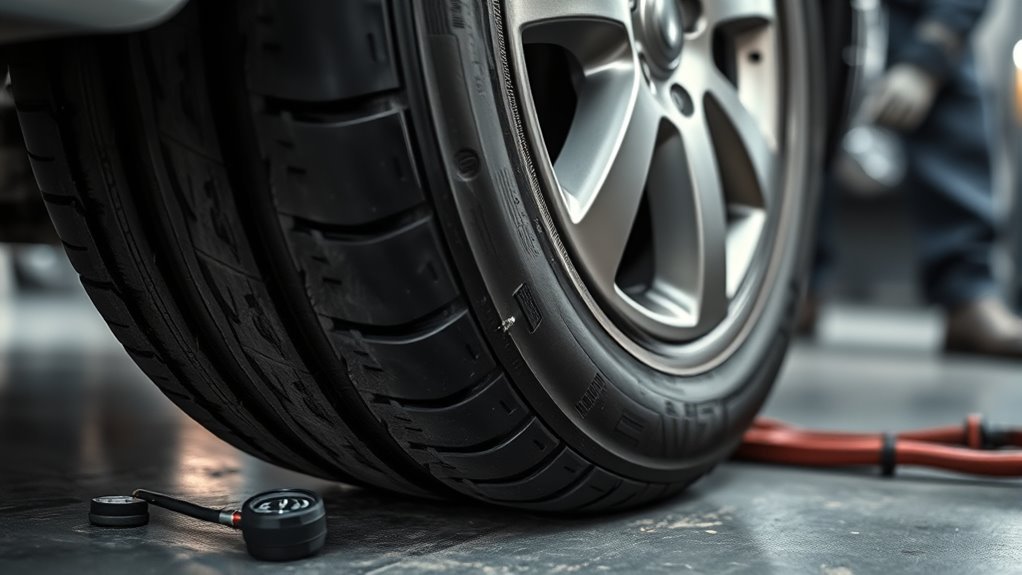
After a puncture, run‑flat tires let you keep going but only for a short, controlled window: typically up to about 50 miles at a maximum of 50 mph. You should treat that limit as firm: the reinforced sidewalls let you maintain control and avoid immediate collapse, but they don’t restore normal performance.
- Use the 50/50 guideline—don’t exceed ~50 mph or ~50 miles; that balances mobility with safety considerations.
- Expect reduced ride comfort and handling; this is a deliberate performance trade offs compromise to preserve control.
- Check damage promptly; run‑flats often can’t be repaired after being driven on and usually need replacement.
- Monitor speed and distance closely and stop as soon as it’s practical to avoid catastrophic tire or vehicle damage.
Why TPMS Matters With Run-Flat Tires
When a run‑flat tire loses air, your car’s TPMS is the critical early warning that lets you respond safely; without it you might not notice pressure loss until damage has already started. You rely on tire pressure alerts to know when a run‑flat is operating out of spec so you can slow down and exit traffic. TPMS maintenance importance can’t be overstated: sensors need batteries, calibration, and periodic checks to remain reliable. If sensors fail, you lose the controlled‑mobility advantage run‑flats provide and risk structural tire failure from prolonged low pressure. Check TPMS during routine service, replace sensors per manufacturer intervals, and act immediately on alerts. Doing so preserves safety and lets run‑flat technology perform as intended.
Run-Flat Tires vs. Standard Tires: Cost Differences
Because run‑flat tires use reinforced sidewalls and tougher construction, you’ll typically pay 13–50% more per tire than for a standard one. That upfront premium reflects materials, limited availability, and the design that lets you drive briefly after a puncture. Consider practical cost trade-offs below:
- Purchase: run-flat advantages include no spare needed, but sticker prices are higher and replacements (often double conventional costs) raise ownership expense.
- Repairability: run flat disadvantages — most run-flats aren’t repairable after punctures, so you usually replace rather than patch, increasing long-term cost.
- Maintenance: fewer spare-related tools, yet limited dealer options can mean higher labor or shipping fees.
- Value: factor expected replacement frequency and comfort preferences when comparing total cost.
Run-Flat Tires: Ride, Handling, and Noise Trade-Offs
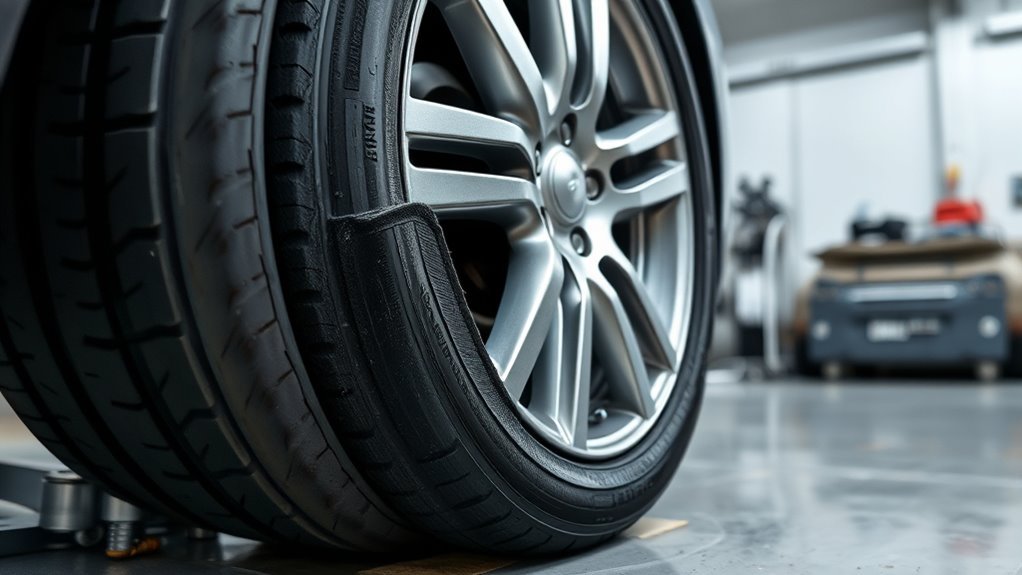
Expect a firmer ride with run-flat tires because their reinforced sidewalls trade cushioning for puncture resilience. You’ll often get more predictable steering and better control after a puncture, though actual handling varies by brand and model. Be prepared for potentially higher road noise, since the stiffer construction can transmit more sound into the cabin.
Firmer Ride Comfort
Though they boost safety after a puncture, run-flat tires use reinforced sidewalls that give a noticeably firmer ride, so you’ll feel more road harshness over uneven pavement. That stiffer construction improves post-puncture control but changes ride quality and creates clear comfort trade offs you should weigh.
- You’ll notice increased vibration and sharper feedback over bumps compared with standard tires.
- Long drives can become tiring for occupants due to reduced absorption of road irregularities.
- Some run-flat designs also transmit more road noise, further reducing perceived comfort.
- If urban streets or ride comfort matter to you, compare tire models and test-drive options before committing.
Decide by balancing emergency safety needs against daily comfort expectations.
Steering And Handling
A firmer ride affects more than comfort — it changes how the car steers and responds. You’ll notice tighter steering feedback from reinforced sidewalls; turns feel more direct and handling stability often improves, especially during cornering. That said, stiffer tires can transmit more bumps, which changes your inputs and can reduce fine-seat-of-pants feel. Performance varies by brand and model, so you may lose some grip or precision with certain run-flat designs. Never mix run-flat and standard tires—you’ll degrade steering, braking, and overall dynamics. Choose a matched set to preserve predictable behavior and handling stability.
| Attribute | Effect |
|---|---|
| Steering feedback | More direct |
| Handling stability | Often improved |
| Comfort | Reduced |
| Grip variance | Model-dependent |
Road Noise Levels
You’ll notice run-flat tires usually make more road noise than standard tires because their reinforced sidewalls and stiffer construction transmit vibrations into the cabin. You’ll hear more tire noise at higher speeds and on rough surfaces, which reduces perceived tire comfort. Expect a trade-off: safety and puncture resistance versus a quieter, smoother ride.
- Materials — stiff compounds and support rings can amplify vibrations and sound into the vehicle.
- Speed sensitivity — noise becomes more noticeable as you drive faster or on uneven pavement.
- Comfort impact — many drivers report lower tire comfort ratings due to transmitted road imperfections.
- Variation by model — noise levels differ across brands, so compare reviews and spec sheets before choosing.
Repair Rules and When a Run-Flat Must Be Replaced
When a run-flat sustains a puncture or impact, it’s usually not repairable and often carries a “Do Not Repair” warning, so you’ll need a full inspection to confirm whether replacement is required. You must understand repair limitations: reinforced sidewalls prevent standard patch-and-plug fixes, and internal damage can exist without visible signs. Expect a thorough inspection (up to about $75) after any significant impact or pressure loss. If the tire was driven flat—even within the temporary 50-mile allowance—it frequently meets replacement criteria because internal breakdown may compromise safety. Rely on your TPMS to detect pressure loss early and avoid extended driving on a puncture. In short, assume replacement unless a qualified technician proves the tire structurally sound.
Mixing Run-Flat Tires With Regular Tires: Compatibility Rules
Mixing run-flat and regular tires can change tread contact and grip, so you may notice uneven traction and accelerated wear. You’ll also feel handling and braking differences because stiffer run-flat sidewalls respond differently than standard tires. For consistent performance and safety, fit like-for-like tires across each axle.
Matching Tread And Grip
If you pair run-flat tires with standard tires, expect differences in handling, braking, and grip because run-flats usually have stiffer sidewalls and different tread designs. You should prioritize tread compatibility and be aware of grip differences across axles; mismatched patterns change contact patch behavior and traction limits. Manufacturers recommend using a full set of matching tires to avoid uneven performance and possible warranty issues.
- Check tread pattern: identical or closely matched patterns maintain predictable water evacuation and wear.
- Match compound and tread depth: differing compounds can create inconsistent grip under acceleration or cornering.
- Verify alignment and balance: correct setup reduces asymmetric wear and stability problems.
- Consult the tire maker: follow their guidance to avoid safety and warranty risks.
Handling And Braking Changes
Because run-flat and standard tires respond differently to loads, you’ll notice immediate changes in steering feel, braking distances, and overall stability if you mix them. You’ll feel uneven steering response and altered braking distances because run-flats have stiffer sidewalls and different design characteristics than standard tires. That mismatch creates uneven grip, compromises tire performance, and raises safety concerns, especially in emergency maneuvers. Manufacturers generally advise against mixing types; replacing all four tires with the same category preserves consistent traction, alignment, balance, and predictable wear. If you must mix temporarily, drive cautiously and have a professional inspect alignment and balance as soon as possible. Prioritize uniform tires to maintain predictable handling, consistent braking, and reduced risk of losing vehicle control.
Should You Choose Run-Flat Tires? A Practical Decision Checklist
Wondering whether run-flat tires are right for you? Weigh run flat benefits against cost considerations, ride comfort, and repair limits. Use this checklist to decide practically.
- Safety/convenience: You can drive about 50 miles at up to 50 mph after a puncture, reducing roadside stops—great if you value getting home or to a shop safely.
- Price: Expect higher purchase costs ($217–$270+); factor replacement expense since many punctures require full tire swaps.
- Comfort/tradeoffs: Reinforced sidewalls give a stiffer ride; test-drive similar tires to see if you tolerate the firmness.
- Maintenance needs: Verify a working TPMS and accept that repair options are limited; plan budget and service access accordingly.
Frequently Asked Questions
What Are the Downsides of Run-Flat Tires?
You face higher replacement costs, limited availability, and often non-repairable damage; you’ll get stiffer sidewalls causing reduced ride comfort and potentially faster tread wear, and you may lack a spare after severe blowouts.
How Many Days Can You Drive on a Run-Flat Tire?
Ironically, you won’t be camping on one: you can only drive a run-flat tire for about 30–50 miles (hours, not days). You’ll need prompt tire maintenance to guarantee driving safety and avoid permanent damage.
How Much Do Run-Flat Tires Typically Cost?
You’ll typically pay $217–$270 per run-flat tire, often double conventional tires; full outfitting can reach $350–$1,500+ per tire. Expect higher tire maintenance and inspection costs, affecting performance comparison and long-term upkeep.
Conclusion
Run-flat tires are your roadside lifeboat: when a puncture sinks a regular tire, they keep you afloat long enough to reach safe harbor. They trade some comfort and range for security, so weigh their limits—speed, distance, repair rules, and fit with your other tires—against your needs. If you value convenience and emergency resilience over peak ride refinement, they’re a sensible anchor; otherwise, stick with conventional tires and a reliable spare.

Related Articles
How to Find Your Tire’s Diameter and Width: Sidewall Reading Guide
Know your tire’s diameter and width from the sidewall code, but the hidden ratings could change everything—learn what they mean next.
Read More
How Much Does a Tractor Tire Weigh? Exact Weight Guide
Discover how tractor tire weight varies from 300 to 1,000 pounds, and why your exact setup could change everything.
Read More
How Much Does a Car Tire Weigh? Weight Breakdown by Category
Tire weights vary widely by category, and the numbers may surprise you when you compare passenger, SUV, motorcycle, and heavy-duty options.
Read More