
What Muscles Does Tire Flipping Work? Full Body Breakdown
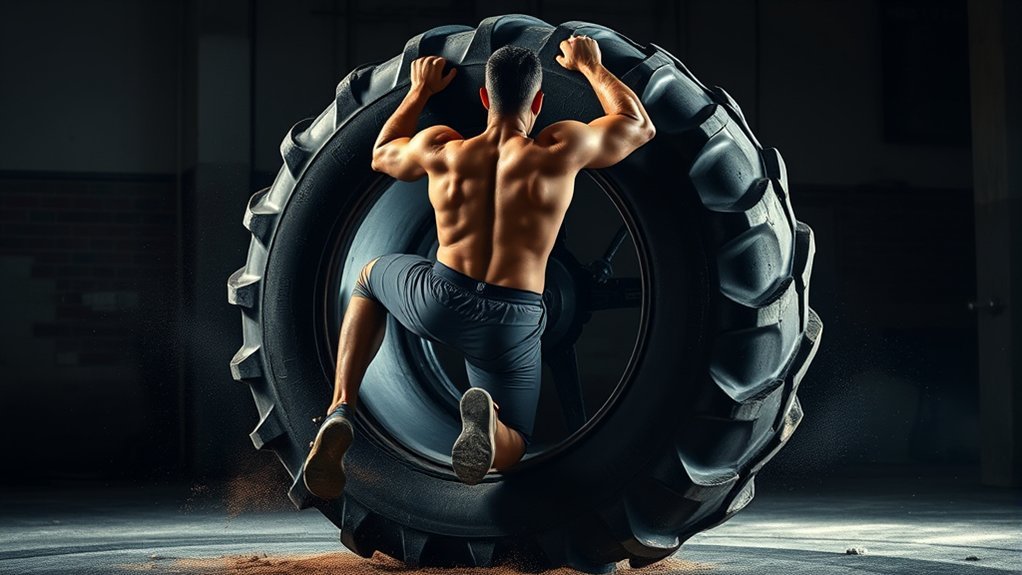
Tire flips work your whole body, but the biggest drive comes from your glutes, quadriceps, hamstrings, calves, core, back, shoulders, chest, arms, and grip. The movement starts like a heavy hinge or squat, then turns into a powerful push. Done well, it trains strength, power, coordination, and conditioning in one exercise.
Quick Answer
Tire flips mainly work your glutes, quads, hamstrings, calves, core, back, shoulders, chest, arms, and forearms. Your legs and hips start the lift, your core keeps your spine stable, and your upper body guides and pushes the tire over.
Key Takeaways
- Tire flips are a full-body exercise, not just a leg movement.
- Your glutes, quads, hamstrings, and calves create the first strong drive off the ground.
- Your abs, obliques, transverse abdominis, and spinal erectors brace your trunk and help transfer force.
- Your upper back, shoulders, chest, biceps, triceps, and forearms help pull, guide, push, and control the tire.
- Use a tire you can move with clean form, and stop the set when your back rounds or your arms start doing the lift.
At a Glance
| Time Required | 10-20 minutes after a proper warm-up |
| Difficulty | Intermediate to advanced, unless scaled with a light tire or partial reps |
| Tools Needed | A clean training tire, flat non-slip surface, athletic shoes, and optional gloves or chalk |
| Cost | Often free or low cost if you already have access to a safe training tire |
What Muscles Do Tire Flips Work?
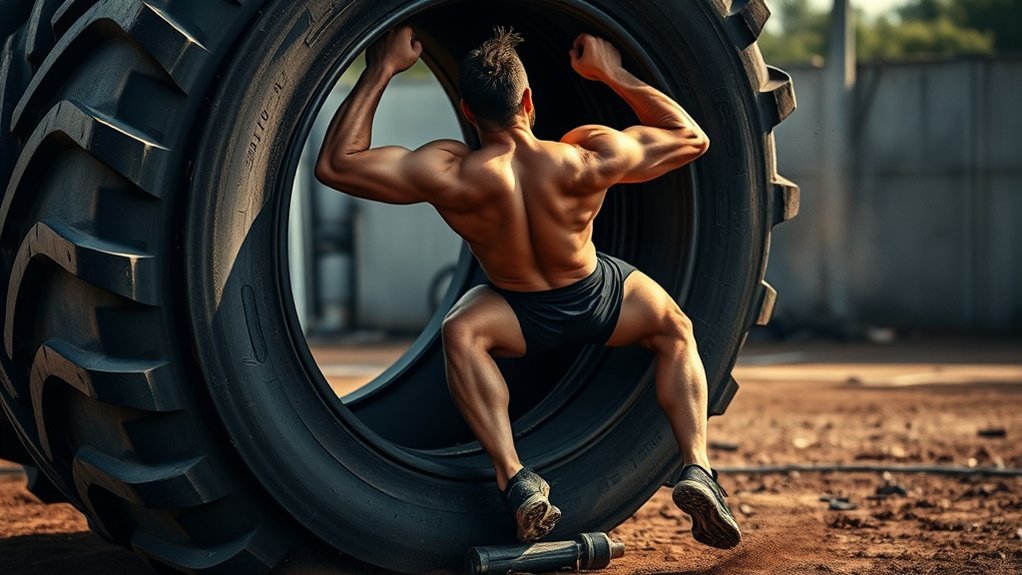
Tire flips work the lower body, core, and upper body at the same time. Your lower body starts the movement by driving through the floor. Your hips and legs create most of the force needed to break the tire off the ground. Your core then braces hard so the force moves through your body instead of leaking through a rounded back.
Your upper body helps finish the movement. Your back and arms help keep the tire close during the lift. Your shoulders, chest, and triceps help push the tire over once it reaches the turnover point. Your forearms and hands work the whole time because the tire is awkward and hard to grip.
That is why tire flips feel harder than many standard gym lifts. You are not moving a balanced barbell on a fixed path. You are moving a large, awkward object that makes your muscles work together.
[Products Worth Considering]

This TPMS relearn tool helps you quickly activate, match, and reset GM tire pressure sensors to keep the vehicle monitoring system working properly. It clears tire pressure alarms and dashboard warning lights after sensor replacement or tire rotation, and supports learning for common 315/433 MHz TPMS sensors. Designed for simple one-button operation, it can help you avoid unnecessary trips to repair shops.

The AICEL TPMS relearn tool helps you quickly reset or relearn tire pressure sensors after replacement, tire rotation, or resolving tire pressure alarms. It provides an activation reset function so your vehicle’s TPMS can operate optimally, saving time and money on frequent visits to an auto shop. Designed for easy use on most vehicles, it works by placing the tool near the valve stem and using the learn button.

This spare tire tool kit is designed for the 2004 to 2018 Ford F-150 to help you loosen and tighten wheel lug nuts and manage the spare tire and provided jack functions from underneath the vehicle. It includes the lug nut wrench and extension pieces plus a convenient storage carrying case for organized transport. The jack itself is not included.
Tire Flip Muscle Map by Phase
The muscles used in tire flips change as the tire moves. The first half is more lower-body and posterior-chain dominant. The second half uses more upper body because you have to guide, push, and finish the turnover.
| Phase | Main Muscles | What They Do |
|---|---|---|
| Setup | Core, spinal erectors, glutes, hamstrings | Brace your trunk, set your hips, and prepare for the drive. |
| First pull | Glutes, hamstrings, quads, lats, traps | Break the tire from the floor while keeping it close. |
| Leg drive | Quads, glutes, calves, core | Extend the knees and hips to move the tire upward and forward. |
| Hand switch | Biceps, forearms, shoulders, upper back | Control the tire as your hands move from pulling to pushing. |
| Push-over | Chest, shoulders, triceps, core | Drive the tire over without losing balance or collapsing forward. |
| Reset | Legs, core, grip, upper back | Step in, regain position, and prepare for the next rep. |
Tire Flip Muscles Worked in the Lower Body
Your lower body does the hardest work at the start of a tire flip. The tire is dead weight on the ground, so you need strong hip and knee extension to get it moving. This is where your glutes, quadriceps, hamstrings, and calves work together.
Glutes and Hips
Your glutes are key muscles in tire flips because they extend your hips. When you set up low and drive forward, your gluteus maximus helps push your hips through and move the tire upward. Your hip muscles also help you stay stable as the tire shifts away from the ground.
| Phase | Main Role | Effect |
|---|---|---|
| Setup | Hips loaded | Prepares force |
| Drive | Glutes contract | Tire rises |
| Finish | Hips extend | Momentum carries forward |
Good hip drive matters more than arm strength. If you try to curl the tire with your biceps, the tire will feel much heavier and your injury risk may rise.
Quadriceps Drive
Your quadriceps straighten your knees as you drive the tire upward. They help you push through the floor, maintain leg power, and keep the tire moving through the first half of the rep. If your quads fatigue, you may start to lift with your back or arms, which makes the movement less efficient.
To use your quads well, keep your feet planted, knees tracking in the same direction as your toes, and chest close to the tire. Think of the first part as a leg drive, not an arm pull.
Hamstrings and Calves
Your hamstrings support hip extension and help control the hinge position. They work with your glutes to move the tire from the ground and keep your lower body stable. Your calves help you press through the feet, stay balanced, and finish the drive as your body angle changes.
Together, the hamstrings and calves help you create a strong base. That base lets you move the tire with more speed and less wasted effort.
Core Muscles Used in Tire Flips
Tire flips strongly challenge your core. Your rectus abdominis, obliques, transverse abdominis, spinal erectors, and deeper trunk muscles brace your spine while your legs and arms create force. A strong brace helps you keep your ribs, hips, and spine under control.
Your core does not just “feel the burn.” It helps transfer power from your legs into the tire. If your core relaxes, your back may round, your hips may rise too soon, and your upper body may end up doing too much work.
Note: A tire flip is not a pure ab exercise. Your core is working mostly to brace, resist rotation, and protect position while the rest of your body produces force.
Upper Body Muscles in Tire Flips
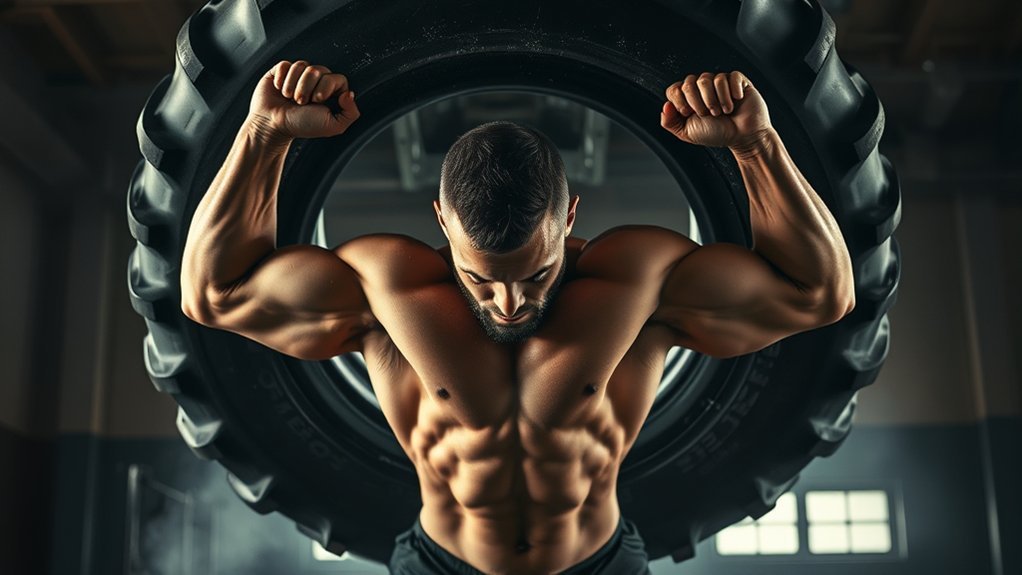
Your upper body works hard in tire flips, but it should not start the lift alone. The trapezius, latissimus dorsi, rhomboids, rear delts, biceps, forearms, chest, shoulders, and triceps all help control the tire.
Your lats and upper back help keep the tire close as it rises. Your biceps and forearms help you hold and guide it, but they should not try to curl the full load. Once the tire reaches chest height, your chest, shoulders, and triceps help push it over.
Grip strength also matters. A tire is awkward, dirty, and uneven, so your hands and forearms may fatigue before your legs do. Chalk or gloves can help, but clean technique matters more than grip aids.
Muscles That Stabilize Tire Flips
Stabilizer muscles keep the tire flip controlled. Your abs and obliques hold your trunk steady. Your spinal erectors help maintain a neutral back. Your rhomboids, traps, and lats keep your shoulders organized. Your glute medius and smaller hip muscles help your knees and hips stay aligned.
This stabilization matters because the tire does not move like a barbell. It can shift, bounce, or roll slightly as it comes up. Good control helps you keep force spread across your body instead of dumping stress into your lower back, elbows, or shoulders.
How to Choose the Right Tire
Choose a tire that lets you complete every rep with a neutral back, strong leg drive, and no painful pulling in your elbows or biceps. Bigger is not always better. A tire that is too heavy can turn the exercise into a slow, ugly grind.
- For beginners: Use a lighter tire or practice tire deadlifts, partial flips, sled pushes, or trap bar deadlifts first.
- For strength and power: Use a tire that feels challenging but still moves with speed and clean form.
- For conditioning: Use a lighter tire that allows repeatable reps without form breakdown.
- For safety: Train on a flat, dry, non-slip surface with enough open space for the tire to land.
Warning: Do not use a tire that forces you to round your back, jerk with your arms, or feel sharp pain in your back, shoulder, elbow, or biceps. Stop the set and choose an easier variation.
How to Warm Up Before Tire Flips
A tire flip is explosive, so do not walk up cold and start pulling. Mayo Clinic recommends warming up before lifting because cold muscles are more prone to injury. Use a short warm-up that raises your heart rate and rehearses the movement pattern.
- 5 minutes of brisk walking, light jogging, cycling, or sled pushing
- Bodyweight squats for 10-15 reps
- Hip hinges or kettlebell deadlifts for 8-10 reps
- Glute bridges for 10-15 reps
- Planks or dead bugs for 20-30 seconds
- One or two easy tire deadlift reps before full flips
The goal is simple: warm muscles, active hips, braced core, and clean movement before the tire gets heavy.
How to Do a Tire Flip Safely
Set up close to the tire with your feet wider than shoulder-width. Your toes can point slightly out. Brace your core, keep your back neutral, and place your hands under the tire. Your arms should help connect you to the tire, but your legs and hips should create the drive.
- Set your stance: Stand close enough that your chest can lean into the tire.
- Brace first: Tighten your core before you pull.
- Drive through your legs: Push the floor away and extend your knees and hips.
- Keep the tire close: Do not let it drift far from your body early in the lift.
- Switch your hands: As the tire rises, move from pulling to pushing.
- Push it over: Drive through your chest, shoulders, and triceps until the tire lands flat.
- Reset fully: Step in, breathe, brace, and repeat only if your form is still sharp.
| Step | Key Cue | Risk Control |
|---|---|---|
| Grip | Hands under tire | Do not curl with your arms |
| Lift | Legs drive | Keep back neutral |
| Flip | Push forward | Stay controlled |
Pro Tip: Think “push the tire forward” instead of “lift the tire up.” This cue helps you use your legs and hips instead of turning the movement into a risky arm curl.
[Products Worth Considering]

The VEHLIVE SU-50448 II TPMS relearn tool provides a fast activation reset to restore accurate tire pressure monitoring after sensor replacement or tire rotation. It supports 315 MHz and 433 MHz GM series sensors and helps clear dashboard pressure warnings. With simple two-button operation and horn-confirmed relearning order, you can reprogram sensors conveniently at home.

Secure your trailer or RV tires with a scissor-style wheel chock stabilizer that applies opposing force to help prevent wheel shift. It fits tight wheel gaps from 3.5 inches up to 12 inches and works for travel trailers, campers, fifth wheels, toy haulers, and heavy-duty trucks. The surface uses new electrophoretic technology to help prevent rust for reliable travel use.

This 1/2-inch drive breaker bar delivers powerful leverage for loosening and tightening stubborn lug nuts and automotive fasteners. The 180-degree flex head helps you reach tight spaces at the angle you need, making tire and brake jobs easier. A spring-loaded ball detent design holds 1/2-inch sockets securely while the chrome-moly head provides durable strength for everyday use.
Common Tire Flip Mistakes
Most tire flip mistakes happen when the tire is too heavy or the lifter rushes. Fix these errors before you add more reps or choose a larger tire.
- Rounding your back: Reset your brace and choose a lighter tire if you cannot keep a neutral spine.
- Curling the tire: Your biceps should guide the tire, not lift the whole load.
- Standing too far away: Get closer so your legs and hips can drive into the tire.
- Letting the tire stall: Drive with intent and switch your hands quickly once the tire rises.
- Doing too many reps: Stop when speed drops or form changes.
- Skipping the reset: Each rep should start from a strong stance, not a rushed stumble.
Tire Flip Benefits for Strength and Power
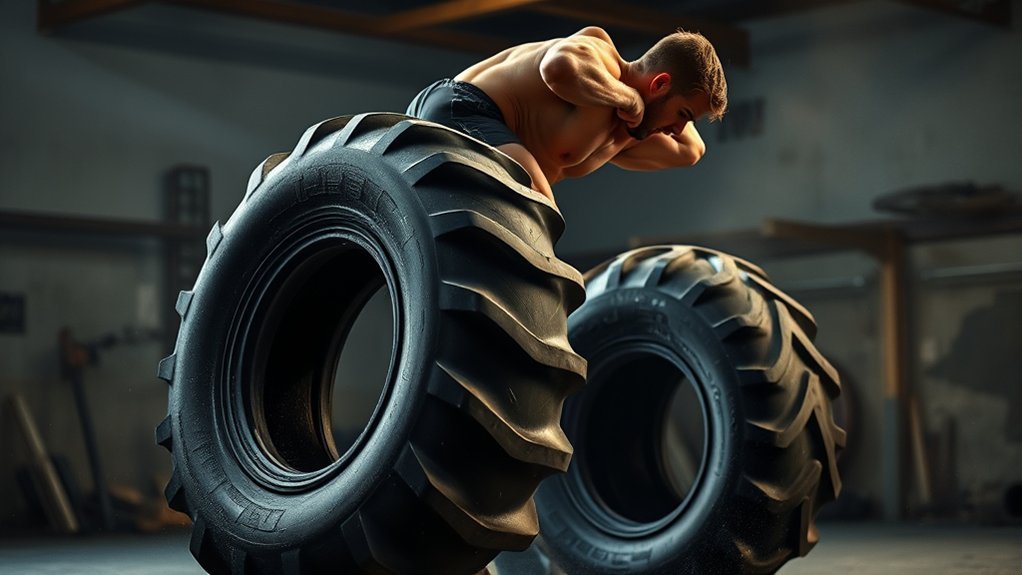
Tire flips build strength and power because they ask your lower body, core, and upper body to work as one unit. You train hip extension, knee extension, trunk bracing, grip strength, and upper-body pushing in one movement.
They can also improve conditioning when you use repeatable reps and short rest periods. Because the exercise is fast and demanding, your heart rate can climb quickly. That said, tire flips should not replace all strength work. Deadlifts, squats, sled pushes, carries, rows, and presses are still useful because they are easier to load, measure, and progress.
For general health, the CDC recommends that adults include muscle-strengthening activity at least 2 days each week, working all major muscle groups. Tire flips can be one part of that plan if they match your ability and you can do them safely.
How to Program Tire Flips
Program tire flips based on your goal. Keep the quality high because sloppy reps can turn the movement into a back or biceps strain.
| Goal | Sets and Reps | Rest |
|---|---|---|
| Technique practice | 3-5 sets of 1-3 clean reps | 60-120 seconds |
| Strength and power | 3-6 sets of 2-5 explosive reps | 2-3 minutes |
| Conditioning | 4-8 rounds of 20-30 seconds | 60-90 seconds |
Place tire flips early in your workout if you are training power. Place them after main strength work if you are using them for conditioning. Avoid heavy tire flips when you are already exhausted.
Best Beginner Alternatives to Tire Flips
If you are new to tire flipping, build the same basic movement patterns with safer, easier-to-control exercises first. These options train leg drive, hip extension, core stiffness, and upper-body power without the same awkward tire position.
- Trap bar deadlift: Builds leg and hip strength with a more controlled setup.
- Kettlebell deadlift: Teaches hinge mechanics before speed is added.
- Kettlebell swing: Trains hip power and trunk stiffness.
- Sled push: Builds leg drive and conditioning with less upper-body pulling stress.
- Medicine ball chest pass: Trains explosive pushing for the turnover phase.
- Landmine press: Builds shoulder and chest strength on a friendly pressing path.
Build up slowly. MedlinePlus advises increasing activity gradually and stopping exercise if you feel pain, dizziness, or unusual shortness of breath. If you have a back, shoulder, elbow, knee, or heart-related concern, talk with a qualified health professional before trying heavy tire flips.
Who Should Avoid Tire Flips?
Tire flips are not the right exercise for everyone. Avoid them or get professional coaching first if you have current back pain, recent hernia, shoulder pain, elbow or biceps tendon pain, knee pain, balance problems, uncontrolled blood pressure, dizziness with exertion, or any condition that makes heavy lifting unsafe for you.
You should also skip tire flips if you cannot hinge, squat, brace, and push without pain. Start with controlled strength exercises first, then progress only when your technique is reliable.
Frequently Asked Questions
Does tire flipping build muscle?
Yes, tire flipping can build muscle if the tire is challenging enough, your sets are hard enough, and you progress over time. It trains your legs, glutes, back, shoulders, arms, and core. For best results, pair tire flips with controlled strength lifts such as squats, deadlifts, rows, and presses.
Is tire flipping better than deadlifts?
No. Tire flips and deadlifts train different qualities. Deadlifts are better for controlled, measurable strength progression. Tire flips are better for explosive full-body power, grip, coordination, and conditioning. Many athletes use both, but beginners should master basic hinge and squat strength before heavy tire flips.
How many tire flips is a good workout?
For strength and power, 3-6 sets of 2-5 clean reps works well for many trained lifters. For conditioning, use a lighter tire for short timed rounds, such as 20-30 seconds. Beginners can start with 3-5 sets of 1-3 reps or use tire deadlifts and sled pushes first.
What are the benefits of tire flip exercise?
Tire flips can improve full-body strength, explosive power, grip, core bracing, coordination, and work capacity. They are useful when you want a hard, athletic movement that trains many muscles at once. The benefits depend on using the right tire, good form, enough rest, and smart progression.
Are tire flips safe for beginners?
They can be safe for some beginners if the tire is light, the surface is stable, and a coach teaches the technique. Many beginners should start with trap bar deadlifts, kettlebell deadlifts, sled pushes, and partial tire lifts before doing full flips.
Conclusion
Tire flips work your glutes, quads, hamstrings, calves, core, back, shoulders, chest, arms, and grip. Your legs and hips start the lift, your core keeps your spine stable, and your upper body guides and pushes the tire over. Choose a tire that matches your strength, warm up first, drive with your legs, and stop when your form breaks down. With smart programming, tire flips can be a powerful tool for strength, power, and conditioning.
Sources
- Mayo Clinic: Weight training do’s and don’ts of proper technique — supports proper form, warm-up, progression, and injury-risk guidance.
- CDC: Adult Activity, An Overview — supports weekly muscle-strengthening recommendations for major muscle groups.
- Office of Disease Prevention and Health Promotion: Current Physical Activity Guidelines — supports current U.S. physical activity guidance.
- MedlinePlus: Exercise and Physical Fitness — supports gradual progression, core stability, and stop-exercise safety advice.
[Products Worth Considering]

LiQuiTube Premium Heavy Duty Tire Sealant provides permanent flat tire protection to help maintain proper air pressure while sealing punctures and leaks. It seals bead, rim, and porosity weathering leaks and helps prevent flats in heavy ply industrial tires. Designed for versatile use on trailers and off-road equipment, it can be installed in tubeless tires and also inside tubes.

TheraTears Dry & Tired preservative-free eye drops provide all-day soothing comfort for dry, tired eyes. The formula contains twice the hydrating ingredient found in the original TheraTears blend, helping relieve discomfort from eye strain and screen fatigue. Convenient single-use vials make it ideal for sensitive eyes and daily eye care.
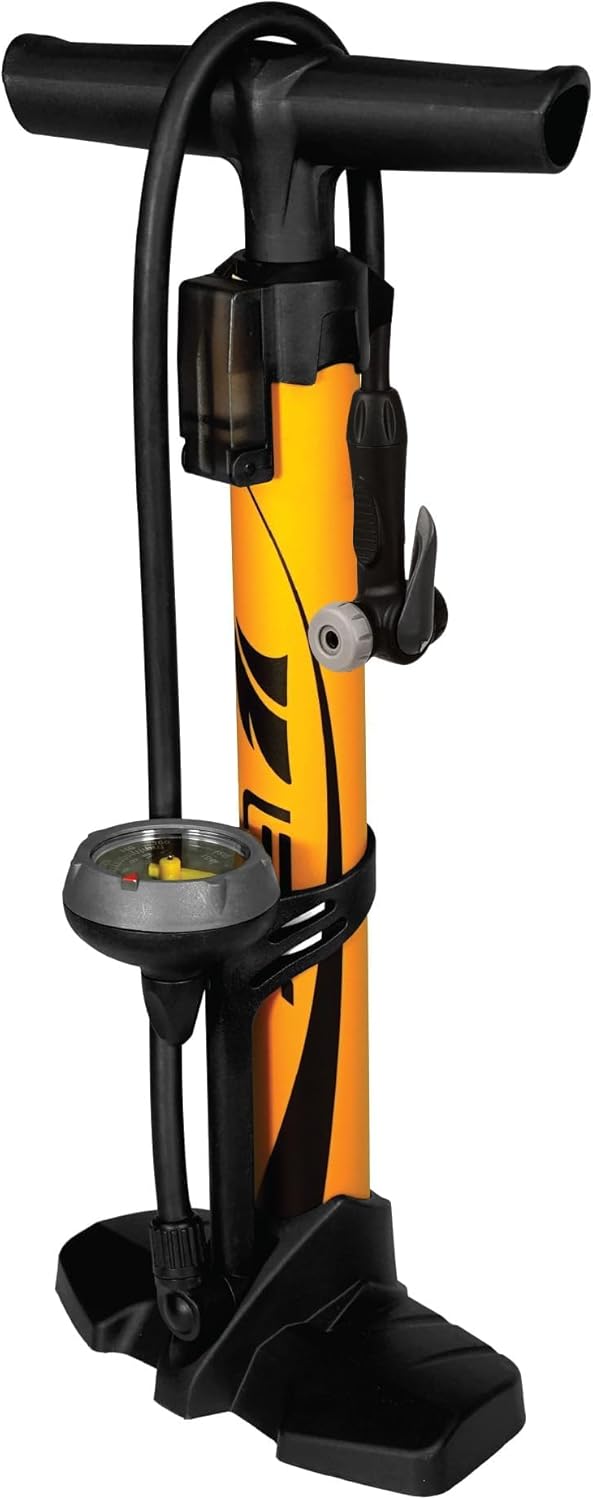
This durable BV floor pump delivers up to 160 PSI for confident inflation of bikes and other high-pressure uses. Its twin valve head lets you quickly switch between Presta and Schrader valves by reversing the components, with no compromise. The ergonomic handle makes pumping comfortable, and the compact size is easy to carry for rides and home storage.

Related Articles
How to Stop Tires From Rubbing: 10 Clearance Fixes
Baffled by tire rub? Discover 10 proven clearance fixes that can save your setup—and find out which one actually works best.
Read More
How to Reduce Road Noise From Tires: 8 Proven Fixes
Muffle tire drone with 8 proven fixes that reveal the easiest ways to quiet your ride—and one overlooked step may surprise you.
Read More
Racing Tire Technology: How They’re Built for Speed
Ultimate racing tire technology blends grip, heat, and precision in ways that can shave seconds—discover what really makes them so fast.
Read More