
Is a 295 Tire the Same as a 35-Inch? Size Comparison Guide
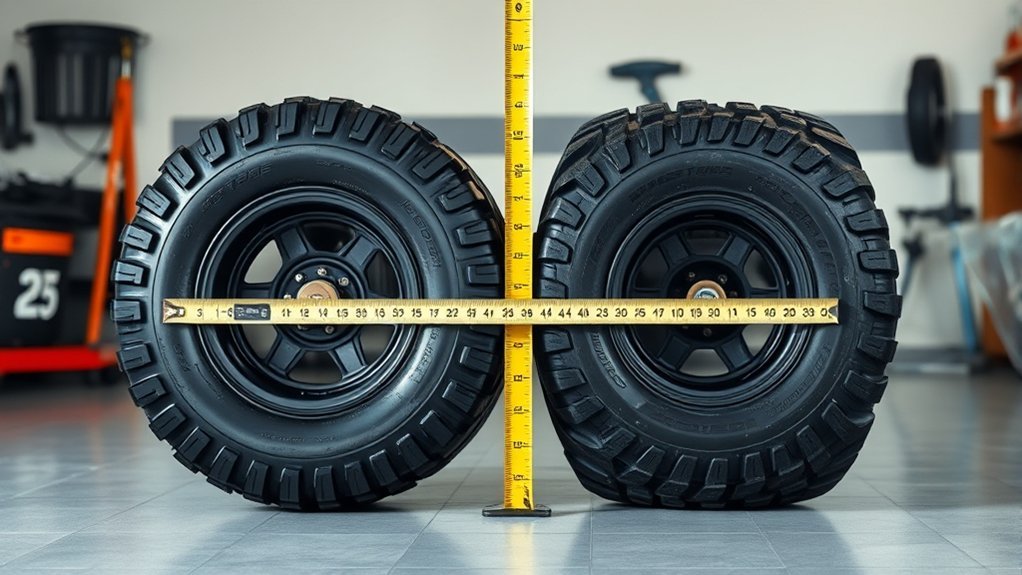
A 295/65R20 tire is very close to a 35-inch tire, but it is not something you should judge by the nickname alone. By tire-size math, a 295/65R20 is about 35.1 inches tall and 11.6 inches wide. A 35×11.50R20 is nominally about 35.0 inches tall and 11.5 inches wide. In real life, the exact mounted size depends on the tire brand, tread design, wheel width, load range, and inflation pressure.
Quick Answer
A 295/65R20 is effectively a 35-inch tire for many truck fitment comparisons because it calculates to about 35.1 inches tall. It is slightly wider than a nominal 35×11.50R20, but measured specs vary by tire model. Always compare the manufacturer spec sheet, load index, wheel width, and clearance before buying.
Key Takeaways
- A 295/65R20 calculates to about 35.1 inches tall and 11.6 inches wide.
- A 35×11.50R20 is nominally about 35.0 inches tall and 11.5 inches wide.
- The difference is small, but actual tire specs can change by brand and tread design.
- Load index, load range, wheel width, and air pressure matter as much as diameter.
- Check clearance at full steering lock and under suspension compression before you buy.
295/65R20 vs 35×11.5R20: Which Fits Better
When you compare 295/65R20 vs 35×11.5R20, the fit is close enough that many truck owners shop both sizes. Still, the 295/65R20 is not automatically the same as every 35-inch tire. A generic calculator lists 295/65R20 at about 35.1 inches tall, while 35×11.50R20 is listed at about 35.0 inches tall.
The better fit depends on your truck, wheel width, offset, suspension setup, and the exact tire model. If your current setup already has tight clearance near the fender liner, upper control arm, mud flap, or bumper bracket, even a small change in section width can matter.
| Size | Calculated / Nominal Diameter | Nominal Width | Sidewall Height | Revs Per Mile |
| 295/65R20 | About 35.1 inches | About 11.6 inches | About 7.5 inches | About 575 |
| 35×11.50R20 | About 35.0 inches | About 11.5 inches | About 7.5 inches | About 577 |
Pro Tip: Use generic size math for a quick comparison, then confirm the actual manufacturer specs before ordering. Two tires with similar names can have different measured diameter, width, tread depth, weight, and approved rim-width ranges.
[Products Worth Considering]

This metal-free wheel and tire cleaning brush uses dense, fluffy synthetic wool to safely clean rims, spokes, fenders, and engine areas without worrying about damaging surfaces. Its flexible, comfortable design helps you reach detailed areas while maintaining durability, and the extra absorbent fibers work well with wheel spray cleaners for faster cleanup. Reusable and washable performance helps prevent grime and build-up for cleaner vehicles and easier maintenance at home.

Keep your tires properly inflated with this analog VONDIOR tire pressure gauge, designed for fast, easy readings without batteries. The swiveling, two-axis hose and large glow dial help you measure at any tire angle with instant visibility. Built with a protective rubber shield, it supports durable, low-maintenance use for cars and trucks.

The SAFELIFE dial tire tread depth gauge measures tread depth in 1/32 inch increments with clear, easy-to-read 2-inch dial face. Color zones using a traffic light system help you quickly judge whether tread is low, marginal, or ample for safer driving. Built with a durable zinc cast body and a metal detect probe for precise, comfortable use across cars, motorcycles, trucks, and buses.
How to Calculate 295/65R20 in Inches
The number 295 is the tire’s section width in millimeters. The number 65 means the sidewall height is 65% of that width. The 20 means the tire fits a 20-inch wheel.
Use this formula:
Overall diameter = wheel diameter + 2 × sidewall height
For 295/65R20:
- Width: 295 mm ÷ 25.4 = about 11.6 inches
- Sidewall: 295 × 0.65 = 191.75 mm, or about 7.55 inches
- Diameter: 20 + 7.55 + 7.55 = about 35.1 inches
Note: “295” by itself does not tell you tire height. A 295/55R20, 295/60R20, and 295/65R20 all share the same nominal width, but they have different sidewall heights and overall diameters.
Manufacturer Specs Can Change the Answer
Calculator numbers are helpful, but a manufacturer spec sheet gives you the best answer for the tire you plan to buy. For example, Nitto lists the Terra Grappler G3 LT295/65R20 E at 35.12 inches overall diameter and 11.77 inches overall width. In that same tire line, the 35×11.50R20LT E is listed at 34.53 inches overall diameter and 11.42 inches overall width.
The sidewall name gets you close, but the manufacturer’s measured specs decide the real fit.
This is why you should not assume every 295/65R20 is exactly 35.1 inches tall or every 35×11.50R20 is exactly 35.0 inches tall. Tread pattern, casing design, measuring rim, and inflation pressure can change the final numbers.
How Width and Sidewall Affect Clearance
Beyond overall diameter, width and sidewall shape affect how the tire fits and performs on your truck. A 295/65R20 is nominally about 11.6 inches wide, so it can sit slightly wider than a 35×11.50R20 on paper. That extra width may improve contact patch feel, but it can also increase rubbing risk near the fender liner, upper control arm, sway bar, or mud flap.
Sidewall height also matters. A taller sidewall can absorb impacts better, especially on rough roads or trails. It can also flex more under load, which changes steering feel and clearance when the suspension compresses.
- Check clearance at full left and full right steering lock.
- Check the rear of the front fender liner and mud flap area.
- Confirm inner clearance near control arms and suspension links.
- Check clearance with the suspension compressed, not only while parked.
- Verify that your wheel width and offset match the tire manufacturer’s approved range.
If your truck already rubs with a smaller tire, a 295/65R20 or 35×11.50R20 may need trimming, a different offset, a leveling kit, or a different tire model with a narrower measured section width.
Why 295/65R20 Is Close to 35×11.5R20
A 295/65R20 is close to a 35×11.50R20 because both sizes land around the same height and width class. The metric size describes width, aspect ratio, and wheel diameter. The flotation size describes approximate overall diameter, section width, and wheel diameter.
That means both sizes can work for similar truck setups, but they are not automatically interchangeable. The final choice should come down to actual specs, available load index, tire weight, approved rim width, tread type, and clearance.
Diameter Similarity
The calculated diameter difference between a 295/65R20 and a nominal 35×11.50R20 is tiny. A 295/65R20 is about 35.1 inches tall, while a 35×11.50R20 is about 35.0 inches tall. That difference is roughly 0.1 inch by generic sizing, so ride height and speedometer change should be minimal when comparing only those nominal numbers.
Real tire models may differ more than that. If one tire’s spec sheet shows 34.5 inches and another shows 35.4 inches, the difference becomes more noticeable for gearing, rubbing, and speedometer accuracy.
Width And Fitment
A 295/65R20 is nominally about 11.6 inches wide, while a 35×11.50R20 is nominally about 11.5 inches wide. That makes the 295 slightly wider by basic conversion, not narrower. Still, tread width and section width are not always the same thing, and the tire’s shape can change depending on the wheel width.
For fitment, focus on these specs before you buy:
- Overall diameter: affects ride height, gearing, and speedometer reading.
- Section width: affects rubbing near suspension and body parts.
- Approved rim width: confirms whether your wheel is safe for the tire.
- Load index: confirms whether the tire can support your vehicle.
- Tire weight: affects acceleration, braking feel, and ride quality.
Cost And Ride Quality
Cost can vary either way. A 295/65R20 may cost less than a 35×11.50R20 in one tire line, but more in another. Brand, availability, tread type, load range, and promotions can all change the final price.
Ride quality also depends on more than size. Load range, air pressure, tire weight, casing design, tread pattern, and your suspension all matter. If you compare a lighter D-rated tire to a heavier E-rated tire, the D-rated tire may feel more compliant. If both tires are E-rated and inflated to similar load-correct pressure, the ride difference may be smaller.
Ride Quality Differences Between 295 and 35s
When you compare 295s to 35s, you may notice the ride difference more than the size difference. That is usually because of load range, tire pressure, sidewall stiffness, and tire weight, not just the diameter printed on the sidewall.
A heavier all-terrain or mud-terrain tire can feel firmer than a lighter highway-terrain tire, even if both are close in size. A tire with a stronger sidewall may handle towing or rocky terrain better, but it may also transmit more impact on broken pavement.
D-Rated Vs E-Rated
Load Range D and Load Range E describe strength and load capacity at specific pressures. A D-rated LT tire is commonly an 8-ply rating, while an E-rated LT tire is commonly a 10-ply rating. These are strength ratings, not a guarantee that the tire physically has that many body plies.
An E-rated tire usually supports heavier loads at higher pressure, which helps with towing, hauling, and heavy trucks. A D-rated tire may ride softer in some setups because it can have a more compliant casing. Still, you should not choose a lower load range unless the tire’s load index and load capacity meet or exceed what your vehicle requires.
Warning: Never downsize load capacity just to get a softer ride. Check your door placard, owner’s manual, and the tire’s load index. NHTSA advises using the recommended cold inflation pressure shown on the vehicle tire information placard or certification label.
Stiffer Sidewall Feel
A stiffer sidewall can make steering feel sharper and support heavier loads, but it can also make the ride feel harsher. You may feel more impact over potholes, expansion joints, gravel roads, and washboard surfaces.
A more flexible sidewall can absorb small impacts better, but it may also feel less precise under heavy load or quick steering input. The right choice depends on how you use your truck. Daily driving, towing, hauling, and off-road use all put different demands on the tire.
Comfort On The Road
For daily driving, comfort usually comes from the full tire package: casing design, tread pattern, load range, inflation pressure, and weight. A 295/65R20 may feel smoother than a 35×11.50R20 in one brand, but the opposite can happen in another brand.
- Use load-correct pressure instead of guessing.
- Compare tire weight before buying.
- Choose an all-terrain or highway-terrain pattern if road comfort matters most.
- Choose a stronger sidewall if you tow, haul, or drive sharp rocky trails.
- Balance comfort against load capacity and durability.
D-Rated vs E-Rated Tires
The main difference between D-rated and E-rated tires is load capacity at pressure. In many LT sizes, Load Range E carries more weight than Load Range D, but the exact load capacity comes from the tire’s load index and the manufacturer’s load-inflation data. For example, Falken’s load-inflation table lists LT295/65R20 Load Range E values by pressure for single and dual applications.
If your truck tows, hauls, carries tools, or runs heavy accessories, the higher capacity of an E-rated tire may be worth the firmer feel. If your truck is a lighter daily driver and the D-rated tire still meets the required load capacity, the softer casing may feel more comfortable.
The safest rule is simple: match or exceed the original tire’s required load capacity and follow the pressure guidance for your vehicle and tire setup.
[Products Worth Considering]

Accurately measure tire tread depth with a calibrated gauge marked from 0 to 1 inch in 1/32 inch increments. The color-coded bar helps you quickly identify tread condition ranges, supporting safe driving for trucks, motorcycles, automobiles, and passenger vehicles.

Upgrade your 2024-2026 Tesla Model 3 Highland with REEVAA all-weather mud flaps designed for seamless fit along the original body lines. The set of four delivers strong splash protection against mud, gravel, and road debris while using OEM-grade durable materials. Installation is non-destructive with original hole positions and snap-in clips, and the aerodynamic design helps minimize impact on efficiency.

This ALL-TOP auto-stop tire deflator valve kit lets you air down off-road tires quickly without watching pressure, automatically stopping when your preset PSI is reached. Each valve is individually calibrated for reliable performance with an acceptable +/- 2 PSI tolerance. The adjustable deflator range covers 10 to 30 PSI and includes four valves plus valve caps and a zipper pouch for easy setup on trucks, SUVs, RVs, UTVs, and powersports.
How Weight and Cost Change The Choice
Weight and cost can tip the decision between 295/65R20 and 35×11.50R20 tires. A heavier tire can reduce acceleration response, add braking load, and make the suspension work harder. It can also increase rotational mass, which may reduce fuel economy.
Cost is not always tied directly to size. A 295/65R20 may be cheaper in one brand and more expensive in another. Compare tires within the same product line when possible, because that gives you a cleaner look at the size difference without mixing tread designs and construction types.
- Daily driving: prioritize reasonable weight, low road noise, and correct load capacity.
- Towing or hauling: prioritize load index, pressure range, and sidewall strength.
- Off-road use: prioritize sidewall protection, tread depth, and real-world clearance.
- Budget builds: compare total installed cost, not just tire price.
- Long-term value: consider treadwear warranty, rotations, alignment, and fuel use.
What Bigger Tires Do To MPG and Power
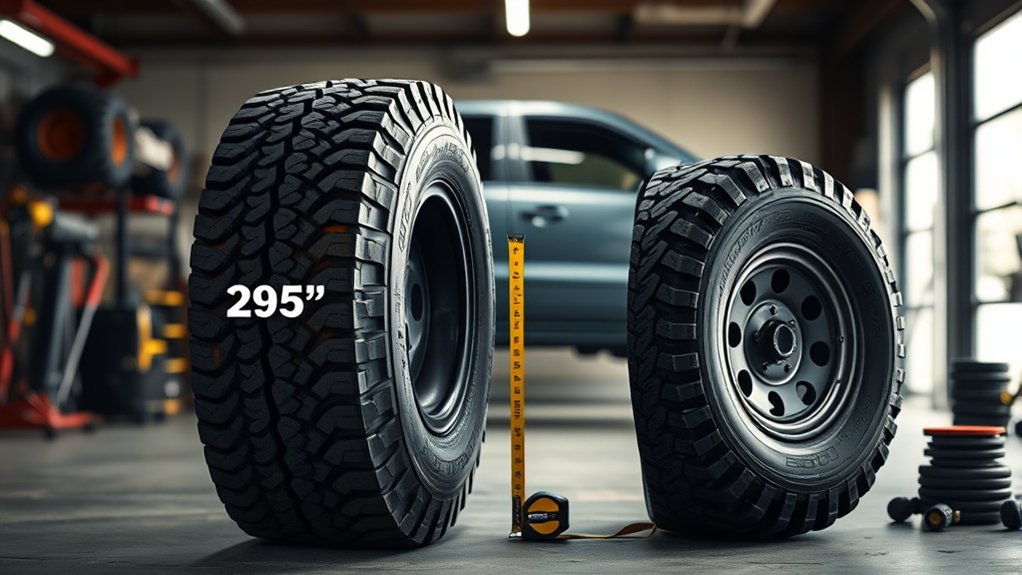
Bigger and heavier tires can reduce MPG because they add weight and rolling resistance. They can also change effective gearing. When the tire diameter increases, each wheel rotation moves the truck farther, which can lower engine RPM at a given road speed. That sounds helpful, but it can also move the engine outside its most efficient power range, especially in stop-and-go driving or while towing.
Speedometer and odometer readings can change too. If your new tire is larger than the tire your truck is calibrated for, the speedometer may read lower than your actual road speed. If your new tire is smaller, it may read higher than your actual road speed.
For a 295/65R20 and a nominal 35×11.50R20, the generic diameter difference is very small. The bigger issue is usually the jump from your original factory tire to either of these larger sizes.
Use a Tire Size Calculator Before You Buy
A tire size calculator gives you a fast way to compare diameter, width, sidewall height, circumference, and revolutions per mile. It is useful for narrowing your options, but it should not be your final fitment check.
Before ordering, compare the actual spec sheet for the exact tire model you want. Then check your truck physically.
- Measure fender and liner clearance with the wheels straight.
- Turn the steering wheel fully left and right and check again.
- Look for tight spots near control arms, sway bars, and mud flaps.
- Confirm the tire fits your wheel width and offset.
- Check spare tire space if you plan to carry a matching spare.
- Confirm the load index meets or exceeds your vehicle’s requirement.
- Set pressure based on the vehicle placard, tire data, and actual load needs.
The NHTSA TireWise guidance recommends using the cold inflation pressure listed on the vehicle tire information placard or certification label. That placard should be your starting point, especially if you are not changing load capacity or vehicle use.
Which Size Should You Choose?
Choose 295/65R20 if you want a near-35-inch metric size, slightly wider nominal width, and strong availability in LT truck tires. It is a smart option when the manufacturer specs, load index, and wheel-width range match your truck.
Choose 35×11.50R20 if you prefer flotation sizing, want a tire marketed directly as a 35-inch option, or find a specific model with better measured specs for your setup. In some tire lines, the 35×11.50R20 may measure slightly shorter or narrower than a 295/65R20, so always check the spec sheet.
Choose neither size until you verify clearance if your truck has stock suspension, aggressive wheel offset, aftermarket mud flaps, or limited fender space. A tire that clears one truck may rub on another with the same badge and trim.
Frequently Asked Questions
What size tire is a 295 equal to?
A 295 tire is about 11.6 inches wide, but the height depends on the aspect ratio and wheel size. A 295/65R20 calculates to about 35.1 inches tall, which makes it close to a 35-inch truck tire.
What size is equal to a 35-inch tire?
A 295/65R20 is one of the closest metric matches to a 35-inch tire on a 20-inch wheel. It calculates to about 35.1 inches tall and about 11.6 inches wide. Other 35-inch options include 35×11.50R20 and 35×12.50R20, but the 35×12.50R20 is much wider.
Is a 295/65R20 a 35-inch tire?
Yes, it is close enough to be treated as a 35-inch tire in many fitment comparisons. By calculation, a 295/65R20 is about 35.1 inches tall. It is still best to check the tire manufacturer’s actual overall diameter before buying.
What is a 295 tire equivalent to in inches?
The 295 number equals about 11.6 inches of section width. It does not tell you the tire’s height by itself. For height, you also need the aspect ratio and wheel diameter. A 295/65R20 is about 35.1 inches tall.
Is 295/65R20 the same as 35×12.50R20?
No. A 295/65R20 is close to 35 inches tall, but it is only about 11.6 inches wide by nominal math. A 35×12.50R20 is about 12.5 inches wide, so it is roughly an inch wider and may create more rubbing risk.
Will 295/65R20 tires affect my speedometer?
They can, especially if you are moving up from a smaller factory tire. The speedometer effect depends on the diameter difference between your old tire and the new tire. Compare revolutions per mile and recalibrate if the change is large enough to matter.
Conclusion
A 295/65R20 is very close to a 35-inch tire, and by calculation it is actually about 35.1 inches tall. Compared with a nominal 35×11.50R20, it is slightly wider and almost the same height. That makes it a strong alternative for many truck setups.
Still, do not buy by size name alone. Check the exact tire’s measured diameter, section width, approved rim width, load index, load range, weight, and inflation guidance. Then confirm clearance on your own truck. That extra step helps you avoid rubbing, speedometer error, rough ride quality, and unsafe load-capacity mistakes.
Sources
- TireSize.com 295/65R20 tire size data — backs up calculated diameter, width, circumference, and revolutions per mile.
- TireSize.com 35×11.50R20 tire size data — backs up nominal 35×11.50R20 dimensions.
- Nitto Terra Grappler G3 specifications — backs up real manufacturer-measured size variation between LT295/65R20 and 35×11.50R20LT.
- Tire Rack load range and ply rating guide — backs up load range and ply rating guidance.
- NHTSA TireWise tire safety guide — backs up vehicle placard and cold tire pressure guidance.
- Falken Tire load-inflation table — backs up size-specific LT tire load and pressure examples.
[Products Worth Considering]

Measure tire tread depth quickly and accurately with this LUMITECO dial gauge that reads in 1/32" increments up to 14/32". The color-coded green/yellow/red zones make it easy to judge tire wear and know when replacement is needed. A rugged, compact design with a protective pouch helps keep the gauge ready for use on cars, trucks, motorcycles, and more.

The Milton S-693 straight foot dual head air chuck is designed for accurate tire pressure checks and quick, secure valve-core engagement with lock-on threads on both ends. With a 1/4" FNPT connection and a maximum 150 PSI rating, it’s built for use on inner duals and common vehicle tires, including trucks and RVs.

Secure a full-size spare on your trailer with this powder-coated steel spare tire mount bracket. It fits most 4-, 5-, and 6-lug wheel bolt patterns and mounts to trailer tongues up to 4 in wide and 5 in tall. Built for reliable carry with a max 150 lb load rating and includes zinc-plated hardware for straightforward installation.

Related Articles
How Much Do Used Tires Cost? Price Guide
A quick guide to used tire prices reveals what you’ll really pay, and the factors that could save you more than you expect.
Read More
Walmart Tire Return Policy: Rules and Time Limits
At Walmart, tire returns have strict rules and time limits, but one overlooked detail could determine whether your refund gets approved.
Read More
How Often Does Costco Have Tire Sales?
Just how often does Costco discount tires, and when are the biggest savings hidden?
Read More