
What Is the Correct Tire Pressure for a Toyota RAV4?
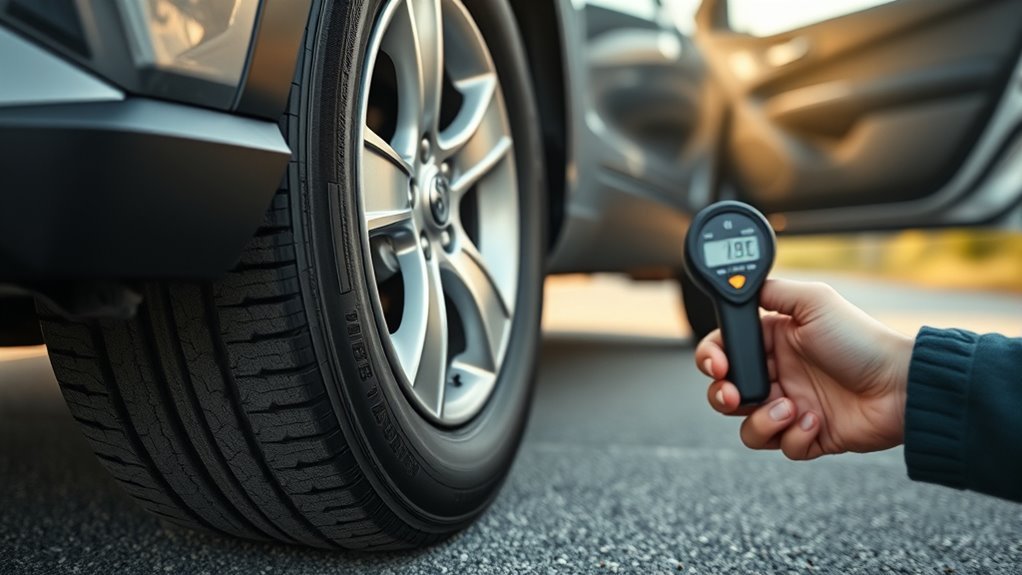
The right Toyota RAV4 tire pressure is not one universal number for every year, trim, and tire size. Many RAV4 models fall around 30 to 36 PSI when the tires are cold, but the exact front and rear PSI for your vehicle is listed on the Tire and Loading Information label on the driver-side door jamb and in your owner’s manual.
Quick Answer
Most Toyota RAV4 models use a cold tire pressure around 30 to 36 PSI, with many newer trims commonly near 33 to 36 PSI. Always use the driver-side door-jamb placard or owner’s manual for your exact RAV4, not the maximum PSI printed on the tire sidewall.
Key Takeaways
- Check your RAV4 tire pressure when the tires are cold: before driving or after the vehicle has been parked for about three hours.
- Use the driver-side door-jamb placard or Toyota owner’s manual as the final authority for your exact PSI.
- Do not automatically inflate to 40–41 PSI in hot weather or lower tire pressure in winter for normal road driving.
- A TPMS warning light is helpful, but it does not replace regular checks with a tire pressure gauge.
At a Glance
| Time Required | 5–10 minutes |
| Difficulty | Easy DIY maintenance |
| Tools Needed | Tire pressure gauge, air compressor or tire inflator, valve caps |
| Cost | Often free at home or an air station; about $5–$25 for a basic gauge if you need one |
What Is the Recommended Tire Pressure for a Toyota RAV4?
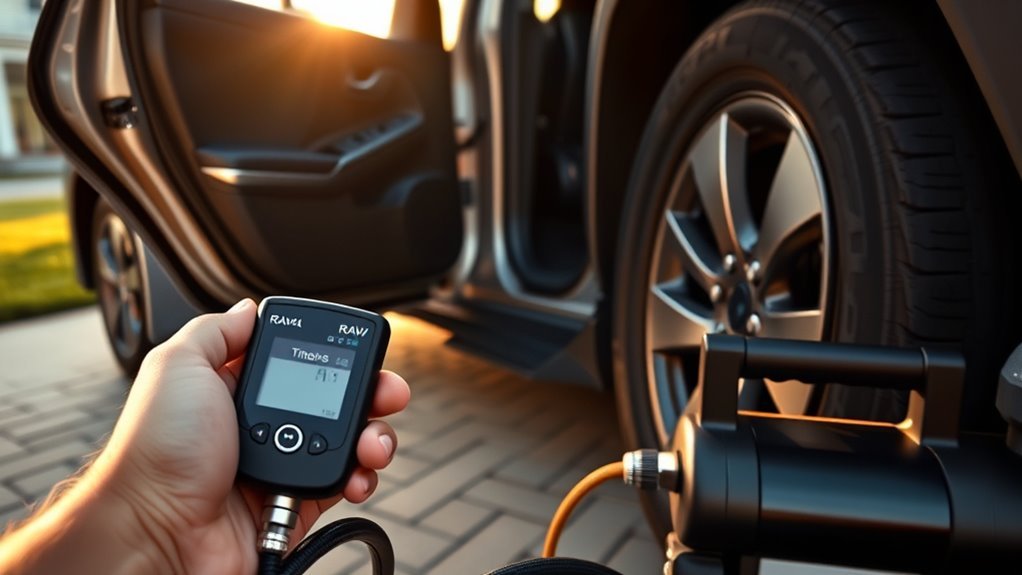
The recommended Toyota RAV4 tire pressure depends on the model year, trim, tire size, and wheel package. A general range of 30 to 36 PSI cold covers many RAV4 models, but it should be treated as a starting point only.
For your exact vehicle, check the driver-side door-jamb sticker, owner’s manual, or Toyota online manual. Toyota explains that tire pressure specs are vehicle-specific, and your RAV4 performs best when the tires match the manufacturer-recommended pressure.
Warning: Do not use the maximum PSI printed on the tire sidewall as your normal tire pressure target. That number is the tire’s maximum cold inflation pressure, not Toyota’s recommended operating pressure for your RAV4.
| RAV4 Setup | Common Cold PSI Range | Best Source |
| Older RAV4 models | Often around 30–32 PSI | Door-jamb placard and owner’s manual |
| Many newer RAV4 trims | Often around 33–36 PSI | Door-jamb placard and owner’s manual |
| Temporary spare tire, if equipped | Usually different from the four road tires | Spare tire label and owner’s manual |
[Products Worth Considering]

This portable cordless tire inflator delivers up to 160 PSI with fast 17 L/min airflow to help you quickly top up tires and get back on the road. It features dual power mode, running on a 21V rechargeable battery or a 12V DC adapter for convenient roadside use. An automatic shut-off with digital pressure gauge helps prevent overinflation, and a built-in LED light improves visibility in low-light conditions.

EVOULTES heavy duty tire inflator with an integrated gauge delivers accurate pressure readings from 10–120 PSI, helping you inflate, deflate, and check tires in one tool. The 16.5-inch extended dual-head air chuck with swivel base reaches hard-to-access dual wheel valves on trucks and RVs. A brass trigger core and side-mounted air release valve make operation smooth, with standard 1/4" NPT threading and quick-connect compatibility for easy setup.

The AstroAI 2 pack air chucks provide a heavy-duty, closed-flow locking design that helps keep air flowing during inflation while securely attaching to the valve stem. Built with 250 PSI rated brass components and compatible with Schrader valves, they feature 1/4" female NPT threads for a wide fit with common inflators. The straight tip and locking clip make filling tires and monitoring pressure more convenient.
Where to Find Your Exact RAV4 Tire Pressure
The easiest place to find the correct PSI is the Tire and Loading Information label on the driver-side door jamb. Open the driver’s door and look along the door frame or pillar. The label usually lists the original tire size and the recommended cold front and rear tire pressure.
You can also check your printed owner’s manual or the Toyota Owners manuals and warranties page for model-specific information. If your tires are not the original size, ask a Toyota service center or qualified tire professional to confirm the correct pressure for the replacement tire size and load rating.
Note: Tire pressure should be measured in cold PSI. “Cold” means the RAV4 has not been driven yet or has been parked for about three hours.
What Happens if Your Tire Pressure Is Too High or Too Low?
If your tire pressure is too high or too low, your RAV4 may not handle, brake, ride, or wear tires the way Toyota intended. Incorrect pressure can also affect fuel economy, tread life, and TPMS warnings.
Potential Risks of Overinflation
Overinflated tires can reduce the tire’s contact patch with the road. That may lead to a harsher ride, less grip, longer braking distances, uneven center tread wear, and a greater chance of damage from potholes or road debris.
Toyota notes that overinflated tires can negatively affect handling and safety, and tire makers also warn that the sidewall maximum is not the same as the vehicle’s recommended pressure.
Consequences of Underinflation
Underinflated tires flex more than they should. That extra flexing builds heat, increases rolling resistance, and can make the RAV4 feel sluggish or unstable. It can also cause uneven shoulder wear and increase the risk of tire failure.
- Poorer handling and braking response
- Lower fuel economy from added rolling resistance
- More heat buildup inside the tire
- Faster or uneven tread wear
- Higher risk of blowouts or tire damage
Impact on Tire Longevity
Correct tire pressure helps the tread wear more evenly. That matters because tire life is affected by inflation, rotation, alignment, load, road conditions, and driving habits. Underinflation tends to wear the outside shoulders, while overinflation often wears the center of the tread faster.
Understanding the Importance of Correct Tire Pressure
Correct tire pressure supports four things RAV4 owners care about every day: safety, traction, tire life, and fuel economy. The U.S. Department of Energy’s FuelEconomy.gov maintenance guidance says keeping tires properly inflated can improve gas mileage by 0.6% on average and up to 3% in some cases.
Proper tire pressure is not just about MPG. It helps your RAV4 keep the tire shape, load support, and road contact Toyota designed into the vehicle.
Do not wait for the TPMS light before checking your tires. TPMS is a warning system, not a maintenance schedule. A tire can be below the ideal pressure before the warning light appears.
Checking Your Tire Pressure: A Step-by-Step Guide
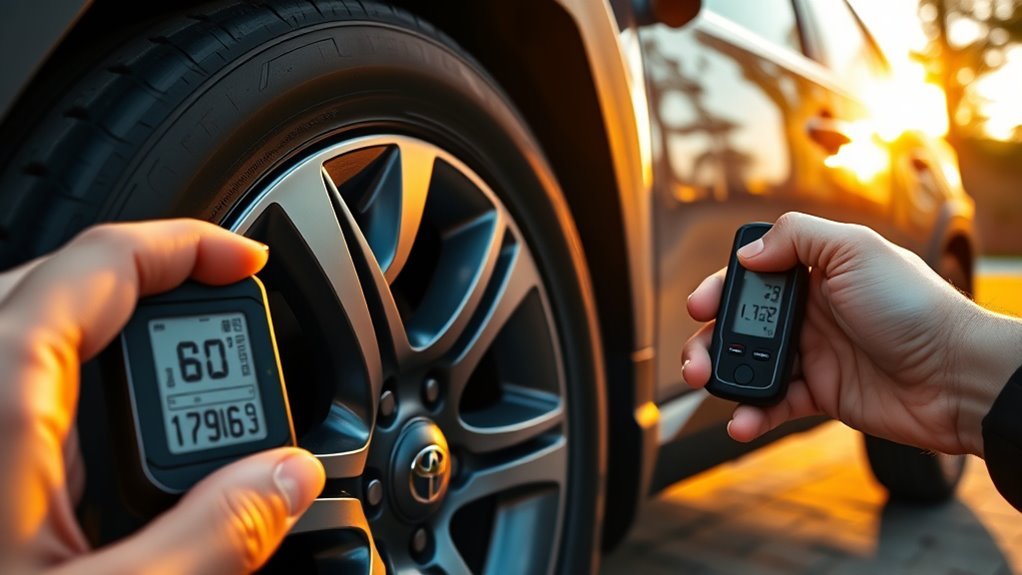
Check your RAV4 tire pressure at least once a month, before long trips, before carrying a heavy load, and after major temperature swings. For the most accurate reading, check the tires before driving or after the SUV has been parked for about three hours.
- Find the correct PSI. Use the driver-side door-jamb placard or owner’s manual.
- Remove the valve cap. Keep it somewhere safe so it does not roll away.
- Press the tire pressure gauge onto the valve stem. Press firmly until the hissing stops and the gauge gives a reading.
- Compare the reading to the recommended PSI. Check all four tires, and check the spare if your RAV4 has one.
- Add or release air as needed. Use an air compressor or tire inflator to reach the placard PSI.
- Recheck the pressure. Confirm the reading after adding or releasing air.
- Replace the valve cap. This helps keep dirt and moisture out of the valve stem.
Pro Tip: Keep a small digital tire pressure gauge in your glove box. Gas station gauges can be worn or inaccurate, and your own gauge makes monthly checks easier.
Adjusting Tire Pressure for Different Conditions
Adjust your RAV4 tire pressure to the recommended cold PSI, not to a random seasonal number. Temperature, driving, and load can all change pressure readings, but the placard remains your normal target for street driving.
Hot Weather and Summer Driving
Do not automatically inflate your RAV4 tires to 40–41 PSI just because it is hot outside. Hot weather and driving can raise pressure naturally. If you check tires after driving, the reading may be higher than the true cold pressure.
Warning: Do not bleed air from hot tires simply because the number looks high after driving. Let the tires cool, then adjust them to the cold PSI on the placard.
Cold Weather and Winter Driving
Cold weather lowers tire pressure. A common tire-industry rule is that pressure changes by about 1 PSI for every 10°F change in ambient temperature. That is why a TPMS light often appears on the first cold morning of the season.
For normal road driving, do not lower tire pressure in winter to “gain traction.” Instead, check the tires cold and inflate them to the recommended placard PSI. In extremely cold climates, follow your owner’s manual or ask a Toyota service center for model-specific guidance.
Heavy Loads and Road Trips
Before a long road trip or carrying extra passengers and cargo, check the tire pressure cold and confirm that the load is within the limits listed on the Tire and Loading Information label. Never exceed the tire’s maximum cold inflation pressure or the vehicle’s load limit.
What Are the Common Tire Sizes for the Toyota RAV4?
Common Toyota RAV4 tire sizes include 225/65R17, 225/60R18, 235/55R19, and 245/45R20, depending on model year, trim, and wheel package. Tire size affects fitment and load capacity, but it does not replace the vehicle placard as the final PSI source.
If you replace the original tires with a different size, load index, speed rating, or tire type, confirm the correct inflation pressure with a qualified tire professional. The right replacement tire should support the RAV4’s load requirements and match the vehicle’s intended use.
[Products Worth Considering]

This portable cordless tire inflator delivers fast, efficient inflation for cars, motorcycles, bikes, and sports balls with a digital pressure gauge. Use the one-click PSI preset with auto shut-off for accurate, hands-free topping to your target pressure up to 150 PSI. It’s compact and rechargeable with a built-in emergency LED light plus valve adapters and accessories for quick, ready-to-go use.

Blackline Blackout is a water-based trim and tire dressing that restores rubber, vinyl, and plastic with a rich satin, blackout look. Its no-sling formula dries quickly and helps prevent messy transfer onto paint. The coating repels water and offers UV protection to help prevent fading, cracking, and discoloration for a clean, long-lasting finish.
How Temperature Affects Tire Pressure in Your RAV4
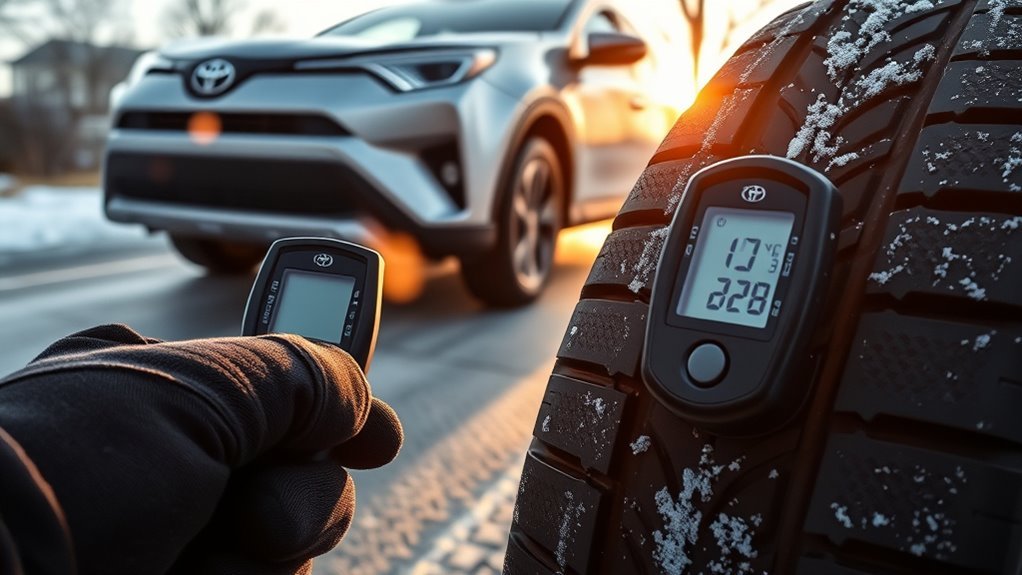
Air expands when it warms and contracts when it cools. That means your RAV4 tire pressure can change even when the tire has no puncture. A drop from 70°F to 30°F can reduce pressure by several PSI, which may be enough to trigger the TPMS warning light.
- Cold mornings: pressure may read lower than it did the day before.
- After driving: pressure may read higher because the tires warmed up.
- Season changes: pressure should be checked more often because outdoor temperatures shift.
The safest habit is simple: check the tires when cold, compare the reading to the door-jamb placard, and adjust only as needed.
What to Do When Your TPMS Light Comes On?
When the TPMS light comes on, treat it as a safety warning. The federal TPMS standard is designed to warn drivers about significant underinflation, but it does not replace manual tire checks.
- Pull over safely if the vehicle feels unstable. Do not keep driving on a tire that looks flat or damaged.
- Check all four tires with a gauge. Some RAV4 displays may identify a tire, but others may show only a general warning.
- Inflate to the recommended cold PSI. If the tires are hot, adjust carefully and recheck when cold.
- Inspect for damage. Look for nails, sidewall bulges, cracks, valve-stem leaks, or uneven wear.
- Drive and recheck the light. Some systems need a short drive after the tires are corrected.
- Schedule service if the light blinks or returns. A blinking TPMS light or repeated pressure loss can point to a sensor fault, puncture, leaking valve stem, or wheel issue.
Note: If one tire keeps losing pressure after you inflate it, do not keep topping it off without inspection. A slow leak can become a roadside failure.
Where to Get Tire Services for Your Toyota RAV4 in Carson
If you are near Carson, California, a Toyota service center can check tire pressure, inspect for leaks, rotate tires, replace damaged valve stems, diagnose TPMS issues, and confirm the correct PSI for your exact RAV4. Fletcher Jones Toyota of Carson is a local Toyota dealership option for tire-related service and maintenance.
Consider scheduling service if you notice:
- A TPMS light that stays on after inflation
- A tire that loses pressure repeatedly
- Visible punctures, cracks, bulges, or sidewall damage
- Uneven tread wear
- Vibration, pulling, or a rough ride after pressure correction
Frequently Asked Questions
What is the correct tire pressure for a Toyota RAV4?
Many Toyota RAV4 models use a cold tire pressure around 30 to 36 PSI, but the correct number for your SUV is listed on the driver-side door-jamb placard and in the owner’s manual. Use that number for the front and rear tires.
Is 37 PSI too high for a RAV4?
It depends on your exact model, tire size, and placard spec. If your door-jamb label says 35 or 36 PSI, a cold reading of 37 PSI may be slightly above target. If the reading was taken after driving, let the tires cool and check again before releasing air.
Does a Toyota RAV4 tell you which tire is low?
Some RAV4 model years and trims may show individual tire pressure information, while others may only show a general TPMS warning light. Either way, check all four tires with a gauge and inflate them to the placard PSI.
Should I use the PSI printed on the tire sidewall?
No. The tire sidewall usually shows the tire’s maximum cold inflation pressure, not the recommended pressure for your RAV4. Use the driver-side door-jamb placard or owner’s manual instead.
How often should I check RAV4 tire pressure?
Check tire pressure at least once a month, before long trips, before carrying heavy loads, and after major temperature changes. Checking every two weeks is also a good habit if temperatures are changing quickly.
Why does my RAV4 tire pressure light come on in cold weather?
Cold air lowers tire pressure. A common rule is about 1 PSI for every 10°F temperature drop, so a cold morning can trigger the TPMS light even if there is no puncture. Check the tires cold and inflate them to the placard PSI.
Conclusion
Keeping your Toyota RAV4 tires properly inflated is one of the simplest ways to protect handling, braking, fuel economy, and tire life. Use the driver-side door-jamb placard or owner’s manual for the exact PSI, check the tires when cold, and respond quickly to TPMS warnings or repeated pressure loss. A few minutes with a gauge can prevent uneven wear, reduce safety risks, and help your RAV4 drive the way it should.
Sources
- Toyota — How to Check Tire Pressure — cold tire checks, door-jamb placard guidance, underinflation and overinflation effects.
- Toyota Owners — Manuals and Warranties — model-specific owner’s manual reference for exact RAV4 specifications.
- FuelEconomy.gov — Keeping Your Vehicle in Shape — fuel-economy benefits of proper tire inflation and sidewall PSI warning.
- eCFR — 49 CFR § 571.138 Tire Pressure Monitoring Systems — TPMS performance requirements for significant underinflation warnings.
- Bridgestone Americas — Tire Inflation — monthly pressure checks, cold-tire timing, and temperature effects.

Related Articles

Toyota RAV4 TPMS Reset: Easy Steps That Work
Unlock the secrets to resetting your Toyota RAV4's TPMS effortlessly—discover the essential steps to ensure your tires are always safe.
Read More
Toyota RAV4 Tire Rotation: DIY Steps & Pattern
Take control of your Toyota RAV4's tire maintenance with our simple DIY rotation guide—discover the best steps for optimal performance and longevity!
Read More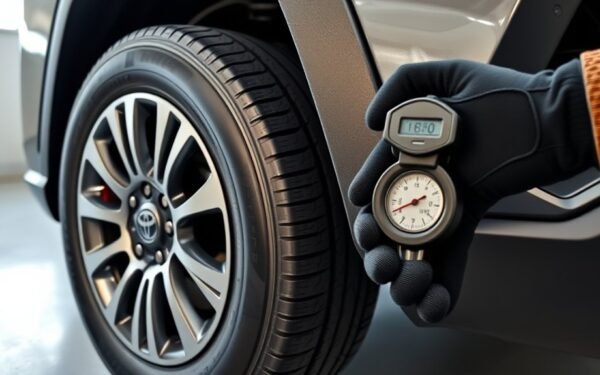
Mix Tire Brands on a Toyota RAV4? Expert Guide
Keeping your RAV4 safe? Learn when mixing tire brands risks traction, ABS/TCS and AWD damage — and what exact matches you must insist on.
Read More