
How to Tell If a Tire Fits Your Car: Size Guide & Compatibility Check
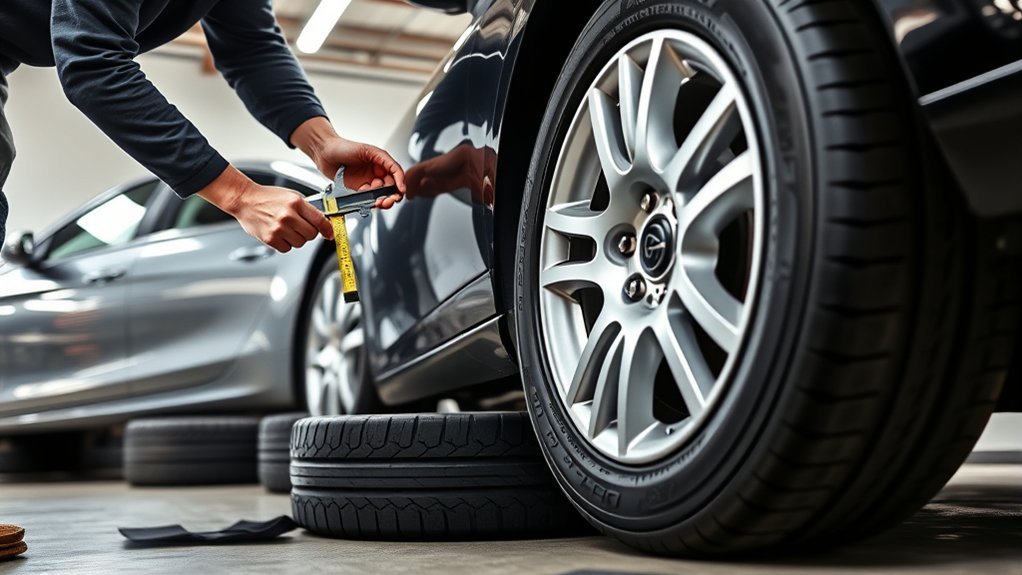
To tell if a tire fits your car, check the sidewall code and match it to the placard or owner’s manual. Confirm the load index and speed rating meet or exceed factory specs, and make sure the wheel diameter and rim width suit the tire. Keep replacement size within about 3% of the original diameter, then verify clearance for rubbing. A tire size calculator and dealer check can help, and there’s more to compare next.
Key Takeaways
- Check the tire sidewall and door placard for the exact size code, like 205/60R16, before buying replacements.
- Match or exceed the vehicle’s required load index and speed rating for safe handling and durability.
- Ensure the new tire’s rim diameter and wheel width fit the wheel specifications and allow proper clearance.
- Keep replacement tire diameter within ±3% of the original size to preserve speedometer accuracy and performance.
- Verify fitment with the owner’s manual, a tire size calculator, or a professional tire retailer.
How to Find Your Tire Size

To find your tire size, start by checking the tire sidewall for a code such as 205/60R16. That code gives you tire size information: section width, aspect ratio, and rim diameter. You can also find the recommended size on the tire information placard on the driver’s side door or door jamb. The vehicle manufacturer sets that specification to preserve handling, load capacity, and clearance, so follow it closely. If you’re comparing options, use a tire size calculator to check whether a new size stays within ±3% of your current tires. That range helps you keep speedometer accuracy and fitment under control. When you want freedom from guesswork, match the numbers carefully and confirm them in your owner’s manual. If anything still seems unclear, ask an authorized tire retailer to verify the correct size for your specific vehicle model before you buy. Additionally, consider how all-season tires can enhance safety and performance throughout the year.
Read Tire Size Markings
A tire code like 225/50R17 gives you the key fitment details at a glance: the first number is the section width in millimeters, the second is the aspect ratio, and the last number is the rim diameter in inches. Read Tire size markings left to right so you can verify width, sidewall profile, and wheel size without guesswork. In 225/50R17, 225 means the tire is 225 mm wide, while the aspect ratio of 50 means the sidewall height is 50% of that width. The R tells you the tire uses radial construction, which is standard on most modern passenger cars. You’ll also see a load index and speed ratings after the size code. These numbers and letters help you confirm the tire matches your vehicle’s needs and driving demands. When you decode each part correctly, you keep your setup precise, roadworthy, and free from costly fitment errors. Additionally, understanding tire specifications can greatly enhance your tire selection process.
Match Load Index and Speed Rating
You need to match the replacement tire’s load index to your vehicle’s specified value or higher so it can safely support the required weight. You also need to match the speed rating to the manufacturer’s recommendation, or choose a higher rating if allowed. Check your owner’s manual before you buy, because both ratings affect safety and performance. Additionally, consider the UTQG ratings to better understand the tire’s durability and performance characteristics.
Load Index Match
The load index and speed rating are two specs you can’t ignore when replacing tires. For load index match, you need the right size tire that can support your vehicle’s weight without strain. The load index is a code from 1 to 150, each tied to a specific weight limit. Always choose a tire replacement with the same load index as the original, or a higher one only if your vehicle requires it. If you fit a lower rating, you risk heat buildup and failure. Check the vehicle owner’s manual and tire information placard, then confirm any XL marking if your car needs Extra Load capacity. Matching this spec keeps handling stable, protects the tire structure, and gives you the freedom to drive with confidence.
Speed Rating Match
Speed rating is just as critical as load index when you’re replacing tires, because it tells you the maximum speed a tire can safely maintain. You need to match or exceed your vehicle’s original speed rating in the owner’s manual or tire placard. Ratings run from L at 75 mph to Y at 186 mph, so your tire size choice must support the speeds you actually drive. If you install a lower-rated tire, you weaken tire compatibility and raise risk during fast travel or sudden evasive moves. Use the manufacturer’s speed rating chart to pair the right load index with the right speed rating, especially when your car carries passengers or cargo. Exact matching protects performance, stability, and your freedom on the road.
Check Wheel Diameter and Width
You should measure the wheel diameter and confirm it matches the rim diameter listed on the tire sidewall, because the last number in the tire code must align exactly. You also need to match rim width to the tire’s section width so the tire seats correctly and performs as designed. Then check clearance limits at the fenders, suspension, and brakes to make sure the assembly fits without interference. Additionally, consult a trusted tire shop to ensure you select the right tire for your vehicle’s specifications.
Measure Wheel Diameter
Measure the wheel diameter with a tape measure across the rim from one edge to the opposite edge, and record it in inches. This wheel diameter tells you whether your tire size can seat correctly on the rim diameter, which is essential for safe tire fitment. Check your vehicle’s tire information placard for the manufacturer’s recommended size before you buy.
- Measure straight across the wheel, not diagonally.
- Confirm the reading in inches, since tire specs use that unit.
- Compare your wheel diameter to the tire’s listed rim diameter.
- Note that passenger rims usually fall between 14 and 20 inches.
If the numbers don’t match, don’t force the fit. Precise measurements keep you free from wasted money, poor handling, and avoidable mounting problems.
Match Rim Width
After confirming the wheel diameter, check the rim width to make sure the tire’s section width falls within the wheel’s approved range. For a 225/50R17 tire size, you need a 17-inch diameter and a rim width that supports about 7 to 9 inches for correct fitment. Use the tire information placard for manufacturer-approved dimensions.
| Rim width | Fitment note |
|---|---|
| 7 in | Typical minimum for 225 mm section width |
| 8 in | Balanced handling and ride quality |
| 9 in | Typical maximum for 225 mm section width |
Match the load index too, because the wheel must support the tire’s rated load. If you run aftermarket rims, verify both width and diameter against the original specs so you keep control, safety, and freedom on the road.
Check Clearance Limits
Once the wheel diameter and rim width check out, confirm there’s enough physical clearance in the wheel well so the tire won’t rub suspension parts, the liner, or the body at full lock and full compression. Measure the space around your Tire size and compare it with the new overall diameter; stay within about ±3% of the original spec. Then verify your wheel size and clearance limits against the owner manual or tire placard. Wider or taller options can fit on paper yet fail in motion.
- Check full steering lock
- Check suspension compression travel
- Check liner and fender gaps
- Compare actual vs. recommended diameter
Understand the 3% Tire Rule
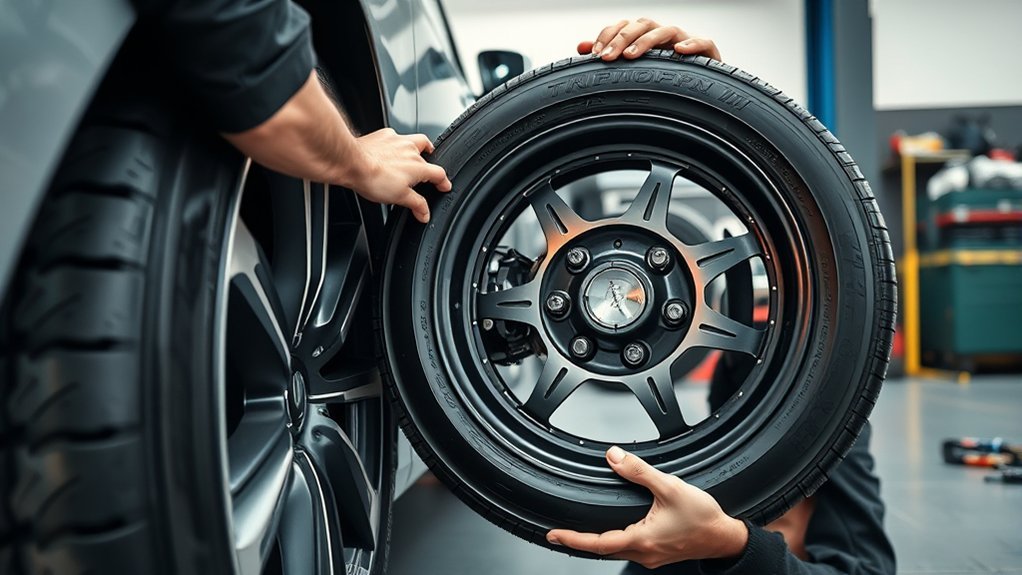
The 3% tire rule means any replacement tire should stay within ±3% of the original tire’s diameter so your car keeps its intended performance and safety characteristics. You protect vehicle safety by matching your tire size to the factory spec, not by guessing. Use the placard or owner’s manual to confirm the stock diameter in inches before you shop.
| Check | Rule |
|---|---|
| Tire size | Match OEM specs |
| Diameter change | Stay within ±3% |
| Width and sidewall | Keep dimensions close |
| Result | Preserve handling |
For example, a 26-inch stock tire allows 25.22 to 26.78 inches. If you go beyond that, you can trigger inaccurate speedometer readings and even brake issues from altered tire behavior. The 3% tire rule isn’t arbitrary; it’s a practical boundary that keeps your setup aligned with the vehicle’s design. Staying within it ensures you adhere to treadwear warranties and maintain control, compliance, and confidence.
Compare Tire Diameter and Circumference
You should compare the new tire’s diameter to the original because even small changes alter fitment, rolling radius, and vehicle geometry. Tire circumference matters too, since it’s calculated as diameter × π and directly affects revolutions per mile. If the diameter shifts too much, your speedometer won’t read correctly and your vehicle’s performance can change. Additionally, ensure that the tire rim diameter matches the wheel’s bead-seat diameter to guarantee a safe and secure fit.
Diameter Changes Matter
Because tire diameter directly affects how your car drives, keep any new size within ±3% of the original to avoid safety and calibration problems. When you choose new tires, check Tire diameter against your vehicle specifications so the fit supports braking, handling, and ride control. A larger diameter covers more ground per revolution, which can change fuel use and steering feel. Compare the numbers before you buy, not after.
- Measure the current tire’s diameter precisely.
- Confirm the replacement stays within the ±3% window.
- Review vehicle specifications for approved sizes.
- Verify speedometer accuracy after installation.
Even a small mismatch can upset calibration and weaken performance. Pick sizes that match your car’s design, and you keep control, efficiency, and freedom on the road.
Circumference And Speedometer
Tire circumference tracks directly with diameter, so even a small size change can alter how far your car travels per revolution and throw off speedometer readings. You should compare tire diameter and tire circumference before you buy. A tire size calculator gives exact values, so you can check speedometer accuracy and keep revolutions per mile close to stock. Stay within ±3% of the original tire diameter to avoid handling shifts and odometer error.
| Measure | Original | New |
|---|---|---|
| Tire diameter | 25.0 in | 25.5 in |
| Tire circumference | 78.5 in | 80.1 in |
| Speedometer effect | Baseline | Slightly slow |
If the new tire keeps similar circumference, you preserve fuel efficiency, stability, and the freedom to drive without guesswork.
Use a Tire Size Calculator
A tire size calculator lets you enter your vehicle’s stock size and quickly see compatible alternatives within a ±3% variance, which helps keep fitment changes within a safe range. You can compare tire dimensions side by side and choose compatible tire sizes without guesswork. The tool shows diameter, width, sidewall height, and circumference, so you can judge how each option affects vehicle performance with precision. Because the calculator supports imperial and metric units, you can work in the format that fits your region and your workflow. Regular database updates also help you rely on current vehicle specs and available options. Additionally, understanding load rating can ensure you select a tire that meets your driving needs.
- Enter your stock size first.
- Review diameter, width, and sidewall data.
- Compare options before you buy.
- Use updated results to make a confident choice.
Check for Clearance and Speedometer Issues
Once you’ve narrowed down a size, check that the new tire’s diameter stays within ±3% of the original so your speedometer remains accurate and handling doesn’t change unexpectedly. Compare the candidate against your original equipment (OE) tires, then confirm the tread width still fits your rim’s maximum recommendation. If the size is too wide, you can sacrifice stability, bead seating, and safety.
Next, measure wheel well clearance. You need enough space between the tire and nearby suspension components, brakes, and liners for steering, compression, and load transfer. Turn the wheel lock-to-lock and inspect both sides; any rubbing means the fit isn’t free enough for real-world driving. Check aspect ratio, too: a lower profile can sharpen response, while a taller sidewall may soften impacts but slightly dull cornering. Additionally, ensure the tire’s performance aligns with your driving needs, such as wet and snow traction, to optimize safety and comfort.
Finally, verify everything against your owner’s manual or tire placard. Those specs give you the cleanest, most reliable path to a tire setup that fits, works, and lets you drive with confidence.
Check Staggered Tire Fitment
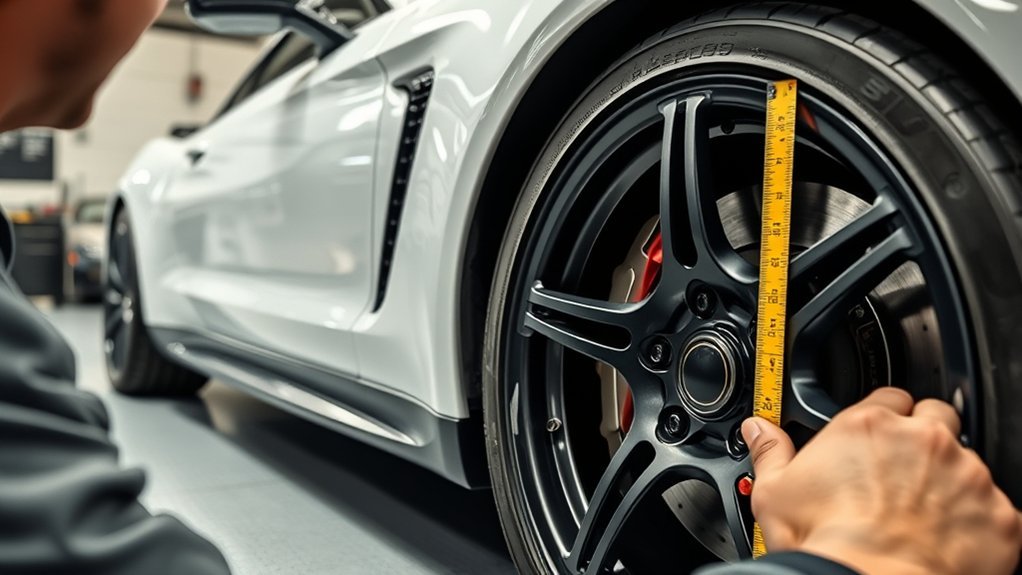
If your car uses staggered fitment, you’ll run different tire sizes on the front and rear axles, so match each position to the vehicle’s tire placard before you buy. Staggered tire fitment is common on performance cars because it can sharpen turn-in and add rear grip, but tire compatibility depends on exact sizing. Keep overall diameter within ±3% front to rear, or you may trigger speedometer error, odd handling, and uneven wear.
- Check the placard for both tire sizes.
- Verify front and rear diameter match the ±3% window.
- Use wider rear tires only when the chassis calls for it.
- Seek professional guidance if you’re changing factory specs.
When you respect these limits, you keep the car balanced and the setup free from avoidable compromises. Additionally, understanding tire load ratings is crucial to ensure safety and performance when selecting your tires.
Ask a Tire Dealer to Verify Fitment
A tire dealer can verify fitment with the databases and tools needed to match your vehicle correctly, so bring your make, model, and year for an exact search. A Tire Dealer should confirm OE specs, load rating, and speed rating before approving any tire size change. That fitment verification reduces guesswork and keeps your compatibility check grounded in factory data, not assumptions. Ask for a speedometer and handling review if you want an alternative setup; small diameter changes can alter readings and response. Request a side-by-side visual comparison too. It helps you see width, sidewall, and overall diameter differences before you buy, so you can choose freely and safely. Additionally, understanding the tire load rating is crucial for ensuring that your vehicle can safely handle the chosen tires.
| Check | What to provide | Why it matters |
|---|---|---|
| Vehicle ID | Make, model, year | Precise lookup |
| OE specs | Current tire label | Correct ratings |
| Comparison | Proposed tire size | Visible differences |
Frequently Asked Questions
How Do I Tell if a Tire Size Will Fit My Car?
You tell if a tire size’ll fit by checking your door-jamb placard and matching your vehicle specifications to the replacement tire size. Compare width, aspect ratio, rim diameter, and load rating on a compatibility chart, then keep overall diameter within about 3% of stock. Use a tire calculator to verify speedometer and clearance effects. If you’re swapping wheels or lowering, ask a tire pro before you commit.
What Is the 3 Tire Rule?
The 3% tire rule means you should keep a replacement tire’s overall diameter within 3% of the original size. You’ll preserve tire pressure accuracy, wheel alignment, load capacity, and tread patterns performance. If you go beyond that limit, you can skew speedometer readings, reduce clearance, and stress brakes. Measure carefully, compare specs, and follow your tire placard. When in doubt, you should ask a tire professional before you buy.
Can I Fit 275 Tires Instead of 265?
Yes, you can sometimes fit 275s instead of 265s, but you need to check clearance first. Like a wider stance on a solid frame, the extra tire width differences can change handling performance, fuel efficiency, and aesthetic appeal. Verify the overall diameter stays within ±3%, confirm load index and speed rating, and inspect wheel well space at full lock. If you’re unsure, ask a tire professional before you commit.
Should I Get 33 or 35 Inch Tires?
You should get 35s if you want maximum Off road capability and Aesthetic appeal, but only if your setup can clear them. They’ll improve traction, yet they can hurt Fuel efficiency, gearing, and Tire performance on pavement. Choose 33s if you want better daily drivability, less rubbing risk, and easier fitment. Check wheel well clearance, lift, axle gearing, and speedometer calibration before you commit, so you keep control and freedom.
Conclusion
Now you can tell if a tire fits your car by checking size markings, load index, speed rating, wheel dimensions, and clearance before you buy. Keep the 3% rule in mind, and use a tire size calculator to compare options accurately. Tire fitment mistakes are common: nearly 1 in 4 drivers choose replacements without verifying compatibility. If you’re unsure, ask a tire dealer to confirm fitment so you don’t compromise safety, handling, or speedometer accuracy.

Related Articles

Where Can I Use My America’s Tire Credit Card? Full Guide
Discover where your America’s Tire credit card works and the surprising places it may be accepted—check the full guide to see if yours qualifies.
Read More
What Tire Brands Are Made in America? Full Guide to USA Tires
Jump into which tire brands are made in America and discover the surprising U.S.-built options, origins, and DOT clues before you choose.
Read More
What Is Canadian Tire? Canada’s Largest Retail Chain Explained
Behind Canada’s biggest retail chain lies a surprising history of brands, rewards, and reach—discover what keeps Canadian Tire dominant.
Read More