
How to Know When to Replace Tires on Your Toyota RAV4: 4 Key Signs
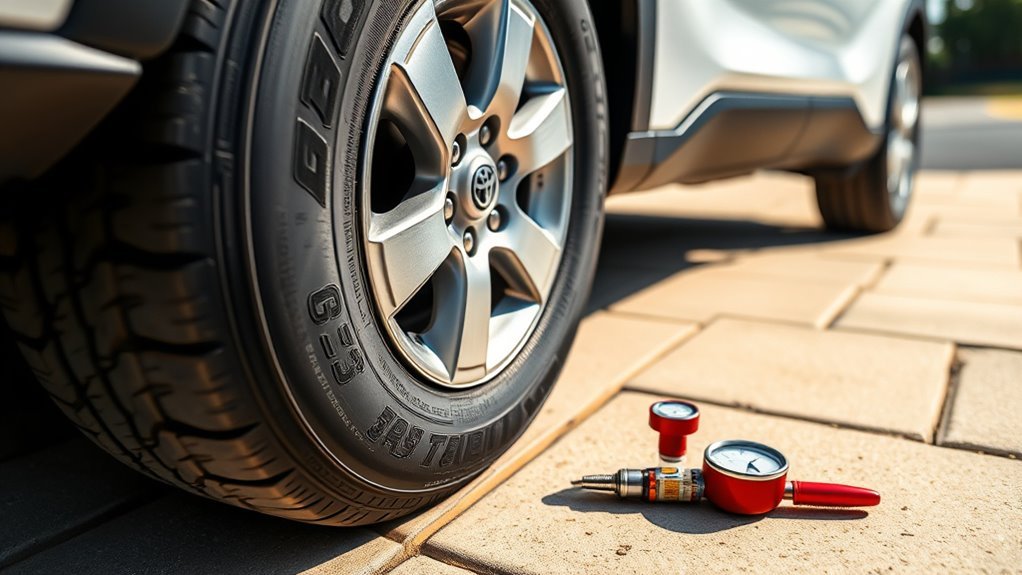
Your Toyota RAV4 tires should be replaced when tread is too low, the sidewalls are damaged, the tire is aging out, pressure keeps dropping, or the vehicle starts vibrating, pulling, or losing wet-road grip. A quick driveway check can spot many warning signs before they turn into a blowout, hydroplaning, or uneven tire wear.
Quick Answer
Replace your Toyota RAV4 tires when tread reaches 2/32 inch, when treadwear bars are flush, when you see bulges, exposed cords, deep cracks, repeated air loss, or when wet traction becomes poor. If you often drive in rain, start shopping around 4/32 inch for a safer margin.
Key Takeaways
- The penny test checks the basic 2/32-inch replacement point, but a tread-depth gauge is more accurate.
- At 4/32 inch, wet-road stopping distance can already be much worse, so do not wait for bald tires if you drive in rain.
- Bulges, blisters, exposed cords, sidewall cuts, or repeated pressure loss mean the tire needs immediate professional inspection.
- Check RAV4 tire pressure cold using the driver-door placard, not the maximum PSI printed on the tire sidewall.
- Replace tires with the correct size, load rating, and speed rating recommended for your RAV4 model and trim.
At a Glance
| Time Required | 10–15 minutes for a basic tire check |
| Difficulty | Easy for inspection; professional help needed for mounting, balancing, alignment, or damage diagnosis |
| Tools Needed | Tread-depth gauge, penny, quarter, tire-pressure gauge, flashlight, and your RAV4 tire placard or owner’s manual |
| Cost | Inspection is usually free or low-cost; replacement cost depends on tire size, brand, trim, and whether you replace two or four tires |
Check Tread Depth First
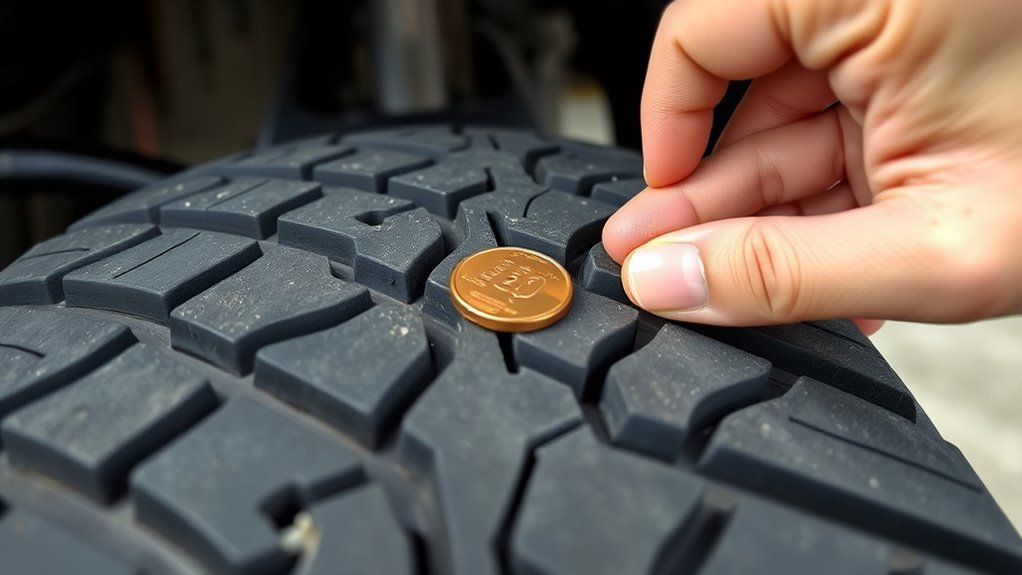
Tread depth is the fastest way to judge whether your Toyota RAV4 tires are nearing replacement. The simple penny test works like this: place a penny into a main tread groove with Lincoln’s head facing down. If the top of Lincoln’s head is fully visible, the tread is at about 2/32 inch, which is the common minimum replacement point.
For a more accurate reading, use an inexpensive tread-depth gauge and check several grooves across each tire. Measure the inner edge, center, and outer edge because one part of the tire can be worn out even when another part still looks usable.
Pro Tip: Use the penny test for a quick warning, but use a tread-depth gauge before deciding a tire is safe. A gauge removes the guesswork and helps you spot uneven wear early.
Your RAV4 tires also have treadwear indicator bars molded into the tread. Toyota’s owner guidance says to check whether those indicators are showing and to inspect for uneven wear, including excessive wear on one side of the tread. If the treadwear indicators are showing, the tire should be replaced. You can confirm the Toyota guidance in the Toyota RAV4 tire inspection section.
[Products Worth Considering]

EVOULTES heavy duty tire inflator with an integrated gauge delivers accurate pressure readings from 10–120 PSI, helping you inflate, deflate, and check tires in one tool. The 16.5-inch extended dual-head air chuck with swivel base reaches hard-to-access dual wheel valves on trucks and RVs. A brass trigger core and side-mounted air release valve make operation smooth, with standard 1/4" NPT threading and quick-connect compatibility for easy setup.

The JACO FlowPro Tire Inflator measures, inflates, and airs down tires up to 100 PSI with battery-free operation and ±2% accuracy after calibration. It features a glowing pressure dial for night visibility, a heavy-duty steel build with a hybrid hose, and a precision push-to-inflate thumb trigger. The patented Lightning Air Chuck locks on for a secure seal, and the kit includes quick-connect hardware for easy inline use with your air compressor.

Blackline Blackout is a water-based trim and tire dressing that restores rubber, vinyl, and plastic with a rich satin, blackout look. Its no-sling formula dries quickly and helps prevent messy transfer onto paint. The coating repels water and offers UV protection to help prevent fading, cracking, and discoloration for a clean, long-lasting finish.
Know the Difference Between 2/32 and 4/32 Inch
A RAV4 tire at 2/32 inch is worn out and should be replaced. However, waiting until 2/32 inch is not ideal if you often drive in rain. Wet traction drops as tread gets shallow because the grooves cannot move water away as well.
AAA testing found that tires worn to 4/32 inch had a 43% longer average wet stopping distance than new tires at highway speeds.
That is why 4/32 inch is a smart planning point for replacement if your area gets heavy rain, you drive at highway speeds, or your RAV4 carries passengers and cargo often. You can use a quarter as a rough check: place Washington’s head down into the tread. If the top of Washington’s head is fully visible, start shopping for tires. AAA explains this wet-road concern in its worn-tire safety testing.
Inspect Sidewalls for Cracks, Cuts, Bulges, and Blisters
Sidewall damage can make a tire unsafe even when the tread still looks deep. Walk around your RAV4 and look at the sidewall of each tire with a flashlight. Check both visible sidewalls and, when safe, turn the steering wheel to see more of the front tires.
Replace or professionally inspect the tire right away if you see:
- Bulges or blisters, which can mean the internal tire structure is damaged.
- Deep cuts, slices, or punctures in the sidewall.
- Cracks from dry rot, especially if they are deep, widespread, or paired with aging tires.
- Exposed cords or fabric, which means the tire is no longer safe to drive on.
- Repeated air loss even after the valve stem and tread area have been checked.
Warning: Do not keep driving normally on a tire with a bulge, exposed cords, severe sidewall cut, or sudden pressure loss. Slow down, avoid highway speeds, and have the tire inspected or replaced as soon as possible.
Sidewall damage often comes from potholes, curbs, road debris, or driving while underinflated. A tire shop or Toyota dealer can check whether the tire can be safely used, but sidewall bulges and exposed cords usually mean replacement, not repair.
Check Tire Age and the DOT Date Code
Tire age matters because rubber can harden and crack even when tread depth looks acceptable. This is especially important for a RAV4 that sits outside, drives low annual mileage, or still has older tires with plenty of tread.
Look for the DOT code molded on the tire sidewall. The last four digits show the week and year the tire was made. For example, 2321 means the tire was made in the 23rd week of 2021. If your tires are more than six years old, have them checked by a qualified technician even if the tread looks good. Toyota owner guidance for RAV4 tires also notes that older tires should be checked by a qualified technician when age becomes a concern.
Note: Age is not the only replacement rule. A newer tire with a sidewall bulge is more urgent than an older tire with no damage, but old rubber should still be inspected carefully.
Watch for Poor Traction, Hydroplaning, or Longer Stops
Your RAV4 may need tires before they look completely bald if the vehicle starts slipping more easily on wet roads. Shallow tread reduces the tire’s ability to channel water, which raises the risk of hydroplaning and longer stopping distances.
Common traction warning signs include:
- The RAV4 slides or feels nervous during moderate rain.
- Anti-lock brakes activate more often during normal wet stops.
- The vehicle feels less stable in turns or lane changes.
- You need more distance to stop than you used to.
- The tires spin more easily when accelerating from a stop.
If the tread is around 4/32 inch and wet traction feels worse, do not wait for the treadwear bars to appear. Replace the tires before the next rainy season or long road trip.
Check Tire Pressure and Do Not Rely Only on TPMS
Low tire pressure can cause uneven wear, poor fuel economy, heat buildup, and handling problems. It can also make the outer edges of the tread wear faster. Overinflation can wear the center of the tread faster and reduce ride comfort.
Use these steps to check RAV4 tire pressure correctly:
- Park the vehicle for at least three hours so the tires are cold.
- Find the recommended cold tire pressure on the driver-side door placard or in the owner’s manual.
- Check all four tires with a reliable gauge. If your RAV4 has a spare tire, check it too.
- Add or release air until each tire matches the placard pressure.
- Recheck pressure after filling and reinstall the valve caps.
NHTSA explains that the correct tire pressure is the vehicle manufacturer’s cold inflation pressure, not the maximum pressure printed on the tire sidewall. NHTSA also notes that tire pressure monitoring systems help warn drivers about significant underinflation, but they do not replace routine pressure checks. See the NHTSA TireWise tire safety guide for pressure, rotation, balancing, alignment, and TPMS guidance.
If your RAV4 display identifies one low tire, confirm it with a gauge. If the warning light stays on after adjusting pressure, or if it flashes before staying on, the TPMS system or a sensor may need service. Federal TPMS rules are designed around warning drivers of significant underinflation, as described in 49 CFR § 571.138.
Read Uneven Wear Patterns Before Replacing Tires
Uneven tread wear can tell you whether the tire problem is only age and mileage or whether your RAV4 has another issue that will ruin the next set of tires too.
- Wear on both outer edges: often points to underinflation or frequent hard cornering.
- Wear in the center: often points to overinflation.
- Wear on one shoulder: can point to alignment issues or worn suspension parts.
- Cupping or scalloped dips: can point to worn shocks/struts, imbalance, or suspension problems.
- One tire wearing faster than the others: can point to rotation, alignment, pressure, or mechanical issues.
If you replace tires without fixing the cause of uneven wear, the new tires may wear out early. Have the alignment, balance, suspension, and tire pressure checked before or during replacement.
[Products Worth Considering]
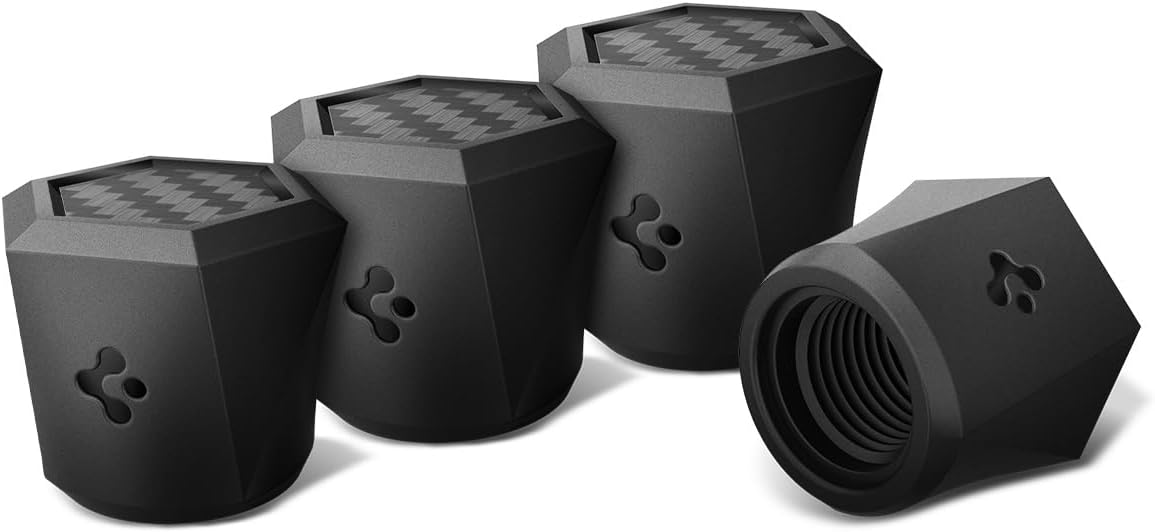
Spigen magnetic tire valve caps attach securely to metal surfaces so you never have to search for lost caps. Designed for Schrader valve stems, they install quickly, help...
Understand Vibration and Noise Signals
Vibration, humming, thumping, or grinding from your Toyota RAV4 can point to tire or wheel problems. A tire that is out of balance may shake at certain speeds. Misalignment can make the vehicle pull or wear one edge of the tread. A separated belt, flat spot, or damaged tire can create rhythmic thumping.
Pay close attention to where you feel the vibration:
- Steering wheel vibration: often starts with the front tires, wheels, balance, or alignment.
- Seat or floor vibration: may come from the rear tires or wheels.
- Rhythmic thump: can point to a flat spot, tire separation, or damaged tread.
- New humming noise: can come from uneven tread wear, cupping, or a tire/wheel bearing issue.
NHTSA notes that balancing helps prevent shake or vibration, while alignment helps tire life and keeps the vehicle from pulling on a straight, level road. If vibration starts suddenly after hitting a pothole or curb, have the tire and wheel inspected before driving far.
Choose the Correct Replacement Tires for Your RAV4
When it is time to replace tires, choose the correct size, load rating, and speed rating for your specific RAV4 year, trim, wheel size, and drivetrain. Check the tire placard on the driver-side door jamb, your owner’s manual, or the original tire size on the current tire sidewall.
NHTSA recommends buying tires that match the original tire size or another size recommended by the vehicle manufacturer. Using the wrong size or load rating can affect handling, braking, speedometer accuracy, traction control, and all-wheel-drive operation.
For the best handling, replace all four tires when they are worn evenly. If only two tires are replaced, ask a qualified tire professional where they should be installed for your RAV4, especially if the vehicle has all-wheel drive. Avoid mixing tire types, tread patterns, or sizes unless Toyota or a qualified tire professional confirms the setup is safe.
Simple RAV4 Tire Maintenance Schedule
A short routine can help you catch tire problems early:
- Monthly: check cold tire pressure and inspect tread and sidewalls.
- Before road trips: check pressure, tread depth, visible damage, and the spare if equipped.
- At rotation intervals: rotate tires according to your owner’s manual or service schedule.
- After hitting a pothole or curb: inspect for bulges, cuts, vibration, and steering pull.
- When replacing tires: balance the new tires and consider alignment if wear was uneven.
Toyota guidance says tire rotation helps equalize tire wear, and some RAV4 models require tire pressure warning system initialization after rotation. If you are unsure whether your RAV4 requires that step, check the owner’s manual or ask your Toyota dealer.
Frequently Asked Questions
How do I know which Toyota RAV4 tire needs air?
If your RAV4 display shows individual tire pressures, use that as a starting point, then confirm with a tire-pressure gauge. If your display does not identify the tire, check all four tires cold and compare each reading with the driver-door placard. Add air only to the tires below the recommended cold pressure.
When should I replace RAV4 tires with 4/32 inch tread?
Replace them soon if you drive in rain, take highway trips, carry passengers often, or notice slipping and longer stops. A tire at 4/32 inch may still be above the basic 2/32-inch minimum, but wet-road performance can already be reduced enough to make replacement the safer choice.
Can I replace only one tire on a Toyota RAV4?
Sometimes, but it depends on tread depth, tire type, drivetrain, and the condition of the other tires. Replacing only one tire can create uneven handling or drivetrain concerns, especially on all-wheel-drive models. Ask a tire professional or Toyota dealer before mixing one new tire with three worn tires.
Is the penny test enough for RAV4 tires?
The penny test is good for spotting the basic 2/32-inch replacement point, but it is not the best way to judge wet-weather safety. Use a tread-depth gauge for accuracy, and start planning replacement around 4/32 inch if you drive in rain.
Do RAV4 tires expire if the tread still looks good?
Tires do not expire on one exact day, but age matters. Heat, sunlight, storage, low mileage, and rubber aging can cause cracks or internal weakness. If a tire is more than six years old, have it inspected by a qualified technician even if the tread still looks usable.
Should I use the PSI on the tire sidewall?
No. The PSI on the tire sidewall is the tire’s maximum pressure rating, not the recommended pressure for your RAV4. Use the cold tire pressure listed on the driver-door placard or in the owner’s manual.
Conclusion
Your RAV4 tires are ready for replacement when tread is too low, wet traction feels poor, treadwear bars are showing, the sidewalls are cracked or bulging, the tire is aging out, or vibration and noise point to tire damage. Do not wait for a blowout or a scary stop in the rain. Check tread depth, pressure, sidewalls, age, and wear patterns regularly, then replace damaged or worn tires before they compromise your safety.
Sources
- Toyota RAV4 Owner’s Manual — Tires — backs up treadwear indicators, uneven wear checks, spare tire checks, and replacement guidance.
- NHTSA TireWise — backs up cold tire pressure, driver-door placard pressure, TPMS limitations, rotation, balance, alignment, and tire-size guidance.
- AAA Worn Tire Wet-Road Testing — backs up 4/32-inch wet stopping-distance concerns and quarter-test guidance.
- 49 CFR § 571.138 — Tire Pressure Monitoring Systems — backs up TPMS purpose and significant-underinflation warning requirements.
- Bridgestone Tire Replacement Guidance — backs up tread-depth replacement basics and professional tire inspection guidance.

Related Articles

Toyota RAV4 TPMS Reset: Easy Steps That Work
Unlock the secrets to resetting your Toyota RAV4's TPMS effortlessly—discover the essential steps to ensure your tires are always safe.
Read More
Toyota RAV4 Tire Rotation: DIY Steps & Pattern
Take control of your Toyota RAV4's tire maintenance with our simple DIY rotation guide—discover the best steps for optimal performance and longevity!
Read More
Mix Tire Brands on a Toyota RAV4? Expert Guide
Keeping your RAV4 safe? Learn when mixing tire brands risks traction, ABS/TCS and AWD damage — and what exact matches you must insist on.
Read More