
What Are Mud and Snow (M+S) Tires for a Toyota RAV4?
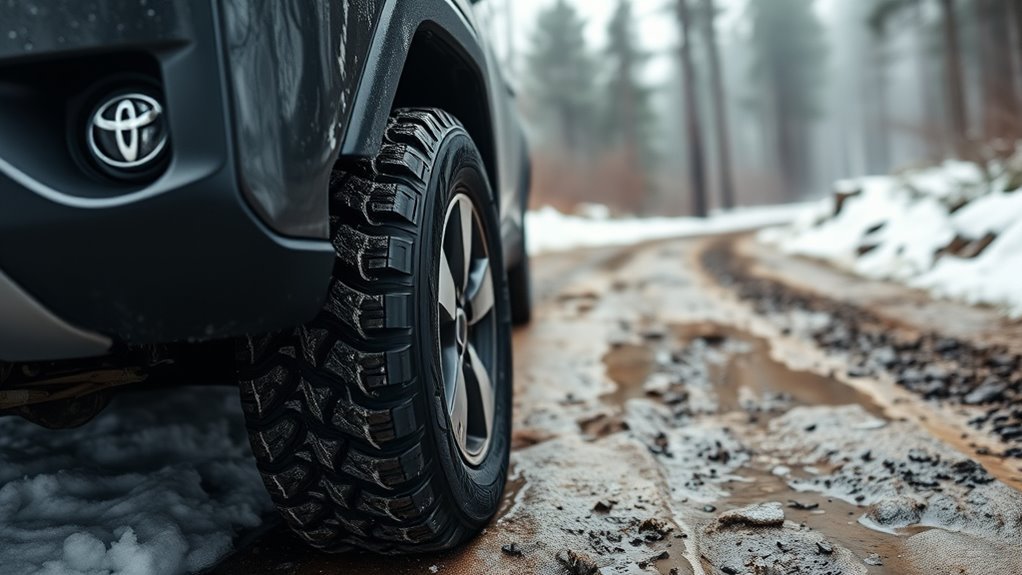
You’ll see M+S, M/S, or M&S on many Toyota RAV4 tire sidewalls. It stands for “Mud and Snow”, but it does not mean the tire is a true winter tire. For most RAV4 owners, the marking simply means the tread design is built to handle light mud, slush, and light snow better than a summer tire.
Quick Answer
M+S on a RAV4 tire means “Mud and Snow.” It is a tread-design marking, not a severe-winter certification. M+S tires are usually fine for rain, slush, mild mud, and light snow, but for regular ice, packed snow, or mountain winter driving, choose tires with the 3PMSF snowflake symbol.
Key Takeaways
- M+S means Mud and Snow, but it is based mainly on tread design, not a severe-winter performance test.
- 3PMSF is the stronger winter symbol; it shows the tire meets a minimum packed-snow traction standard.
- RAV4 AWD helps you move, but it does not replace winter-capable tires for braking and steering on snow or ice.
- Use the driver-door tire placard for your RAV4’s size and cold tire pressure, not the maximum pressure printed on the tire sidewall.
What “M+S” Means on Your RAV4 Tire Sidewall
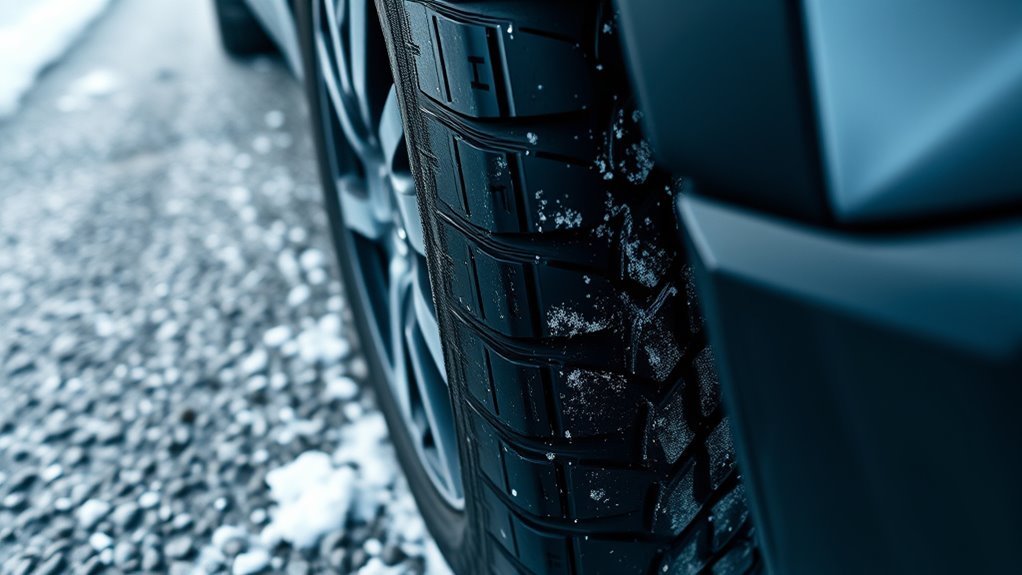
The M+S stamp on your RAV4 tire stands for Mud and Snow. You may also see it written as MS, M/S, M&S, or M-S. Under the U.S. Tire Manufacturers Association snow tire definition, an M+S tire has tread features such as pockets or slots and a minimum tread-contact void area of 25% based on mold dimensions.
In plain English, M+S means the tire has open tread channels and biting edges intended to move soft snow, slush, and mud out of the contact patch. That can help a RAV4 on wet roads, muddy driveways, gravel roads, and light snow.
Note: M+S is not a Toyota-specific marking. It appears on many all-season, all-terrain, and SUV tires. The marking tells you about the tire’s tread category, not your RAV4’s AWD system.
The key limitation is that M+S is not the same as a 3PMSF winter rating. M+S does not prove the tire has passed a severe-snow performance test. If you regularly drive on packed snow, ice, steep winter roads, or mountain passes, look for the three-peak mountain snowflake symbol instead.
[Products Worth Considering]

This screw-in tire plug kit seals punctures fast using the included screwdriver, letting you repair tread damage without removing the tire or using messy glue. It includes...
When to Use M+S Tires on a Toyota RAV4
M+S tires make sense on a Toyota RAV4 when your winter driving is mild and occasional. They are best for wet roads, light slush, shallow snow, muddy shoulders, dirt roads, and short gravel or fire-road trips.
They are not the best choice if you drive through deep snow, polished ice, frequent freeze-thaw conditions, or long mountain trips where winter traction laws may apply. In those conditions, a RAV4 is safer with 3PMSF all-weather tires or dedicated winter tires.
Seasonal Snow Conditions
For mild climates, M+S all-season tires can be a practical year-round choice. They give you more tread void than a summer tire and can handle light snow better than a tire with no M+S marking.
For colder areas, use the temperature and road conditions together. When daily temperatures are often below about 45°F (7°C), winter tire compounds generally stay more flexible than typical all-season compounds. If that cold weather comes with snow or ice, choose a tire with the 3PMSF symbol rather than relying on M+S alone.
Warning: RAV4 AWD can help with acceleration, but it does not shorten stopping distance by itself. Braking and steering on snow or ice depend heavily on the tire’s tread, compound, and remaining tread depth.
Temporary Off-Road Use
M+S tires can also help during short, light off-road use, such as muddy service roads, damp campsites, gravel lanes, and compacted snow tracks. The wider grooves can clear loose material better than a summer-style tread.
Stay within the tire’s limits. M+S tires are not mud-terrain tires, rock-crawling tires, or dedicated snow tires. If the road has deep ruts, sharp rocks, thick mud, or icy climbs, slow down, use the correct RAV4 drive mode if equipped, and turn around if traction becomes unpredictable.
M+S vs 3PMSF: Real Winter Performance Differences
The easiest way to compare the two markings is this: M+S is a tread-design marking; 3PMSF is a snow-traction performance symbol.
The USTMA severe snow service definition requires tires to meet a minimum snow grip index using a packed-snow traction test. Tires that meet that requirement can carry the mountain-and-snowflake pictograph along with an M+S marking.
Symbol Meaning Difference
- M+S: Means Mud and Snow. It is based on tread geometry and is common on all-season and all-terrain tires.
- 3PMSF: Means the tire meets a minimum severe-snow traction requirement. It is the symbol to look for when winter grip matters.
- Winter tire: Usually carries 3PMSF and uses a cold-weather compound and tread design built for snow, slush, and freezing temperatures.
- All-weather tire: A year-round tire that also carries 3PMSF. It is often a good choice for RAV4 owners who want one set of tires in a moderate winter climate.
Traction and Testing
Do not overread the 3PMSF symbol. According to Tire Rack’s explanation of the 3PMSF test, the test focuses on acceleration traction on medium-packed snow. It does not directly test ice braking, snow cornering, wet braking, or deep-snow flotation.
Even so, the 3PMSF symbol is still a stronger winter signal than M+S alone. It gives you proof that the tire reached a defined snow-traction threshold instead of only meeting a tread-pattern definition.
Real-World Performance
On a RAV4, M+S tires usually feel acceptable in rain, slush, and light snow. In heavier winter driving, 3PMSF all-weather or winter tires offer a better safety margin because they are built around snow traction and cold-weather grip.
Dedicated winter tires are still the best choice for frequent snow, ice, freezing rain, and steep winter roads. All-weather 3PMSF tires are the compromise choice for drivers who want one set of tires year-round and do not face severe winter conditions every week.
How M+S Tread Patterns and Compounds Affect Wet/Snow Grip
M+S tires help in soft conditions because of the way the tread is shaped. Wider grooves move water and slush away from the tire. Smaller cuts called sipes create biting edges that can grab light snow. Open shoulder blocks help shed mud before it packs into the tread.
The rubber compound matters just as much as the tread. A tire can have an M+S marking and still feel stiff in cold weather if it is mainly designed for long tread life and warm-road comfort. That is why two M+S tires can perform very differently on the same RAV4.
For winter confidence, check three things before buying:
- Sidewall symbols: M+S is useful; 3PMSF is better for winter.
- Rubber compound: Look for all-weather or winter wording if you drive in cold climates.
- Tread depth: More tread helps clear slush and snow. Legal minimums are not the same as ideal winter traction.
Compare: M+S, All-Season, All-Weather, and Winter Tires for RAV4s
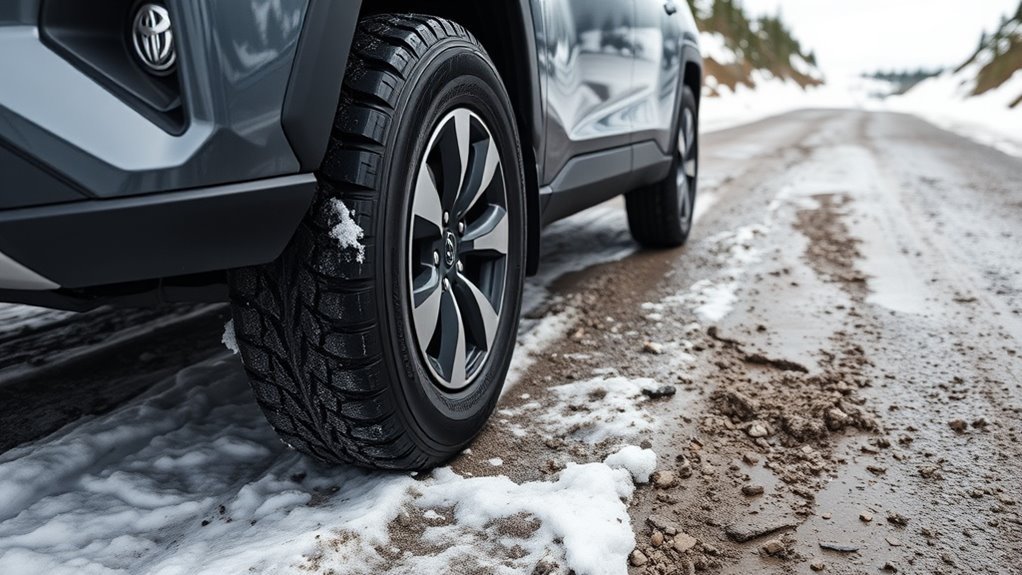
| Tire Type | Best For | Main Limitation |
| M+S all-season | Rain, dry roads, light slush, mild snow, everyday RAV4 driving | Not severe-snow tested unless it also has 3PMSF |
| All-weather 3PMSF | One-tire year-round setup in moderate winter climates | May not match dedicated winter tires on ice or severe snow |
| Dedicated winter 3PMSF | Frequent snow, ice, freezing rain, mountain roads, harsh winters | Faster wear and softer handling in warm weather |
| All-terrain M+S or 3PMSF | Gravel, dirt roads, camping, light trail use, mixed surfaces | Can be noisier and heavier; winter performance varies by model |
If your RAV4 mostly sees city streets and a few light snow days, M+S all-season tires may be enough. If your winters include regular packed snow or icy mornings, choose all-weather 3PMSF tires. If winter driving is serious where you live, use dedicated winter tires.
Choosing the Right M+S Tire Size, Load & Speed Rating for a RAV4
Before choosing any M+S tire for a RAV4, start with the Tire and Loading Information Label on the driver-side door area. Toyota also lists tire size and recommended cold inflation pressure in the owner’s manual. The Toyota owner manual guidance points owners to the tire and loading label for the correct size and pressure.
Match these details carefully:
- Tire size: Keep the correct width, aspect ratio, and wheel diameter for your trim unless a qualified tire shop confirms an approved alternate size.
- Load index: Choose a tire that meets or exceeds the original load requirement.
- Speed rating: Do not downgrade without professional guidance, because it can affect heat resistance and handling expectations.
- AWD matching: On AWD RAV4 models, use four matching tires with similar tread depth to reduce drivetrain stress and keep traction systems predictable.
Pro Tip: If you are moving from the original RAV4 tire to a more aggressive M+S or all-terrain tire, ask the installer to confirm wheel clearance, load rating, speed rating, TPMS compatibility, and whether snow chains or cables are allowed for your tire size.
Installing M+S Tires: Fitment, Pressure, and Vehicle Mode Tips
Install M+S tires as a complete, matched set whenever possible. Mixing tire categories, brands, tread depths, or winter and non-winter tires can make braking and cornering less predictable.
After installation, set the tires to the RAV4’s recommended cold tire pressure. NHTSA advises drivers to use the vehicle manufacturer’s pressure shown in the owner’s manual or driver-side label, not the maximum pressure printed on the tire sidewall. You can review NHTSA’s winter tire and pressure guidance here: NHTSA Winter Driving Tips.
Some RAV4 models also require TPMS initialization or recalibration after tire service, pressure changes, or wheel changes. Check your exact owner’s manual and follow the on-screen or manual procedure for your model year.
Using RAV4 Snow, Mud, and Trail Modes
RAV4 drive modes vary by model, trim, and year. Some gas AWD models include Multi-terrain Select settings such as Mud & Sand, Snow, or Rock & Dirt. Many RAV4 Hybrid models use Trail Mode, which Toyota describes as integrated control of AWD, brake, and drive-force systems to help control wheel spin.
Use these modes only as traction aids. They can change throttle response, braking control, and AWD behavior, but they cannot create grip if the tires are wrong for the road.
Tire Care and Driving Tips to Maximize Wet/Winter Performance

Good tire care makes a bigger difference than many drivers expect. Check tire pressure when the tires are cold, inspect tread depth monthly during winter, and look for cuts, bulges, uneven wear, embedded stones, and sidewall damage.
For tread depth, know the difference between legal minimum and winter usefulness. NHTSA lists 2/32 inch as the minimum tread depth, but winter grip drops before that. Continental recommends at least 4 mm of tread depth for winter conditions, which is about 5/32 inch. Learn more in Continental’s guide to winter tire markings and tread depth.
- Check pressure cold: Do it before driving or after the vehicle has been parked for several hours.
- Rotate on schedule: Follow your Toyota maintenance schedule or tire manufacturer guidance.
- Clean the tread: Remove packed mud, stones, and ice when safe to do so.
- Drive smoothly: Avoid sudden steering, hard braking, and quick throttle inputs on snow or slush.
- Increase following distance: Even AWD RAV4 models need more space to stop in winter weather.
Warning: Do not raise or lower tire pressure randomly for snow driving. Use Toyota’s recommended cold pressure unless your owner’s manual or a qualified tire professional gives a specific instruction for your situation.
Cost, Warranty, and Insurance Implications of Fitting M+S Tires
M+S tires are available in many price ranges because the marking appears on basic all-season tires, premium touring tires, SUV tires, and all-terrain tires. The real cost is not just the tire price; it also includes mounting, balancing, valve stems or TPMS service, rotations, alignments, and seasonal storage if you keep a second set of wheels.
Warranty coverage varies by tire model. Some M+S all-season tires include mileage warranties, while some winter and all-terrain tires may have shorter or more limited treadwear coverage. Read the tire warranty before buying and keep your installation and rotation records.
Insurance rules vary by company and region. Do not assume M+S or winter tires will lower your premium. If your area has winter tire discounts or traction-equipment rules, confirm them directly with your insurer and local road authority.
Frequently Asked Questions
Are M+S tires okay for winter driving?
M+S tires are okay for light winter driving, such as shallow snow, slush, and cold rain. They are not the best choice for regular ice, deep snow, mountain passes, or long periods of freezing weather. For those conditions, choose 3PMSF all-weather or dedicated winter tires.
Is M+S the same as 3PMSF?
No. M+S means the tire meets a mud-and-snow tread-design definition. 3PMSF means the tire meets a minimum packed-snow traction standard. For real winter driving, 3PMSF is the more useful symbol.
Does an AWD RAV4 still need winter tires?
Yes, in harsh winter climates. AWD helps the RAV4 accelerate and manage wheel spin, but braking and steering still depend on tire grip. If you drive on packed snow or ice often, winter tires or 3PMSF all-weather tires are a smarter choice than M+S all-seasons alone.
What is Mud Mode on the RAV4?
Toyota does not use the same mode names on every RAV4. Some AWD models have a Mud & Sand setting through Multi-terrain Select. Some hybrids use Trail Mode. These systems adjust AWD, throttle, brake, or traction-control behavior, but they work best when the tires already match the surface.
Can you put snow tires on a RAV4?
Yes. A Toyota RAV4 can use snow tires as long as they match the correct size, load rating, speed rating, and wheel fitment for your model. For best handling, install four matching winter tires rather than only two.
How much tread depth do RAV4 tires need for snow?
The legal minimum is often lower than what works well in snow. For winter traction, replace or plan replacement well before the tire reaches 2/32 inch. Around 4/32 to 5/32 inch is a more practical winter-performance warning zone because shallow tread cannot clear slush and snow as effectively.
Conclusion
M+S on a RAV4 tire means Mud and Snow, but it should be treated as a light-duty traction marking, not a full winter guarantee. For rain, slush, mild snow, and muddy roads, M+S tires can be a sensible everyday choice. For frequent ice, packed snow, or mountain winter driving, look for the 3PMSF symbol and consider dedicated winter tires.
The safest setup is simple: match the RAV4’s correct tire size, load rating, speed rating, and cold tire pressure; keep all four tires matched; monitor tread depth; and choose the tire category that fits the worst conditions you actually drive in.
Sources
- U.S. Tire Manufacturers Association — Snow Tire Definition for Passenger and Light Truck Tires — backs up the M+S tread-design criteria.
- U.S. Tire Manufacturers Association — Severe Snow Conditions Definition — backs up the 3PMSF severe snow service standard.
- Tire Rack — Three-Peak Mountain Snowflake Symbol — explains what the 3PMSF test does and does not measure.
- Toyota Owners — RAV4 Tire Inflation Pressure — supports checking the RAV4 tire and loading label for size and cold pressure.
- NHTSA — Winter Driving Tips — supports cold-pressure, tread, damage, and winter safety guidance.
- Continental — Winter Tire Markings — supports winter-symbol and tread-depth guidance.

Related Articles

Toyota RAV4 TPMS Reset: Easy Steps That Work
Unlock the secrets to resetting your Toyota RAV4's TPMS effortlessly—discover the essential steps to ensure your tires are always safe.
Read More
Toyota RAV4 Tire Rotation: DIY Steps & Pattern
Take control of your Toyota RAV4's tire maintenance with our simple DIY rotation guide—discover the best steps for optimal performance and longevity!
Read More
Mix Tire Brands on a Toyota RAV4? Expert Guide
Keeping your RAV4 safe? Learn when mixing tire brands risks traction, ABS/TCS and AWD damage — and what exact matches you must insist on.
Read More