What Are Fat Tire Bikes For? Best Uses & Who Should Ride One
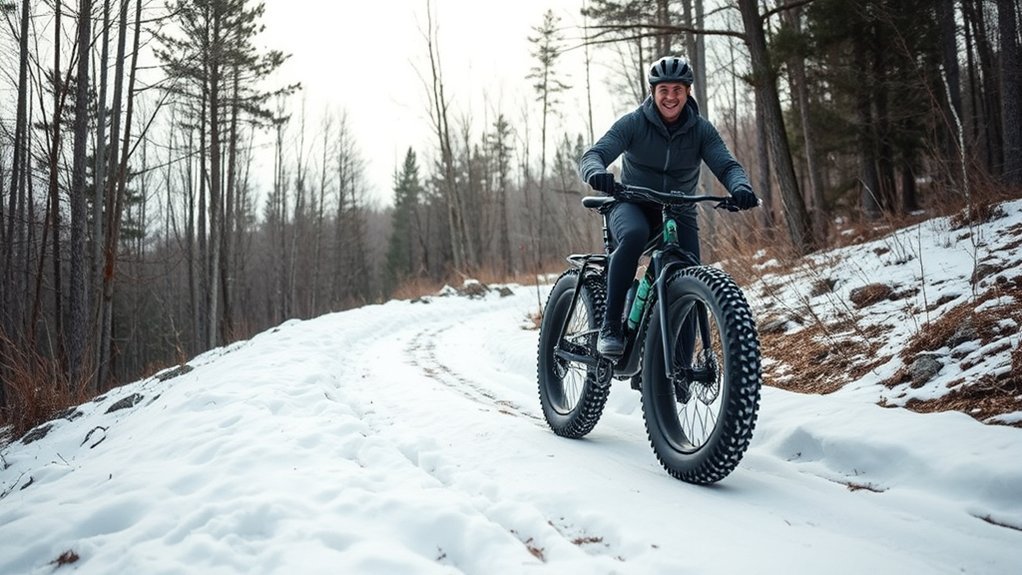
Fat tire bikes are for soft, unstable terrain like snow, sand, and mud, where their oversized 3.8- to 5-inch tires give you extra traction, flotation, and control. You can also use them on rough roads, gravel, and cracked pavement because low tire pressure smooths bumps and boosts stability. They’re best if you ride in winter, carry cargo, or want a dependable, rugged bike that handles surfaces standard bikes can’t. You’ll see why they stand out.
Key Takeaways
- Fat tire bikes are built for soft terrain like snow, sand, and mud, where wider tires prevent sinking and improve traction.
- They handle rough roads, gravel, potholes, and cracked pavement well, offering a stable, comfortable ride.
- Low tire pressure helps absorb bumps and improves control on uneven or slippery surfaces.
- They suit riders who want dependable traction, winter riding, or a unique off-road cycling experience.
- Fat bikes are also useful for heavier riders or cargo-carrying, thanks to their high weight capacity and stability.
What Are Fat Bikes Best For?
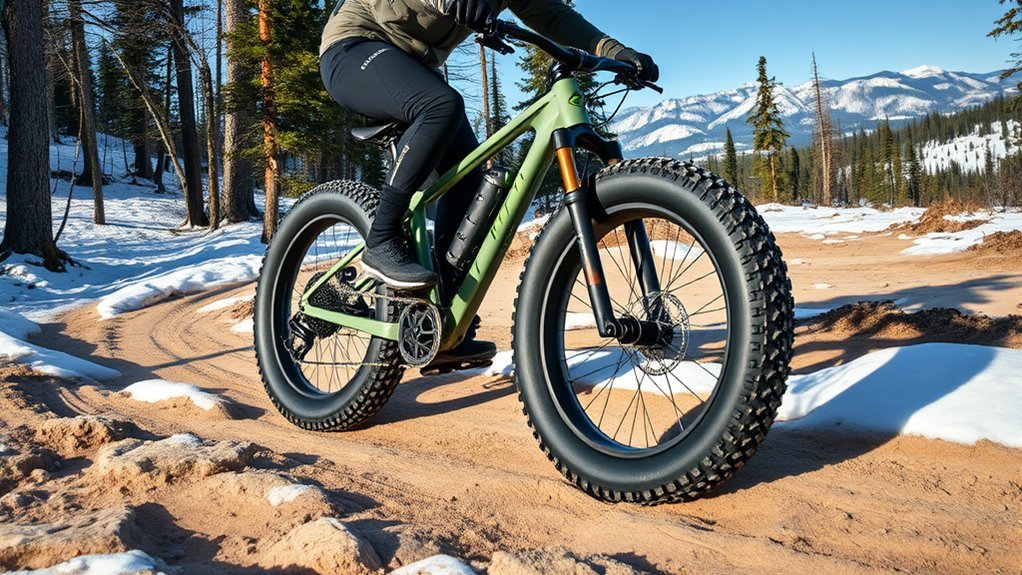
Fat bikes are best for soft, unstable terrain like snow, sand, and mud, where their 3.8- to 5-inch tires improve traction and flotation. You can use fat bikes on soft surfaces when standard bikes sink or lose grip. Their oversized tires let you run lower tire pressure, which boosts contact, absorbs bumps, and keeps you moving with better stability and control. That makes them practical for mountain biking on rough routes, but they’re also useful for year-round riding when conditions change. If you want freedom to ride beyond pavement, fat bikes give you a unique riding experience in places where narrow tires fail. They’re also strong enough for many riders and gear loads, with a useful weight capacity for commuting, touring, or hauling equipment. You get a tough, adaptable bike that helps you ride farther, stay balanced, and keep momentum on difficult ground without giving up comfort or control. Additionally, their turf-friendly tread design enhances performance on various surfaces, similar to how specialized tires protect lawns.
Fat Tire Bikes for Snow, Sand, and Mud
When the trail turns soft, a fat tire bike keeps you moving with far more control than a standard bike. You get traction and stability from tires that measure 3.8 to 5 inches wide, so your wheels spread your weight across more surface and resist sinking. On snow, sand, and mud, that larger contact patch improves flotation and helps you track straight instead of bogging down. Run low tire pressure, around 5-8 psi, and you’ll feel the bike conform to the ground, absorb chatter, and deliver a smoother ride over uneven terrain. That setup also makes it easier to clear obstacles that would stop narrower tires. If you want freedom to ride beyond dry pavement, fat tire bikes give you a practical way to keep rolling in harsh conditions. They’re built for winter challenges, but they also support year-round riding when you want reliable control, comfort, and access to soft, unpredictable terrain. Additionally, their 4.0-inch width enhances stability and grip across various surfaces, making them ideal for challenging conditions.
Fat Tire Bikes for Commuting and Rough Roads
If your commute includes cracked pavement, potholes, gravel, or patched roads, a fat tire bike can make the ride more controlled and comfortable. Fat bikes use wide tires, usually 3.8 to 5 inches, to increase traction on rough roads and keep you stable when the surface changes. You can run lower tire pressure, around 5 to 10 PSI, which improves shock absorption and cuts harsh feedback from broken pavement. That means more comfort and less fatigue on longer rides.
For commuting, fat bikes also handle mixed terrains well, so you can move from street to shoulder to gravel path without losing control. They’re practical when you carry a bag or cargo, since many support 300 to 400 lbs. They’re slower on clean pavement, but if your route includes rough roads, the tradeoff is useful: better grip, steadier handling, and a ride that supports your freedom to travel without avoiding the bad parts of town. Additionally, the wide tread on fat tires enhances traction on sand and snow, making them versatile for various conditions.
Fat Tire Bikes vs Mountain Bikes
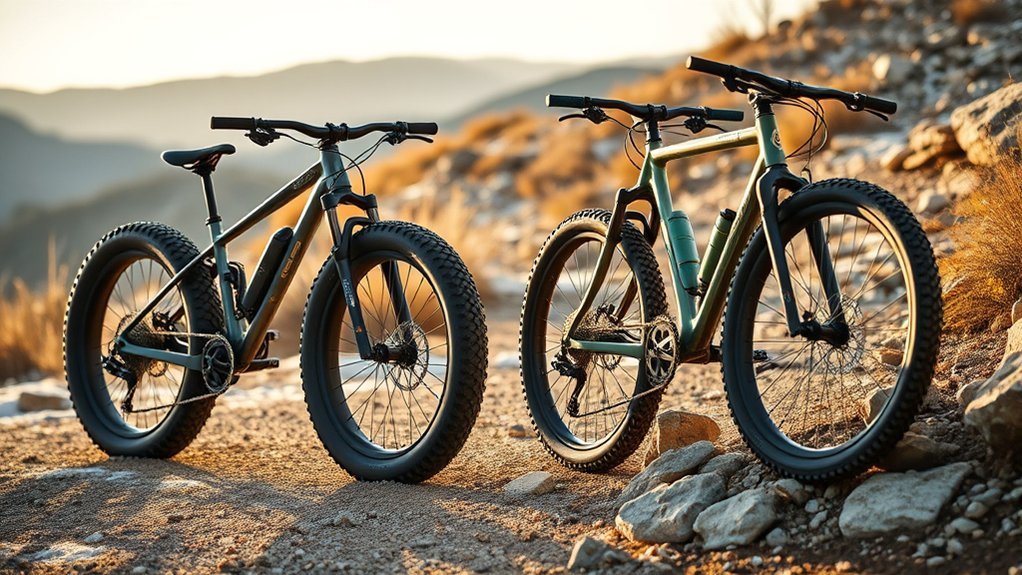
Compared with mountain bikes, fat tire bikes trade agility for traction and stability, so you’ll usually choose them for loose, soft, or rough surfaces rather than technical trail speed. Fat bikes use tire width around 3.8 to 5 inches, while mountain bikes stay closer to 1.8 to 2.6 inches. That extra volume lets you run lower pressure, which improves ride quality by smoothing snow, sand, mud, and broken ground. Mountain bikes depend more on suspension and faster handling for steep climbs, descents, and tight trail moves. Fat bikes also use longer chain stays and a more stability-focused frame, while mountain bike geometry changes by discipline to sharpen performance. Expect fat bikes to feel heavier and slower on pavement, but freer and more planted where the terrain gets soft. Their gearing systems are often simple 1x setups, while mountain bikes may use 2x or 3x drivetrains for broader range. Additionally, fat bikes are designed to excel in rugged-terrain traction, making them ideal for various outdoor adventures.
Who Benefits Most From a Fat Bike?
A fat bike fits you best if you ride on snow, sand, mud, or other soft ground where traction matters more than speed. You’ll benefit most if you want terrain versatility and dependable traction and control in conditions that defeat narrower tires. The fat bike’s 3.8- to 5-inch tires run at low pressure, so you get better float, stability and comfort, and fewer harsh impacts. If you’re heavier, carrying cargo, or want a more forgiving platform, this setup can support 300-400 lbs and still feel composed. For winter cycling, you can keep riding when roads and trails turn slick, and you’ll often find the experience more freeing than forced. It’s also a strong choice if you want year-round riding on mixed surfaces or a unique riding experience that keeps you engaged on technical singletrack. Choose one when confidence, grip, and access matter more than outright speed. Additionally, all-season versatility allows you to ride comfortably across various terrains without needing multiple bikes.
Frequently Asked Questions
What Are the Disadvantages of a Fat Tire Bike?
You’ll notice a fat tire bike’s drawbacks fast: extra weight hurts Weight distribution, and the Frame design adds drag. You lose Speed limitations on pavement, and Tire pressure changes don’t fully offset that. Traction control and Stability benefits can’t cancel higher Maintenance needs or Cost considerations. Terrain versatility is real, but Riding techniques get harder in tight spaces. If you’re chasing liberation, you may want lighter options for daily freedom.
Is a Fat Tire Bike Harder to Pedal?
Yes, you’ll usually find a fat tire bike harder to pedal because extra weight and rolling resistance cut pedal efficiency. You gain traction control, terrain adaptability, and smoother weight distribution, but speed comparison favors lighter bikes on pavement. Lower tire pressure can improve riding comfort and handling characteristics, though it may raise maintenance needs. If you ride for fitness benefits, expect more effort, especially uphill without motor assist.
Can You Ride a Fat Tire Bike on the Road?
Yes, you can ride a fat tire bike on the road. You’ll get decent road handling and strong terrain versatility, but you should expect slower speed comparison and some stability issues at higher speeds. Keep tire pressure around 25-30 PSI for better ride comfort and traffic safety. They’re practical for urban commuting, though heavier frames raise maintenance needs. You won’t lose off road performance, but pavement efficiency drops.
Are Fat Tire Bikes Good for Beginners?
Yes, fat tire bikes are great for beginners: slow and steady wins the race. You get beginner advantages from stable handling techniques, broad terrain suitability, and comfort benefits from low-pressure tires. Check weight considerations, choose proper gear selection, and follow maintenance tips. Keep an upright riding posture, match your fitness levels, and use confidence building practice on sand, snow, or mud. You’ll learn faster and ride freer with less intimidation.
Conclusion
If you’re chasing traction on snow, sand, mud, or busted-up roads, a fat tire bike can feel almost unstoppable. Its huge tires grip like claws and smooth out chaos better than a standard mountain bike ever could. You’ll benefit most if you ride in harsh conditions, want extra stability, or value comfort over speed. For pure all-around efficiency, they’re not the fastest choice—but for the right terrain, they’re ridiculously effective.

Related Articles
How Much Does a Nascar Tire Weigh? Exact Weight Guide
Properly understanding NASCAR tire weight reveals surprising performance tradeoffs, and the exact numbers may change how you view every pit stop.
Read More
How Much Does a Monster Truck Tire Weigh? Exact Weight Guide
Weighty monster truck tires can reach 800–900 pounds each, but the full story of why they’re so massive will surprise you.
Read More
What Is a T/a Tire? Complete Guide & Best Options
I’ll explain what a T/A tire really means, how it differs from A/T, and which BFGoodrich options might be right for your ride.
Read More