
Is Tire Shine Bad for Your Tires? What Experts Recommend
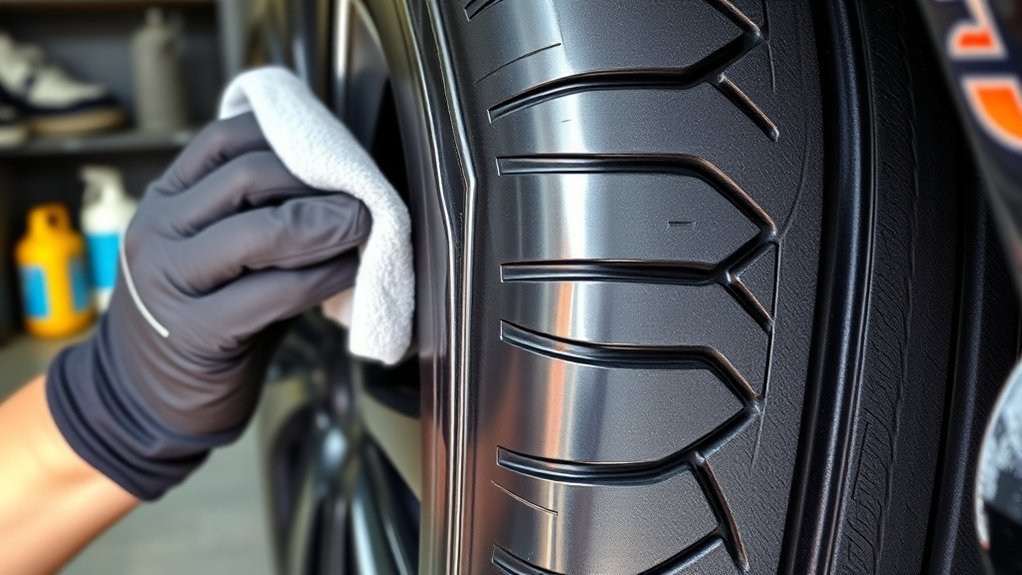
Tire shine can make faded sidewalls look darker and cleaner, but the product and application method matter. A tire-specific, non-petroleum dressing is generally safe when used as directed. Petroleum-based cleaners, heavy buildup, and overspray on the tread or brakes create the real risks. Tire shine is also cosmetic—it cannot repair dry rot, cracks, bulges, or other damage.
Quick Answer
No—tire shine is not automatically bad for tires. A tire-specific, non-petroleum product used as directed on clean sidewalls is generally safe. The bigger risks are petroleum-based cleaners, heavy buildup, and overspray on the tread or brakes. Tire shine also cannot repair or safely hide cracks, bulges, or other damage.
Key Takeaways
- Choose a tire-specific, non-petroleum formula; a water-based dressing is usually the easiest type to identify and control.
- Apply dressing to the sidewall only. Keep it off the tread, brake rotors, drums, calipers, and pads.
- Clean, inspect, and completely dry the tire before applying a thin coat.
- Wipe away excess product and follow the label’s drying time to reduce sling and buildup.
- Tire shine improves appearance but does not repair dry rot, cracking, cuts, bulges, or age-related deterioration.
At a Glance
| Time Required | About 20–30 minutes, including cleaning and drying time |
| Difficulty | Easy |
| Tools Needed | Mild soap or tire cleaner, water, soft brush, microfiber towel, foam applicator, and tire-specific dressing |
| Cost | Varies by product; no specialized equipment is required |
Why Tire Shine Got a Bad Reputation
Tire shine developed a poor reputation because some older or incompatible products relied heavily on petroleum-based carriers. Misuse also caused greasy buildup, trapped dirt, staining, and product sling onto body panels.
The U.S. Tire Manufacturers Association warns that incompatible dressings and harsh cleaning agents can hasten oxidation and premature cracking. It specifically advises against petroleum-based tire dressings and cleaners. Michelin and Goodyear give similar petroleum-product warnings.
That does not mean every shiny, silicone-containing, or solvent-carried product automatically damages tires. The complete formulation, carrier, intended use, and application instructions matter. A tire-specific water-based dressing is simply an easier option for most drivers because it is usually easier to apply thinly, clean up, and buff to a dry finish.
[Products Worth Considering]

Adam’s Pro Tire Hex Grip applicators are molded foam sponges designed for precise, even tire dressing application. The ergonomic grip helps you spread product without overapplying, reducing sling that can splash onto paint and helping keep your hands clean during wheel and trim detailing. They’re durable, washable, and reusable for repeated detailing sessions.

Cristal Products Untouchable Tire Shine Spray delivers a deep, wet-look gloss that enhances your vehicle’s tires. It’s quick-drying and spreads smoothly for consistent, streak-free coverage, while forming a protective coating against UV rays, road grime, and weather. Suitable for all tire types, it helps restore dull, faded tires to a showroom-quality finish.

Blackline Blackout is a water-based trim and tire dressing that restores rubber, vinyl, and plastic with a rich satin, blackout look. Its no-sling formula dries quickly and helps prevent messy transfer onto paint. The coating repels water and offers UV protection to help prevent fading, cracking, and discoloration for a clean, long-lasting finish.
Is Tire Shine Bad for Tires?
Tire shine is generally not harmful when the label identifies it as suitable for tire sidewalls and you apply it correctly. Problems are more likely when a product contains petroleum-based ingredients, is not intended for automotive rubber, remains oily, or reaches a surface where traction is essential.
When Tire Shine Is Usually Safe
A tire dressing is a reasonable choice when it meets all of these conditions:
- It is specifically labeled for automotive tire sidewalls or exterior rubber.
- It is water-based or clearly identified as non-petroleum.
- The directions and warnings are readable and product-specific.
- It can be applied in a thin, controlled coat.
- It dries or can be buffed to a non-greasy finish.
- It stays completely off the tread and braking system.
When Tire Shine Can Cause Problems
Tire shine can create problems when you use an incompatible product, saturate the sidewall, repeatedly layer new dressing over old residue, or drive before the product has dried. Overspray may also make pavement, tread surfaces, or brake components slippery.
Warning: Apply tire shine to the sidewall only. Never coat the tread, and do not spray dressing onto brake rotors, drums, calipers, or pads. Many tire-dressing labels also prohibit use on motorcycles, bicycles, and other two-wheeled vehicles because even a small amount on the contact area can reduce grip.
Tire shine must not be used to conceal damage. A darker sidewall can make small cracks or abrasions harder to see, so inspect each tire before applying anything.
What Makes a Tire Shine Safe?
Water-Based or Non-Petroleum Formula
A water-based dressing is usually a practical starting point. These products commonly suspend polymers or gloss agents in water rather than relying on a petroleum-heavy carrier. They can still produce a satin or glossy finish, and many are easier to spread in a thin coat.
“Water-based” does not mean you can ignore the label. Confirm that the product is intended for tires or exterior automotive rubber, and follow its surface restrictions.
Clear Label and Safety Information
A reputable product should provide directions, drying instructions, surface warnings, and access to a Safety Data Sheet. Be cautious when a product does not identify its intended surfaces or gives no guidance about tread, brakes, paint, wheels, or pavement.
If the front label is vague, check the manufacturer’s website or Safety Data Sheet before use. Do not assume that a household cleaner, oil, trim coating, or industrial rubber product is suitable for a road tire.
Dry, Non-Greasy Finish
A finish that dries to the touch is less likely to collect dust or sling onto nearby paint. This does not prove that the product has soaked into the rubber; many dressings leave a thin polymer layer on the surface. The practical goal is an even finish with no wet patches, drips, or transferable residue.
Does Silicone Damage Tires?
The word “silicone” alone does not tell you whether a tire dressing is safe. Some tire-specific products use silicone polymers or synthetic polymers to create gloss and water resistance. Tire-manufacturer warnings focus more directly on petroleum-based and otherwise incompatible products.
Instead of rejecting or selecting a dressing based only on the word “silicone,” check the product’s intended use, carrier, warnings, and application directions.
Water-Based vs. Petroleum-Based Tire Shine
| Feature | Water-Based or Non-Petroleum | Petroleum-Based or Incompatible |
| Tire-maker guidance | Generally the more cautious choice when specifically labeled for tires | Major tire-industry sources advise against petroleum-based dressings and cleaners |
| Application | Usually easy to spread, layer, buff, and clean up | May remain oily or leave persistent residue, depending on the formulation |
| Finish | Available in matte, satin, and glossy finishes | May produce strong initial gloss but is not automatically safer or more durable |
| Best practice | Use a thin coat on a clean, dry sidewall and buff excess | Avoid unless the tire manufacturer and product documentation confirm compatibility |
The safest decision is not based on gloss level alone. Choose a product made for automotive tire sidewalls, avoid petroleum-based products, and obey every surface warning on the label.
How to Apply Tire Shine Safely
- Park on a level surface and let the tires cool. Applying cleaner or dressing to a hot tire can cause uneven drying.
- Inspect the tread and sidewalls. Look for cuts, cracks, bulges, exposed material, punctures, or uneven wear. Do not cover suspicious damage with dressing.
- Clean the tire. Use mild soap or a compatible tire cleaner with water and a soft-bristle brush. Remove old dressing, road film, and dirt.
- Rinse and dry completely. Water left in lettering or sidewall texture can dilute the product and cause streaking.
- Put the dressing on an applicator. Applying it to a foam pad first gives you more control than spraying directly toward the wheel.
- Spread a thin coat over the sidewall only. Stop before the tread shoulder and keep the applicator away from brake components.
- Wait for the label’s specified drying time. Do not use a universal five- or ten-minute rule when the manufacturer gives different instructions.
- Buff away excess. Use a clean microfiber towel until no wet patches or transferable residue remain.
Pro Tip: Turn the foam applicator rather than spraying more product when you reach raised lettering and textured areas. This works dressing into the sidewall while reducing drips, overspray, and waste.
A second coat may deepen the appearance if the label permits layering. Let the first coat dry fully before deciding whether another is needed.
What to Do If Tire Shine Gets on Tread or Brakes
Act before driving if dressing reaches a traction or braking surface.
- Tire tread: Wash the affected area thoroughly with mild detergent and water, scrub it with a suitable brush, and rinse it. Do not drive while the surface still feels slick or oily.
- Brake components: Do not drive if rotors, drums, pads, or other friction components are visibly contaminated. Have the brakes cleaned and inspected by a qualified technician.
- Paint or wheels: Wipe the product away promptly using a cleaner approved for that finish. Test unfamiliar cleaners in a hidden area first.
- Concrete or asphalt: Clean the spill immediately according to the label. Some dressings can stain pavement or leave a slippery spot.
Note: When you are uncertain whether all residue has been removed from the tread or braking system, do not test the vehicle on a public road. Ask a tire or brake professional to inspect it.
How Often Should You Reapply Tire Shine?
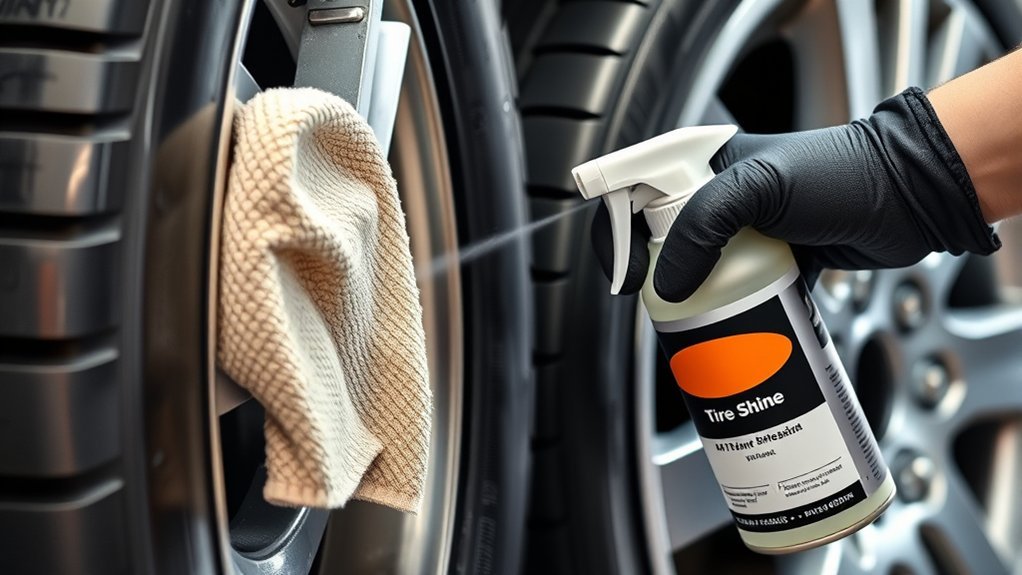
There is no universal reapplication interval. Apply the product again when the finish has faded, the tire has been properly cleaned, and the label allows another coat.
For some products and driving conditions, that may be about every two to four weeks. Others may fade after a few washes or last longer. Rain, road salt, strong cleaners, dust, mileage, and outdoor parking all affect the appearance.
Reapplication is cosmetic maintenance—not a requirement for preventing tire failure or dry rot. Applying new dressing too often without removing old residue can create dark patches, buildup, and sling.
- Inspect and clean the sidewall before every application.
- Do not add another coat just because a calendar interval has passed.
- Use less product when the previous finish is still present.
- Follow the product label if it specifies a curing or recoat period.
[Products Worth Considering]

This oesee 8-piece wheel care kit helps you clean, scrub, and dry wheels safely with purpose-built brushes and towels. The scratch-free microfiber wheel brush lifts brake dust and grime, while the stiff pro-grip tire brush removes tire browning and embedded dirt. A twist loop microfiber drying towel and an applicator help achieve a streak-free finish and cleaner, more even product application.

This wheel brush kit delivers pro-level cleaning at home, lifting dirt, grime, and brake dust to help restore wheel appearance. It includes multiple brush styles and applicator pads for tackling different wheel surfaces, with gentle, metal-free bristles designed to reduce scratching risk. The flat and double-ended brushes are built for comfort and reach, making wheel care easier for cars, trucks, and RVs.
How to Choose a Safer Tire Shine
Look for specific, verifiable information rather than relying on words such as “premium,” “extreme,” or “professional.” A suitable tire shine should provide:
- A label that identifies tire sidewalls or exterior automotive rubber as an approved surface
- A water-based or non-petroleum formulation
- Directions for cleaning, application, drying, and buffing
- Warnings about tread, brakes, two-wheeled vehicles, paint, and pavement
- A dry-to-the-touch or low-sling finish
- An accessible Safety Data Sheet or detailed manufacturer support page
For example, Chemical Guys Tire Kicker is identified by its manufacturer as a water-based dressing that dries to the touch. Meguiar’s Hyper Dressing is also identified as a water-based formula suitable for tires and exterior rubber.
These are formulation examples, not a claim that one product is best for every vehicle. Confirm compatibility with your tire manufacturer’s guidance and the exact product label in your hand.
How to Keep Tires Protected Longer
Tire shine is only a small part of tire care. The maintenance steps that matter most are correct inflation, regular inspection, suitable storage, proper loading, rotation, alignment, and timely replacement.
A glossy sidewall is not proof of a healthy tire. Inspect the rubber before dressing it, and never use shine to cover damage.
- Check cold tire pressure against the vehicle placard at least monthly.
- Inspect the tread and both sidewalls for cuts, cracks, bulges, punctures, and uneven wear.
- Keep tires away from petroleum products, volatile chemicals, excessive heat, and prolonged storage in direct sun.
- Use soap, water, and a soft brush for routine cleaning.
- Have questionable damage evaluated by a qualified tire professional.
NHTSA’s TireWise guidance explains tire-age identification, pressure checks, tread inspection, and signs that require attention. These practices protect tire performance more reliably than any cosmetic dressing.
Can Tire Shine Fix Dry Rot, Cracks, or Other Damage?
No. Tire dressing may temporarily darken a weathered sidewall, but it cannot restore the tire’s internal structure or reverse deteriorated rubber.
Do not apply shine before inspecting a tire with visible cracking. A qualified professional should examine deep cracks, bulges, cuts, exposed cords, repeated pressure loss, impact damage, or any condition you cannot identify confidently.
Tires also age even when tread remains. Check the DOT Tire Identification Number to determine the manufacturing week and year, then follow the replacement guidance from the vehicle and tire manufacturers.
Frequently Asked Questions
What is a good alternative to tire shine?
Plain soap and water are the safest simple alternative. Clean the tire with a soft brush, rinse it, and leave the sidewall undressed for a natural finish. Do not substitute coconut oil, olive oil, motor oil, or another household oil.
Is tire shine bad for rubber?
A tire-specific, non-petroleum dressing is generally safe when used as directed on the sidewall. Petroleum-based or otherwise incompatible products can interfere with the rubber’s protective chemistry and may contribute to premature deterioration.
What tire shine will not damage tires?
Choose a tire-specific water-based or clearly non-petroleum product with complete directions and surface warnings. No product is risk-free when misapplied, so use a thin coat, keep it off the tread and brakes, and wipe away excess.
Does tire shine crack your tires?
Compatible tire shine is not expected to crack a healthy tire when used according to its label. Petroleum-based or harsh incompatible products may contribute to premature cracking, while existing cracks can also result from age, underinflation, overloading, heat, storage conditions, or other damage.
Can I use car tire shine on a motorcycle or bicycle?
Do not assume that you can. Many automotive tire-dressing labels prohibit use on motorcycles, bicycles, and other two-wheeled vehicles because product migration onto the limited contact area can reduce traction. Follow both the vehicle and product manufacturers’ instructions.
Can tire shine hide dry rot or sidewall damage?
It can temporarily darken the surface and make small defects less obvious, but it cannot repair them. Inspect the tire in good light before applying dressing, and have cracks, bulges, cuts, exposed material, or repeated air loss professionally evaluated.
How do I remove old tire shine?
Use mild soap or a compatible tire cleaner, water, and a soft-bristle brush. Rinse thoroughly and repeat if greasy residue remains. Avoid petroleum cleaners, harsh solvents, pressure washing at close range, and steam cleaning unless the tire manufacturer specifically permits them.
Conclusion
Tire shine is not inherently bad for tires. The safer approach is to use a tire-specific, non-petroleum product on a clean, dry sidewall, apply only a thin coat, and buff away excess. Keep every dressing off the tread and braking system, and follow the exact product label instead of relying on a universal schedule.
Most importantly, treat tire shine as a cosmetic product—not a repair or substitute for pressure checks, inspections, rotation, and timely replacement. A clean natural sidewall maintained with soap and water is also a perfectly acceptable choice.
Sources
- U.S. Tire Manufacturers Association Tire Care and Safety Guide — cleaning guidance and warnings about petroleum-based dressings.
- Michelin Tire-Cleaning FAQ — petroleum-based cleaner and weathering-agent guidance.
- Goodyear Custom Sidewall Cleaning Guide — recommended cleaning method and prohibited petroleum-based products.
- Meguiar’s Hybrid Ceramic Tire Shine Safety Directions — tread, brake, pavement, and two-wheel warnings.
- NHTSA TireWise — tire-age, pressure, tread, and damage-inspection guidance.
- Chemical Guys Tire Kicker Product Information — example of a water-based, dry-to-the-touch tire dressing.

Related Articles
AWD Tire Rotation Pattern: How Often and How to Do It
W**ondering the right AWD tire rotation pattern and timing? Discover the simple method, ideal schedule, and mistakes to avoid before your tires wear unevenly.
Read More
Wheel Damage: Types, Repair Options, and Costs
Many wheel damages look minor, but some hide costly safety risks—learn which repairs are worth it and when replacement is smarter.
Read More
Tire Balancing Weights: Types, Cost, and Why You Need Them
Precisely chosen tire balancing weights reduce vibration and wear, but which type fits your wheels and what it really costs may surprise you.
Read More