
How to Determine Tire Wear: Inspection Guide & Replacement Tips
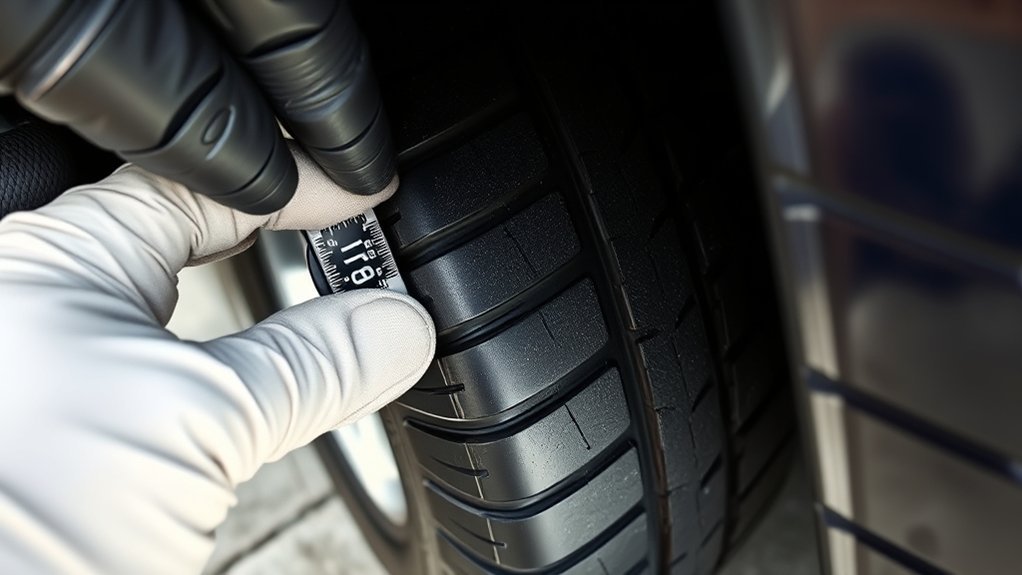
You can determine tire wear by checking tread depth, tread wear bars, sidewall condition, tire age, and uneven wear patterns. The safest method is to use a tread depth gauge, but the penny test and quarter test are useful quick checks at home. If tread is at 2/32 inch, the tire needs replacement; if it is near 4/32 inch, wet-weather grip is already reduced.
Quick Answer
Check tire wear by measuring tread depth in several grooves, looking for wear bars, and inspecting for cracks, bulges, exposed cords, vibration, or uneven wear. Replace tires at 2/32 inch, start planning around 4/32 inch for wet roads, and have aging or damaged tires inspected by a professional.
At a Glance
| Time Required | 5–10 minutes for all four tires |
| Difficulty | Easy DIY check; use a tire shop for damage, vibration, or severe uneven wear |
| Tools Needed | Tread depth gauge, penny, quarter, flashlight, and tire pressure gauge |
| Cost | Free with coins; usually under $10 for a simple tread depth gauge |
Key Takeaways
- Use a tread depth gauge for the most accurate reading, and check the inner, center, and outer grooves on every tire.
- Replace tires at 2/32 inch; consider shopping or replacing around 4/32 inch if you drive often in rain.
- Wear bars that sit flush with the tread mean the tire has reached its replacement point.
- Cracks, bulges, exposed cords, knots, vibration, or tread separation need professional inspection right away.
- Check tire pressure monthly when the tires are cold, rotate tires on schedule, and check the DOT date code as tires age.
What Tire Tread Tells You
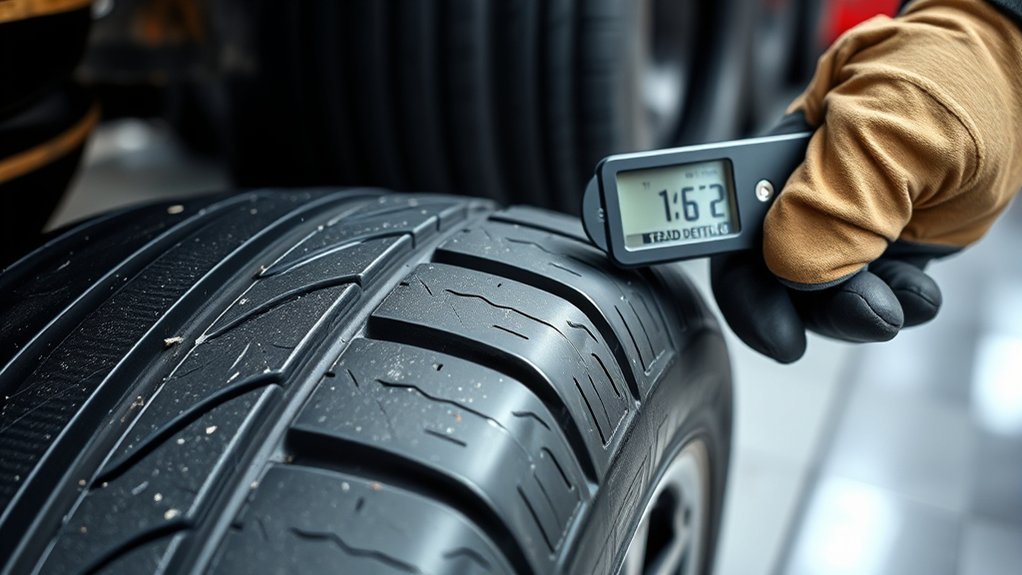
Tire tread tells you how much grip, water evacuation, and braking control your tires can still provide. Many new passenger tires start around 10/32 inch to 11/32 inch of tread, but the exact depth depends on the tire type, brand, and model. As tread wears down, the grooves have less room to move water away from the contact patch, which increases the risk of longer stops and hydroplaning on wet roads.
The most important number is 2/32 inch. The National Highway Traffic Safety Administration says tires are not safe and should be replaced when tread is worn down to 2/32 inch. That is the common U.S. passenger-vehicle replacement threshold, but local laws and commercial-vehicle rules can be stricter, so check the rules that apply to your vehicle.
AAA testing found that all-season tires worn to 4/32 inch showed significantly longer wet stopping distances than new tires, even though 4/32 inch is still above the common legal minimum.
Tread is only one part of tire condition. During each check, also look for sidewall cracks, bulges, cuts, punctures, exposed cords, uneven wear, and tire age. Proper tire pressure and regular rotation also help the tread wear evenly.
[Products Worth Considering]

EVOULTES heavy duty tire inflator with an integrated gauge delivers accurate pressure readings from 10–120 PSI, helping you inflate, deflate, and check tires in one tool. The 16.5-inch extended dual-head air chuck with swivel base reaches hard-to-access dual wheel valves on trucks and RVs. A brass trigger core and side-mounted air release valve make operation smooth, with standard 1/4" NPT threading and quick-connect compatibility for easy setup.

The JACO FlowPro Tire Inflator measures, inflates, and airs down tires up to 100 PSI with battery-free operation and ±2% accuracy after calibration. It features a glowing pressure dial for night visibility, a heavy-duty steel build with a hybrid hose, and a precision push-to-inflate thumb trigger. The patented Lightning Air Chuck locks on for a secure seal, and the kit includes quick-connect hardware for easy inline use with your air compressor.

This portable cordless tire inflator delivers up to 160 PSI with fast 17 L/min airflow to help you quickly top up tires and get back on the road. It features dual power mode, running on a 21V rechargeable battery or a 12V DC adapter for convenient roadside use. An automatic shut-off with digital pressure gauge helps prevent overinflation, and a built-in LED light improves visibility in low-light conditions.
Tire Tread Depth Chart: What the Numbers Mean
| Tread Depth | What It Means | What To Do |
|---|---|---|
| 10/32″–11/32″ | Typical range for many new passenger tires | Maintain pressure and rotate on schedule |
| 6/32″ | Still usable for many conditions, but winter grip may be reduced | Inspect more often before snow or mountain driving |
| 4/32″ | Wet-road stopping distance and handling can drop | Start shopping; replace sooner if you drive often in rain |
| 3/32″ | Very close to the replacement limit | Plan replacement now and avoid risky wet driving |
| 2/32″ or less | Worn out for safe use | Replace the tire |
Note: Commercial trucks, buses, snow-tire rules, and some state inspections can have different tread-depth requirements. Use the 2/32 inch number as the common passenger-vehicle minimum, not as a guarantee that the tire is safe for every road condition.
How to Check Tire Tread at Home
Park on a flat surface, set the parking brake, and turn the steering wheel so you can see the front tires more clearly. Check all four tires, not just the easiest one to reach. Tread can wear faster on one axle, one shoulder, or one tire if pressure, rotation, alignment, or suspension is off.
- Use a tread depth gauge first if you have one. Push the probe into a main groove, press the gauge base flat against the tread, and read the measurement.
- Measure several places on each tire. Check the inner edge, center, and outer edge because uneven tire wear can hide on the inside shoulder.
- Compare all four tires. One tire wearing faster than the others can point to alignment, suspension, pressure, or rotation issues.
- Look for tread wear indicator bars. If the tread is level with the bars, the tire needs replacement.
- Inspect the sidewalls and tread blocks. Look for cuts, cracks, nails, bulges, bubbles, exposed cords, or missing chunks.
- Check tire pressure when cold. Use the pressure listed on the driver-door placard or owner’s manual, not the maximum pressure printed on the tire sidewall.
Pro Tip: Keep a small tread depth gauge in your glove box. Coin tests are helpful, but a gauge gives an actual number so you can track wear from month to month.
Penny Test Method
The penny test is a quick way to spot dangerously low tread. Place a penny into a main tread groove with Lincoln’s head facing down. If you can see the top of Lincoln’s head, the tread is at or below about 2/32 inch, and the tire should be replaced.
| Penny Test Result | Meaning | Action |
|---|---|---|
| Lincoln’s head is partly covered | More than about 2/32″ remains | Measure with a gauge and keep monitoring |
| Top of Lincoln’s head is visible | Tread is about 2/32″ or less | Replace the tire |
Repeat the penny test in several grooves. A tire can pass in the center but fail on the inner or outer shoulder if alignment or inflation has been neglected. Regular checks and tire longevity habits help you catch problems before the tire becomes unsafe.
Quarter Test Check
The quarter test is stricter than the penny test and is useful for wet-weather planning. Place a quarter into a tread groove with Washington’s head facing down. If the tread touches or covers part of Washington’s head, you have about 4/32 inch or more. If his head is fully visible, wet-weather grip may already be reduced.
- Use the quarter test on several grooves across every tire.
- Plan replacement when the tread approaches 4/32 inch if you often drive in rain.
- Use a tread depth gauge to confirm the exact reading.
- Get a professional inspection if one side of the tire fails the test before the rest of the tire.
Gauge and Indicator Bars
A tread depth gauge gives the most precise at-home reading. Insert the gauge into a major tread groove, keep it straight, and measure in 32nds of an inch. Write down the lowest reading for each tire so you can compare wear during the next inspection.
Most modern passenger tires also have built-in treadwear indicator bars. These are raised rubber bars inside the grooves. When the surrounding tread is flush with the bars, the tire has reached its wear limit and should be replaced. These bars are convenient, but they do not replace a full inspection for sidewall damage, age cracks, or uneven wear.
Use the Penny Test
Use the penny test when you need a fast, no-tool check. It works best as a warning test, not as your only measurement. If Lincoln’s head is visible, do not wait for the tire to look worse. At that point, the tread is too shallow for safe service, especially in rain.
Warning: Do not keep driving on a tire with exposed cords, a sidewall bulge, tread separation, a deep cut, or a tire that keeps losing air. These are damage problems, not normal wear, and they need immediate professional attention.
Try the Quarter Test
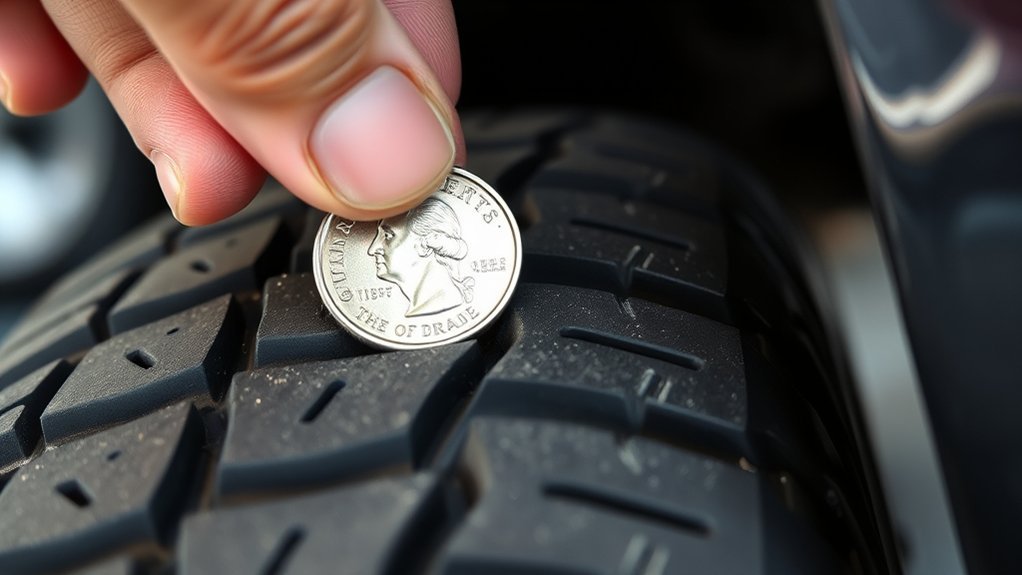
The quarter test helps you make an earlier replacement decision. Tires can still be above the 2/32 inch replacement limit but perform worse in wet conditions. AAA’s all-season tire testing found significant wet braking and handling declines in tires worn to 4/32 inch, so this is a smart point to start shopping if you drive in heavy rain or at highway speeds.
Quarter Test Basics
Place the quarter head-first into a main tread groove. If tread covers part of Washington’s head, the tire has about 4/32 inch or more. If the head is fully visible, the tire is below that wet-weather planning point. This simple test helps you decide whether replacement tires should be on your near-term maintenance list.
Reading Washington’s Head
| Visible Head | Approximate Tread Depth | Best Next Step |
|---|---|---|
| Part of Washington’s head is covered | About 4/32″ or more | Keep monitoring and measure with a gauge |
| Head is barely covered | Near 4/32″ | Start shopping, especially for rainy climates |
| Head is fully visible | Below about 4/32″ | Replace soon; avoid pushing wet-road limits |
When to Replace
Replace tires immediately at 2/32 inch. Replace earlier if you frequently drive in rain, snow, mountain passes, or heavy traffic where emergency braking matters. If your quarter test shows less than 4/32 inch and the rainy season is coming, it is safer to plan replacement before the tire reaches the minimum limit. Regularly inspecting tread helps with maintaining optimal traction and predictable braking.
Read Tread Wear Indicator Bars
Tread wear indicator bars are small raised sections molded into the tire grooves. They are designed to become level with the surrounding tread when the tire is worn out. To find them, look across the main grooves for short horizontal bars that bridge the groove from one tread block to another.
If the tread surface is flush with the wear bars, replace the tire. Check several locations around the tire because one area may be more worn than another. Wear bars are fast and helpful, but they only show the minimum replacement point. They do not tell you whether the tire is aging, internally damaged, improperly inflated, or wearing unevenly.
Proper tire maintenance, including evaluating tread depth, helps preserve traction in rain, mud, and light snow.
[Products Worth Considering]
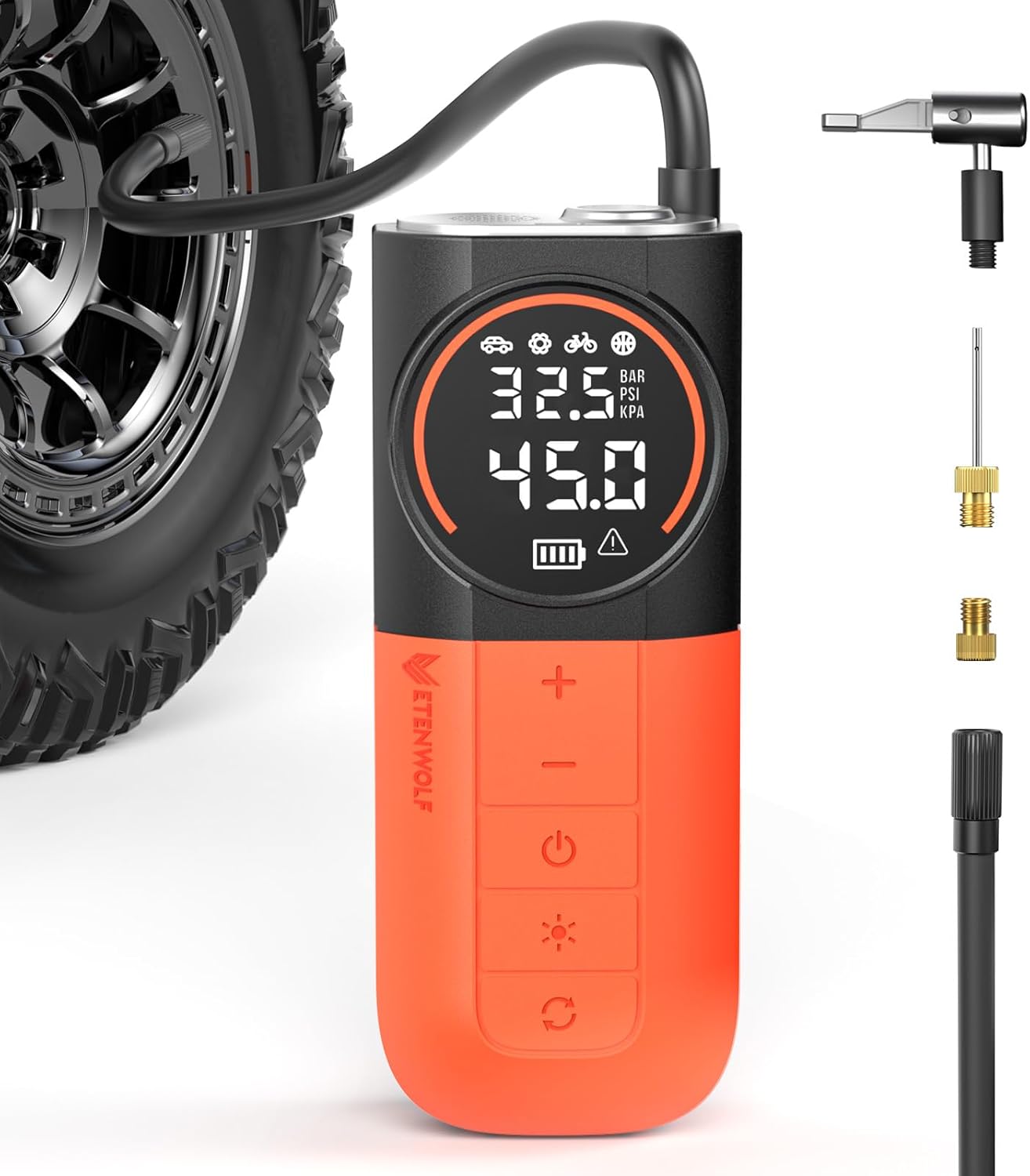
The ETENWOLF S1 cordless tire inflator delivers ultra-fast inflation with up to 160 PSI and a 20 L/min airflow for quicker tire top-offs. Its 5200mAh battery and cooling system support inflating many tires and sports balls on a single charge, while the digital pressure gauge and multi-unit display help you reach the right pressure accurately. With preset modes, pressure memory, an auto-stop feature, and an LED flashlight, it’s built for easy roadside and everyday use.

This AUTOWN flat tire repair kit is designed for quick, reliable puncture repairs using a plug kit and spiral probe tool to simplify installation. Built for durability and safe handling, it offers strong adhesion and flexibility to help maintain tire air tightness. With a portable storage case and a multi-vehicle approach, it’s suitable for cars, motorcycles, ATVs, tractors, lawn mowers, RVs, jeeps, and trucks.
Know When Tires Need Replacing
Tires need replacing when tread is too shallow, rubber is damaged, wear is uneven beyond correction, or age has made the tire unsafe. Do not judge tire life by tread depth alone. A tire with acceptable tread can still be unsafe if it has a sidewall bulge, cracking, exposed cords, tread separation, repeated pressure loss, or an old DOT date code.
Check the DOT Date Code
Every tire sold for road use in the United States has a DOT code on the sidewall. For tires made after 2000, the last four digits show the week and year of manufacture. For example, a code ending in 3618 means the tire was made in the 36th week of 2018.
Tire age guidance varies by manufacturer. NHTSA notes that some vehicle manufacturers recommend replacing tires every six years regardless of use. Michelin recommends a professional inspection every year after five years of service. Bridgestone recommends removing Bridgestone and Firestone tires from service after ten years regardless of remaining tread depth. Follow your vehicle owner’s manual and tire manufacturer guidance, and replace sooner if you see cracking, bulges, hardening, or other damage.
Watch for Uneven Wear Patterns
| Wear Pattern | Likely Cause | What To Do |
|---|---|---|
| Center tread wears faster | Overinflation or wrong pressure for load | Set cold pressure to the door placard and inspect again |
| Both edges wear faster | Underinflation, heavy load, or aggressive cornering | Check pressure cold and inspect for damage |
| One edge wears faster | Alignment, camber, toe, or suspension issue | Get alignment and suspension checked |
| Cupping or scalloped dips | Worn shocks/struts, balance issue, or suspension wear | Have the tire, wheel balance, and suspension inspected |
| Patchy or diagonal wear | Rotation delay, alignment issue, or tire/wheel problem | Rotate if safe, then inspect alignment and balance |
If uneven wear is severe, do not assume a rotation will fix it. Rotation can help prevent irregular wear, but it cannot repair a tire that is already worn below safe depth on one edge.
Get Your Tires Inspected
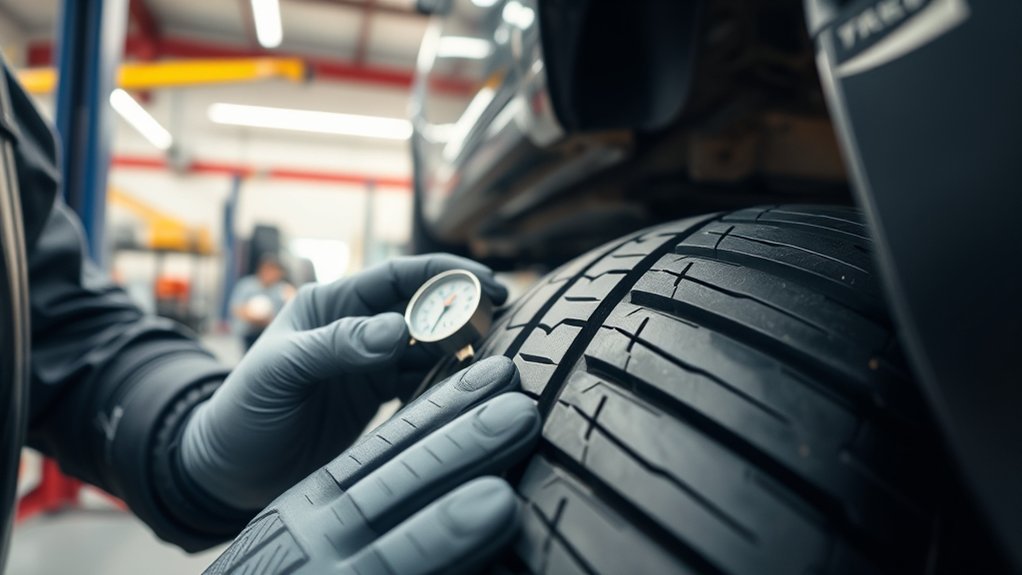
Inspect your tires at least once a month and before long trips. NHTSA recommends checking tire pressure monthly when the tires are cold, meaning the vehicle has not been driven for at least three hours. Check the spare tire too, if your vehicle has one.
Have a tire professional inspect the tires if you notice vibration, pulling, repeated pressure loss, sidewall damage, cracking, cupping, one-sided wear, or any bulge. A tire shop can also check alignment, balance, puncture repairability, and whether a damaged tire should be replaced rather than repaired.
Rotate tires according to the owner’s manual. If the vehicle manufacturer recommends rotation, NHTSA suggests rotating every 5,000 to 8,000 miles or sooner if uneven wear appears. Some vehicles have staggered tire sizes or directional tires that require a specific rotation pattern, so always follow the owner’s manual. Regular rotations enhance longevity and help keep grip balanced across all four tires.
Note: A tire pressure monitoring system warning usually appears only after pressure is significantly low. It does not replace a monthly pressure check with a gauge.
Frequently Asked Questions
How often should I rotate my tires to reduce uneven wear?
Follow your owner’s manual first. If your vehicle manufacturer recommends rotation, a common interval is every 5,000 to 8,000 miles or sooner if uneven wear appears. Rotation helps tires wear more evenly, but it will not fix alignment, suspension, or inflation problems that are already damaging the tread.
Does tire age matter if tread depth still looks good?
Yes. Rubber can age, crack, harden, or weaken even when tread depth looks acceptable. Check the DOT date code, inspect for cracks or bulges, and follow your vehicle and tire manufacturer’s age guidance. Many manufacturers recommend closer professional inspections after about five years, and some recommend replacement by a set age regardless of tread.
Can low tire pressure cause faster tire wear?
Yes. Low pressure can cause both outer edges of the tire to wear faster and can increase heat buildup. Overinflation can wear the center of the tread faster. Check pressure monthly when tires are cold, and use the pressure listed on the driver-door placard or owner’s manual.
What causes tires to wear on only one side?
One-sided tire wear usually points to alignment, camber, toe, suspension wear, or a bent component. It can also be made worse by aggressive cornering or delayed rotation. Have the alignment and suspension checked before installing new tires, or the replacement tire may wear the same way.
Should I replace tires in pairs or all four together?
Replacing all four tires is best when tread depths are uneven, the vehicle is all-wheel drive, or the remaining tires are old or worn. If replacing only two, the new tires are usually installed on the rear axle for better wet-road stability, unless your vehicle manufacturer says otherwise. Match tire size, type, load rating, and speed rating to the vehicle requirements.
Is the penny test enough to check tire wear?
The penny test is enough for a quick warning check near 2/32 inch, but it is not the best tool for tracking gradual wear. A tread depth gauge is more accurate and helps you spot whether one groove, shoulder, or tire is wearing faster than the others.
Can I drive on tires with 3/32 inch tread?
A tire at 3/32 inch is very close to the replacement limit. It may still be above the common 2/32 inch minimum, but wet-road braking and hydroplaning resistance are reduced. Plan replacement immediately and avoid demanding wet-weather driving whenever possible.
Conclusion
You cannot judge tire safety by a quick glance alone. Measure tread depth, read the wear bars, inspect the sidewalls, check the DOT date code, and look for uneven wear across the full width of every tire. Replace tires at 2/32 inch, consider replacement around 4/32 inch for frequent wet driving, and get professional help for bulges, exposed cords, cracks, vibration, or rapid air loss. A few minutes of inspection each month can prevent longer stopping distances, poor wet grip, and avoidable tire failures.
Sources
- NHTSA TireWise — backs up tread replacement at 2/32 inch, monthly tread and pressure checks, wear indicators, tire pressure guidance, and rotation guidance.
- NHTSA Summer Driving & Road Trip Tips — backs up the penny test, uneven wear guidance, and manufacturer six-year age note.
- AAA All-Season Tire Testing — backs up wet braking and handling declines at 4/32 inch tread depth.
- Michelin: When to Replace Tires — backs up professional annual inspection after five years of service.
- Bridgestone: Tire Inspection — backs up tire age checks, DOT date-code reading, and 10-year removal guidance.
- 49 CFR § 393.75 — backs up commercial-vehicle tread-depth differences for front tires and other positions.

Related Articles
AWD Tire Rotation Pattern: How Often and How to Do It
W**ondering the right AWD tire rotation pattern and timing? Discover the simple method, ideal schedule, and mistakes to avoid before your tires wear unevenly.
Read More
Wheel Damage: Types, Repair Options, and Costs
Many wheel damages look minor, but some hide costly safety risks—learn which repairs are worth it and when replacement is smarter.
Read More
Tire Balancing Weights: Types, Cost, and Why You Need Them
Precisely chosen tire balancing weights reduce vibration and wear, but which type fits your wheels and what it really costs may surprise you.
Read More