
How to Select the Right Tire: What to Look for When Buying
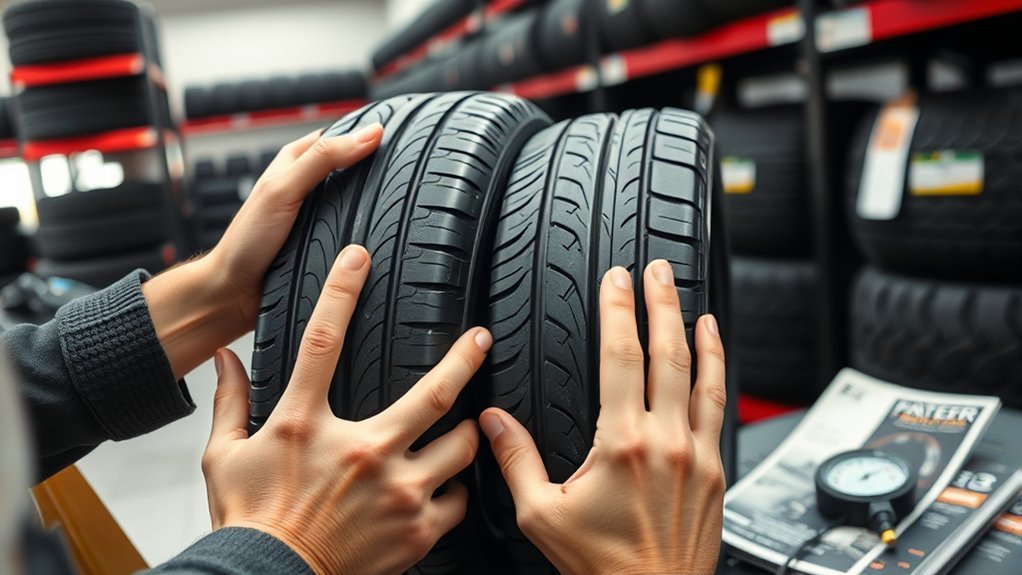
Choosing the right tire starts with one simple rule: match the tire to your vehicle first, then match it to your weather, roads, driving style, and budget. The safest choice is not always the cheapest tire or the tire already on the vehicle. Use the driver-side door placard or owner’s manual as your baseline, then compare tire type, size, load index, speed rating, tread depth, age, and total installed cost.
Quick Answer
To choose the right tire, confirm the factory tire size on the door placard or owner’s manual, pick a tire type for your climate, match or exceed the required load index and speed rating, check tread depth and DOT age, then compare total installed price—not just the tire’s sticker price.
Key Takeaways
- Start with the tire size, load rating, and speed rating listed on your vehicle’s placard or owner’s manual.
- Choose tire type by climate: all-season for mixed use, winter for snow and freezing weather, summer for warm dry/wet performance, and all-terrain for mixed pavement and off-road use.
- Replace tires at 2/32 inch tread depth at the latest, and plan earlier replacement for heavy rain, snow, visible damage, vibration, cracking, or bulges.
- Read the DOT date code before buying so you avoid old stock and know when aging inspections matter.
- Compare the total installed cost, including mounting, balancing, valve stems or TPMS service, disposal fees, taxes, shipping, and road-hazard coverage.
At a Glance
| Time Required | 20–40 minutes to compare specs and prices; longer if you are changing tire type or wheel size |
| Difficulty | Easy if you keep the factory size; moderate if you change size, load range, or tire category |
| Tools Needed | Owner’s manual or door placard, tread-depth gauge or penny, tire pressure gauge, and a way to compare installed quotes |
| Cost | Varies by size and category; compare tire price plus installation, balancing, disposal, taxes, and optional protection plans |
Warning: Do not buy a tire only because it “fits the wheel.” The tire must also match your vehicle’s required load capacity, speed rating, inflation guidance, and overall diameter. When in doubt, use the size on the door placard or ask a qualified tire professional.
Choose the Right Tire Type
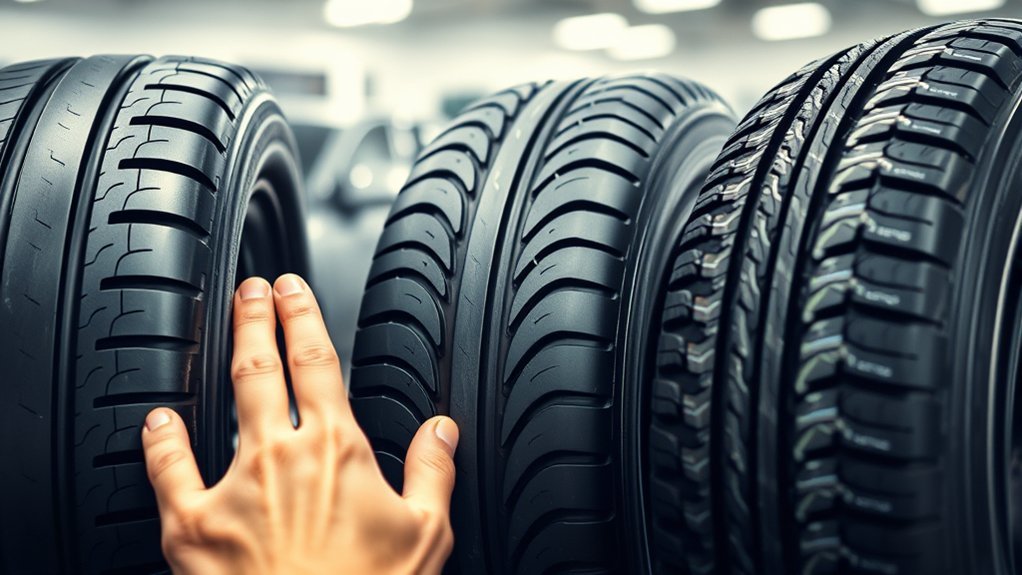
Choosing the right tire type starts with your normal driving conditions. The National Highway Traffic Safety Administration explains that tire design, materials, construction, and tread pattern affect durability, wet and dry traction, handling, ride comfort, rolling resistance, and fuel efficiency.
[Products Worth Considering]

Milton S-921 pencil tire pressure gauge helps you maintain optimal tire pressure for passenger cars with accurate readings in PSI and kPa. It features a built-in deflator valve for convenient pressure adjustments, plus a single chuck head and nylon indicator bar for easy use on the go. Built from durable plated brass and designed for reliable performance, it’s a practical road trip and cold-weather maintenance tool.

Monitor tire tread wear with a smart, color-coded depth gauge that shows clear condition ranges at a glance. The bar is range marked for fast, easy readings, helping you maintain safer traction and performance. Each gauge is portable with a pocket clip, and the set includes 20 units for daily use and sharing.

Check tire pressure with the Milton S-925 pencil gauge built for trucks, RVs, and bicycles. It features a single-head chuck with a built-in deflator valve, and it displays readings in both PSI and kPa for convenient use. The gauge is designed for accurate, repeatable pressure checks within its working range.
Match Type to Weather and Road Use
- All-season tires: Best for drivers who want one tire for mild weather, light rain, and everyday commuting. They are balanced, but they are not the best choice for deep snow or extreme performance driving.
- Winter tires: Best for snow, ice, slush, and freezing temperatures. Their rubber compounds and tread designs are made to stay more flexible in cold weather.
- Summer tires: Best for warm-weather dry and wet grip. They are not designed for freezing temperatures, snow, or ice.
- Touring tires: Best for comfort, long tread life, lower road noise, and steady highway driving.
- Performance tires: Best for sharper steering and braking response, usually with a tradeoff in tread life, ride comfort, or winter capability.
- All-terrain tires: Best for trucks and SUVs that split time between pavement, gravel, dirt, or light trails. They can be noisier and less efficient than highway tires.
Note: If your area has real winter weather, separate winter tires are often safer than trying to make one all-season tire handle every condition. If your climate is warm year-round, summer or touring tires may make more sense.
Find Your Tire Size and Specs
Before you compare brands or prices, confirm the tire size and service description your vehicle was designed to use. The current tires are not always reliable because a previous owner may have installed the wrong size. Your best sources are the driver-side door placard, the Tire and Loading Information label, and the owner’s manual.
Locate Original Tire Size
Look for a size such as 235/65R17, 245/40R18, or 225/50R17 94V. The numbers and letters tell you the tire’s width, sidewall height, construction, wheel diameter, load index, and speed rating. According to NHTSA, replacement tires should be the same size as the original tires or another size recommended by the vehicle manufacturer.
- Width: The first number, such as 235, is the tread section width in millimeters.
- Aspect ratio: The second number, such as 65, is the sidewall height as a percentage of tire width.
- Construction: “R” means radial construction, which is standard for modern passenger vehicles.
- Wheel diameter: The final number, such as 17, is the wheel diameter in inches.
- Service description: A number and letter after the size, such as 94V, show load index and speed rating.
Decode Sidewall Specifications
The tire sidewall is a specification sheet. It can show the tire size, service description, load capacity, maximum pressure, DOT Tire Identification Number, UTQG treadwear/traction/temperature grades, and whether the tire is marked for mud and snow or severe snow service.
Do not confuse maximum pressure on the tire sidewall with the correct pressure for your vehicle. Use the cold tire pressure listed on the vehicle placard or owner’s manual, not the maximum pressure molded into the tire.
Match Load And Speed
The load index tells you how much weight each tire can support when properly inflated. Tire Rack’s load index guide lists a load index of 94 at 1,477 pounds, but you should always match or exceed the load index required by your vehicle.
The speed rating is the letter at the end of the service description, such as S, T, H, V, W, or Y. Tire Rack notes that speed ratings apply only to tires that have not been damaged, altered, overloaded, or driven underinflated. Choose a rating that meets or exceeds the vehicle manufacturer’s requirement.
Pro Tip: If you drive an EV, hybrid, truck, SUV, or regularly carry heavy loads, pay extra attention to load index and tire construction. Heavier vehicles can wear tires faster and may require specific load ratings.
Know When to Replace Tires
You should replace tires when they are worn out, damaged, too old for safe service, or no longer performing normally. Tread depth is the easiest trigger to measure, but it is not the only one.
Check Tread Depth
Tire tread should be at least 2/32 inch. The U.S. Tire Manufacturers Association says tread equals traction and that once tread wears down to 2/32 inch, it is time to visit a tire shop. You can also use the penny test: insert a penny into a tread groove with Lincoln’s head upside down. If you can see the top of Lincoln’s head, the tire is worn to the replacement point.
For safer real-world driving, do not treat 2/32 inch as a goal. In frequent rain, start shopping before tires reach the legal minimum. In snow or slush, winter traction can drop off well before the tire is legally worn out.
Inspect for Damage and Uneven Wear
Replace or professionally inspect any tire with:
- Sidewall bulges or bubbles
- Cracks that open when the rubber flexes
- Cuts deep enough to expose cords or fabric
- Punctures near the sidewall
- Tread separation, vibration, thumping, or a new pull while driving
- Uneven wear caused by underinflation, overinflation, alignment problems, or worn suspension parts
Check Tire Age
Tire age matters even when tread looks usable. NHTSA says some vehicle and tire manufacturers recommend replacing tires that are six to 10 years old, regardless of treadwear. Michelin recommends paying attention to visible signs, performance changes, and age, while Bridgestone recommends regular inspections, inspection after five years, and removing tires more than 10 years old from service.
To check age, find the DOT Tire Identification Number on the sidewall. For tires made since 2000, the last four digits show the week and year of manufacture. For example, 2719 means the tire was made in the 27th week of 2019.
NHTSA reported 511 deaths in tire-related crashes in 2024, which is why tire condition, pressure, age, and correct fitment should be treated as safety checks—not just shopping details.
Read Tire Sidewall Markings
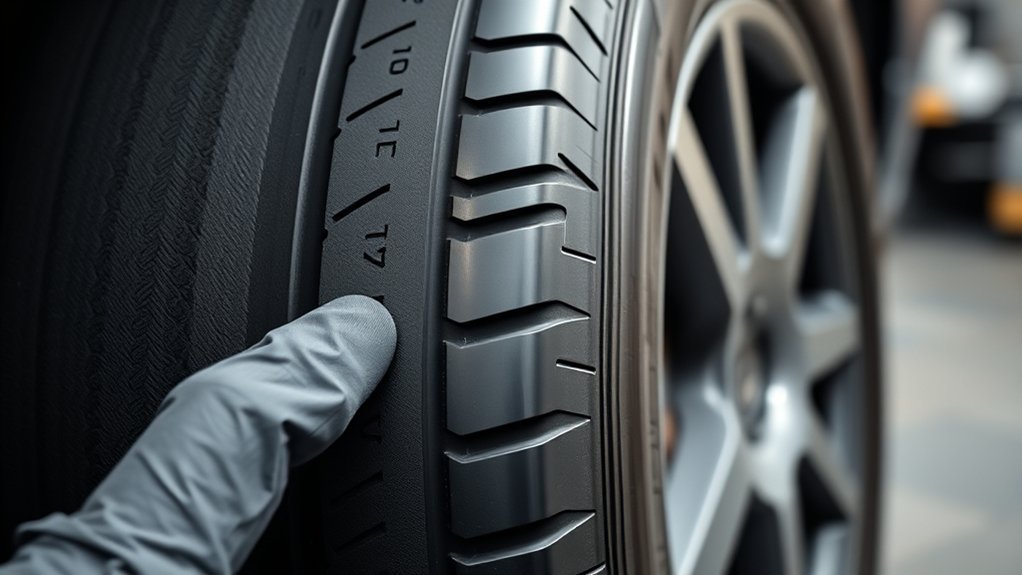
You can read the tire size code on the sidewall to confirm width, aspect ratio, construction, and wheel diameter. You should then verify the load index, speed rating, DOT date code, and UTQG grades before comparing tires by price or brand.
Tire Size Codes
A tire marked 235/65R17 means:
- 235: Width in millimeters
- 65: Aspect ratio, or sidewall height as a percentage of width
- R: Radial construction
- 17: Wheel diameter in inches
If the tire also says 104H, the number is the load index and the letter is the speed rating. Match those to the vehicle requirement, not just to the old tire.
Load And Speed Ratings
Load and speed ratings tell you whether a tire can carry the required weight and safely operate within the vehicle’s intended performance range. A lower load index can be unsafe, especially on SUVs, trucks, vans, EVs, or vehicles that carry passengers and cargo. A lower speed rating can also change handling and heat-resistance expectations.
DOT Code and UTQG Ratings
The DOT code helps identify when the tire was made. The UTQG rating helps compare treadwear, traction, and temperature resistance for many passenger tires. NHTSA explains that treadwear grades are relative, traction grades compare wet stopping performance, and temperature grades relate to heat resistance.
Use UTQG as a comparison tool, not a final answer. A high treadwear number may suggest longer life, but tire category, compound, alignment, inflation, vehicle weight, and driving style still affect how long the tire lasts.
Pick the Features That Matter

Once the size and ratings are correct, compare features that affect safety, performance, comfort, and cost per mile.
- Wet traction: Deeper grooves and strong wet-braking ratings matter if you drive in heavy rain.
- Snow traction: Winter tires or severe snow service-rated tires are better for true winter conditions.
- Noise and comfort: Touring tires usually ride quieter than aggressive all-terrain or performance tires.
- Rolling resistance: Low-rolling-resistance tires can help fuel economy and EV range.
- Treadwear warranty: Useful for comparing expected life, but read the rotation, alignment, and proof-of-maintenance requirements.
- Road-hazard coverage: Worth comparing if you drive around potholes, construction, or rough roads.
[Products Worth Considering]

Accurately measure tire tread depth with a calibrated gauge marked from 0 to 1 inch in 1/32 inch increments. The color-coded bar helps you quickly identify tread condition ranges, supporting safe driving for trucks, motorcycles, automobiles, and passenger vehicles.

Measure tire tread depth quickly and accurately with this LUMITECO dial gauge that reads in 1/32" increments up to 14/32". The color-coded green/yellow/red zones make it easy to judge tire wear and know when replacement is needed. A rugged, compact design with a protective pouch helps keep the gauge ready for use on cars, trucks, motorcycles, and more.

Measure tyre tread depth precisely with a digital gauge that reads in both MM and inches, helping you monitor safe driving conditions. The large LCD screen is easy to operate, and the compact tool fits for cars, trucks, and motorcycles. It provides high accuracy with a 0-25.4mm range and includes a 1-year warranty for added peace of mind.
Where to Buy Tires for Less
After you narrow the tire type and features, compare where to buy. The lowest tire price is not always the lowest total cost.
Compare Total Installed Price
Ask each seller for the complete out-the-door price, including:
- Tire price
- Mounting and balancing
- Valve stems or TPMS service kits
- Disposal or recycling fees
- Shipping or delivery
- Taxes
- Alignment, if needed
- Road-hazard warranty or replacement coverage
Warehouse clubs can be competitive because installation packages may include rotation, balancing, or flat repair. Online sellers can offer strong prices, but make sure you know the installation cost before ordering. Local tire shops may cost more upfront but can be easier for warranty help, rotations, repairs, and fitment questions.
Check Fresh Stock Before Installation
Before installation, check the DOT date code. A tire does not have to be manufactured this month to be safe, but you should know its age before paying. If the tire is already several years old, ask for newer stock or a discount that makes sense for the remaining service life.
After You Buy: Maintain the Tires
The right tire can wear out early if it is underinflated, overloaded, misaligned, or never rotated. Tire care should begin the day the tires are installed.
- Check pressure monthly: Measure when tires are cold, before driving or after the vehicle has been parked for at least three hours.
- Do not rely only on TPMS: TPMS is helpful, but it is not a replacement for monthly pressure checks with a gauge.
- Rotate on schedule: Follow the owner’s manual. NHTSA says to rotate every 5,000 to 8,000 miles if the vehicle manufacturer recommends it.
- Fix alignment problems: Feathering, cupping, or one-sided wear can ruin new tires quickly.
- Rebalance if vibration appears: New vibration after installation or after hitting a pothole needs attention.
- Keep records: Save installation, rotation, alignment, and pressure-service records for warranty claims.
Frequently Asked Questions
What is the 3 rule on tires?
A practical “3 rule” is to check tread, condition, and age. Tread tells you how much grip remains, condition reveals damage such as cracks or bulges, and age helps you decide when professional inspection or replacement is needed even if the tread looks acceptable.
How do I decide which tire to buy?
Buy the tire that matches your vehicle’s required size, load index, and speed rating, then choose the category that fits your weather and driving style. Compare wet traction, treadwear, comfort, road noise, warranty terms, and total installed cost before choosing.
What is the 7/7 rule for tires?
The “7/7 rule” is not an official tire-safety standard. A safer approach is to replace at 2/32 inch tread depth at the latest, plan earlier replacement for heavy rain or winter use, inspect aging tires regularly, and follow your vehicle or tire manufacturer’s age guidance.
What are the top 3 best tire brands?
Michelin, Bridgestone, and Continental are often considered premium global tire brands, but the best tire is the one that fits your vehicle, climate, driving needs, and budget. A top brand in the wrong category or size is still the wrong tire.
Can I buy a different tire size?
Sometimes, but you should only use an alternate size recommended by the vehicle manufacturer or confirmed by a qualified tire professional. A wrong overall diameter can affect speedometer accuracy, braking, traction-control systems, clearance, ride quality, and load capacity.
Should I replace two tires or all four?
Replacing all four is usually best when all tires are worn or old. If you replace only two, many tire and vehicle professionals recommend installing the new pair on the rear axle for better stability in wet conditions. For all-wheel-drive vehicles, follow the owner’s manual because mismatched tread depth can damage the drivetrain.
Do I need winter tires?
You should consider winter tires if you regularly drive in snow, ice, slush, or freezing temperatures. All-season tires can handle many conditions, but winter tires are designed specifically for cold-weather traction and braking.
What do UTQG ratings mean?
UTQG ratings compare treadwear, traction, and temperature resistance for many passenger tires. They are useful for comparison, but they do not replace checking the correct size, load index, speed rating, tire type, and real-world reviews for your driving conditions.
Conclusion
Choosing the right tire comes down to matching the tire to your vehicle first and your driving conditions second. Start with the door placard or owner’s manual, confirm size, load index, and speed rating, then choose the tire type that fits your climate and roads. Before buying, check tread depth, DOT age, UTQG ratings, visible damage, warranty terms, and total installed cost. A careful comparison helps you buy smarter, drive safer, and get more life from every set of tires.
Sources
- NHTSA TireWise — tire size, tire type, UTQG ratings, treadwear indicators, pressure, rotation, aging, and tire-related crash data
- U.S. Tire Manufacturers Association Tire Care Essentials — tread depth, tire pressure, TPMS, monthly checks, and tire inspection guidance
- Michelin: When to Replace Tires — tread, visible damage, age, and performance-change replacement guidance
- Bridgestone Tire Replacement Guidance — inspection after five years and replacement guidance for tires more than 10 years old
- Tire Rack Load Index Guide — load index meaning and load capacity examples
- Tire Rack Speed Rating Guide — speed-rating letters, speed limits, and rating limitations
[Products Worth Considering]

This tire inflator with pressure gauge delivers long-lasting performance with a durable rubber-protected gauge and sturdy build. The longer hose and 360 swivel air chuck help you seal the valve securely and keep your hands free while measuring, inflating, or deflating. It’s battery-free for reliable use and provides ±2 PSI accuracy in the mid-range for most typical tires, with universal compatibility for 1/4 NPT compressor outputs.

The SAFELIFE dial tire tread depth gauge measures tread depth in 1/32 inch increments with clear, easy-to-read 2-inch dial face. Color zones using a traffic light system help you quickly judge whether tread is low, marginal, or ample for safer driving. Built with a durable zinc cast body and a metal detect probe for precise, comfortable use across cars, motorcycles, trucks, and buses.
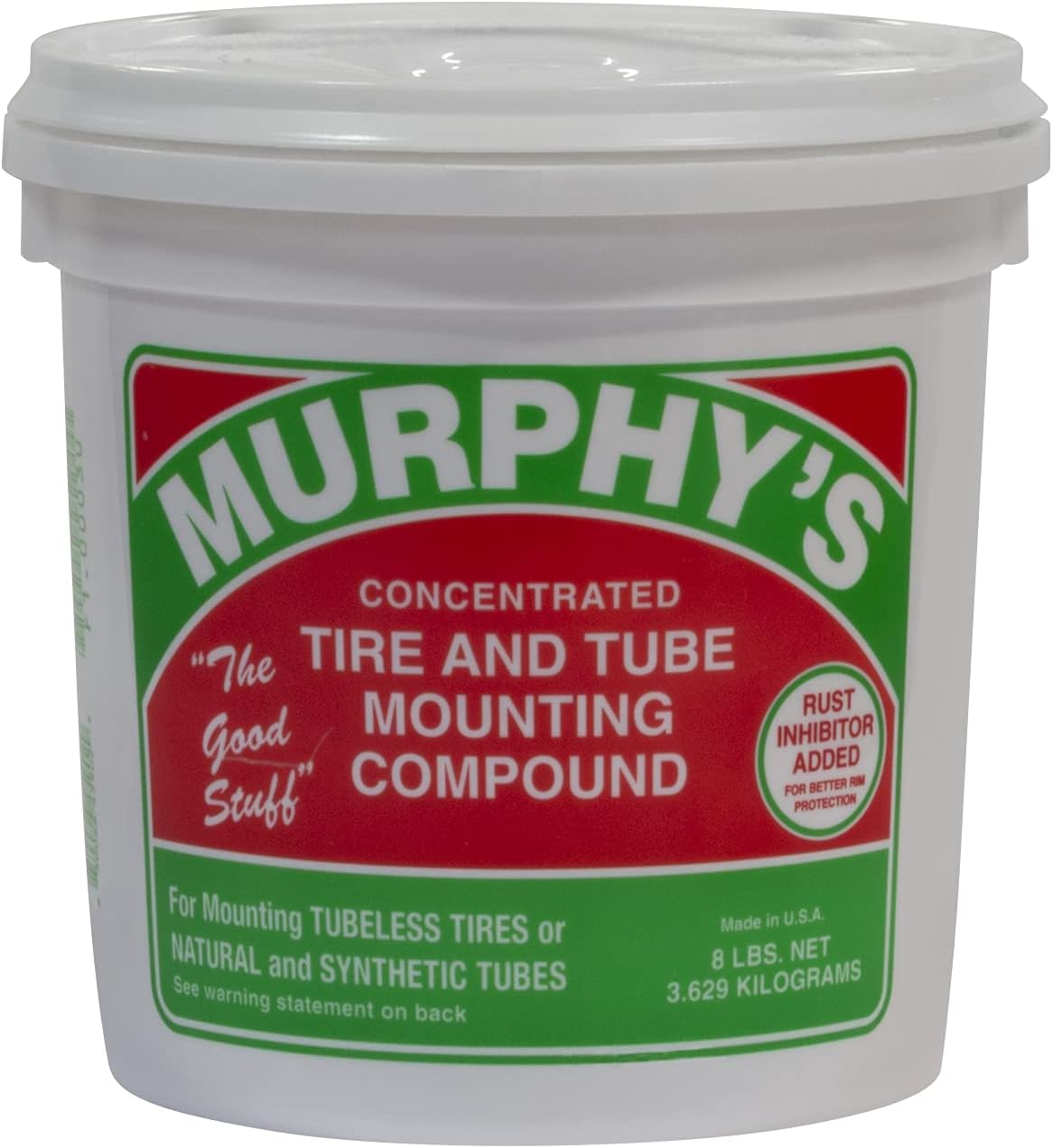
A concentrated tire and tube mounting compound designed to help simplify mounting rubber tires and tubes on passenger, semi truck, construction, and OTR applications. Its ultra-thick formula packs beads effectively and includes rust inhibitors to help protect against corrosion during use.

Related Articles
How Much Does Tire Retreading Cost?
Whether you’re pricing passenger or truck tires, tire retreading costs vary widely, and the real reasons behind the savings may surprise you.
Read More
Firestone Tire Installation Cost: Full Price Guide
Compare Firestone tire installation costs and discover what hidden fees could change your final bill.
Read More
Tire Rack vs Costco: Which Is Better for Tires?
Pick the better tire deal between Tire Rack and Costco before hidden differences change your choice.
Read More