
What Is Tire Balancing for a Toyota RAV4? Why It’s Necessary
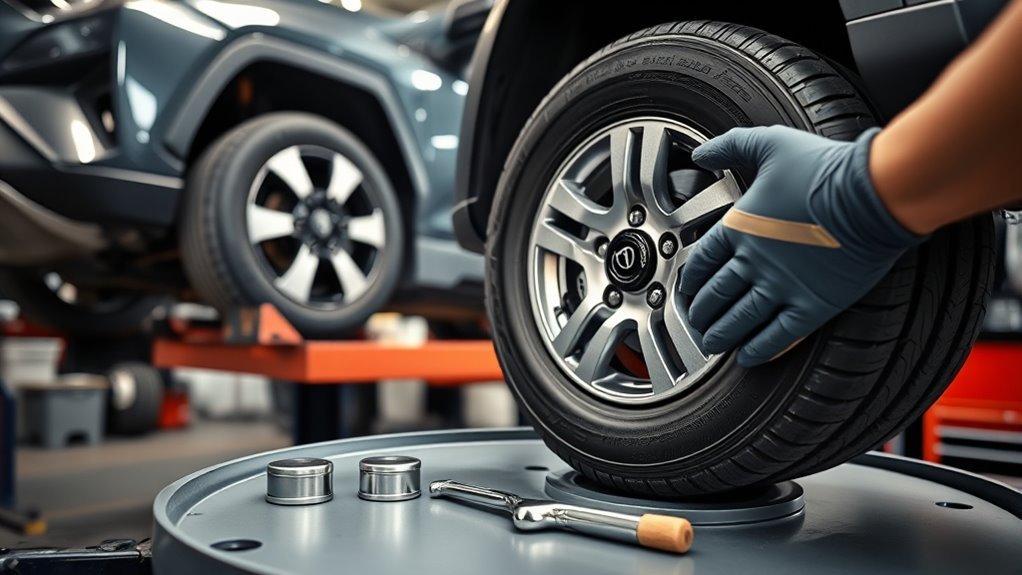
Tire balancing for your Toyota RAV4 helps keep the ride smooth, the steering steady, and the tires wearing evenly. When a tire-and-wheel assembly is even slightly heavier in one spot, that imbalance can show up as vibration, humming, steering-wheel shake, uneven tread wear, or extra stress on suspension parts. Balancing is a simple shop service, but ignoring it can make your RAV4 less comfortable, less efficient, and harder to control.
Quick Answer
Yes, tire balancing is necessary for a Toyota RAV4 when you feel vibration, install new tires, rotate tires with uneven wear, repair a tire, or hit a hard pothole. A practical interval is about every 5,000 to 6,000 miles, especially when paired with tire rotation, but symptoms matter most.
Key Takeaways
- Balanced tires help reduce vibration, steering shake, irregular tread wear, and premature stress on steering and suspension parts.
- Schedule balancing after installing tires, repairing a tire, replacing a wheel, hitting a pothole, or noticing vibration at highway speeds.
- Tire balancing is different from alignment and rotation: balancing fixes weight distribution, alignment fixes wheel angles, and rotation changes tire positions.
- Correct tire pressure still matters. The RAV4’s TPMS does not replace routine pressure checks with a gauge.
At a Glance
| Time Required | Usually 30–60 minutes for a set of four, depending on shop workload and whether road-force testing is needed |
| Difficulty | Inspection is easy; actual balancing requires shop equipment |
| Tools Needed | Professional wheel balancer, wheel weights, torque tools, tire-pressure gauge |
| Cost | Often included with new tires or tire packages; standalone pricing varies by shop and region |
What Is Tire Balancing and Why It Matters for Your RAV4?
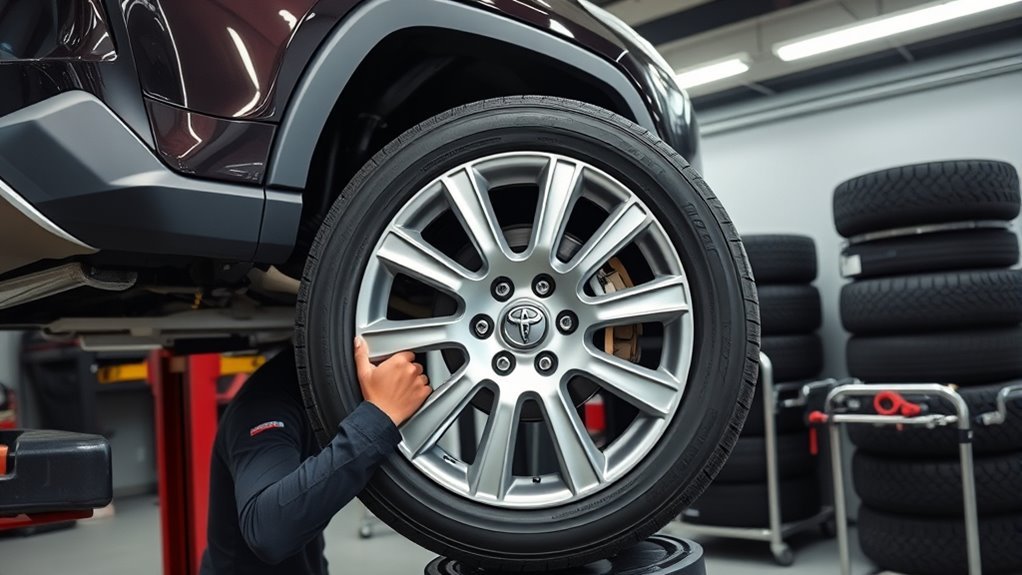
Tire balancing is the process of correcting uneven weight distribution in the tire-and-wheel assembly. A technician spins the wheel on a balancing machine, finds the heavy and light spots, then attaches small weights to the rim so the assembly rotates smoothly.
This matters because the tires are the only parts of your RAV4 that touch the road. The National Highway Traffic Safety Administration emphasizes tire maintenance as part of safe driving, and balancing supports that by helping the tire maintain more consistent road contact.
On a Toyota RAV4, proper tire balance can help with:
- Smoother steering at city and highway speeds
- Less vibration through the steering wheel, seat, or floor
- More even tread wear
- Reduced strain on shocks, struts, wheel bearings, and steering parts
- Better ride comfort for daily commuting and long trips
[Products Worth Considering]

Protect your Tesla during lifting with durable rubber jack pads designed to cushion pressure and help safeguard the battery and chassis. The non-slip, plug-and-play puck set fits Tesla Model 3/Y/X/S for safe, secure jacking. Each pack includes a portable storage case for cleaner trunk organization.

This roadside assistance kit helps drivers and passengers in urgent situations after an accident or breakdown, providing practical support while waiting for help. It includes a lightweight, compact tire inflator for fast inflation of standard vehicle tires, plus reinforced jumper cable protection for safer handling. Ideal for winter weather, road trips, camping, and travel, with everything stowed neatly in a trunk bag.

Universal magnetic jack pad with aluminum grooved design to protect vehicle pinch welds during lifting. Durable nylon pad inserts are upgraded and secured with screws to resist damage and keep in place. Designed to fit most single vehicle pinpoint welds for safer, stable jacking when changing tires, repairs, or performing oil changes.
How Does Tire Balancing Work for Optimal Performance?
During a balancing service, the technician removes the wheel assembly, mounts it on a calibrated balancing machine, and spins it to measure imbalance. The machine shows where weight is needed and how much weight to add. The technician then installs clip-on or adhesive weights and spins the wheel again to confirm the correction.
Static, Dynamic, and Road-Force Balancing
Most modern RAV4 tire balancing is dynamic balancing, which corrects both up-and-down and side-to-side imbalance. Static balancing only corrects a single vertical imbalance and is less complete for modern passenger vehicles. Some shops also offer road-force balancing, which presses a roller against the tire while it spins to detect stiffness variation, wheel runout, or tire issues that a standard spin balance may miss.
Continental notes that balanced tires help protect the vehicle’s suspension, steering, and tires from early damage, while common imbalance signs include vibration, uneven tire wear, and increased fuel consumption.
How Small Imbalances Become Noticeable
A tire can look normal and still be out of balance. At low speeds, you may not notice much. At higher speeds, the uneven rotating weight can turn into a steering-wheel shake, seat vibration, or floor buzz. That is why many drivers first notice the problem on highways.
Note: Balancing does not fix every vibration. Bent wheels, damaged tires, low tire pressure, worn suspension parts, brake issues, and poor alignment can feel similar. A good shop should inspect the tire, wheel, suspension, and tread pattern before assuming balance is the only problem.
Signs Your RAV4 Needs Tire Balancing Now
Pay attention to changes in how your RAV4 feels and sounds. The earlier you catch imbalance, the less likely you are to deal with uneven wear or extra repair costs.
| Sign | What You May Notice | What to Do |
|---|---|---|
| Steering-wheel vibration | Shake that gets worse at certain speeds, often on the highway | Check tire pressure, then schedule balancing if vibration continues |
| Seat or floor vibration | Buzzing or shaking felt through the cabin | Ask the shop to inspect rear tires and wheels too |
| Uneven tread wear | Cupping, scalloping, patchy wear, or faster wear in one area | Request balance, alignment, and suspension inspection |
| Noisy ride | Rhythmic thumping, humming, or droning that changes with speed | Have the tires inspected for imbalance, damage, or irregular wear |
| Recent impact | Vibration after hitting a pothole, curb, or road debris | Inspect for wheel damage and rebalance if safe |
Warning: Do not keep driving at highway speeds if the vibration is severe, new, or paired with pulling, tire bulging, a burning smell, or a loud thump. Pull over safely and inspect the tires, or call roadside assistance.
When Should You Schedule Tire Balancing for Your RAV4?
A practical schedule is to check balance every 5,000 to 6,000 miles, especially when you rotate the tires. Continental’s general tire-care guidance recommends balancing every 5,000 to 10,000 km, which is about 3,100 to 6,200 miles, or every 1 to 2 years depending on driving conditions.
Balance After Tire or Wheel Work
Schedule balancing whenever a tire is removed from a wheel, repaired, replaced, or remounted. New tires should be balanced at installation because even new tires and wheels have small manufacturing weight differences.
Balance After Road Impacts
Potholes, curbs, rough gravel roads, and road debris can knock weights loose or bend a wheel. If your RAV4 drove smoothly before the impact but vibrates afterward, have the tire-and-wheel assembly inspected and balanced.
Balance When Symptoms Appear
Do not wait for the next maintenance interval if you feel steering shake, uneven tread wear, or a rhythmic thump. Symptoms are a stronger signal than mileage alone.
What Happens If You Ignore Tire Balancing?
Ignoring tire balancing can turn a small maintenance issue into a bigger ride, safety, and tire-wear problem. The damage may happen gradually, so it is easy to overlook until the tread pattern is already uneven.
Increased Tire Wear
Unbalanced tires can bounce or scrub instead of rolling smoothly. Over time, that can create cupping, scalloping, or patchy wear. Once a tire wears unevenly, balancing may reduce vibration, but it cannot restore lost tread.
Poor Handling Performance
A vibrating tire does not maintain road contact as cleanly as a smooth-running tire. That can make your RAV4 feel less planted, especially during highway driving, lane changes, or braking on rough pavement.
Extra Strain on Suspension and Steering Parts
Persistent vibration can add stress to shocks, struts, bearings, bushings, and steering components. Balancing is usually cheaper than replacing parts that wore early because a vibration was ignored.
Decreased Fuel Efficiency
Tire balance is only one part of fuel economy, but poor tire condition can add rolling resistance and make the vehicle work harder. Tire pressure has the clearest documented fuel-economy effect: FuelEconomy.gov says properly inflated tires can improve gas mileage by 0.6% on average and up to 3% in some cases.
How Unbalanced Tires Compromise Your RAV4’s Safety
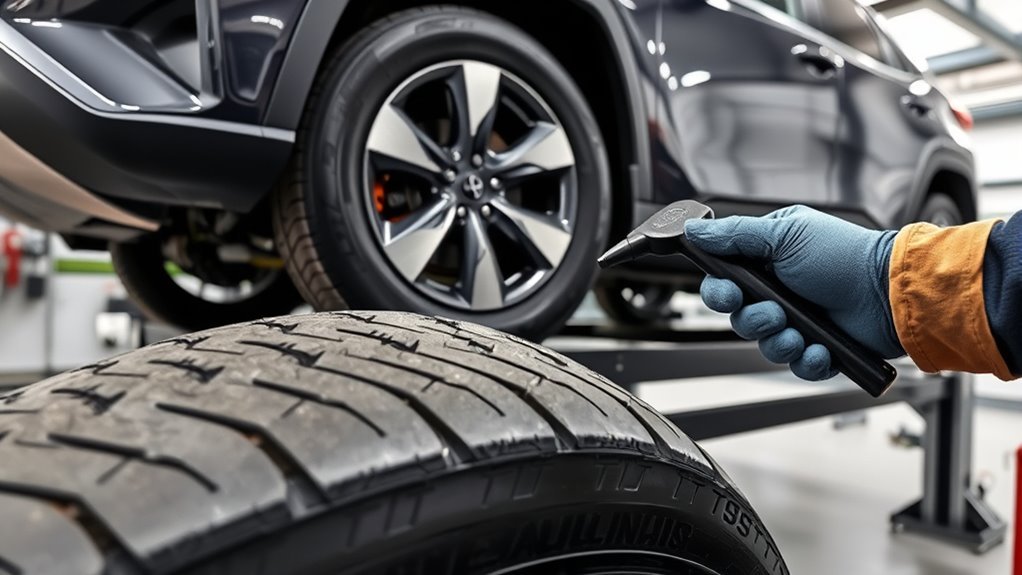
Balanced tires help your RAV4 track smoothly and respond predictably. Unbalanced tires can create vibration that distracts the driver, reduces comfort, and may mask other problems such as a bent wheel or damaged tire.
Safety is also about inspection. If a tire is vibrating because of belt separation, sidewall damage, severe cupping, or a bent wheel, balancing alone is not enough. The shop should identify the real cause before sending the vehicle back on the road.
A smooth ride is not just a comfort upgrade. It is often the first sign that your tires, wheels, steering, and suspension are working together correctly.
Tire Balancing vs. Alignment vs. Rotation
Many RAV4 owners confuse balancing, alignment, and rotation because all three affect tire wear. They are related, but they solve different problems.
| Service | What It Fixes | Common Symptom | When to Do It |
|---|---|---|---|
| Tire balancing | Uneven weight in the tire-and-wheel assembly | Vibration at certain speeds | After new tires, tire repair, vibration, or road impact |
| Wheel alignment | Incorrect wheel angles | Pulling, off-center steering wheel, edge wear | After suspension work, uneven wear, or impact |
| Tire rotation | Uneven wear caused by tire position | Front and rear tires wearing at different rates | At regular maintenance intervals |
Pro Tip: If your RAV4 has vibration and uneven wear, ask for both balancing and an alignment check. Balancing may quiet the vibration, but alignment may be the reason the tread started wearing unevenly.
[Products Worth Considering]

The JACO FlowPro Tire Inflator measures, inflates, and airs down tires up to 100 PSI with battery-free operation and ±2% accuracy after calibration. It features a glowing pressure dial for night visibility, a heavy-duty steel build with a hybrid hose, and a precision push-to-inflate thumb trigger. The patented Lightning Air Chuck locks on for a secure seal, and the kit includes quick-connect hardware for easy inline use with your air compressor.

Upgrade your air tools with this 18-piece air compressor accessory kit featuring a 25ft recoil poly hose, 1/4" NPT quick connect fittings, and a 100 PSI tire inflator gauge. The set also includes a heavy-duty blow gun with safety and tapered nozzles, plus couplers, inflation needles, plugs, and other essentials for everyday mechanic and workshop tasks. Corrosion-resistant steel and brass components help keep connections reliable for inflating, blowing out, and general pneumatic use.
RAV4-Specific Tire Balancing Notes
For the Toyota RAV4, tire balancing works best when it is paired with the basics: correct tire pressure, proper rotation, matching tire size, and TPMS awareness.
- Use the tire placard pressure: Check the driver-side door jamb or your owner’s manual for the correct cold tire pressure. Do not inflate to the maximum pressure printed on the tire sidewall unless it matches the vehicle placard.
- Reset or initialize TPMS when required: Toyota’s RAV4 tire information says the tire pressure warning system should be initialized after tire rotation when equipped.
- Do not ignore the spare: If your RAV4 has a temporary spare, inspect its condition and pressure during maintenance. It is not balanced or used like a normal road tire, but it must be ready for emergencies.
- Watch AWD tire wear: If your RAV4 is AWD, keep tires rotated and inspected so the tread depth stays reasonably even across all four tires. A shop can advise if one tire is too worn to replace by itself.
What to Expect During a Tire Balancing Service
During a tire balancing appointment, a technician should inspect the tire and wheel before adding weights. A proper service usually includes:
- Checking tire pressure and visible tire condition
- Inspecting tread for cupping, scalloping, punctures, bulges, or uneven wear
- Looking for bent wheels, missing wheel weights, or corrosion on the rim
- Mounting the wheel assembly on a balancing machine
- Spinning the assembly to locate imbalance
- Adding clip-on or adhesive weights in the correct positions
- Rechecking the balance reading
- Reinstalling the wheel and torquing lug nuts to specification
If vibration remains after balancing, ask about road-force balancing, wheel runout, tire defects, brake issues, suspension wear, or alignment.
Tips for Keeping Your RAV4’s Tires Balanced
You cannot prevent every imbalance, but you can reduce how often it becomes a problem.
- Check tire pressure monthly: The RAV4’s TPMS warns about low pressure, but Toyota notes that TPMS does not replace routine inflation-pressure checks.
- Rotate tires on schedule: Rotation helps even out normal front-to-rear wear differences.
- Avoid hard curb hits: Even one curb strike can bend a wheel or knock off a weight.
- Clean packed mud or snow from wheels: Heavy buildup inside the wheel can mimic imbalance.
- Inspect tread during every wash or fuel stop: Look for bulges, nails, cracks, and uneven wear before a small issue becomes a roadside problem.
- Use quality valve stems and wheel weights: Cheap or poorly installed parts can loosen and create vibration.
Fuel Efficiency and Tire Balancing
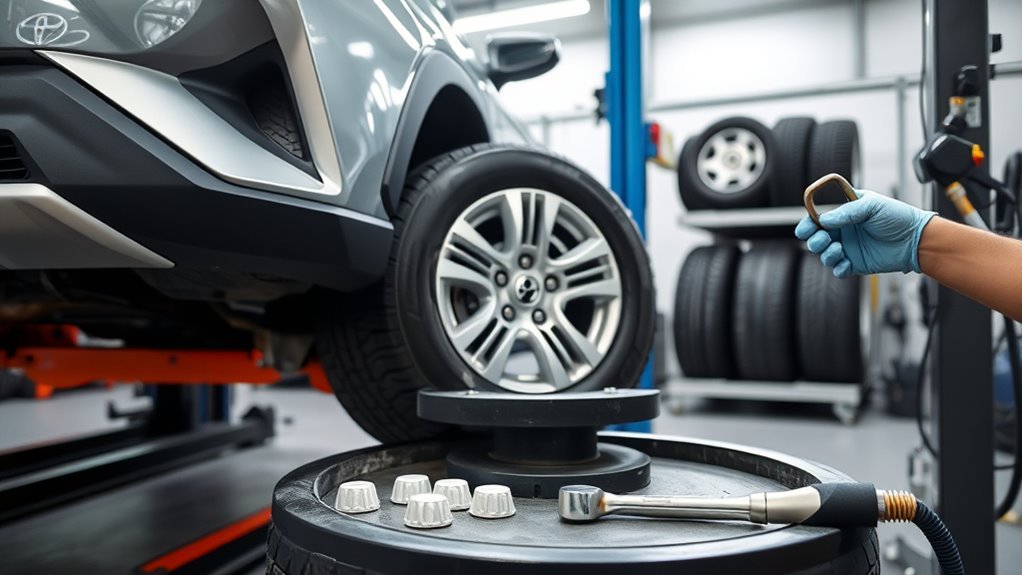
Tire balancing can support fuel efficiency by helping the tire roll smoothly and wear evenly. However, tire pressure, alignment, tread condition, and driving style usually have a clearer and more measurable effect on MPG.
For the best fuel-economy results, combine tire balancing with:
- Correct cold tire pressure
- Regular tire rotation
- Wheel alignment when wear patterns or pulling appear
- Timely replacement of damaged or badly worn tires
- Smooth acceleration, braking, and cornering
If your fuel economy suddenly drops and your RAV4 also develops vibration, inspect the tires first. Low pressure, uneven wear, or imbalance may be part of the problem.
Frequently Asked Questions
Is tire balancing really necessary for a Toyota RAV4?
Yes. Tire balancing helps prevent vibration, uneven tread wear, and unnecessary stress on steering and suspension parts. It is especially important after new tire installation, tire repair, wheel replacement, pothole impact, or any new highway-speed vibration.
How long does tire balancing take?
A standard four-wheel balance often takes about 30–60 minutes, depending on the shop, wheel condition, tire size, and whether the technician also performs rotation, inspection, or road-force balancing.
How often should I balance RAV4 tires?
A good practical interval is every 5,000 to 6,000 miles, especially when rotating tires. You should also balance sooner if you feel vibration, install new tires, repair a tire, replace a wheel, or hit a pothole.
Can I balance RAV4 tires myself?
You can inspect tire pressure, tread wear, and visible damage at home, but accurate balancing requires a professional wheel balancing machine. DIY bubble balancers are not ideal for modern RAV4 highway-speed vibration problems.
What is the difference between tire balancing and wheel alignment?
Balancing corrects uneven weight in the tire-and-wheel assembly. Alignment corrects the angles of the wheels so they point correctly. Vibration often points to balance, while pulling, off-center steering, or edge wear often points to alignment.
Will balancing fix all steering-wheel vibration?
No. Balancing can fix vibration caused by uneven wheel weight, but it will not fix a bent rim, damaged tire, worn wheel bearing, warped brake rotor, bad suspension part, or alignment issue. If vibration remains after balancing, ask for a full inspection.
Conclusion
Tire balancing is a small service that makes a big difference in how your Toyota RAV4 feels on the road. If you notice steering-wheel shake, seat vibration, noisy tires, uneven tread wear, or vibration after a pothole hit, do not ignore it. Schedule a tire balance and ask the technician to inspect tire pressure, tread condition, wheel damage, alignment, and suspension parts at the same time. A smooth-running tire protects comfort, safety, tire life, and your long-term maintenance budget.
Sources
- Continental Tires: Balancing Tires — balancing intervals, imbalance symptoms, suspension and tire-wear effects
- NHTSA TireWise — tire safety, maintenance, labeling, and consumer tire-care guidance
- FuelEconomy.gov: Gas Mileage Tips — tire pressure and fuel-economy impact
- Toyota Owners: 2025 RAV4 Tires — RAV4 tire rotation, TPMS, and tire-pressure warning information

Related Articles

Toyota RAV4 TPMS Reset: Easy Steps That Work
Unlock the secrets to resetting your Toyota RAV4's TPMS effortlessly—discover the essential steps to ensure your tires are always safe.
Read More
Toyota RAV4 Tire Rotation: DIY Steps & Pattern
Take control of your Toyota RAV4's tire maintenance with our simple DIY rotation guide—discover the best steps for optimal performance and longevity!
Read More
Mix Tire Brands on a Toyota RAV4? Expert Guide
Keeping your RAV4 safe? Learn when mixing tire brands risks traction, ABS/TCS and AWD damage — and what exact matches you must insist on.
Read More