
What Is Tire Rotation for a Toyota RAV4? Benefits and Basics
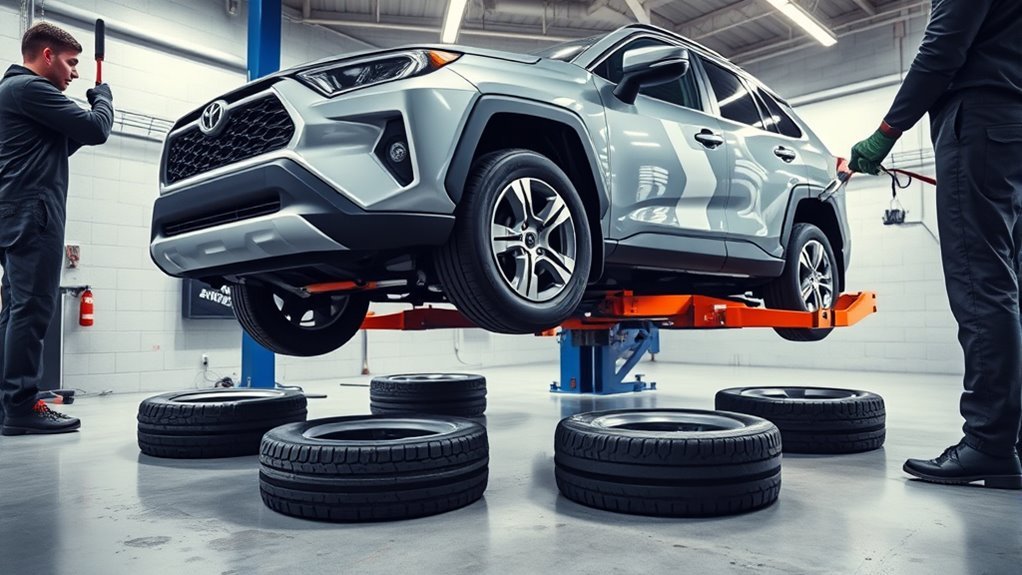
Regular tire rotation helps your Toyota RAV4 ride smoothly, wear tires evenly, and stay predictable in wet, dry, and rough-road driving. For current RAV4 models, Toyota’s factory maintenance schedule is more specific than the common “5,000 to 7,500 miles” advice: follow the Toyota RAV4 Warranty & Maintenance Guide and rotate the tires every 5,000 miles or six months, whichever comes first.
Quick Answer
Rotate your Toyota RAV4 tires every 5,000 miles or six months, whichever comes first. Tire rotation helps equalize tread wear, supports stable handling, and can extend tire life. After rotation, check tire pressure and initialize the tire pressure warning system if your RAV4 requires it.
Key Takeaways
- Toyota recommends scheduled maintenance every 5,000 miles or six months, and tire rotation is listed at each 5,000-mile interval in the RAV4 maintenance chart.
- Front tires often wear faster because they handle most steering, braking, and front-end weight.
- Uneven tread, vibration, pulling, or unusual road noise can mean your tires need rotation, balancing, alignment, or inspection.
- Use the rotation pattern shown in your owner’s manual or recommended by your tire manufacturer, especially if your tires are directional.
At a Glance
| Time Required | About 20–45 minutes |
| Difficulty | Easy for a shop; moderate for DIY |
| Tools Needed | Jack, jack stands, lug wrench or socket, torque wrench, tire pressure gauge |
| Typical Cost | Often free with eligible ToyotaCare service; commonly $20–$50 at many shops if paid separately |
What Is Tire Rotation and Why Is It Important for Your RAV4?
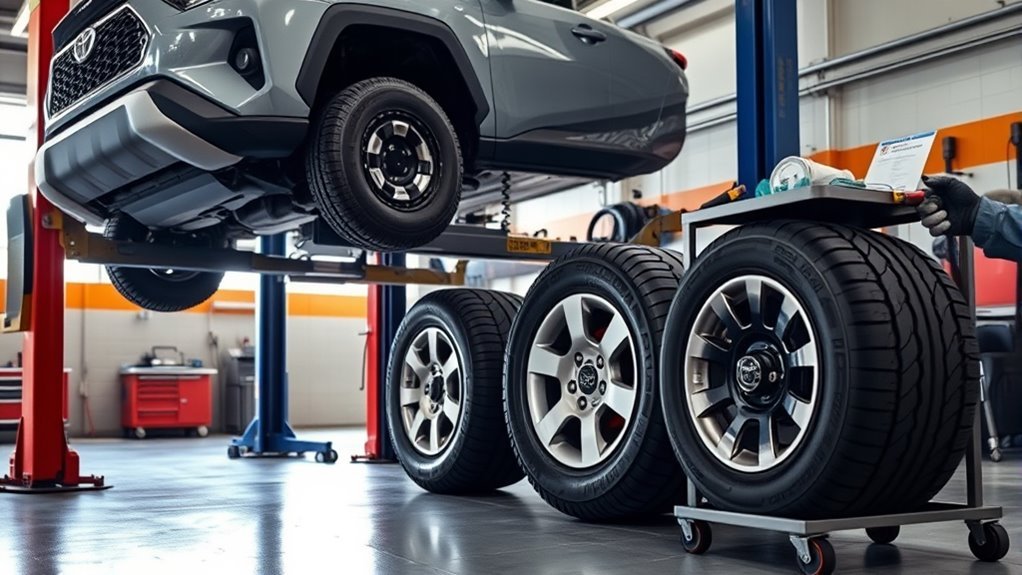
Tire rotation means moving each tire to a different wheel position so one tire does not do the hardest work for its entire life. On a Toyota RAV4, the front tires usually handle more steering force, braking force, and weight transfer than the rear tires. That extra load can make the front tread wear sooner if the tires stay in the same position too long.
Regular rotation helps keep tread depth more even from tire to tire. That matters because even tread helps your RAV4 brake, steer, and grip more consistently. It also makes it easier to spot other issues early, such as alignment problems, underinflation, overinflation, damaged sidewalls, or cupping.
Note: Tire rotation is not a substitute for tire pressure checks. Toyota’s owner information explains that the tire pressure warning system helps detect low tire pressure, but it does not replace routine inflation checks.
[Products Worth Considering]

The Tymate TM3 RV TPMS delivers real-time tire pressure monitoring from 0 to 144 PSI with accurate readings and dependable wireless communication. It includes four external sensors with pre-pairing, six alarm modes for rapid leak, pressure extremes, temperature, and signal loss, plus an easy-reference setup for alert thresholds. Solar and USB-C charging help keep the display powered, while the color LCD and adaptive backlight improve visibility for safer driving and towing.

The JACO FlowPro Tire Inflator measures, inflates, and airs down tires up to 100 PSI with battery-free operation and ±2% accuracy after calibration. It features a glowing pressure dial for night visibility, a heavy-duty steel build with a hybrid hose, and a precision push-to-inflate thumb trigger. The patented Lightning Air Chuck locks on for a secure seal, and the kit includes quick-connect hardware for easy inline use with your air compressor.

This portable cordless tire inflator delivers fast, efficient inflation for cars, motorcycles, bikes, and sports balls with a digital pressure gauge. Use the one-click PSI preset with auto shut-off for accurate, hands-free topping to your target pressure up to 150 PSI. It’s compact and rechargeable with a built-in emergency LED light plus valve adapters and accessories for quick, ready-to-go use.
How Does Tire Rotation Promote Even Tire Wear?
Each wheel position puts different stress on a tire. Front tires scrub during turns, carry heavy braking loads, and support the engine side of the vehicle. Rear tires usually follow with less steering stress. Rotation spreads those jobs across all four tires over time.
That helps prevent:
- one pair of tires wearing out much sooner than the other;
- reduced wet-road grip from uneven tread depth;
- vibration caused by irregular tread wear;
- extra road noise as the tread pattern becomes uneven;
- premature tire replacement.
On all-wheel-drive RAV4 models, even tread wear is especially important because the drivetrain works best when all four tires are close in size and rolling circumference. If one tire is much more worn than the others, ask a Toyota dealer or qualified tire shop before replacing only one tire.
How Often Should You Rotate Your RAV4’s Tires?
For a current Toyota RAV4, the safest rule is simple: rotate the tires every 5,000 miles or six months, whichever comes first. Toyota’s maintenance guide lists “Rotate Tires” as a performed service at each 5,000-mile interval in the standard maintenance chart.
| Situation | Recommended Action | Why It Matters |
|---|---|---|
| Normal driving | Rotate every 5,000 miles or six months | Matches Toyota’s scheduled maintenance cadence |
| Low-mileage driving | Rotate every six months even if you drive less than 5,000 miles | Time still matters for routine inspections |
| Rough roads, frequent city driving, or heavy loads | Inspect tires more often | Harsh use can speed up irregular wear |
| After a puncture repair or tire replacement | Ask whether the rotation pattern or tire position should change | Repairs and tread differences can affect placement |
Recommended Rotation Interval
Many general tire-care guides mention 5,000 to 7,500 miles, but RAV4 owners should give priority to Toyota’s vehicle-specific schedule. If your RAV4 is a different model year, check the maintenance guide for that year because equipment, tires, and maintenance wording can vary.
Pro Tip: Pair tire rotation with your 5,000-mile maintenance visit. It makes the service easy to remember and gives the technician a chance to inspect tread depth, tire pressure, brakes, and visible tire damage at the same time.
Signs Your Tires Need Rotation Sooner
Do not wait for the mileage interval if your RAV4 starts showing symptoms. Schedule an inspection if you notice uneven tread, vibration, pulling, humming, or a tire pressure warning that keeps returning after inflation. Those signs may point to tire rotation needs, but they can also indicate balance, alignment, suspension, or tire damage issues.
Rotation Methods Explained
The correct rotation pattern depends on your tire type and wheel setup. Toyota’s RAV4 Owner’s Manual tire section says to rotate the tires in the order shown in the manual and to initialize the tire pressure warning system after rotation if equipped.
- Non-directional tires: These can usually move from one side of the vehicle to the other as part of the correct pattern.
- Directional tires: These must roll in one direction, so they usually stay on the same side unless the tire is dismounted and remounted.
- Different front and rear tire sizes: If a vehicle has a staggered setup, front-to-rear rotation may not be allowed. Most RAV4 factory setups are not staggered, but always confirm your tire sizes.
- Full-size spare tires: Only include a spare in rotation if the owner’s manual and tire manufacturer allow it. Temporary spares should not be used in a normal rotation pattern.
What Can You Expect When You Get Your Tires Rotated?
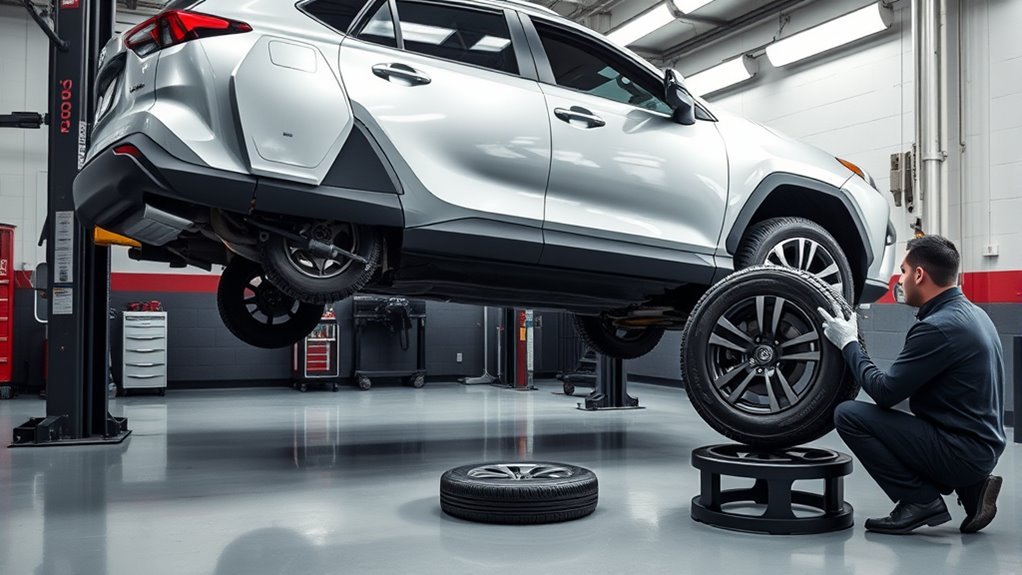
During a tire rotation, a technician moves the tires to the proper positions, checks tire condition, adjusts inflation pressure, and looks for signs of damage or uneven wear. Many shops also check wheel balance symptoms and may recommend balancing if you feel vibration at highway speeds.
| Service Component | What Happens | Why It Helps |
|---|---|---|
| Tire rotation | Tires are moved to the correct positions | Helps equalize tread wear |
| Tread inspection | Tread depth and wear pattern are checked | Finds uneven wear early |
| Pressure adjustment | Tires are inflated to the cold pressure listed for your RAV4 | Supports handling, tire life, and fuel economy |
| Damage check | Technician checks for nails, cuts, bubbles, and sidewall damage | Reduces the risk of driving on an unsafe tire |
| TPMS initialization | System is initialized if required after rotation | Helps the pressure warning system track the correct baseline |
Warning: Never drive on a tire with exposed cords, a sidewall bulge, a deep cut, or rapid pressure loss. A rotation will not fix structural tire damage; the tire needs professional inspection and likely replacement.
Top Benefits of Regular Tire Rotation for Your RAV4
Regular tire rotation is one of the easiest ways to protect your RAV4’s tires and driving feel. It does not magically repair worn-out tires, but it helps keep healthy tires wearing at a more even rate.
- Longer tire life: Even wear helps you use more of the tire’s usable tread before replacement.
- Better handling balance: Similar tread depth across all four tires helps your RAV4 feel more stable.
- Smoother ride: Rotation can reduce the chance of irregular wear that causes vibration and noise.
- Earlier problem detection: A tire rotation visit is a good time to catch nails, low pressure, abnormal tread wear, and brake issues.
- More predictable wet traction: Even tread depth helps tires clear water more consistently.
Toyota’s current RAV4 maintenance chart lists tire rotation at every 5,000-mile interval shown in the factory guide, making it a core maintenance item rather than an optional add-on.
How to Identify Signs That Your RAV4 Needs a Tire Rotation
You can spot many tire-rotation problems before they become expensive. Walk around your RAV4 once a month and before long trips. Look at the tread, sidewalls, and tire pressure. If one tire looks different from the others, get it checked.
[Products Worth Considering]

This portable cordless tire inflator delivers up to 160 PSI with fast 17 L/min airflow to help you quickly top up tires and get back on the road. It features dual power mode, running on a 21V rechargeable battery or a 12V DC adapter for convenient roadside use. An automatic shut-off with digital pressure gauge helps prevent overinflation, and a built-in LED light improves visibility in low-light conditions.
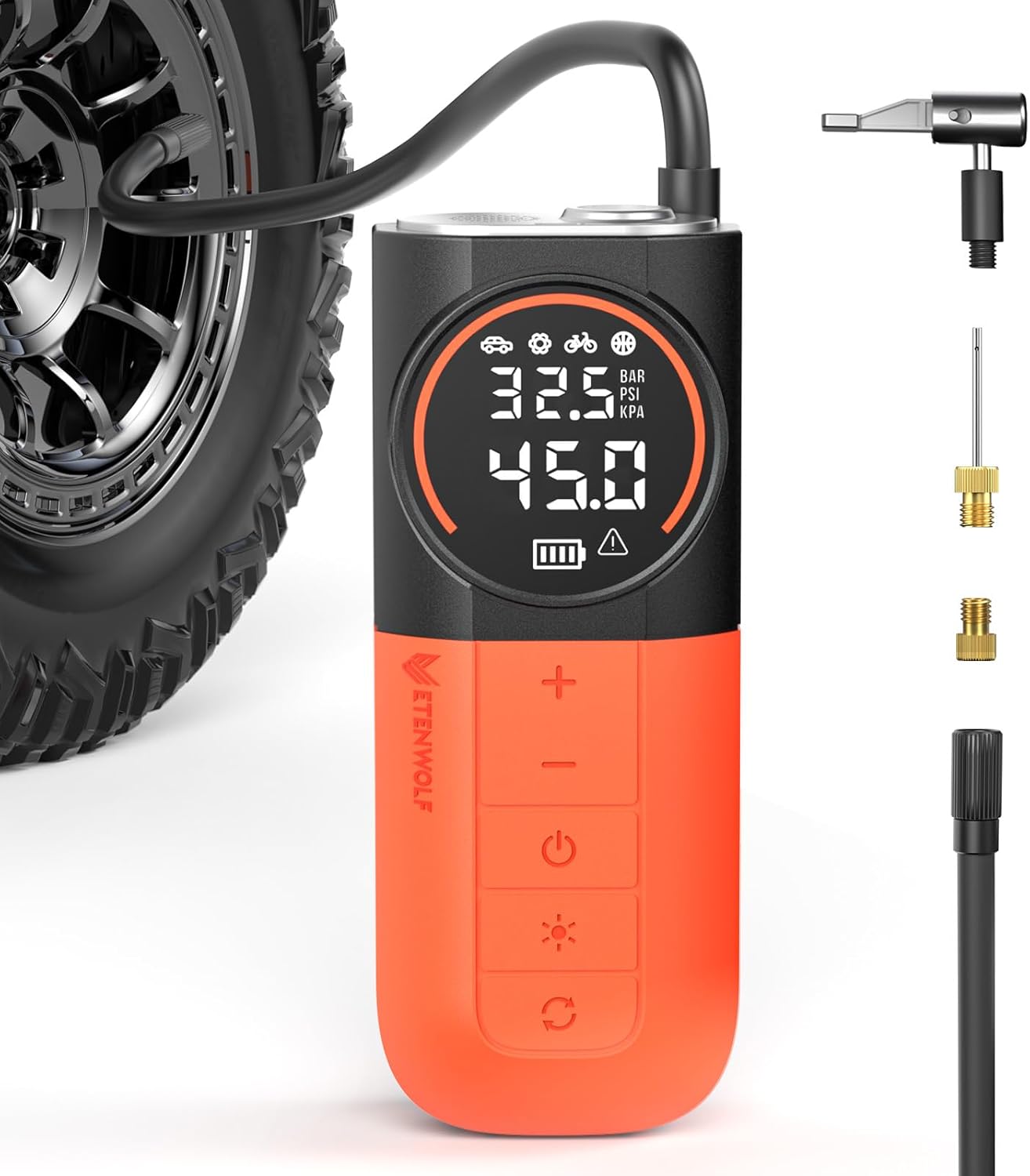
The ETENWOLF S1 cordless tire inflator delivers ultra-fast inflation with up to 160 PSI and a 20 L/min airflow for quicker tire top-offs. Its 5200mAh battery and cooling system support inflating many tires and sports balls on a single charge, while the digital pressure gauge and multi-unit display help you reach the right pressure accurately. With preset modes, pressure memory, an auto-stop feature, and an LED flashlight, it’s built for easy roadside and everyday use.
Uneven Tread Wear
Uneven tread wear is the clearest sign that your tires need attention. You may see one front tire wearing faster, the edges wearing more than the center, the center wearing more than the edges, or patchy wear around the tread.
| What You See or Feel | Possible Cause | What to Do |
|---|---|---|
| Front tires look more worn than rear tires | Normal front-end workload over time | Rotate tires on schedule |
| One edge is wearing quickly | Possible alignment issue or underinflation | Inspect alignment and tire pressure |
| Center tread is wearing quickly | Possible overinflation | Set cold pressure to the door-jamb label |
| Patchy or cupped tread | Possible balance, suspension, or shock issue | Have the tire and suspension checked |
| Bald spots or exposed cords | Unsafe tire wear | Do not rely on rotation; replace or repair as advised |
Steering Wheel Vibrations
Steering wheel vibration can happen when tires wear unevenly, wheels are out of balance, or a tire is damaged. If vibration appears after a rotation, return to the shop and ask them to recheck wheel balance, lug nut torque, tire pressure, and tire placement.
A pull to one side is another warning sign. Rotation may help if the cause is uneven tire wear, but a persistent pull often needs alignment or brake inspection.
Can You Rotate RAV4 Tires Yourself?
You can rotate RAV4 tires at home if you have the right tools, a flat work area, and experience lifting a vehicle safely. If you are unsure, use a Toyota dealer or qualified tire shop. The cost is usually low compared with the risk of an incorrectly lifted vehicle or improperly tightened wheel.
Warning: Never work under a vehicle supported only by a jack. Use properly rated jack stands on a firm, level surface and follow the jacking points in your RAV4 owner’s manual.
- Park safely. Use a level surface, set the parking brake, and chock the wheels that stay on the ground.
- Loosen the lug nuts slightly. Break them loose before lifting, but do not remove them yet.
- Lift and support the RAV4. Use the correct jacking points and secure the vehicle with jack stands.
- Move the tires to the correct positions. Follow the owner’s manual pattern or tire manufacturer guidance for your tire type.
- Inspect each tire. Check tread depth, sidewalls, nails, cracks, bubbles, and uneven wear.
- Reinstall and torque the wheels. Tighten lug nuts in a crisscross pattern to the specification for your exact RAV4 and wheel setup.
- Set cold tire pressure. Use the pressure listed on the driver-side door-jamb label, not the maximum pressure printed on the tire sidewall.
- Initialize TPMS if required. Toyota says the tire pressure warning system should be initialized after tire rotation on equipped vehicles.
Does Tire Rotation Improve Fuel Efficiency?
Tire rotation can support fuel economy indirectly by helping tires wear evenly, but tire pressure is the bigger everyday factor. Underinflated tires create more rolling resistance, which can reduce efficiency and increase heat buildup. For the best result, rotate on schedule, keep tires inflated to the correct cold pressure, and fix alignment issues quickly.
Frequently Asked Questions
What does Toyota recommend for RAV4 tire rotation?
Toyota recommends scheduled maintenance every 5,000 miles or six months, whichever comes first, and the RAV4 maintenance chart lists tire rotation at each 5,000-mile interval. Always confirm the schedule for your exact model year in your owner’s manual or maintenance guide.
How often should I rotate tires on my RAV4?
Rotate your RAV4 tires every 5,000 miles or six months, whichever comes first. If you drive on rough roads, carry heavy loads, or notice uneven wear, inspect the tires sooner.
Will Toyota rotate my tires for free?
ToyotaCare covers normal factory scheduled maintenance for eligible new Toyota vehicles for two years or 25,000 miles, whichever comes first, in covered regions. If your RAV4 is outside that coverage, the dealer or shop may charge for rotation.
Do AWD RAV4 models need tire rotation?
Yes. AWD RAV4 models still need regular rotation. Keeping tread wear even across all four tires helps maintain stable handling and reduces drivetrain stress caused by large tread-depth differences.
Should I balance my tires every time I rotate them?
Not always. Rotation and balancing are different services. Rotate on schedule, but ask for balancing if you feel vibration, notice uneven tread wear, or recently had a tire repaired or replaced.
Do I need to reset the tire pressure warning system after rotation?
On equipped RAV4 models, Toyota says not to forget to initialize the tire pressure warning system after tire rotation. Set the tires to the correct cold pressure first, then follow the owner’s manual steps for your display and model year.
Conclusion
Tire rotation is simple, but it has a big effect on how your Toyota RAV4 feels and how long your tires last. Follow Toyota’s 5,000-mile or six-month schedule, inspect tread and pressure regularly, use the correct rotation pattern, and initialize the tire pressure warning system when required. A well-rotated set of tires helps your RAV4 stay smooth, stable, and ready for the road.
Sources
- Toyota 2025 RAV4 Warranty & Maintenance Guide — supports the 5,000-mile or six-month maintenance schedule and tire rotation intervals.
- Toyota 2025 RAV4 Owner’s Manual: Tires — supports tire rotation guidance and tire pressure warning system notes.
- ToyotaCare FAQ — supports ToyotaCare coverage details for factory scheduled maintenance.
- NHTSA TireWise — supports tire safety, tire pressure, tread, and tire-care guidance.
- NHTSA Tire Safety Brochure — supports tire inspection, inflation, load limit, and road-hazard safety information.
- 49 CFR 571.138 Tire Pressure Monitoring Systems — supports the safety purpose of TPMS requirements.

Related Articles

Toyota RAV4 TPMS Reset: Easy Steps That Work
Unlock the secrets to resetting your Toyota RAV4's TPMS effortlessly—discover the essential steps to ensure your tires are always safe.
Read More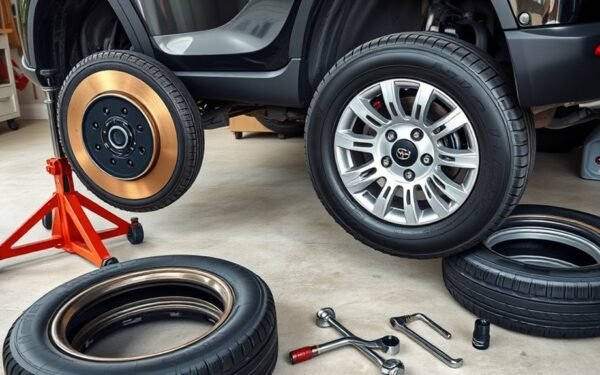
Toyota RAV4 Tire Rotation: DIY Steps & Pattern
Take control of your Toyota RAV4's tire maintenance with our simple DIY rotation guide—discover the best steps for optimal performance and longevity!
Read More
Mix Tire Brands on a Toyota RAV4? Expert Guide
Keeping your RAV4 safe? Learn when mixing tire brands risks traction, ABS/TCS and AWD damage — and what exact matches you must insist on.
Read More