
How to Let Air Out of a Car Tire: Safe & Easy Method
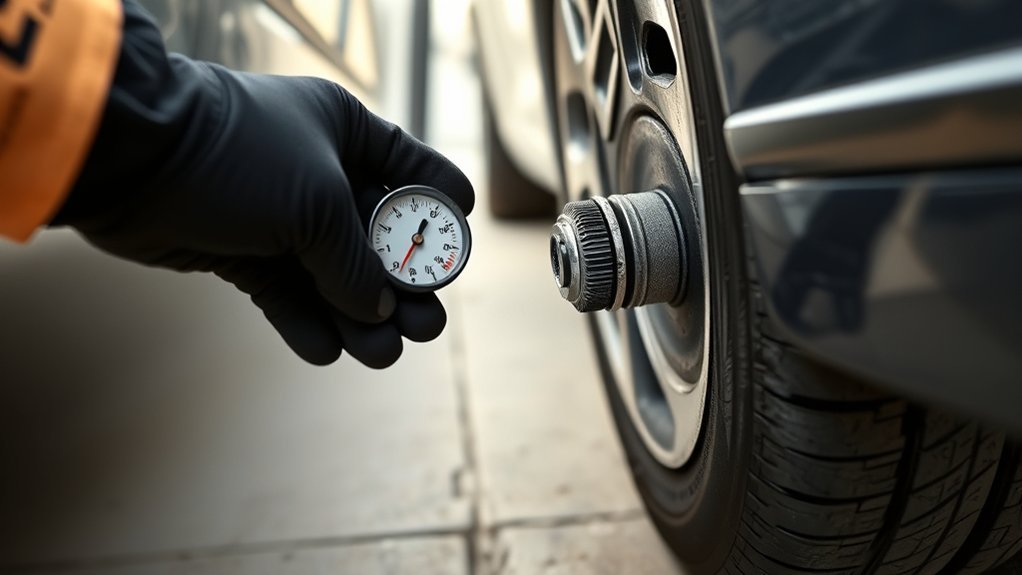
Letting air out of a car tire is simple, but the safe part is knowing when to stop. Your goal is not “low pressure.” Your goal is the correct cold tire pressure listed on your vehicle’s driver-side door placard or owner’s manual. Use a tire pressure gauge, release air in short bursts, and recheck often so you do not turn a small adjustment into an underinflated tire.
Quick Answer
To let air out of a car tire safely, park on level ground, check the cold PSI with a tire gauge, remove the valve cap, and press the small valve pin in short bursts. Recheck every few seconds and stop at the pressure shown on your vehicle’s tire placard.
Key Takeaways
- Use the recommended cold tire pressure on the driver-side door placard or owner’s manual, not the maximum PSI printed on the tire sidewall.
- Release air slowly by pressing the valve stem pin, then check the PSI again with a reliable gauge.
- Do not bleed a hot tire down to the cold placard pressure; recheck when the tire has cooled.
- Reinflate before normal road driving if you aired down for sand, trails, or another low-speed off-road condition.
- If a tire keeps losing air or the valve leaks, have it inspected before driving far.
At a Glance
| Time Required | 2 to 5 minutes per tire |
| Difficulty | Easy, as long as you use a pressure gauge |
| Tools Needed | Tire pressure gauge; optional valve tool or tire deflator |
| Cost | Usually $0 if you already have a gauge; about $5 to $25 for a basic gauge |
Find the Correct PSI First
Before you release air, find the correct tire pressure for your vehicle. Look for the Tire and Loading Information label on the driver-side door edge or door jamb, or check the owner’s manual. That number is the recommended cold tire pressure for your specific vehicle, tire size, and load setup.
Do not use the large PSI number printed on the tire sidewall as your target. That sidewall number is normally the tire’s maximum cold inflation pressure, not the recommended everyday pressure for your car.
Note: A “cold” tire usually means the vehicle has been parked for at least three hours or has been driven less than about one mile at moderate speed. Cold readings are more accurate because driving warms the tire and raises the pressure.
[Products Worth Considering]

The AstroAI 2 pack air chucks provide a heavy-duty, closed-flow locking design that helps keep air flowing during inflation while securely attaching to the valve stem. Built with 250 PSI rated brass components and compatible with Schrader valves, they feature 1/4" female NPT threads for a wide fit with common inflators. The straight tip and locking clip make filling tires and monitoring pressure more convenient.
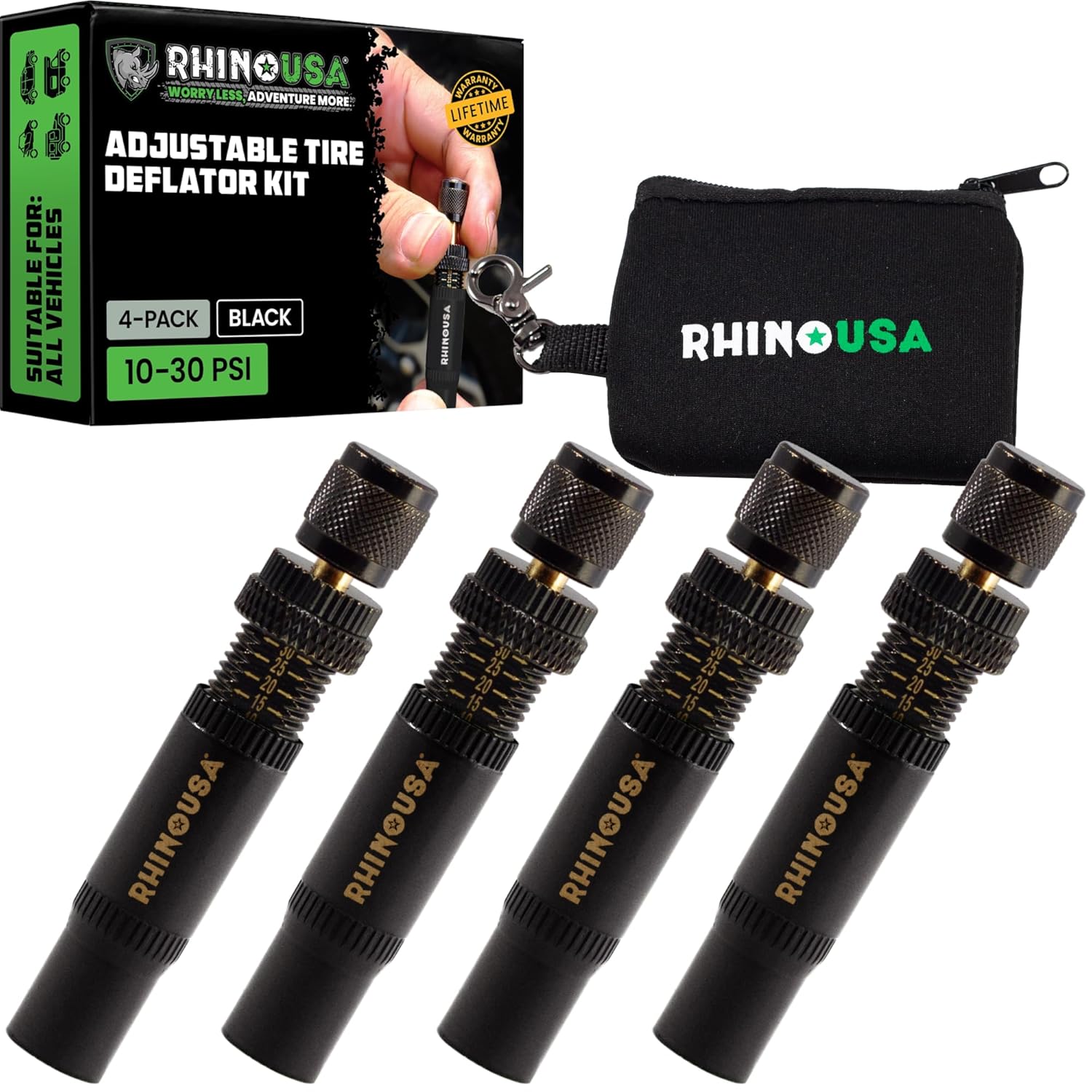
Use the Rhino USA adjustable tire deflators to air down all four tires at once by screwing one deflator onto each valve stem, letting you step away while the tires reach your preset pressure. Each deflator independently adjusts across a 10–30 PSI range with laser-etched indicators for quick setup and verification, making it ideal for beach, sand, and rocky off-road trails.
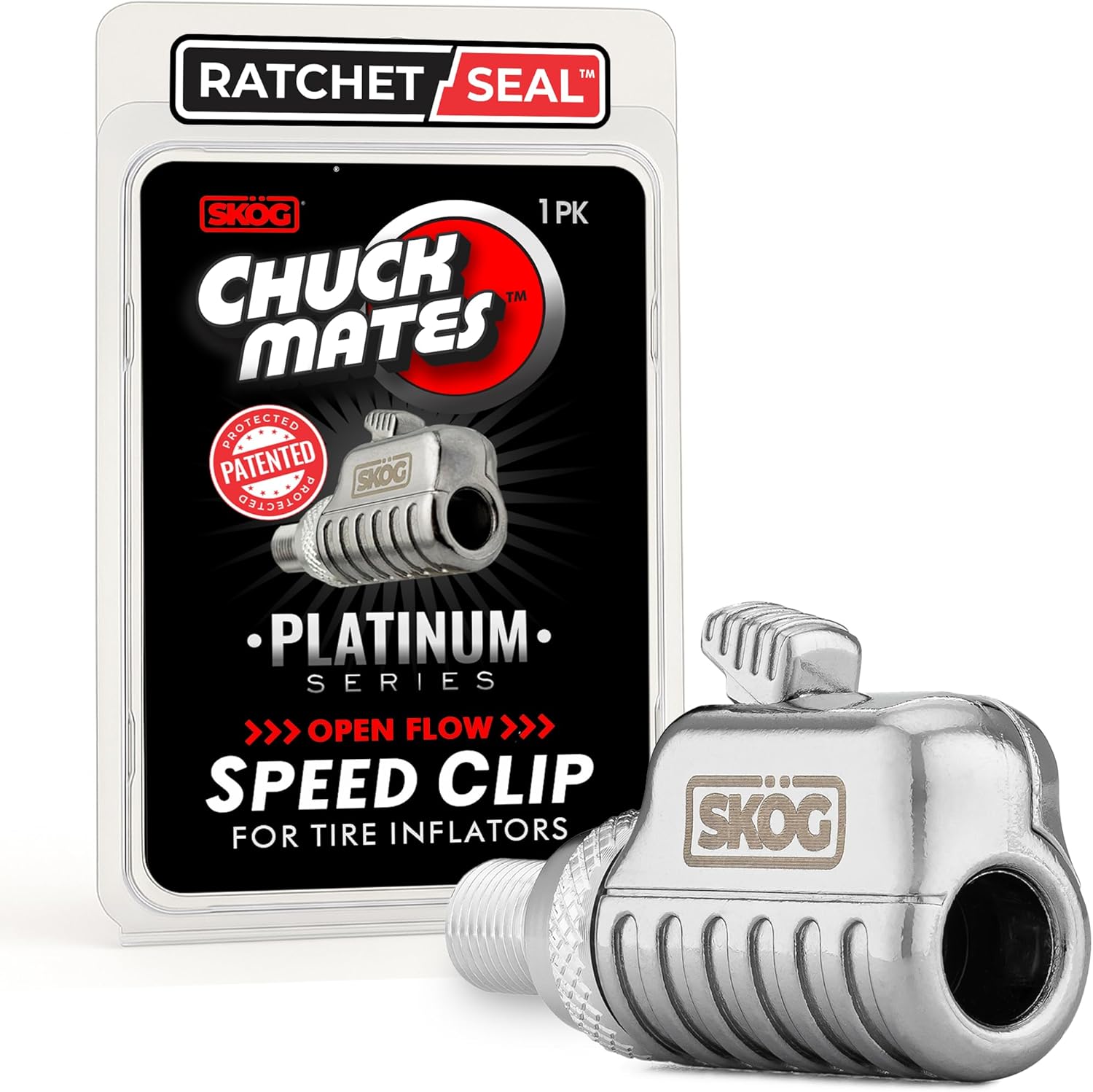
The SKÖG Chuck Mates Platinum uses a patented RatchetSeal push-to-connect system for instant, secure, air-tight attachment to standard tire valve stems. It features an easy push-button release for quick disconnects, plus 360° swivel open-flow airflow to keep operation smooth and kink-free. Universal Schrader compatibility makes it ideal for cars, bikes, motorcycles, RVs, trucks, and more.
Tools for Deflating a Tire
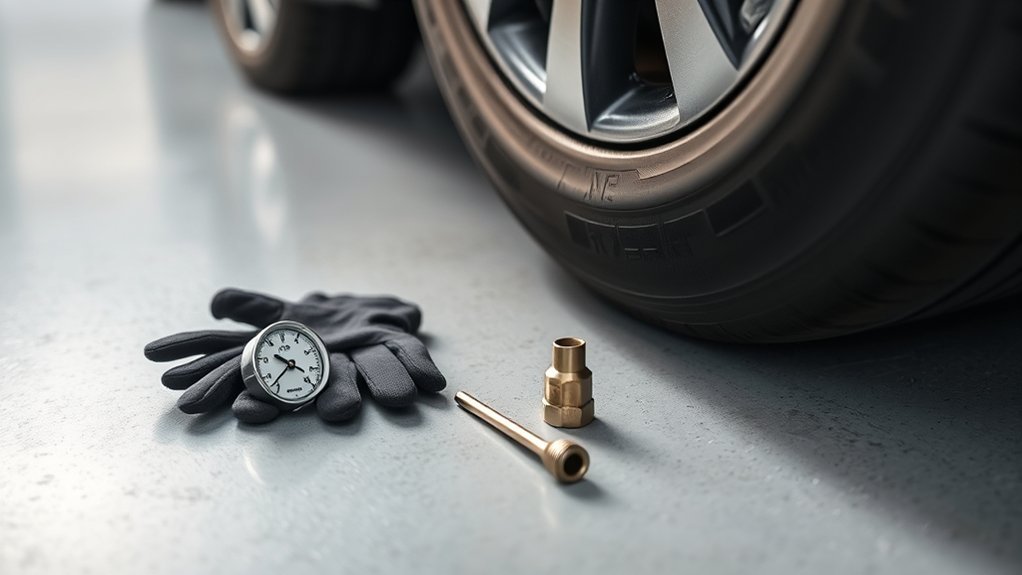
The most important tool is a tire pressure gauge. A pencil gauge, dial gauge, or digital gauge can work as long as it is accurate and easy to read. You can release air by pressing the valve stem pin with the gauge tip, a small flathead screwdriver, a key, or the built-in bleed button on some gauges.
A valve core removal tool can release air very quickly, but it is usually not needed for a normal PSI correction. Use it only when you intentionally need faster deflation, such as controlled off-road airing down, and keep your gauge ready. A dedicated tire deflator can make repeat adjustments easier because many models can be preset or read while air is coming out. Additionally, consider keeping a compact tire repair kit on hand for unexpected punctures.
How to Let Air Out of a Tire Safely
Park on a flat, stable surface, turn off the engine, and set the parking brake. Remove the valve cap and put it somewhere safe so it does not roll away. Press your tire pressure gauge onto the valve stem and note the current PSI before you release any air. Ensuring proper tire maintenance and safety is crucial for optimal driving performance.
Safe Deflation Steps
- Check the current pressure with a tire pressure gauge.
- Compare the reading with the recommended cold PSI on the vehicle placard.
- If the tire is too high, press the valve stem pin for one or two seconds.
- Remove the tool, recheck the pressure, and repeat in small bursts.
- Stop when the tire reaches the target pressure.
- Reinstall the valve cap firmly to keep dirt and moisture out of the valve.
Warning: Do not lower a hot tire to the cold placard PSI right after highway driving. Hot tires read higher because the air inside has expanded. If you bleed them down while hot, they may be underinflated after cooling.
Pressure Check Tips
Check pressure before you start and again every few seconds while you release air. Do not guess by looking at the tire. A tire can be underinflated without looking flat, and a tire pressure monitoring system may not warn you until the tire is already significantly low.
If you are correcting a tire that is only 2 or 3 PSI too high, work slowly. Short bursts give you more control and help you avoid dropping below the target. If you accidentally let out too much air, stop and add air back in with a compressor before driving.
How Much Pressure Should You Remove?
Remove only enough air to reach the vehicle’s recommended cold tire pressure. For many passenger vehicles, the correct pressure falls somewhere around 30 to 35 PSI, but that range is not a rule. Some vehicles, trims, loads, tire sizes, and compact spares require different pressures.
- Read the current PSI with a gauge.
- Find the correct cold PSI on the placard or owner’s manual.
- Subtract the target from the current reading.
- Release air in short bursts until the gauge shows the target.
For example, if the placard says 33 PSI and your cold tire reads 38 PSI, release air gradually until the gauge reads 33 PSI. If the tire reads 33 PSI already, do not deflate it just to soften the ride. Underinflation can increase heat buildup, uneven wear, poor handling, and tire-failure risk. Additionally, maintaining the right pressure can enhance your vehicle’s fuel efficiency by reducing rolling resistance.
Even a few PSI away from the vehicle manufacturer’s recommended pressure can affect handling, stopping distance, tread wear, and fuel economy.
When to Air Down Your Tires
Airing down means intentionally lowering tire pressure for a specific condition, usually at low speed and away from normal pavement driving. It can help in sand, loose dirt, rocky trails, and some off-road snow conditions because a lower pressure can lengthen the tire’s contact patch and help the tire conform to the surface. Tire selection, such as using all-terrain tires, can also significantly impact your vehicle’s performance in challenging conditions.
| Situation | Why airing down may help | Safety note |
|---|---|---|
| Sand | Larger footprint can reduce digging | Keep speeds low and reinflate before pavement |
| Off-road trails | More tire flex can improve grip over uneven ground | Avoid sharp turns and sidewall impacts |
| Rough unpaved roads | Can soften impacts at low speed | Do not use low trail pressure for highway driving |
| Normal roads, heavy loads, or towing | Usually does not help | Follow the placard, owner’s manual, and load guidance |
Pro Tip: If you air down off-road, set a reminder before you leave the trail. Reinflate all tires to the recommended road pressure before returning to normal speeds.
When Not to Let Air Out
Do not let air out just because the tire looks firm, because the ride feels stiff, or because you saw a general PSI number online. Do not lower pressure for heavy cargo or towing unless your owner’s manual or a qualified tire professional says to do so. Extra load usually needs correct inflation, not less inflation.
Also avoid deflating a tire that appears damaged, has a bulge, shows exposed cords, or has a valve stem that is cracked or leaking. In those cases, the safer move is inspection and repair, not pressure adjustment.
Common Tire Deflation Mistakes
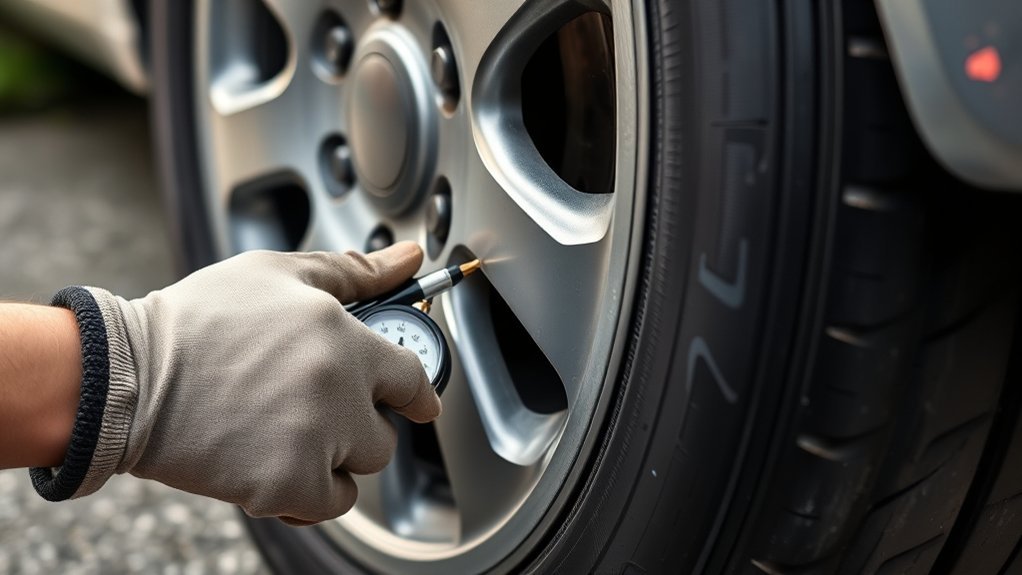
Small mistakes can turn a simple PSI correction into a tire problem. The biggest mistake is releasing air without a gauge. The second is using the tire sidewall number as the target pressure. The third is letting out air from a hot tire and assuming that reading will still be correct later.
- Do not remove the valve core for a small PSI correction.
- Do not drive at normal road speeds on intentionally low off-road pressure.
- Do not ignore a tire that keeps losing air after you adjust it.
- Do not forget to reinstall the valve cap after checking or deflating.
Work in short bursts, check the gauge each time, and let the tire settle for a moment before making the next adjustment. Maintaining proper tire pressure is crucial for optimal performance and safety on wet roads.
[Products Worth Considering]
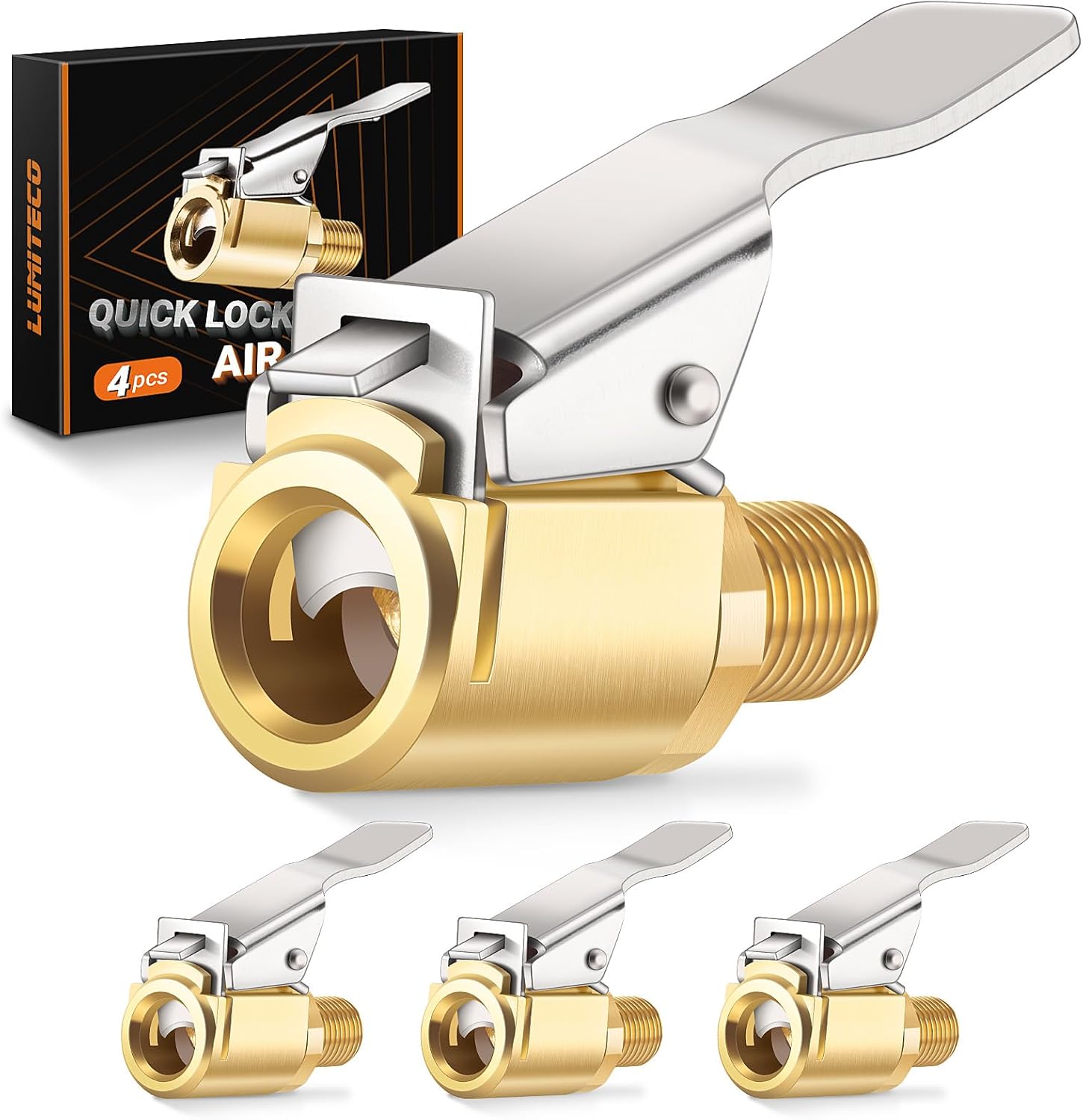
This brass air chuck adapter converts a screw-on inflator connection into a lock-on quick connect for hands-free, no-leak tire inflation. Clip the chuck onto Schrader valve stems and lock it in place to simplify inflating car, bike, and motorcycle tires. Built for durability with a corrosion-resistant brass body and strong quick operation.

This multi-function tire valve stem removal tool set makes it fast to remove, install, bleed, and clean valve cores for easier tire maintenance. It includes valve core removers, a 4-way spool tool, replacement valve caps, and spare cores to handle replacements and repairs with confidence. Universal compatibility suits cars, trucks, motorcycles, bicycles, and more for roadside convenience.
What If You Let Too Much Air Out?
If you let too much air out, do not drive around hoping it will be fine. Add air with a portable compressor or at a service station until the tire returns to the recommended cold pressure. If you must move the vehicle a short distance to reach air, drive slowly and avoid sharp turns, potholes, heavy loads, and highway speeds.
After you refill the tire, recheck the PSI with your own gauge. Gas-station gauges and compressor gauges can be inaccurate or hard to read, so your handheld gauge should be the final check.
How to Put Air Back In
Start by checking the tire pressure with a reliable gauge and comparing it to your vehicle’s recommended PSI. Attach the compressor hose securely to the valve stem, add air in short bursts, and recheck often so you do not overinflate. Maintaining proper tire inflation is crucial for maximizing tire life, as it ensures optimal performance and longevity.
Check Tire Pressure
Measure pressure when the tires are cold whenever possible. Remove the valve cap, press the gauge firmly onto the valve stem, and read the PSI. Compare it with the door placard or owner’s manual. If your front and rear tires have different recommended pressures, adjust each tire to its own listed value.
Add Air Slowly
Attach the compressor nozzle to the valve stem with a tight seal, then add air slowly in short bursts. Pause often and read the pressure gauge. If you overshoot the target, press the valve pin briefly to release a little air, then check again.
Recheck For Accuracy
Once you reach the target PSI, remove the hose, listen for leaking air, and reinstall the valve cap. A valve cap helps keep dirt and moisture away from the valve core. If pressure drops again within days, check for a puncture, loose valve core, damaged valve stem, or rim leak.
Note: A tire pressure monitoring system is helpful, but it does not replace regular gauge checks. Check pressure at least monthly and before long trips.
RAV4 Tire Pressure Note
Many modern Toyota RAV4 models use tire pressures in the low-to-mid 30 PSI range, but the exact number depends on model year, trim, tire size, drivetrain, and market. The safest answer is always the same: use the pressure printed on your RAV4’s driver-side door placard or in the Toyota owner’s manual, and check it when the tires are cold.
Frequently Asked Questions
How do you let air out of tires safely?
Park on level ground, set the parking brake, remove the valve cap, and check the tire pressure first. Press the valve stem pin for one or two seconds, then recheck with a gauge. Repeat until the tire reaches the recommended cold PSI on the vehicle placard.
What PSI should RAV4 tires be?
Many newer RAV4 models are around the low-to-mid 30 PSI range, but you should not rely on a generic number. Check the driver-side door jamb sticker or the Toyota owner’s manual for your exact tire size and trim, then measure when the tires are cold.
How do you let air out of a car tire without a tool?
You can press the valve stem pin with a key, pen tip, or small flathead screwdriver, but you still need a tire pressure gauge to know when to stop. Release air in short bursts and recheck often. Do not guess by feel or appearance.
Can you let air out of a tire with a tire gauge?
Yes. Many gauges can press the valve pin, and some have a built-in bleed button. Press briefly, check the reading, and repeat until you reach the correct PSI. This is one of the easiest ways to make a controlled adjustment.
Is it safe to drive after letting air out of a tire?
It is safe only if the tire is still at the recommended road pressure for your vehicle. If you aired down for off-road use or accidentally dropped below the placard PSI, reinflate before normal driving, especially before highway speeds.
Should I let air out when my tires are hot?
Avoid bleeding a hot tire down to the cold placard number. Driving heats the tire and raises the PSI reading. If the tire is not dangerously overinflated, wait until it cools and check again for a more accurate reading.
Conclusion
Deflating a tire is easy; doing it safely comes down to using a gauge and respecting the correct PSI. Find the vehicle placard, check the tire cold, release air in short bursts, and stop at the recommended pressure. If you air down for off-road traction, reinflate before regular driving. Your tire is not a balloon. It is part of the braking, steering, suspension, and safety system, so treat the pressure setting like it matters—because it does.
Sources
- NHTSA TireWise — supports placard-first PSI guidance, cold-pressure checks, TPMS cautions, and safe air-release steps.
- NHTSA Tire Pressure Maintenance — A Statistical Investigation — supports the safety impact of underinflation on handling, stopping distance, blowouts, and fuel economy.
- Michelin USA Tire Pressure Guide — supports checking the driver-door sticker or owner’s manual instead of using tire sidewall PSI.
- Bridgestone Proper Tire Inflation — supports monthly checks, cold-tire checks, and pressure changes from temperature.
- Bridgestone Tire Maintenance and Safety Manual — supports warnings about improper inflation, hot-tire adjustment, sidewall maximum pressure, and valve caps.
- Toyota RAV4 Owner’s Manual: Tire Inflation Pressure — supports cold tire pressure checks and gauge-based tire pressure measurement for RAV4 owners.

Related Articles
How to Apply Tire Shine: Step-by-Step Guide for a Perfect Finish
With the right tire shine and technique, your tires can look flawless—discover the step-by-step method that keeps the finish looking even better.
Read More
How to Use Tire Sealer: Step-by-Step Guide for a Quick Fix
Keen to fix a flat fast, this step-by-step tire sealer guide shows what works, what to avoid, and when you still need help.
Read More
How to Tire Yourself Out to Sleep: Evening Routines That Work
Melt into better sleep with simple evening routines that quietly wear you down—discover the surprising habits that make rest come easier.
Read More