
Toyota RAV4 Tires Explained: The Complete Owner’s Guide

Understanding your Toyota RAV4 tires is one of the easiest ways to protect safety, ride comfort, fuel economy, and long-term tire life. The right tire for your RAV4 depends on your model year, trim, wheel size, climate, and driving style. Use your driver-side door-jamb tire placard and owner’s manual as the final authority, then match the tire type, size, load rating, and pressure to how you actually drive.
Quick Answer
For most Toyota RAV4 owners, the best tire choice is a quality all-season or all-weather tire in the exact size listed on the driver-side door placard. Check pressure monthly when tires are cold, rotate tires at Toyota’s recommended service interval, and replace tires when tread, age, damage, or uneven wear makes them unsafe.
Key Takeaways
- The correct RAV4 tire size and cold PSI are printed on the tire information placard inside the driver’s door area.
- Common recent RAV4 tire sizes include 225/65R17, 225/60R18, and 235/55R19, but your exact trim may differ.
- All-season tires suit mild climates; all-weather or winter tires are better for frequent snow and ice.
- Check tread depth, sidewall condition, tire age, pressure, alignment, and rotation history before deciding whether to replace tires.
- TPMS is helpful, but it does not replace a manual monthly tire-pressure check with a gauge.
At a Glance
| Time Required | 5–10 minutes for pressure and tread checks; 30–60 minutes for tire rotation |
| Difficulty | Easy for checks; moderate for DIY rotation |
| Tools Needed | Tire pressure gauge, tread-depth gauge or penny, air compressor, and torque wrench if rotating tires |
| Cost | Usually free to check; replacement tires vary widely by size, type, brand, and installation fees |
Understanding the Importance of Tire Maintenance
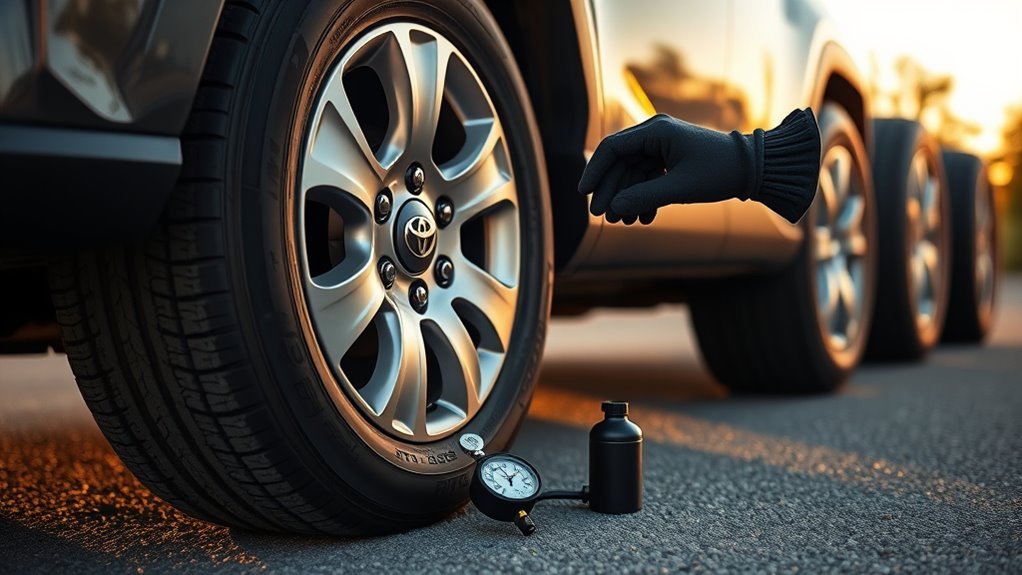
When it comes to keeping your Toyota RAV4 running smoothly, tire maintenance is crucial. Tires affect braking, steering, traction, fuel economy, road noise, and ride comfort. A simple monthly check can help you spot low pressure, uneven wear, cracks, punctures, or alignment problems before they turn into expensive repairs.
The National Highway Traffic Safety Administration reminds drivers that tire care includes checking pressure, checking tread, understanding tire labels, and watching for recalls. Toyota also recommends following the tire and maintenance instructions in your owner’s manual for your exact RAV4 model year.
Keep your RAV4 on a simple tire routine:
- Check tire pressure at least once a month and before long trips.
- Inspect tread depth and sidewalls when you check pressure.
- Rotate tires at the interval recommended in your Toyota maintenance guide.
- Have alignment, balancing, or suspension issues checked if tire wear looks uneven.
- Check the spare tire or repair kit so it is ready during an emergency.
Pro Tip: Take a clear photo of your driver-side tire placard. It gives you quick access to your exact tire size, load information, and cold tire pressure whenever you shop for tires or add air.
[Products Worth Considering]

This portable cordless tire inflator delivers up to 160 PSI with fast 17 L/min airflow to help you quickly top up tires and get back on the road. It features dual power mode, running on a 21V rechargeable battery or a 12V DC adapter for convenient roadside use. An automatic shut-off with digital pressure gauge helps prevent overinflation, and a built-in LED light improves visibility in low-light conditions.

The JACO FlowPro Tire Inflator measures, inflates, and airs down tires up to 100 PSI with battery-free operation and ±2% accuracy after calibration. It features a glowing pressure dial for night visibility, a heavy-duty steel build with a hybrid hose, and a precision push-to-inflate thumb trigger. The patented Lightning Air Chuck locks on for a secure seal, and the kit includes quick-connect hardware for easy inline use with your air compressor.

This portable cordless tire inflator delivers fast, efficient inflation for cars, motorcycles, bikes, and sports balls with a digital pressure gauge. Use the one-click PSI preset with auto shut-off for accurate, hands-free topping to your target pressure up to 150 PSI. It’s compact and rechargeable with a built-in emergency LED light plus valve adapters and accessories for quick, ready-to-go use.
Best Tire Types for Your RAV4: All-Season vs. Winter vs. Performance
Choosing the right tires for your Toyota RAV4 depends on where you drive most. A tire that works well in Phoenix may not be the best choice for Chicago, Denver, Toronto, or mountain roads with snow and ice. Here’s how the main tire types compare.
| Tire Type | Best For | What to Know |
|---|---|---|
| All-Season | Mild climates and everyday commuting | Balanced ride, tread life, and wet/dry traction, but limited grip in deep snow or ice. |
| All-Weather | Drivers who want one tire for rain, light snow, and changing seasons | Look for the three-peak mountain snowflake symbol for better winter capability than standard all-season tires. |
| Winter | Frequent snow, ice, freezing rain, or long cold seasons | Soft winter compounds and aggressive tread improve cold-weather grip, but they wear faster in warm weather. |
| All-Terrain | Gravel, dirt roads, camping, mild trails, and outdoor use | More rugged tread can add traction off pavement, but may increase road noise or reduce fuel economy. |
| Performance | Sharper handling on dry or wet pavement | Can improve steering response, but may have shorter tread life and weaker snow performance. |
If your RAV4 is mainly a family commuter, a high-quality touring all-season tire is usually the most practical choice. If you regularly drive in winter storms, choose dedicated winter tires or a true all-weather tire with winter certification.
Warning: Do not assume AWD replaces winter traction. AWD helps the RAV4 accelerate, but braking and turning still depend heavily on tire grip.
Choosing the Right Tire Size for Your RAV4
Choosing the right tire size is essential for safety, handling, speedometer accuracy, braking performance, and compatibility with Toyota’s traction, stability, ABS, and AWD systems. Your first stop should always be the tire information placard on the driver-side door jamb or door edge. You can also confirm details in the Toyota owner’s manual for your exact model year.
Selecting Tire Specifications
Recent RAV4 models commonly use sizes such as 225/65R17, 225/60R18, and 235/55R19, depending on trim, drivetrain, and market. Do not buy tires based only on another RAV4 you saw online. Match your vehicle’s placard and wheel size.
| Common RAV4 Size | What It Usually Means | Buyer Tip |
|---|---|---|
| 225/65R17 | 17-inch wheel setup on many base and mid trims | Often offers a comfortable ride and broad tire availability. |
| 225/60R18 | 18-inch wheel setup on some hybrid and upgraded trims | Balance tire comfort, price, and handling before choosing a model. |
| 235/55R19 | 19-inch wheel setup on some premium trims | Tires may cost more, so compare installation and warranty coverage. |
Here is how to read a size like 225/65R17: 225 is the tire width in millimeters, 65 is the sidewall aspect ratio, R means radial construction, and 17 is the wheel diameter in inches.
Understanding Load Ratings
Load rating tells you how much weight each tire can safely carry. Your RAV4’s tire placard and owner’s manual are the safest guides. When replacing tires, choose tires that meet or exceed the original load index and speed rating unless a qualified tire professional confirms a safe alternative.
- Check the tire placard for the original size and pressure.
- Check the sidewall for load index and speed rating.
- Do not downgrade load capacity to save money.
- Avoid mixing sizes, construction types, or load ratings on the same axle.
- For non-OE sizes, ask a tire professional to verify load capacity, diameter, clearance, and pressure.
Matching Seasonal Requirements
Seasonal tire selection matters. Summer tires are designed for warm pavement and should not be used in freezing conditions. Standard all-season tires are convenient but may struggle in deep snow. Winter tires are the safest pick for repeated snow and ice. All-weather tires sit between all-season and winter tires, giving many drivers a practical one-set solution.
If your RAV4 has AWD, try to keep all four tires closely matched in brand, model, size, tread depth, and wear level. Large differences in rolling diameter can affect AWD behavior and handling.
The Cost of New Tires for Your Toyota RAV4
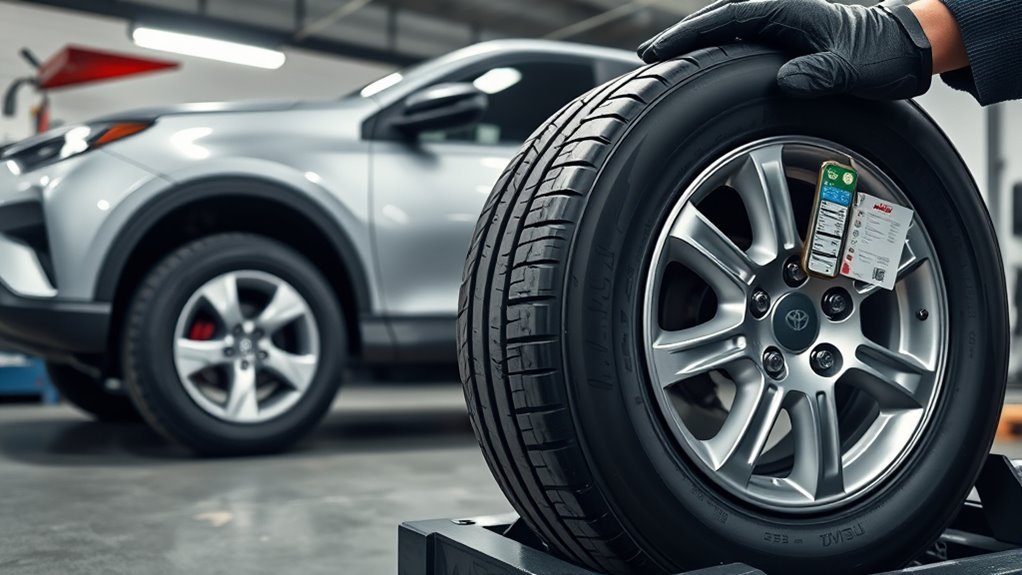
The cost of new Toyota RAV4 tires depends on size, brand, tire type, tread warranty, speed rating, load rating, installation fees, and local availability. Budget tires may look attractive upfront, but the best value often comes from a tire with strong wet braking, good tread life, low road noise, and warranty support.
When comparing tire prices, include the complete installed cost, not just the per-tire price. Ask for a quote that includes:
- Four tires in the correct size and rating
- Mounting and balancing
- Valve stems or TPMS service kits if needed
- Tire disposal fees
- Road-hazard coverage, if available
- Alignment check or alignment service if your old tires wore unevenly
- Taxes and shop fees
The cheapest RAV4 tire is not always the least expensive over time. A tire that lasts longer, brakes better in rain, and wears evenly can be the better value.
Signs It’s Time to Replace Your Toyota RAV4 Tires
Knowing when to replace your Toyota RAV4 tires is essential for safety and performance. Do not wait for a blowout or a warning light. Check tread depth, tire age, wear pattern, sidewall condition, and repair history.
Tread Depth Inspection
Use a tread-depth gauge for the most accurate reading. If you do not have one, the penny test can give a quick warning, but it is less precise. The federal tire inspection standard in 49 CFR 570.62 references minimum tread depth requirements and also warns against tires with exposed cords, bulges, or other serious defects.
Replace or professionally inspect your tires when:
- Treadwear indicators are flush with the tread.
- Wet-road traction feels weaker than normal.
- Tread depth is near the legal or safety minimum.
- Winter traction is poor because tread depth is too low for snow.
- The tire has repeated flats or damage in a non-repairable area.
Uneven Wear Patterns
Uneven wear often points to another problem. Excessive wear on one edge can signal alignment trouble. Cupping or scalloping may point to worn suspension parts, imbalance, or poor rotation habits. Center wear can come from overinflation, while shoulder wear can come from underinflation or aggressive cornering.
If you notice uneven wear, do not simply install new tires and ignore the cause. Have the alignment, suspension, wheel balance, and tire pressure checked so the next set does not wear out early.
Visible Damage Signs
Visible damage can make a tire unsafe even if tread depth looks acceptable. Replace or inspect a tire immediately if you see:
- Bulges, bubbles, or blisters on the sidewall
- Deep cuts, cracks, or exposed cords
- Objects stuck near the sidewall or shoulder
- Separation, knots, or distorted tread
- Dry cracking on older tires
Age matters too. Toyota owner information for RAV4 models commonly advises having tires over six years old checked by a qualified technician, even if damage is not obvious. You can read the tire’s DOT date code on the sidewall to find its manufacturing week and year.
Note: A tire can be unsafe because of age, cracking, impact damage, or internal separation even when the tread still looks usable.
How to Check Tire Pressure for Optimal Safety
Regular pressure checks are one of the simplest ways to improve tire life and safety. According to FuelEconomy.gov, properly inflated tires are safer, last longer, and can improve gas mileage compared with underinflated tires.
Follow these steps:
- Park your RAV4 and let the tires cool. Cold tire pressure is measured before driving or after the vehicle has been parked long enough for the tires to cool.
- Find the recommended PSI on the driver-side tire placard. Do not use the maximum PSI printed on the tire sidewall as your normal setting.
- Remove the valve cap and press a quality tire pressure gauge firmly onto the valve stem.
- Compare the reading to the placard pressure.
- Add air if the tire is low or release air if it is overinflated.
- Recheck the pressure and reinstall the valve cap.
- Repeat for all four tires and check the spare if your RAV4 has one.
| Condition | Recommended Action | Why It Matters |
|---|---|---|
| Underinflated | Inflate to the placard PSI | Can increase heat, wear, rolling resistance, and blowout risk. |
| Overinflated | Release air to the placard PSI | Can reduce ride comfort and contact patch performance. |
| TPMS Alert | Check pressure manually | TPMS warns you, but a gauge confirms the actual pressure. |
Maintaining Proper Tire Pressure: Tips and Tricks
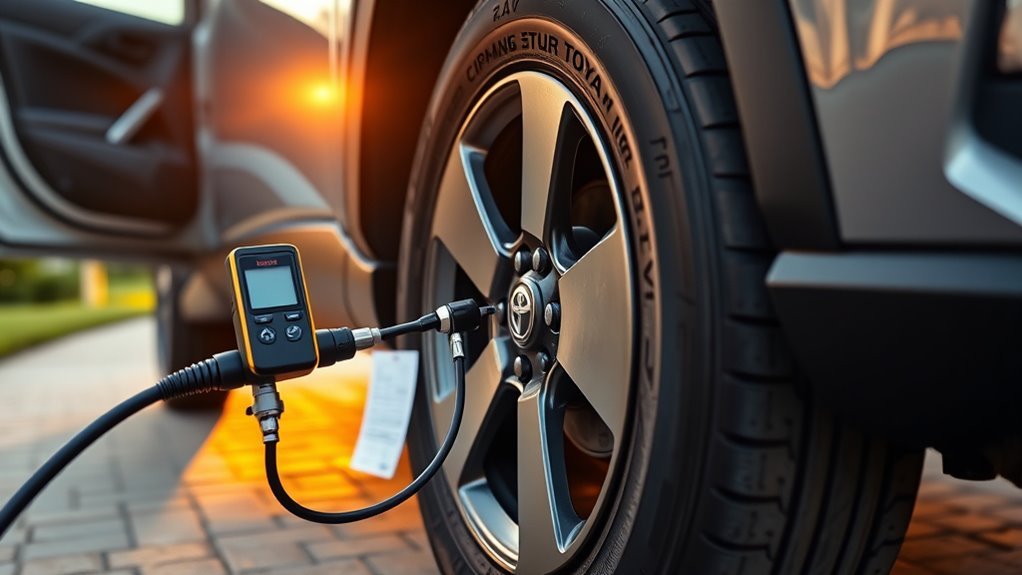
Maintaining proper tire pressure is not a one-time job. Temperature changes, slow leaks, valve issues, and normal air loss can all change pressure over time. Make tire pressure part of your regular routine.
- Check pressure monthly and before long trips.
- Check pressure when tires are cold for the most accurate reading.
- Use a reliable digital or dial gauge instead of guessing by appearance.
- Inspect valve caps and replace missing caps to help keep dirt and moisture out.
- After adding air, watch for repeated pressure loss, which may indicate a puncture or valve leak.
- Reinitialize or update the tire pressure warning system when your owner’s manual says to do so.
[Products Worth Considering]

EVOULTES heavy duty tire inflator with an integrated gauge delivers accurate pressure readings from 10–120 PSI, helping you inflate, deflate, and check tires in one tool. The 16.5-inch extended dual-head air chuck with swivel base reaches hard-to-access dual wheel valves on trucks and RVs. A brass trigger core and side-mounted air release valve make operation smooth, with standard 1/4" NPT threading and quick-connect compatibility for easy setup.

The Fanttik X10 Pro is a cordless portable tire inflator that reaches up to 150 PSI and can inflate an R15 tire in about 35 seconds for quick roadside or home top-ups. With AccuInFlate auto-stop and smart start/stop controls, it helps maintain accurate pressure and frees your hands once the target is reached. A high-visibility digital display and preset modes make it easy to set and monitor inflation for cars, motorcycles, bikes, and balls.
Rotating Your RAV4 Tires: Frequency and Best Practices
Rotating your RAV4 tires helps even out tread wear and extend tire life. Toyota’s RAV4 owner information says to rotate tires in the recommended order and initialize the tire pressure warning system after rotation when required. Your exact service interval may vary by model year and driving conditions, so follow the maintenance schedule for your vehicle.
Best practices include:
- Rotate tires at Toyota’s recommended maintenance interval.
- Use the rotation pattern shown in the owner’s manual unless a tire professional recommends otherwise.
- Check pressure after rotation and adjust to the placard PSI.
- Torque lug nuts to the proper specification if rotating tires yourself.
- Inspect tread depth on each tire during rotation.
- Check alignment if wear is uneven from one side to the other.
Warning: If you rotate tires yourself, support the RAV4 with proper jack stands on a level surface. Never rely on a jack alone while working around or under a vehicle.
How to Set Up Your Tire Pressure Warning System
Your Toyota RAV4’s tire pressure warning system helps alert you when pressure is low or when the system detects a fault. The exact menu steps can vary by model year and display type, so use your owner’s manual as the final guide. Current Toyota owner information says the system may need initialization after certain tire pressure adjustments, tire rotation, tire replacement, wheel replacement, or TPMS-related service.
Setting Tire Pressure Levels
Before initializing the system, set all tires to the correct cold inflation pressure shown on the tire placard. This gives the system the right baseline. Do not initialize the system when a tire is low, because the vehicle may treat the wrong pressure as normal.
Initializing Warning System
General RAV4 TPMS initialization steps often follow this pattern:
- Park safely and let the tires cool.
- Adjust all tires to the specified cold pressure.
- Turn the vehicle on according to the owner’s manual instructions.
- Use the multi-information display or vehicle settings menu to select the tire pressure warning system setting.
- Choose the pressure-setting or initialization option shown for your model.
- Drive as instructed by the manual if the system needs driving time to complete registration.
Troubleshooting Common Issues
If the TPMS light stays on, check the actual pressure in all tires with a gauge. If the light flashes and then stays on, the system may have a malfunction rather than a simple low-pressure warning. Toyota owner information notes that the TPMS malfunction indicator is combined with the low tire pressure telltale, so a flashing pattern should not be ignored.
- Recheck cold tire pressure on all tires.
- Look for a nail, leak, damaged valve stem, or bead leak.
- Confirm the correct sensor IDs are registered after wheel or sensor replacement.
- Move away from nearby wheels with TPMS sensors if registering IDs.
- Have a Toyota dealer or qualified technician inspect persistent warnings.
Troubleshooting Tire Problems Specific to Your RAV4
Tire problems can lead to safety issues and reduced performance in your Toyota RAV4. Use the symptoms below to narrow down the likely cause, then inspect the tire or schedule service before the issue worsens.
| Problem | Possible Cause | What to Do |
|---|---|---|
| Uneven tire wear | Alignment, suspension, inflation, or rotation issue | Check pressure, rotate if appropriate, and schedule alignment or suspension inspection. |
| Steering wheel vibration | Wheel imbalance, bent wheel, tire damage, or uneven wear | Have the wheels balanced and tires inspected for damage. |
| RAV4 pulls to one side | Low pressure, alignment issue, brake drag, or tire defect | Check pressure first, then schedule alignment and brake inspection if it continues. |
| Low pressure warning returns | Slow leak, puncture, valve problem, or TPMS issue | Check all tires with a gauge and inspect for leaks or sensor faults. |
| Poor snow traction | Wrong tire type or worn tread | Switch to winter or all-weather tires and replace worn tires before severe weather. |
| Road noise increased | Tread pattern, cupping, worn tires, or rough road surface | Inspect tread wear, rotate if appropriate, and check alignment or shocks/struts. |
Frequently Asked Questions
What are the best brands for RAV4 tires?
Good RAV4 tire brands include Michelin, Bridgestone, Goodyear, Continental, Pirelli, Yokohama, Falken, Toyo, and BFGoodrich. The best choice depends on your tire size, budget, weather, noise preference, tread-life goals, and whether you need all-season, all-weather, winter, or all-terrain performance.
How do tire warranties work for RAV4 tires?
Tire warranties vary by manufacturer and retailer. A limited treadwear warranty may cover early wear if you keep records for rotation, alignment, and inflation. Road-hazard coverage is different and may cover certain punctures or impact damage. Always read the warranty exclusions before buying.
Can I mix different tire types on my RAV4?
It is best not to mix different tire types, sizes, construction types, or tread patterns on a RAV4. Mismatched tires can affect braking, handling, stability control, AWD operation, and tread wear. If you must replace one tire, ask a qualified tire professional whether shaving, matching, or replacing a pair or full set is safer.
What is the ideal tread depth for RAV4 tires?
There is no single ideal tread depth for every condition. New tires often start around 8/32 to 11/32 inch, depending on the model. Replace tires when they reach the wear bars or become unsafe for your driving conditions. For rain, snow, or winter driving, replacing earlier than the minimum can improve traction.
How does the tire pressure monitoring system operate in a RAV4?
RAV4 models with direct TPMS use sensors in the wheels to monitor tire pressure and warn you when pressure is low or when a system fault is detected. The warning light helps, but you should still check pressure manually with a gauge every month.
Should I replace all four RAV4 tires at once?
Replacing all four tires is usually best when the existing tires are worn, mismatched, old, or uneven. It keeps tread depth and rolling diameter consistent. On AWD RAV4 models, matching all four tires is especially important for predictable handling and drivetrain behavior.
Are all-weather tires better than all-season tires for a Toyota RAV4?
All-weather tires are often better if you want one tire set for rain, light snow, and colder temperatures. Standard all-season tires can be quieter and longer-lasting in mild climates, but they usually do not match all-weather or winter tires in snow and ice.
Where do I find the correct tire pressure for my RAV4?
Use the tire information placard on the driver-side door area and the owner’s manual for your exact model year. Do not use the maximum PSI printed on the tire sidewall as the normal inflation pressure.
Conclusion
Keeping your Toyota RAV4 tires in top shape is one of the simplest ways to improve safety, traction, ride quality, and tire life. Start with the correct size and cold PSI on your door placard, choose a tire type that matches your climate, check pressure and tread regularly, rotate on schedule, and replace tires when tread, age, damage, or uneven wear calls for it. Give your RAV4 the right tires, and it will reward you with a smoother, safer, more confident drive.
Sources
- Toyota Owners: 2025 RAV4 Tires — tire rotation and tire pressure warning system notes for RAV4 maintenance.
- Toyota Owners: 2025 RAV4 Hybrid Tire Inflation Pressure — official tire-pressure reference for RAV4 Hybrid models.
- Toyota Owners: TPMS Warning Light — tire pressure warning system and malfunction indicator guidance.
- NHTSA TireWise — tire safety, pressure monitoring, buying, maintenance, labeling, and recall information.
- FuelEconomy.gov: Keeping Your Vehicle in Shape — tire pressure, fuel economy, safety, and tire-life guidance.
- 49 CFR 570.62 Tires — federal tire inspection criteria for tread depth, general condition, and damage.

Related Articles

Toyota RAV4 TPMS Reset: Easy Steps That Work
Unlock the secrets to resetting your Toyota RAV4's TPMS effortlessly—discover the essential steps to ensure your tires are always safe.
Read More
Toyota RAV4 Tire Rotation: DIY Steps & Pattern
Take control of your Toyota RAV4's tire maintenance with our simple DIY rotation guide—discover the best steps for optimal performance and longevity!
Read More
Mix Tire Brands on a Toyota RAV4? Expert Guide
Keeping your RAV4 safe? Learn when mixing tire brands risks traction, ABS/TCS and AWD damage — and what exact matches you must insist on.
Read More