
What Is Tire Bead Seat Diameter? Sizing Guide
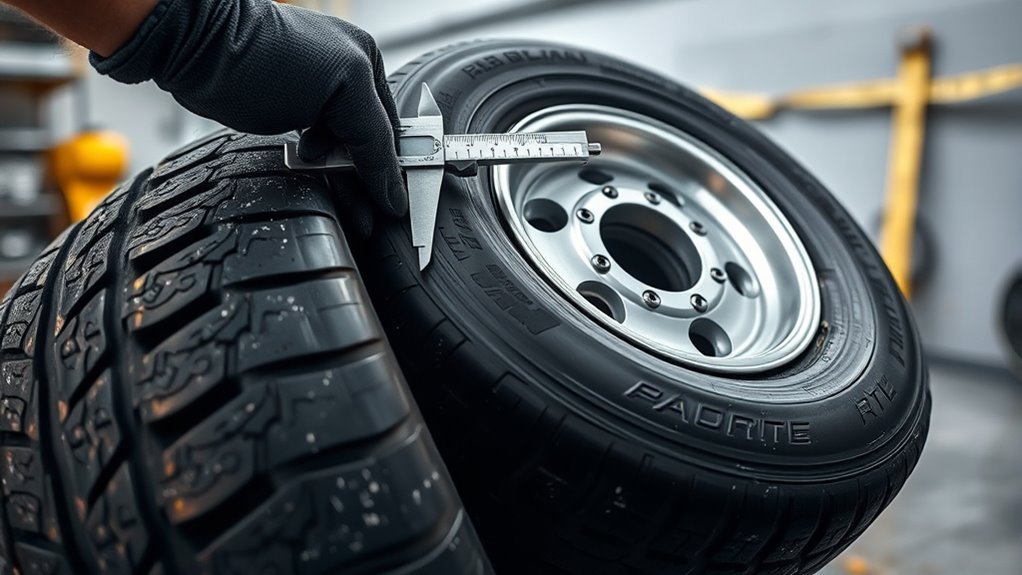
Bead Seat Diameter (BSD) is the rim-size number that decides whether a tire can safely lock onto a wheel. For bicycles, BSD is usually shown in the ISO/ETRTO size code, such as 37-622, where 622 is the bead seat diameter in millimeters. Match that number first, then check rim width, tire width, pressure limits, and tubeless compatibility.
Quick Answer
Bead Seat Diameter is the diameter of the rim at the shelf where the tire bead sits. On bicycle tires, it is the second number in the ISO/ETRTO marking, such as 622 in 37-622. The tire and rim BSD must match exactly for safe seating, sealing, and inflation.
Key Takeaways
- For bicycle tires, the ISO/ETRTO code is the safest way to confirm fit: in 37-622, 37 is tire width and 622 is BSD.
- Common bicycle BSDs include 622 mm for 700C/29-inch, 584 mm for 650B/27.5-inch, and 559 mm for many 26-inch mountain bike tires.
- A matching BSD does not guarantee full compatibility; tire width, internal rim width, maximum pressure, hookless/tubeless rules, and frame clearance still matter.
- Never force a tire onto a rim with a different BSD. A close-looking size can still fail to seat, leak, blow off, or handle unpredictably.
At a Glance
| Time Required | 2–10 minutes to read markings; 10–20 minutes if measuring manually |
| Difficulty | Easy if markings are visible; moderate if measuring the rim |
| Tools Needed | Good light, clean rag, tape measure, and caliper if markings are missing |
| Cost | Usually free; a basic digital caliper costs extra if you do not already own one |
What Is Bead Seat Diameter?
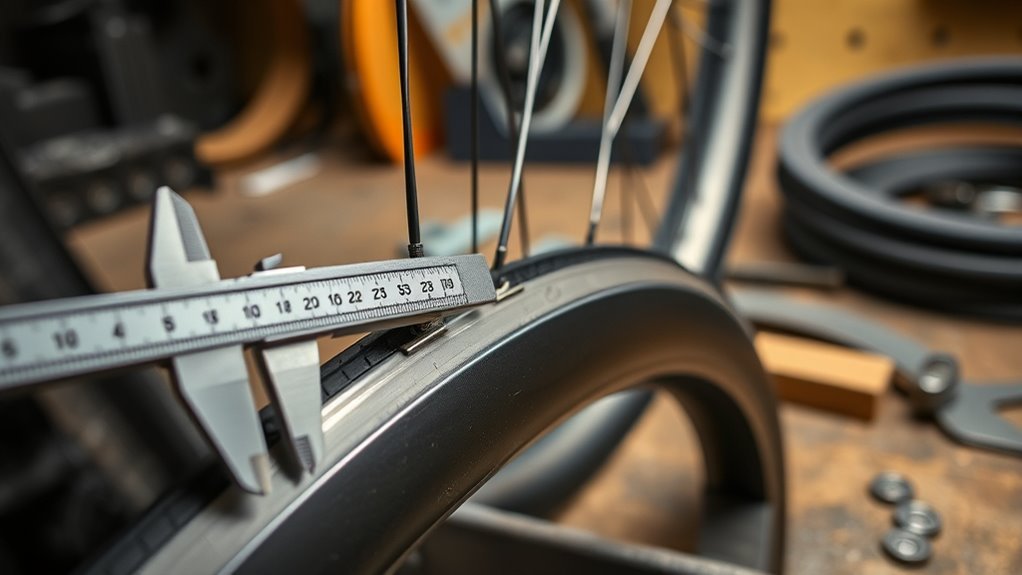
Bead Seat Diameter is the diameter of the rim measured at the bead seat: the shelf or shoulder where the tire bead rests when the tire is mounted and inflated. It is not the outside diameter of the inflated tire, and it is not the visible outer edge of the rim.
On bicycles, BSD is normally written in millimeters through the ISO 5775 bicycle tire and rim designation system. For example, a tire marked 37-622 has an approximate inflated tire width of 37 mm and a bead seat diameter of 622 mm. Schwalbe’s tire-size guide explains the same point: the ETRTO marking is the clearest way to assign a tire to the correct rim size.
For automotive tires, the rim diameter is usually shown in inches. In a P225/45R17 tire size, the 17 means the tire is designed for a 17-inch rim. Automotive bead seat contours also differ by application, so a 16-inch passenger tire, a 16.5-inch truck tire, and a motorcycle tire should never be treated as interchangeable.
Warning: Do not mount a tire just because the old inch or French label sounds similar. Match the ISO/ETRTO BSD number on bicycles, and follow the tire and rim manufacturer’s exact size rules for automotive, motorcycle, and commercial applications.
BSD vs. Wheel and Tire Diameter: What’s the Difference?
BSD is a fixed rim dimension. Wheel diameter and tire outside diameter change depending on tire width, tread height, inflation pressure, casing shape, load, and rim width.
- BSD controls fit: it tells you whether the tire bead can sit on the rim shoulder correctly.
- Outside tire diameter controls clearance and rollout: it affects frame clearance, fender clearance, gearing feel, speedometer or bike-computer setup, and ride height.
- Nominal labels can be misleading: many sizes called “26 inch” do not share the same BSD. Schwalbe notes that 559 mm, 571 mm, and 590 mm tires have all been labeled as 26-inch in different systems.
- Rim width still matters: a tire can have the right BSD but still be unsuitable if it is too narrow or too wide for the rim.
The number that must match first is the bead seat diameter. For a bicycle tire marked 40-622, do not shop by “700C” alone; match the 622.
Common BSD Standards: 622, 584, 559, and What They Map To
These three BSDs cover a large share of modern adult bicycles, but they are not the only standards. Always confirm the printed ISO/ETRTO number on the tire and the rim or wheel documentation.
| BSD | Common Label | Typical Use | Important Note |
|---|---|---|---|
| 622 mm | 700C, 29-inch, some 28-inch | Road, gravel, hybrid, touring, and 29er MTB | 700C and 29-inch share the same BSD, but tire width and frame clearance differ. |
| 584 mm | 650B, 27.5-inch | Gravel, adventure, MTB, and some smaller road frames | A 650B tire is not the same as 650C or 650A. |
| 559 mm | Many 26-inch MTB tires | Older mountain bikes, some utility bikes, and some touring setups | “26 inch” is especially ambiguous; check the ISO number. |
| 406 mm | 20-inch BMX/folding bike | BMX, cargo, recumbent, and folding bikes | Some other 20-inch tires use different BSDs, such as 451 mm. |
| 630 mm | 27-inch road | Older road bikes | A 27-inch tire is not the same as 700C, even though the names sound close. |
How to Find BSD on Your Rim or Tire Markings
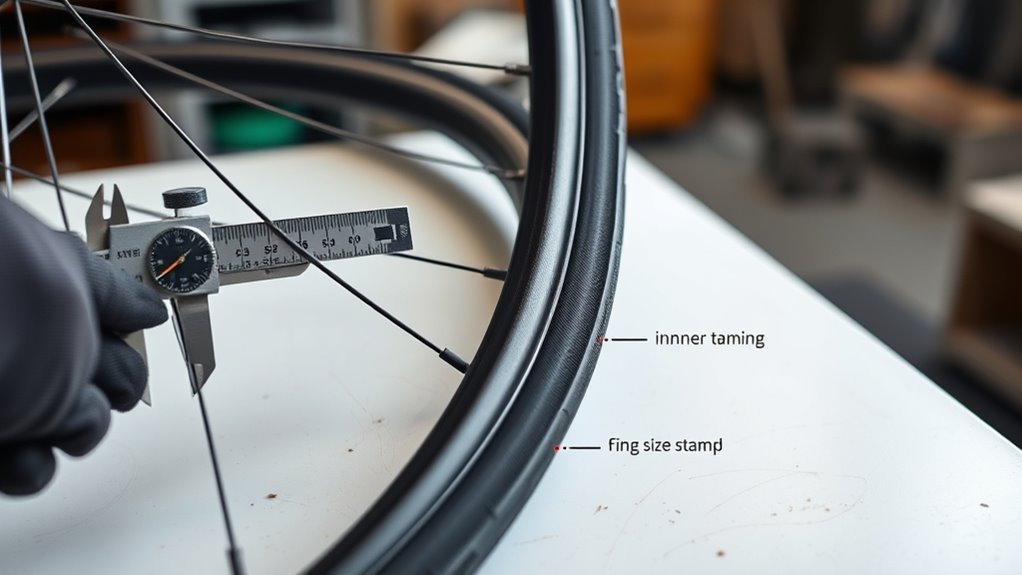
Start with the tire sidewall. Look for a size written as two numbers separated by a hyphen, such as 25-622, 37-622, 47-559, or 50-584. The second number is the BSD. On the rim, you may see a marking such as 622 x 19C or 19-622; this means a 622 mm rim diameter with an internal rim width around 19 mm.
- Check the tire sidewall first: the ISO/ETRTO size is often printed near the brand, model, or pressure range.
- Inspect the rim: look near the valve hole, inside the rim bed, under old rim tape, or on a printed rim decal.
- Use the wheel or rim product page: manufacturer specifications are more reliable than a worn decal.
- Do not rely on the casual label alone: “700C,” “29er,” “650B,” and “26 inch” are useful shortcuts, not final proof.
Note: If the tire has only an old fractional inch marking, use a conversion chart from a trusted tire maker or bike repair reference before buying a replacement. Fractional sizes that look close can use different bead seat diameters.
Measure BSD at Home: Step-by-Step
Reading the printed ISO/ETRTO marking is usually better than measuring, because BSD is a precise fit dimension and a small measuring error can point you to the wrong tire. Measure only when markings are missing, damaged, or contradictory.
Tools You’ll Need
- Tape measure or ruler for the largest outside rim measurement
- Digital or vernier caliper for bead-seat depth and internal rim width
- Clean rag to remove dirt, old sealant, and adhesive
- Notebook or phone to record measurements
- Manufacturer specifications for a final cross-check
Measuring Step Sequence
The most practical home method is to measure the rim’s largest outside diameter, estimate how far the bead seat sits below the rim edge, then subtract that depth twice. This is an approximation; verify the result against standard BSD values and manufacturer specifications.
| Step | Tool | What to Record |
|---|---|---|
| 1 | Tape measure | Largest outside rim diameter, measured straight across the rim |
| 2 | Caliper | Distance from the rim edge down to the bead seat on one side |
| 3 | Calculation | Approximate BSD = outside rim diameter − 2 × bead-seat depth |
| 4 | Specification check | Compare the result with standard BSDs such as 559, 584, 622, 630, 406, or 451 mm |
Pro Tip: If your measurement lands near a standard size, choose the standard size only after confirming the tire or rim marking. For example, a measured value close to 622 mm should still be verified as 622, not guessed from “700C.”
Why BSD Must Match Your Rim
The tire bead is designed to sit on a specific rim diameter. If the tire BSD and rim BSD do not match, the bead cannot seat with the correct shape and tension. That can create immediate mounting problems or a dangerous failure later under load.
- Tire will not mount: a tire with a smaller BSD may feel impossibly tight or require unsafe force.
- Tire may feel loose: a tire with a larger BSD may not stay centered or seated.
- Air leaks: tubeless setups may leak around the bead if the bead does not sit correctly.
- Blowoff risk: a poorly matched tire can unseat suddenly during inflation or riding.
- Poor handling: the tire profile may become unstable, especially during cornering, braking, or impacts.
Continental’s bicycle tire guidance recommends checking tire/rim compatibility, following both tire and rim manufacturer guidelines, and using the lower maximum pressure if tire and rim limits differ. That is especially important with modern tubeless and hookless systems.
How Rim Width and BSD Determine Tire Compatibility
BSD tells you whether the tire fits the rim diameter. Rim width tells you whether the tire has the right shape and support once it is installed. You need both.
A rim marked 622 x 19C, for example, has a 622 mm bead seat diameter and about 19 mm internal width. A tire with a 622 mm BSD may fit that diameter, but the safe tire-width range depends on the rim manufacturer, tire manufacturer, rim type, tire type, and pressure limits.
- Too narrow for the rim: the tire may have an overly squared-off profile and less predictable bead behavior.
- Too wide for the rim: the tire may feel vague, squirm under cornering, or exceed manufacturer recommendations.
- Hookless rims need extra care: use only tire models and widths approved by both the tire and rim maker.
- Frame clearance still matters: the right tire/rim match can still rub the frame, fork, fenders, or brake bridge.
As a general rule, use the rim maker’s chart first, the tire maker’s chart second, and choose the more conservative limit when they differ.
Tubeless and BSD: Sealing, Tape, and Valve Tips
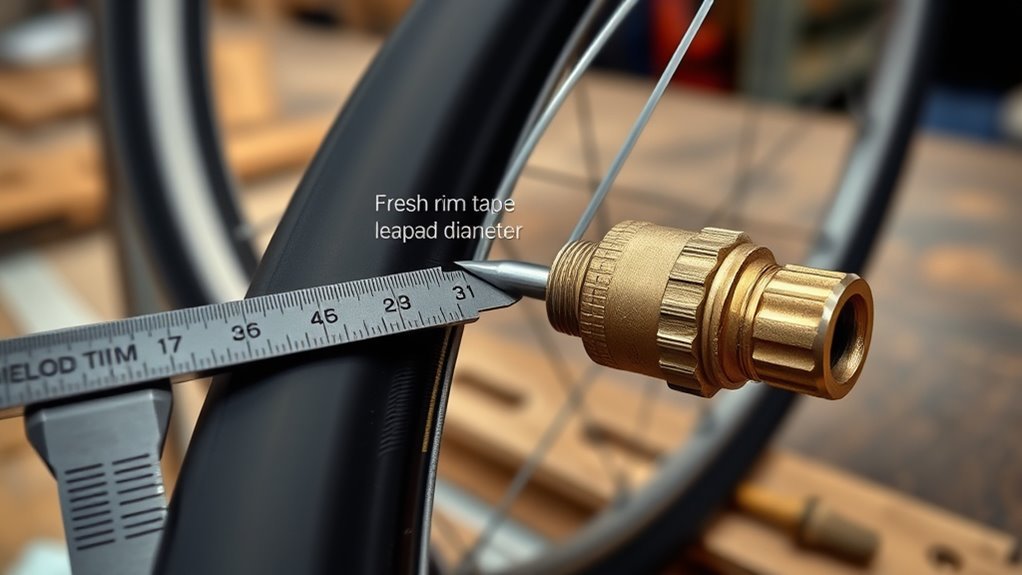
For tubeless tires, the bead must fit the rim precisely, and the rim bed must be sealed properly. Matching BSD is the first step, but tape, valve fit, sealant, tire casing, rim type, and pressure limits all affect the final result.
- Use a tubeless-ready rim and tire: do not assume any rim can be converted safely with tape and sealant alone.
- Choose the right tape width: Stan’s recommends tape that spans sidewall to sidewall and is typically 1–2 mm wider than the internal rim width for many tubeless-ready rims.
- Clean the rim bed: remove old sealant, adhesive, oil, and dirt before taping.
- Install the valve correctly: the valve base should seal against the rim bed without deforming the tape.
- Use the recommended sealant amount: follow the tire or sealant maker’s volume guide for your tire size.
- Respect pressure limits: never exceed the lower maximum pressure listed by the tire or rim manufacturer.
Warning: With hookless or straight-side rims, use only tires approved for that rim type and size. Do not exceed the rim maker’s pressure limit, even if the tire sidewall lists a higher number.
[Products Worth Considering]

The GERCHWAY Presta Valve Adaptor Pump offers a versatile dual‑head chuck that fits both Presta and Schrader valves, eliminating the need for extra adapters. Its precision gauge accurately reads 5–100 PSI with ±2 PSI tolerance, ensuring safe and optimal tire inflation for bikes, motorcycles, SUVs, and cars. The 18‑inch hose provides flexible reach, while the 3‑in‑1 design lets you check pressure, release air, or inflate directly from an air compressor.

The AZUNO digital tire inflator gauge offers precise pressure readings for both Presta and Schrader bike valves, eliminating the need for separate adapters. Its bright LCD backlight and automatic shut‑off conserve battery life, while the included 18‑inch hose and accessories make setup quick and hassle‑free. Built with durable steel and brass components, it provides reliable performance for bicycles, motorcycles, and other vehicles.

The GERCHWAY Digital Bike Tire Pressure Gauge offers precise ±1% accuracy across a 3–200 PSI range, fitting both Presta and Schrader valves without extra adapters. Its 16‑inch hose provides extra reach for easy inflation on bikes, motorcycles, SUVs, and cars, while the 1/4" NPT quick connector enables direct compressor attachment. Designed for quick checks, deflation, and inflation, it delivers reliable, leak‑free performance for all your tire needs.
Troubleshooting BSD Fit Issues: Tire Won’t Seat or Won’t Hold Air
If a tire will not seat, will not inflate, or loses air quickly, work through the fit checks before adding more pressure. Most failures come from the wrong size, damaged parts, poor tape work, or an incompatible tubeless setup.
| Problem | Likely Cause | Fix |
|---|---|---|
| Tire feels impossibly tight | Wrong BSD, stiff bead, or bead not in the rim’s center channel | Confirm ISO size, push both beads into the drop center, and avoid metal levers on tubeless rims. |
| Tire slips on too easily | Possible wrong BSD, stretched bead, damaged tire, or incompatible rim | Stop and verify size. Replace the tire if the bead is damaged or loose. |
| Tubeless tire will not pop into place | Air escaping too quickly, loose bead fit, poor tape, or valve-core restriction | Remove valve core for more airflow, check tape, lubricate beads lightly with soapy water, and use a booster pump if approved. |
| Air leaks from spoke holes | Damaged, wrinkled, narrow, or poorly sealed rim tape | Remove the tire, clean the rim, and re-tape the rim bed completely. |
| Air leaks around valve | Valve not seated, tape torn at valve hole, or wrong valve shape | Reseat the valve, inspect the tape, and use a valve base that matches the rim bed shape. |
[Products Worth Considering]

Stay prepared for any bike emergency with this all-in-one repair kit featuring a compact CO2 inflator, 2 × 16 g cartridges, multi‑tool Allen keys, and tire repair accessories. The lightweight design fits easily in a saddlebag, allowing quick fixes of flats and minor adjustments on the road or trail. Chrome vanadium steel construction ensures durability, while the included patches and levers cover all basic tire repairs.

The ROCKBROS Mini Bike Pump delivers fast, high‑pressure inflation up to 100 PSI in a compact, lightweight design that fits easily in a pocket or backpack. Its rechargeable Type‑C battery and interchangeable Presta and Schrader nozzles make it versatile for road, mountain, and inner‑tube tires, while the LED indicator keeps you informed of battery status. Ideal for cyclists on the go, it inflates two 700×25C road tires on a single charge and charges fully in just 25 minutes.

GOING TUBELESS?: Our bike rim tape is the perfect choice if you’re looking to make the switch to tubeless bike tires. High quality rim tape is the first step in your tubeless conversion - so grab yourself a roll and let's get cracking!
Quick BSD Reference: Common Rims, BSDs, and Compatible Tire Sizes
Use this table as a starting point, not as a substitute for the tire and rim manufacturer’s compatibility charts.
[Products Worth Considering]

Designed to be compatible with a 28" diameter internal rim by 1 1/2 inches, with widths ranging from 17mm to 23mm

Pack of 2 Foldable Tires – Includes two 700 x 32c bike tires for electric, road, touring, hybrid bicycles used for commuting, weekday riding, and regular fitness use.
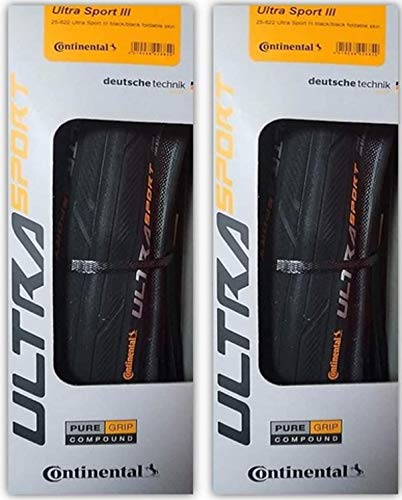
Fast rolling tire ready to handle a wide range of road riding conditions
Common BSD Values
| Common Name | BSD | Example ISO Tire Size |
|---|---|---|
| 700C road/gravel, 29-inch MTB | 622 mm | 28-622, 40-622, 57-622 |
| 650B, 27.5-inch | 584 mm | 47-584, 50-584, 57-584 |
| 26-inch MTB | 559 mm | 47-559, 54-559 |
| 20-inch BMX/folding | 406 mm | 47-406, 54-406 |
| 27-inch road | 630 mm | 28-630, 32-630 |
Rim-to-Tire Matches
To match a bicycle tire to a rim, use this order:
- Match the BSD exactly.
- Check tire width against the rim’s internal width chart.
- Confirm whether the rim is hooked, hookless, straight-side, tubeless-ready, or tube-only.
- Check the tire type: tube-type, tubeless-ready, tubeless, or hookless-approved.
- Use the lower maximum pressure if the tire and rim list different limits.
- Check frame, fork, brake, fender, and mud clearance after inflation.
Width Compatibility Ranges
Width ranges vary by rim and tire model, so avoid universal rules like “a 622 rim fits every 700C tire.” For example, a narrow road rim and a wide gravel rim may both have a 622 mm BSD but support very different tire-width ranges. Schwalbe and Continental both recommend checking tire width against internal rim width and following tire/rim manufacturer limits.
Automotive, Motorcycle, and Truck Bead Seats
The term “bead seat diameter” is also used outside bicycles, but the sizing system is different. Passenger car and light truck inch-rim sizes commonly use whole-inch rim diameters and a 5-degree bead seat taper. Heavy-duty truck, bus, and wide-base sizes ending in half-inches, such as 16.5, 19.5, and 22.5 inches, commonly use wider 15-degree bead seat tapers. Tire Rack’s bead-seat contour guide explains that these profiles are not interchangeable.
That means a 16-inch tire and a 16.5-inch tire are not “close enough.” They use different bead diameters and profiles. The same caution applies to motorcycle tires, TRX metric tires, and specialty run-flat systems: match the tire size, wheel diameter, bead seat contour, load rating, and application exactly.
Frequently Asked Questions
How do I measure bead seat diameter on a bicycle rim?
First, look for the ISO/ETRTO size on the tire or rim because markings are more reliable than home measurement. If markings are missing, measure the rim’s largest outside diameter, measure how far the bead seat sits below the rim edge, then subtract twice that depth. Treat the result as an estimate and confirm it against a standard BSD and the manufacturer’s specifications.
What does 622 BSD mean?
622 BSD means the tire bead is designed to sit on a rim with a 622 mm bead seat diameter. This is the common BSD for 700C road, gravel, hybrid, touring, and 29-inch mountain bike wheels. A 622 BSD tire must be paired with a 622 BSD rim.
Are 700C and 29-inch the same BSD?
Yes, both commonly use a 622 mm BSD. However, that does not mean every 700C and 29-inch tire is interchangeable in practice. You still need to check tire width, rim internal width, frame clearance, brake clearance, tubeless compatibility, and pressure limits.
What is the bead seat diameter of a 26-inch bike tire?
Many 26-inch mountain bike tires use a 559 mm BSD, but “26 inch” is not specific enough by itself. Some older or specialty 26-inch tires use other bead seat diameters, including 571 mm or 590 mm. Check the ISO/ETRTO number on the sidewall before buying a replacement.
What bead diameter has a 5-degree bead seat?
A 5-degree bead seat is a rim-contour feature, not one single diameter. Passenger car and light-truck inch-rim sizes commonly use whole-inch diameters with a 5-degree bead seat taper, while motorcycle inch-rim sizes also use 5-degree tapers but different bead-seat widths and flange heights. Match the full tire and wheel specification, not just the angle.
What tire size uses a 15-degree bead seat?
Many heavy-duty truck, bus, RV, and wide-base tires with half-inch rim diameters, such as 16.5, 19.5, and 22.5 inches, use 15-degree bead seat tapers. These are not interchangeable with standard whole-inch passenger car rims. Always follow the tire, rim, load, and vehicle manufacturer’s specifications.
Conclusion
BSD is the fit number you should confirm before choosing a tire. For bicycles, use the ISO/ETRTO marking whenever possible: the second number, such as 622, 584, or 559, is the bead seat diameter. Match that number exactly, then check internal rim width, tire width, tubeless status, pressure limits, and clearance. If a tire feels wrong during installation, stop and verify the size instead of forcing it.
Sources
- ISO 5775-1:2023 Bicycle tyres and rims — official ISO standard page for bicycle tire designations and dimensions.
- Schwalbe Tire Sizes — ETRTO tire size meaning, common size labels, and why inch/French labels can be ambiguous.
- Schwalbe Tire Dimensions — tire-to-rim matching, internal rim width, and hookless/tubeless notes.
- Continental Tire/Rim Combinations and ETRTO Standards — manufacturer safety guidance for tire/rim compatibility, pressure limits, and rim-width checks.
- Stan’s Tape & Valves Support — tubeless tape width, rim preparation, and tape/valve conversion cautions.
- Tire Rack Matching Wheel Diameters and Bead Seat Contours — automotive, motorcycle, and heavy-duty bead seat contour differences.

Related Articles
What Does THE P Stand For on a Tire? Full Meaning Explained
I’ll explain what the “P” on a tire really means and why it could change how you choose your next set.
Read More
How to Use a Tubeless Tire Repair Kit: Complete Field Guide
Learn how to fix tubeless tire punctures fast with the right kit, because one small mistake can leave you stranded on the trail.
Read More
How to Tell a Tire’s Diameter: Easy Guide to Reading Tire Size
Want to decode tire sidewall numbers and find the right diameter, but wonder what those hidden digits really mean?
Read More